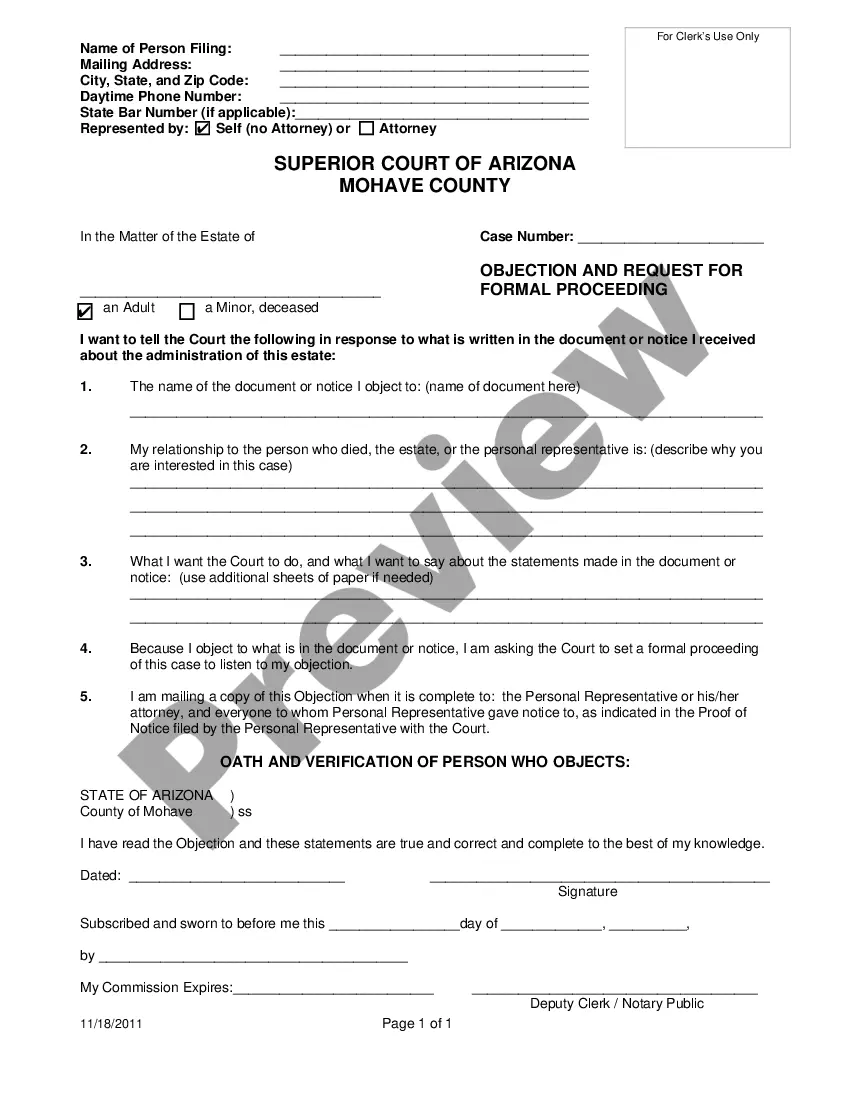
Arizona Objection and Request for Formal Proceeding
Overview of this form
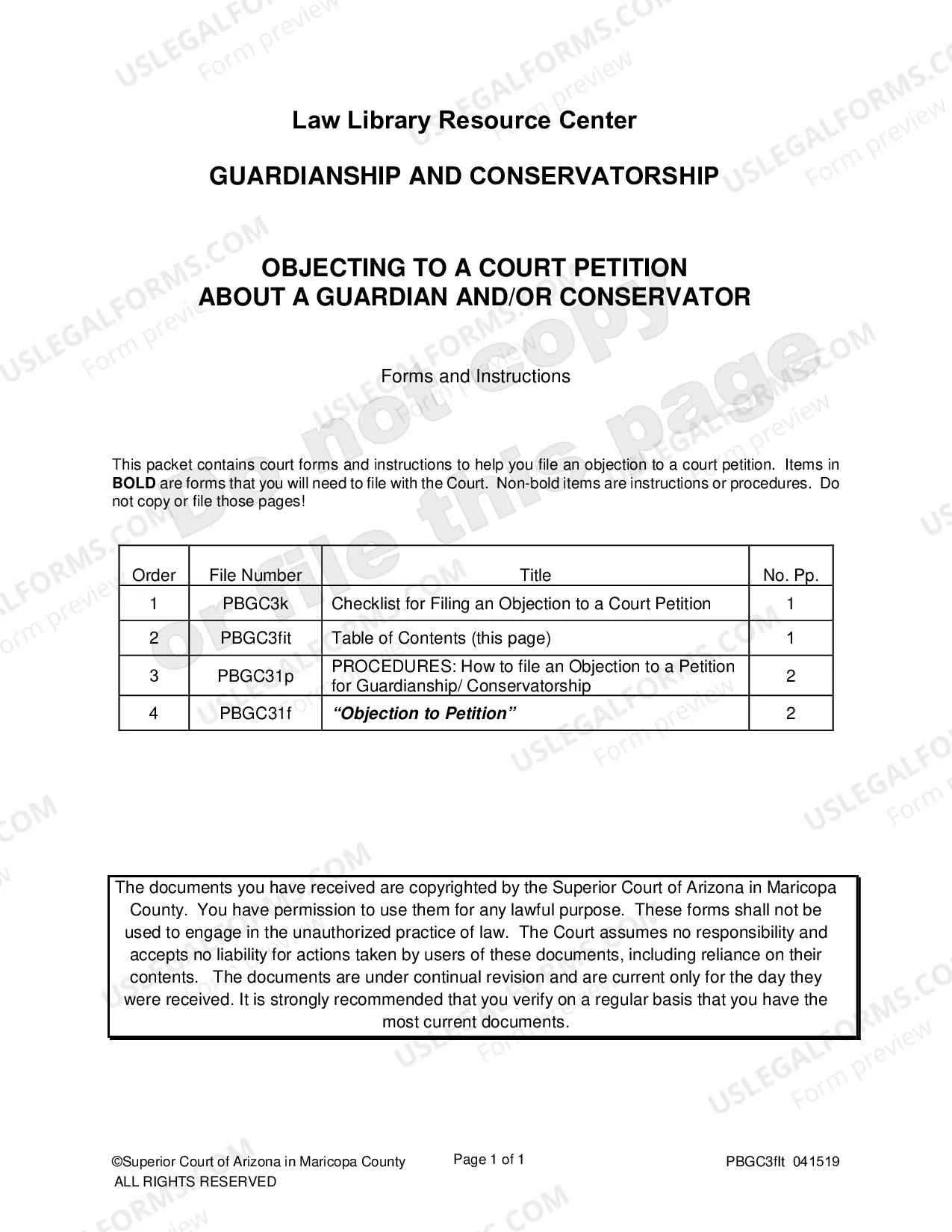
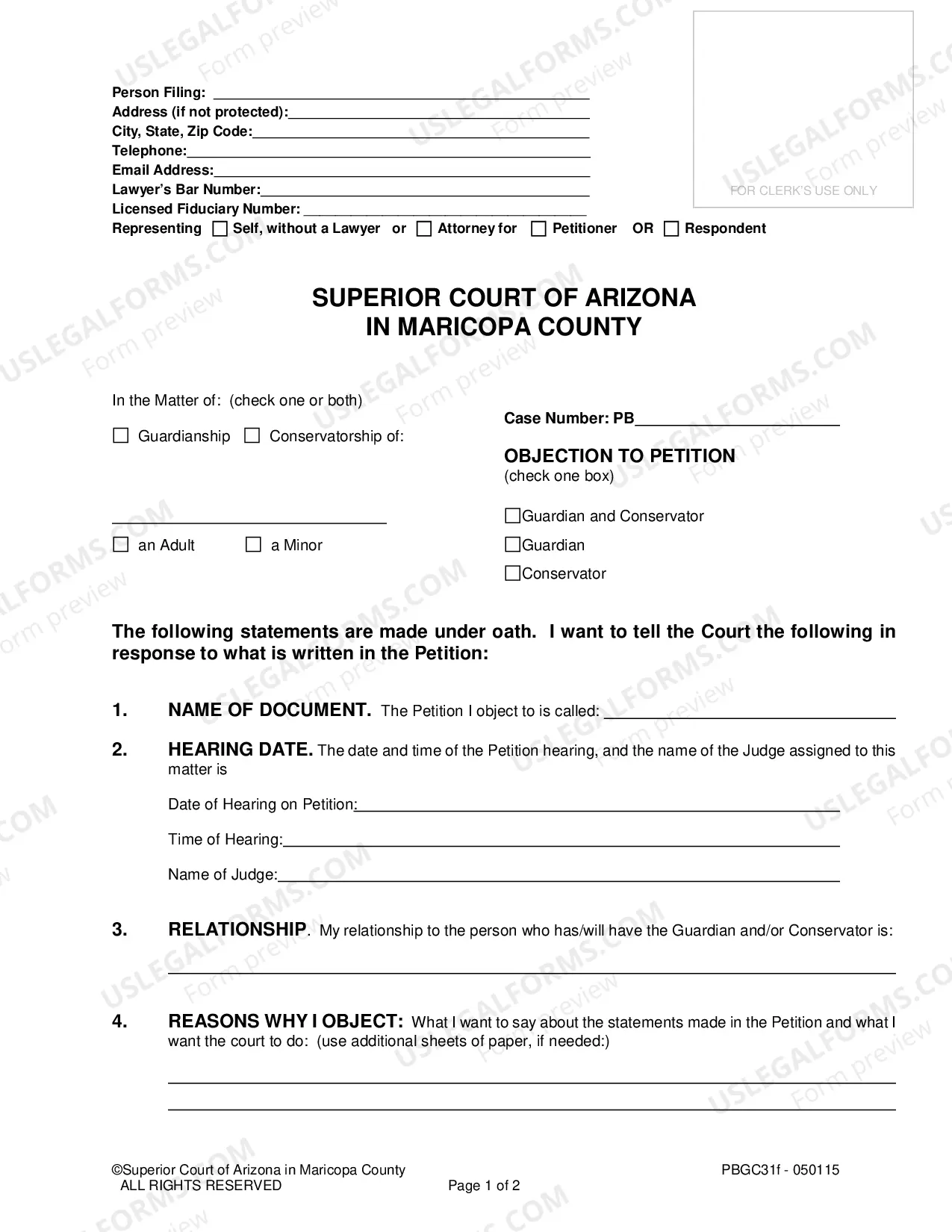
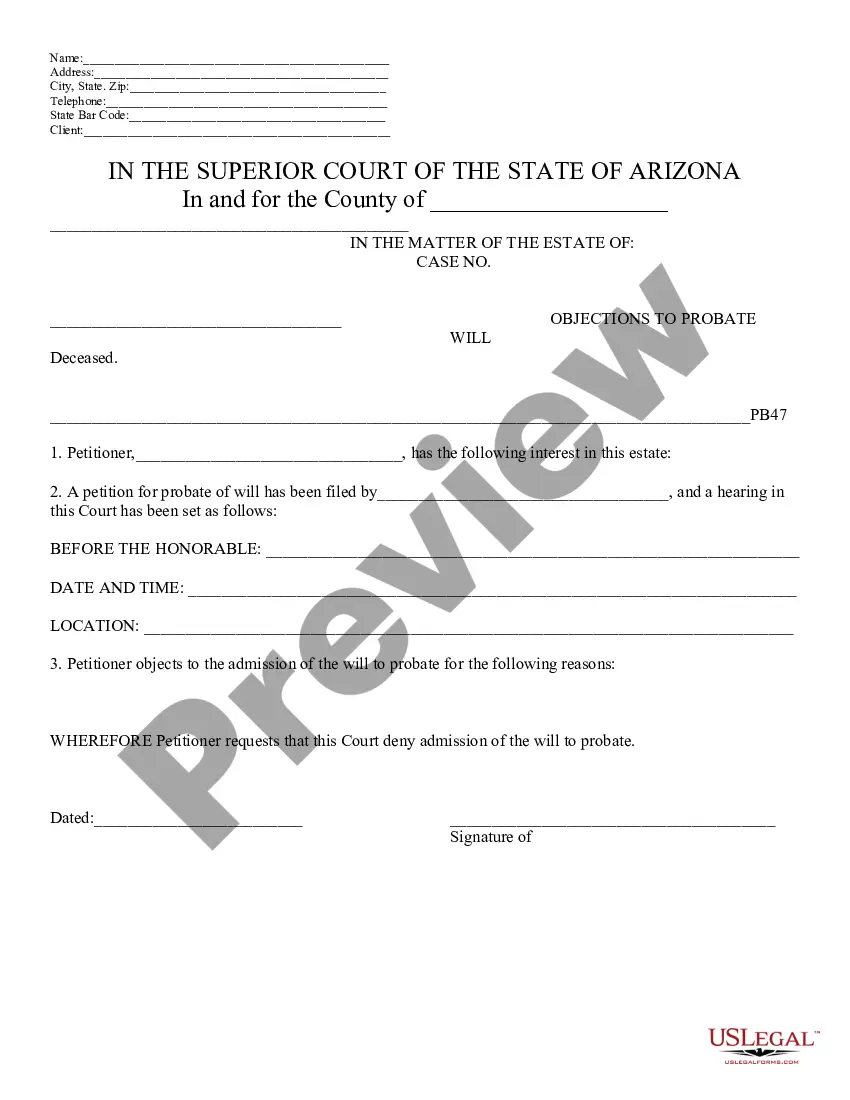
The Objection and Request for Formal Proceeding form is a legal document used to formally object to a court petition for guardianship and/or conservatorship. This form allows individuals with a vested interest in the case to voice their disagreements regarding the petition, which can impact the court's decision on who should serve as guardian or conservator for another person.
What’s included in this form
- Petition details: Identifies the specific petition being objected to and the hearing date.
- Objection reasons: Details the reasons for the objection, allowing for additional sheets if necessary.
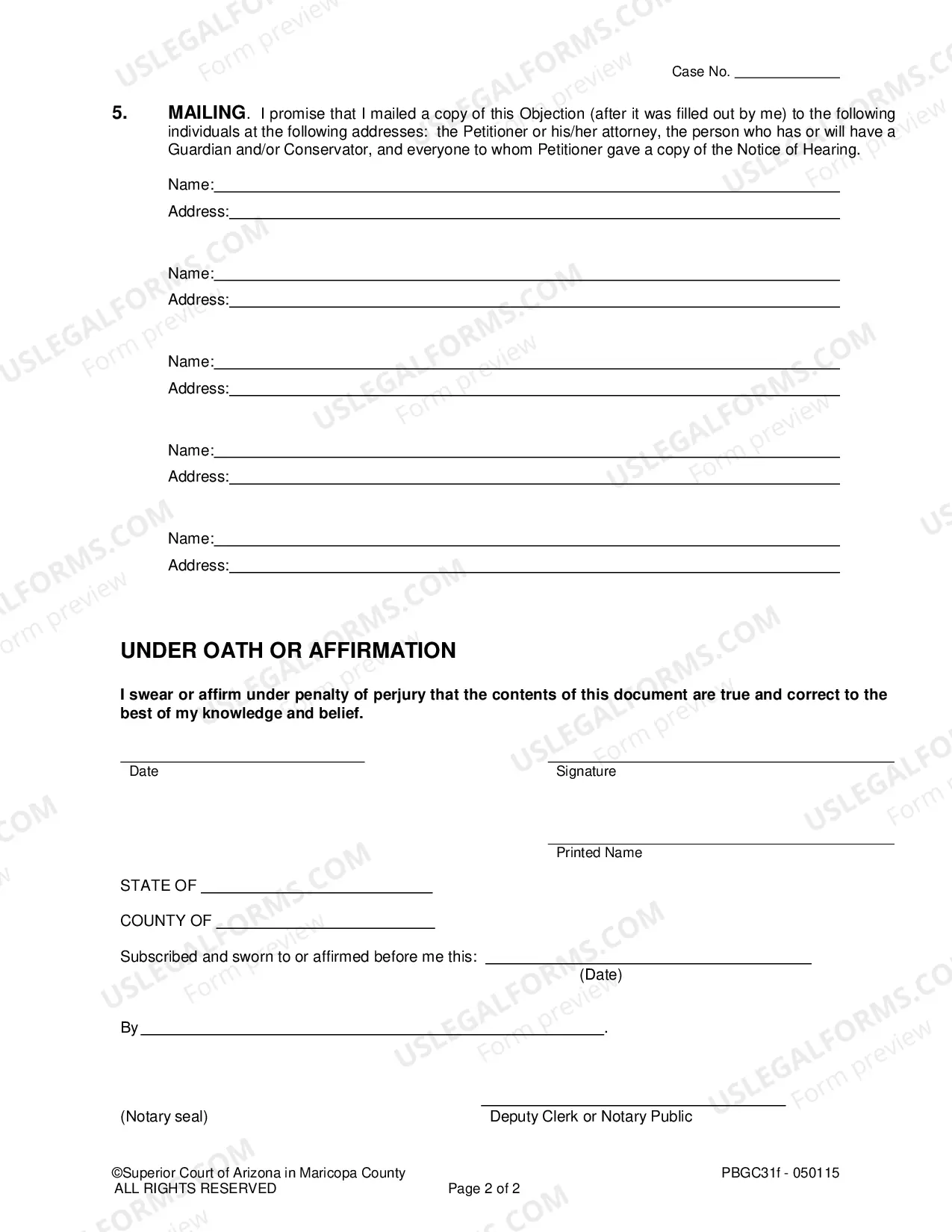
- Mailing list: A section to provide the names and addresses of individuals who received copies of the objection.
- Oath and affirmation: A statement that the information provided is true under penalty of perjury.
Situations where this form applies
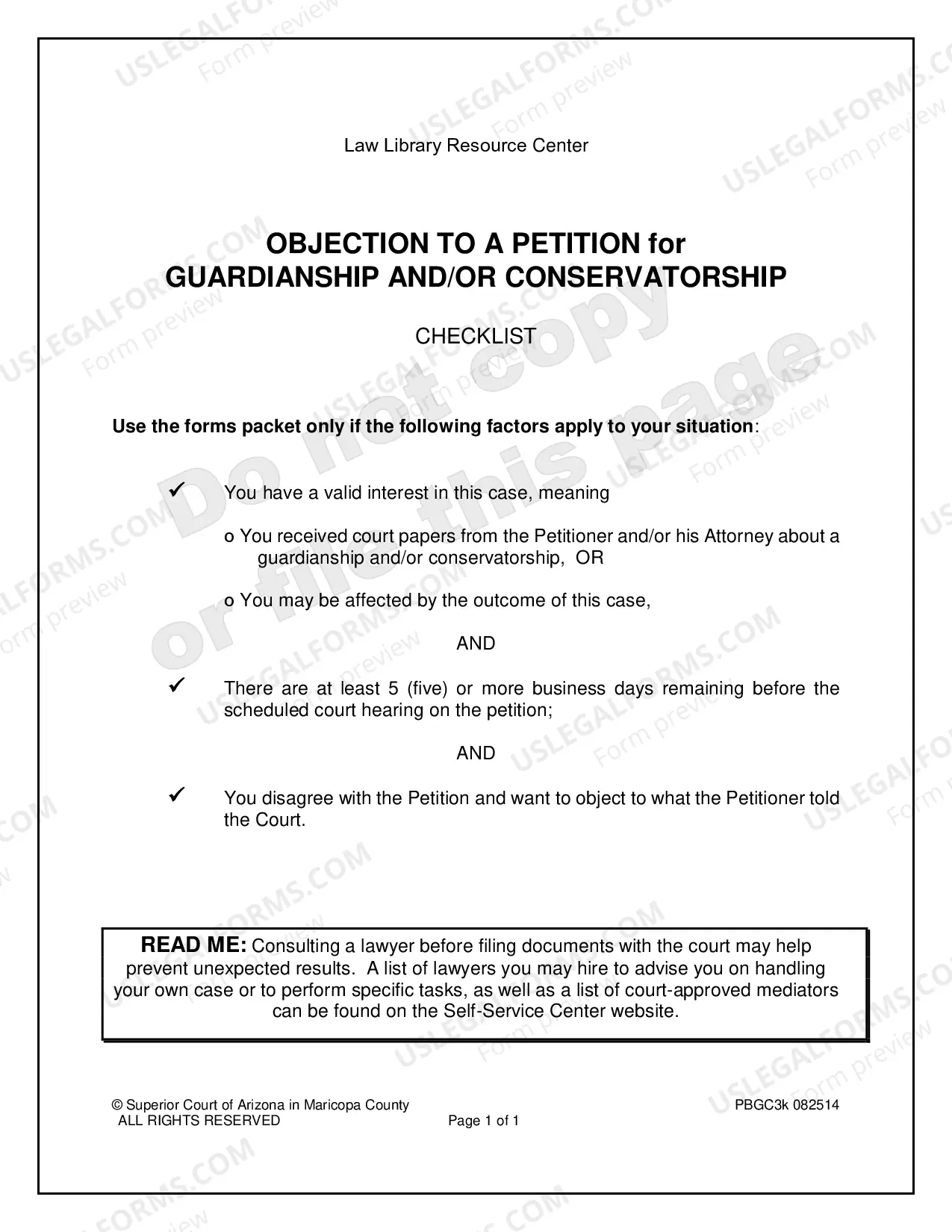
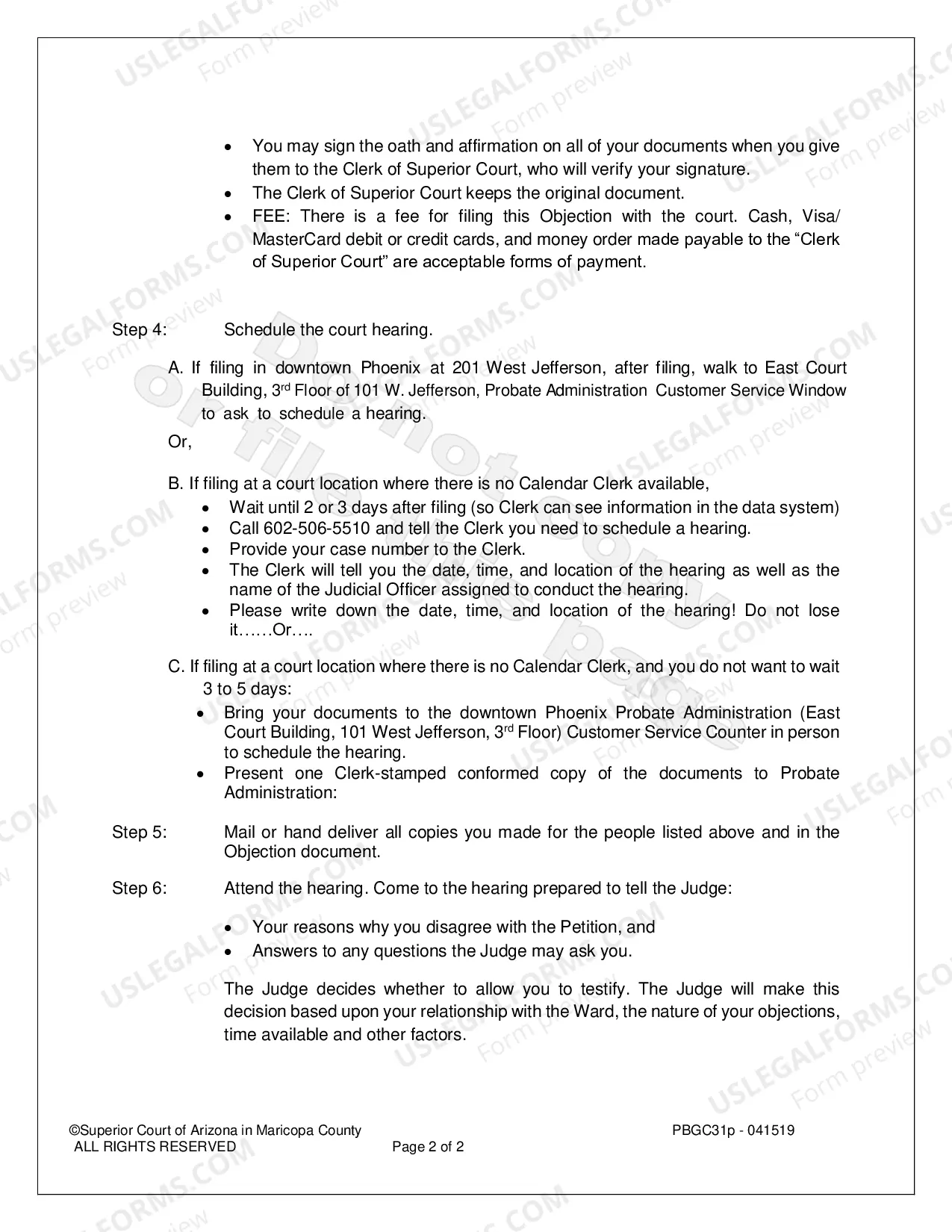
This form should be used when you have received court papers regarding a guardianship or conservatorship and believe you have valid grounds to oppose the petition. It is essential to act at least five business days prior to the scheduled court hearing to ensure your objection is considered.
Who needs this form
- Individuals who have a valid interest in the guardianship or conservatorship case.
- Those who have received notice of the court petition from the petitioner or their attorney.
- Persons who may be directly affected by the court's decision regarding the guardianship or conservatorship.
How to prepare this document
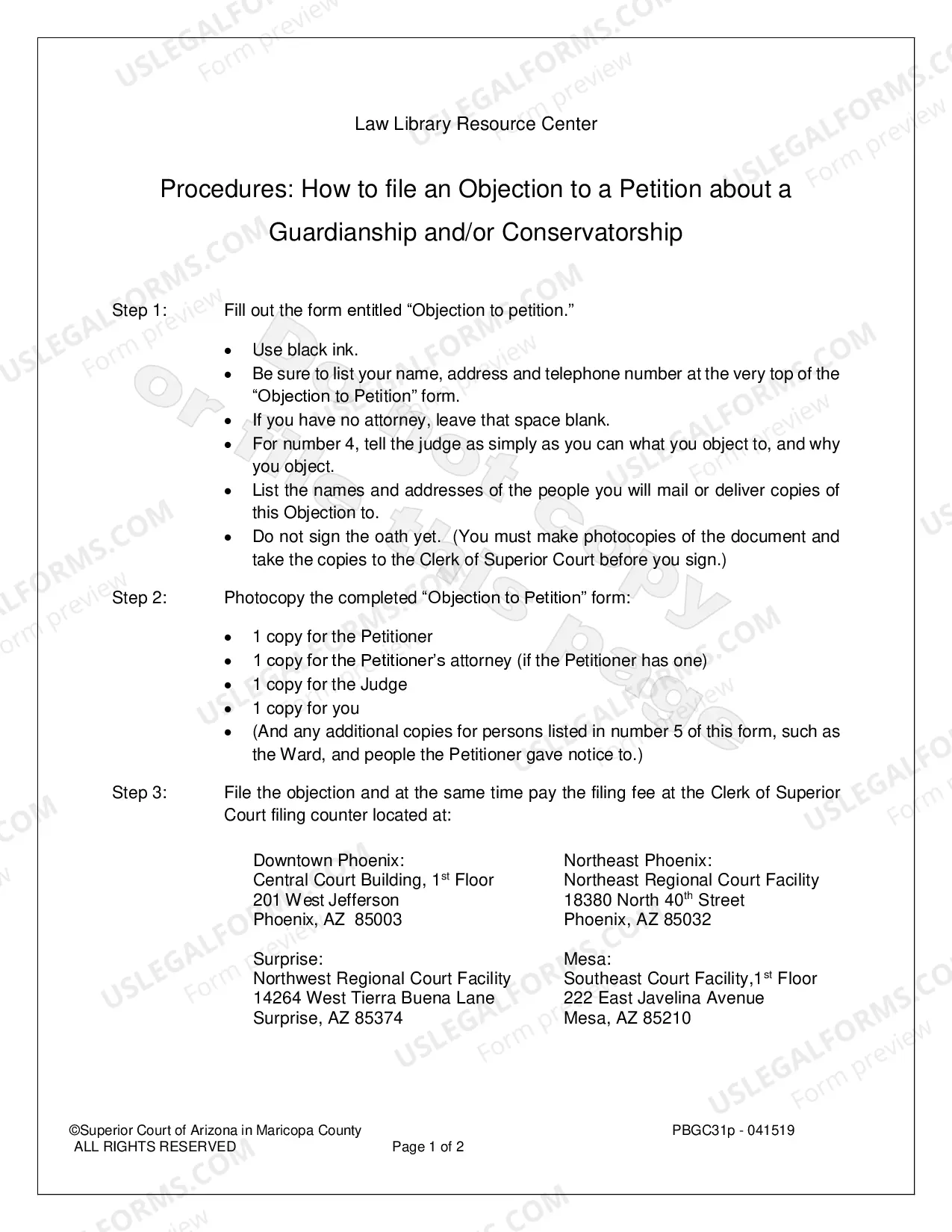
- Fill out the "Objection to Petition" form, clearly stating your name and contact information.
- Provide specific reasons for your objection in a simple and concise manner.
- Photocopy the completed form for all involved parties, including the petitioner and their attorney.
- File the objection at the Clerk of Superior Court, paying any necessary filing fees.
- Schedule a court hearing by either visiting the appropriate office or calling the Clerk's office after filing.
- Deliver copies of the objection to the parties listed in the document.
- Prepare for the court hearing by organizing your reasons for objection and being ready to answer questions from the judge.
Notarization guidance
This form does not typically require notarization unless specified by local law. However, it is crucial to ensure that you follow the court's instructions regarding the filing process.
Get your form ready online
Our built-in tools help you complete, sign, share, and store your documents in one place.
Make edits, fill in missing information, and update formatting in US Legal Forms—just like you would in MS Word.
Download a copy, print it, send it by email, or mail it via USPS—whatever works best for your next step.
Sign and collect signatures with our SignNow integration. Send to multiple recipients, set reminders, and more. Go Premium to unlock E-Sign.
If this form requires notarization, complete it online through a secure video call—no need to meet a notary in person or wait for an appointment.
We protect your documents and personal data by following strict security and privacy standards.

Make edits, fill in missing information, and update formatting in US Legal Forms—just like you would in MS Word.

Download a copy, print it, send it by email, or mail it via USPS—whatever works best for your next step.

Sign and collect signatures with our SignNow integration. Send to multiple recipients, set reminders, and more. Go Premium to unlock E-Sign.

If this form requires notarization, complete it online through a secure video call—no need to meet a notary in person or wait for an appointment.

We protect your documents and personal data by following strict security and privacy standards.
Typical mistakes to avoid
- Failing to file the objection within the required timeframe (at least five business days before the hearing).
- Not providing a clear and detailed explanation of the objections.
- Forgetting to photocopy and deliver all necessary copies of the document.
- Missing the court hearing date due to poor record-keeping of the scheduled time and location.
Advantages of online completion
- Convenience: Download and complete the form at your own pace from the comfort of your home.
- Reliability: Access to up-to-date legal templates that comply with local laws.
- Editability: Ability to modify the document easily as needed before submission.
- Guidance: Step-by-step instructions to help ensure you complete the form correctly.
What to keep in mind
- The Objection and Request for Formal Proceeding form allows parties to contest guardianship and conservatorship petitions.
- It must be filed at least five business days before the scheduled hearing.
- Preparation is key; understand your reasons for objection and keep thorough records of correspondence.
Looking for another form?

Form popularity
FAQ
The formal probate process is a bit more complicated and typically takes longer than informal probate. With formal probate, a judge gets involved to resolve the estate's legal issues, and a court proceeding is required. Only the court can open formal probate.
Formal probate involves a petition , a hearing or trial before a Judge or Court Commissioner who resolves the issues with a final court order . Informal Probate only requires an application, no hearing or trial, and is administered by a court official known as the Probate Registrar .
Steps for Filing a Claim Against a Deceased Person's Estate Find proof of the amount owed to you by the decedent. Locate the probate court responsible for the estate's proceedings. Visit the court and bring your proof with you, then ask for a creditor's claim form and the case number for the probate proceedings.
Informal probate requires that the deceased had a valid will at the time of death that has not been challenged and died less than 2 years before probate is opened. In an informal probate process, a personal representative is appointed by the court to administer the estate with minimal court supervision.
Informal Probate is usually wrapped up within 6 to 8 months. Formal Probate may take a year or more to settle and close the estate.
Formal probate involves a petition , a hearing or trial before a Judge or Court Commissioner who resolves the issues with a final court order . Informal Probate only requires an application, no hearing or trial, and is administered by a court official known as the Probate Registrar .
In Arizona, formal probate, unlike informal probate, is the process where the petitioner files a petition requesting that a judicial officer decide an issue or direct that action be taken, usually after notice to all interested parties and a court hearing.