Alaska Grant of Driveway Easement
About this form
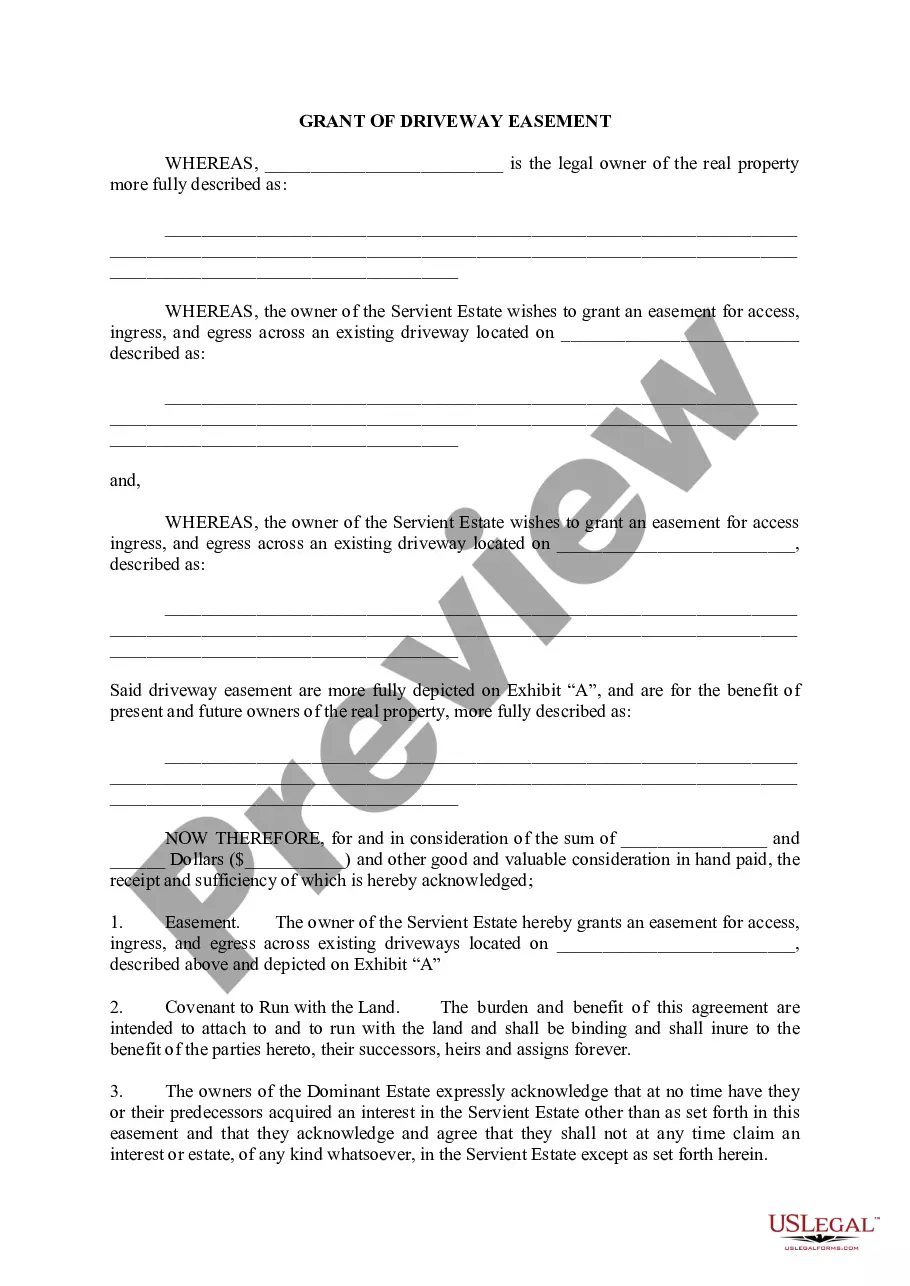
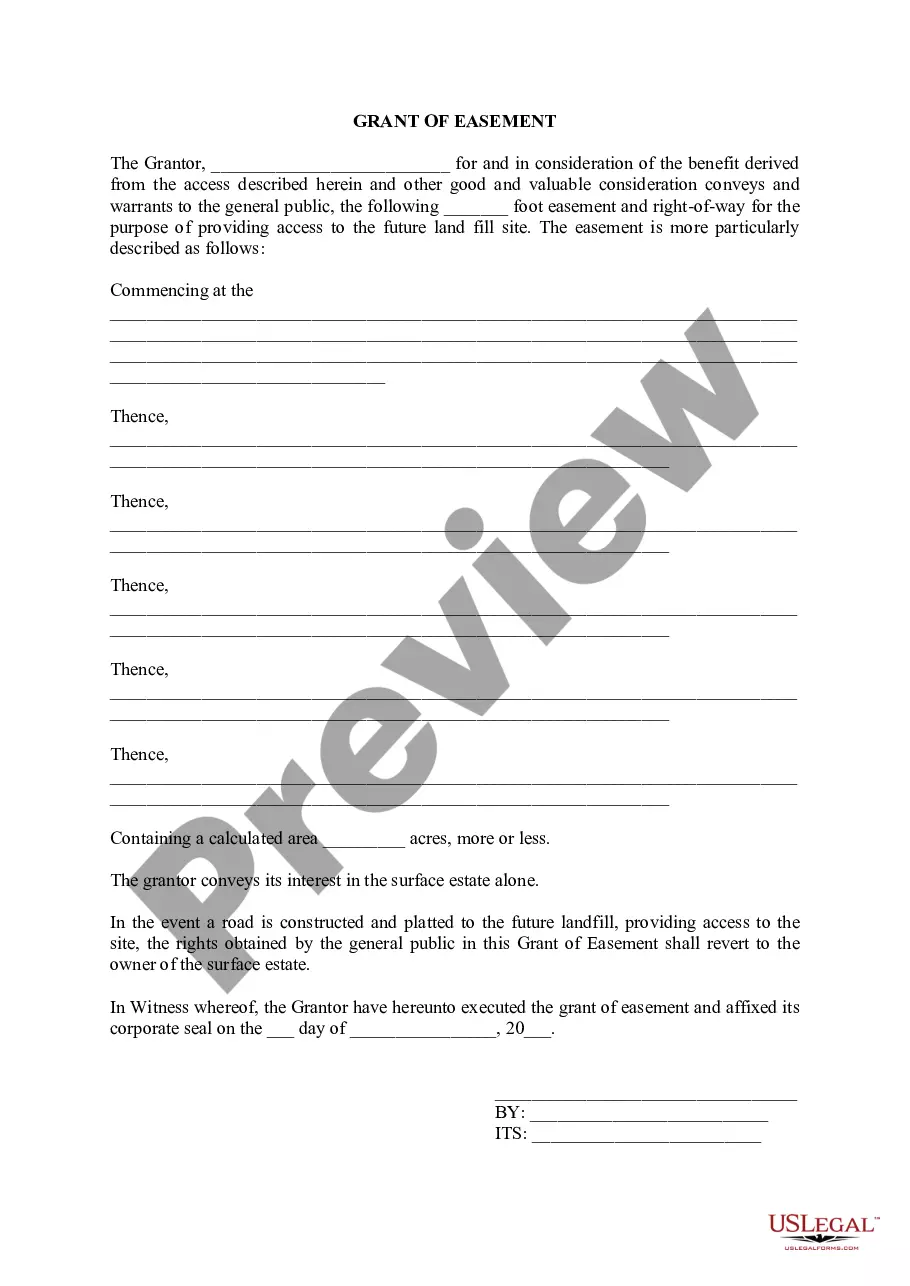
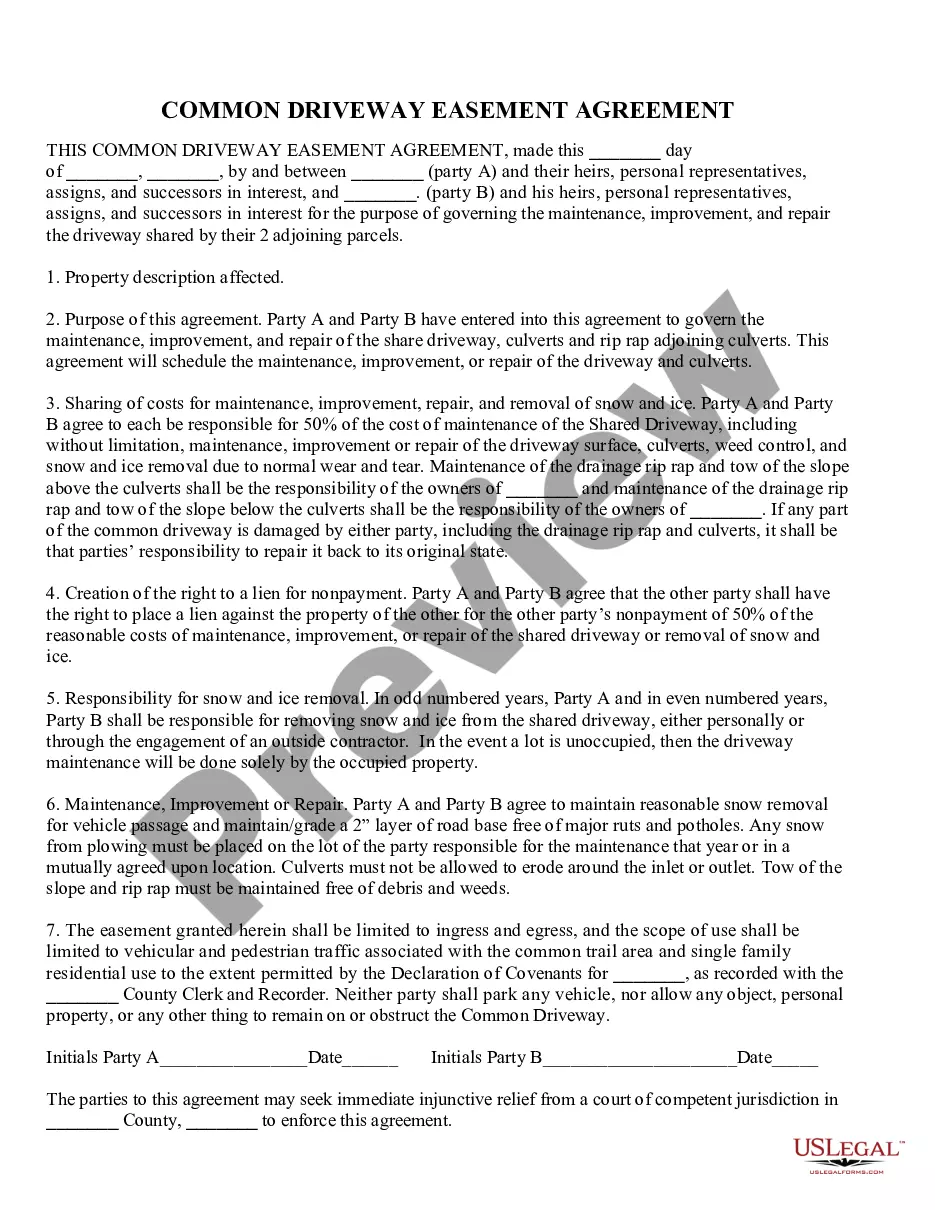
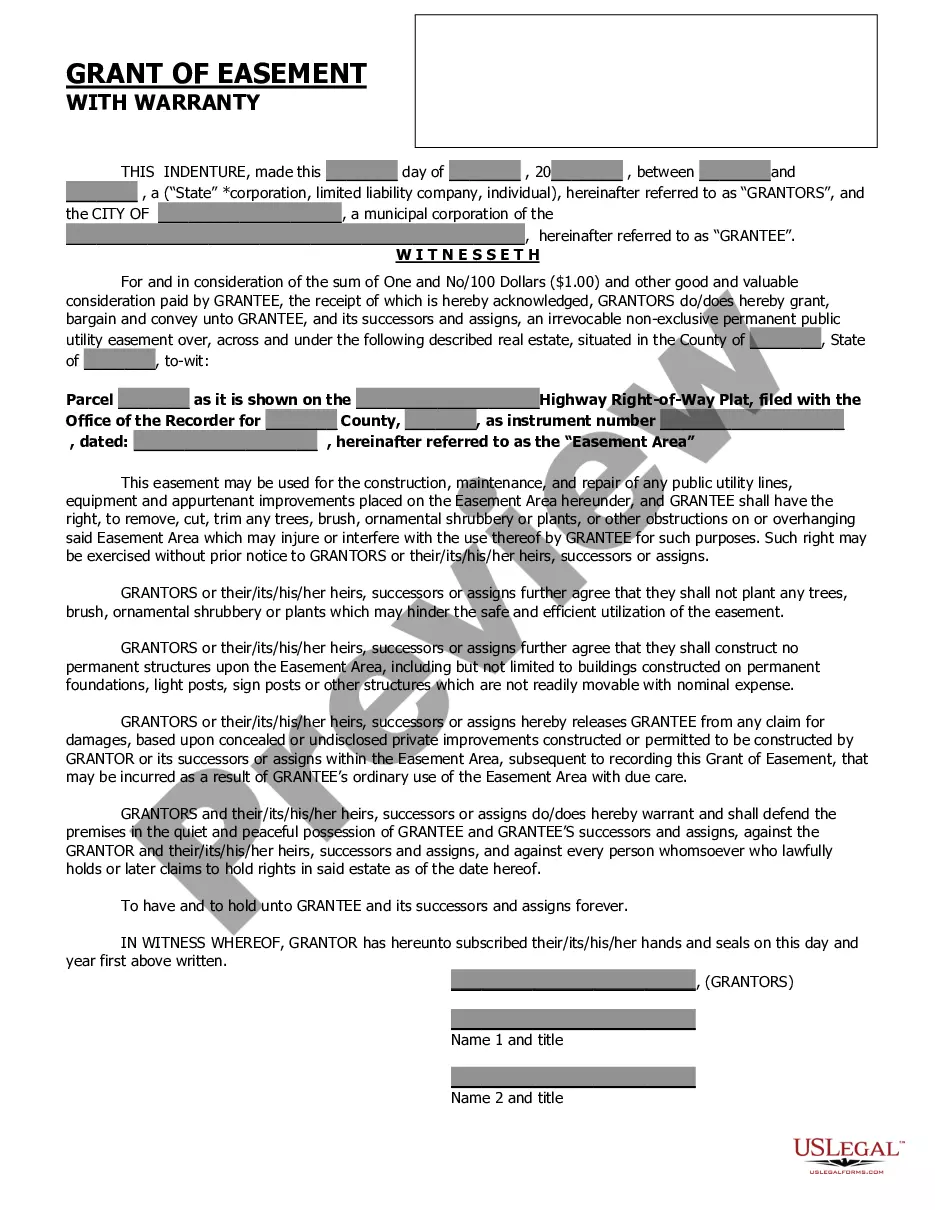
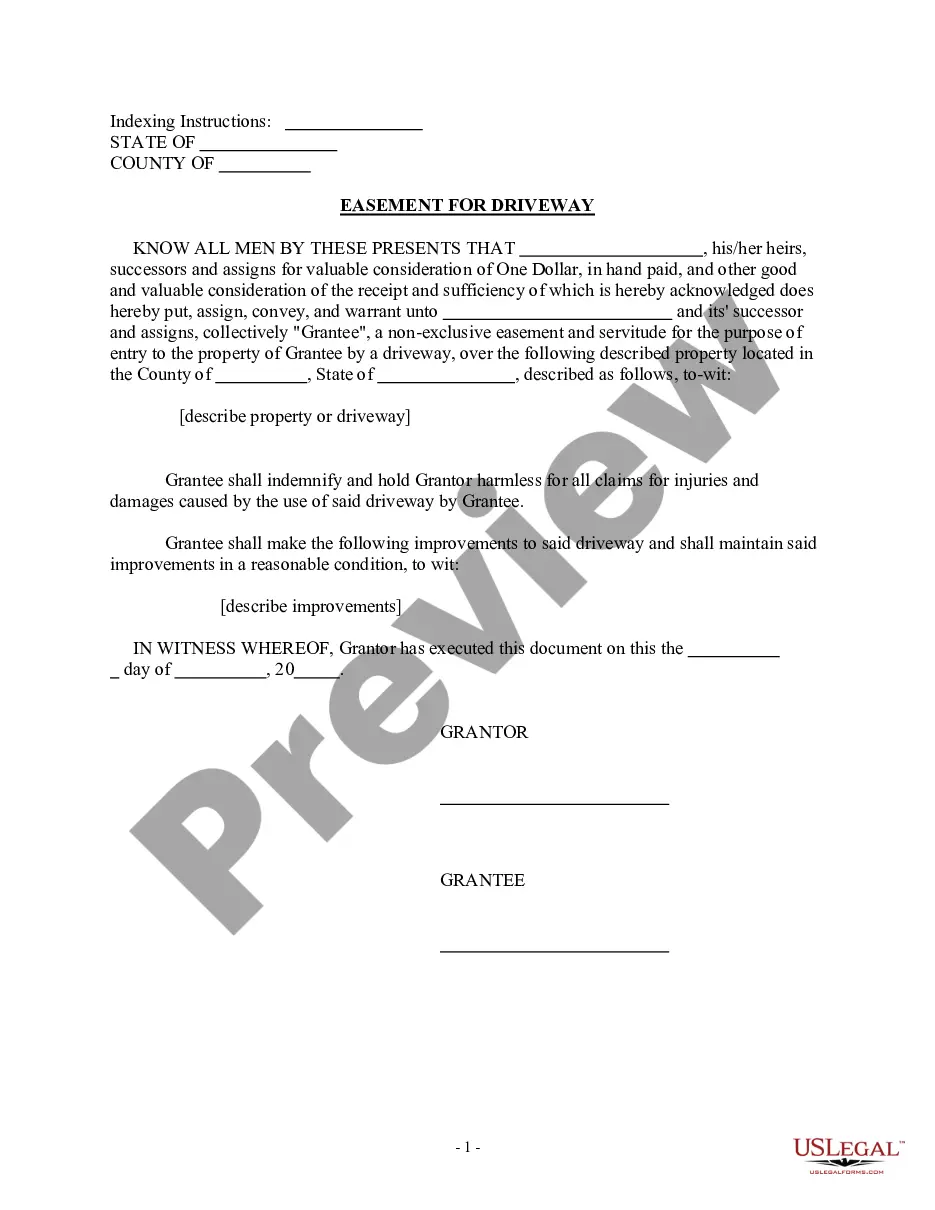
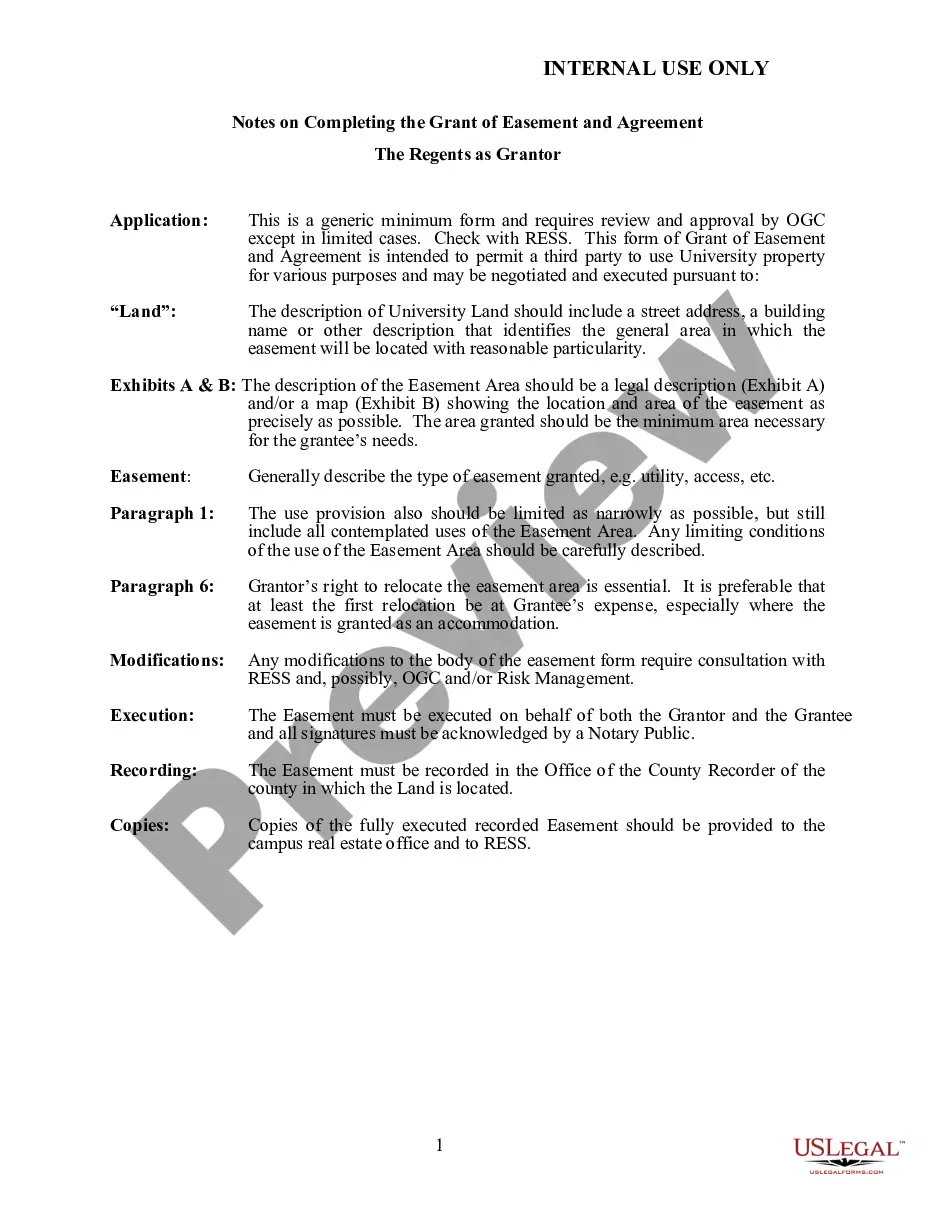
The Grant of Driveway Easement is a legal document that allows an easement holder to use a property owner's driveway for accessing their own land. This form is specifically designed to create a clear, legally binding agreement between property owners, distinguishing it from general property agreements or permits. By formalizing the easement, both parties protect their rights and clarify usage terms, making it an essential tool for property management and planning.
Key parts of this document
- Identification of parties: Names and addresses of the Servient Estate owner and Dominant Estate owner.
- Property descriptions: Detailed descriptions of both properties involved in the easement.
- Easement grant: Clear articulation of the rights granted for access, ingress, and egress across the driveway.
- Covenant to run with the land: Provisions ensuring the easement's benefits and burdens attach to the property.
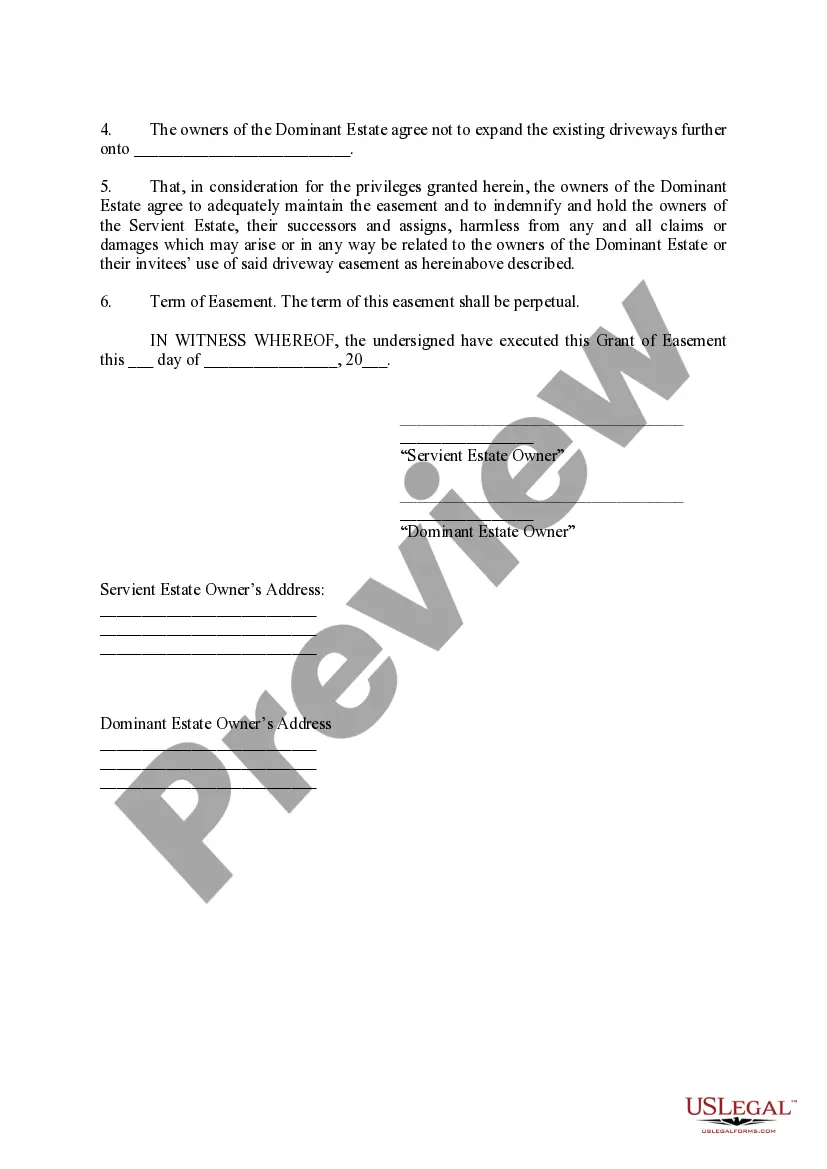
- Indemnification clause: Terms outlining maintenance responsibilities and liability protection.
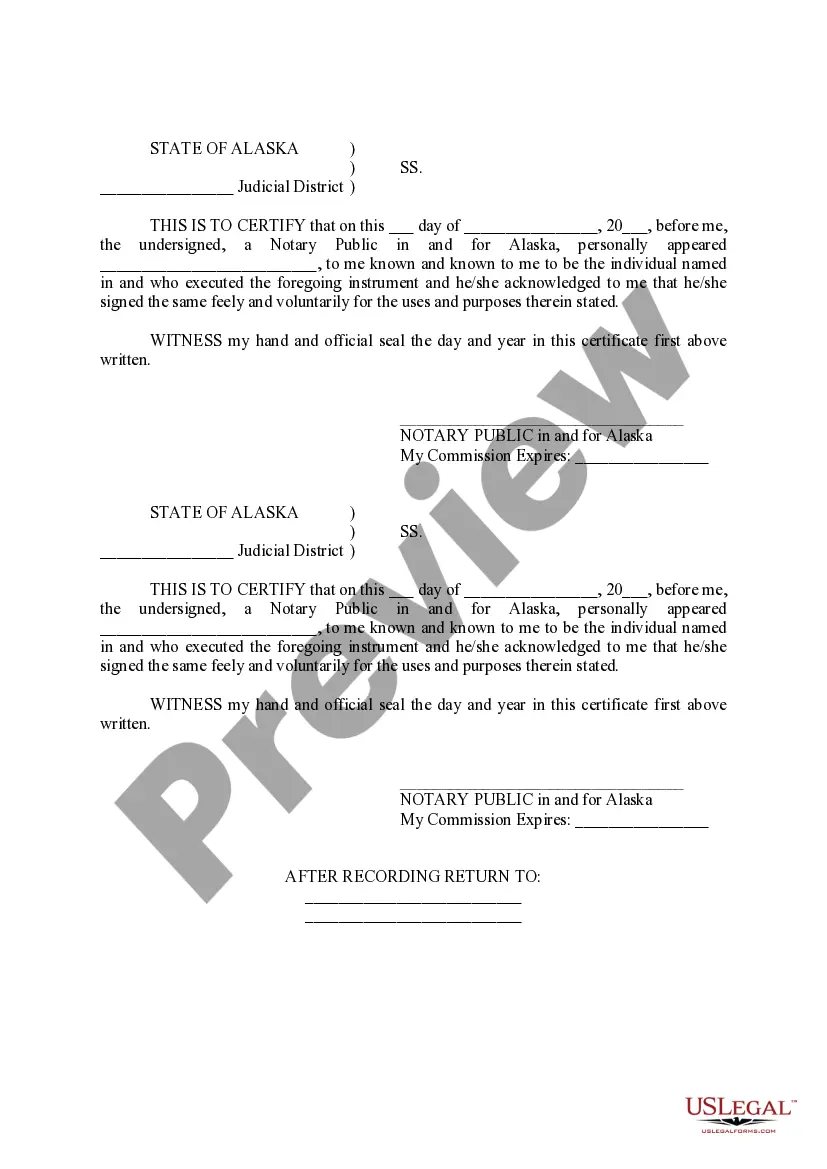
- Notary acknowledgment: Certification to validate the signatures of both parties.
Situations where this form applies
This form is needed in situations where a property owner wants to allow another party to access their property via an existing driveway. Common scenarios include when a landlocked property requires a means of access or when neighbors need to establish clear rights to a shared driveway. It is an essential document for preventing disputes over property access and usage.
Intended users of this form
- Property owners who wish to grant access rights to their driveway.
- Individuals or entities that need to legally use someone else's driveway to reach their property.
- Developers or real estate professionals involved in property transactions where easements may be necessary.
Completing this form step by step
- Identify the parties involved: Fill in the names and addresses of the Servient Estate owner and Dominant Estate owner.
- Specify the properties: Provide detailed descriptions of both the Servient and Dominant Estates, including any relevant designations.
- Enter easement details: Clearly outline the scope of the easement, including rights to access and maintenance obligations.
- Complete payment information: Specify any consideration provided for the easement rights.
- Gather signatures: Ensure all parties sign the document in the presence of a notary public.
Does this form need to be notarized?
Yes, this form must be notarized to be legally valid. Notarization provides an additional layer of authenticity, ensuring that signatures are verified. US Legal Forms offers integrated online notarization through secure video calls, making the process easy and convenient for users.
Get your form ready online
Our built-in tools help you complete, sign, share, and store your documents in one place.
Make edits, fill in missing information, and update formatting in US Legal Forms—just like you would in MS Word.
Download a copy, print it, send it by email, or mail it via USPS—whatever works best for your next step.
Sign and collect signatures with our SignNow integration. Send to multiple recipients, set reminders, and more. Go Premium to unlock E-Sign.
If this form requires notarization, complete it online through a secure video call—no need to meet a notary in person or wait for an appointment.
We protect your documents and personal data by following strict security and privacy standards.

Make edits, fill in missing information, and update formatting in US Legal Forms—just like you would in MS Word.

Download a copy, print it, send it by email, or mail it via USPS—whatever works best for your next step.

Sign and collect signatures with our SignNow integration. Send to multiple recipients, set reminders, and more. Go Premium to unlock E-Sign.

If this form requires notarization, complete it online through a secure video call—no need to meet a notary in person or wait for an appointment.

We protect your documents and personal data by following strict security and privacy standards.
Typical mistakes to avoid
- Failing to provide complete property descriptions, which can lead to confusion or disputes.
- Not having the document notarized, which may affect its legal validity.
- Omitting important terms related to maintenance responsibilities and liability.
Benefits of using this form online
- Immediate access to a professionally drafted legal document tailored to your needs.
- Easy editing capabilities allow you to customize details specific to your situation.
- Secure and convenient download saves time compared to traditional legal services.
Looking for another form?

Form popularity
FAQ
The measure and impact (value) of an easement is the loss in value to the remainder property after imposition of the easement. This diminution is comprised of both the easement acquisition and damage (if any) to the remainder.
Basically, the person or party using an easement, known as an easement holder, has a duty to maintain it. Easement holders don't become owners of the land attached to their easements, though, and within limits the actual landowners retain most rights over it.
Easement holders have the right to use the land to their enjoyment as long as it does not place an unreasonable burden on the servient estate. Landowners have the right to make whatever use of the land as long as it doesn't unduly affect the easement.
The party gaining the benefit of the easement is the dominant estate (or dominant tenement), while the party granting the benefit or suffering the burden is the servient estate (or servient tenement). For example, the owner of parcel A holds an easement to use a driveway on parcel B to gain access to A's house.
The Good Relationship. The person with the property often has a working or good relationship with neighbors.The easement is sometimes a necessity because of restrictions of the land the other person owns or is leasing such as a company or organizational situation.
The owner of the land that has the benefit of the right of way (the user) also has no obligation to maintain and repair but is entitled to maintain and repair the way but if he does so, he has to do so at his own cost.
If an authority has an easement registered over your land, they have the right to access the easement to maintain or repair the easement land or their equipment on the land.
When one of the owners of either the dominant estate which an easement benefits or the servient estate over which the easement runs becomes the owner of both properties, then there is a unity of the two titles, and since an owner does not need an easement over the owner's own property, according to Florida law, the