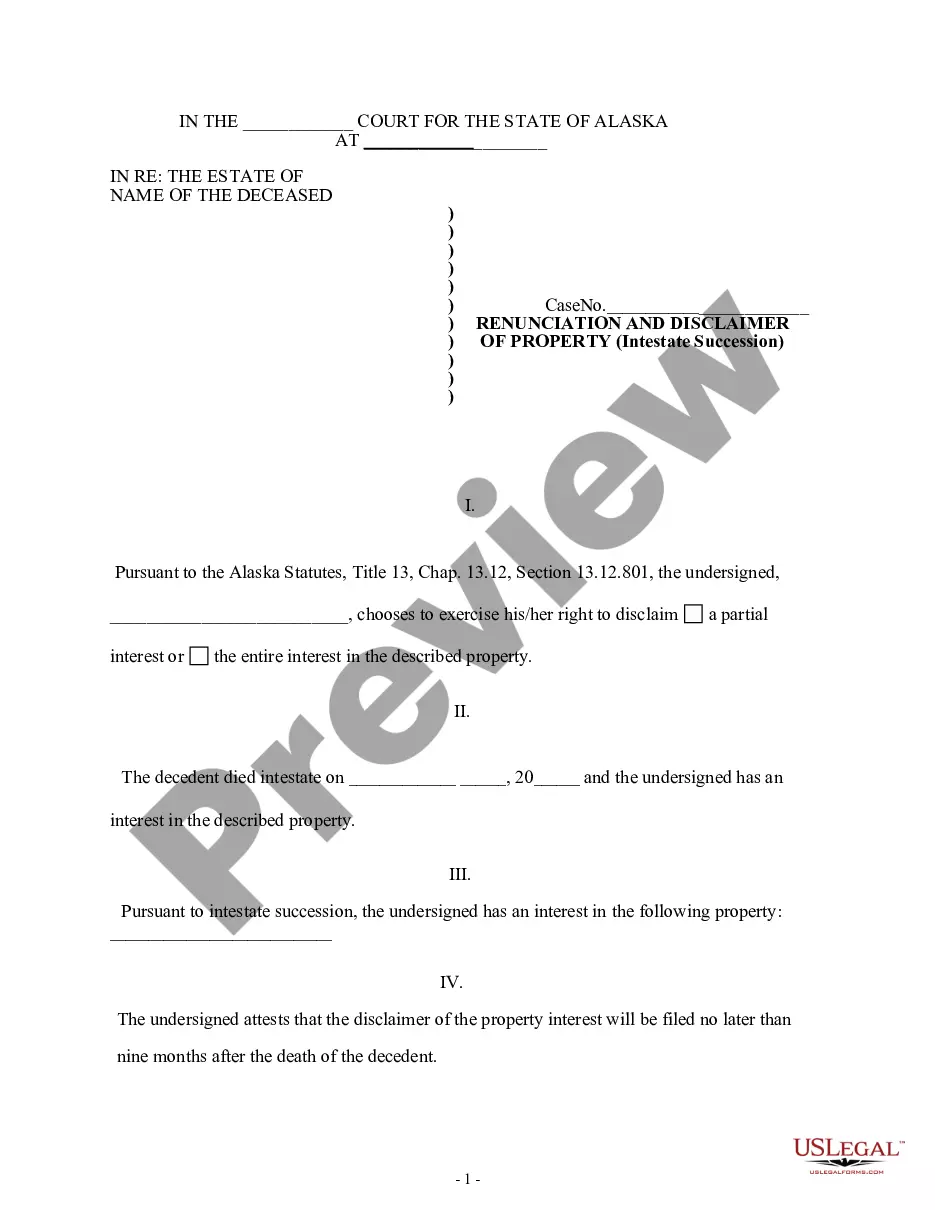
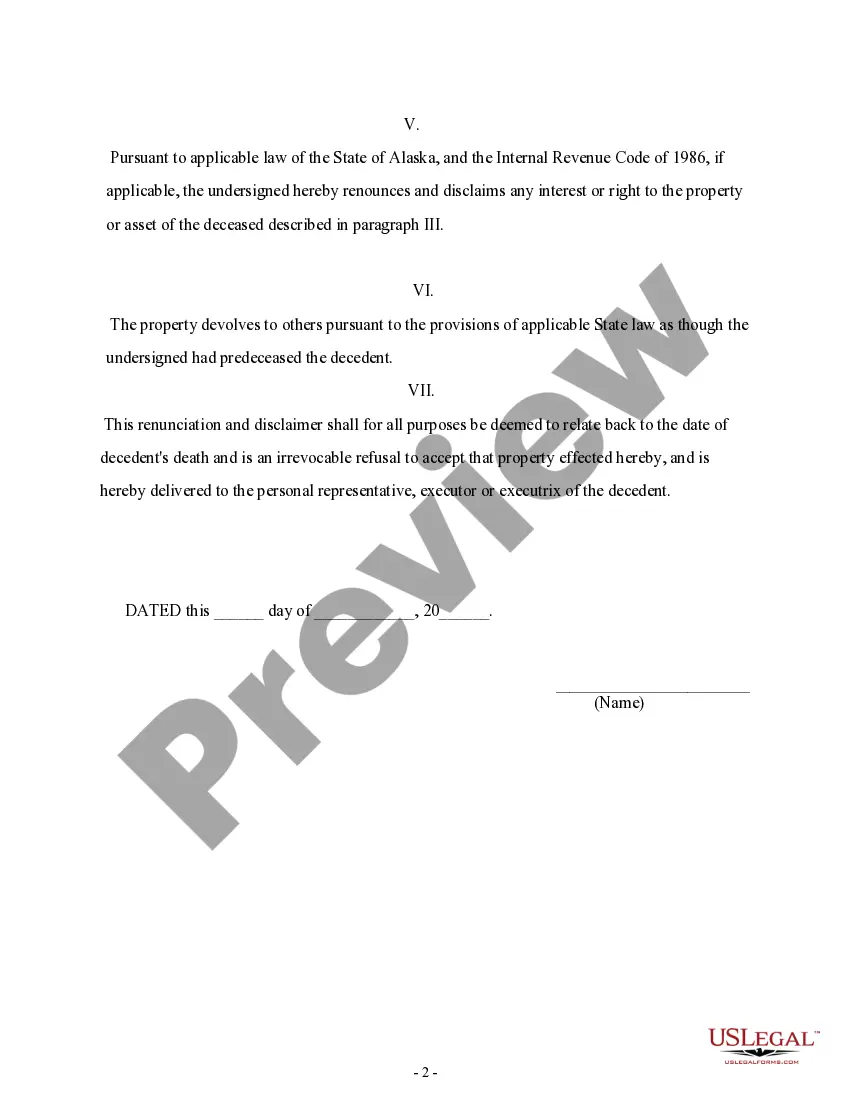
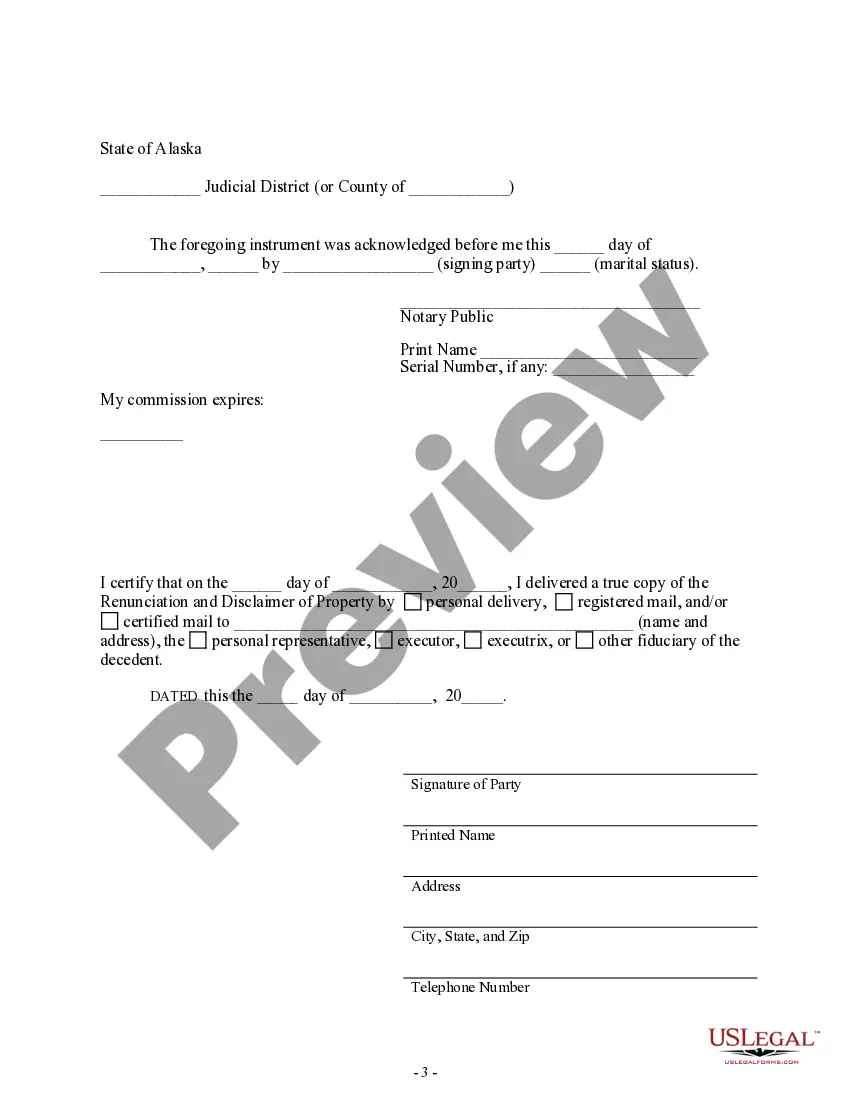
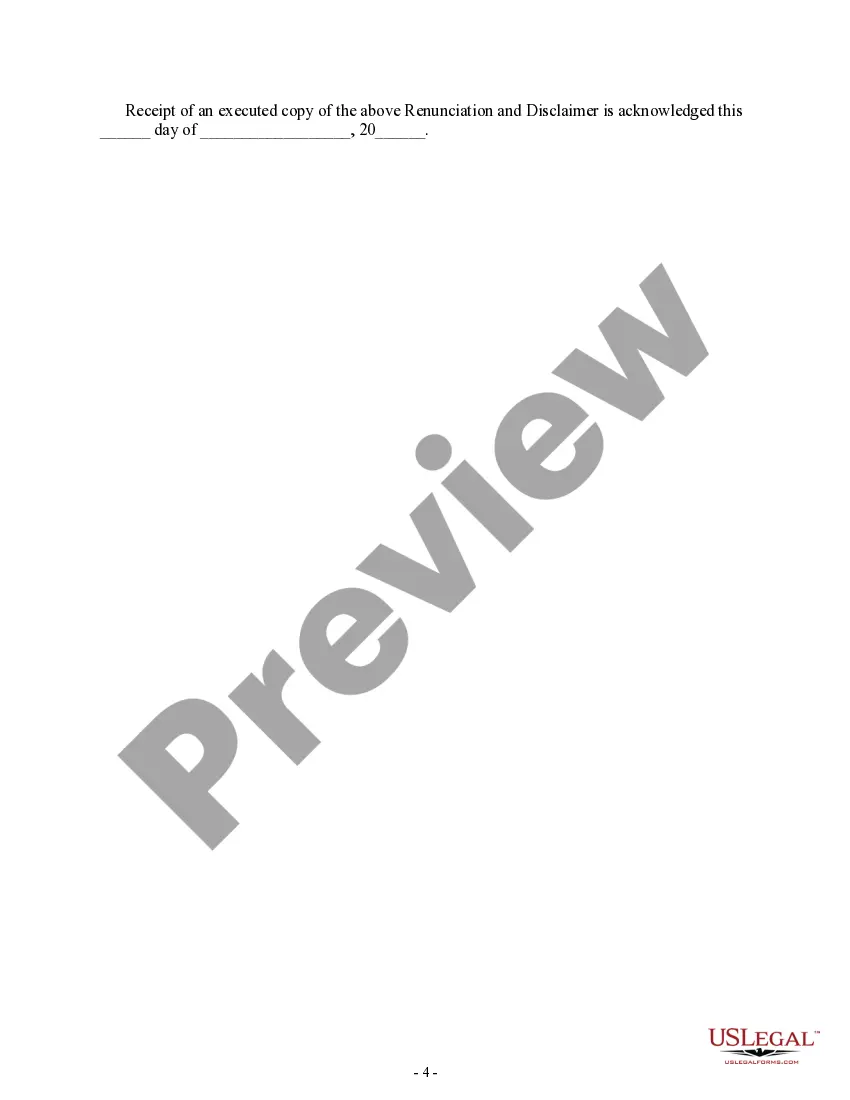
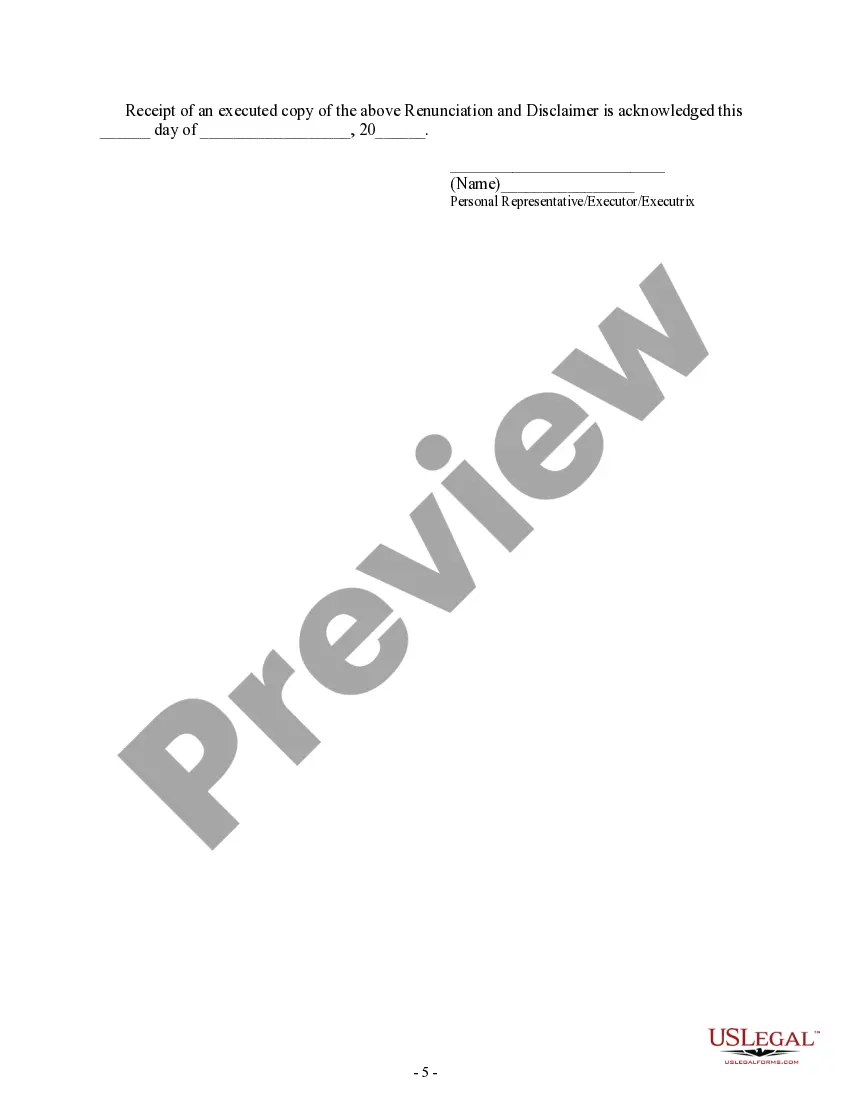
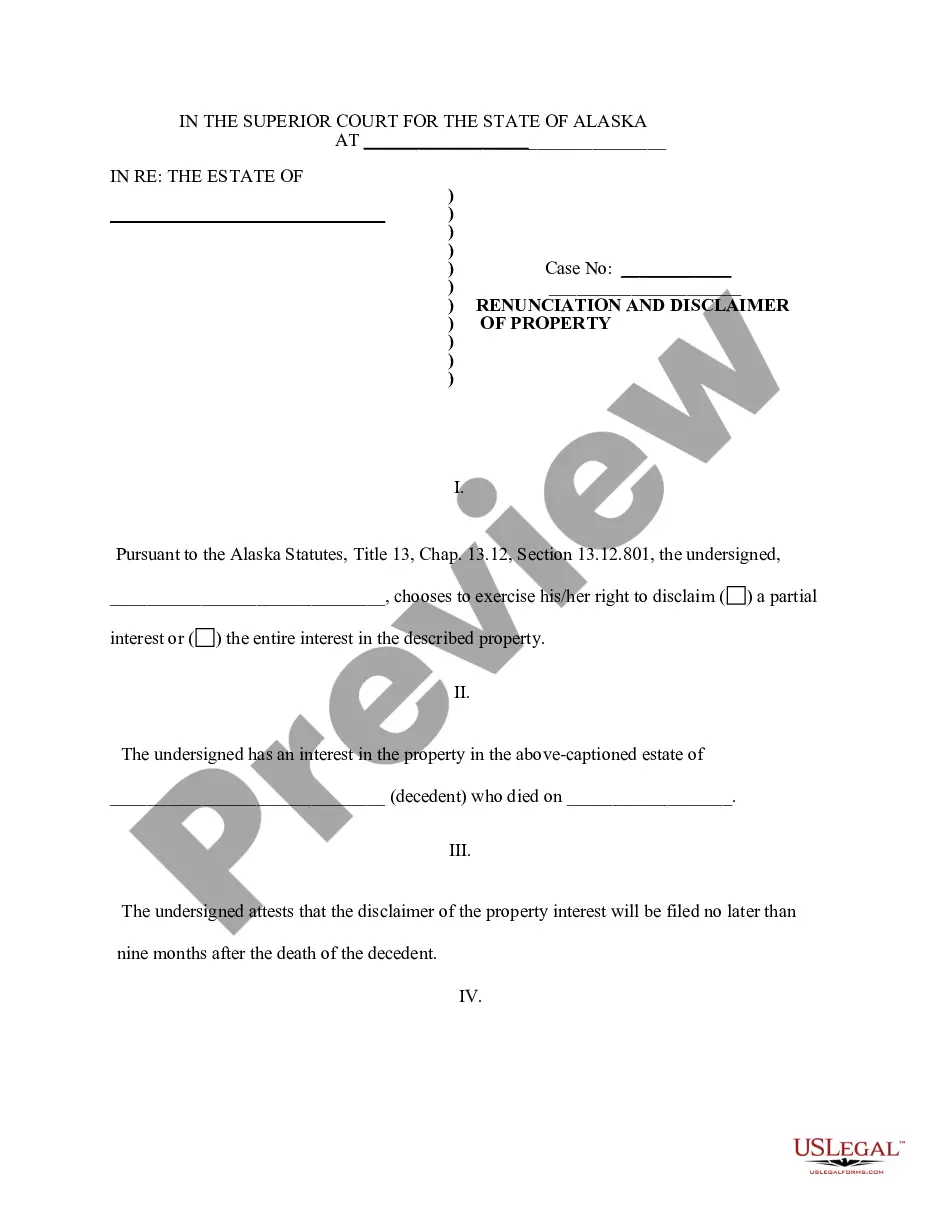
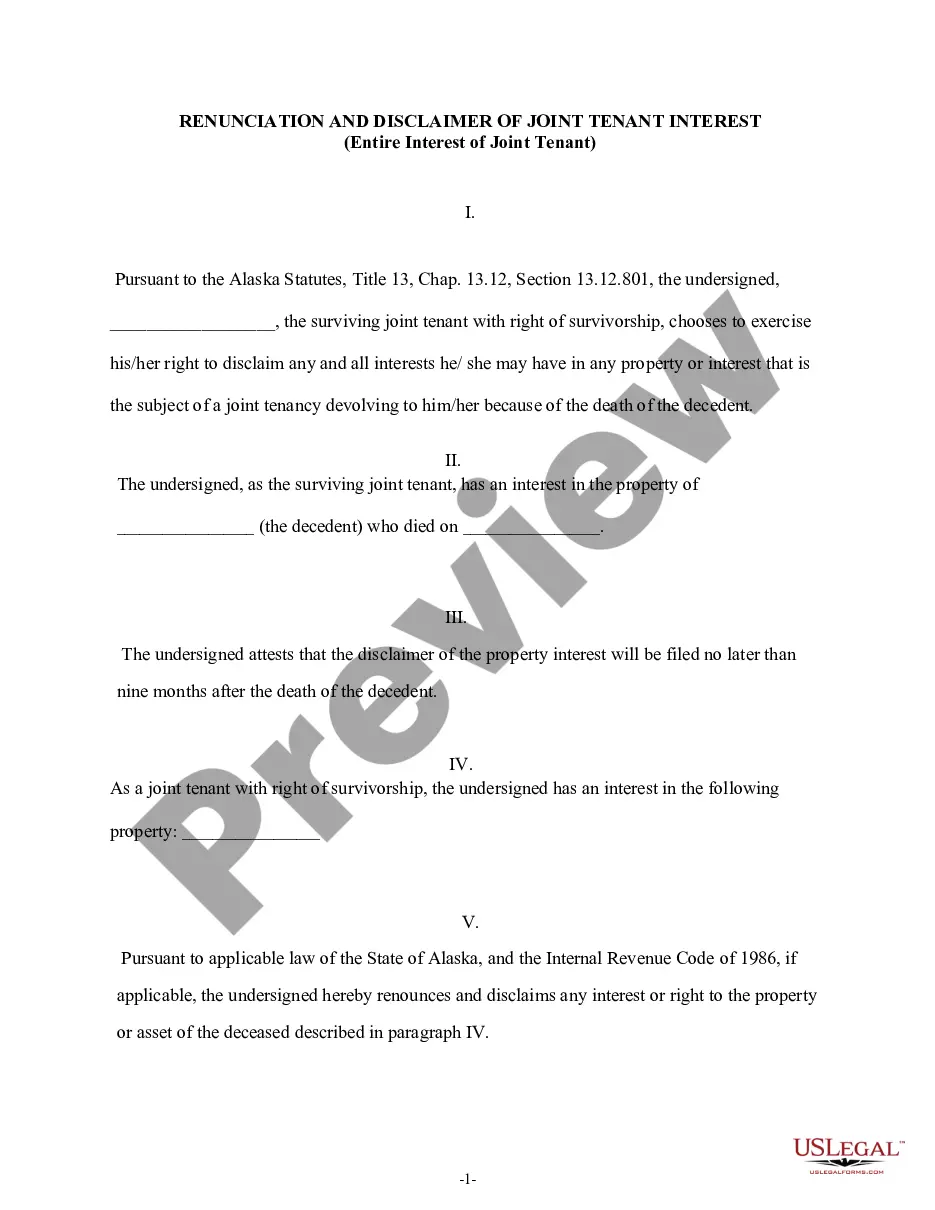
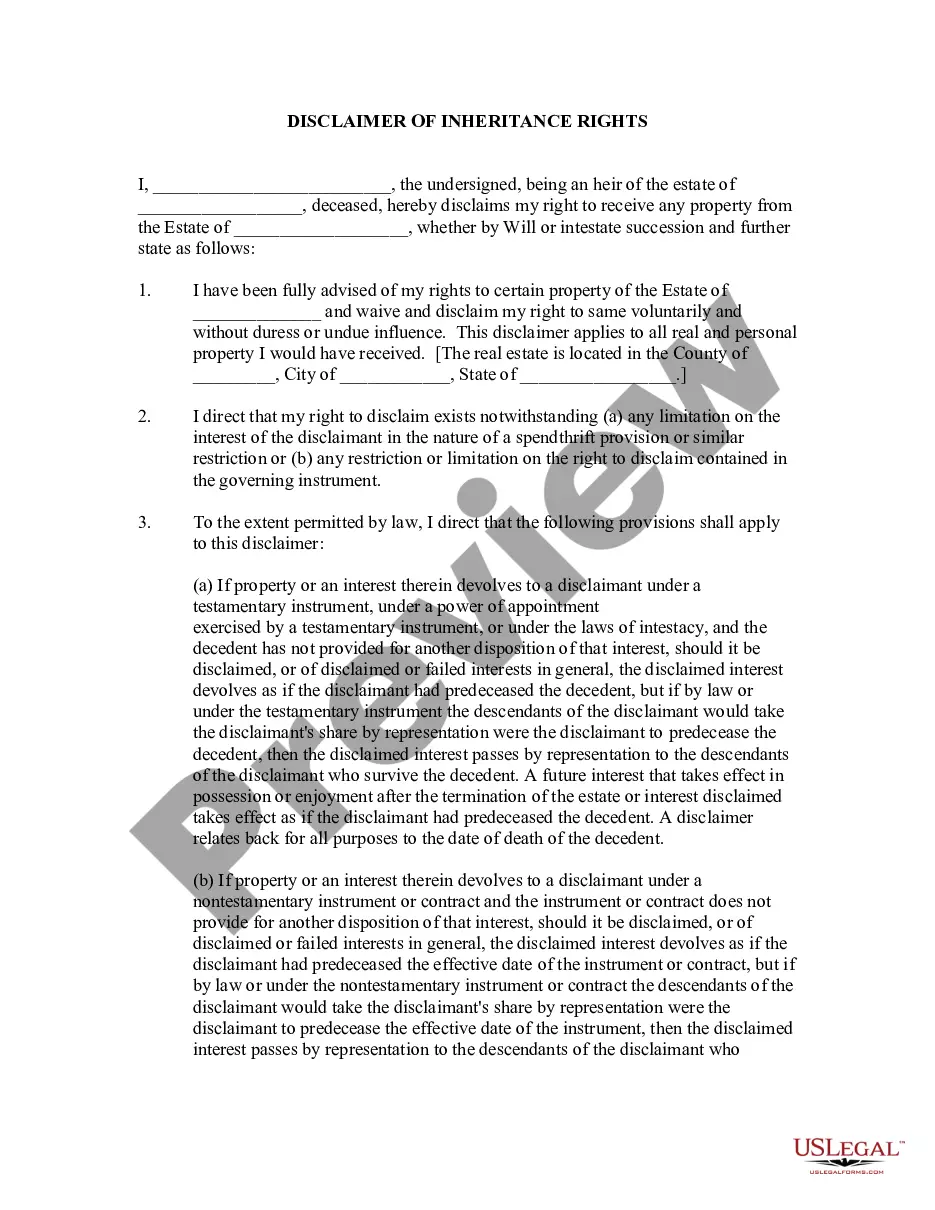
This Renunciation and Disclaimer of Property is received by the beneficiary through intestate succession. The decedent died intestate and the beneficiary is entitled to claim the property described in the form. However, the beneficiary has chosen to exercise his/her option to disclaim the entire interest or a portion of the interest in the described property. The beneficiary has the right to disclaim the property based upon the Alaska Statutes, Title 13, Chap. 13.12, Section 13.12.801. The form also contains a state specific acknowledgment and a certificate to verify delivery.
Alaska Renunciation and Disclaimer of Property received by Intestate Succession
State:
Alaska
Control #:
AK-02-03
Format:
Word;
Rich Text
Instant download
Description
Free preview

How to fill out Alaska Renunciation And Disclaimer Of Property Received By Intestate Succession?
Employing Alaska Renunciation and Disclaimer of Property acquired through Intestate Succession instances developed by expert lawyers allows you to avert complications when completing paperwork.
Simply download the example from our website, complete it, and ask an attorney to review it.
By doing so, you can save significantly more time and money compared to having a legal expert draft a document on your behalf.
After you have completed all the steps mentioned above, you will be able to finalize, print, and sign the Alaska Renunciation and Disclaimer of Property acquired through Intestate Succession example. Remember to verify all entered information for accuracy before submitting or mailing it. Minimize your document preparation time with US Legal Forms!
- If you possess a US Legal Forms subscription, just Log In to your profile and return to the sample page.
- Locate the Download button next to the templates you are reviewing.
- Once you download a template, you will find all of your stored samples in the My documents section.
- If you do not have a subscription, that's not an issue.
- Just follow the instructions below to register for an account online, obtain, and complete your Alaska Renunciation and Disclaimer of Property received by Intestate Succession template.
- Ensure you are downloading the correct state-specific document.
Form popularity
FAQ
Disclaim, in a legal sense, refers to the renunciation of an interest in, or an acceptance of, inherited assets, such as property, by way of a legal instrument. A person disclaiming an interest, right, or obligation is known as a disclaimant.
Disclaimer may be revoked if procured by undue influence The disclaimed property passed to the disclaimant's nephew who was the contingent beneficiary of the will and the executor. The disclaimant then filed a document with the court purporting to revoke the disclaimer. The nephew objected and won summary judgment.
Disclaimer of interest, in the law of inheritance, wills and trusts, is a term that describes an attempt by a person to renounce their legal right to benefit from an inheritance (either under a will or through intestacy) or through a trust. A disclaimer of interest is irrevocable.
A "Disclaimer Will", sometimes referred to as a "Disclaimer Trust", is a flexible estate planning tool that can be implemented to benefit married couples whose combined estates are approaching or exceed the lifetime exemption amount for federal estate tax, resulting in substantial tax savings to the estate of the
A qualified disclaimer is a part of the U.S. tax code that allows estate assets to pass to a beneficiary without being subject to income tax. Legally, the disclaimer portrays the transfer of assets as if the intended beneficiary never actually received them.