Alaska Commercial Building or Space Lease

Understanding this form
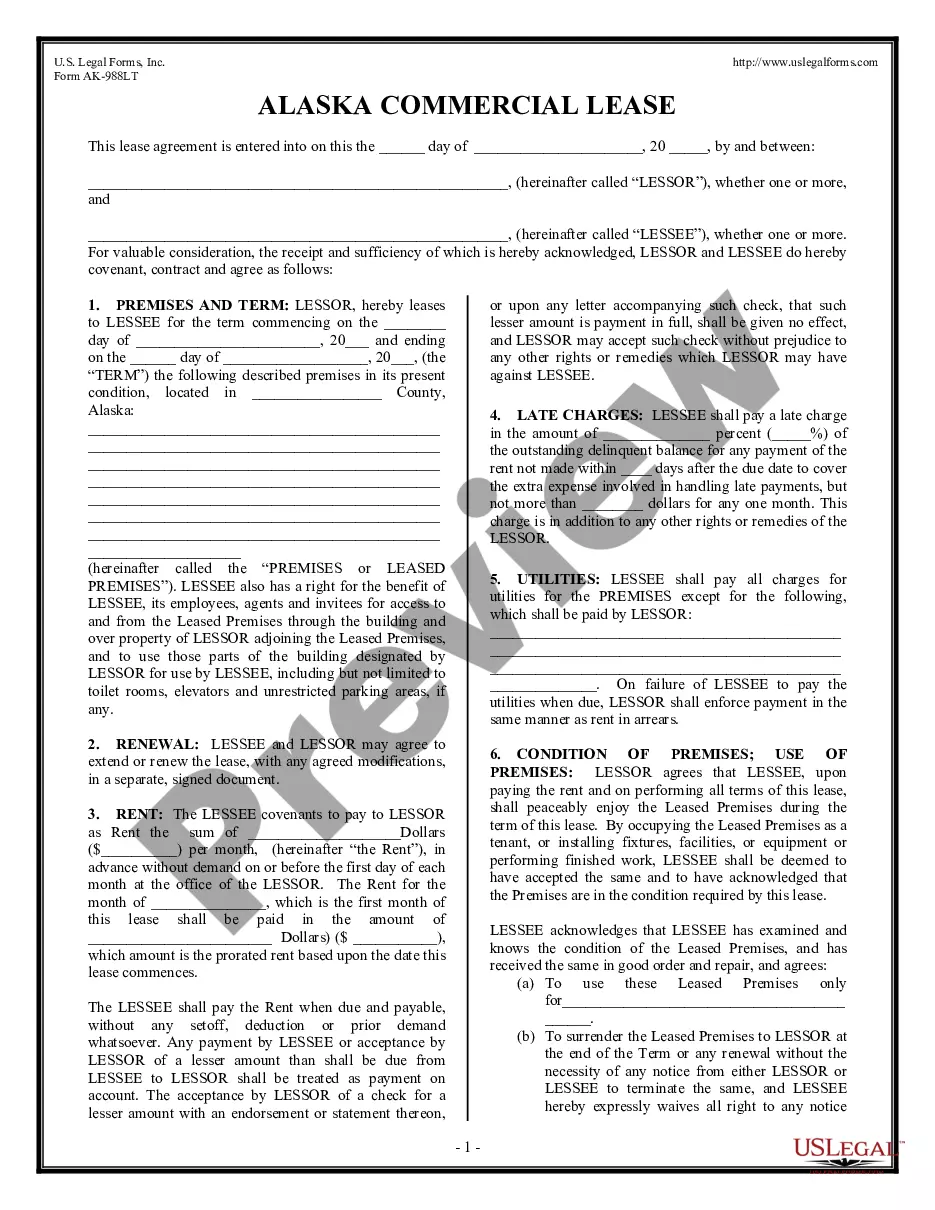
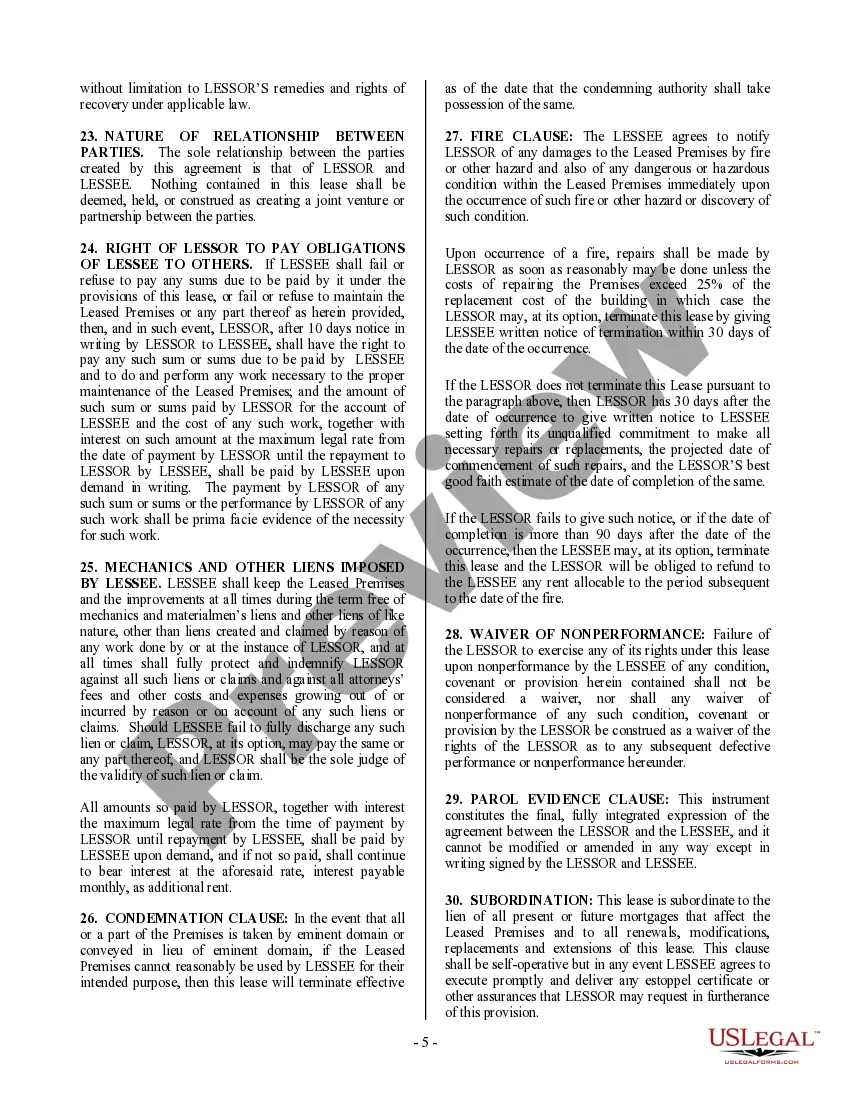
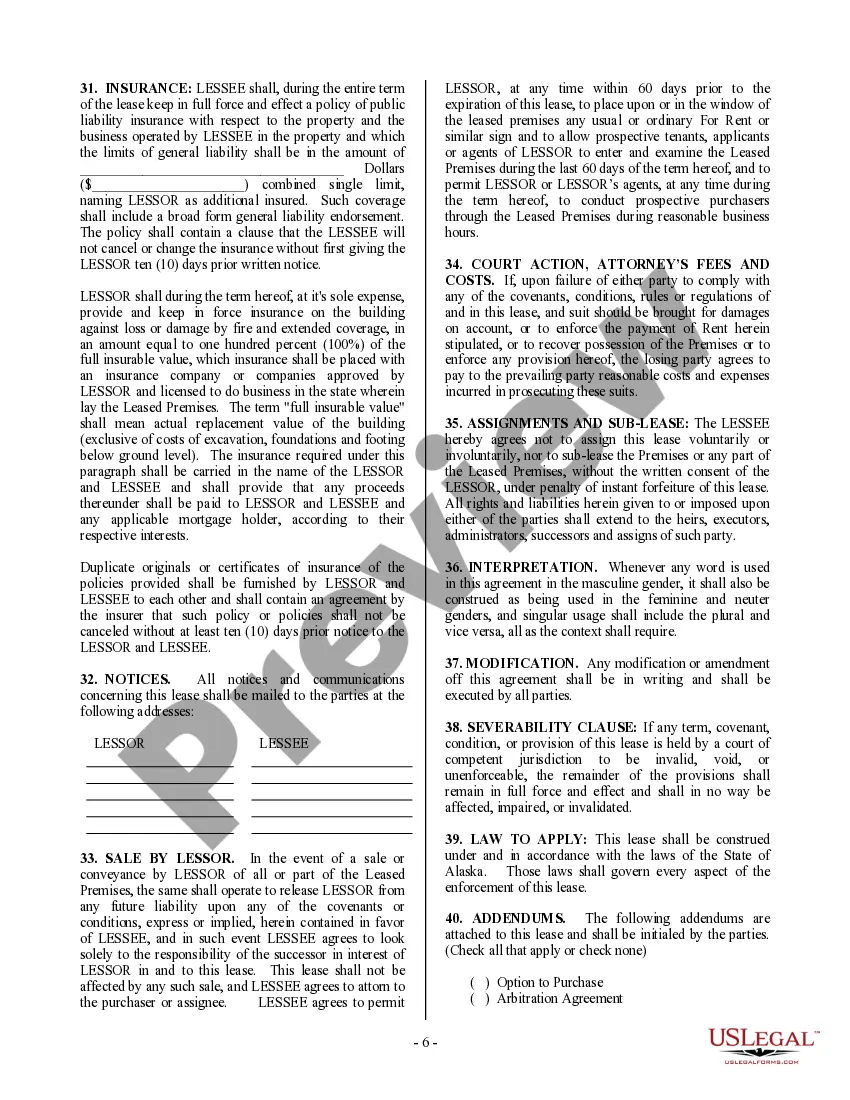
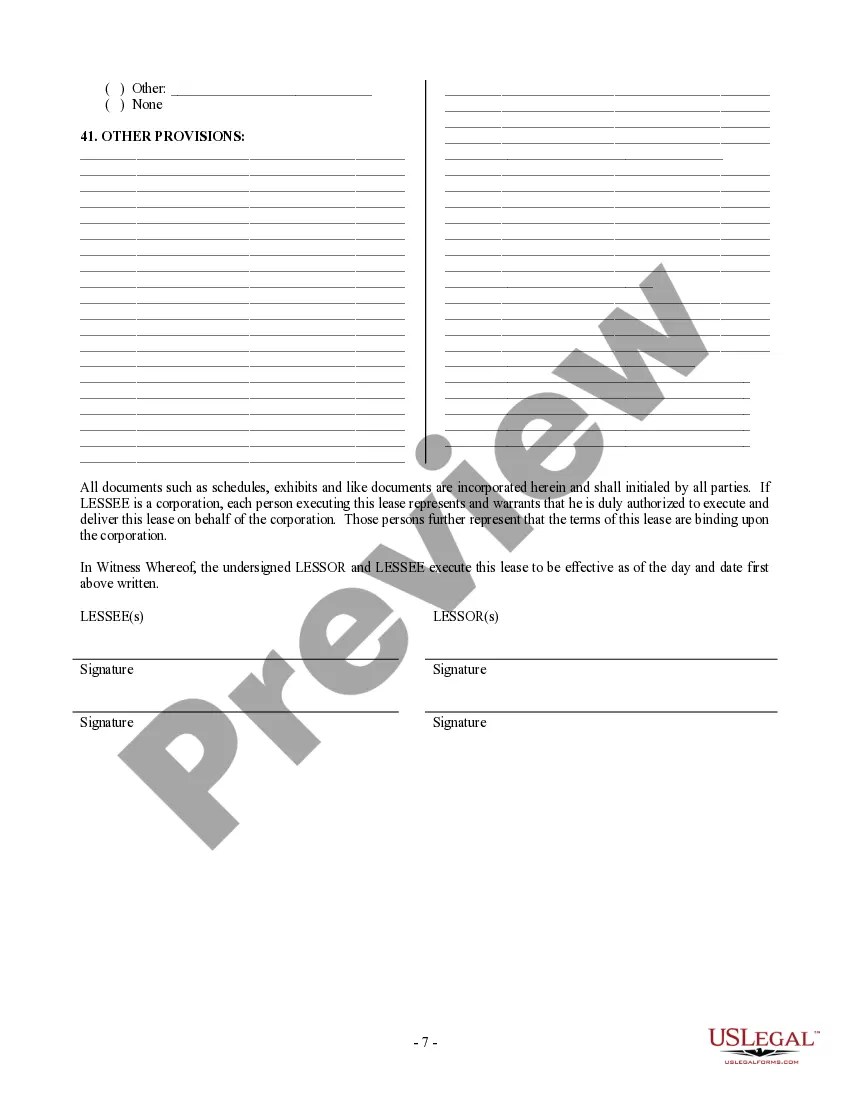
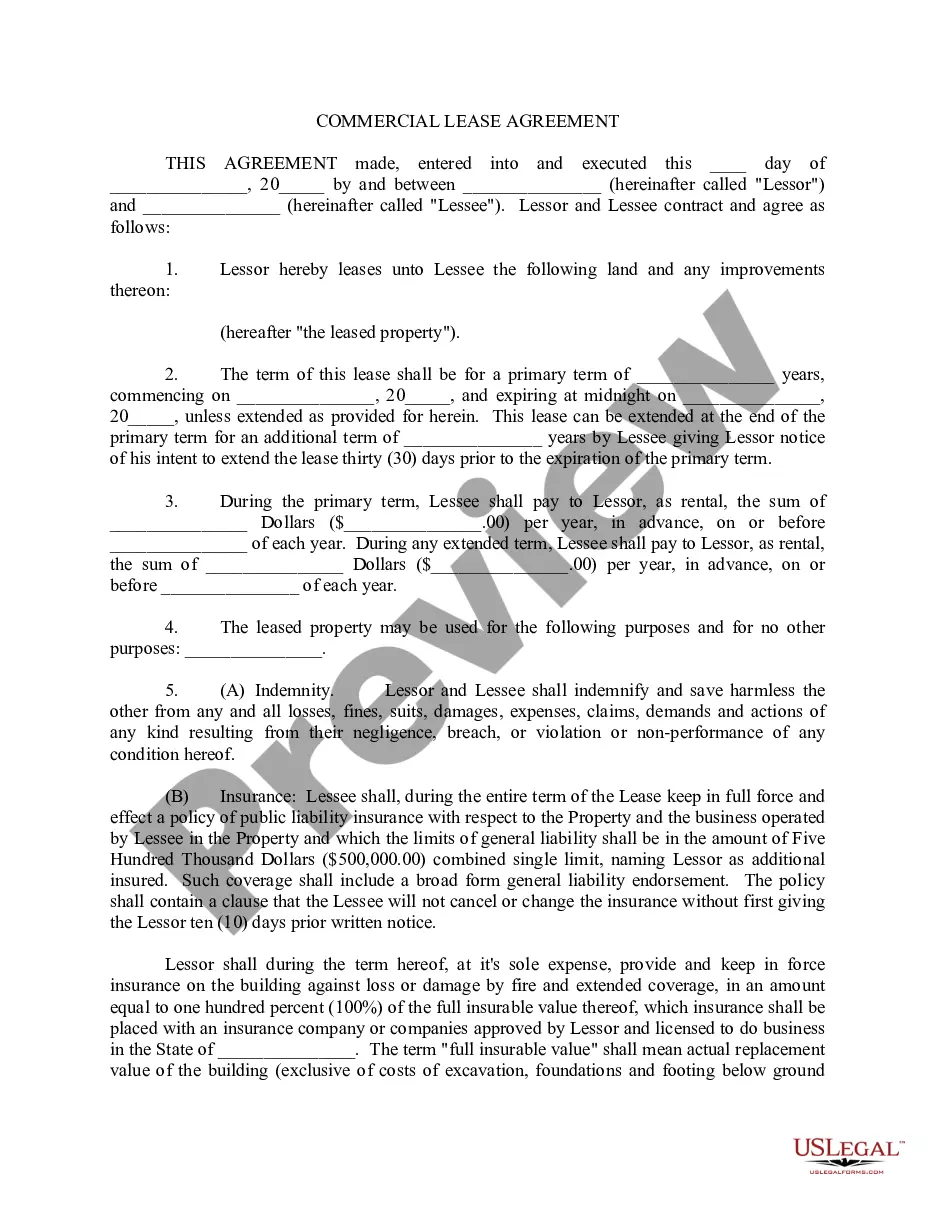
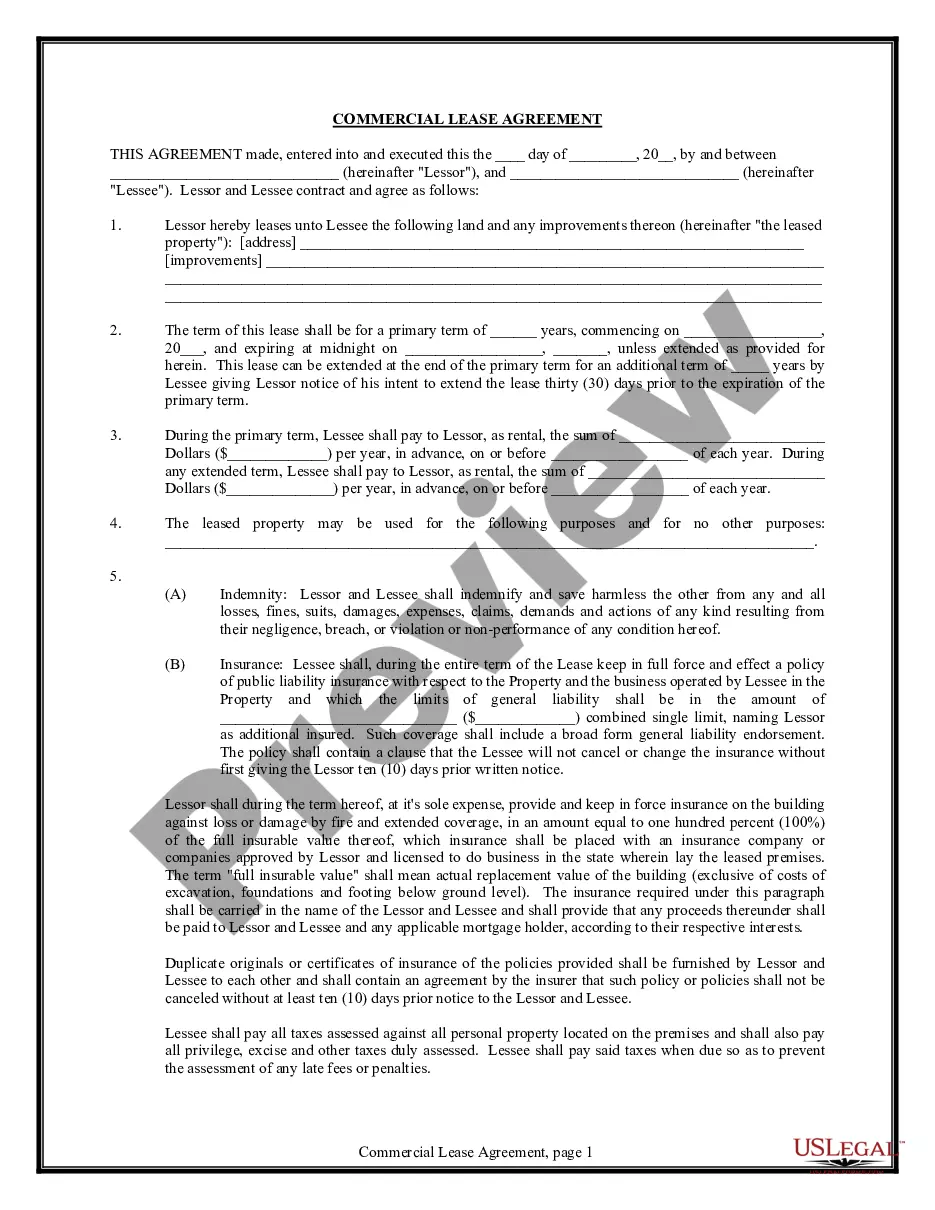
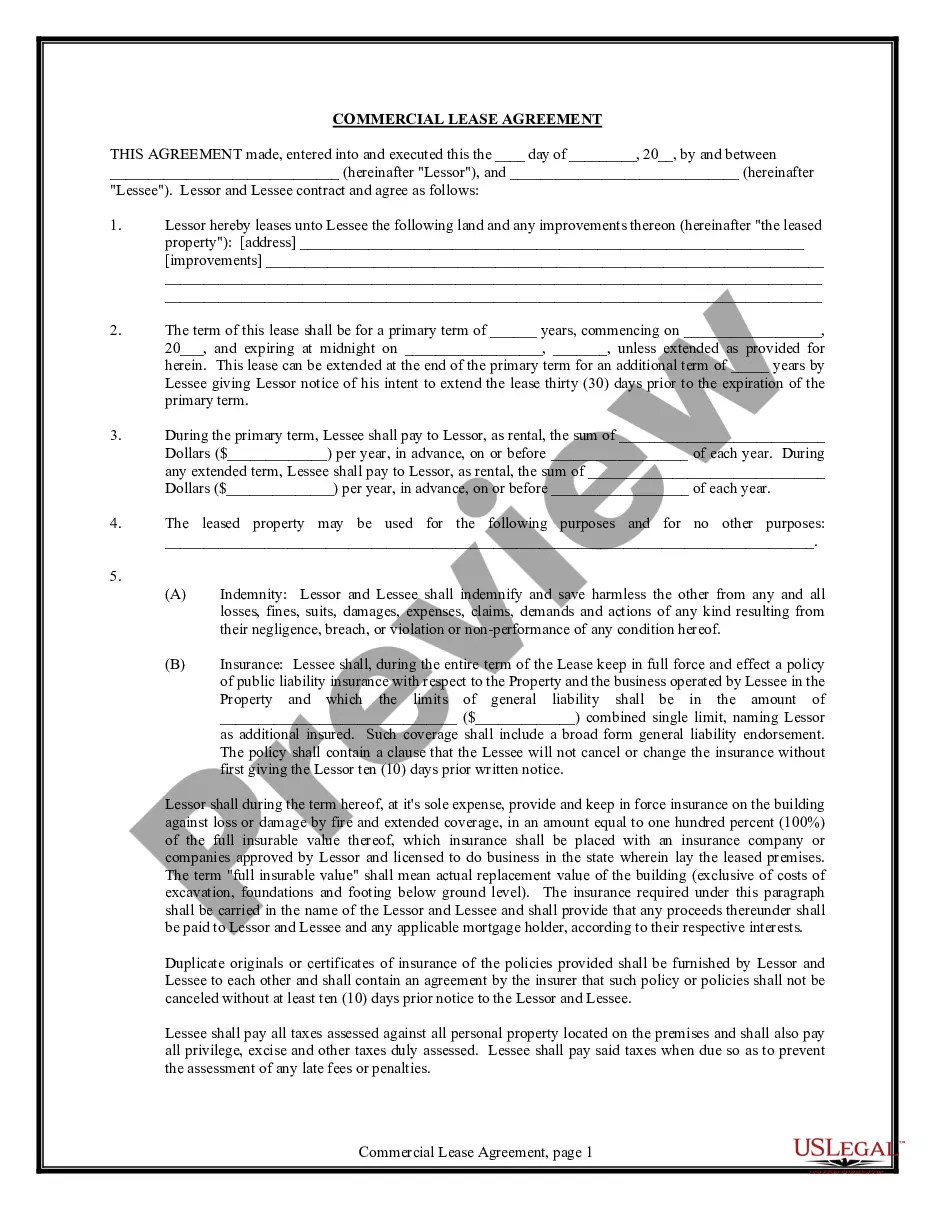
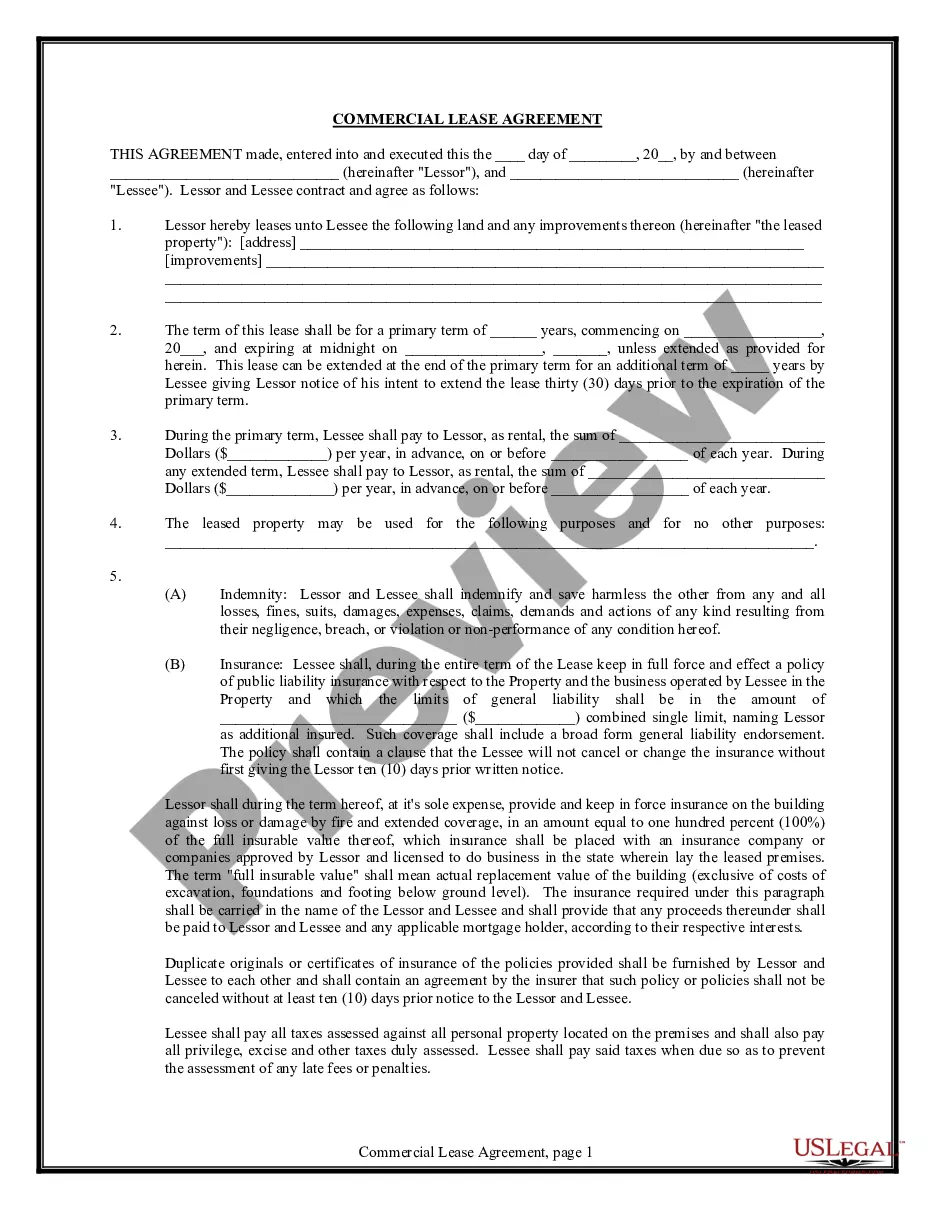
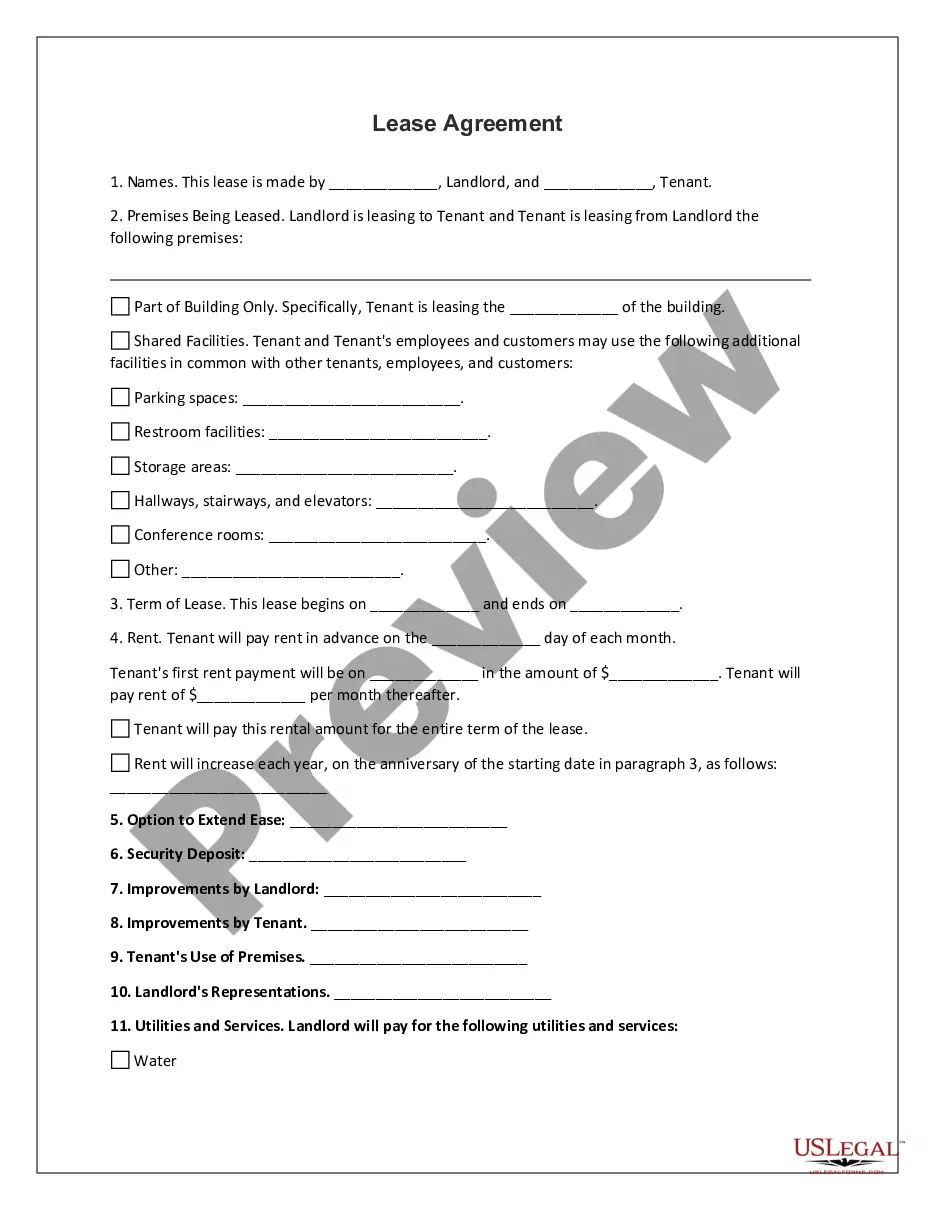
The Commercial Building or Space Lease is a legally binding document used to establish the terms of leasing a commercial property in Alaska. This form outlines specific details pertaining to rent payments, lease duration, maintenance responsibilities, and default conditions. It differs from residential leases by focusing on commercial use, ensuring that both parties are clear on their rights and obligations in a business context.
What’s included in this form
- Parties: Identifies the lessor (property owner) and lessee (tenant).
- Premises Description: Specifies the location and condition of the leased property.
- Rent: Outlines the amount due and payment schedule.
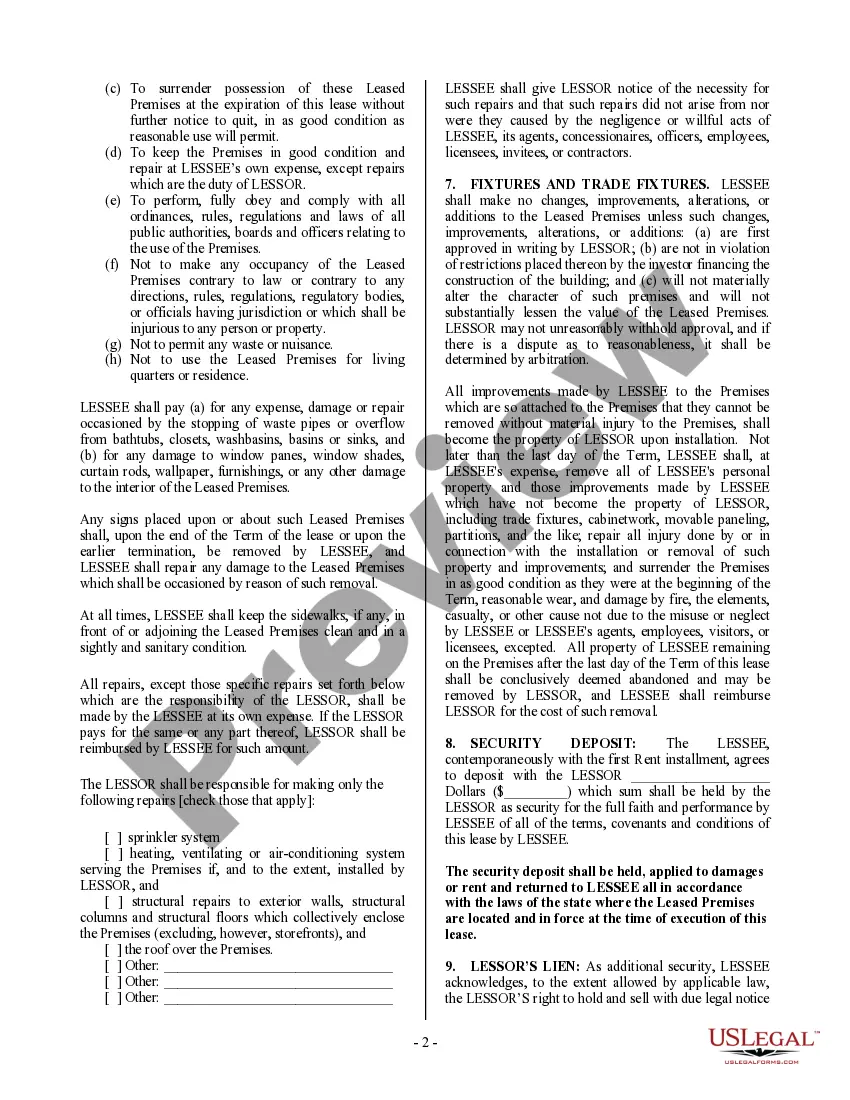
- Utilities: States which party is responsible for utility payments.
- Conditions of Use: Details permitted uses and maintenance obligations.
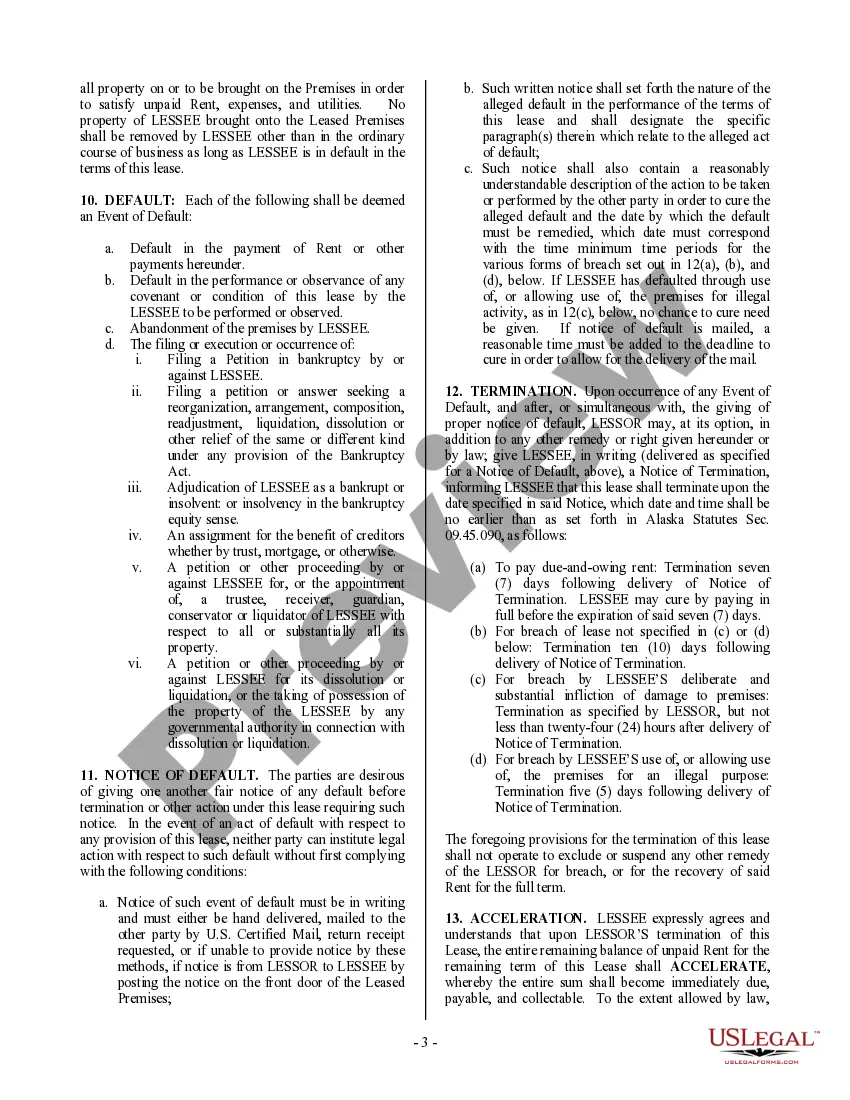
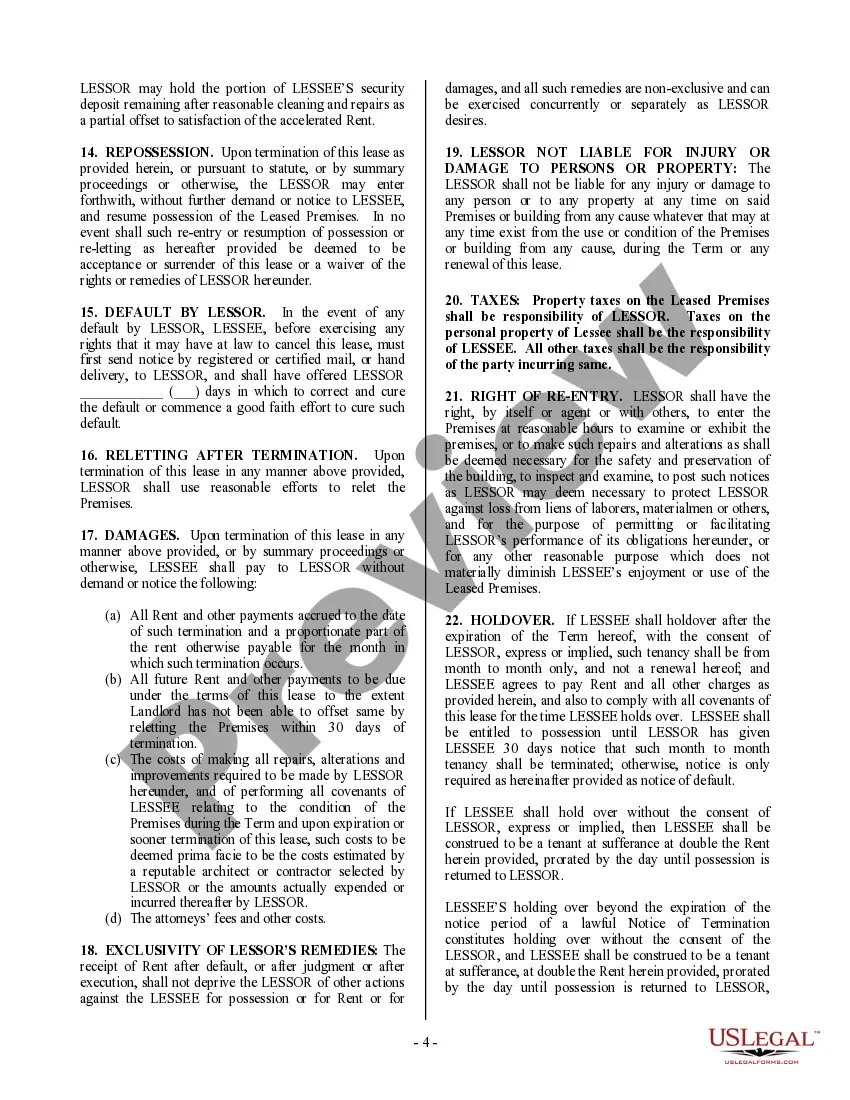
- Default & Termination: Defines default scenarios and termination procedures.
When this form is needed
This form is typically used when a business needs to lease a commercial space in Alaska. Situations may include opening a new storefront, establishing an office, or renting a warehouse. It is essential when both parties need to clarify their responsibilities to avoid disputes during the lease term.
Who this form is for
This form is intended for:
- Business owners seeking to lease a commercial property.
- Landlords who own commercial spaces and wish to lease them to tenants.
- Real estate agents involved in commercial property transactions.
Steps to complete this form
Follow these steps to complete the Commercial Building or Space Lease:
- Identify the parties by filling in the names of the lessor and lessee.
- Describe the leased premises, including its current condition and specific location.
- Specify the lease term by entering start and end dates.
- State the amount of rent due and detail when payments should be made.
- Outline utility responsibilities, clarifying which utilities are covered by the lessor and lessee.
Notarization guidance
This form does not typically require notarization unless specified by local law. However, it is advisable to have both parties sign in the presence of a witness to ensure the validity of the agreement.
Get your form ready online
Our built-in tools help you complete, sign, share, and store your documents in one place.
Make edits, fill in missing information, and update formatting in US Legal Forms—just like you would in MS Word.
Download a copy, print it, send it by email, or mail it via USPS—whatever works best for your next step.
Sign and collect signatures with our SignNow integration. Send to multiple recipients, set reminders, and more. Go Premium to unlock E-Sign.
If this form requires notarization, complete it online through a secure video call—no need to meet a notary in person or wait for an appointment.
We protect your documents and personal data by following strict security and privacy standards.

Make edits, fill in missing information, and update formatting in US Legal Forms—just like you would in MS Word.

Download a copy, print it, send it by email, or mail it via USPS—whatever works best for your next step.

Sign and collect signatures with our SignNow integration. Send to multiple recipients, set reminders, and more. Go Premium to unlock E-Sign.

If this form requires notarization, complete it online through a secure video call—no need to meet a notary in person or wait for an appointment.

We protect your documents and personal data by following strict security and privacy standards.
Typical mistakes to avoid
- Failing to specify the rent payment schedule can lead to confusion.
- Not detailing maintenance responsibilities may cause disputes later.
- Overlooking the need for a clear description of the premises, leading to misunderstandings about what is included in the lease.
- Neglecting to include provisions for renewal or termination of the lease can create future complications.
Why complete this form online
- Convenience: The form is available for immediate download, allowing you to start the leasing process quickly.
- Editability: You can customize the lease to fit the specific needs of both parties.
- Reliability: The form is drafted by licensed attorneys to ensure it meets all legal standards.
Legal use & context
- The lease must comply with Alaska state laws governing commercial property rentals.
- Both parties should be aware of their rights and obligations as outlined in the lease.
- Enforceability depends on clear terms and mutual agreement to the lease provisions.
Key takeaways
- The Commercial Building or Space Lease is essential for formalizing commercial rental agreements in Alaska.
- Clear definitions of terms and responsibilities help prevent disputes between landlords and tenants.
- Customizing the lease to fit specific needs ensures it meets the requirements of both parties.
Looking for another form?

Form popularity
FAQ
A typical commercial lease is a 5 and 5, meaning a 5 year lease, with an option to renew for another 5 years. Options usually must be exercised by writing a letter to the landlord some months before the initial lease term expires, expressly exercising the option.
Names of all tenants. Limits on occupancy. Term of the tenancy. Rent. Deposits and fees. Repairs and maintenance. Entry to rental property. Restrictions on tenant illegal activity.
Property address. Monthly rent, generally calculated by square footage. Deposit amount. Purpose for which the space is being rented. Start date for the lease agreement. End date of the rental agreement. Names & signatures of all parties.
To calculate the value of a commercial property using the Gross Rent Multiplier approach to valuation, simply multiply the Gross Rent Multiplier (GRM) by the gross rents of the property. To calculate the Gross Rent Multiplier, divide the selling price or value of a property by the subject's property's gross rents.
To calculate the value of a commercial property using the Gross Rent Multiplier approach to valuation, simply multiply the Gross Rent Multiplier (GRM) by the gross rents of the property. To calculate the Gross Rent Multiplier, divide the selling price or value of a property by the subject's property's gross rents.
OFFICE LEASES This form is used to lease commercial property where there are more than one tenant/s occupying a building and they share a common area (landscape areas, parking lots, ingress/egress and loading areas) outside the building and a common area (hallways, restrooms and lobbies) inside the building.
The amount of Rent paid for the occupancy and use of real property. Typically stated on a per square foot per month or per year basis.
The Introduction. The beginning of the lease agreement should contain the name of the landlord and tenant, as well as a statement of the agreement into which they are entering. Rent. Deposit. Taxes. Property Insurance. Utilities and Amenities. Remodeling and Improvements. Repairs and Maintenance.
The Parties & Personal Guarantees. Lease Term & Renewals. Rent Payments and Expenses. Business Protection Clauses.