Wyoming Quitclaim Deed - Trust as Grantor to Husband and Wife as Grantees
About this form
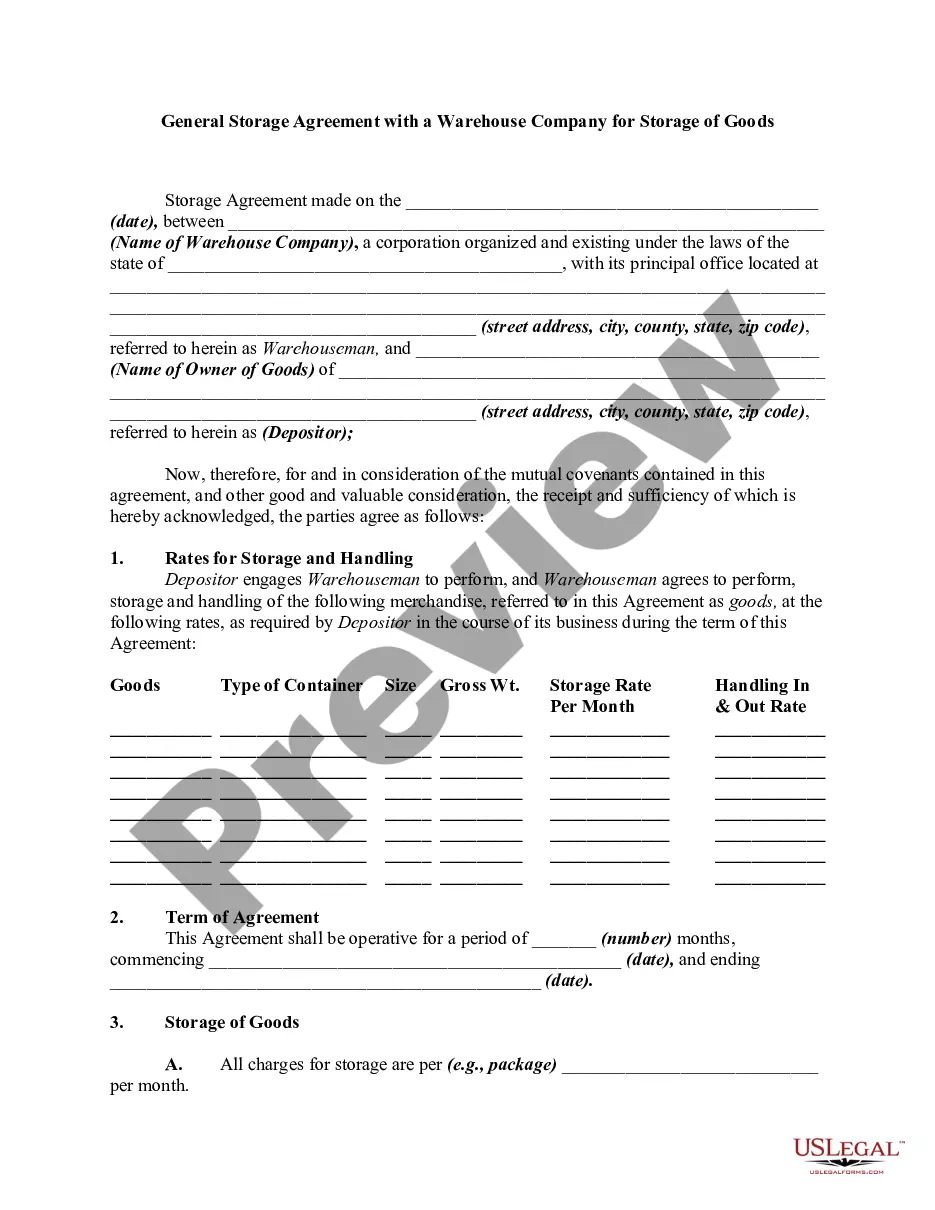
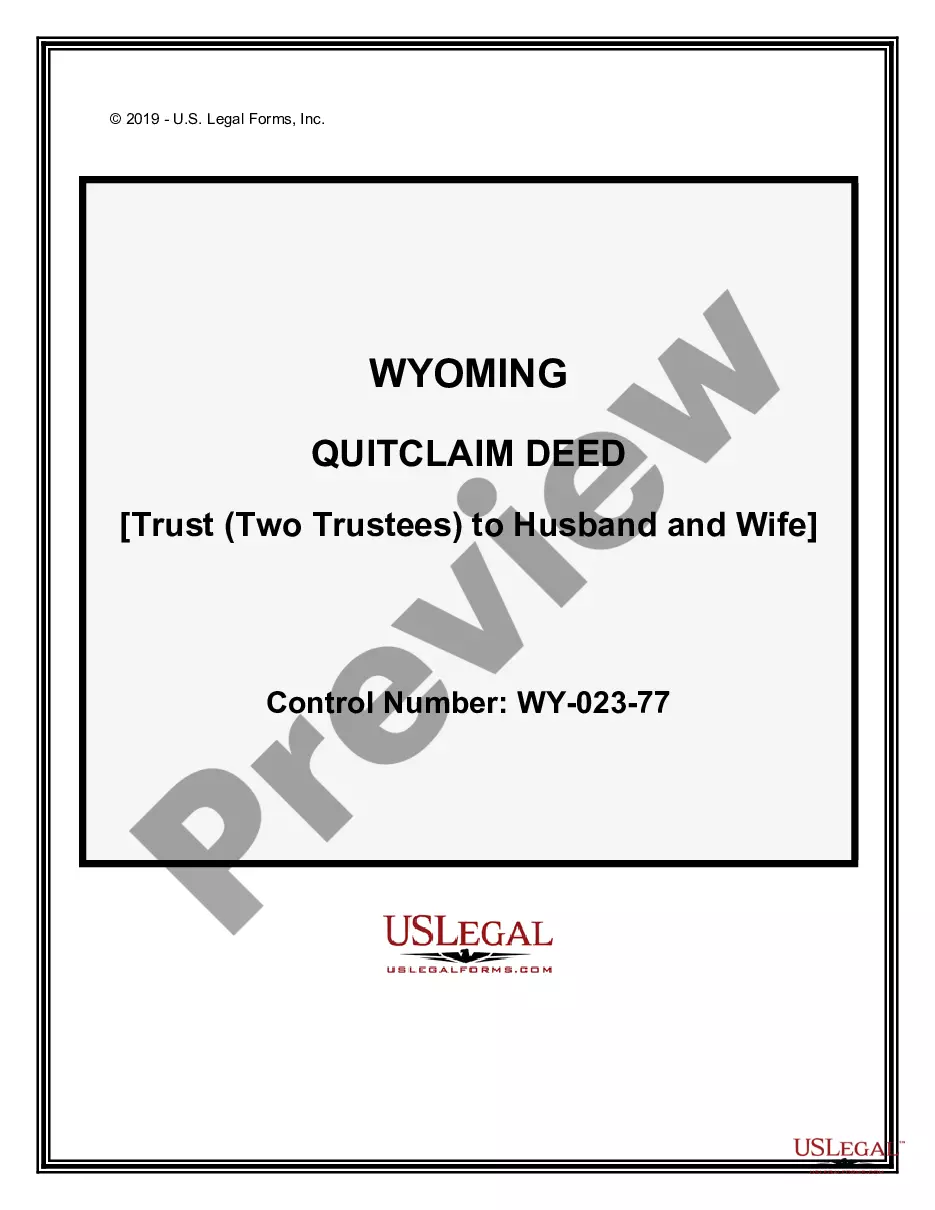
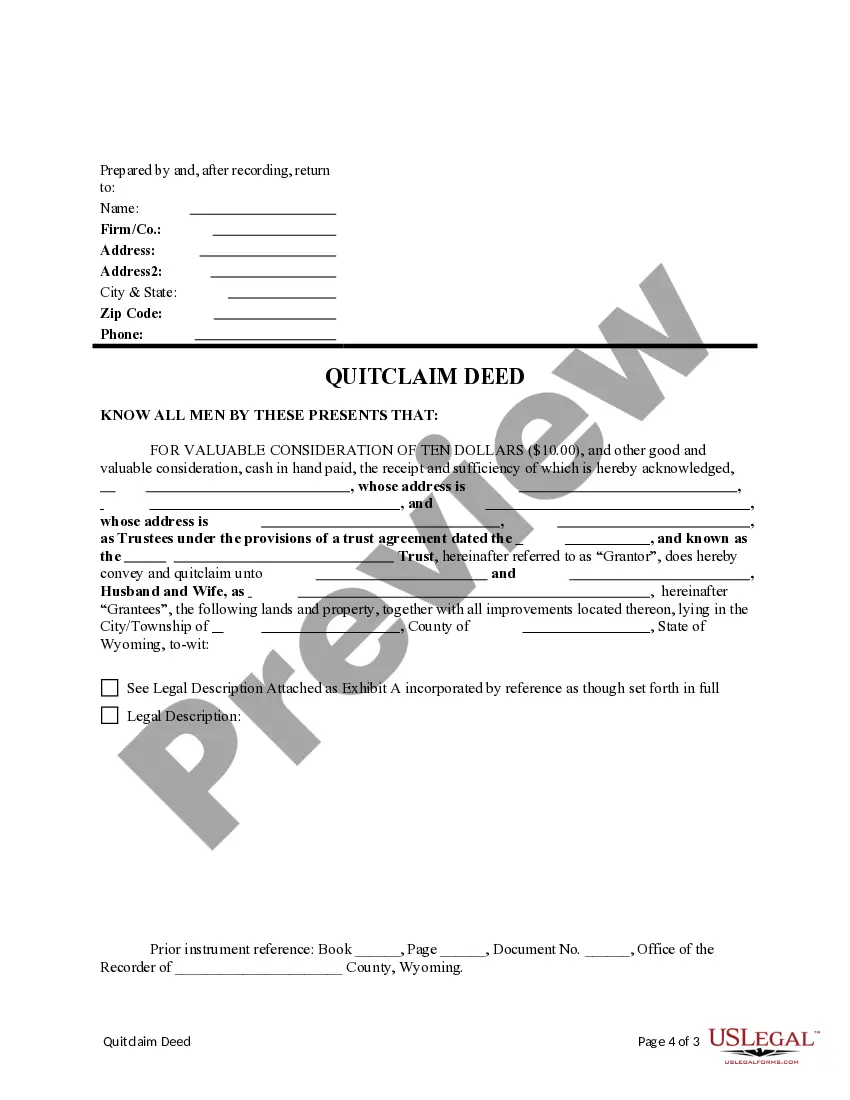
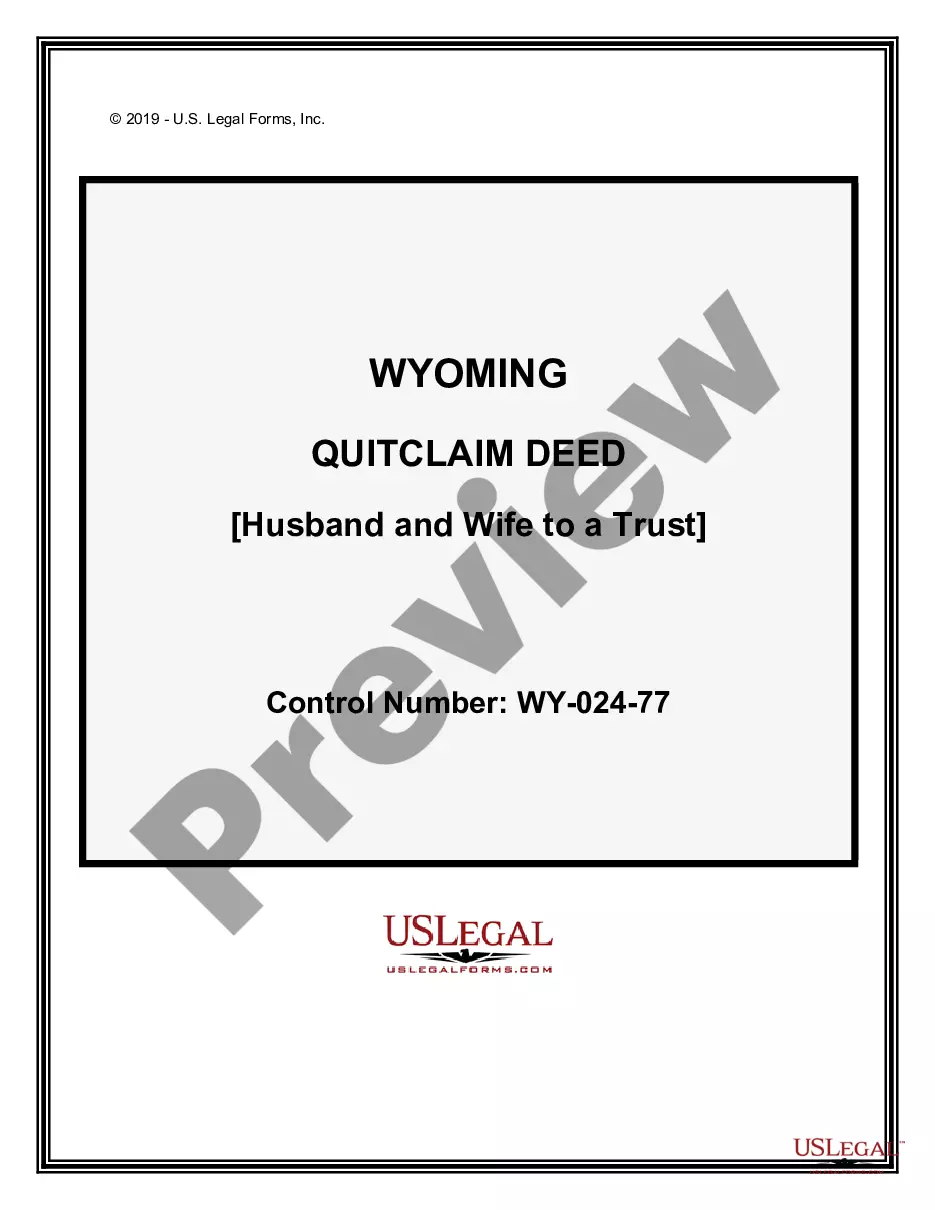
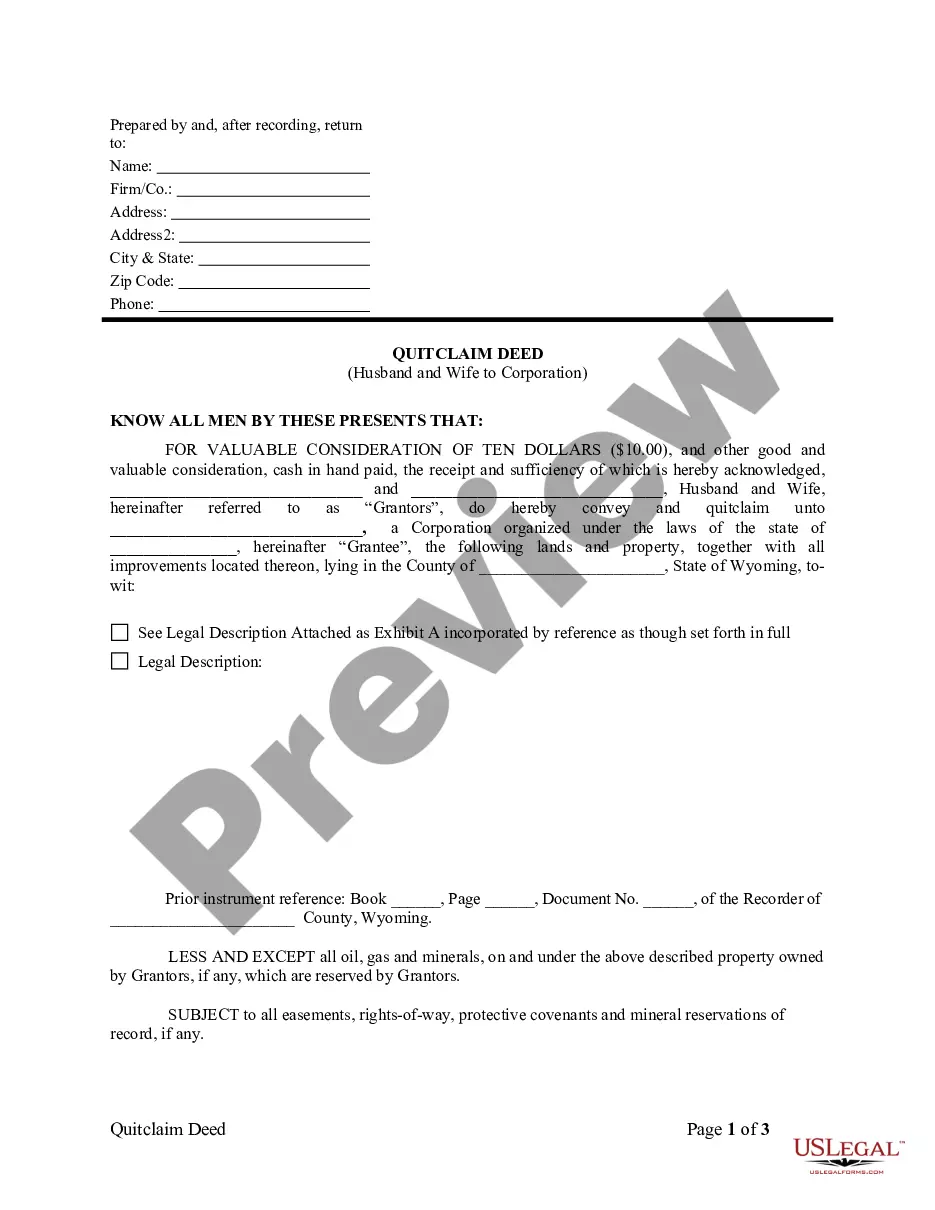
The Quitclaim Deed is a legal document that transfers ownership of property from a Trust, acting through two Trustees, to a Husband and Wife as Grantees. Unlike other deeds, a quitclaim deed does not guarantee the quality of the title, making it an essential tool for transferring property rights without warranty. This form allows the Grantees to hold the property in various ways, such as tenants in common or joint tenants with the right of survivorship, providing flexibility based on the couple's preferences.
Key components of this form
- Identification of the Grantor, which is a Trust represented by two Trustees.
- Details of the Grantees, specifically noted as a Husband and Wife.
- Clear description of the property being transferred.
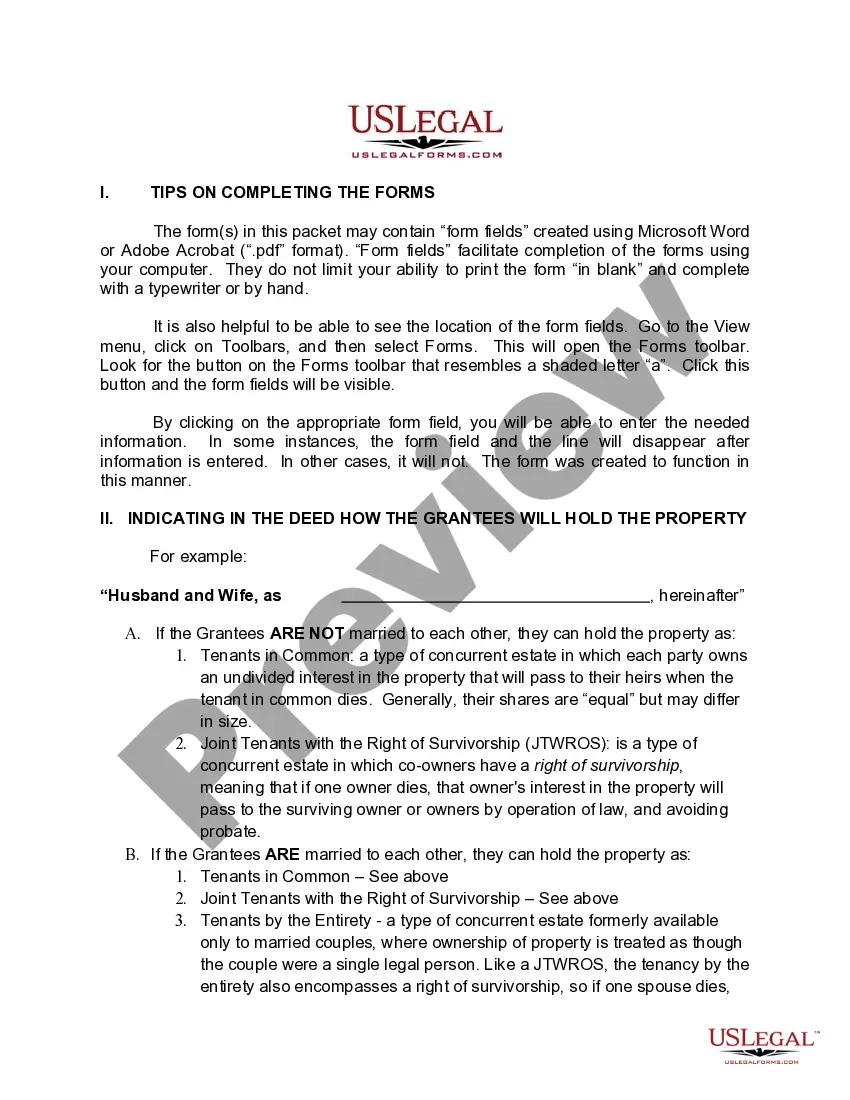
- Specification of how the Grantees will hold the property, including options like Tenants in Common, Joint Tenants with Right of Survivorship, or Tenants by the Entirety.
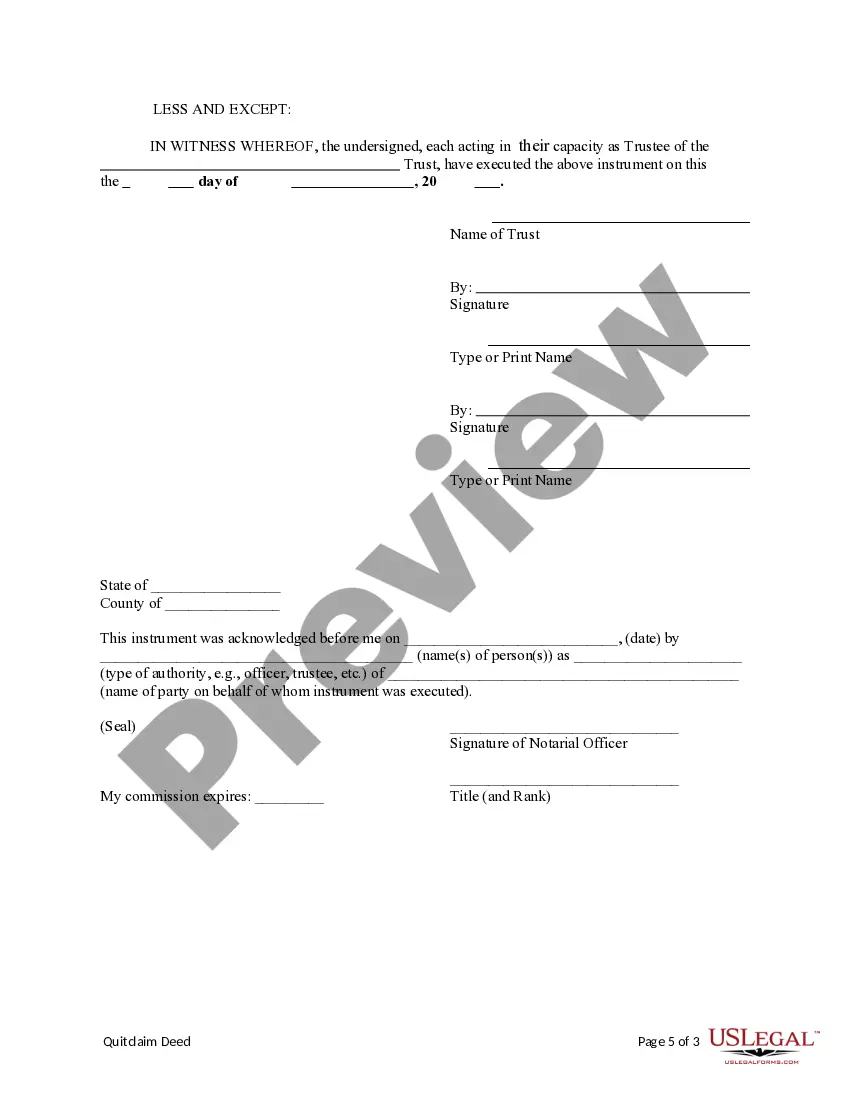
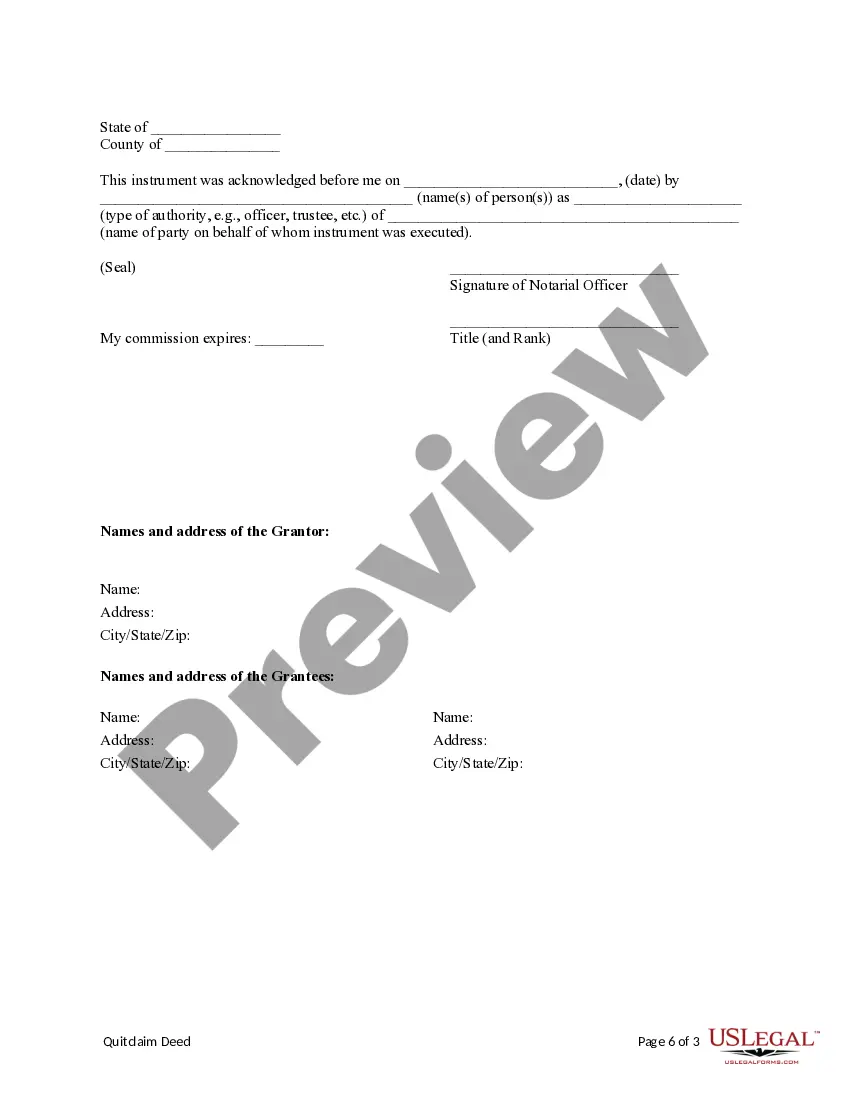
- Signature lines for the Grantor, Trustees, and any witnesses or notaries.

Common use cases
This Quitclaim Deed should be used when a Trust wishes to transfer property to a married couple without any warranties regarding the property's title. It is especially useful in cases such as estate planning, divorce settlements, or simplifying property ownership between family members. This form is also applicable when the couple wants to clarify how they will hold the property together, ensuring that their intentions regarding survivorship and inheritance are clear.
Intended users of this form
- Individuals completing property transfers involving a Trust.
- Married couples acquiring property from a Trust.
- Trustees seeking a simple method to convey property to beneficiaries.
Completing this form step by step
- Identify the Grantor by entering the name of the Trust and the Trustees.
- List the full names of the Grantees, specifically the Husband and Wife.
- Provide a detailed description of the property being transferred, including the address and any relevant identifiers.
- Select how the Grantees will hold the property: as Tenants in Common, Joint Tenants with Right of Survivorship, or Tenants by the Entirety.
- Ensure all necessary signatures are collected from the Trustees and any required witnesses or notaries.
Notarization requirements for this form
To make this form legally binding, it must be notarized. Our online notarization service, powered by Notarize, lets you verify and sign documents remotely through an encrypted video session.
Get your form ready online
Our built-in tools help you complete, sign, share, and store your documents in one place.
Make edits, fill in missing information, and update formatting in US Legal Forms—just like you would in MS Word.
Download a copy, print it, send it by email, or mail it via USPS—whatever works best for your next step.
Sign and collect signatures with our SignNow integration. Send to multiple recipients, set reminders, and more. Go Premium to unlock E-Sign.
If this form requires notarization, complete it online through a secure video call—no need to meet a notary in person or wait for an appointment.
We protect your documents and personal data by following strict security and privacy standards.

Make edits, fill in missing information, and update formatting in US Legal Forms—just like you would in MS Word.

Download a copy, print it, send it by email, or mail it via USPS—whatever works best for your next step.

Sign and collect signatures with our SignNow integration. Send to multiple recipients, set reminders, and more. Go Premium to unlock E-Sign.

If this form requires notarization, complete it online through a secure video call—no need to meet a notary in person or wait for an appointment.

We protect your documents and personal data by following strict security and privacy standards.
Avoid these common issues
- Failing to clearly specify how the Grantees will hold the property.
- Omitting signatures from either the Grantor or witnesses.
- Not providing a complete description of the property.
Benefits of completing this form online
- Convenient access to legal forms that can be completed from home.
- Editability allows users to input their specific information easily.
- Reliable and compliant with state regulations, reducing the risk of legal issues.
Looking for another form?
Form popularity
FAQ
But you might be wondering if an owner can transfer a deed to another person without a real estate lawyer. The answer is yes. Parties to a transaction are always free to prepare their own deeds.A quitclaim deed, for example, is far simpler than a warranty deed.
A certain level of capacity is necessary in order to sign legal documents. Someone who is in the end stages of Alzheimer's disease probably does not have the requisite capacity to sign legal documents. However, a person with a diagnosis of dementia may very well be able to sign legal documents.
Locate the deed that's in trust. Use the proper deed. Check with your title insurance company and lender. Prepare a new deed. Sign in the presence of a notary. Record the deed in the county clerk's office.
A person who signs a quitclaim deed to transfer property they do not own results in no title at all being transferred since there is no actual ownership interest. The quitclaim deed only transfers the type of title you own.
1 attorney answer Your mother's dementia does not, as a matter of law, make her incapable of executing a quitclaim deed. However, if your Power of Attorney was duly recorded and is a General Power of Attorney, you are the person who is the attorney in fact for...
In general, a person with dementia can sign a power of attorney designation if they have the capacity to understand what the document is, what it does, and what they are approving. Most seniors living with early stage dementia are able to make this designation.
Legal Documents These documents can authorize another person to make health care and financial decisions, including plans for long-term care. As much as possible, the person with Alzheimer's should participate in legal planning, as long as they are mentally able to sign official documents.
If the quitclaim deed requires the signature of all co-owners, the deed is invalid unless all co-owners have signed it and the deed is then delivered to the grantee.If one individual owns real estate and desires to add a co-owner such as a spouse, a quitclaim deed might be used.
Yes, you can prepare.