West Virginia Residential Landlord Tenant Rental Lease Forms and Agreements Package
Understanding this form package
The West Virginia Residential Landlord Tenant Rental Lease Forms and Agreements Package provides essential forms tailored for the landlord-tenant relationship in West Virginia. This comprehensive package includes a rental application, lease agreement, lead paint disclosure, and various notices, helping both landlords and tenants navigate the rental process effectively. Unlike generic forms, these documents are specifically drafted to comply with West Virginia laws and best practices.
Documents contained in this package
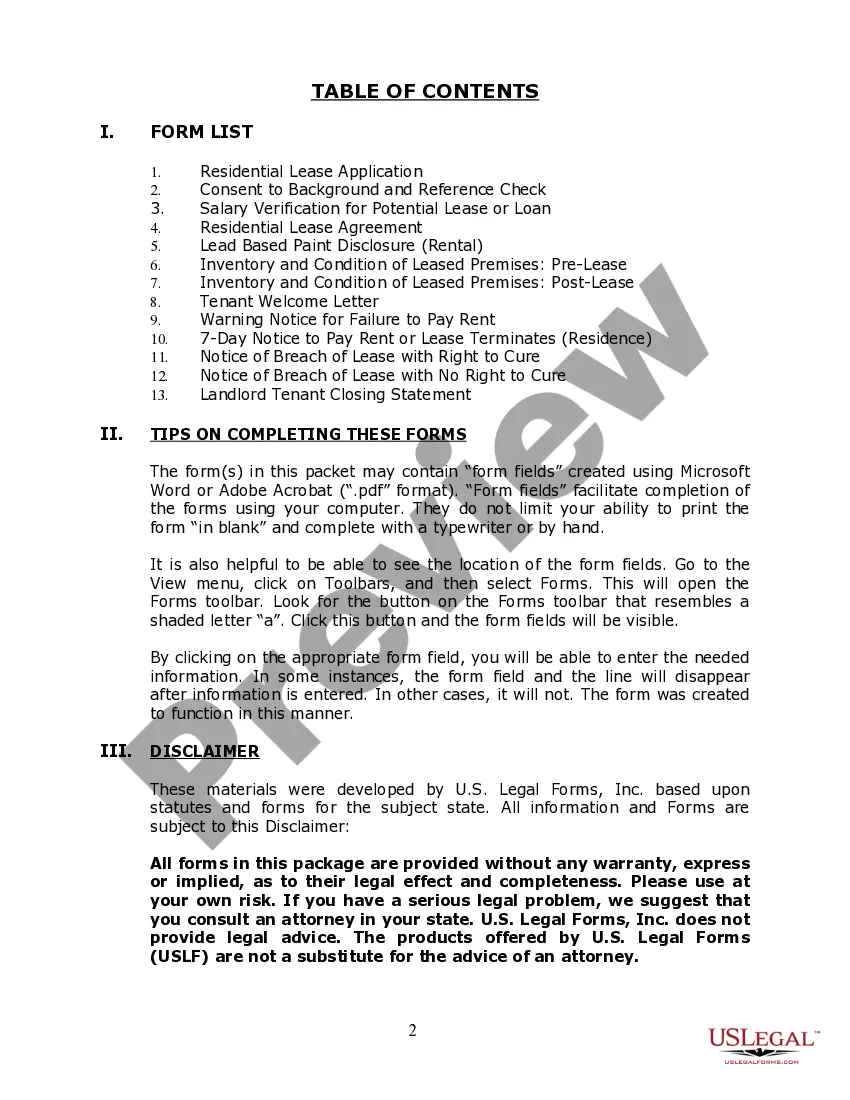
- Notice of Default in Payment of Rent as Warning Prior to Demand to Pay or Terminate for Residential Property
- Notice of Breach of Written Lease for Violating Specific Provisions of Lease with Right to Cure for Residential Property from Landlord to Tenant
- Notice of Breach of Written Lease for Violating Specific Provisions of Lease with No Right to Cure for Residential Property from Landlord to Tenant
- 7 Day Notice to Pay Rent or Lease Terminates
- Residential Rental Lease Application
- Salary Verification form for Potential Lease
- Inventory and Condition of Leased Premises for Pre Lease and Post Lease
- Tenant Consent to Background and Reference Check
- Residential Rental Lease Agreement
- Tenant Welcome Letter
- Landlord Tenant Closing Statement to Reconcile Security Deposit
- Lead Based Paint Disclosure for Rental Transaction

When this form package is needed
This package is ideal for use in the following situations:
- When renting residential property in West Virginia.
- When a landlord needs to screen potential tenants with an application.
- When a tenant requires a clear understanding of their rights and responsibilities through a lease agreement.
- When disclosures, such as lead paint information, must be provided to tenants.
- When enforcing or terminating a lease due to non-payment or other breaches.
Intended users of this form package
- Landlords seeking to establish a rental agreement with tenants.
- Tenants wanting to understand their legal rights and obligations.
- Property management companies responsible for managing rental properties.
- Real estate agents assisting clients in the rental process.
How to prepare this document
- Review all included forms to understand their purpose and requirements.
- Identify the parties involved, ensuring accurate names and contact details.
- Fill out the application and lease with the necessary information, including dates and terms.
- Ensure all required disclosures, such as lead paint information, are provided.
- Have the relevant parties sign the lease and any notices, retaining copies for records.
Notarization details for included forms
Forms in this package typically do not require notarization. However, certain states or document types may still need it. US Legal Forms provides online notarization powered by Notarize, available 24/7 for your convenience.
Get your form ready online
Our built-in tools help you complete, sign, share, and store your documents in one place.
Make edits, fill in missing information, and update formatting in US Legal Forms—just like you would in MS Word.
Download a copy, print it, send it by email, or mail it via USPS—whatever works best for your next step.
Sign and collect signatures with our SignNow integration. Send to multiple recipients, set reminders, and more. Go Premium to unlock E-Sign.
If this form requires notarization, complete it online through a secure video call—no need to meet a notary in person or wait for an appointment.
We protect your documents and personal data by following strict security and privacy standards.

Make edits, fill in missing information, and update formatting in US Legal Forms—just like you would in MS Word.

Download a copy, print it, send it by email, or mail it via USPS—whatever works best for your next step.

Sign and collect signatures with our SignNow integration. Send to multiple recipients, set reminders, and more. Go Premium to unlock E-Sign.

If this form requires notarization, complete it online through a secure video call—no need to meet a notary in person or wait for an appointment.

We protect your documents and personal data by following strict security and privacy standards.
Typical mistakes to avoid
- Failing to provide required disclosures to tenants.
- Not getting all necessary signatures on the lease agreement.
- Using outdated forms that do not comply with current laws.
- Overlooking important details in the rental application, such as references.
Why use this package online
- Convenience of downloading forms for immediate use.
- Editability to customize forms to meet specific rental situations.
- Reliability, as forms are drafted by licensed attorneys familiar with state laws.
Legal use & context
- The forms provided are legally recognized in West Virginia for residential leasing.
- Improper completion or failure to follow legal procedures can invalidate agreements.
- Using these forms can help clarify rights and responsibilities between landlords and tenants, minimizing conflicts.
What to keep in mind
- This package includes crucial forms necessary for residential leasing in West Virginia.
- It is suitable for landlords, tenants, and property managers.
- Careful completion of the forms will help prevent common legal issues related to rentals.
Looking for another form?
Form popularity
FAQ
Amount of rent, security deposit, other payments. Duration of agreement and renewal criteria. List of fittings, fixtures. Registration of agreement. Restrictions.
Collect each party's information. Include specifics about your property. Consider all of the property's utilities and services. Know the terms of your lease. Set the monthly rent amount and due date. Calculate any additional fees. Determine a payment method. Consider your rights and obligations.
Collect each party's information. Include specifics about your property. Consider all of the property's utilities and services. Know the terms of your lease. Set the monthly rent amount and due date. Calculate any additional fees. Determine a payment method. Consider your rights and obligations.
Collect each party's information. Include specifics about your property. Consider all of the property's utilities and services. Know the terms of your lease. Set the monthly rent amount and due date. Calculate any additional fees. Determine a payment method. Consider your rights and obligations.
The Lease Must be in Writing It does not matter if the lease is handwritten or typed. If the lease is for more than one year, it must be in written form and contain the following terms.
A written agreement can act as a roadmap for the landlord-tenant relationship, especially if a dispute arises. Also, real estate (land) leases for more than one year must be in writing. If a lease for over one year is not in writing, it will generally not be enforceable in court.
Most rental agreements are short-term agreements, such as month-to-month tenancies, while lease agreements are usually for longer rental periods, such as six months, a year, or more.
The Lease Must be in Writing It does not matter if the lease is handwritten or typed.
The lease becomes legally binding when all parties have signed: the landlord and all tenants living in the unit who are 18 and older. If you're worried about situations where a lease needs to end early, learn about breaking a lease and grounds for eviction.