New Hampshire Historic Preservation Easement for Architectural, Historical, and Cultural Features
Overview of this form
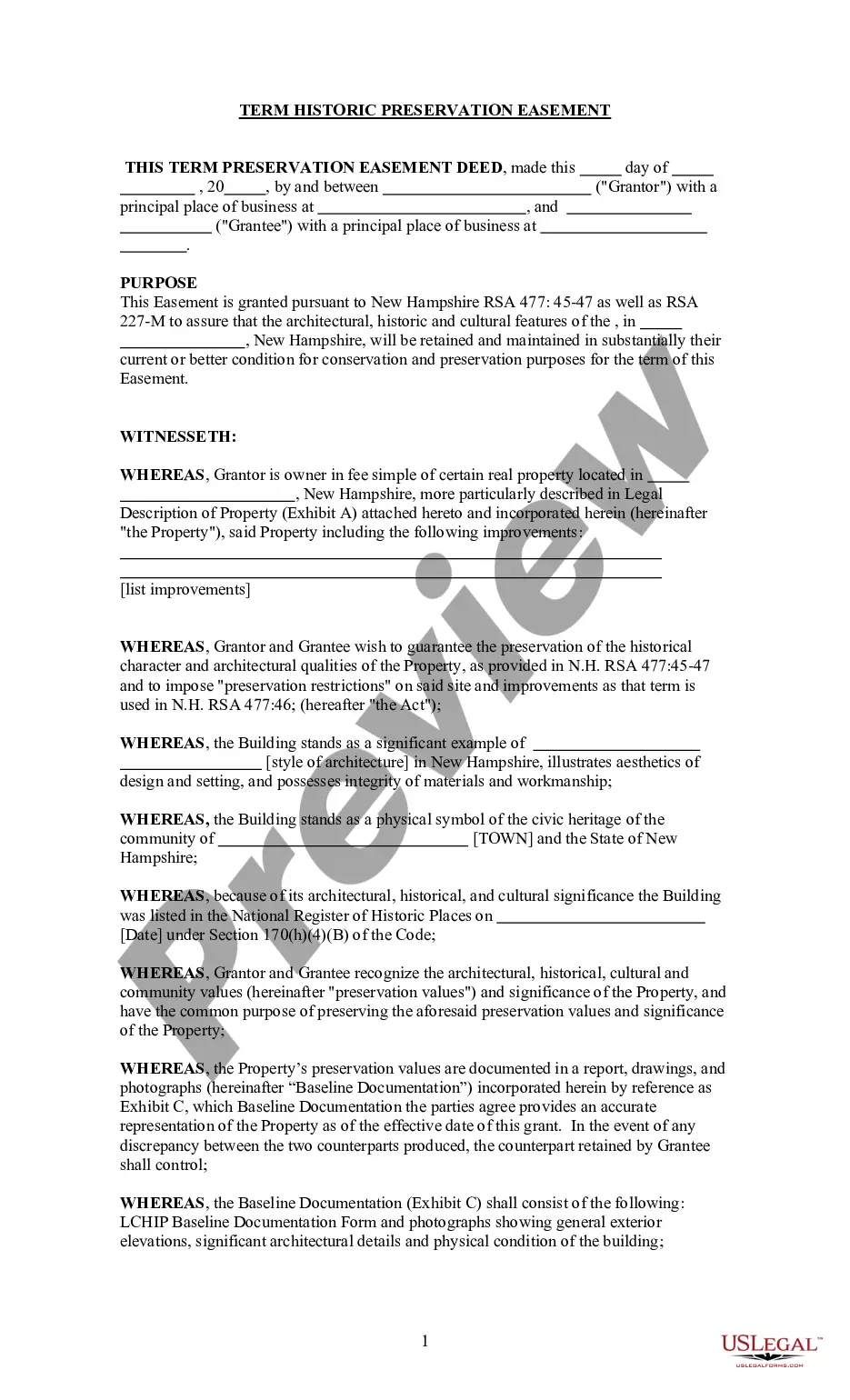
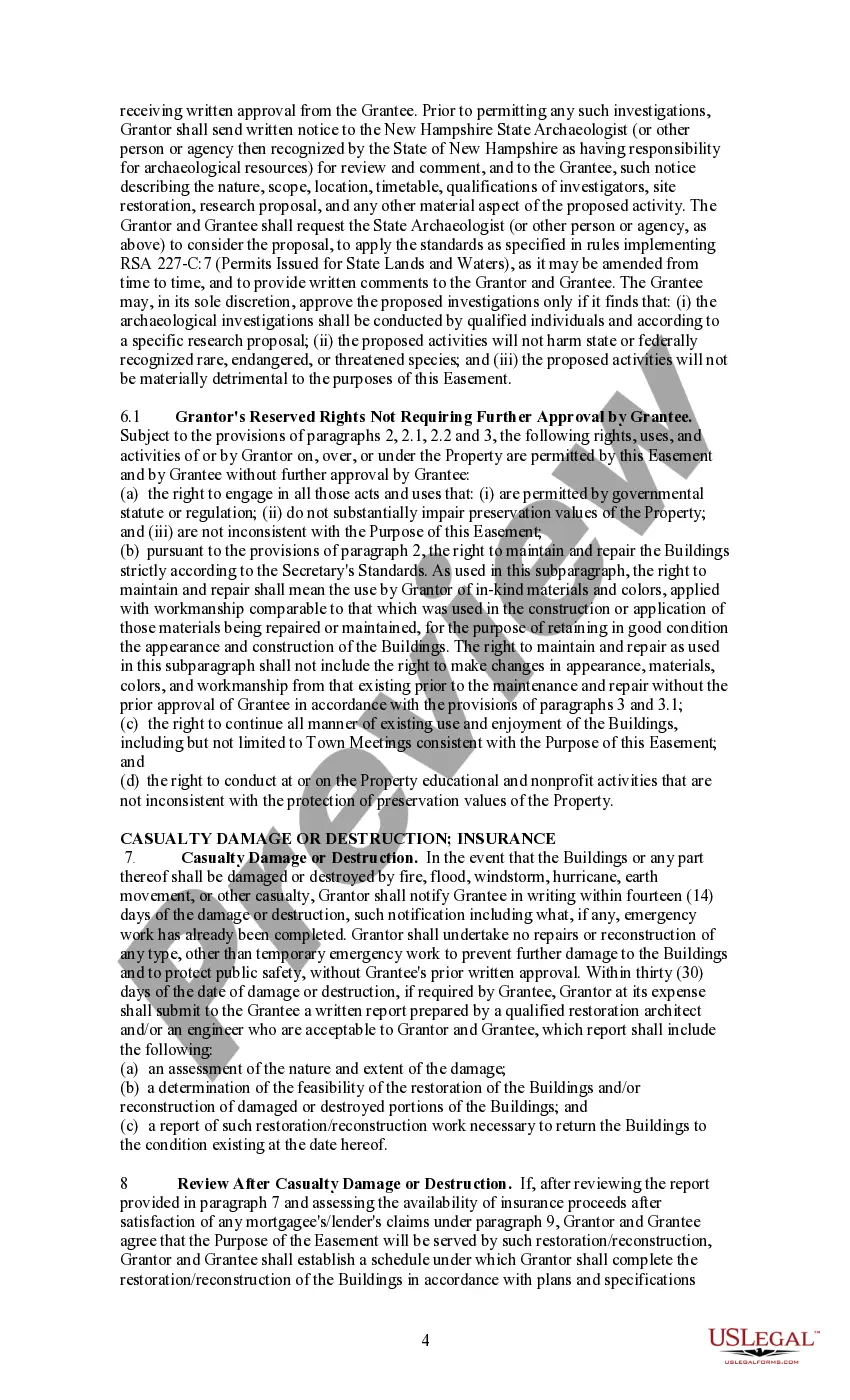
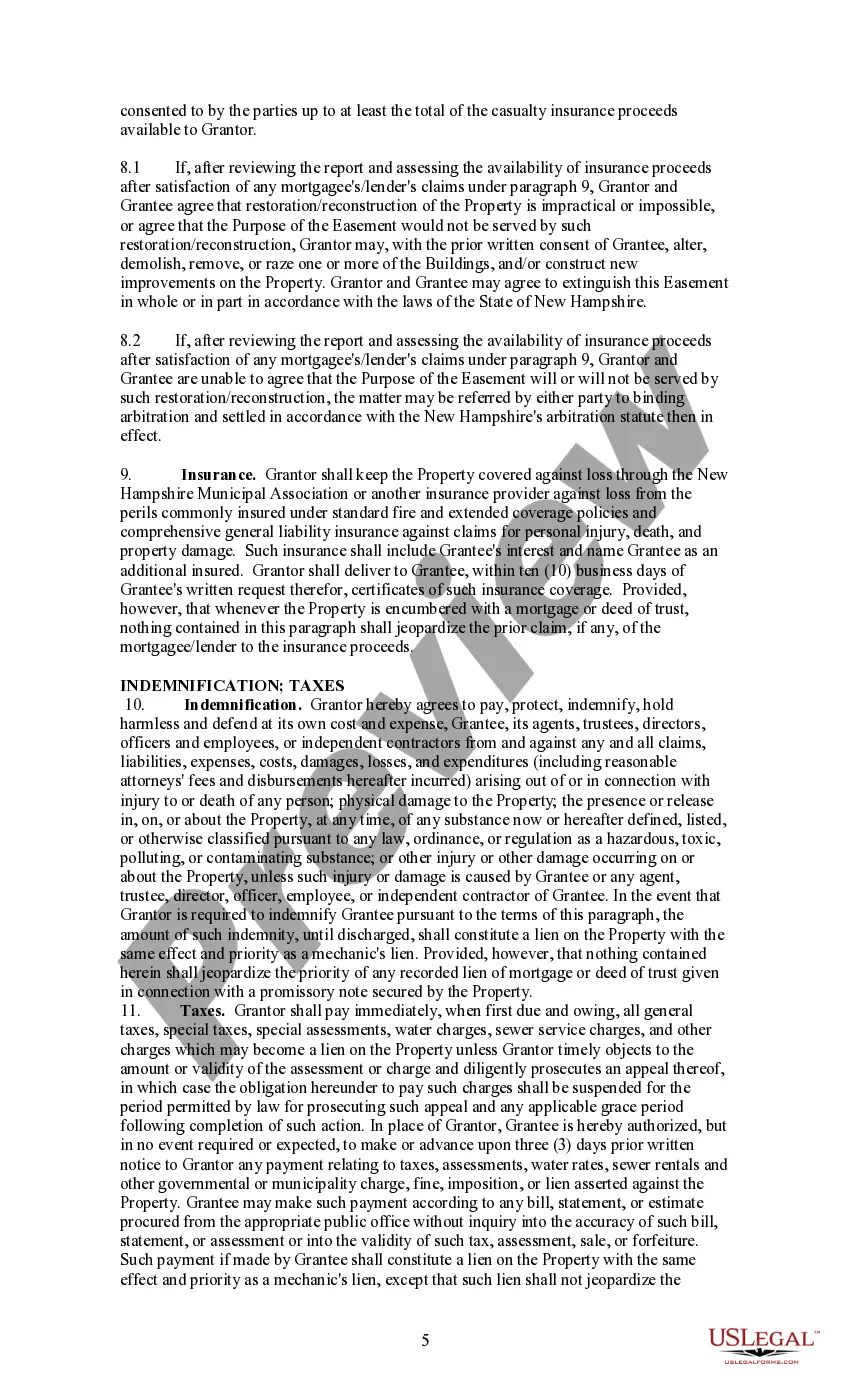
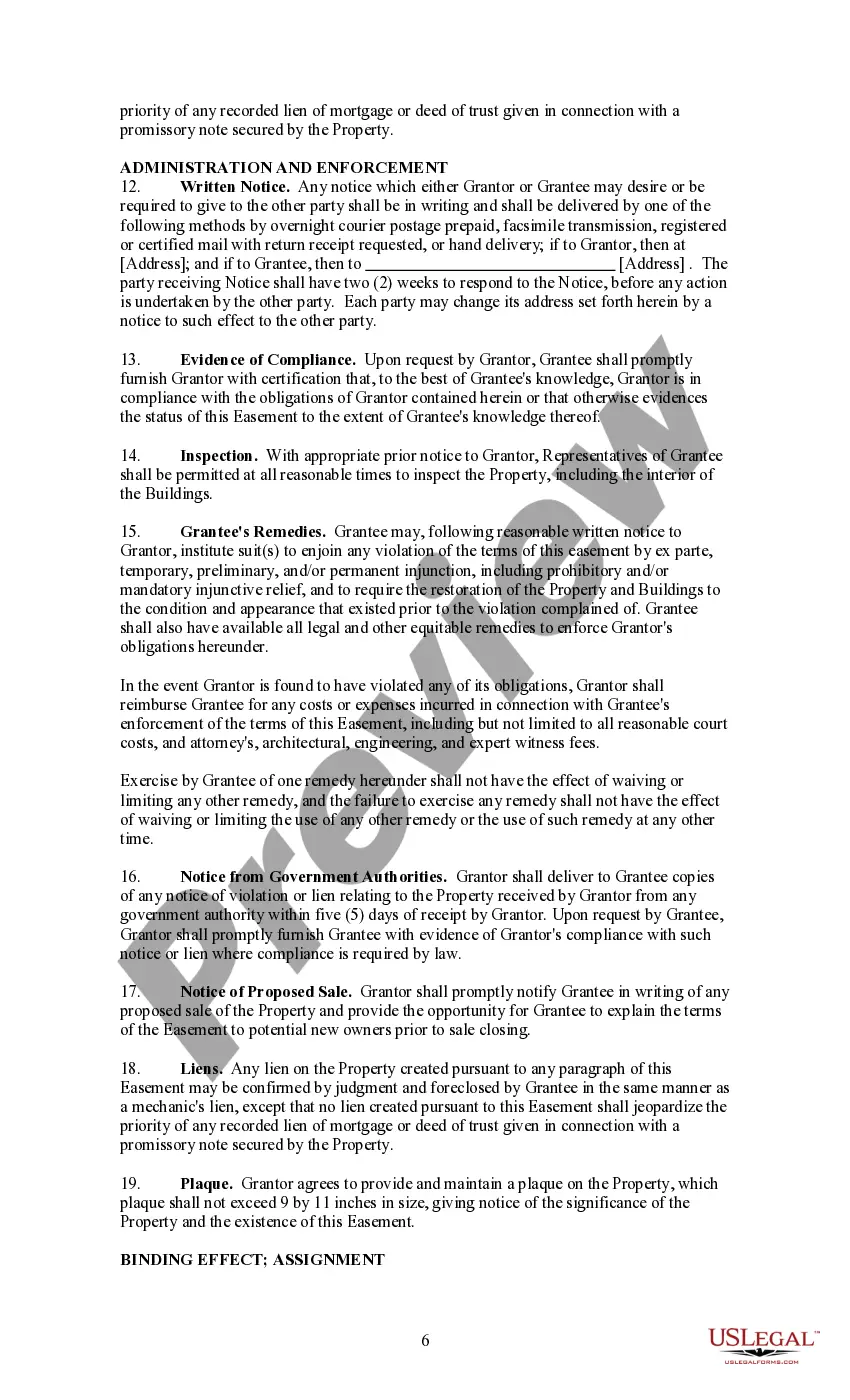
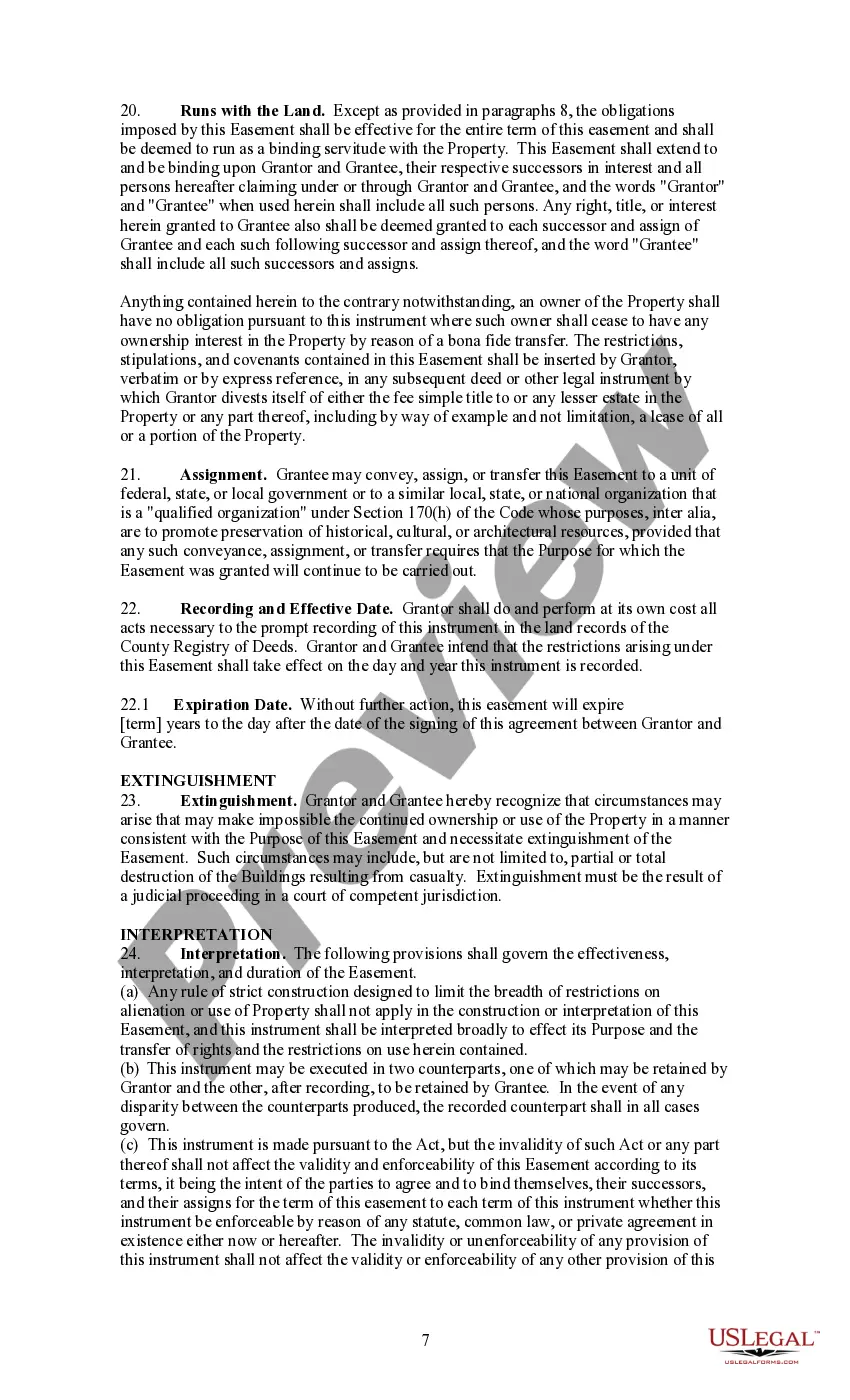
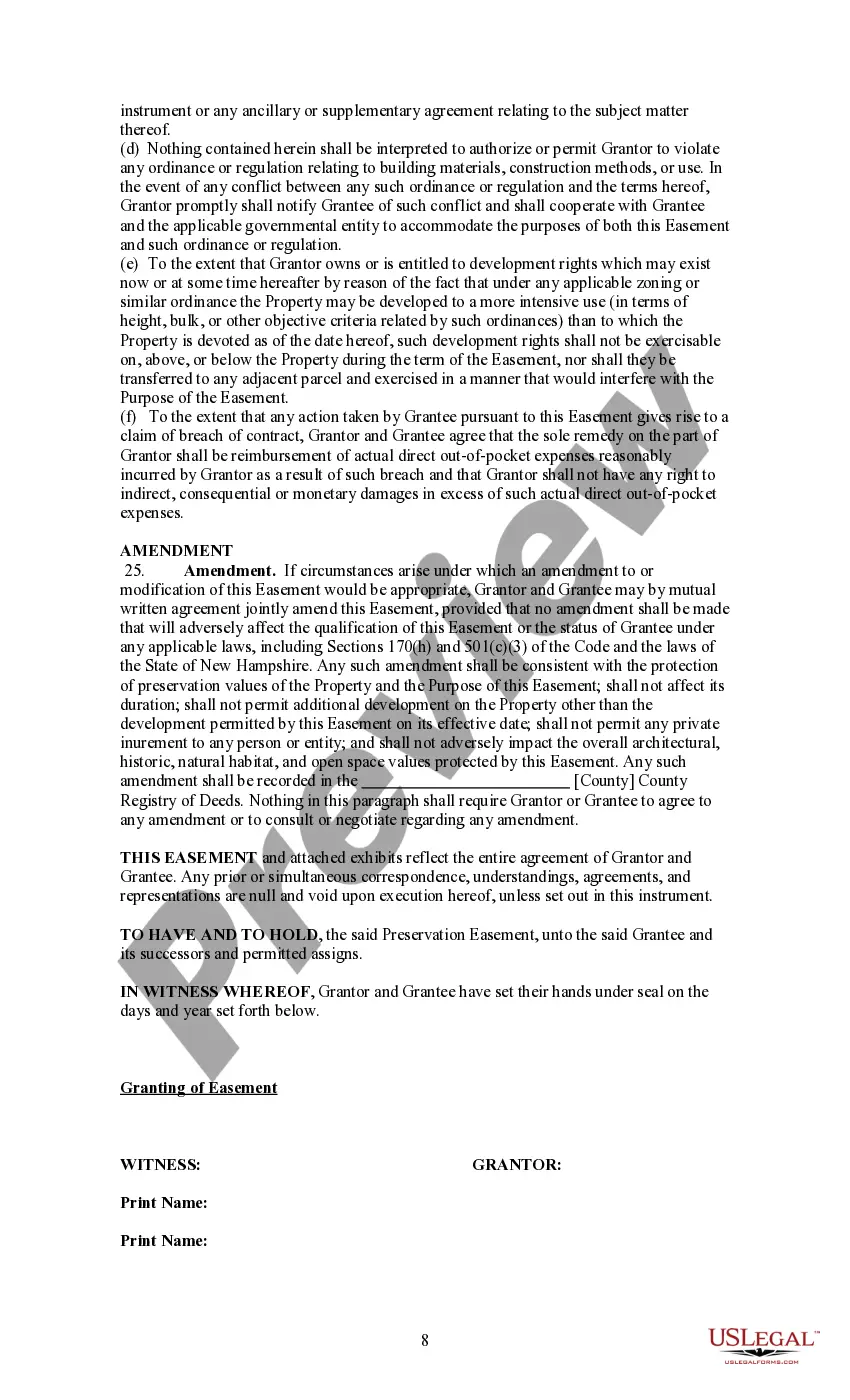
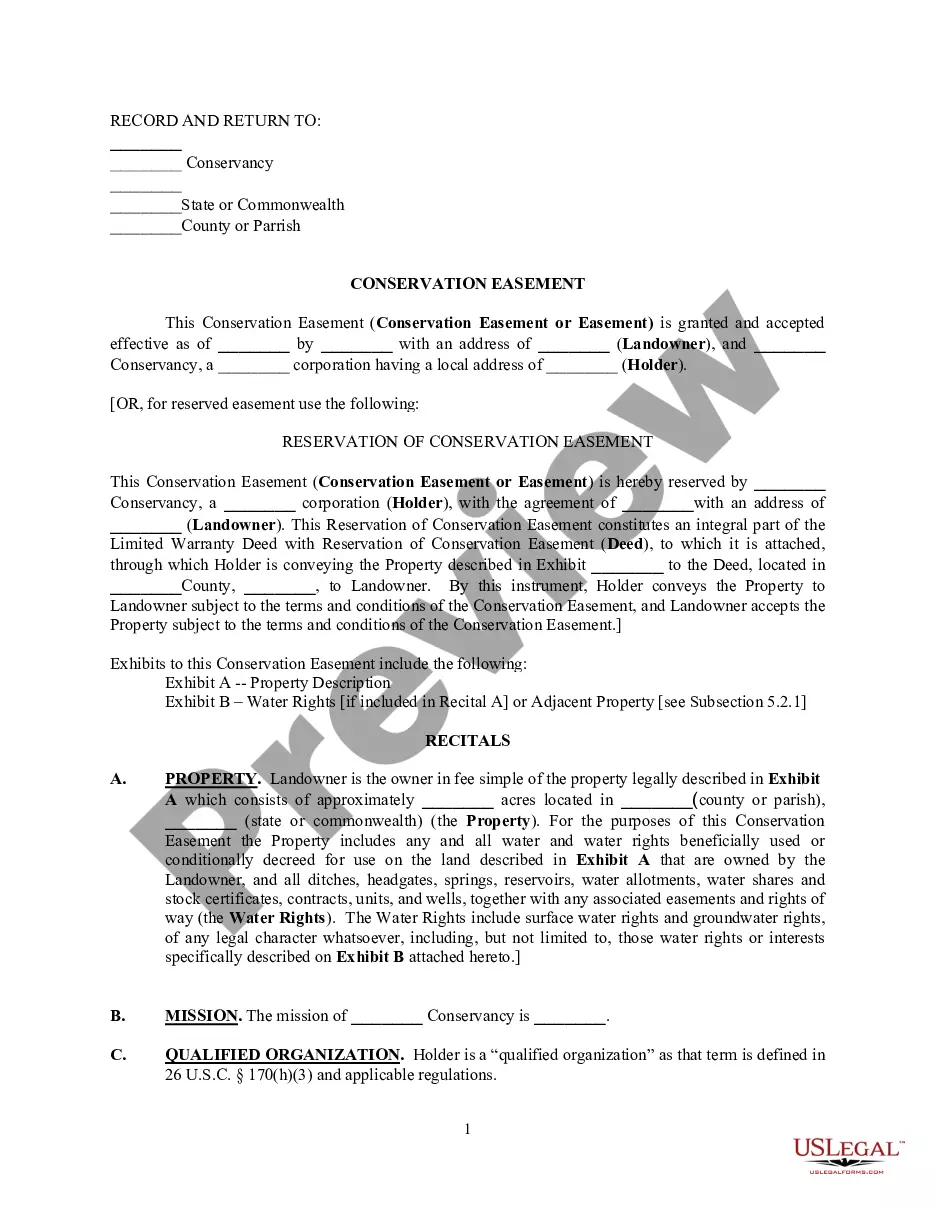
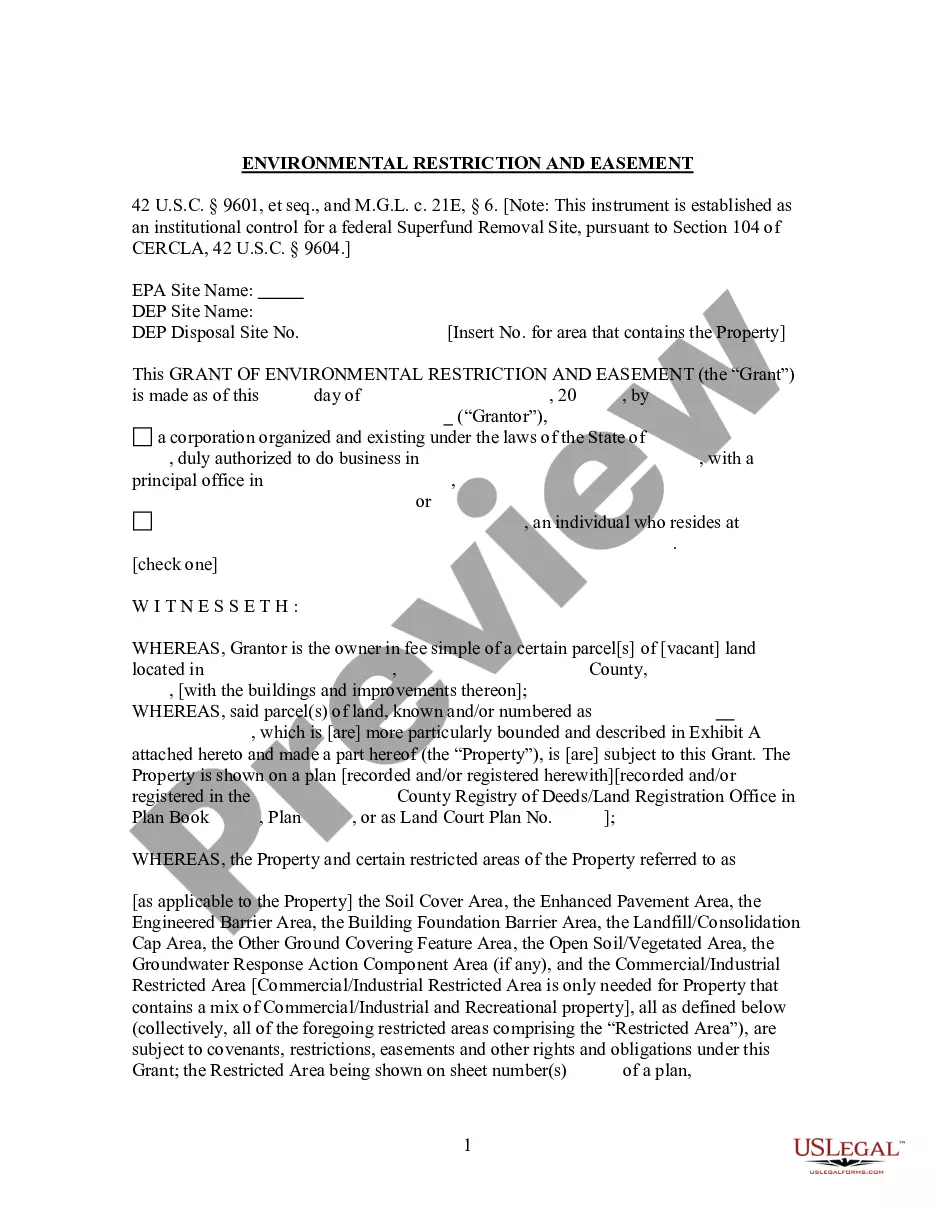
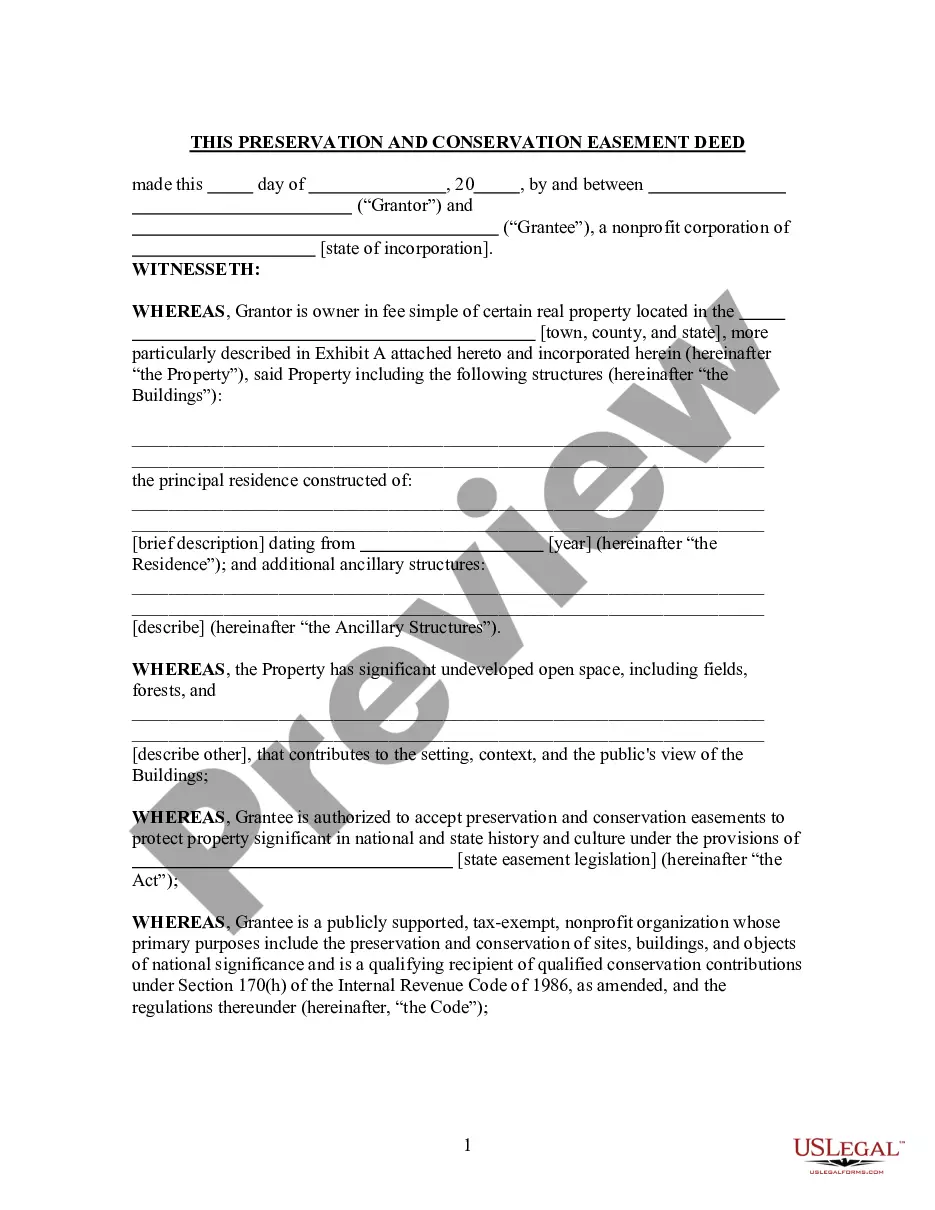
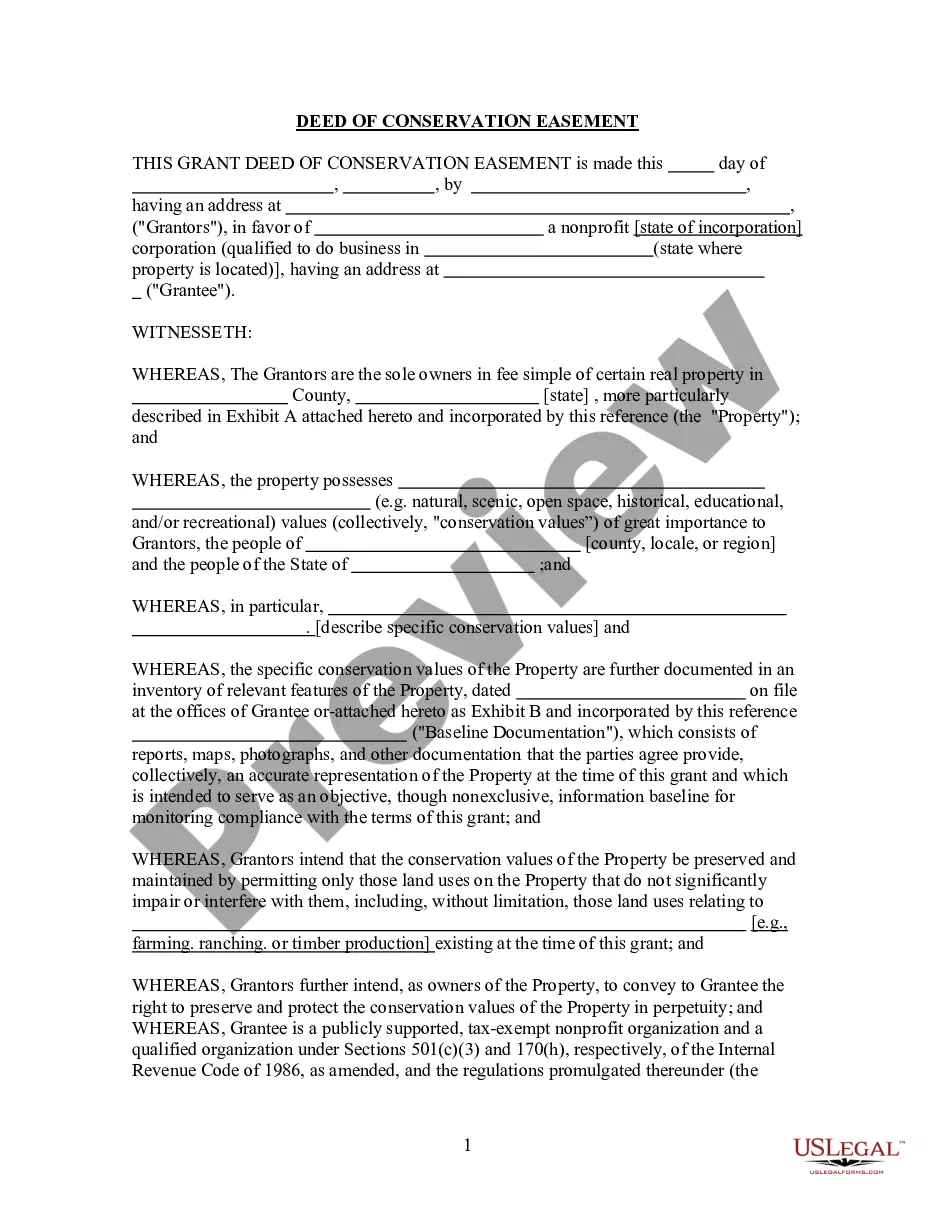
The Historic Preservation Easement for Architectural, Historical, and Cultural Features is a legal document designed to ensure the preservation of a property's unique architectural and cultural characteristics. This easement serves to maintain the property in its current or improved condition, preventing any alterations that could diminish its historical value. Unlike general property agreements, this form specifically focuses on the preservation of significant features, making it essential for property owners who wish to protect their historical assets.
Form components explained
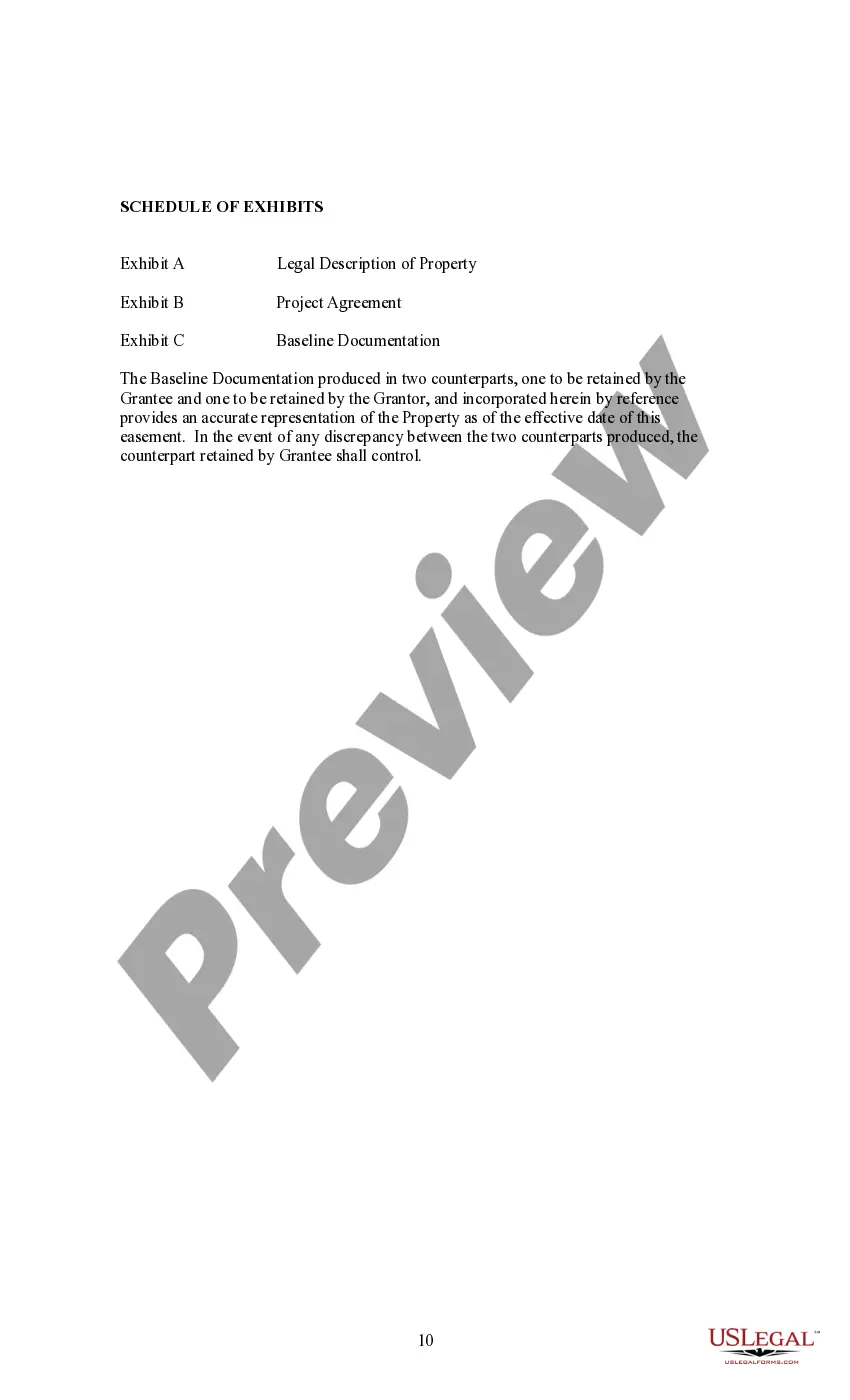
- Baseline documentation detailing the property's architectural and historical features.
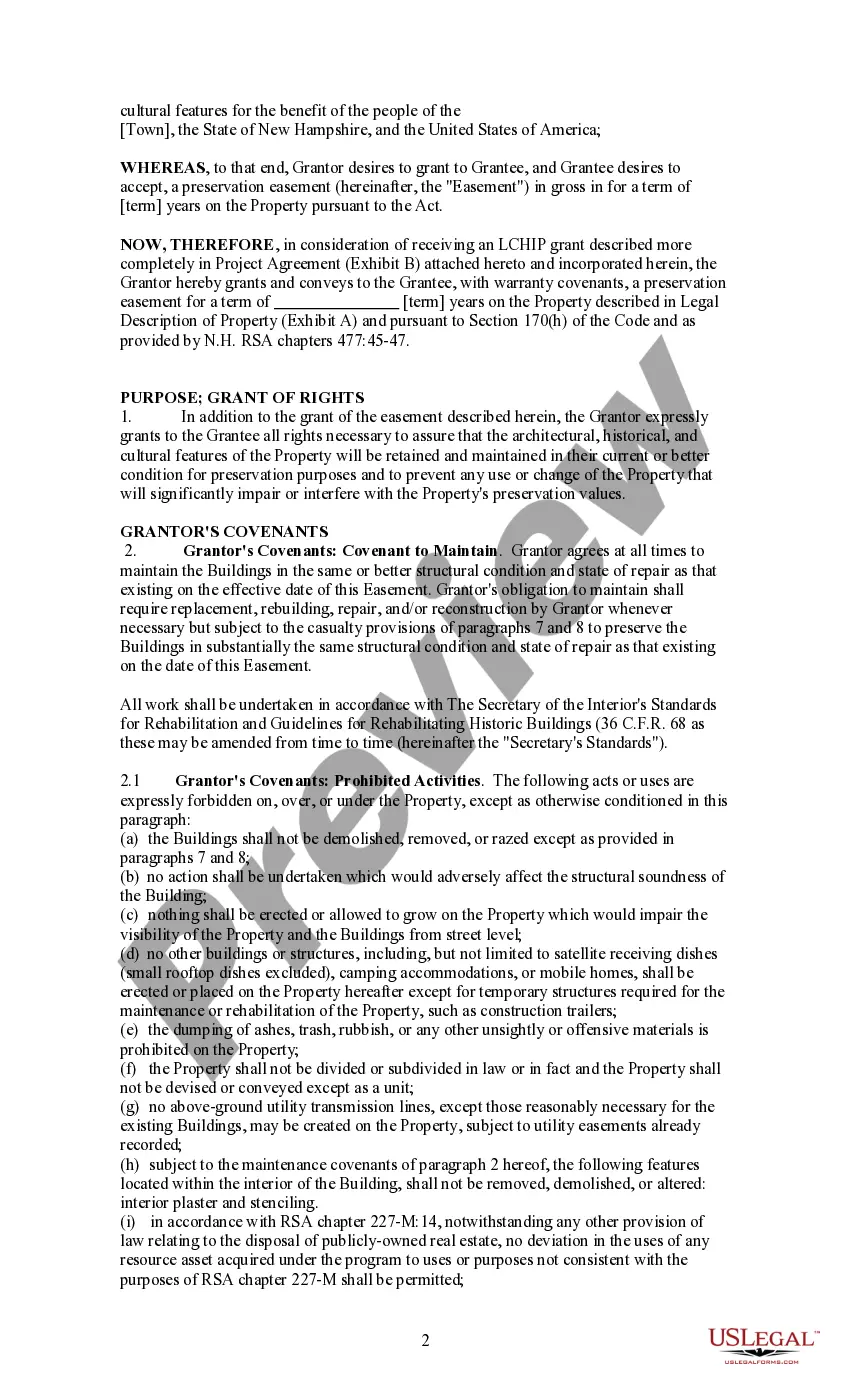
- Grantor's obligations to maintain and preserve the property in a specified condition.
- List of prohibited activities that may harm the property's preservation values.
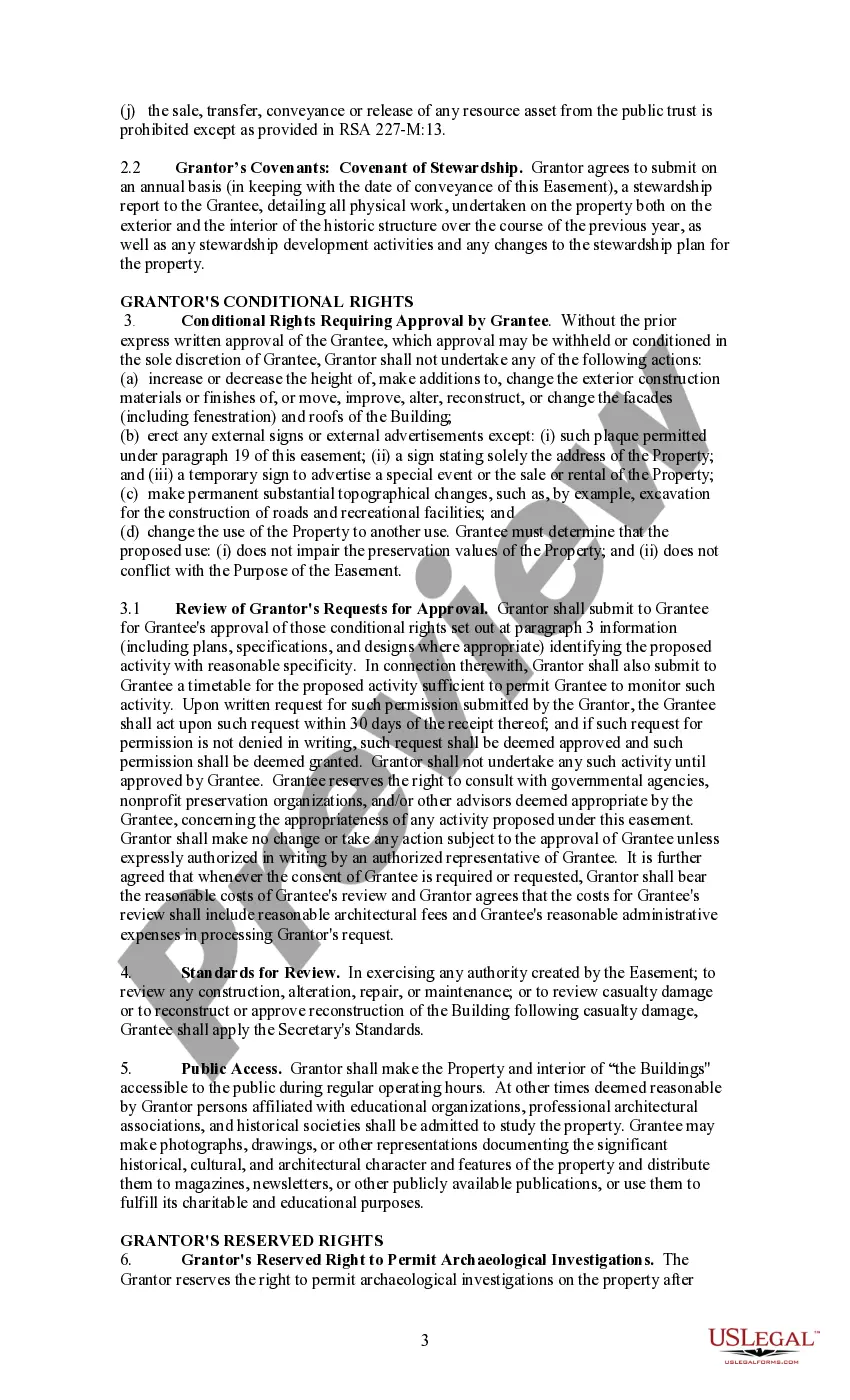
- Procedures for obtaining approval from the Grantee for any changes to the property.
- Conditions regarding public access to the property for educational purposes.
When to use this document
This form should be used when a property owner wishes to establish an easement for the preservation of a historic property. It is applicable in situations where the owner wants to ensure that the architectural, historical, or cultural significance of the property is safeguarded from future alterations or developments. Ideal scenarios include selling or transferring a historic property, applying for grants for restoration, or when entering into preservation agreements with local or state governments.
Who should use this form
- Property owners of historically significant real estate.
- Non-profit organizations focused on heritage preservation.
- Developers seeking to maintain historical integrity in new projects.
- Local governments involved in land preservation initiatives.
How to complete this form
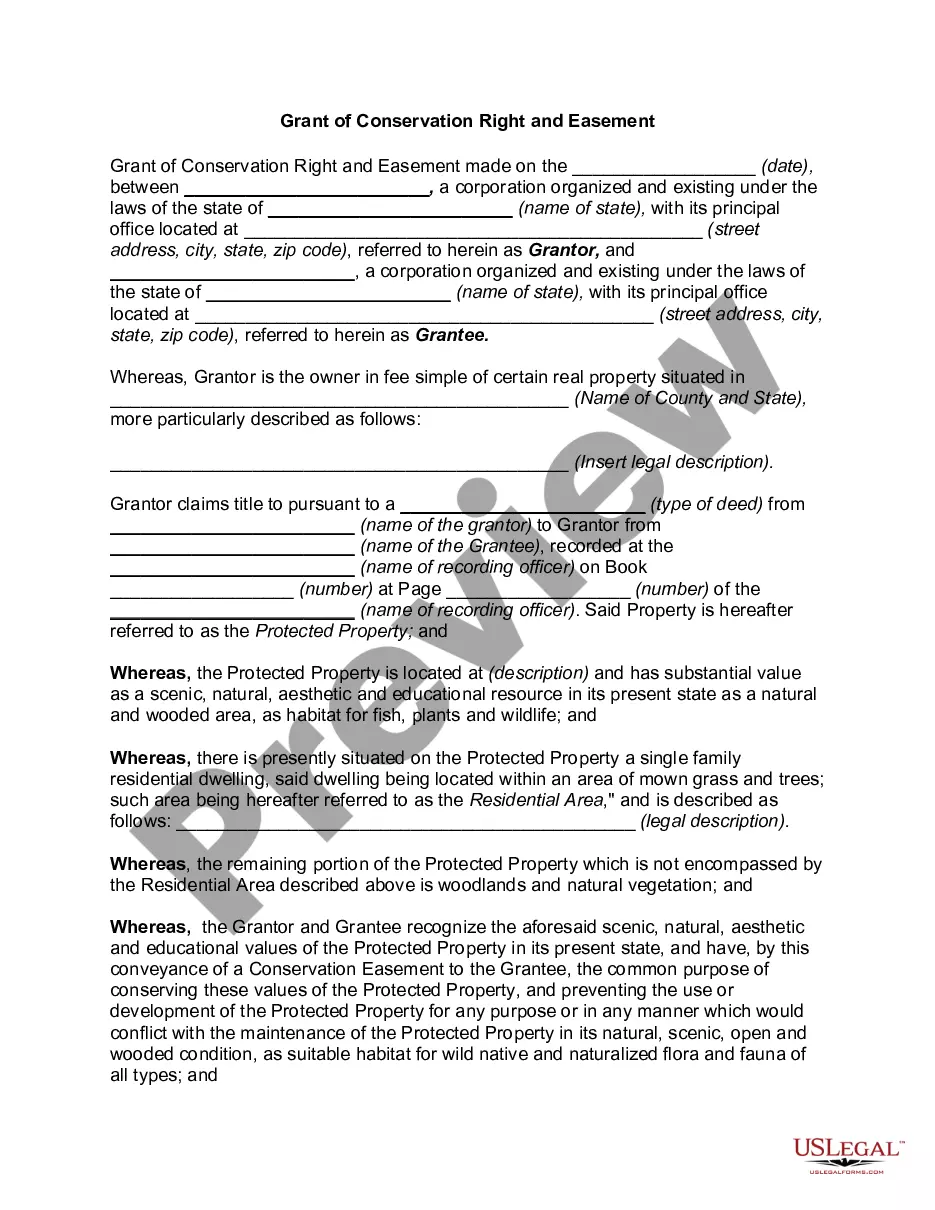
- Identify the parties involved: the Grantor (property owner) and Grantee (preservation entity).
- Specify the property details, including address and description.
- Attach baseline documentation that includes photographs and architectural details of the property.
- Outline the covenants and restrictions to be observed for preservation.
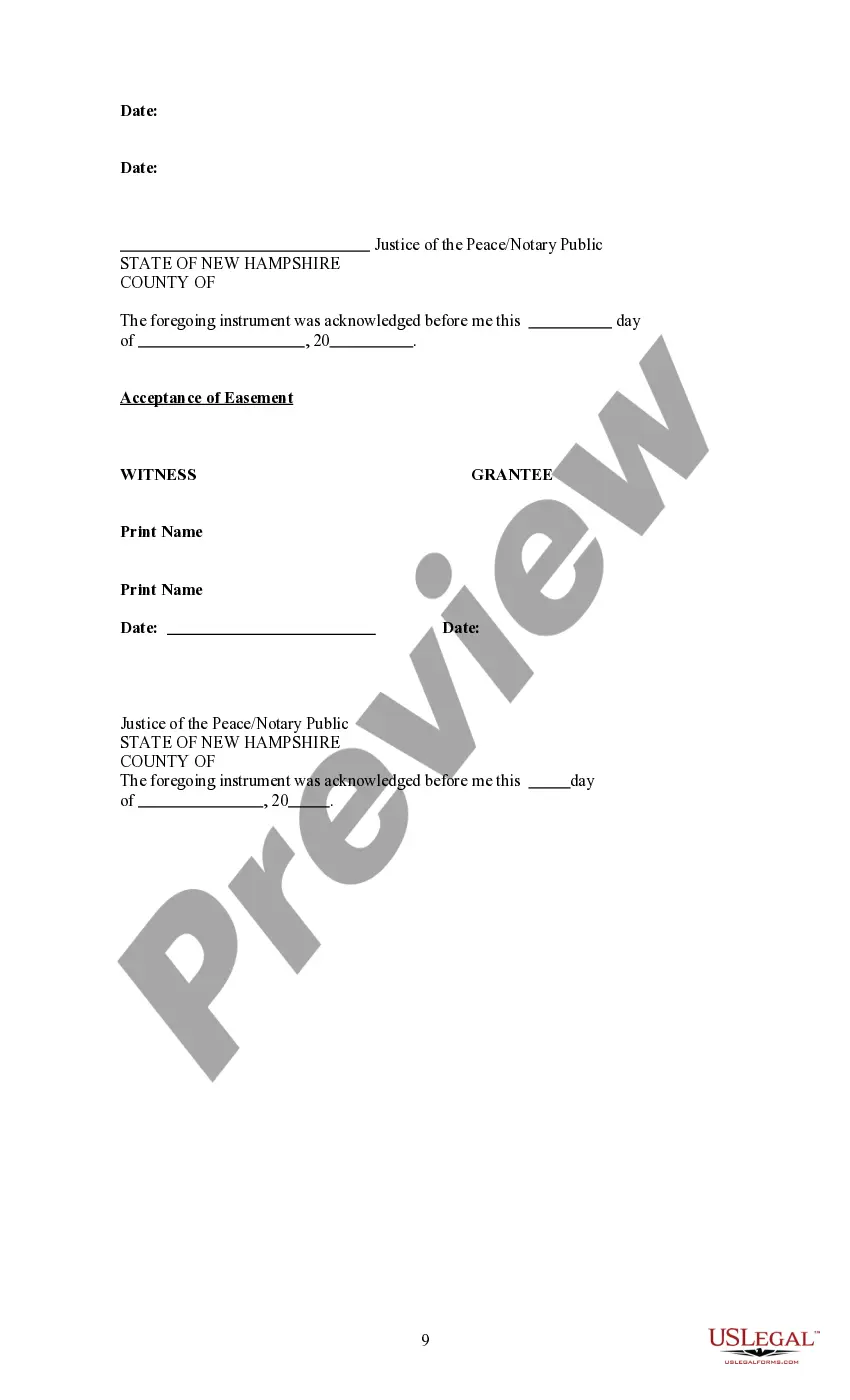
- Sign and date the document in accordance with local laws and required formalities.
Does this document require notarization?
To make this form legally binding, it must be notarized. Our online notarization service, powered by Notarize, lets you verify and sign documents remotely through an encrypted video session.
Get your form ready online
Our built-in tools help you complete, sign, share, and store your documents in one place.
Make edits, fill in missing information, and update formatting in US Legal Forms—just like you would in MS Word.
Download a copy, print it, send it by email, or mail it via USPS—whatever works best for your next step.
Sign and collect signatures with our SignNow integration. Send to multiple recipients, set reminders, and more. Go Premium to unlock E-Sign.
If this form requires notarization, complete it online through a secure video call—no need to meet a notary in person or wait for an appointment.
We protect your documents and personal data by following strict security and privacy standards.

Make edits, fill in missing information, and update formatting in US Legal Forms—just like you would in MS Word.

Download a copy, print it, send it by email, or mail it via USPS—whatever works best for your next step.

Sign and collect signatures with our SignNow integration. Send to multiple recipients, set reminders, and more. Go Premium to unlock E-Sign.

If this form requires notarization, complete it online through a secure video call—no need to meet a notary in person or wait for an appointment.

We protect your documents and personal data by following strict security and privacy standards.
Typical mistakes to avoid
- Failing to include comprehensive baseline documentation that accurately represents the property.
- Neglecting to specify prohibited activities clearly, leading to future disputes.
- Not obtaining necessary approvals from Grantee before making changes to the property.
- Ignoring the requirement for annual stewardship reports.
Why use this form online
- Convenience of downloading and completing at your own pace.
- Access to attorney-drafted language ensuring legal validity.
- Easy editing options to customize the document for specific property details.
- Instant access without the need for travel or scheduling appointments.
Looking for another form?
Form popularity
FAQ
Easements are not serious issues on the whole. However, they can make a big difference to the potential profitability of a property because of the various building limitations often associated with them.
A Historic Preservation Degree will allow you take many different career paths. You could become a curator, a historian, a preservation researcher or a conservationist. You could also work for a museum as an exhibition designer or a technician.
A historic preservation easement is a voluntary legal agreement, typically in the form of a deed, which per- manently protects a significant historic property. Since it is a perpetual easement, an owner is assured that the property's historic character will be preserved.
A facade easement is a legally binding agreement that the owner of a historic structure enters into with a charity whose mission includes historic preservation. The owner gives up the right to demolish or make other destructive alternations to the exterior of the building.
Historic preservation reinforces the five senses of quality communities: sense of place, sense of identity, sense of evolution, sense of ownership, and sense of community.
A negative easement is a promise not to do something with a certain piece of property, such as not building a structure more than one story high or not blocking a mountain view by constructing a fence.
Cultural heritage is central to protecting our sense of who we are. It gives us an irrefutable connection to the past to certain social values, beliefs, customs and traditions, that allows us to identify ourselves with others and deepen our sense of unity, belonging and national pride.
An easement is a property right that provides its holder with a non-possessory interest on another person's land.If there are only personal individual benefits from an easement the term used is in gross. The majority of easements are affirmative, this means that they authorise the use of another person's land.
To be designated as a California Historical Landmark, a resource must meet at least one of the criteria listed below; have the approval of the property owner(s); be recommended by the State Historical Resources Commission; and be officially designated by the Director of California State Parks.