West Virginia Notice of Mechanic's Lien - Mechanic or Laborer Working for Contractor or Subcontractor - Individual
Understanding this form
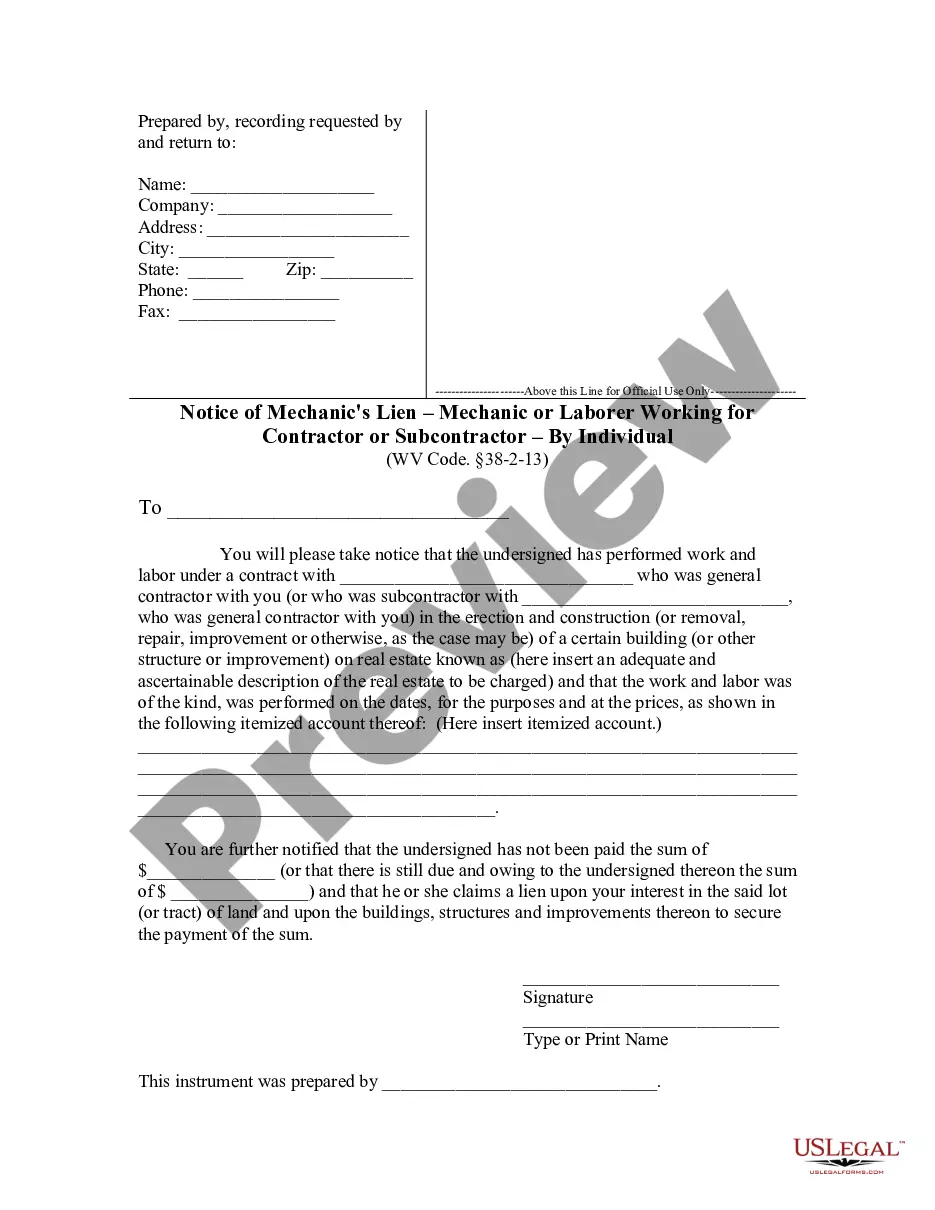
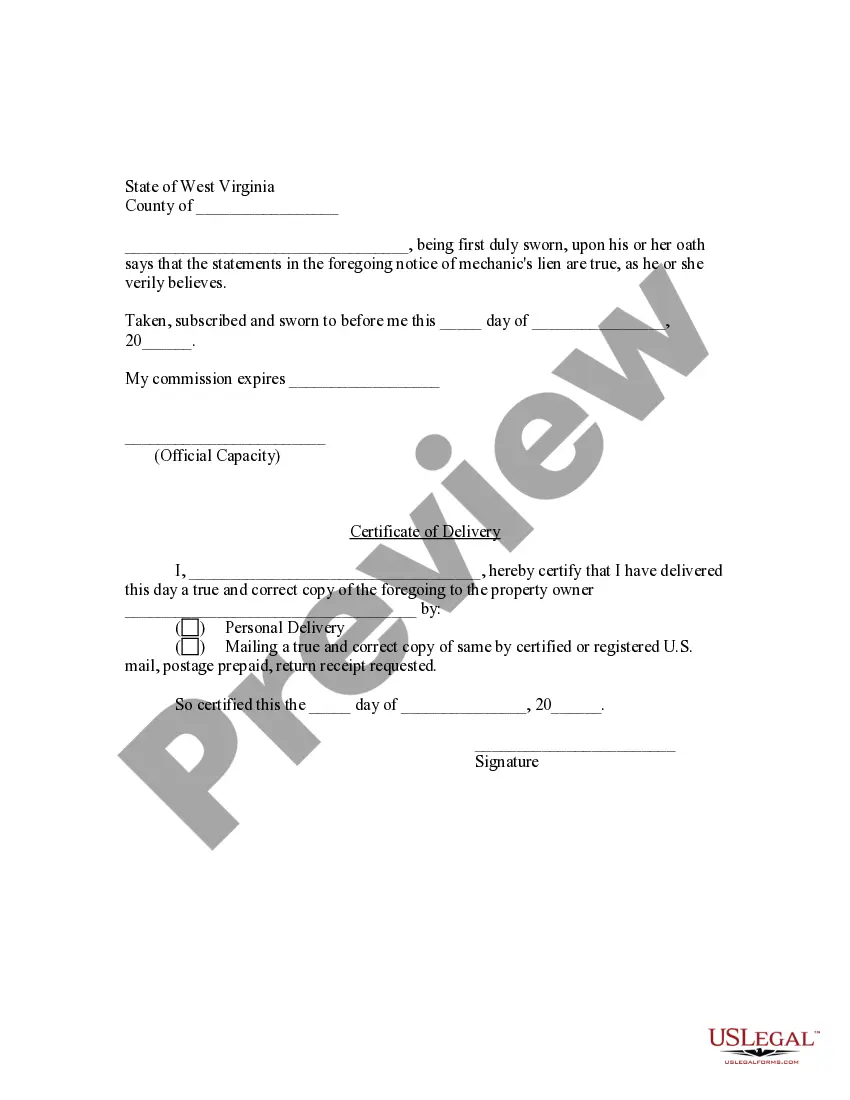
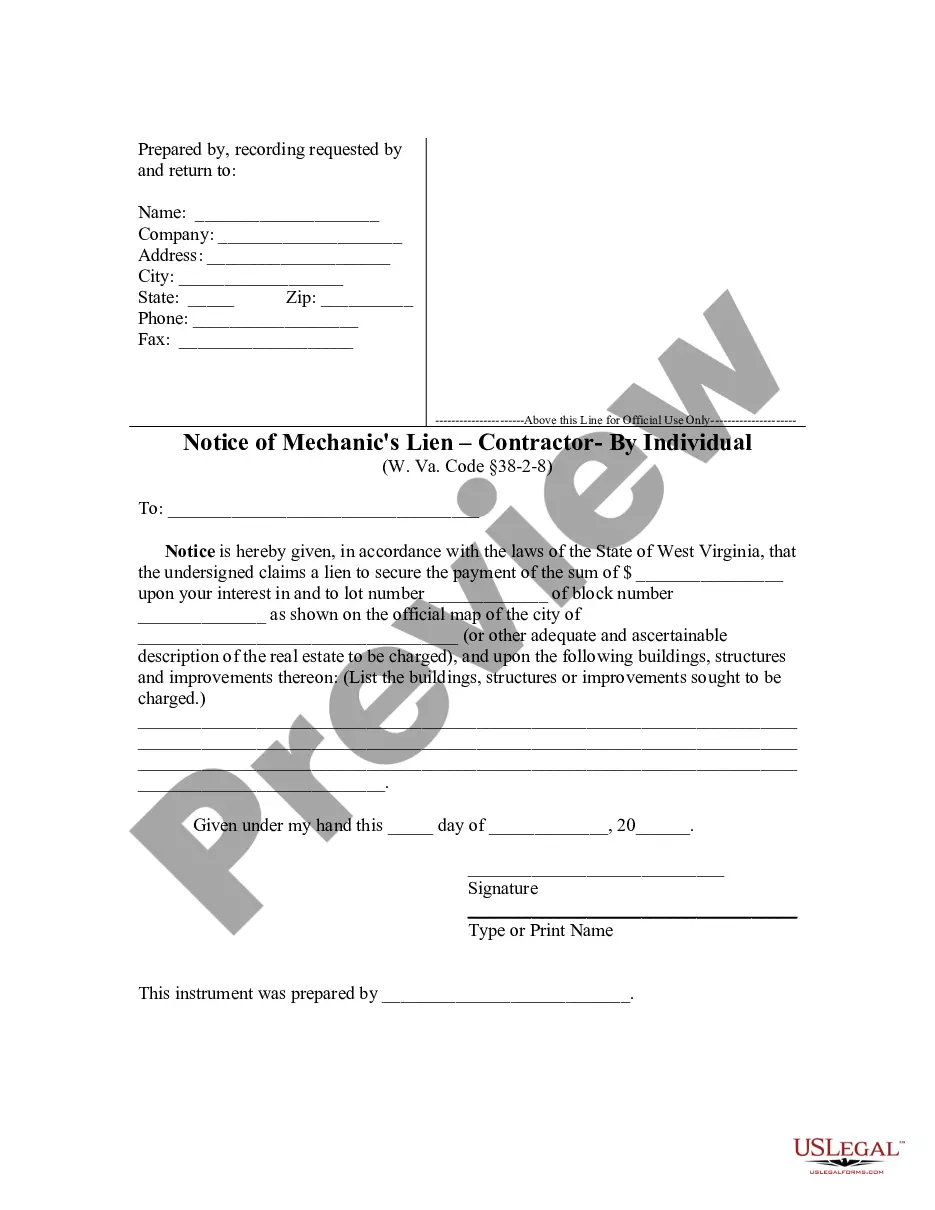
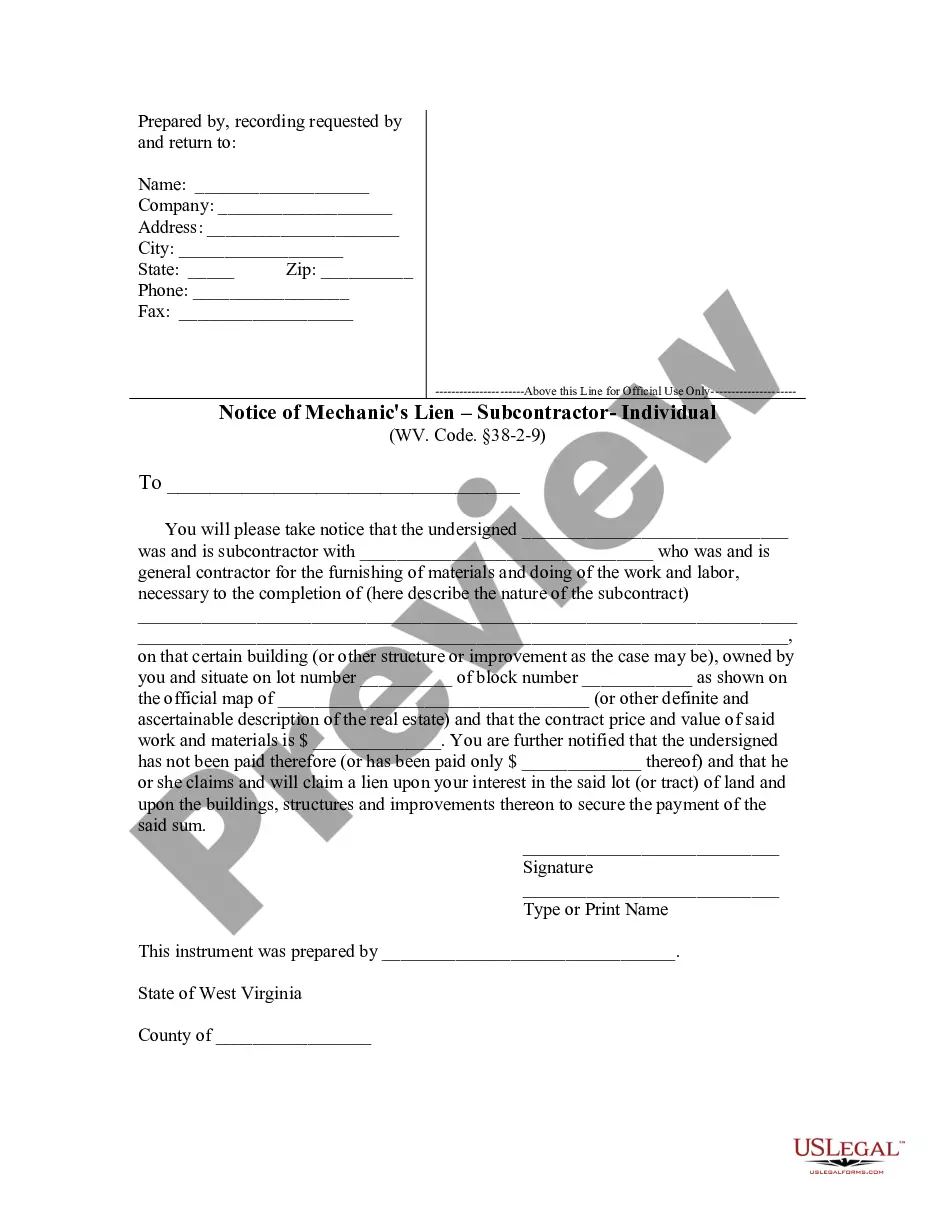
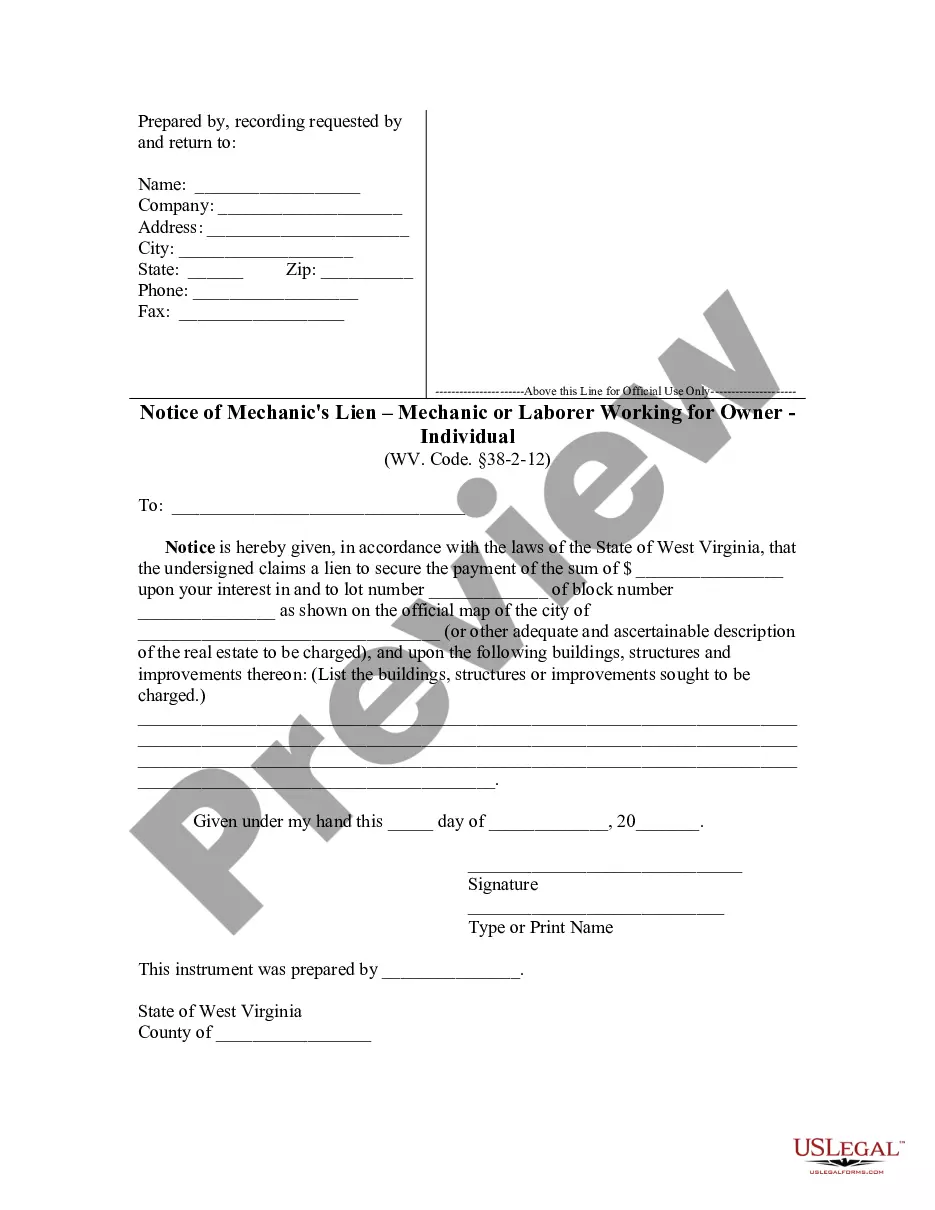
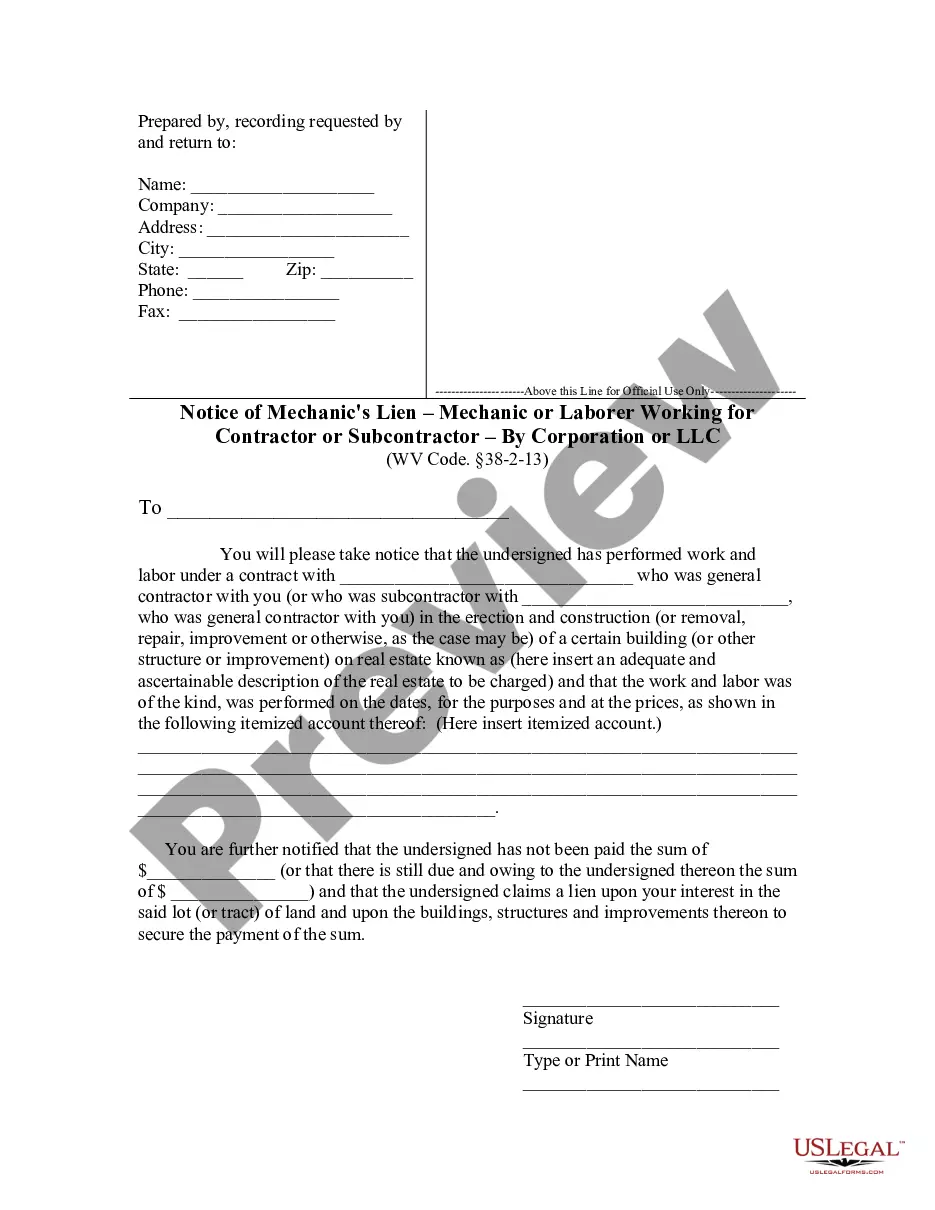
The Notice of Mechanic's Lien is a legal document used by laborers to inform property owners that they are placing a lien on the property due to unpaid work. This form is distinct because it is specifically intended for individuals who have worked as contractors or subcontractors and ensures that their claim for payment is formally recognized. By filing this notice, the laborer secures their right to be compensated for the labor performed on the property.
What’s included in this form
- Section for party names: Identifies the laborer, property owner, and contractor details.
- Property description: Specifies the location and nature of the work performed on the property.
- Itemized account: Lists the dates, type of work completed, and amounts due.
- Claim amount: States the total sum owed to the laborer.
- Signature line: Required for formal acknowledgment of the notice.
- Notary acknowledgment: Options for notarization to verify authenticity.
Common use cases
This form should be used when a laborer has not received payment for their contracted work on a property. It is particularly necessary when the laborer intends to protect their right to payment by placing a lien on the property, which may compel the owner to settle the outstanding debt to avoid further legal action.
Intended users of this form
This form is intended for:
- Individual laborers who have worked for a contractor or subcontractor.
- Self-employed contractors seeking payment for services rendered.
- Any individual who wishes to secure their right to lien against a property for unpaid work.
Completing this form step by step
- Identify the parties: Fill in the names of the laborer, owner, and contractor involved.
- Specify the property: Provide a detailed description of the property where the work was performed.
- Detail the work performed: Include an itemized account with dates, types of work, and amounts due.
- Enter the claim amount: Clearly state the total sum owed to secure the lien.
- Obtain necessary signatures: Ensure the laborer signs the document and complete notarization if required.
Does this form need to be notarized?
This form needs to be notarized to ensure legal validity. US Legal Forms provides secure online notarization powered by Notarize, allowing you to complete the process through a verified video call, available anytime.
Get your form ready online
Our built-in tools help you complete, sign, share, and store your documents in one place.
Make edits, fill in missing information, and update formatting in US Legal Forms—just like you would in MS Word.
Download a copy, print it, send it by email, or mail it via USPS—whatever works best for your next step.
Sign and collect signatures with our SignNow integration. Send to multiple recipients, set reminders, and more. Go Premium to unlock E-Sign.
If this form requires notarization, complete it online through a secure video call—no need to meet a notary in person or wait for an appointment.
We protect your documents and personal data by following strict security and privacy standards.

Make edits, fill in missing information, and update formatting in US Legal Forms—just like you would in MS Word.

Download a copy, print it, send it by email, or mail it via USPS—whatever works best for your next step.

Sign and collect signatures with our SignNow integration. Send to multiple recipients, set reminders, and more. Go Premium to unlock E-Sign.

If this form requires notarization, complete it online through a secure video call—no need to meet a notary in person or wait for an appointment.

We protect your documents and personal data by following strict security and privacy standards.
Typical mistakes to avoid
- Failing to provide a complete and accurate property description.
- Not itemizing the work performed or missing dates and amounts.
- Omitting signatures or not completing the notarization process when required.
- Filing the notice too late to protect the right to a lien under state law.
Benefits of using this form online
- Convenience: Access and download the form at any time without traveling to a legal office.
- Editability: Fill in the fields electronically, ensuring clarity and accuracy.
- Reliability: Use professionally drafted templates created by licensed attorneys to avoid errors.
Looking for another form?
Form popularity
FAQ
A lien is essentially a claim for repayment of a debt. In the construction context, a lien is of considerable importance because it offers considerable power to a subcontractor to seek payment from an owner through the property itself for a debt owed to the subcontractor by a general contractor or other third party.
If a general contractor refuses to pay his subcontractors, they can make a claim against the payment bond. The surety company will pay out the subcontractors for at least part of their money and take the contractor to court.
Legally, an unpaid contractor, subcontractor or supplier can file a lien (sometimes called a mechanic's lien) that could eventually force the sale of your home in place of compensation.Conversely, if the contractor who worked on your project does not pay for materials, a supplier could place a lien on your property.
The people who can file mechanic's liens are identified by state law. A subcontractor or supplier to a subcontractor may not be able to file a lien. Also, unlicensed contractors are often barred from filing a mechanic's lien.
Usually, anything that subcontractors would be liable for, general contractors may also be liable for (with the caveat that if the contractor has to pay for damages, the subcontractor who is legally responsible will often reimburse the general contractor).
To enforce the lien, the contractor must file a lawsuit within 90 days from the date of recording the lien. If this deadline is passed, the contractor may not be able to enforce the lien and may be required to remove the lien.
If a license is required for the work performed, an unlicensed contractor NOT ONLY cannot file a valid mechanics lien, but s/he also cannot file suit to recover, either. In California, unlicensed contractors are not entitled to be paid period for anything, and will be thrown out of court if they sue to get paid.
When a contractor files a mechanics' (construction) lien on your home, the lien makes your home into what's called security for an outstanding debt, which the contractor claims is due and unpaid for services or materials.
The simplest way to prevent liens and ensure that subcontractors and suppliers are paid is to pay with joint checks. This is when both parties endorse the check. Compare the contractor's materials or labor bill to the schedule of payments in your contract and the Preliminary Notices.