Wisconsin Last Will and Testament for Single Person with Adult Children
About this form
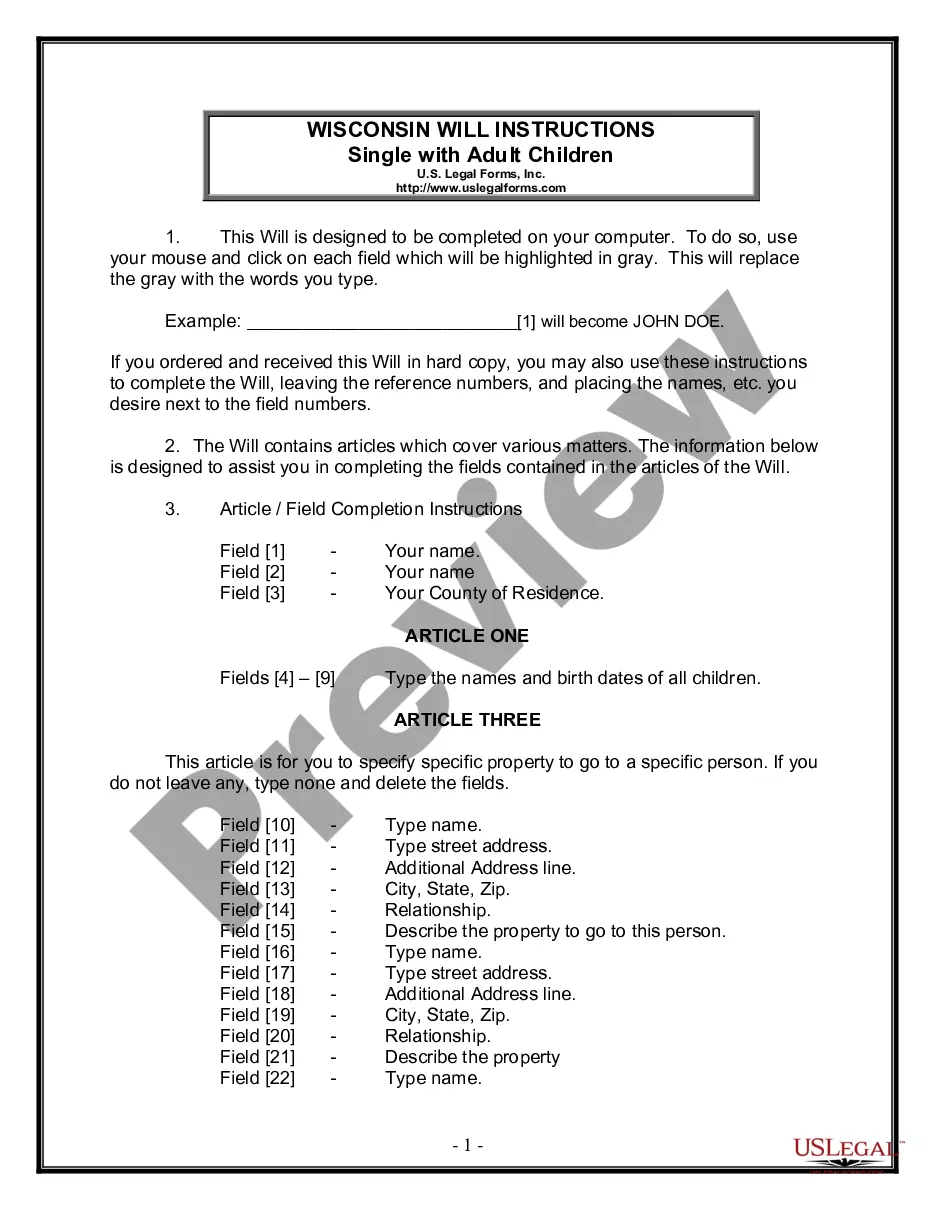
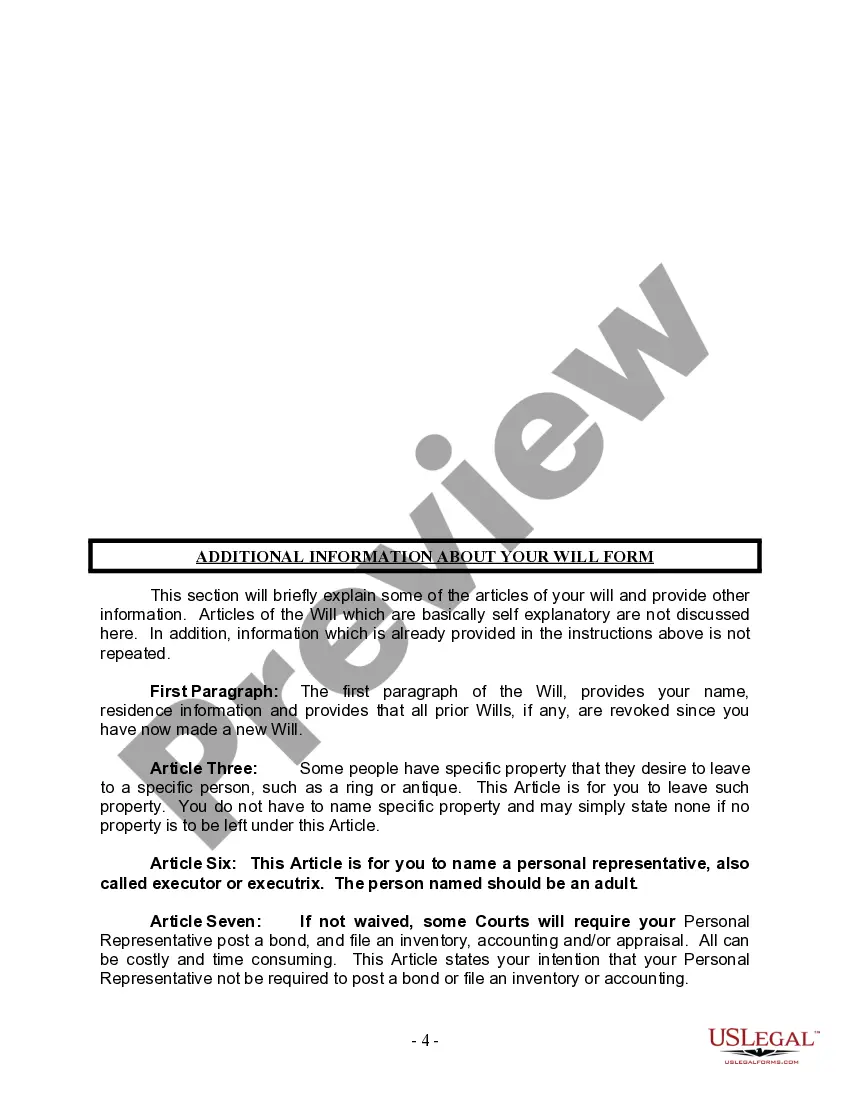
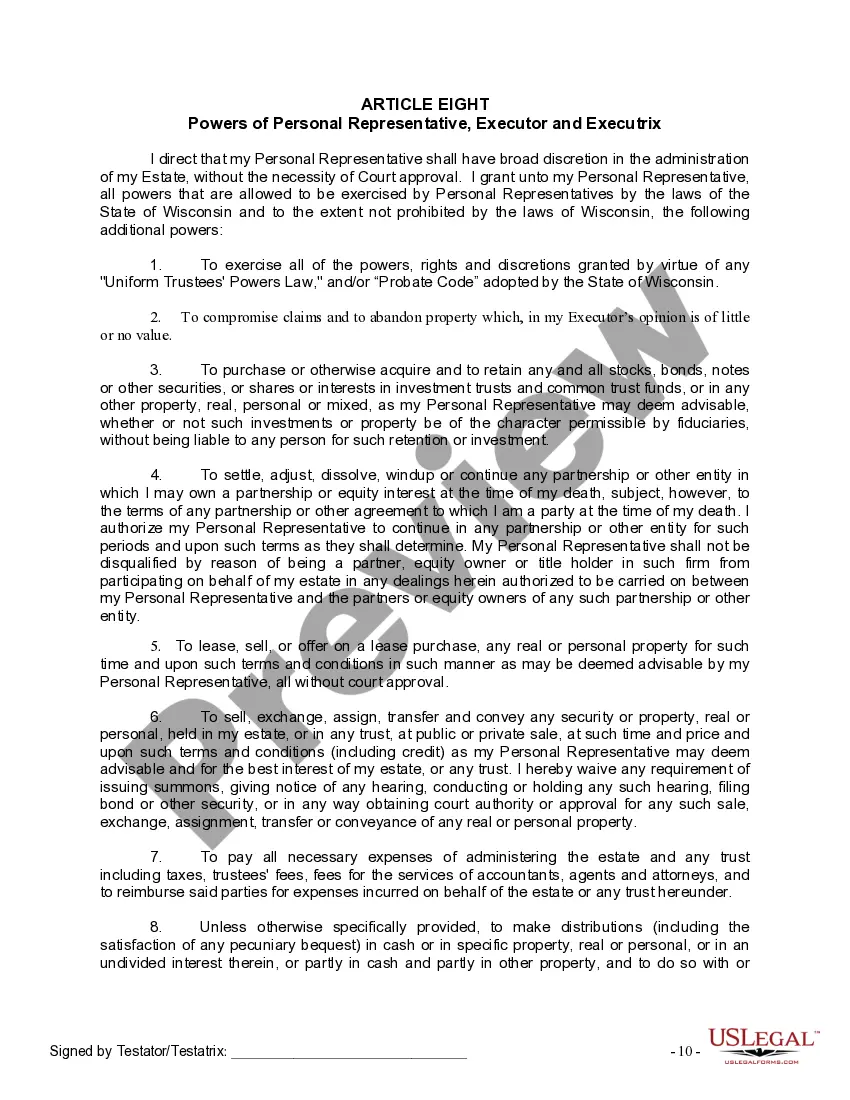
The Last Will and Testament for a Single Person with Adult Children is a legal document that outlines how your assets will be distributed upon your death. This form is specifically designed for individuals who are single and have adult children. It allows you to appoint a personal representative, designate beneficiaries for your property, and include provisions relevant to your estate. Unlike other wills, this form caters to the specific needs of single individuals while providing clear instructions for the distribution of assets and responsibilities.
Form components explained
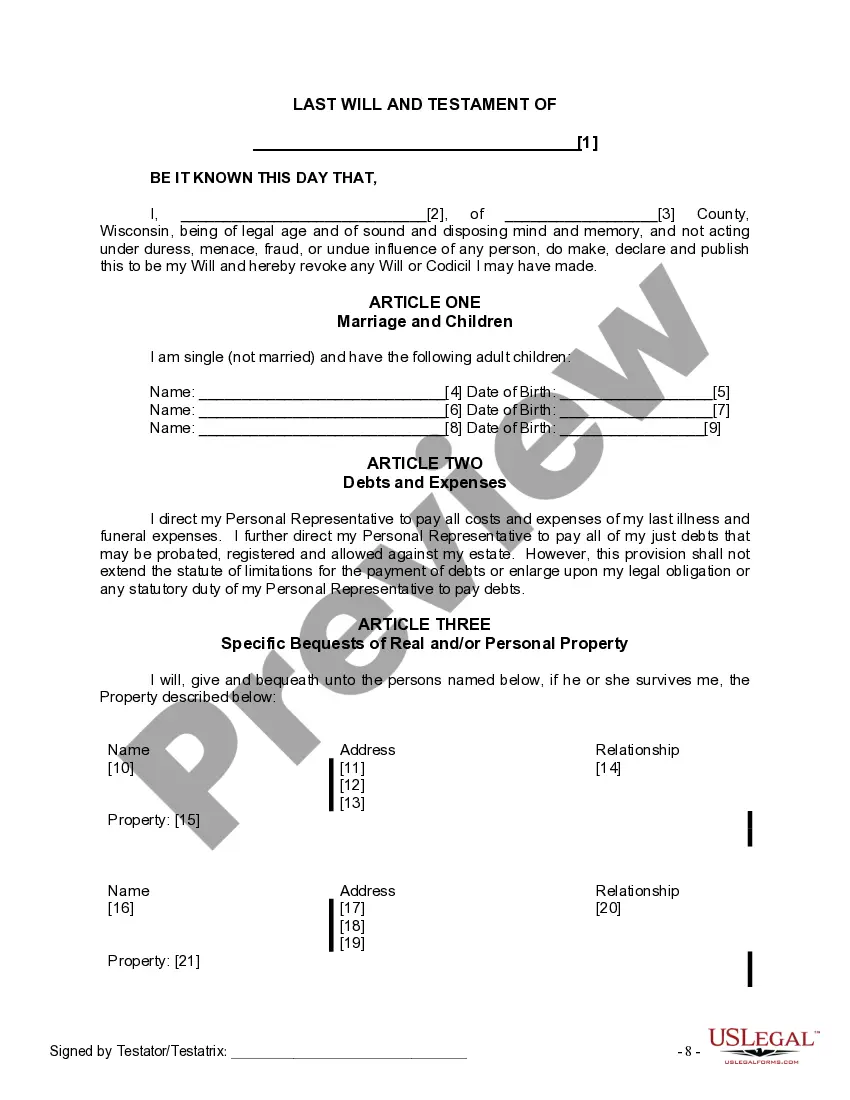
- Personal details: Name, county of residence, and information about your adult children.
- Executor: Appoint a personal representative to administer your estate.
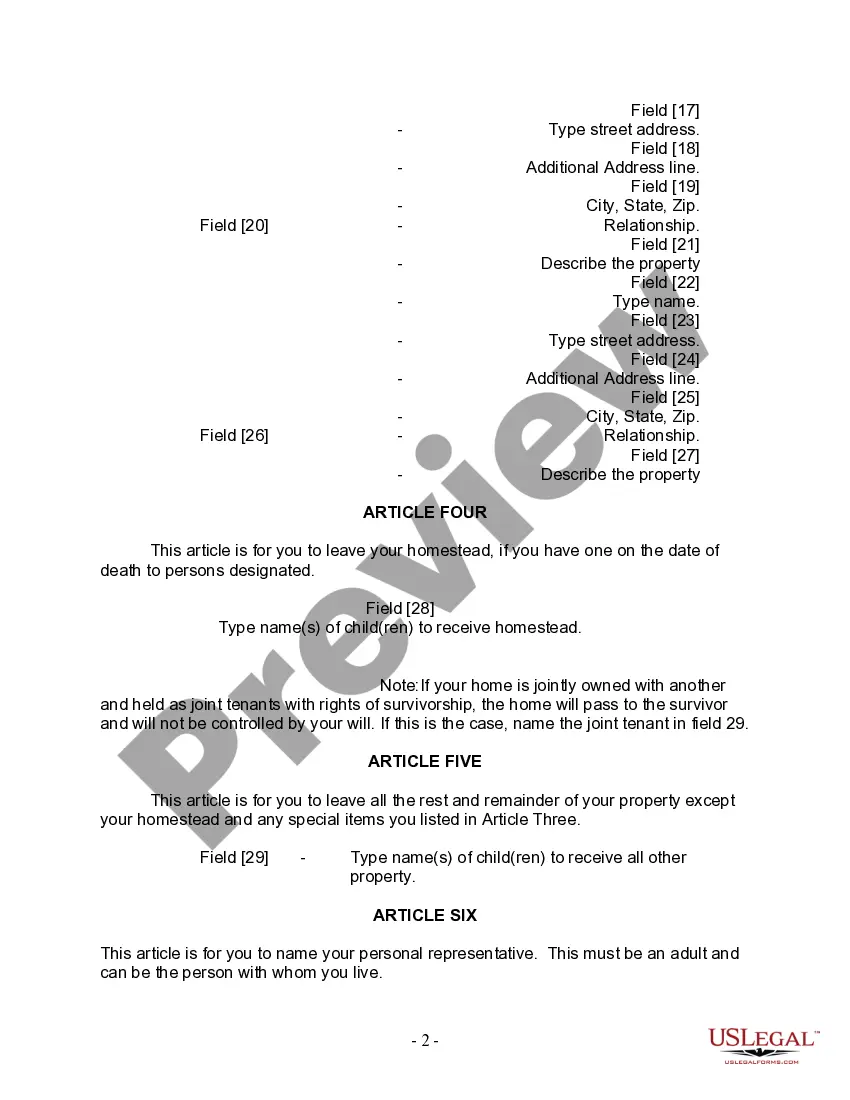
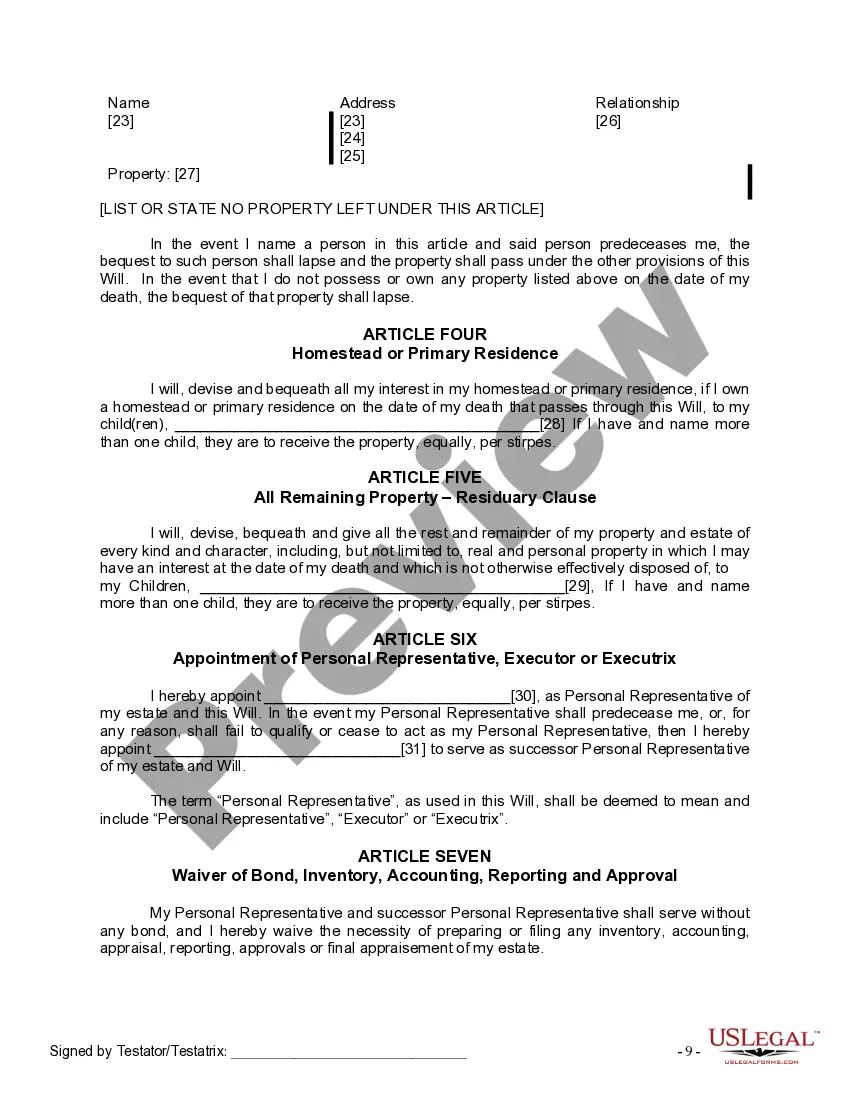
- Specific bequests: Specify any particular items or properties to be given to chosen individuals.
- Homestead: Designate the beneficiaries for your primary residence.
- Residuary clause: State how the remainder of your estate is to be distributed.
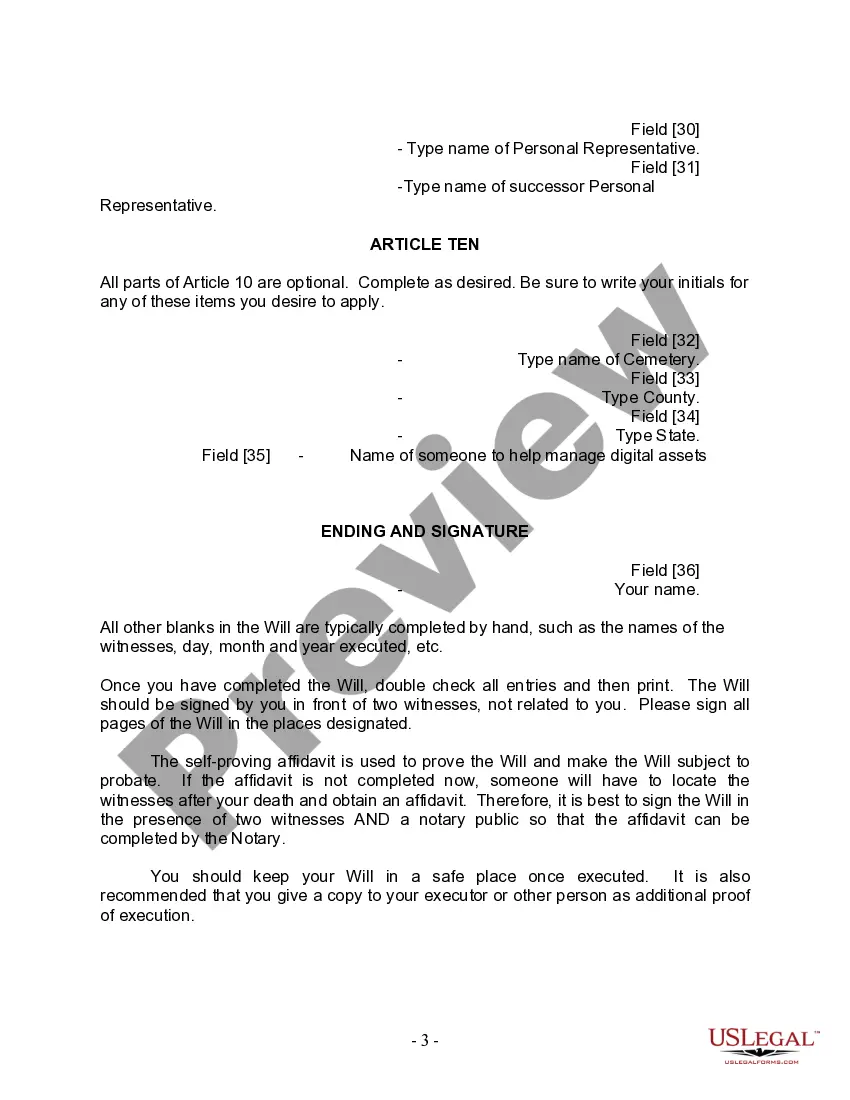
- Witnesses: Instructions on signing the will in front of two non-related witnesses.







Common use cases
This form should be used when you want to ensure your assets are distributed according to your wishes after your passing. It is particularly relevant if you are a single person with adult children and wish to clarify your intentions regarding property distribution, guardianship, and the appointment of a personal representative. Using this will can prevent legal disputes and ensure a smooth transition of your estate.
Intended users of this form
This form is suitable for:
- Single individuals with adult children.
- Those looking to designate specific persons to receive certain properties.
- Someone wishing to appoint an executor for their estate.
- Anyone wanting to avoid intestacy laws that would otherwise dictate asset distribution.
Completing this form step by step
- Enter your name and county of residence in the designated fields.
- List the names and birth dates of your adult children.
- Specify any properties you wish to bequeath to specific individuals.
- Designate who will receive your homestead or primary residence.
- Appoint a personal representative, and provide their name and successor's name if applicable.
- Ensure you sign the will in front of two witnesses who are not related or named in the will.
Is notarization required?
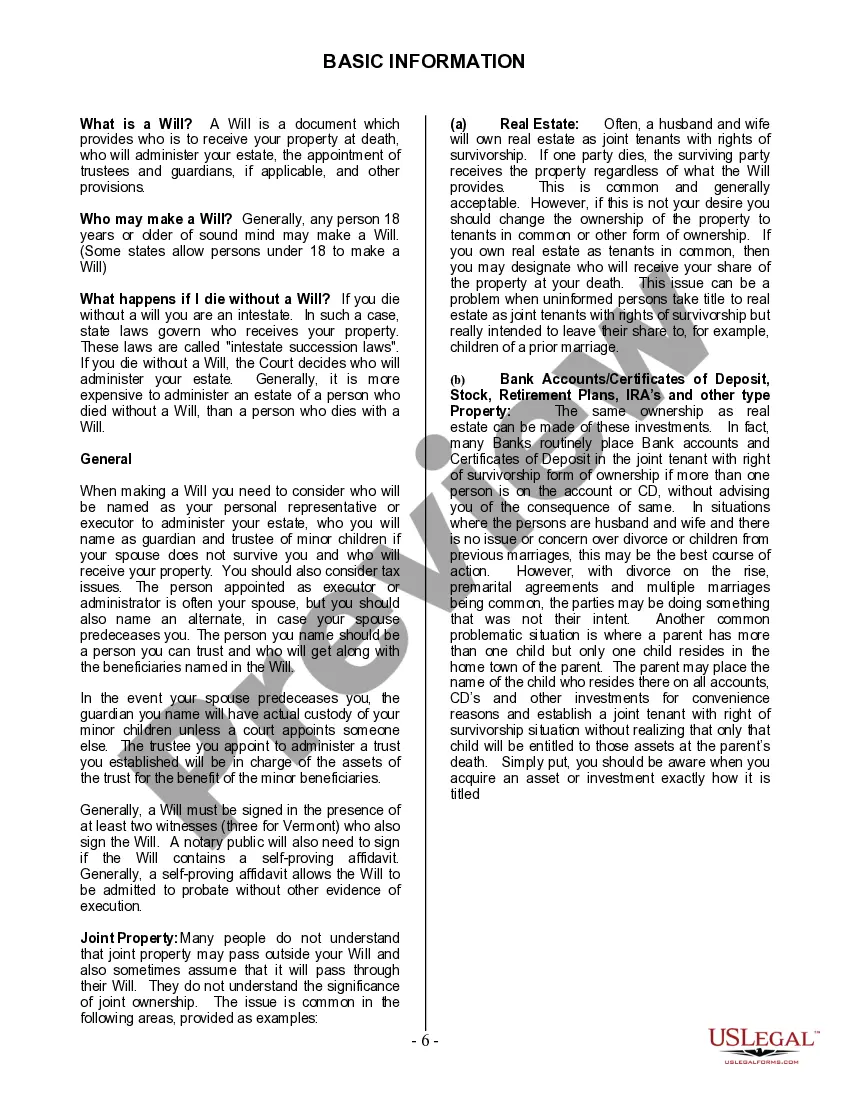
This form does not typically require notarization unless specified by local law. However, it is recommended to sign the will in the presence of a notary public to facilitate the self-proving process, which can simplify probate procedures later on.
Get your form ready online
Our built-in tools help you complete, sign, share, and store your documents in one place.
Make edits, fill in missing information, and update formatting in US Legal Forms—just like you would in MS Word.
Download a copy, print it, send it by email, or mail it via USPS—whatever works best for your next step.
Sign and collect signatures with our SignNow integration. Send to multiple recipients, set reminders, and more. Go Premium to unlock E-Sign.
If this form requires notarization, complete it online through a secure video call—no need to meet a notary in person or wait for an appointment.
We protect your documents and personal data by following strict security and privacy standards.

Make edits, fill in missing information, and update formatting in US Legal Forms—just like you would in MS Word.

Download a copy, print it, send it by email, or mail it via USPS—whatever works best for your next step.

Sign and collect signatures with our SignNow integration. Send to multiple recipients, set reminders, and more. Go Premium to unlock E-Sign.

If this form requires notarization, complete it online through a secure video call—no need to meet a notary in person or wait for an appointment.

We protect your documents and personal data by following strict security and privacy standards.
Common mistakes to avoid
- Not having the will signed in front of the required number of witnesses.
- Failing to update the will after significant life changes, such as the birth of a child or changes in relationships.
- Overlooking the specific designation of beneficiaries, leading to confusion regarding asset distribution.
- Filing the will in places that may not keep it secure, risking loss or damage.
Advantages of online completion
- Convenient: Complete and download the document from anywhere at any time.
- Editability: Customize the form as needed to reflect your specific wishes.
- Guided process: Follow clear instructions that help ensure the form is completed correctly.
- Reliable: Access forms drafted by licensed attorneys, ensuring legal compliance.
- Legally binding document outlining your end-of-life wishes.
- Helps avoid intestate succession laws, which determine asset distribution without a Will.
- Specifies who manages your estate, reducing potential disputes among heirs.
What to keep in mind
- The Last Will and Testament for Single Person with Adult Children is designed specifically for single individuals with adult children.
- It allows you to articulate your estate distribution clearly and legally.
- Proper signing and witnessing ensure that your Will remains valid.
- Consider updating your Will to reflect any significant life changes or shifts in asset ownership.
Looking for another form?

Form popularity
FAQ
There are four main requirements to the formation of a valid will: The will must have been executed with testamentary intent; The testator must have had testamentary capacity: The will must have been executed free of fraud, duress, undue influence or mistake; and.
In simple terms, you can create a handwritten document solely in your own handwriting and signed by you which can serve as your last will and testament. It's important to emphasize that no portion of the document may be typewritten and no witnesses or notaries are required.
In order for a will to be valid, it must be: made by a person who is 18 years old or over and. made voluntarily and without pressure from any other person and.signed by the two witnesses, in the presence of the person making the will, after it has been signed.
No, in Wisconsin, you do not need to notarize your will to make it legal. However, Wisconsin allows you to make your will "self-proving" and you'll need to go to a notary if you want to do that. A self-proving will speeds up probate because the court can accept the will without contacting the witnesses who signed it.
The law of Wisconsin is well settled that once a will has been validly executed and has not been revoked, it may be admitted to probate even though the original copy of the will cannot be located at the death of the testator.
What makes a will legal?The will must be signed by at least two witnesses. The witnesses must watch you sign the will, though they don't need to read it. Your witnesses, in most states, must be people who won't inherit anything under the will.
A notarized will does not need to be probated.When a person dies leaving behind a will that is not notarized, the law requires that its validity be ascertained by a notary or by a court. Similarly, any non-notarized modification made to a will must be probated, whether the will is notarized or not.
A handwritten will is also known as a holographic will in California. Under California Probate Code Section 6111, a handwritten will may be valid in California if the signature and material provisions of the will are in the handwriting of the person making the will.
Your will is valid in Wisconsin if you had capacity and signed a written will in the presence of two witnesses, and the witnesses signed your will.In general, Wisconsin law requires at least one of the witnesses to make a sworn statement that the will is valid in a court hearing.