Wisconsin Divorce Worksheet and Law Summary for Contested or Uncontested Case of over 25 pages - Ideal Client Interview Form
About this form
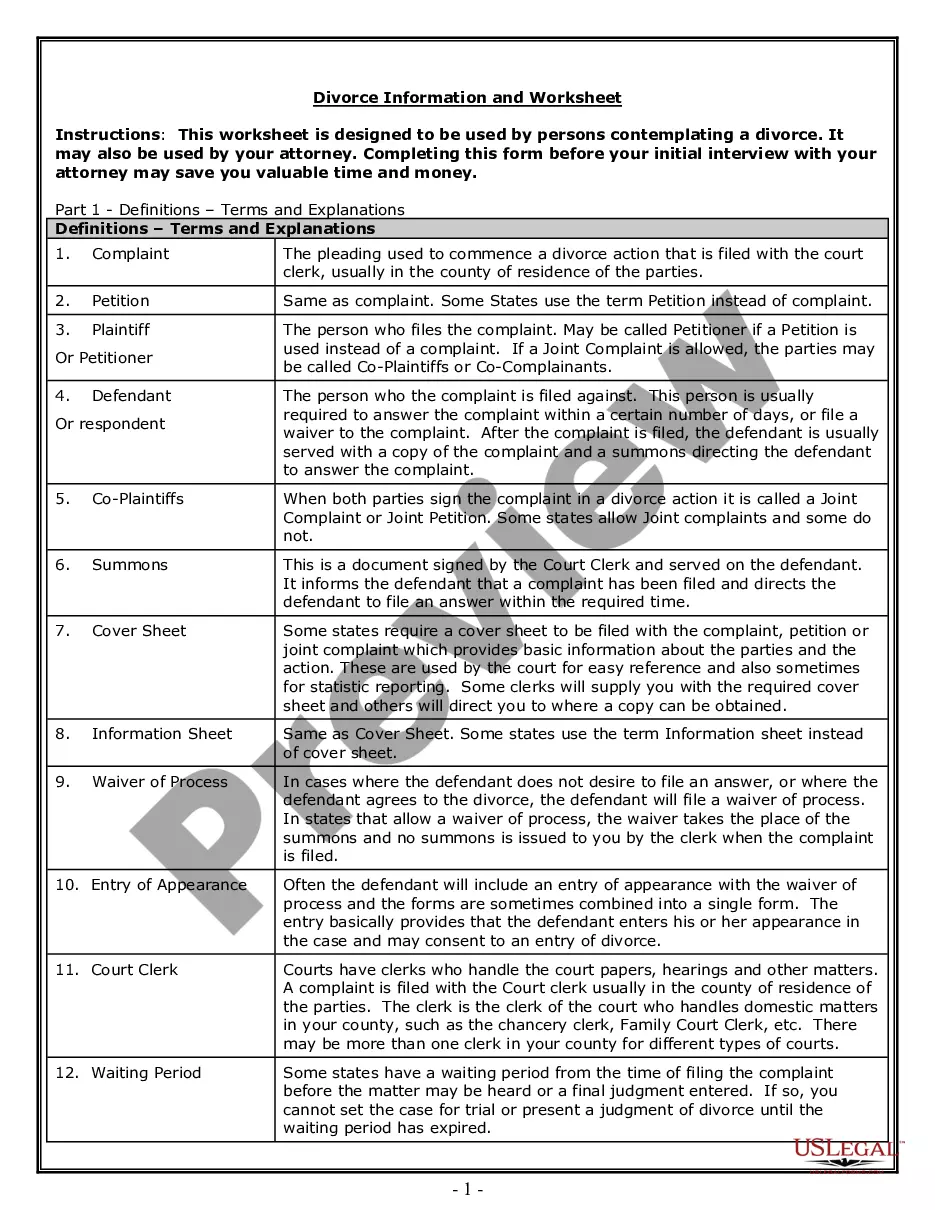
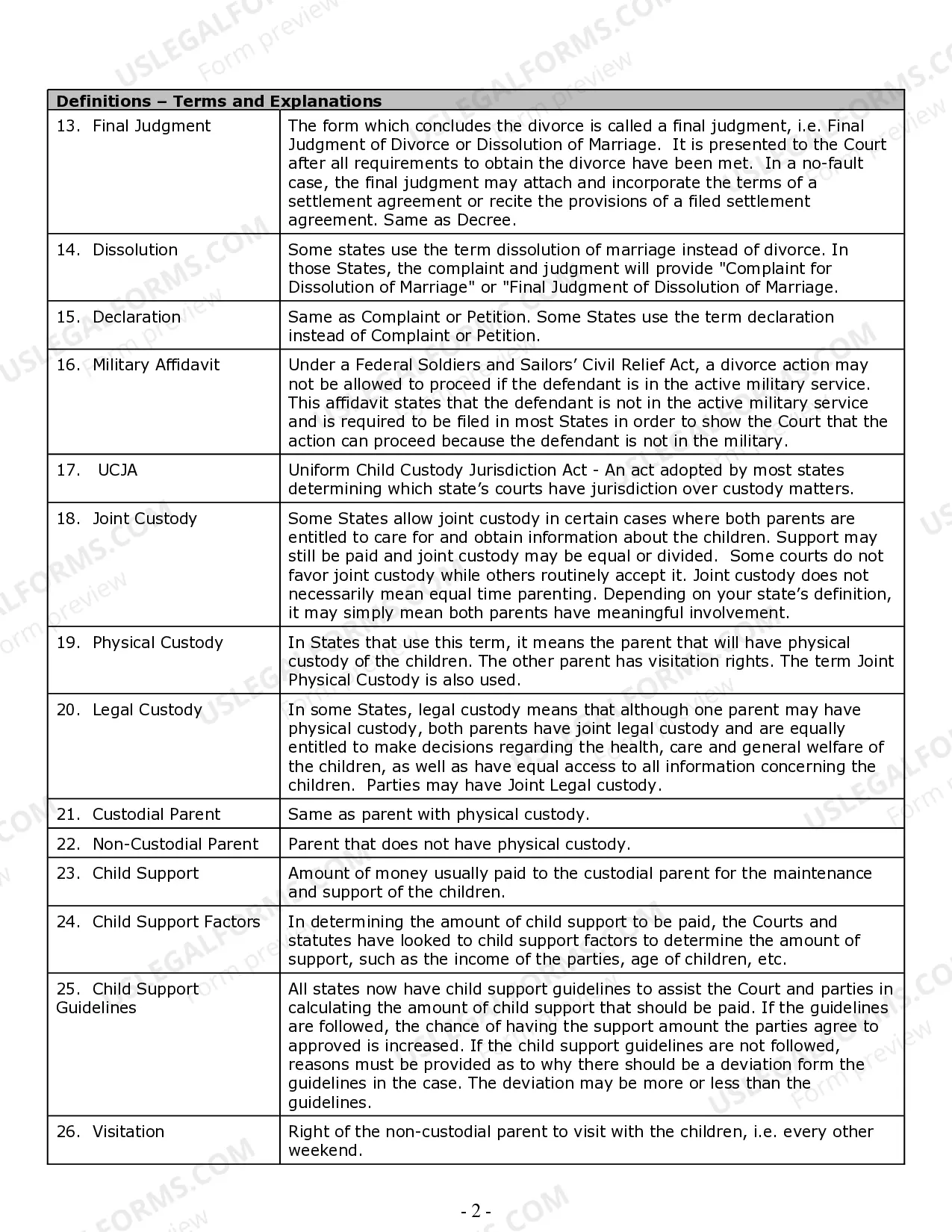
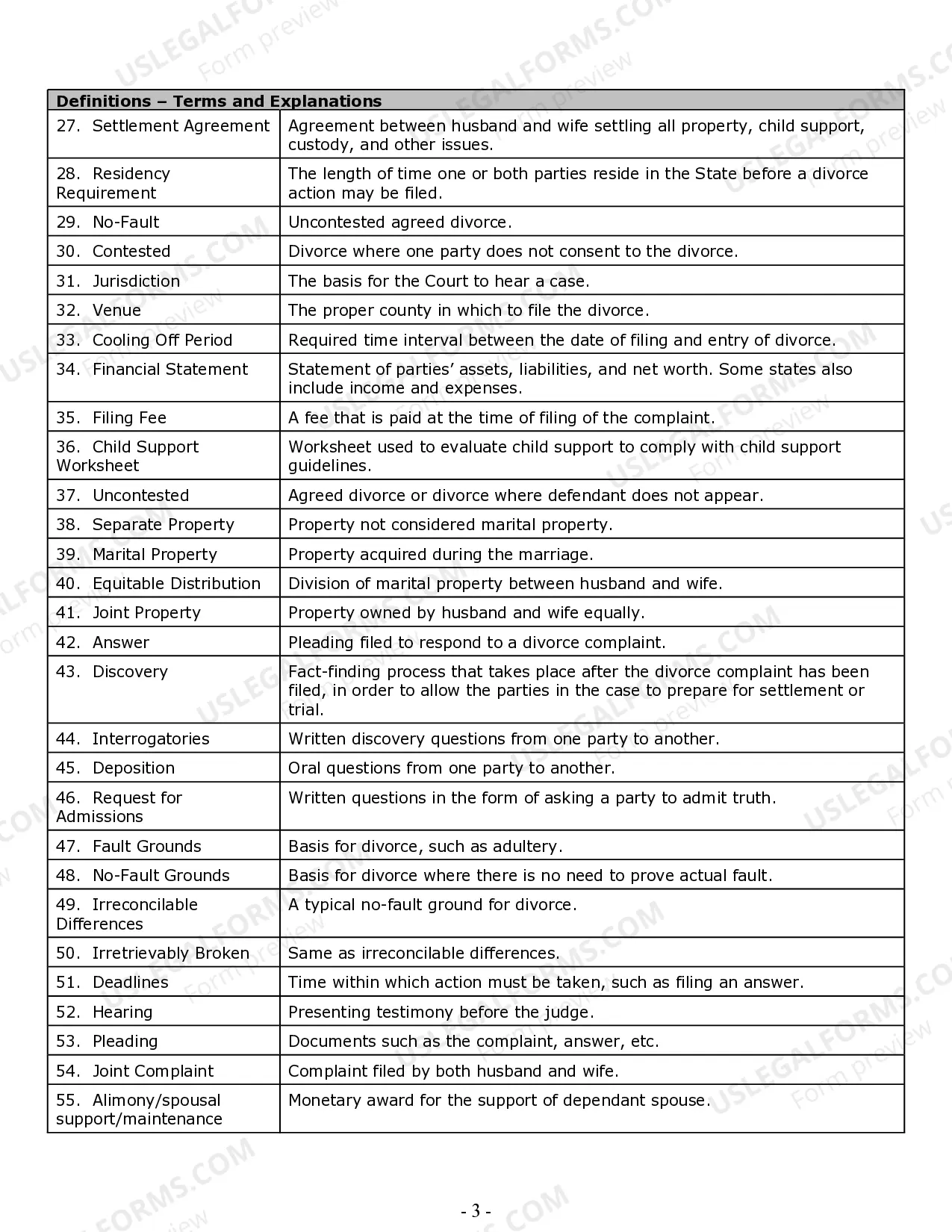
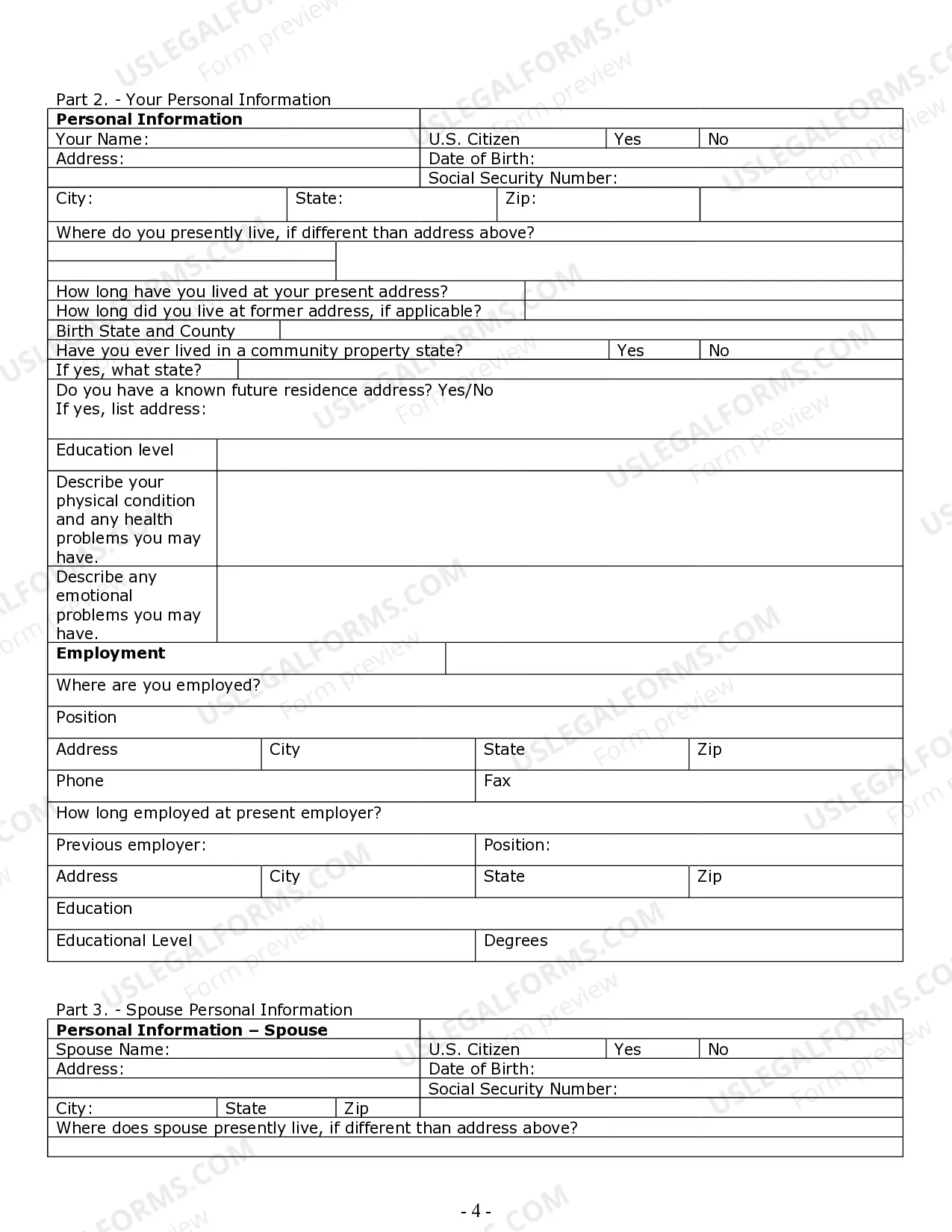
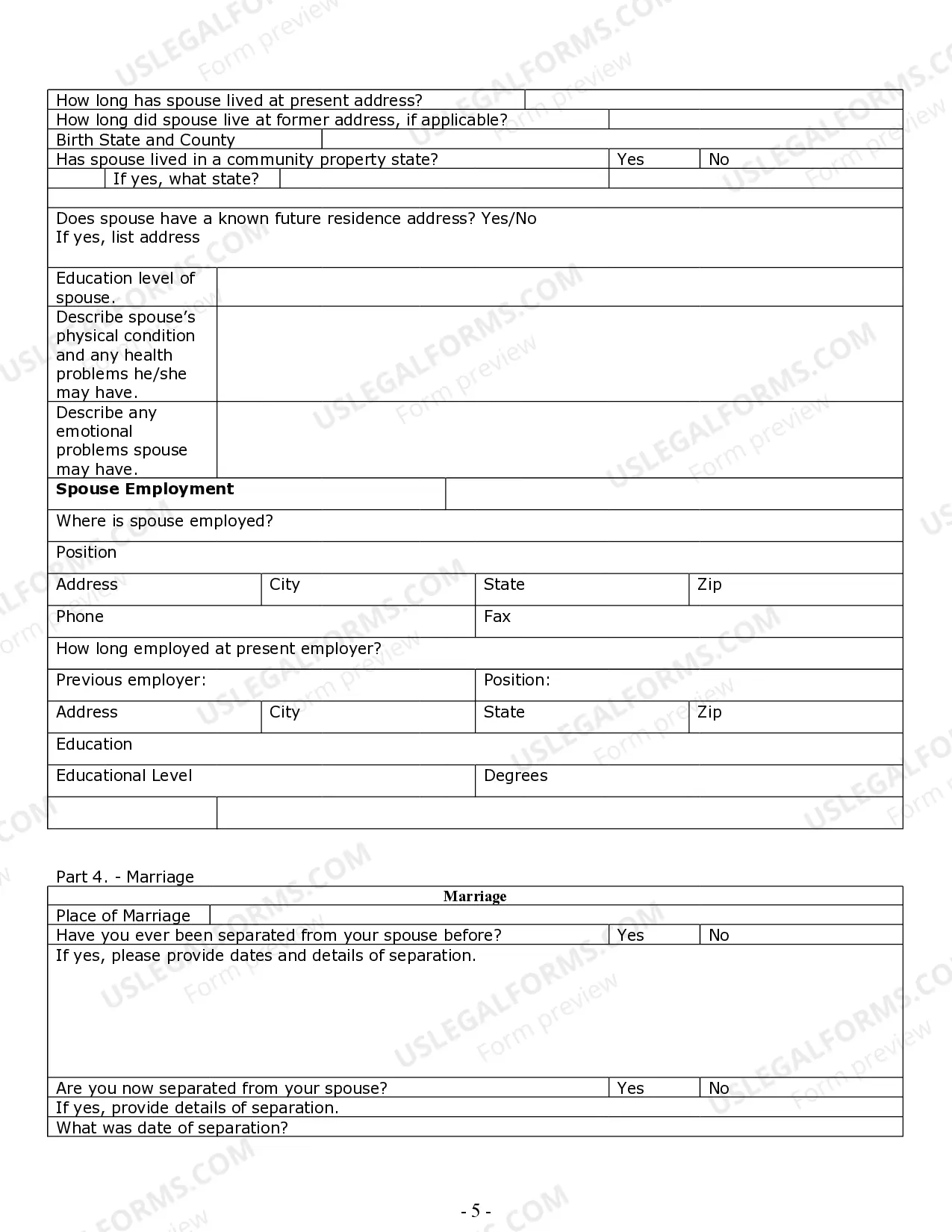
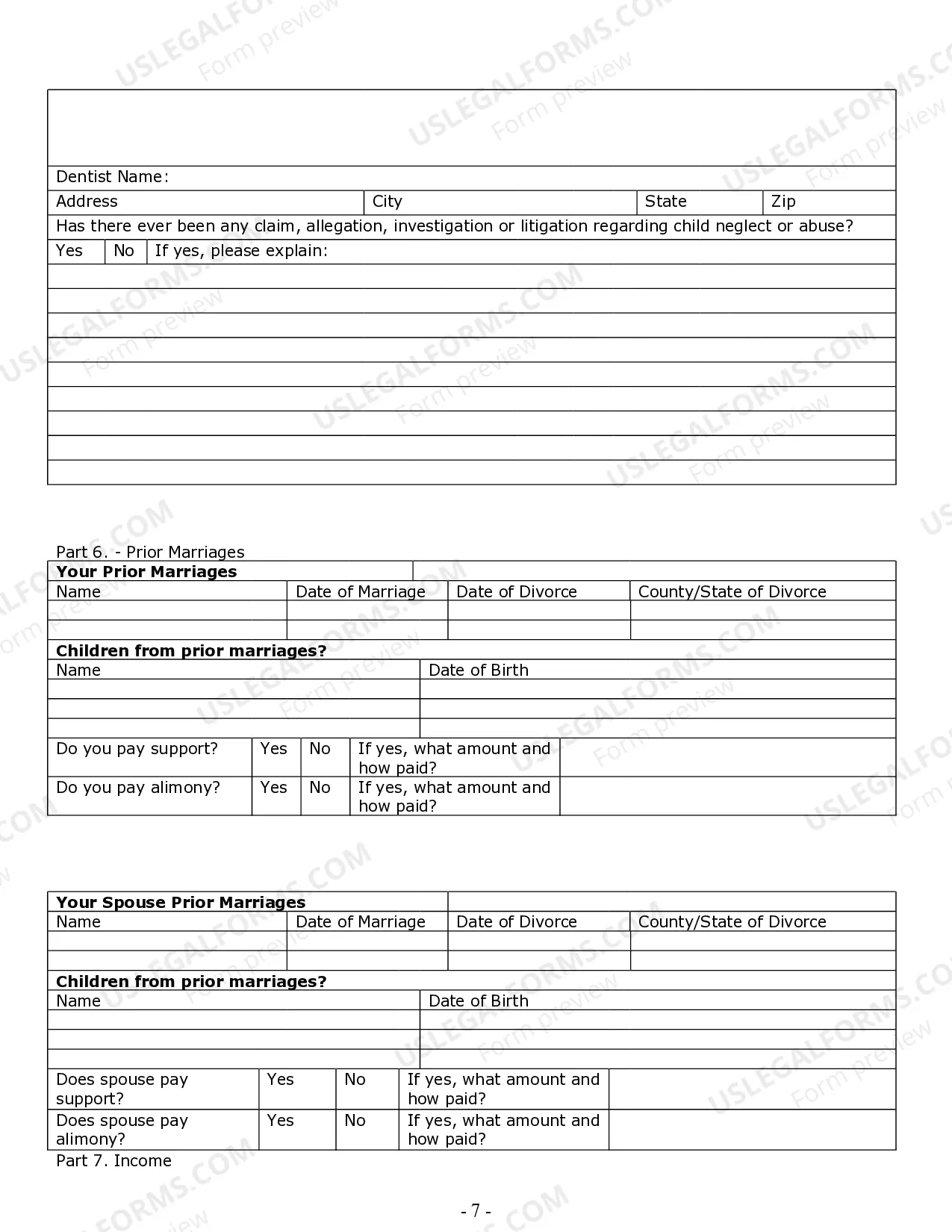
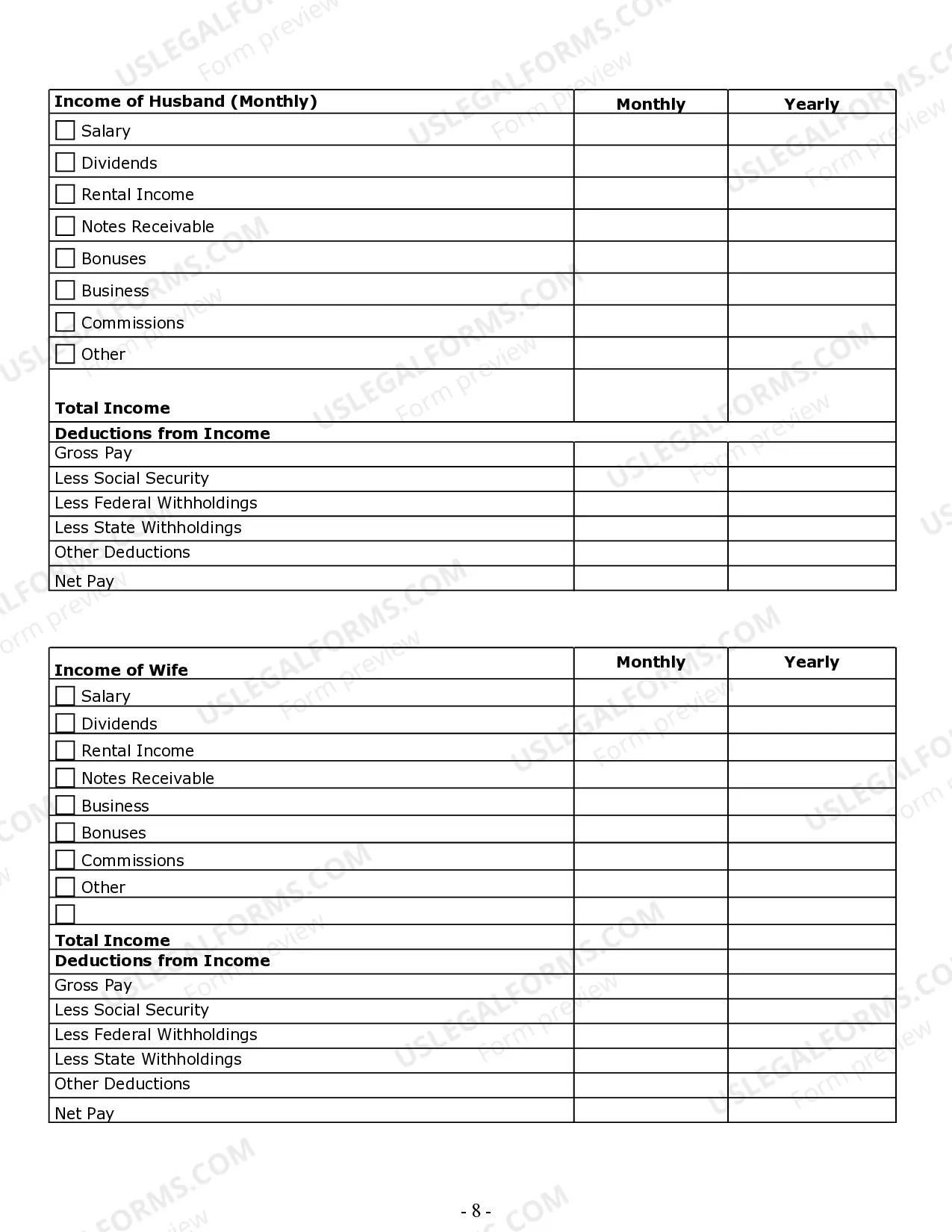
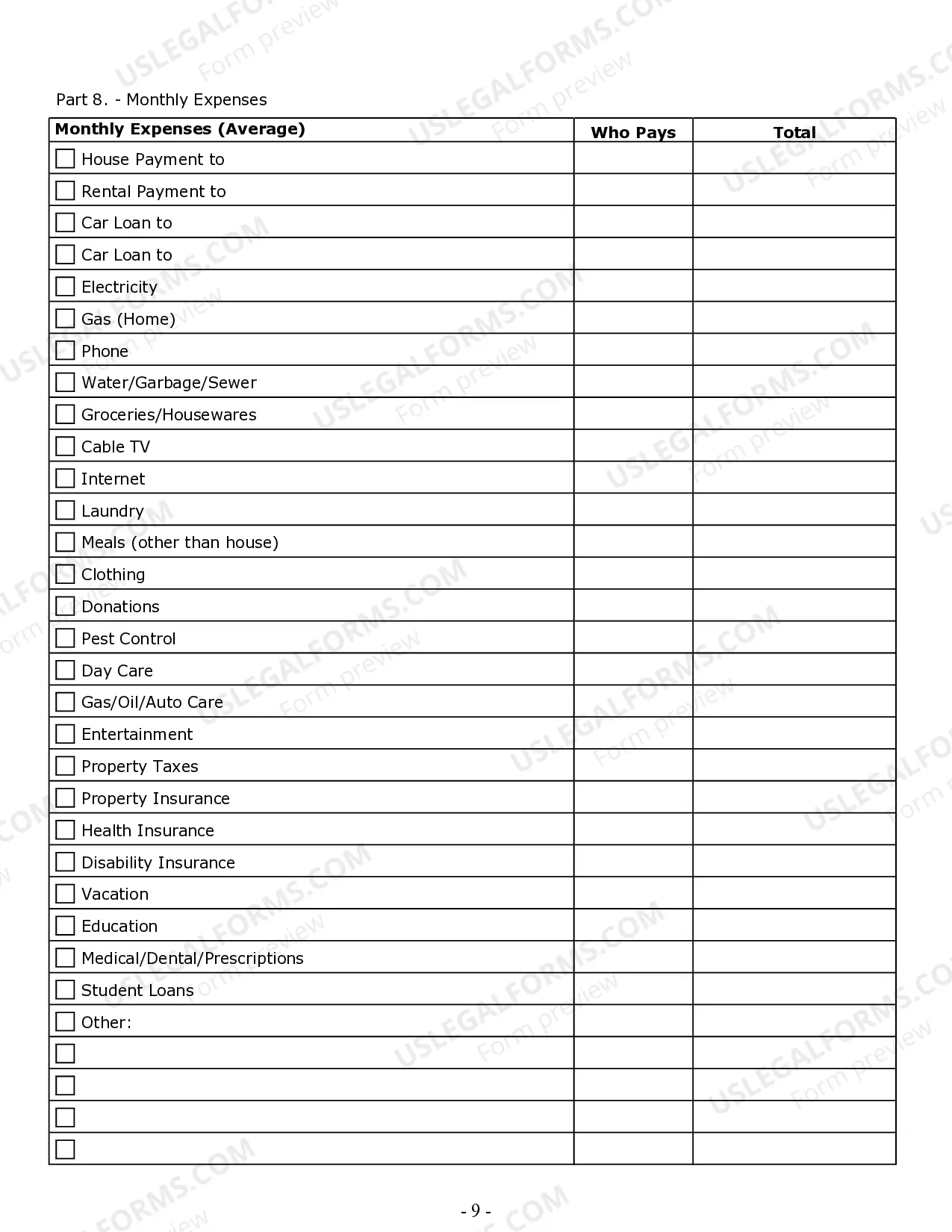
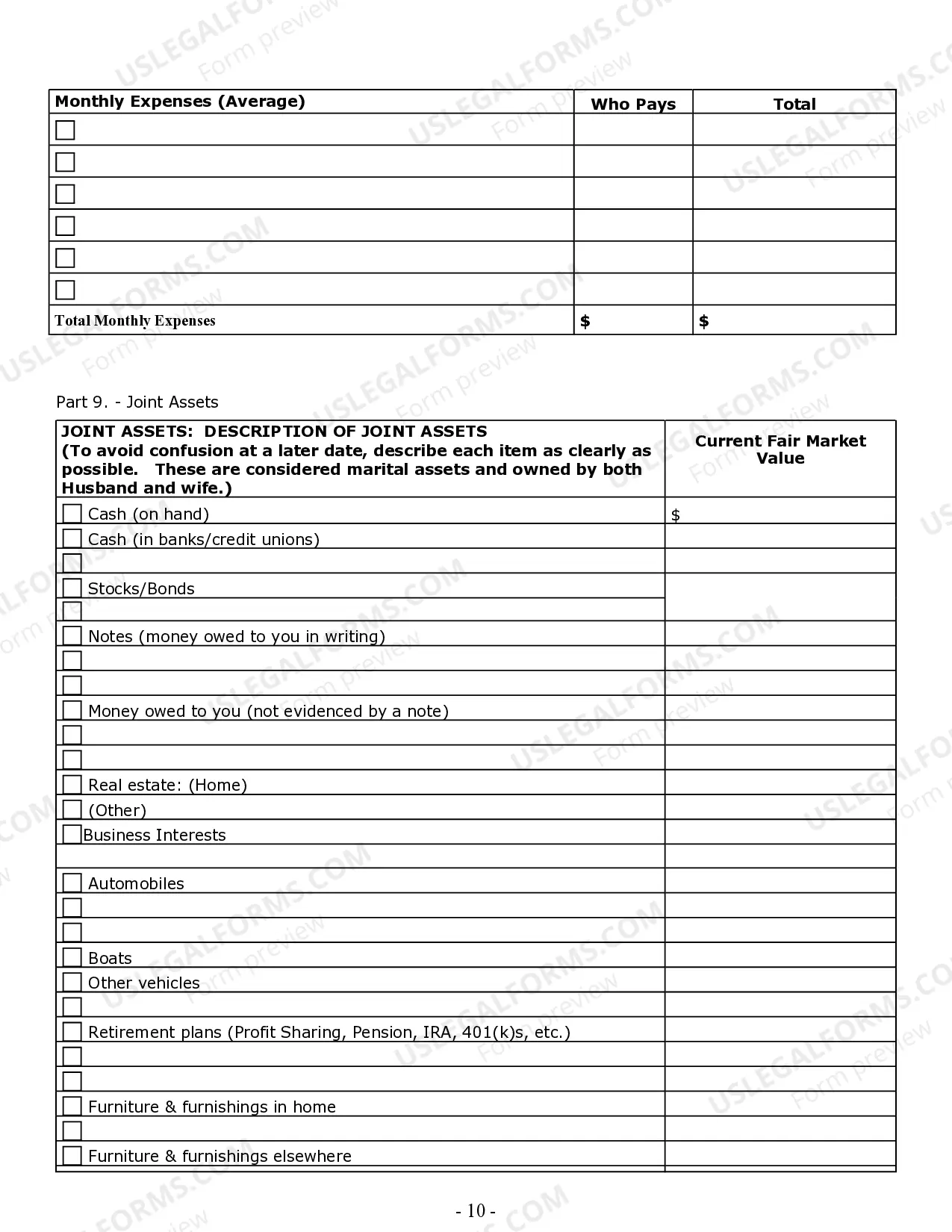
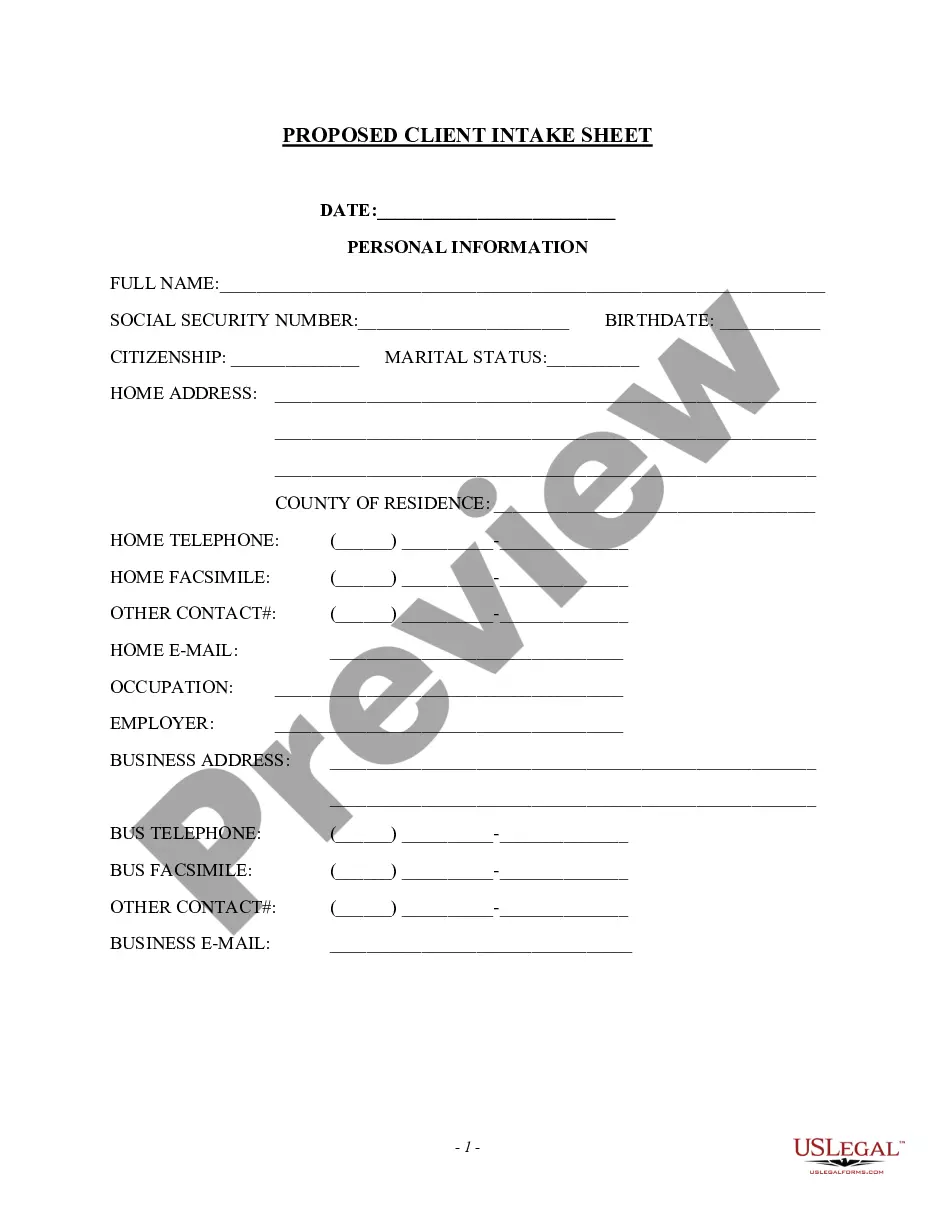
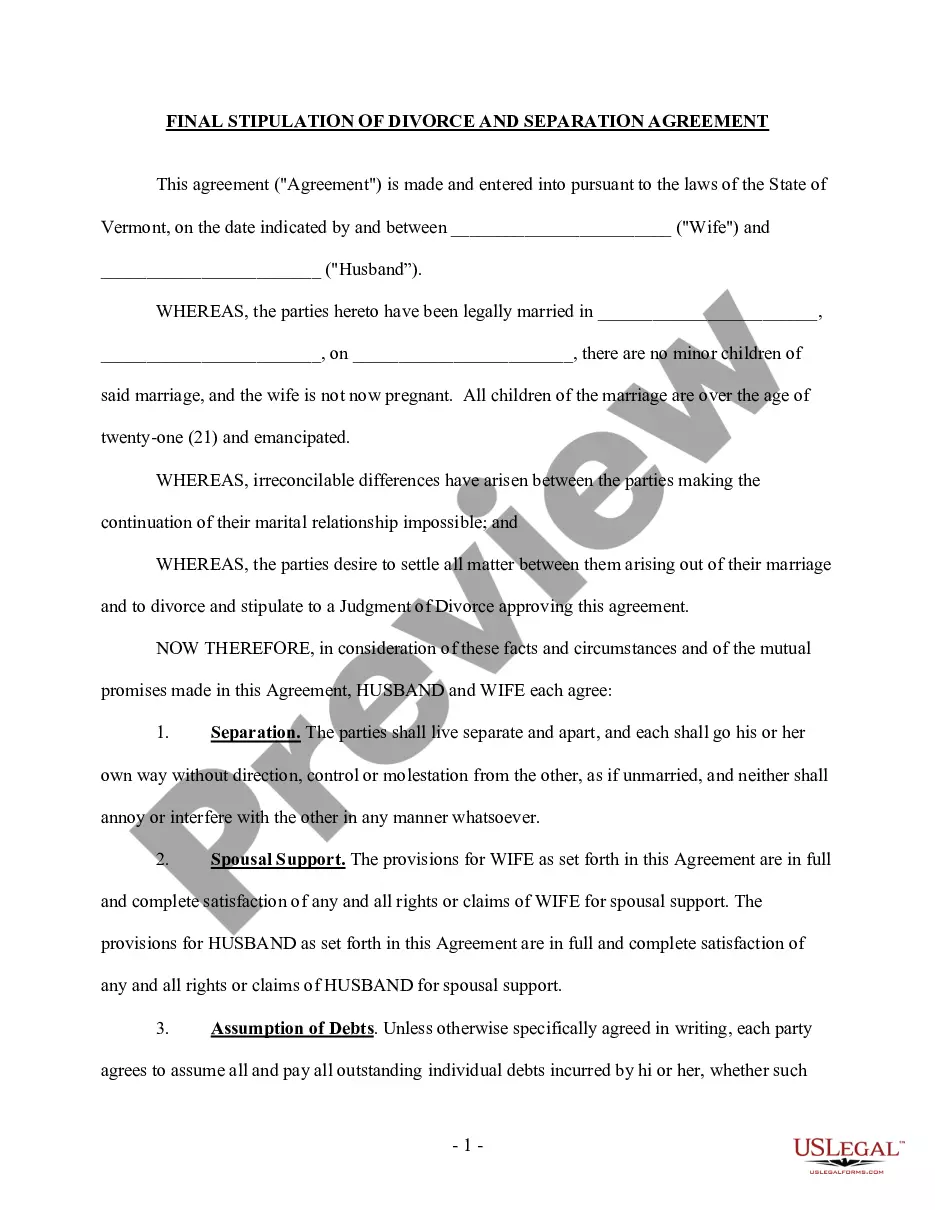
This Divorce Worksheet and Law Summary for Contested or Uncontested Cases is a comprehensive package designed to assist individuals navigating the complexities of a divorce. Unlike standard divorce forms, this worksheet offers detailed definitions, financial considerations, and other vital information required for both contested and uncontested divorce cases. It includes worksheets for client interviews and serves as an essential preparatory tool for meeting with an attorney or preparing for a self-representation.
Form components explained
- Detailed definitions of legal terms related to divorce, custody, and support.
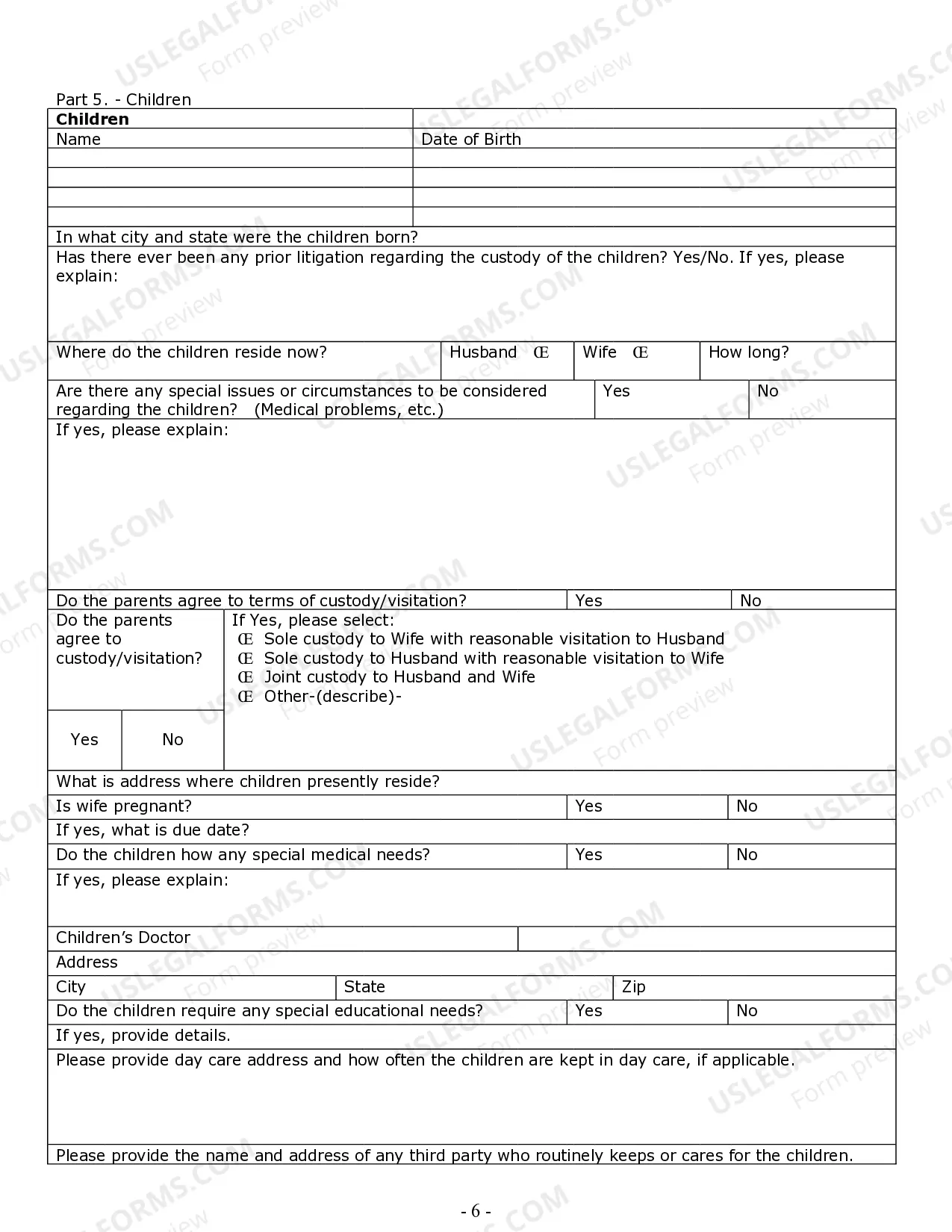
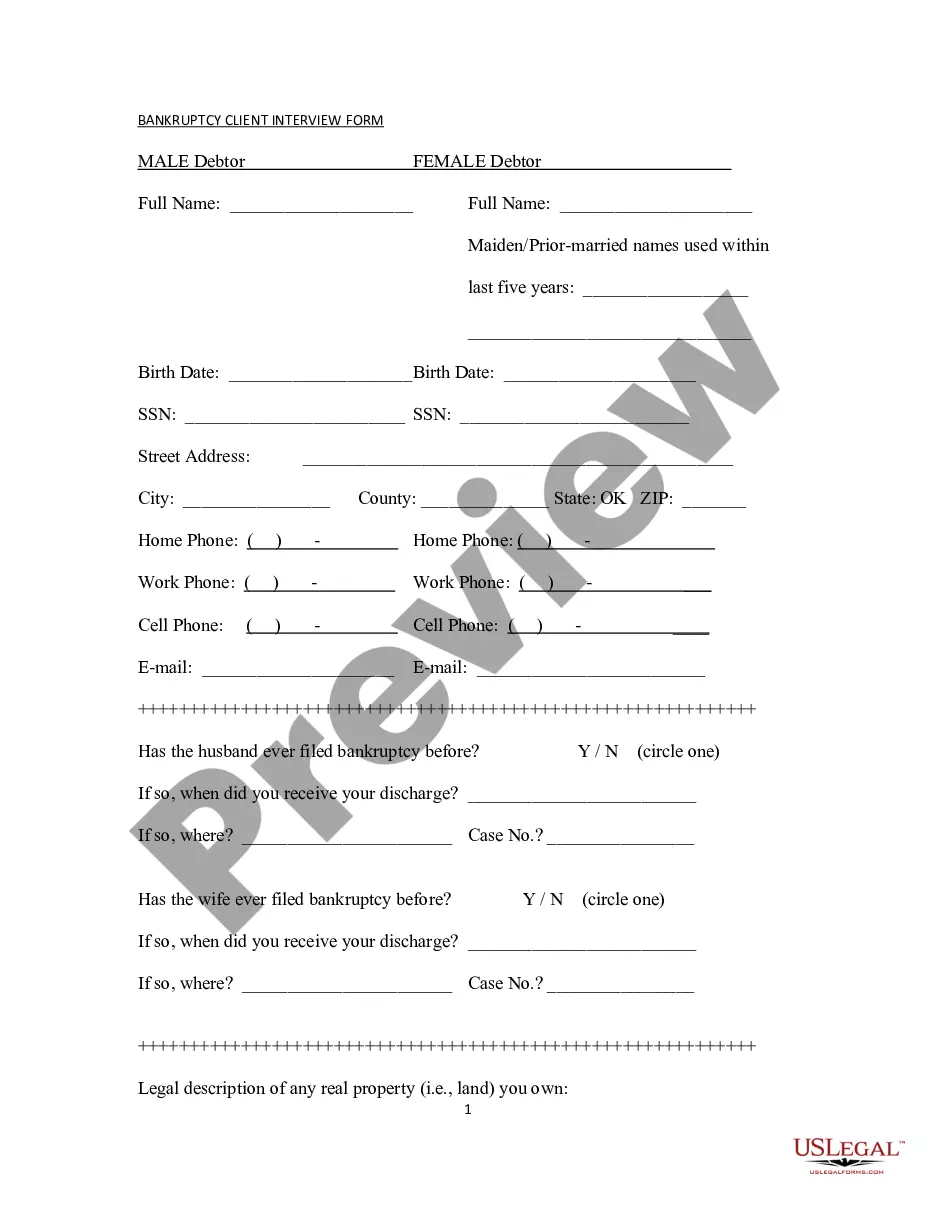
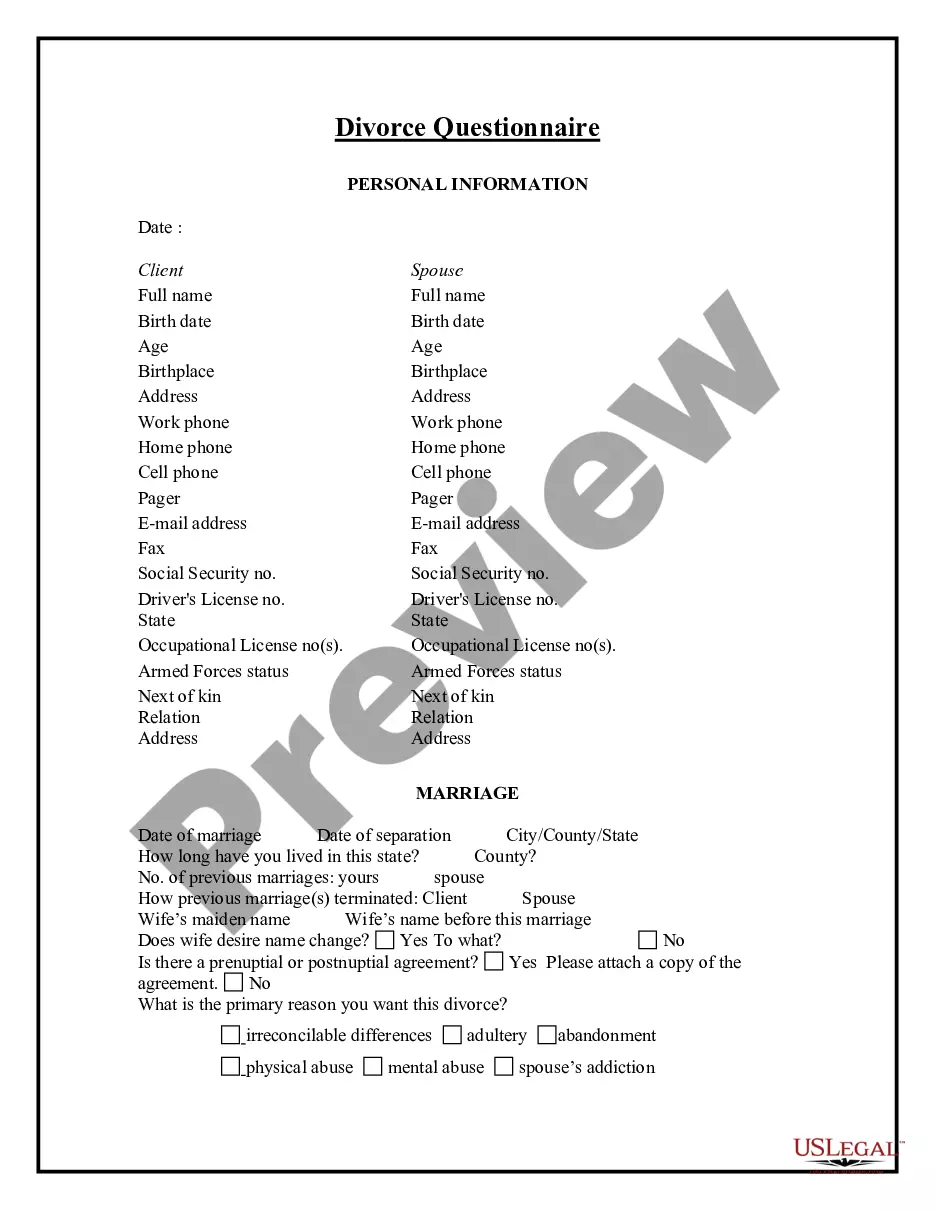
- Worksheets for personal and financial information gathering.
- Instructions to guide individuals through the divorce process.
- Information about child support, visitation, and custody agreements.
- Forms to help facilitate communication and documentation between spouses regarding marital assets and debts.


When to use this document
This form is particularly useful in several scenarios, including:
- When considering filing for divorce and needing clarity on legal terms.
- If you are preparing for an initial consultation with a divorce attorney.
- When both parties agree on the divorce terms and wish to formalize the agreement.
- In contested cases where detailed financial information and disclosures are required.
Who this form is for
This form is intended for:
- Individuals contemplating divorce, both contested and uncontested.
- Those who wish to prepare detailed information for an attorney before filing.
- Couples seeking an amicable resolution to their divorce.
- Representatives or attorneys assisting clients in divorce proceedings.
How to prepare this document
To complete this form, follow these steps:
- Identify the parties involved in the divorce, including names and addresses.
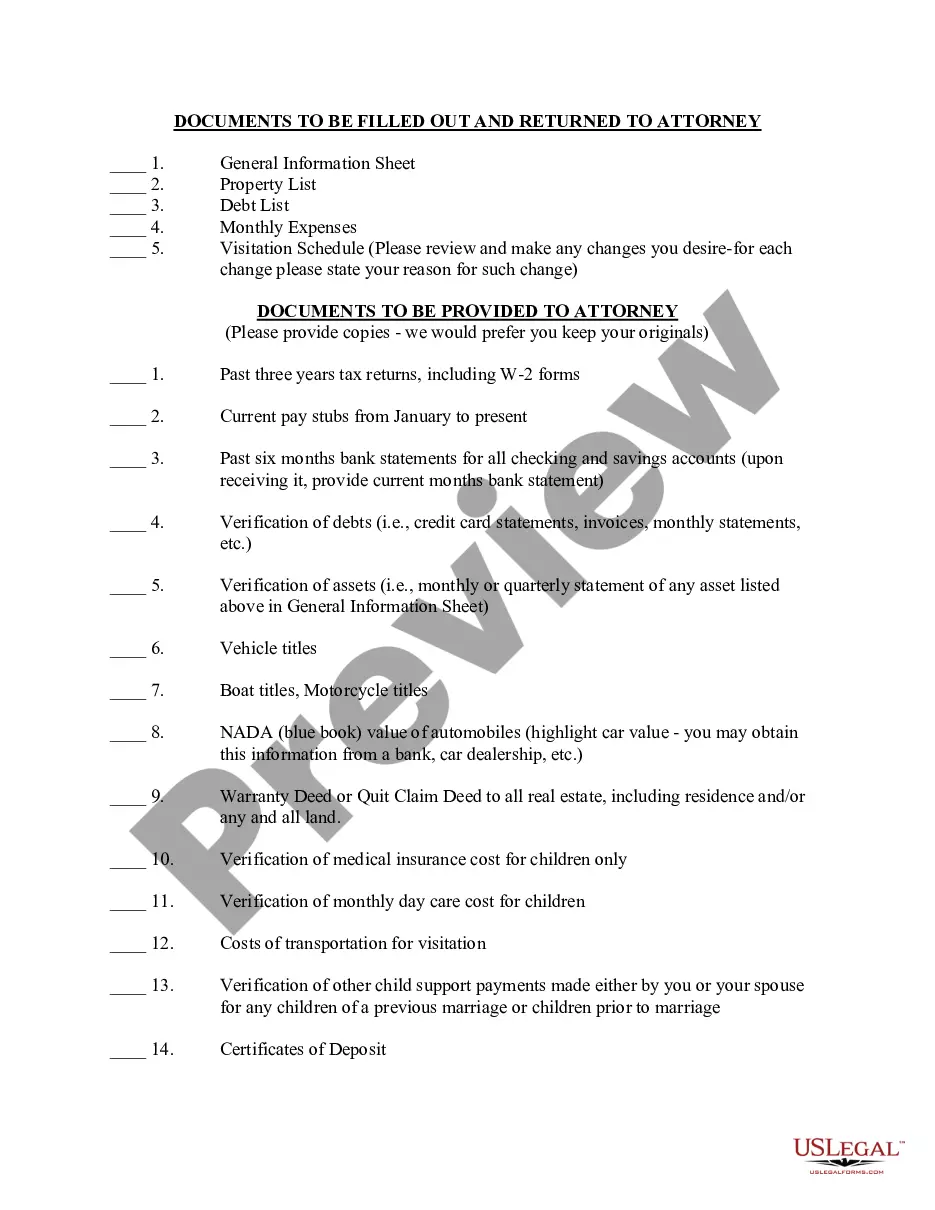
- Gather financial documents and information regarding income, expenses, and assets.
- Fill out the worksheets related to child custody and visitation arrangements, if applicable.
- Review legal definitions and procedures provided in the form to understand the process.
- Consult with your attorney or legal representative if needed for clarifications.
Does this form need to be notarized?
This form does not typically require notarization unless specified by local law. It's always advisable to check with your attorney or local court for any notarization requirements specific to your state.
Get your form ready online
Our built-in tools help you complete, sign, share, and store your documents in one place.
Make edits, fill in missing information, and update formatting in US Legal Forms—just like you would in MS Word.
Download a copy, print it, send it by email, or mail it via USPS—whatever works best for your next step.
Sign and collect signatures with our SignNow integration. Send to multiple recipients, set reminders, and more. Go Premium to unlock E-Sign.
If this form requires notarization, complete it online through a secure video call—no need to meet a notary in person or wait for an appointment.
We protect your documents and personal data by following strict security and privacy standards.

Make edits, fill in missing information, and update formatting in US Legal Forms—just like you would in MS Word.

Download a copy, print it, send it by email, or mail it via USPS—whatever works best for your next step.

Sign and collect signatures with our SignNow integration. Send to multiple recipients, set reminders, and more. Go Premium to unlock E-Sign.

If this form requires notarization, complete it online through a secure video call—no need to meet a notary in person or wait for an appointment.

We protect your documents and personal data by following strict security and privacy standards.
Common mistakes to avoid
- Failing to complete all sections of the worksheet.
- Omitting necessary financial information or documentation.
- Not reviewing definitions and legal terms which could lead to misunderstandings.
- Waiting until the last minute to gather required information before filing.
- Assuming the worksheet is sufficient without consulting legal advice.
Benefits of completing this form online
- Convenience of having a comprehensive overview in one document.
- Editability allows for adjustments based on unique circumstances.
- Reliability as the forms are drafted by licensed attorneys.
- Ease of access, providing immediate assistance in the divorce process.
- The Divorce Worksheet serves as a structured guide to prepare necessary documentation for divorce proceedings.
- Using this form correctly supports your legal strategy and can aid in successfully navigating divorce proceedings.
- Keeping copies of completed forms is essential for personal records and any required court submissions.
Key takeaways
- The Divorce Worksheet is essential for organizing personal and legal information before a divorce.
- Correctly completing the form helps streamline the divorce process, saving time and potential legal complications.
- This form is suitable for both contested and uncontested divorce situations.
- Always review state-specific requirements and legal guidelines relevant to your situation.
Glossary of terms
- Petitioner: The person who files for divorce.
- Respondent: The person who receives the divorce complaint.
- Custody: Legal responsibility for a child, which can involve physical and legal rights.
- No-fault divorce: A type of divorce where the filing party does not need to prove wrongdoing by either partner.
Looking for another form?

Form popularity
FAQ
You can fill it out alone or with the assistance of your spouse. Then, you will need to get a signature from your spouse and you can file the divorce forms with your local court. In Wisconsin, you will typically file with the courthouse in the county in which you currently reside.
Wisconsin imposes a 120-day waiting period before your divorce cannot be finalized. Most divorces take between six months and a year to finalize, although it might take longer if there are contested issues.
Wisconsin is a "no fault" divorce state, which means neither spouse must prove that the other has done anything wrong, and only one spouse must testify under oath that he or she believes that the marriage is irretrievably broken. A marriage is irretrievably broken when there is no chance for reconciliation.
And under Wisconsin marital property law, each spouse has a one-half interest in each marital asset, no matter whose name is on the title.Separate property isn't subject to distribution in the divorce.
The average cost of a divorce in Wisconsin in 2021 is $9,900 which includes attorney and filing fees. Costs can decrease if uncontested or increase up to $25,000 if contested. Divorce involving children, spousal support disputes, or property and assets increases costs.
Wisconsin is a no fault state.Therefore, it does not matter who files or initiates the divorce action in Wisconsin. Further, there is really no advantage as to who files a divorce action.
Wisconsin imposes a 120-day waiting period before your divorce cannot be finalized. Most divorces take between six months and a year to finalize, although it might take longer if there are contested issues.
You must file a petition to divorce either jointly together with your spouse or alone. If you file separately, you will need to serve your spouse and submit proof to the court. Once filed, there's a 120 day waiting period before a final hearing can take place.
Can you date while separated in Wisconsin? As to dating, there is no law about when this can begin.