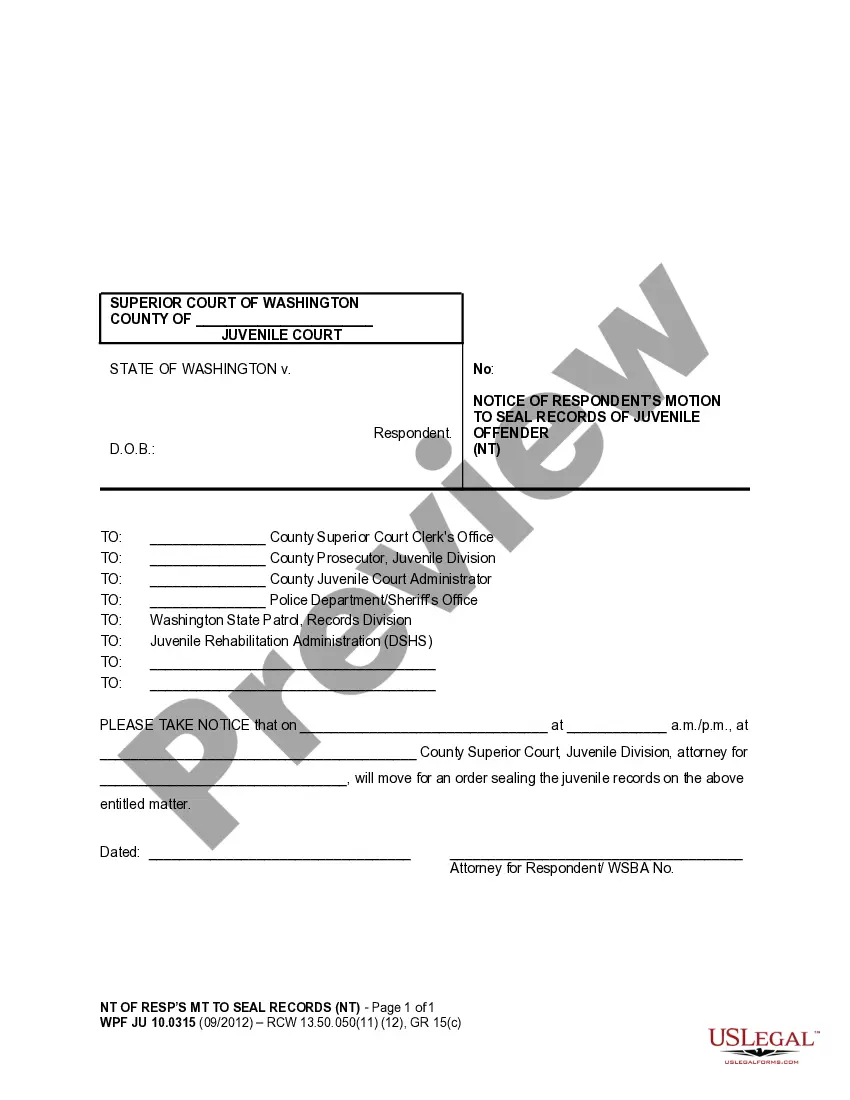
Washington Warranty Deed for Limited Partnership to Limited Partnership
Understanding this form
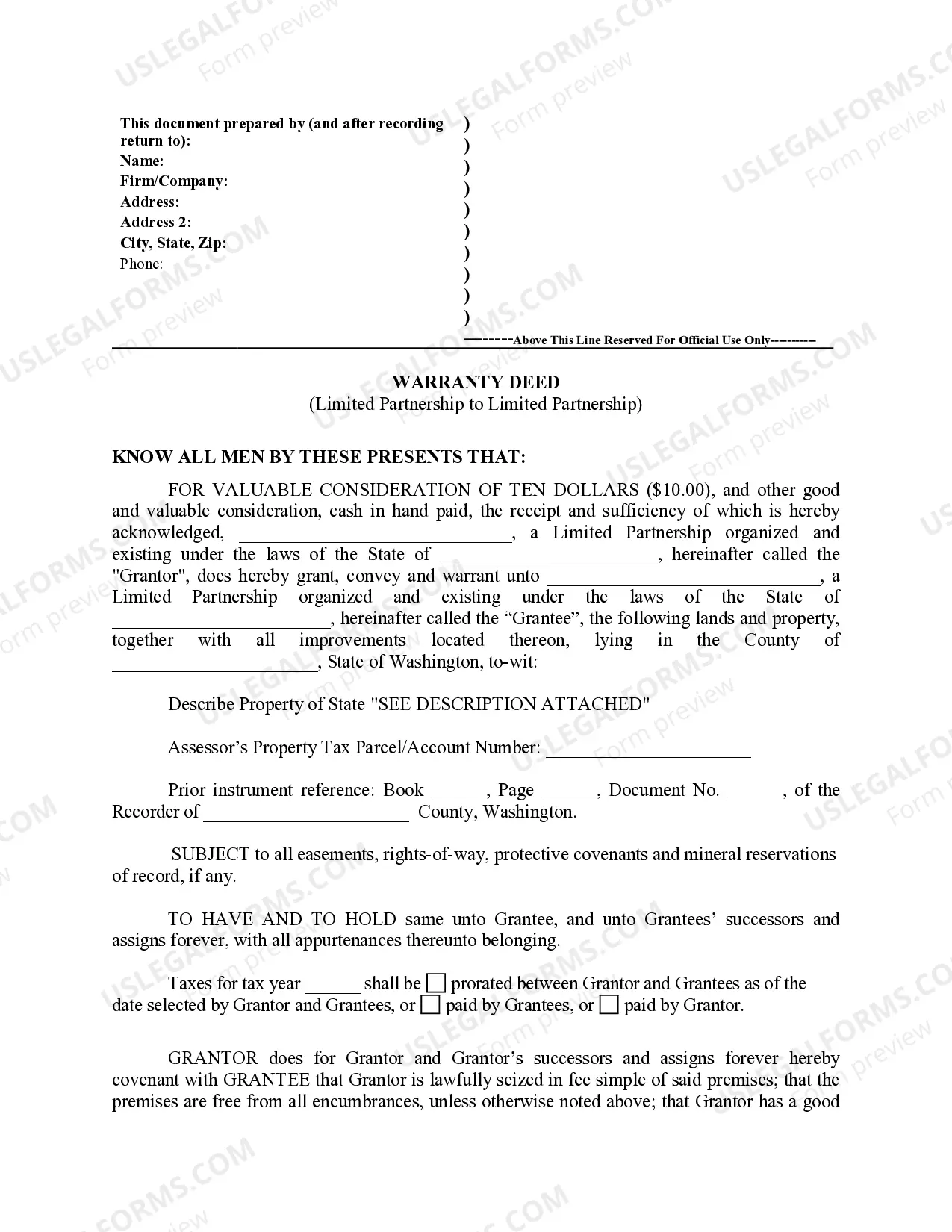
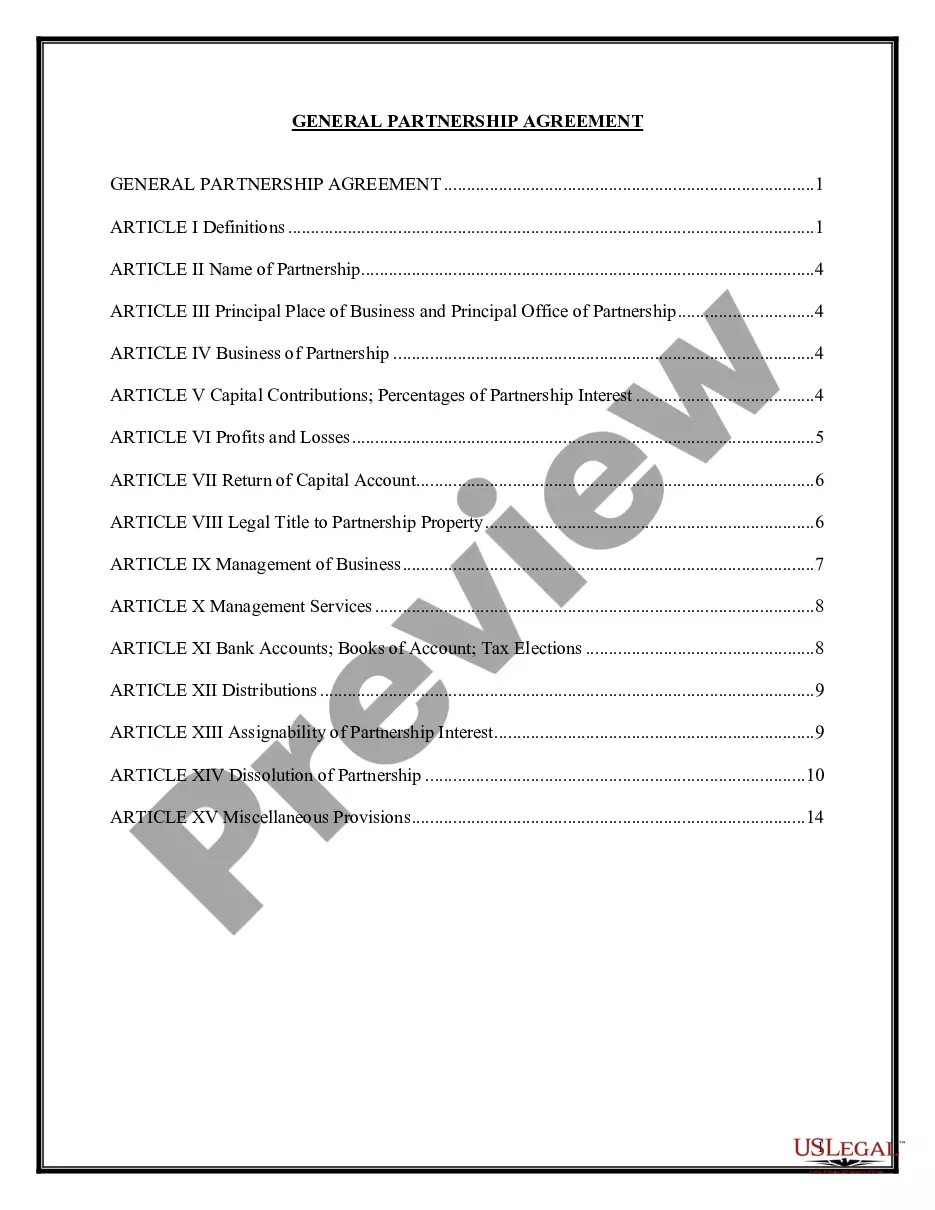
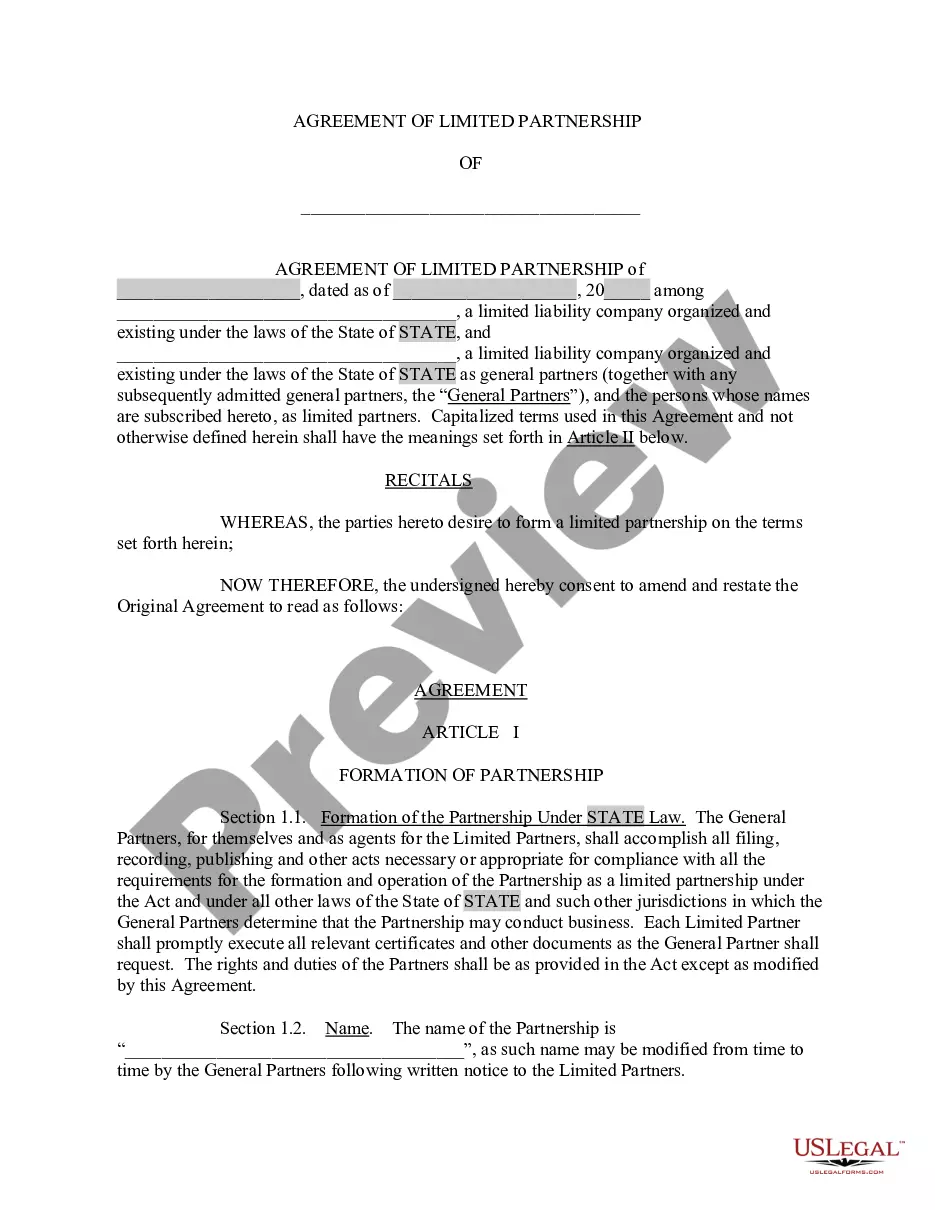
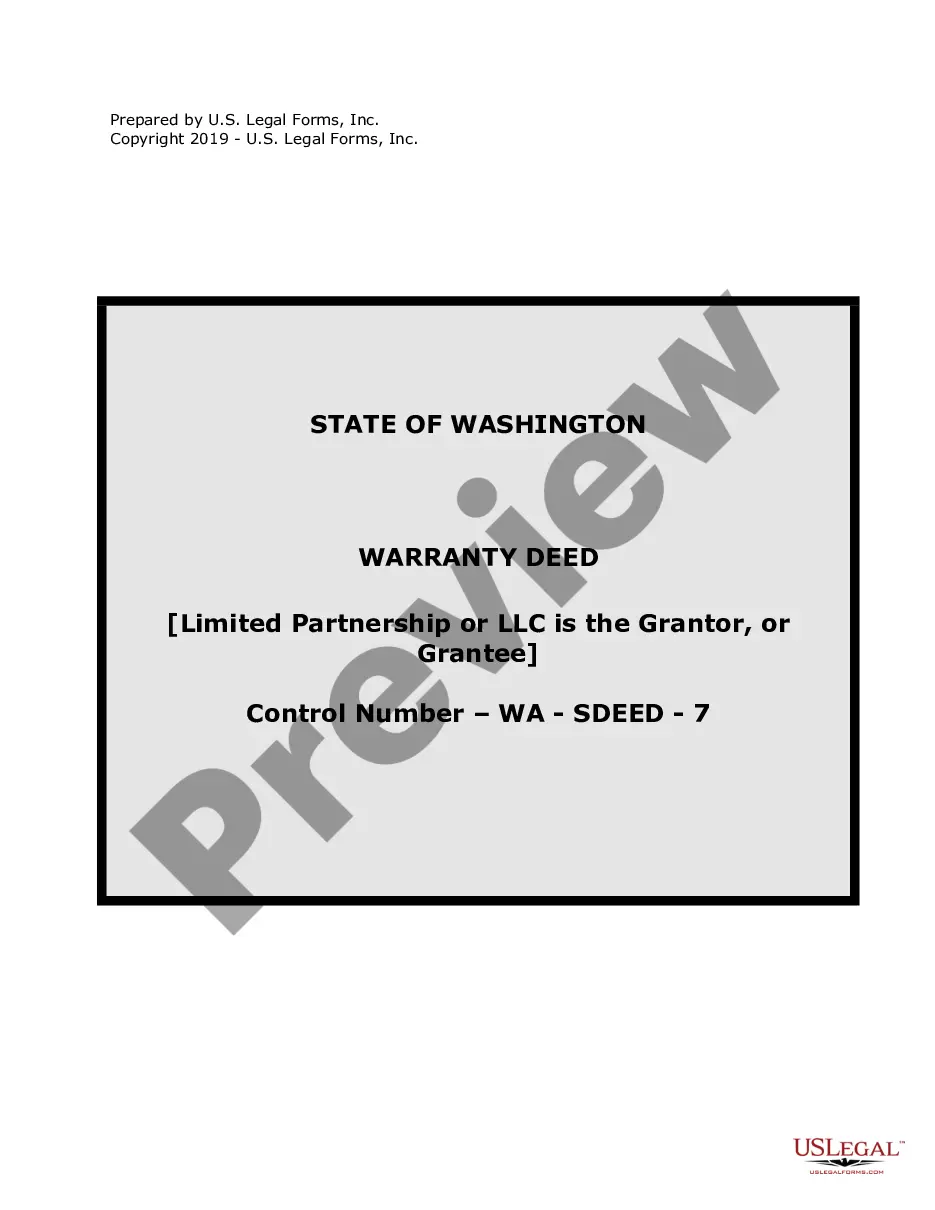
The Warranty Deed for Limited Partnership to Limited Partnership is a legal document used to transfer property ownership between two limited partnerships. Unlike standard warranty deeds, this form specifically addresses transactions where both the seller (grantor) and buyer (grantee) are limited partnerships, ensuring that the rights and obligations of both parties are clearly outlined and protected.
What’s included in this form
- Description of the property being transferred
- Identifying information for both grantor and grantee
- Details on any existing encumbrances or easements
- Proration of taxes for the relevant tax year
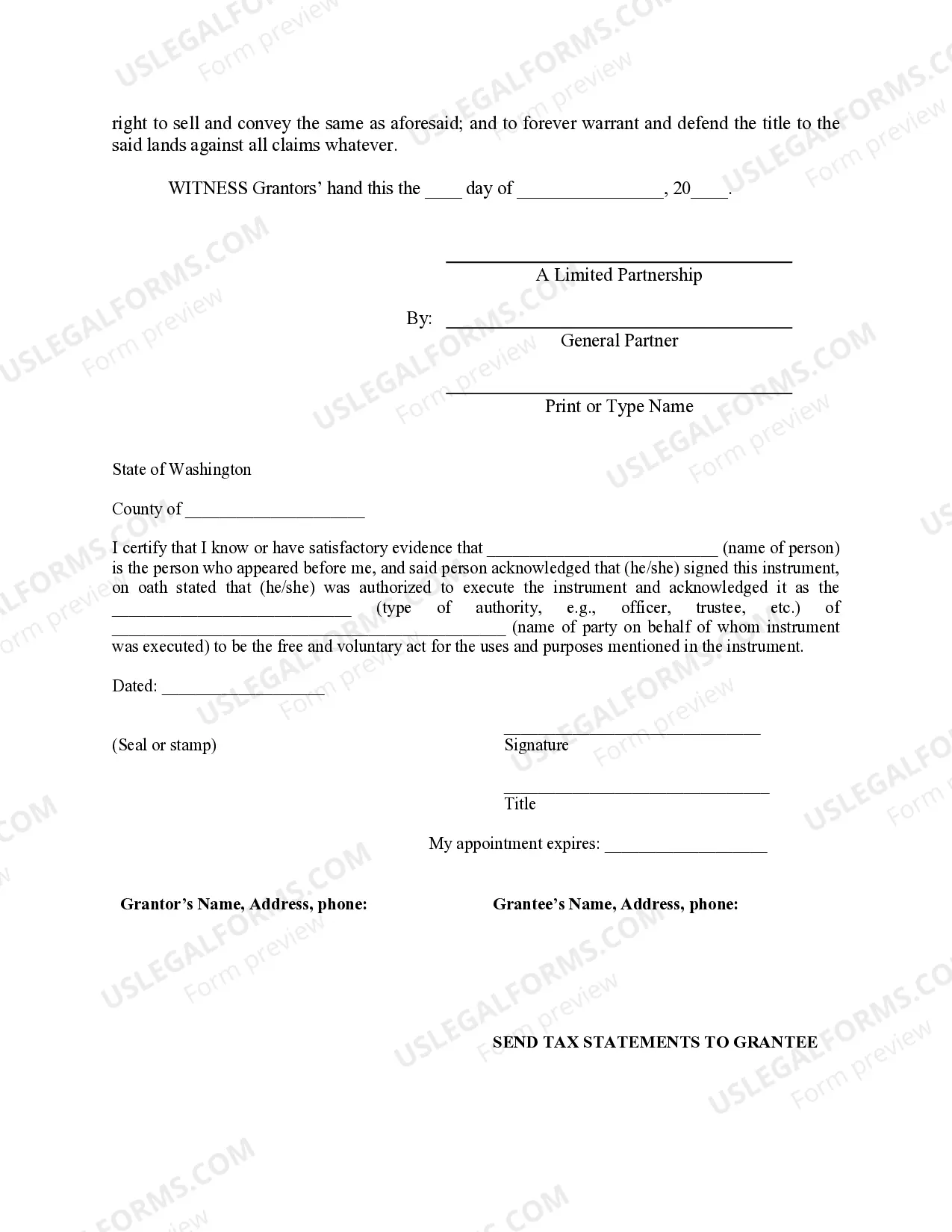
- Grantor's covenant regarding the title and ownership
- Signature and date fields for the grantor
When to use this form
This form should be used when a limited partnership is selling or transferring property to another limited partnership. It is essential in situations such as mergers, acquisitions, or partnerships entering into joint ventures that involve real estate transactions.
Who this form is for
- Limited partnerships involved in property transactions
- Real estate attorneys representing limited partnerships
- Business partners looking to formalize property transfers between partnerships
Instructions for completing this form
- Identify the grantor (selling limited partnership) and grantee (buying limited partnership).
- Provide a detailed description of the property being transferred.
- Include any applicable encumbrances or easements that affect the property.
- Decide how property taxes will be handled for the current tax year.
- Fill in the date and the signature line for the grantor, indicating their agreement to the transfer.
Does this document require notarization?
Notarization is required for this form to take effect. Our online notarization service, powered by Notarize, lets you verify and sign documents remotely through an encrypted video session, available 24/7.
Get your form ready online
Our built-in tools help you complete, sign, share, and store your documents in one place.
Make edits, fill in missing information, and update formatting in US Legal Forms—just like you would in MS Word.
Download a copy, print it, send it by email, or mail it via USPS—whatever works best for your next step.
Sign and collect signatures with our SignNow integration. Send to multiple recipients, set reminders, and more. Go Premium to unlock E-Sign.
If this form requires notarization, complete it online through a secure video call—no need to meet a notary in person or wait for an appointment.
We protect your documents and personal data by following strict security and privacy standards.

Make edits, fill in missing information, and update formatting in US Legal Forms—just like you would in MS Word.

Download a copy, print it, send it by email, or mail it via USPS—whatever works best for your next step.

Sign and collect signatures with our SignNow integration. Send to multiple recipients, set reminders, and more. Go Premium to unlock E-Sign.

If this form requires notarization, complete it online through a secure video call—no need to meet a notary in person or wait for an appointment.

We protect your documents and personal data by following strict security and privacy standards.
Common mistakes to avoid
- Failing to provide a complete and accurate property description.
- Not including all required signatures and dates.
- Overlooking existing easements or encumbrances that could affect the property.
- Not confirming the legitimacy of both limited partnerships involved in the transaction.
Why use this form online
- Easy access to legal forms drafted by licensed attorneys.
- Convenient downloading and editing options that streamline the completion process.
- Updated templates ensure compliance with current laws and regulations.
- Ability to fill out forms online before printing, saving time and reducing errors.
Key takeaways
- The Warranty Deed is essential for transferring property between limited partnerships.
- Accuracy in completing the form is crucial to avoid legal complications.
- Review local laws for any additional notarization requirements.
Looking for another form?

Form popularity
FAQ
A limited partnership only requires one managing general partner. However, several natural persons or legal entities can also be active as general partners and jointly manage the company within the framework of a management board, and represent it externally.
General partnerships have no restrictions on who can be owners. Owners can range from individuals to corporations to LLCs. In addition, states do not place restrictions on the types of businesses in which LLCs can participate. Therefore, LLCs can serve as general partners in a partnership.
A limited partner is a part-owner of a company whose liability for the firm's debts cannot exceed the amount that an individual invested in the company. Limited partners are often called silent partners.
(3) The name of a limited partnership that is not a limited liability limited partnership must contain the words "limited partnership", the abbreviation "L.P." or "LP", or the combination "ltd.
Whats the difference in a limited partner and a general partner in an LLC.A limited partner is not liable for any amount greater than his or her original investment in the partnership, while a general partner is liable for all of the partnership's liabilities.
Limited partners are simply investors in the business; they don't have control of day-to-day operations, and they're only liable for as much as they invest in the company.They're considered passive investors because they contribute money to the partnership but don't have control over decisions.
A limited partnership is a type of partnership that consists of at least one general partner and at least one limited partner. A limited liability partnership does not have a general partner, since every partner in an LLP is given the ability to take part in the management of the company.
In general, a partnership is a business agreement between two or more people who are called partners.Typically, the terms general partner and limited partner in all types of partnerships will refer to liability, with general partners pledging their own personal assets while limited partners having limited liabilities.
The same person can be both a general partner and a limited partner, as long as there are at least two legal persons who are partners in the partnership. The general partner is responsible for the management of the affairs of the partnership, and he has unlimited personal liability for all debts and obligations.