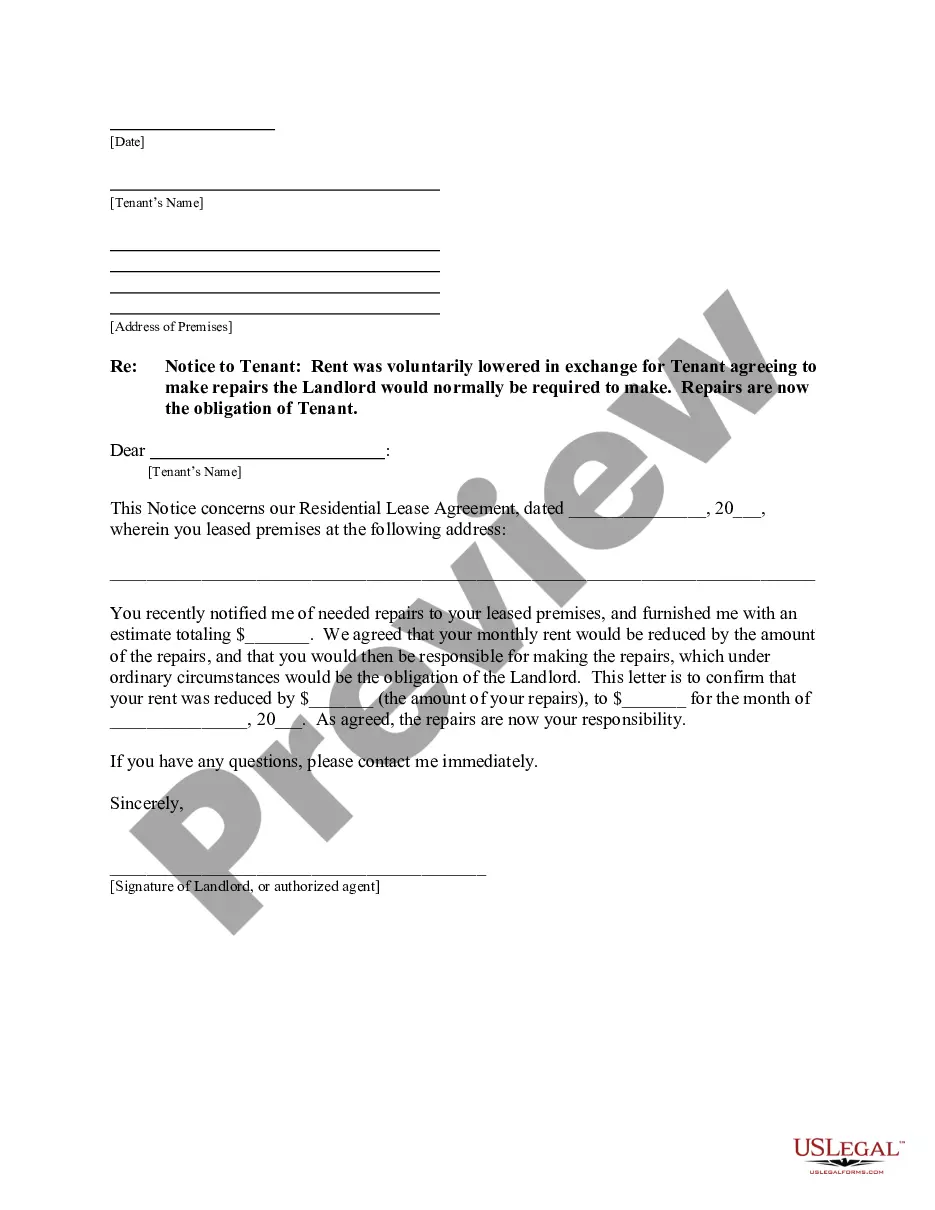
Washington Letter from Tenant to Landlord containing Notice that premises in uninhabitable in violation of law and demand immediate repair
Understanding this form
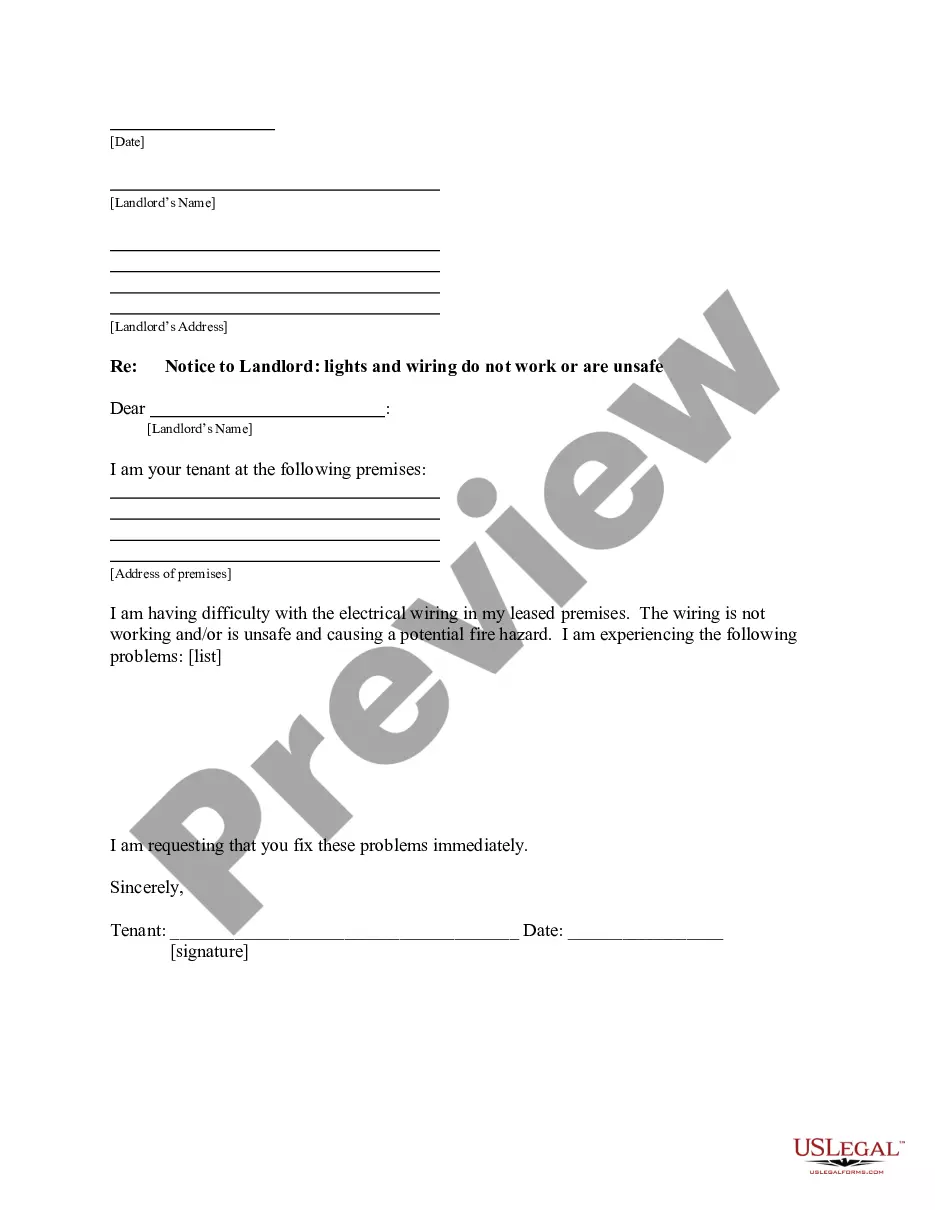
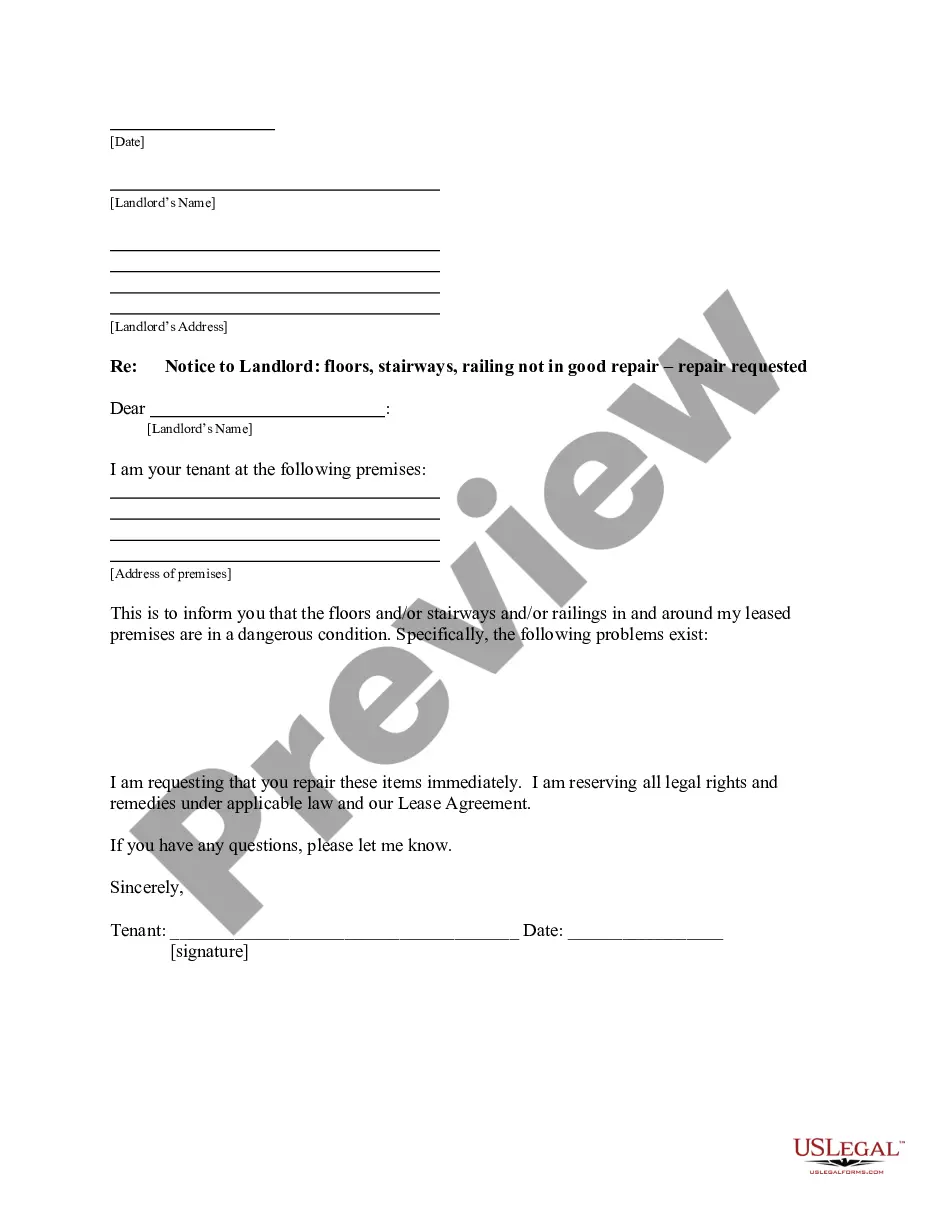
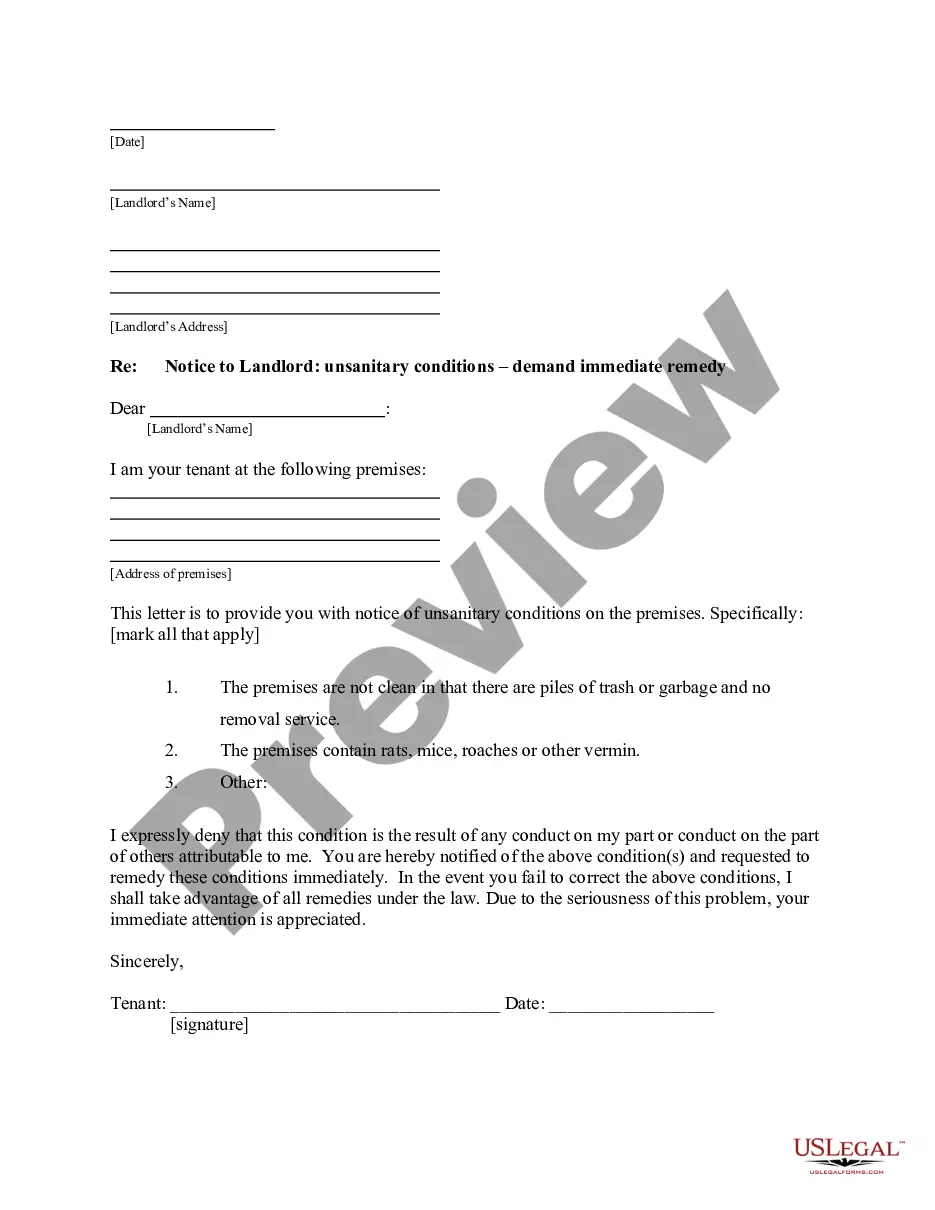
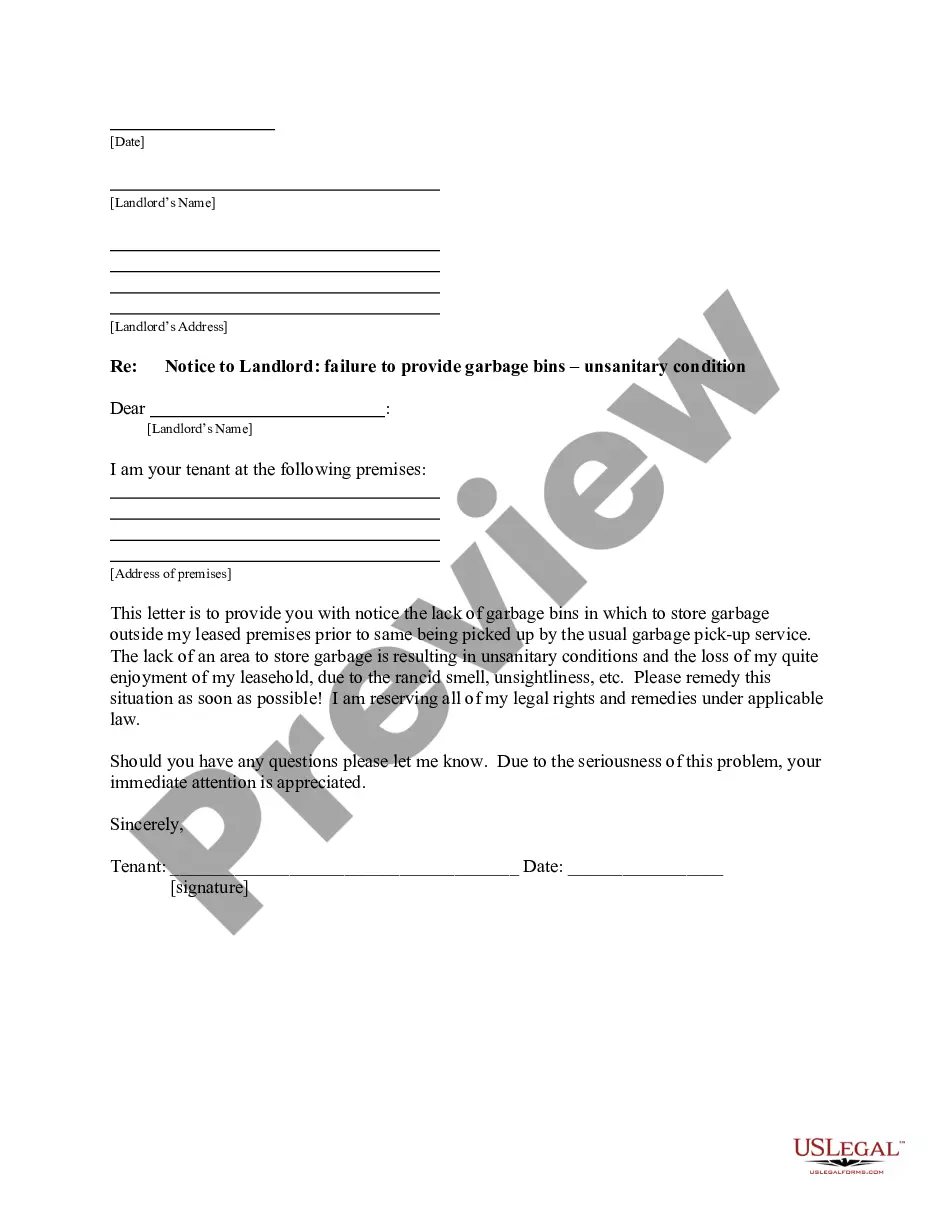
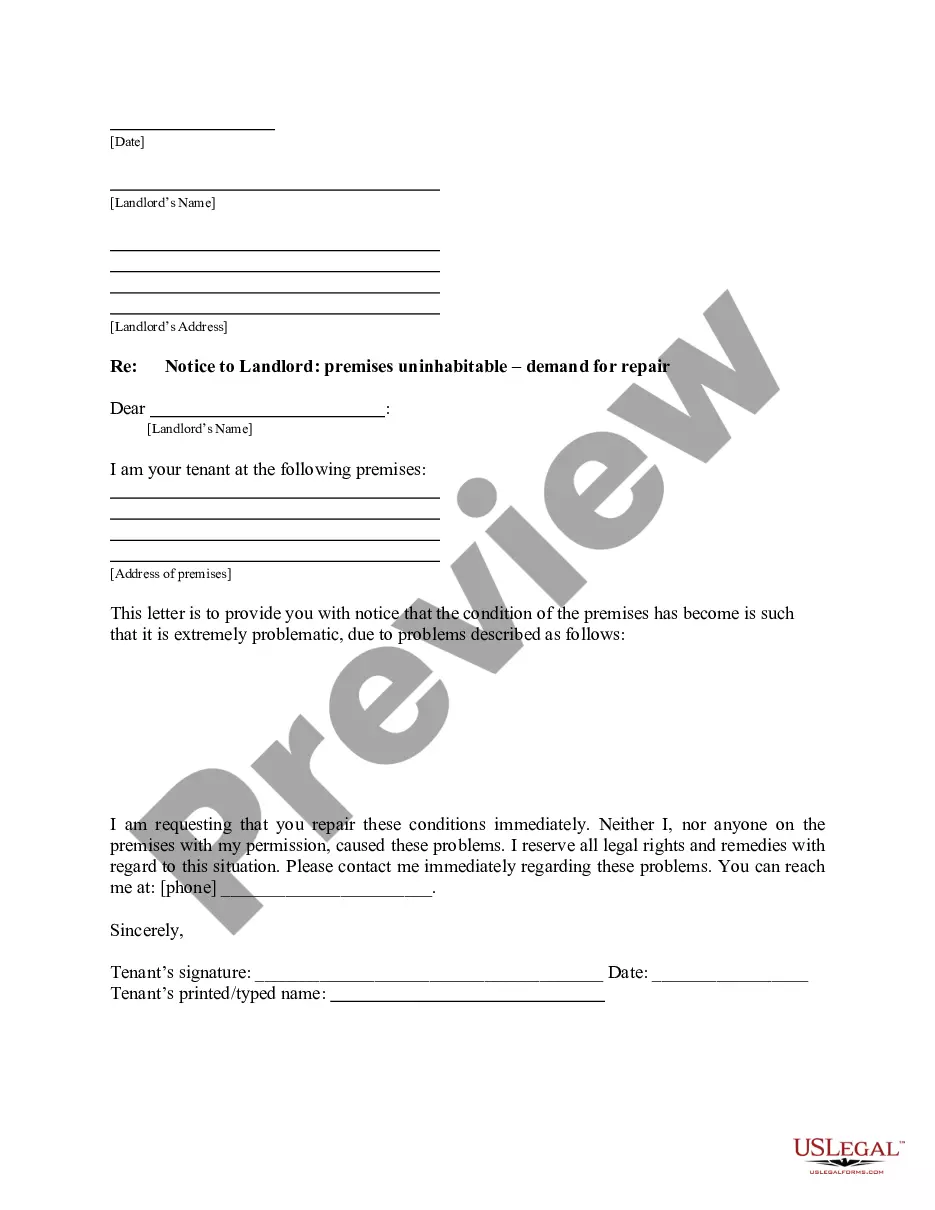
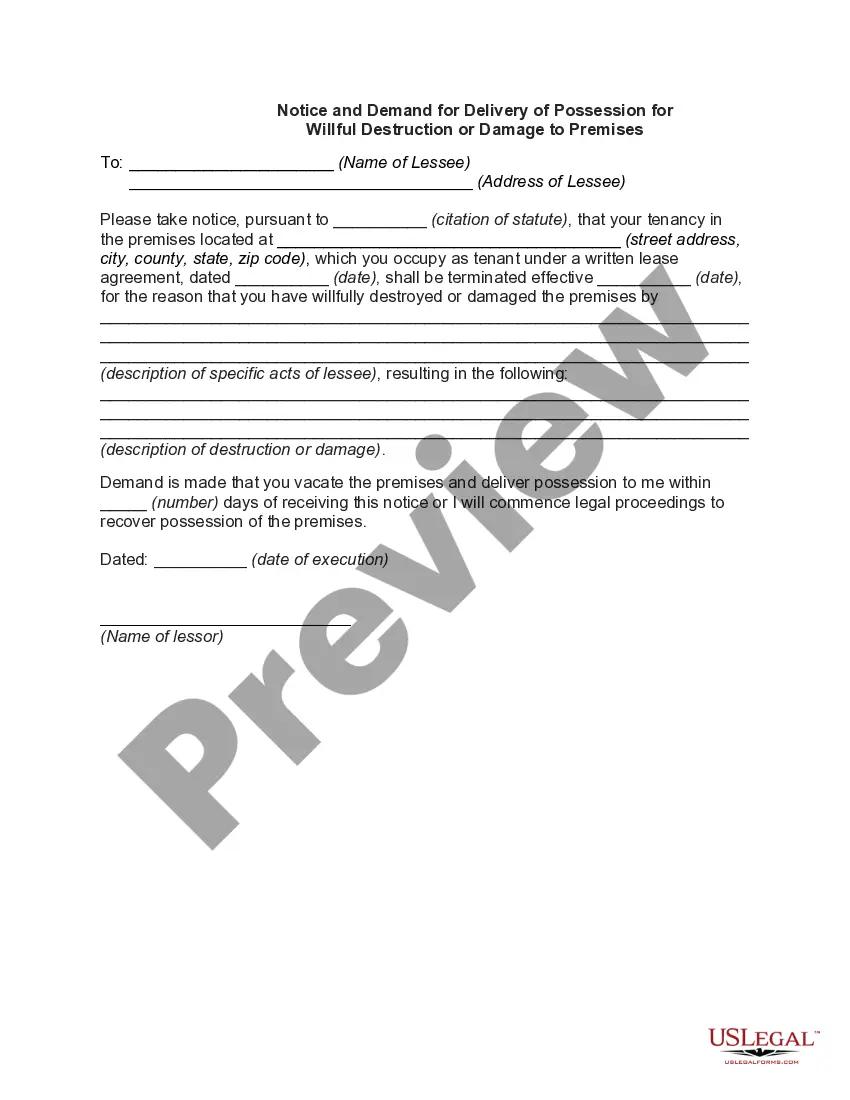
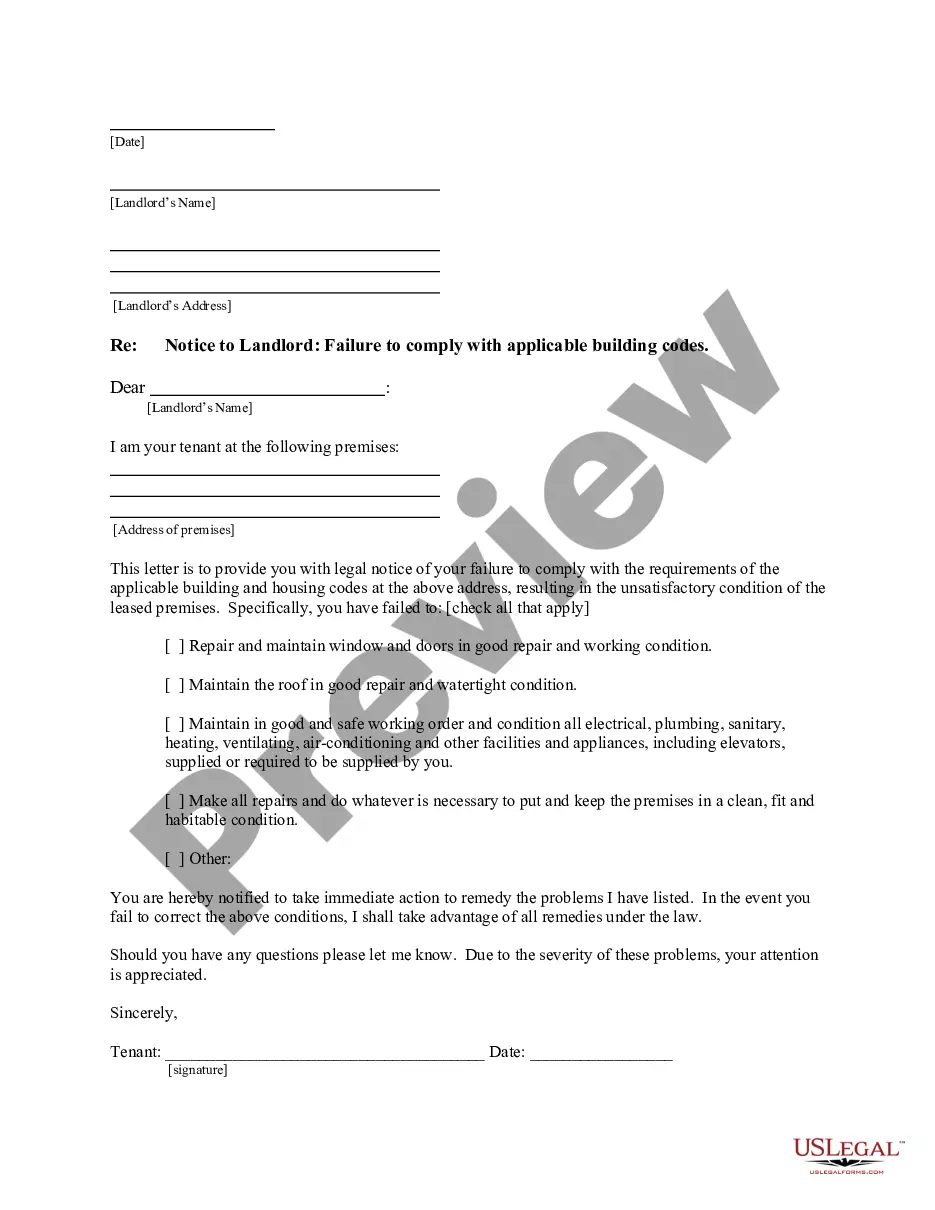
This letter from tenant to landlord serves as a formal notice that the leased premises are uninhabitable, violating legal standards. It allows tenants to demand immediate repairs from their landlord. This form differs from general lease notices by specifically addressing serious health and safety issues that require urgent attention.
Main sections of this form
- Tenant's contact information
- Landlord's contact information
- Description of the uninhabitable conditions
- Demand for immediate repairs
- Date of notification
- Signature of the tenant


When to use this form
This form is essential when tenants discover serious issues in their rented property that make it unlivable, such as severe plumbing problems, lack of heat during winter, or unsafe structural conditions. It should be used when tenants want to officially notify their landlord and document their request for repairs, especially if they are considering further action if repairs are not completed.
Who should use this form
- Tenants experiencing uninhabitable conditions in their rental units
- Individuals looking to document their communication with landlords
- People considering terminating their lease due to unresolved repair issues
Steps to complete this form
- Identify the tenant's and landlord's names and contact information.
- Clearly describe the issues making the premises uninhabitable.
- Specify the urgency of the required repairs.
- Include the date of the notice.
- Ensure the tenant signs the form to validate the request.
Notarization guidance
This form does not typically require notarization unless specified by local law. Always check your state's requirements to be sure.
Get your form ready online
Our built-in tools help you complete, sign, share, and store your documents in one place.
Make edits, fill in missing information, and update formatting in US Legal Forms—just like you would in MS Word.
Download a copy, print it, send it by email, or mail it via USPS—whatever works best for your next step.
Sign and collect signatures with our SignNow integration. Send to multiple recipients, set reminders, and more. Go Premium to unlock E-Sign.
If this form requires notarization, complete it online through a secure video call—no need to meet a notary in person or wait for an appointment.
We protect your documents and personal data by following strict security and privacy standards.
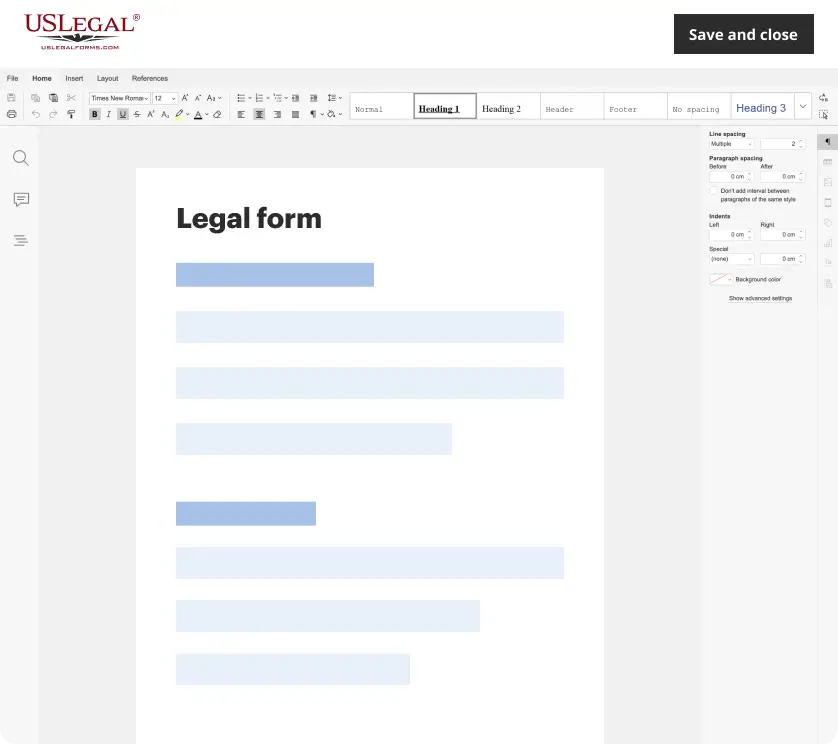
Make edits, fill in missing information, and update formatting in US Legal Forms—just like you would in MS Word.
Download a copy, print it, send it by email, or mail it via USPS—whatever works best for your next step.
Sign and collect signatures with our SignNow integration. Send to multiple recipients, set reminders, and more. Go Premium to unlock E-Sign.
If this form requires notarization, complete it online through a secure video call—no need to meet a notary in person or wait for an appointment.
We protect your documents and personal data by following strict security and privacy standards.
Common mistakes to avoid
- Failing to provide specific details about the uninhabitable conditions.
- Not including a signature or date on the form.
- Overlooking local laws that could affect the request.
Benefits of using this form online
- Immediate access to professionally drafted legal language.
- Easy customization to fit your specific situation.
- Convenience of downloading and printing right away.
Legal use & context
- This letter serves as formal documentation of the tenant's request for crucial repairs.
- If landlords do not respond or fulfill repairs, this letter may support further legal action.
- Legal rights and obligations may vary by state, affecting the enforceability of the repairs requested.
What to keep in mind
- This form enables tenants to formally communicate serious repair needs to landlords.
- Timely and accurate completion is crucial for protecting tenant rights.
- Understanding local laws can strengthen the request and its enforcement.
Looking for another form?
Form popularity
FAQ
Make sure the repair is actually your landlord's responsibility. Document the problem thoroughly. Ask your landlord in writing to make the repair. Send your landlord a letter with return receipt requested. Wait for your landlord to respond.
To give you an idea, it's in good taste to start your letter "Dear Mr./Ms. Insert Name Here," as is the case with any polite letter. No matter how much you might want to give your landlord a piece of your mind, do yourself a favor and refrain from calling him a slumlord.
To give you an idea, it's in good taste to start your letter "Dear Mr./Ms. Insert Name Here," as is the case with any polite letter. No matter how much you might want to give your landlord a piece of your mind, do yourself a favor and refrain from calling him a slumlord.
Dear (Name of landlord or manager), I am writing to request repairs to the (appliance, heating/air conditioning, plumbing issue be specific!) due to (reason for repair; this could include things such as broken handle, leaky sink hose, even normal wear-and-tear that would necessitate replacement).
Review Your Lease Before You Sign. You want to make sure you are following the terms of your lease. Research Local Laws. Keep Records. Pay Your Rent. Maintain Respectful Communication. Seek an Agreeable Solution. Request Repairs in Writing. What Do You Think?
Detail the issue that you're experiencing in your rental (include pictures if helpful) propose a reasonable solution. mention possible consequences, such as health problems, a fire, or a burglary or assault, of not dealing with the issue promptly, and.
A landlord has a right to enter the renter's home for necessary or agreed repairs and inspections. The landlord can also enter the home to show it to prospective renters or buyers.
The letter must be true don't over-exaggerate or lie. Simply state the facts, including your understanding at the time, the roles others played and, ultimately, why you were unable to pay your bills on time, why you broke your lease or got evicted, or you may need to explain your criminal history.