Vermont Guaranty or Guarantee of Payment of Rent
About this form
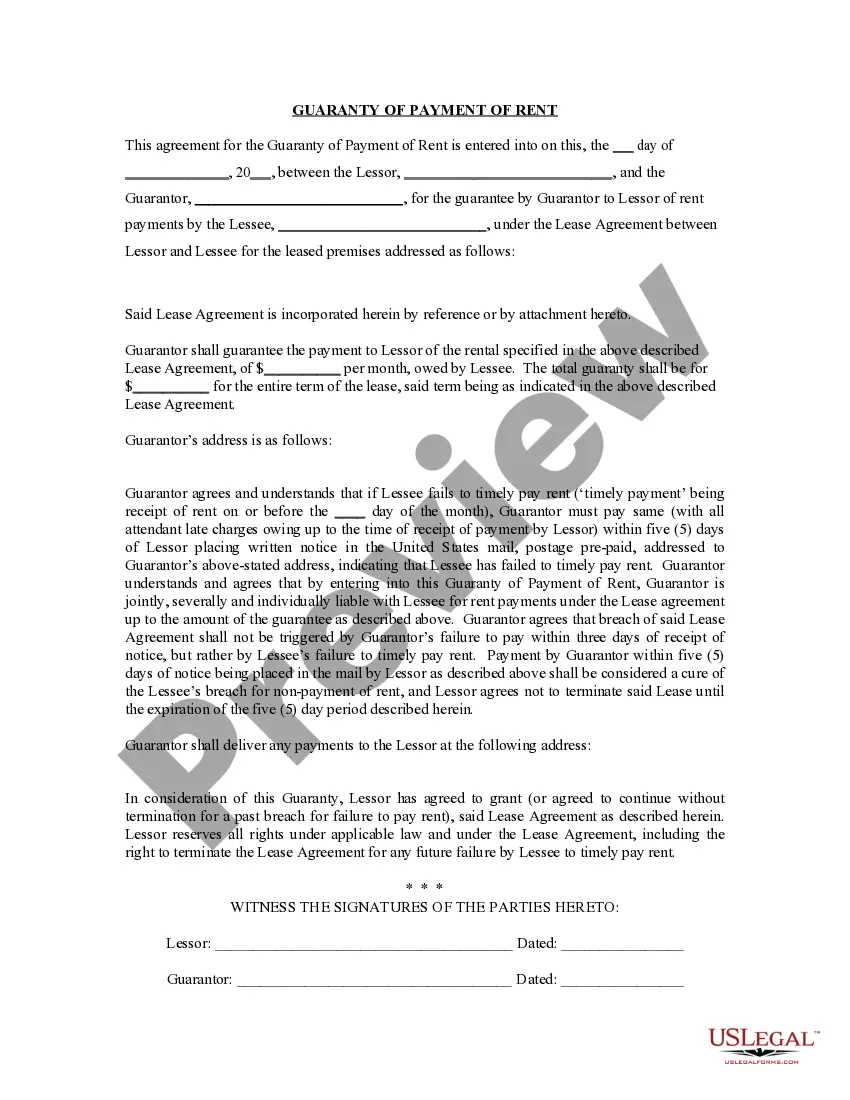
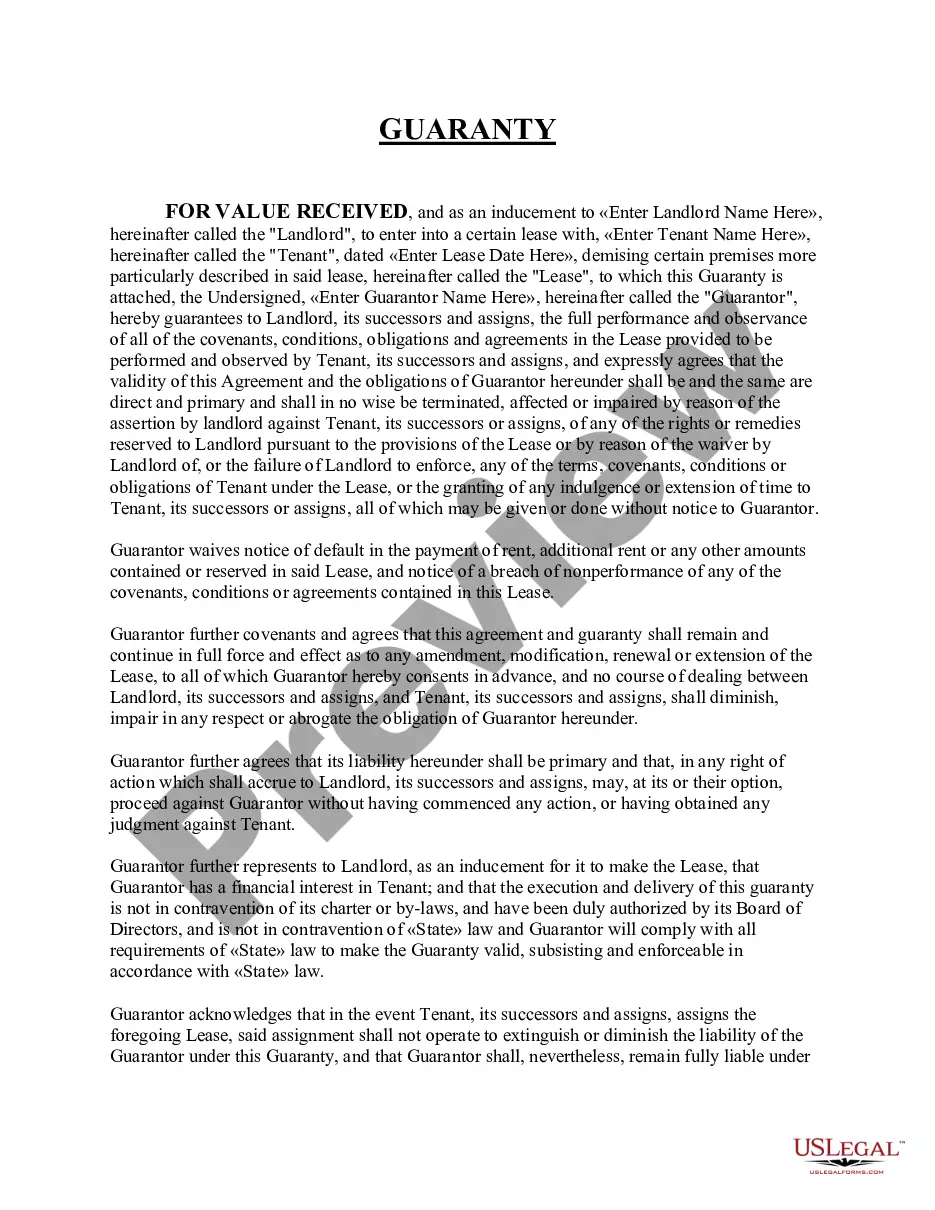
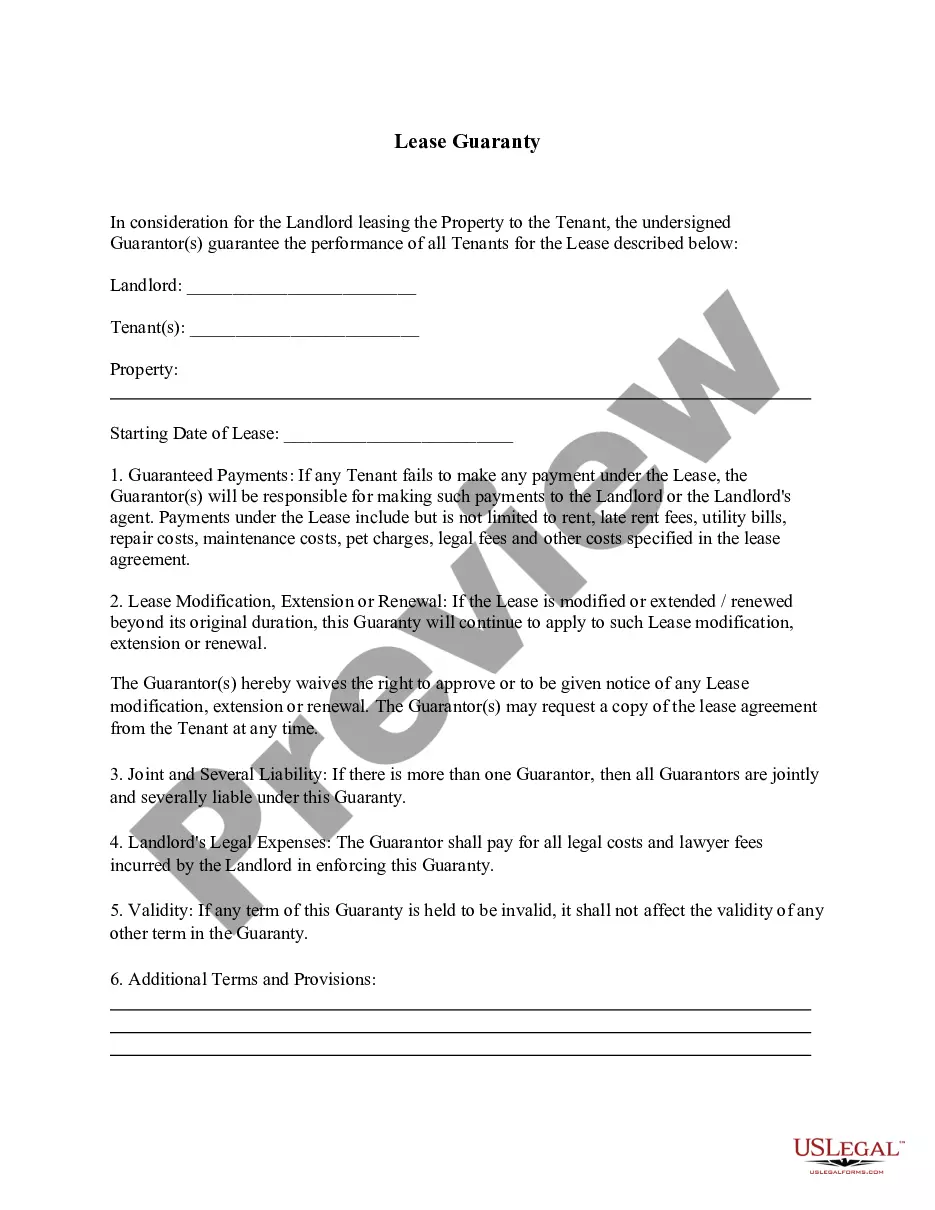
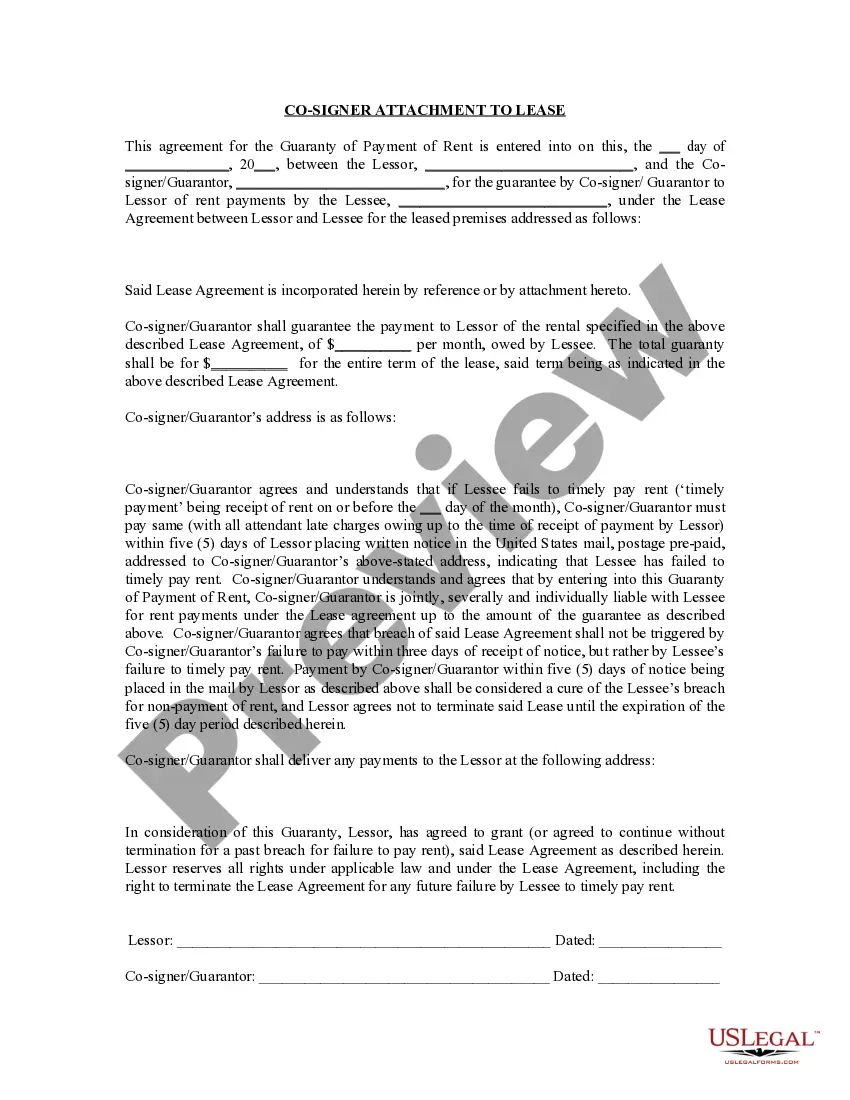
The Guaranty or Guarantee of Payment of Rent is a legal document in which a guarantor agrees to pay the rent for a tenant if the tenant fails to do so. This form establishes the relationship between the guarantor and the landlord, outlining the obligations and conditions under which the guarantor becomes responsible for payment. Unlike a standard rental agreement, this form specifically addresses the financial liability of the guarantor, providing an additional layer of security for landlords in rental situations.
Form components explained
- Guarantor's address: The location where the guarantor resides.
- Signatures: Space for the signatures of the lessor and the guarantor, verifying their agreement to the terms.
- Date fields: Areas to indicate when the agreement is signed, crucial for establishing the effective date of the contract.
Common use cases
This form should be used when a landlord requires additional security for rent payments, particularly when renting to tenants with limited credit history or unstable income. It is ideal in situations where a parent or guardian agrees to back a student's lease, or when a friend or family member helps someone secure housing by guaranteeing their rent.
Who should use this form
Individuals who should consider using the Guaranty or Guarantee of Payment of Rent form include:
- Landlords seeking assurance that rent will be paid even if the tenant defaults.
- Guarantors willing to assume the financial liability for a tenant's rental obligations.
- Tenants who may need a guarantor to secure a lease agreement.
How to complete this form
- Identify the parties: Clearly state the names and addresses of the guarantor and the landlord.
- Specify the property: Detail the rental property covered by the guaranty.
- Provide date fields: Fill in the dates when the form is signed by both parties.
- Secure signatures: Ensure that both the guarantor and the landlord sign the document in the designated areas.
Is notarization required?
Notarization is not commonly needed for this form. However, certain documents or local rules may make it necessary. Our notarization service, powered by Notarize, allows you to finalize it securely online anytime, day or night.
Get your form ready online
Our built-in tools help you complete, sign, share, and store your documents in one place.
Make edits, fill in missing information, and update formatting in US Legal Forms—just like you would in MS Word.
Download a copy, print it, send it by email, or mail it via USPS—whatever works best for your next step.
Sign and collect signatures with our SignNow integration. Send to multiple recipients, set reminders, and more. Go Premium to unlock E-Sign.
If this form requires notarization, complete it online through a secure video call—no need to meet a notary in person or wait for an appointment.
We protect your documents and personal data by following strict security and privacy standards.

Make edits, fill in missing information, and update formatting in US Legal Forms—just like you would in MS Word.

Download a copy, print it, send it by email, or mail it via USPS—whatever works best for your next step.

Sign and collect signatures with our SignNow integration. Send to multiple recipients, set reminders, and more. Go Premium to unlock E-Sign.

If this form requires notarization, complete it online through a secure video call—no need to meet a notary in person or wait for an appointment.

We protect your documents and personal data by following strict security and privacy standards.
Common mistakes to avoid
- Not including the guarantor's full address, which can lead to issues in communication.
- Failing to date the agreement, which can create ambiguity about when the obligations begin.
- Allowing the guarantor to sign without understanding their financial responsibilities, potentially leading to disputes later.
Why complete this form online
- Convenience: Easily download and customize the form at your convenience.
- Editability: Update the content as required to reflect specific tenant and landlord agreements.
- Reliability: The forms are drafted by licensed attorneys, ensuring they meet legal standards.
Quick recap
- The Guaranty of Payment of Rent is essential for landlords requiring security.
- It is a useful tool for tenants with financial challenges in securing a lease.
- Accuracy in completing the form is crucial for its legal effectiveness.
Looking for another form?

Form popularity
FAQ
Moving In. In Alberta, most landlords require a tenant to pay a security deposit or damage deposit before moving in. A security deposit is a one-time only payment and cannot be more than one month's rent. A landlord must place a security deposit in a trust account within two days of receiving it.
In an eviction process for nonpayment of rent the landlord must begin by providing the tenant with a written termination notice giving the tenant at least 14 days to pay in full or to leave. The notice must specifically state how much rent is due.
The cosigner, simply by signing on to the debt, is liable for the debt without the creditor needing to to take any additional actions. The guarantor is only liable for the debt after the creditor has exhausted all other options of collections from the original borrower.
A lease guarantee is an official agreement signed by the landlord, tenant, and in addition, a third party who meets the monetary requirements of the landlord. A lease guarantor serves as a financial intermediary and is responsible for the tenant's defaults, which protects the tenant from eviction.
Business owners are often required to give a personal guarantee to get a business loan or to lease commercial space for their business. Most business advisors say you should keep business and personal financial matters separate, and the loan is for the business, not for the individual.
A guaranty of lease is a covenant by the guarantor to be responsible for the obligations of the tenant.In these examples, a selective landlord would not enter into the lease without the tenant offering a creditworthy guarantor.
Tenants cannot use a deposit as last month's rent. Deposits can be deducted from for unpaid rent, unpaid utility bills, damages and cleaning. Deposits cannot be kept as a penalty for breaking a lease. Leases can be verbal or written.
It's very common for a guarantee to last as long as the tenancy lasts. So, if the tenant remains in the property for four years, you will continue to be responsible for any arrears or damages during that entire period. Most tenancies will run for a fixed term and will then continue on a month-by-month basis.
Does being a guarantor affect my credit rating? Providing the borrower keeps up with their repayments your credit score won't be affected. However, should they fail to make their payments and the loan/mortgage falls into default, it will be added to your credit report.