Vermont Guaranty Attachment to Lease for Guarantor or Cosigner
What is this form?
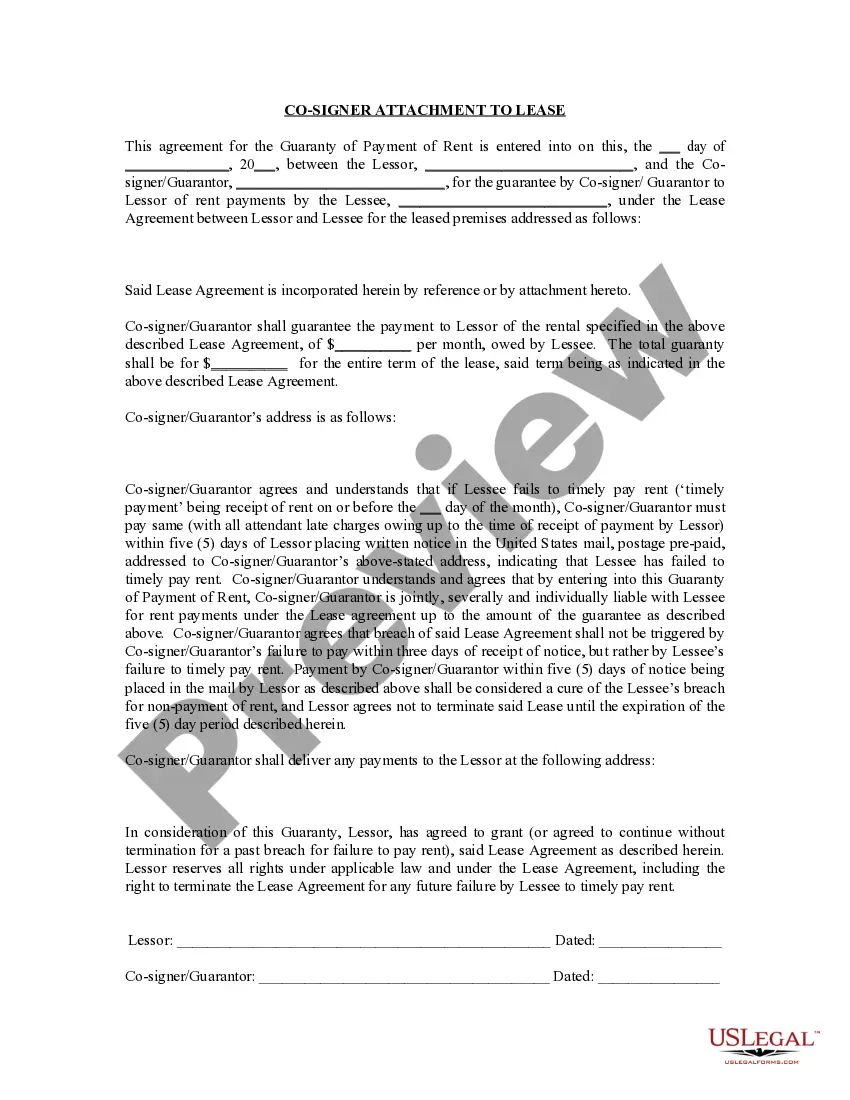
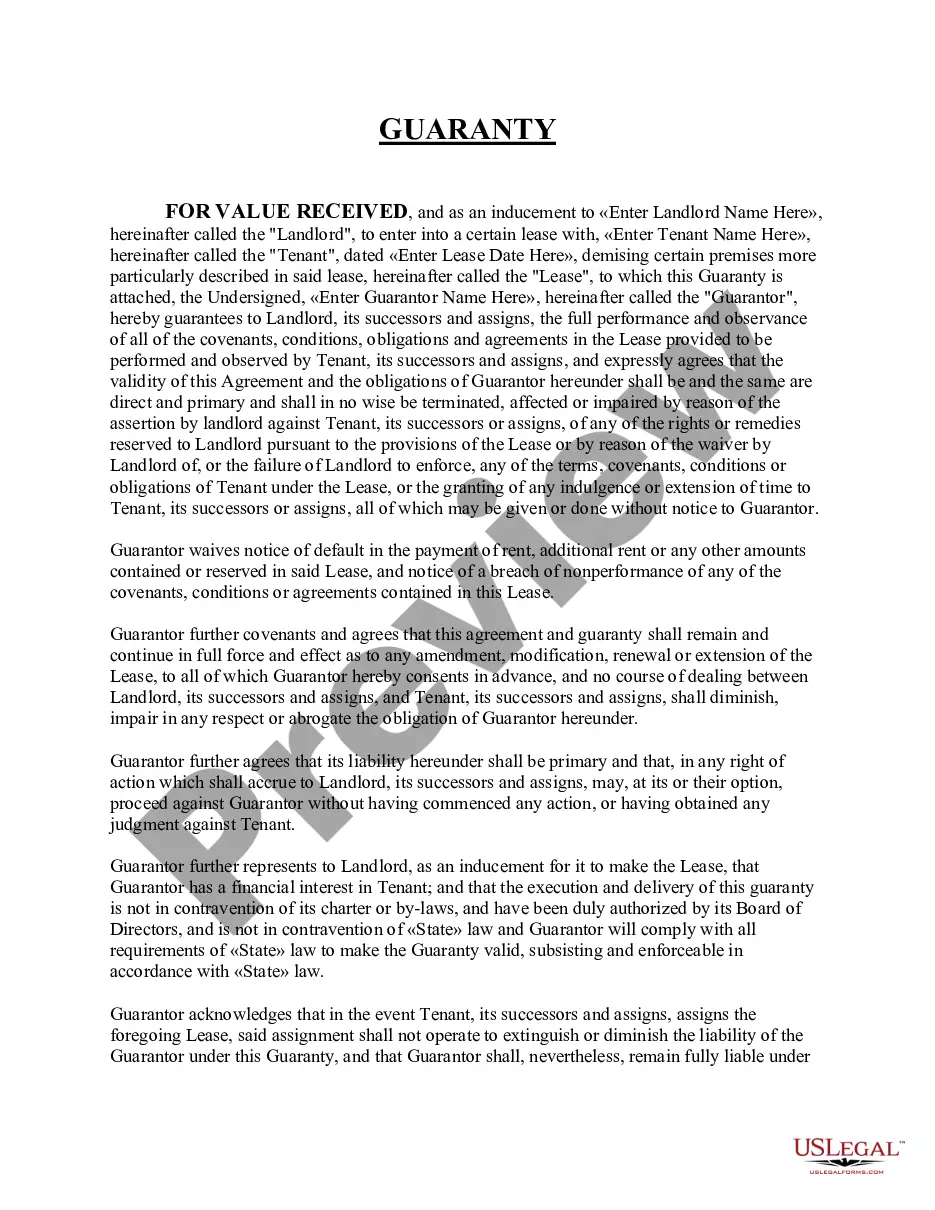
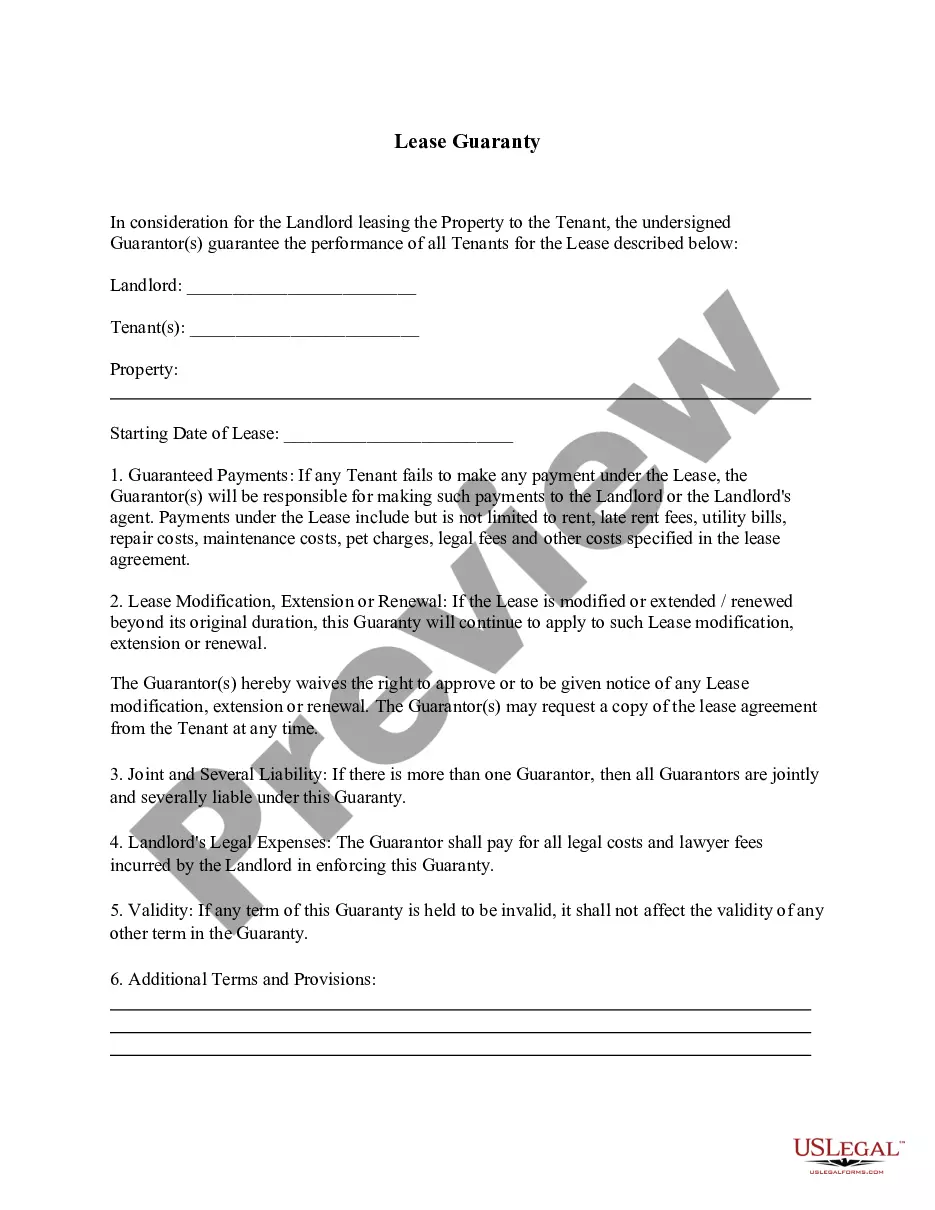
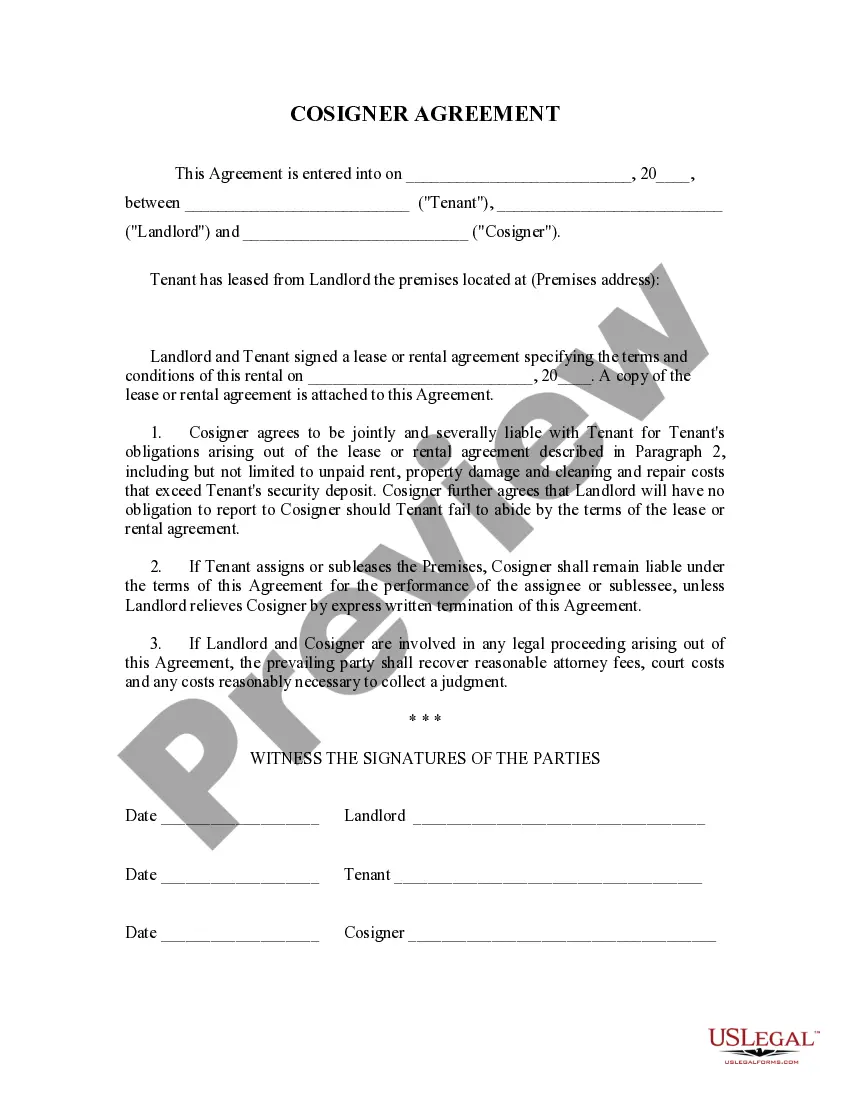
The Guaranty Attachment to Lease for Guarantor or Cosigner is a legal document that allows a third party to co-sign a lease. This guarantor agrees to ensure payment of rent, committing to pay any unpaid rent if the tenant fails to do so. It serves to provide landlords with an added layer of security while legally binding the guarantor to the lease obligations, differentiating it from regular lease agreements where only tenants are involved.
Key parts of this document
- Lessor's name and address
- Co-signer/guarantor's name and address
- Date of the signature
- Legal obligations of the guarantor
- Conditions for enforcement of the guaranty
Common use cases
This form is useful when a tenant does not have sufficient credit history or financial stability to rent a property on their own. In such cases, a guarantor or co-signer can provide the necessary assurance to the landlord regarding rent payments. It may also be needed when the tenant is a student or someone who has just started working and lacks the income to qualify for the lease independently.
Who this form is for
- Landlords seeking additional security for rental agreements
- Tenants with limited credit history or income
- Family members or friends willing to support tenants in securing a lease
How to prepare this document
- Identify and state the names and addresses of the lessor and co-signer/guarantor.
- Include the date of signing for both lessor and guarantor.
- Specify the terms that outline the guarantor's obligations.
- Ensure all parties understand the conditions before signing.
- Keep a copy of the signed document for personal records.
Does this form need to be notarized?
This form usually doesn’t need to be notarized. However, local laws or specific transactions may require it. Our online notarization service, powered by Notarize, lets you complete it remotely through a secure video session, available 24/7.
Get your form ready online
Our built-in tools help you complete, sign, share, and store your documents in one place.
Make edits, fill in missing information, and update formatting in US Legal Forms—just like you would in MS Word.
Download a copy, print it, send it by email, or mail it via USPS—whatever works best for your next step.
Sign and collect signatures with our SignNow integration. Send to multiple recipients, set reminders, and more. Go Premium to unlock E-Sign.
If this form requires notarization, complete it online through a secure video call—no need to meet a notary in person or wait for an appointment.
We protect your documents and personal data by following strict security and privacy standards.

Make edits, fill in missing information, and update formatting in US Legal Forms—just like you would in MS Word.

Download a copy, print it, send it by email, or mail it via USPS—whatever works best for your next step.

Sign and collect signatures with our SignNow integration. Send to multiple recipients, set reminders, and more. Go Premium to unlock E-Sign.

If this form requires notarization, complete it online through a secure video call—no need to meet a notary in person or wait for an appointment.

We protect your documents and personal data by following strict security and privacy standards.
Avoid these common issues
- Failing to include all necessary parties' information.
- Not reading the terms and conditions carefully before signing.
- Assuming verbal agreements suffice without a written contract.
- Neglecting to date the document properly.
Advantages of online completion
- Access and download anytime from anywhere.
- Easily editable to suit specific needs.
- Created by licensed attorneys to ensure legal compliance and protect your rights.
Legal use & context
- This form creates a binding contract between the parties involved.
- It helps clarify the obligations of the guarantor regarding rent payments.
- A properly completed form can enhance enforceability in legal scenarios.
Quick recap
- The Guaranty Attachment to Lease is crucial for tenants requiring additional financial backing.
- Clearly stating each party's obligations protects both tenants and landlords.
- Consult your local laws to ensure compliance and effectiveness.
Looking for another form?
Form popularity
FAQ
When The Lease Is Up When having a guarantor on the lease, the best way to be able to have him removed as soon as possible is to set a good payment record with the landlord.
Co-signers have equal responsibility for payment of monthly rental costs, while a guarantor is generally sought for payment only when the primary signer is unable to make the rental payment.
The cosigner, simply by signing on to the debt, is liable for the debt without the creditor needing to to take any additional actions. The guarantor is only liable for the debt after the creditor has exhausted all other options of collections from the original borrower.
The guarantor covenanted under the lease that the tenant would pay the rent and sums due under the lease and will observe the tenant's covenants. In the event of tenant default, the guarantor covenanted to make good to the landlord on demand all loss, damage, costs and expenses arising or incurred by the landlord.
Business owners are often required to give a personal guarantee to get a business loan or to lease commercial space for their business. Most business advisors say you should keep business and personal financial matters separate, and the loan is for the business, not for the individual.
A co-signer, on the other hand, will usually have their name on the title of the home or automobile. Guarantors are usually liable for default only when the lender has done everything possible to get the primary borrower to make the payments.
The most simple way to get out of being someone's guarantor is for the main borrower to pay off their loan and essentially, terminate the agreement.
The Basics: A Co-signor is part owner of the property, may or may not live in the property and is responsible for the debt repayment. A Guarantor is responsible for the debt repayment if the borrower (applicant) is unable to pay but has no benefits of owning any part of the property.
Guarantors sign the lease and are responsible for the payments under the law, but they don't occupy the apartment nor are they entitled to occupy it.