Virginia Living Trust for Husband and Wife with No Children
Understanding this form
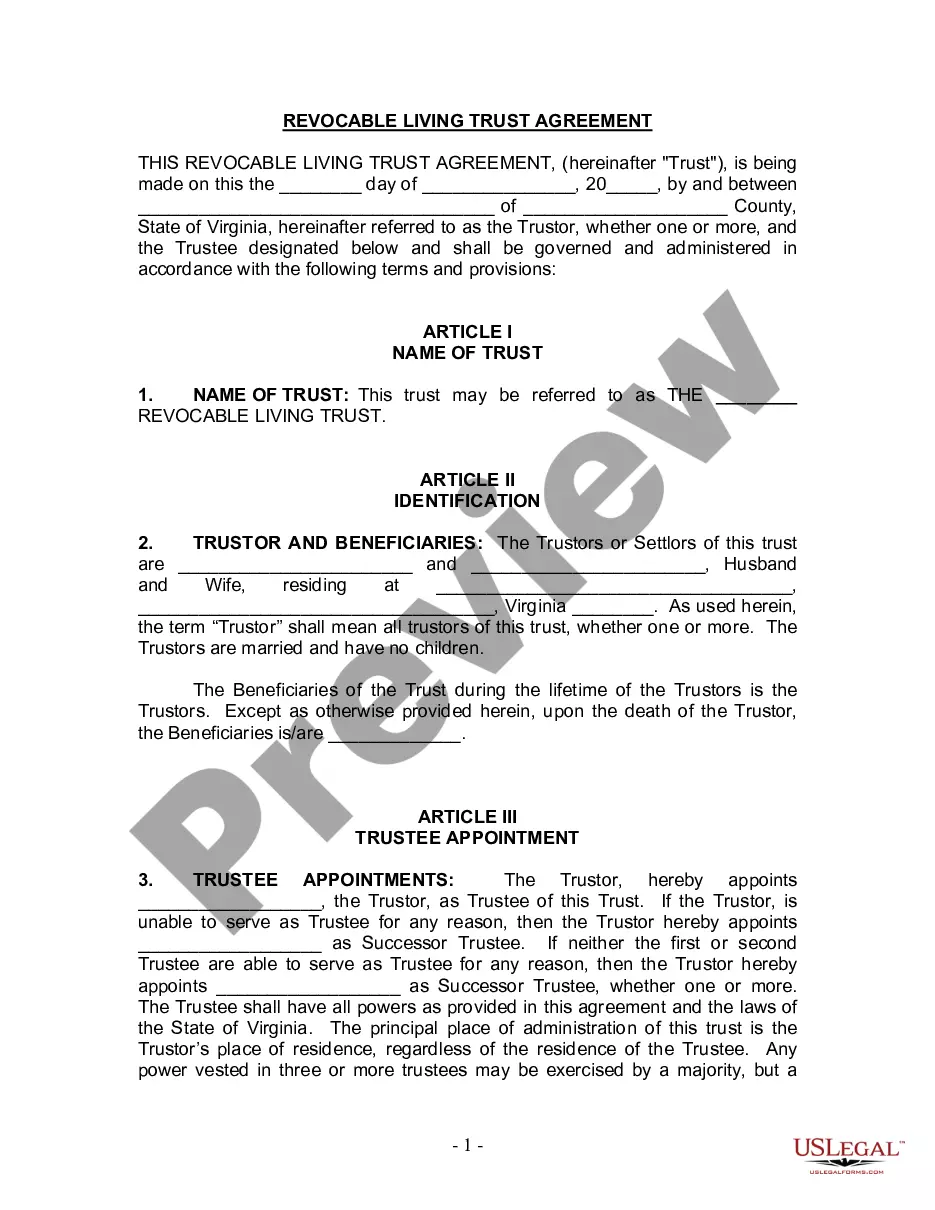
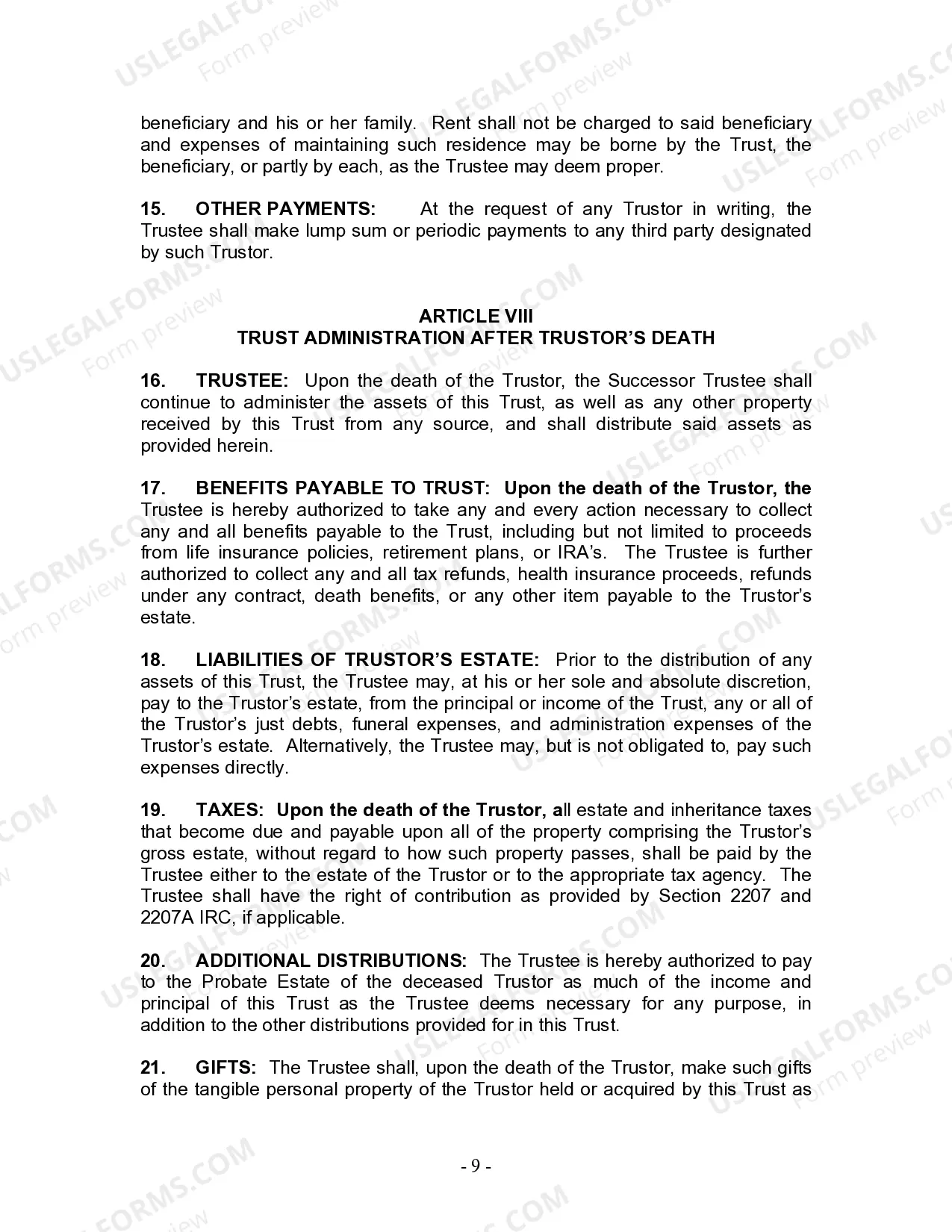
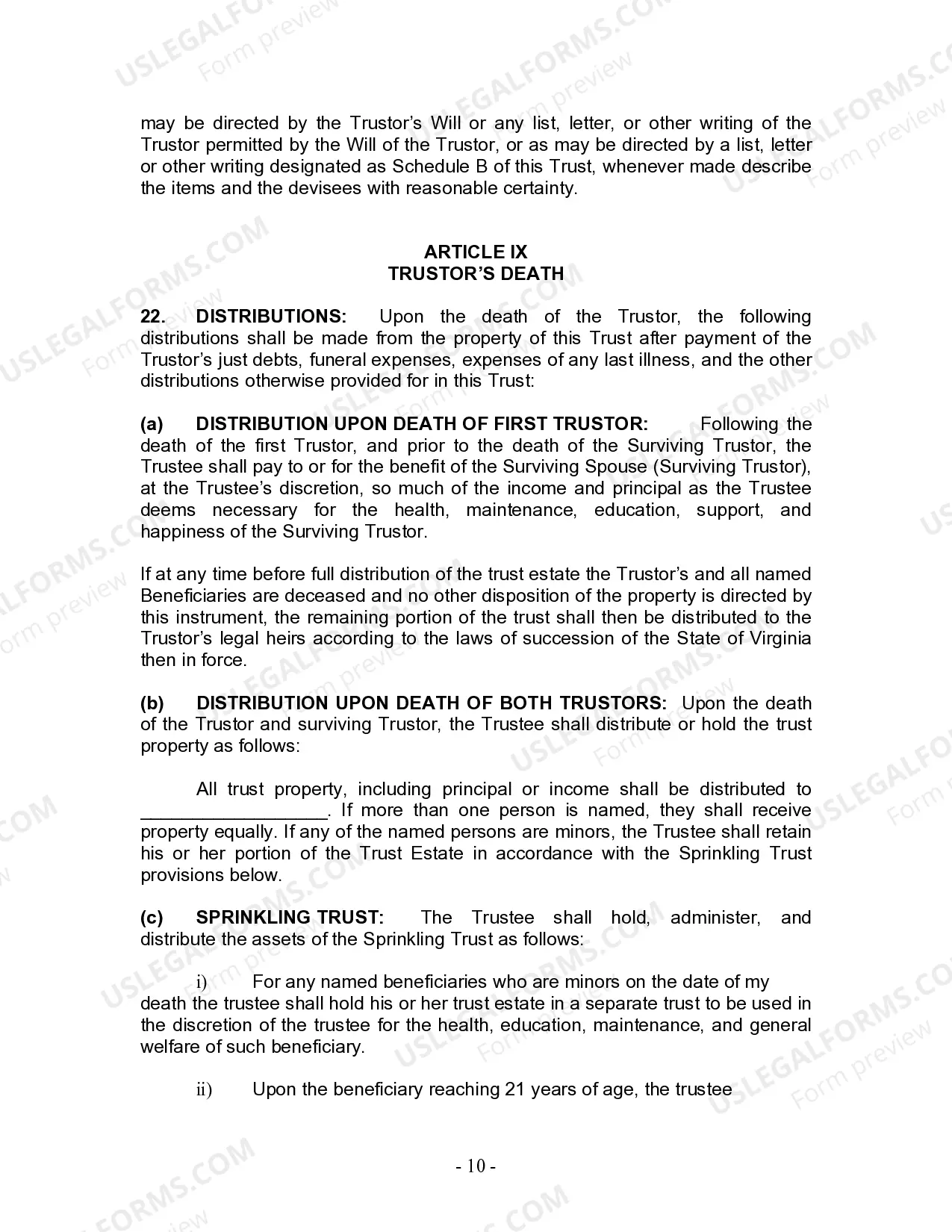
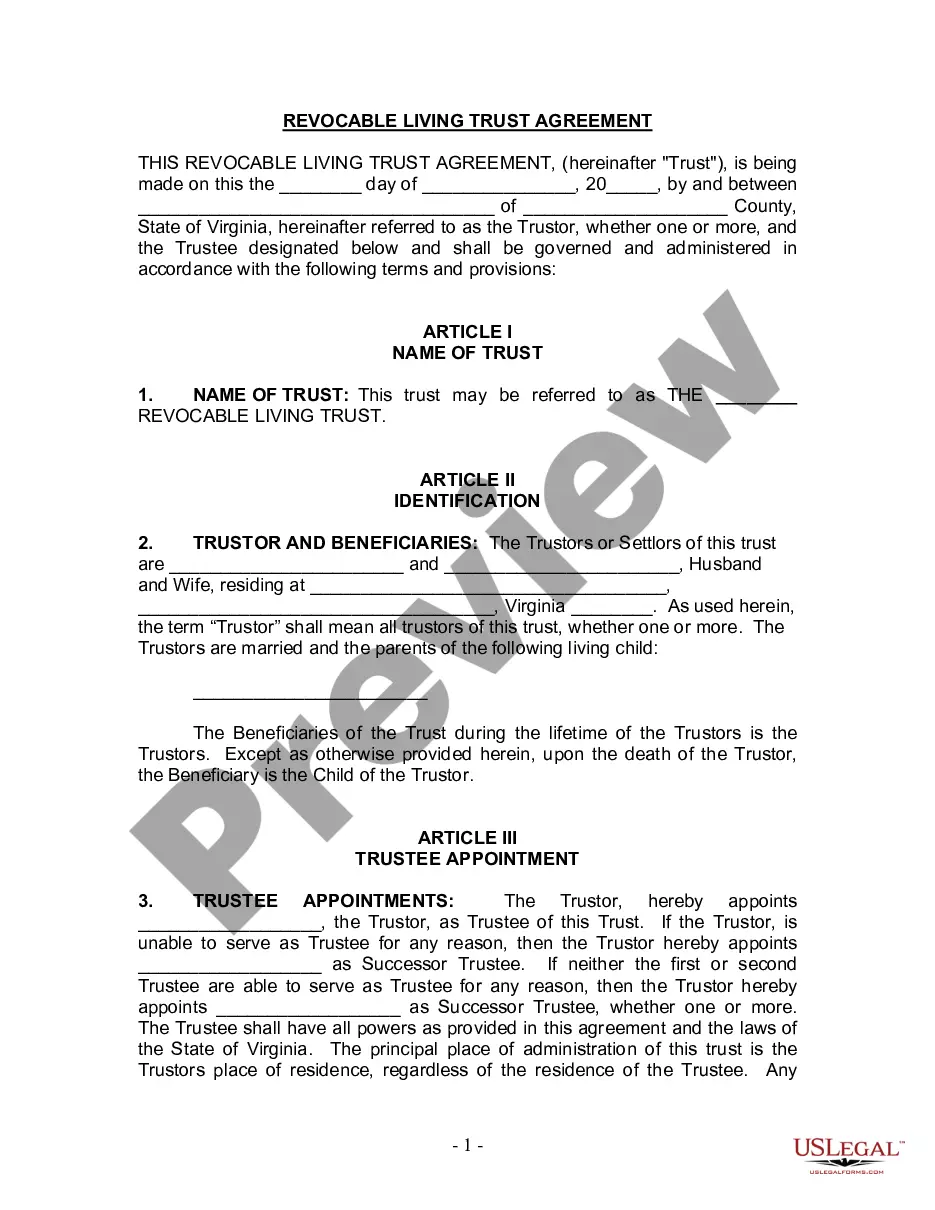
This Living Trust for Husband and Wife with No Children is a legal document that establishes a revocable trust during the lifetime of the trustors. It allows a married couple without children to manage their assets while avoiding probate upon death. The couple, as trustors, retains control over their property during their lifetime, ensuring it is passed directly to their named beneficiaries without going through the lengthy probate process. This form is particularly beneficial for estate planning, providing flexibility and control over asset distribution.
Key components of this form
- Name of Trust: Specifies the title of the trust.
- Trustor and Beneficiaries: Identifies the husband and wife as trustors and outlines the beneficiaries.
- Trustee Appointment: Designates the trustors as trustees, with provisions for successor trustees.
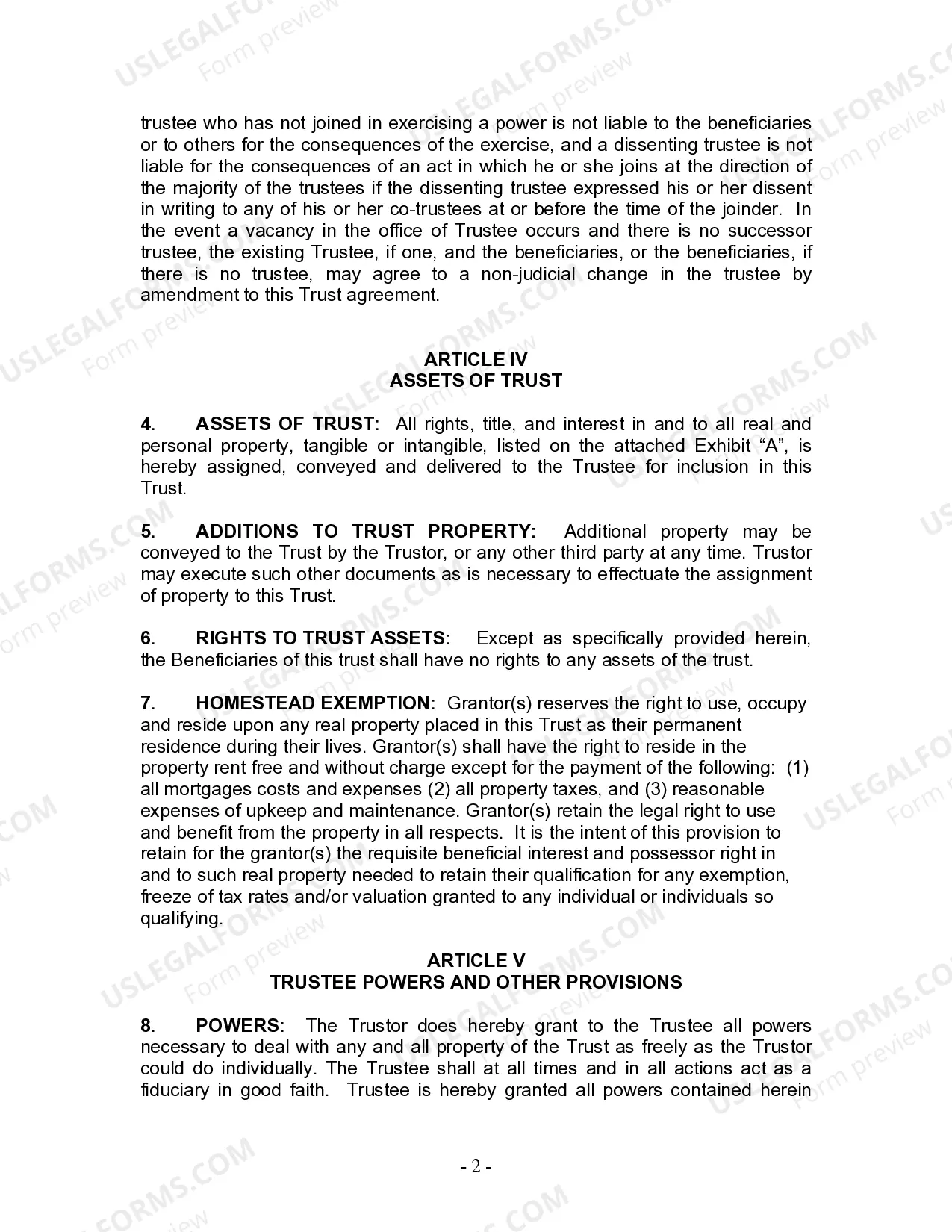
- Assets of Trust: Lists the property and assets included in the trust.
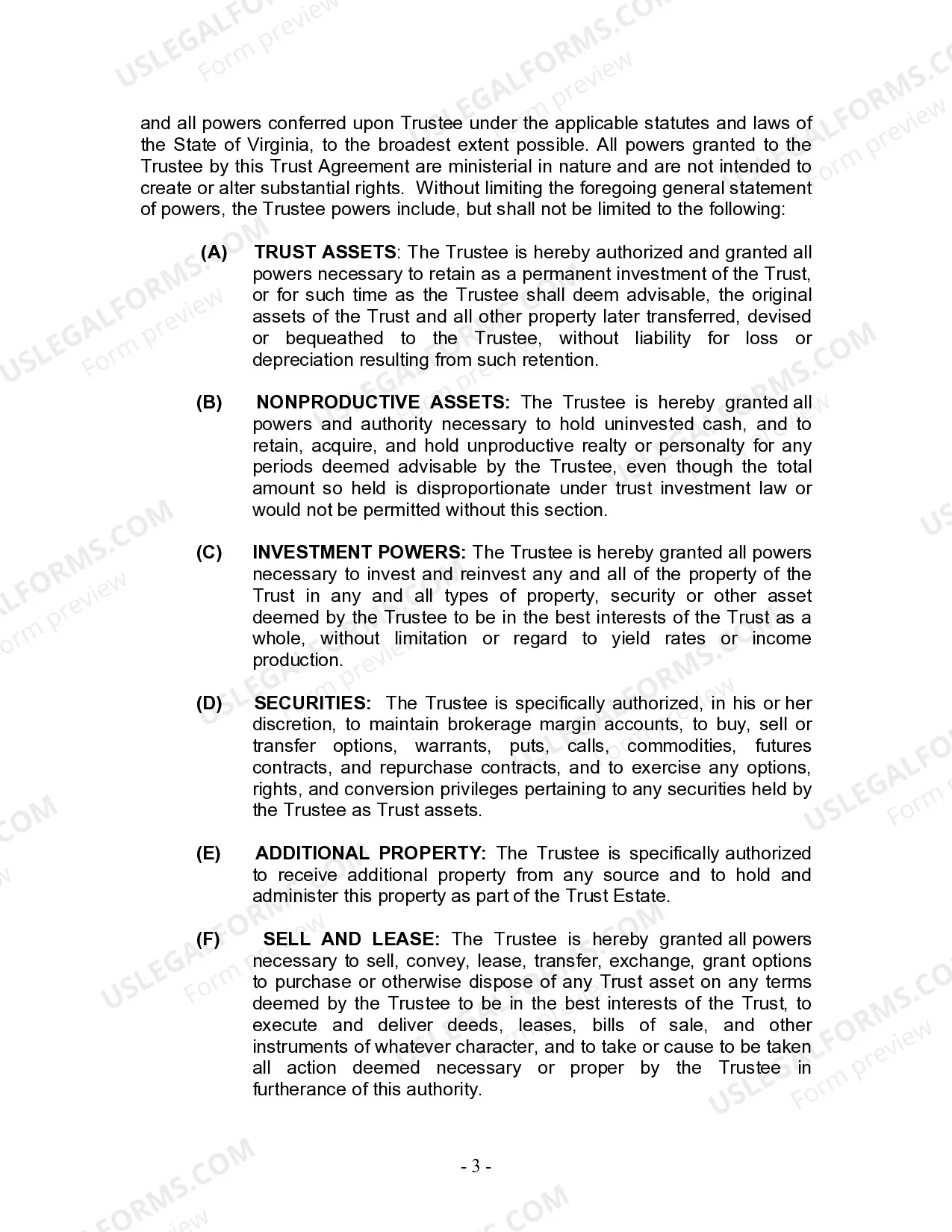
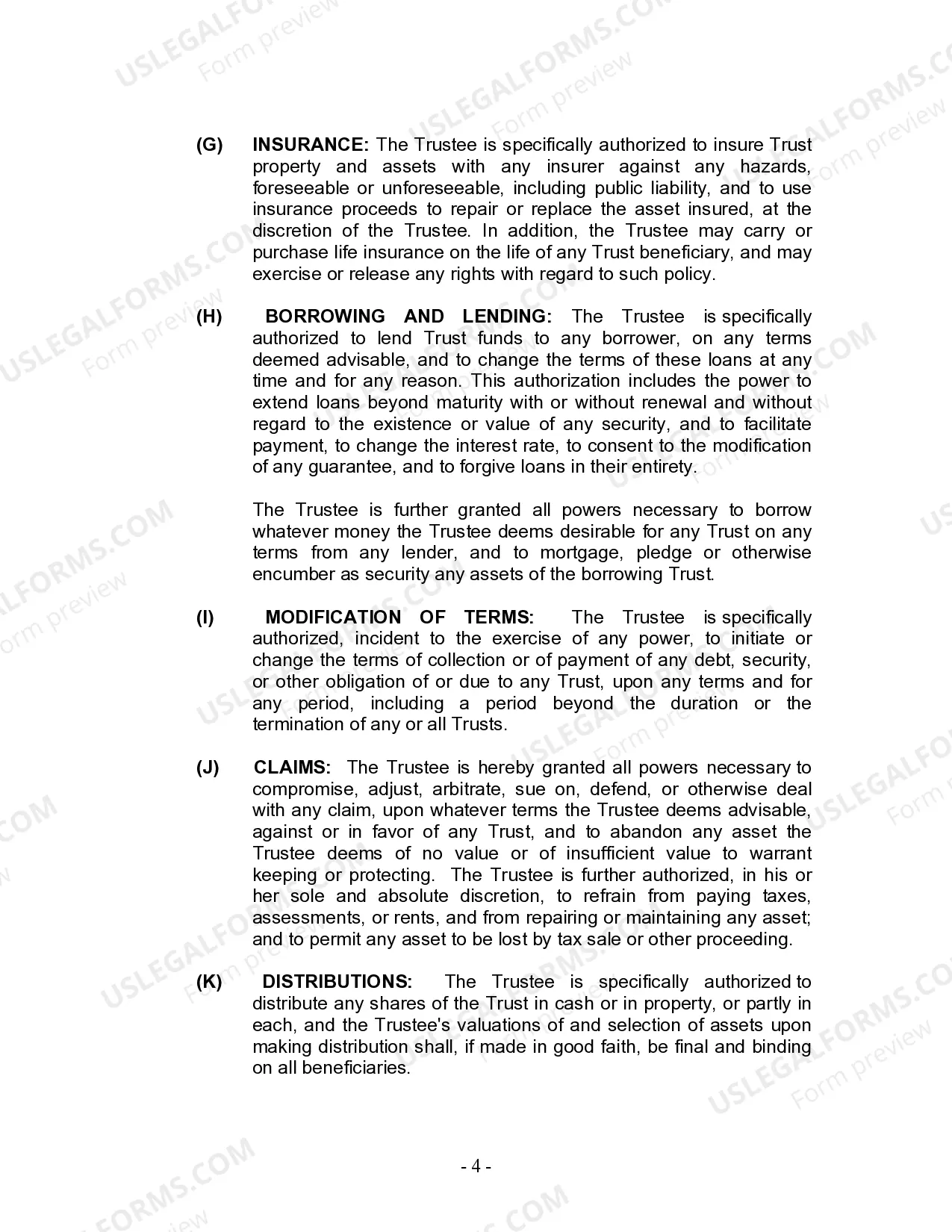
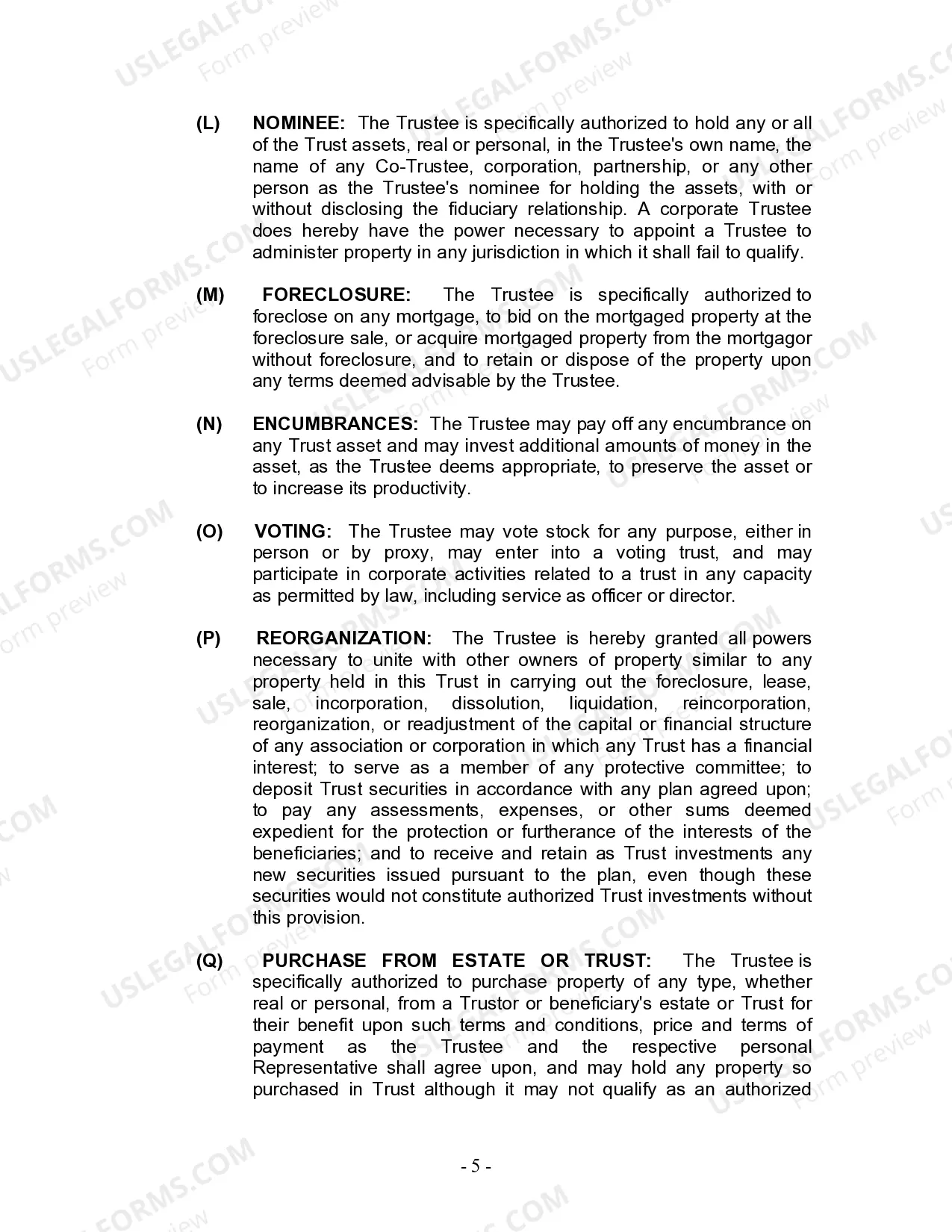
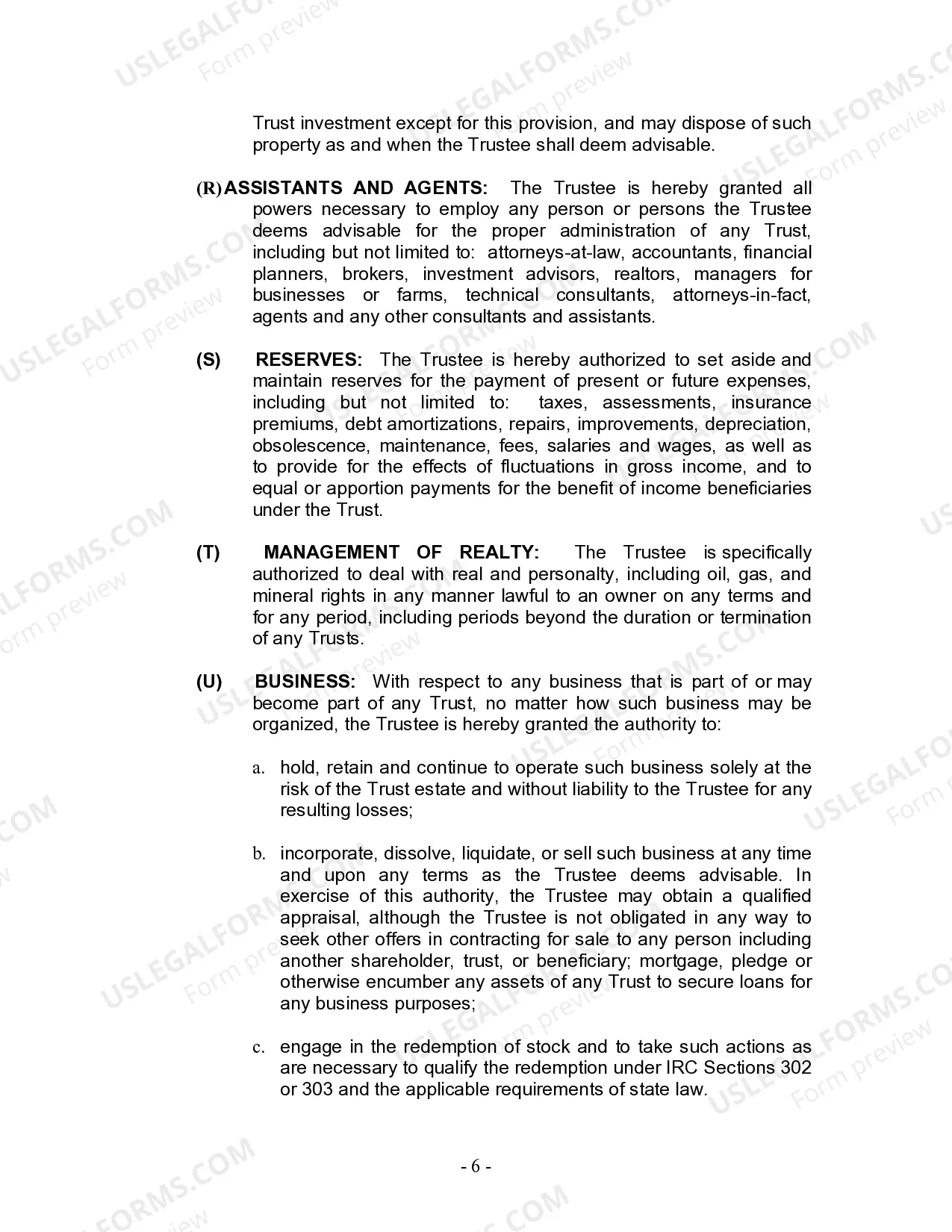
- Trustee Powers: Grants the trustee various powers for managing trust assets.
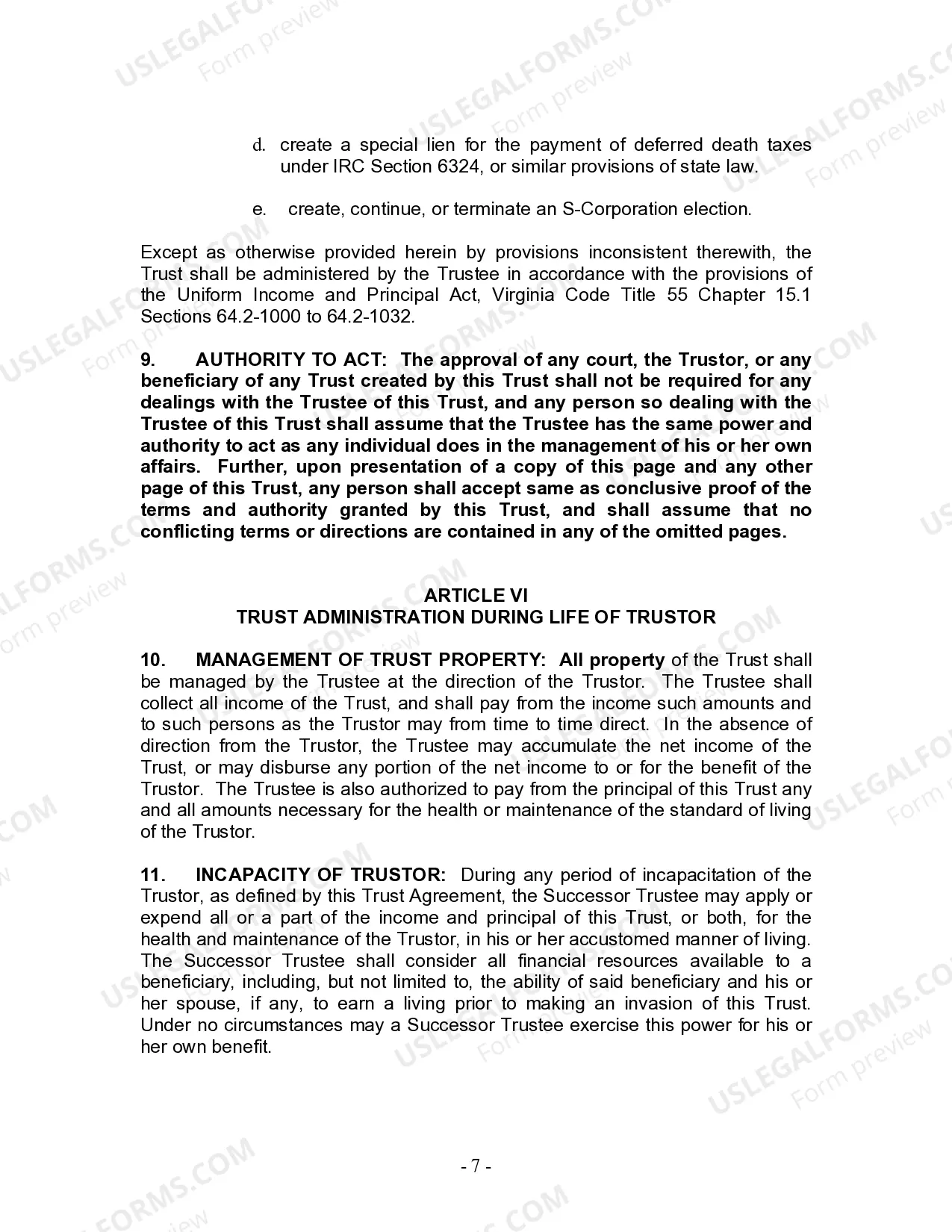
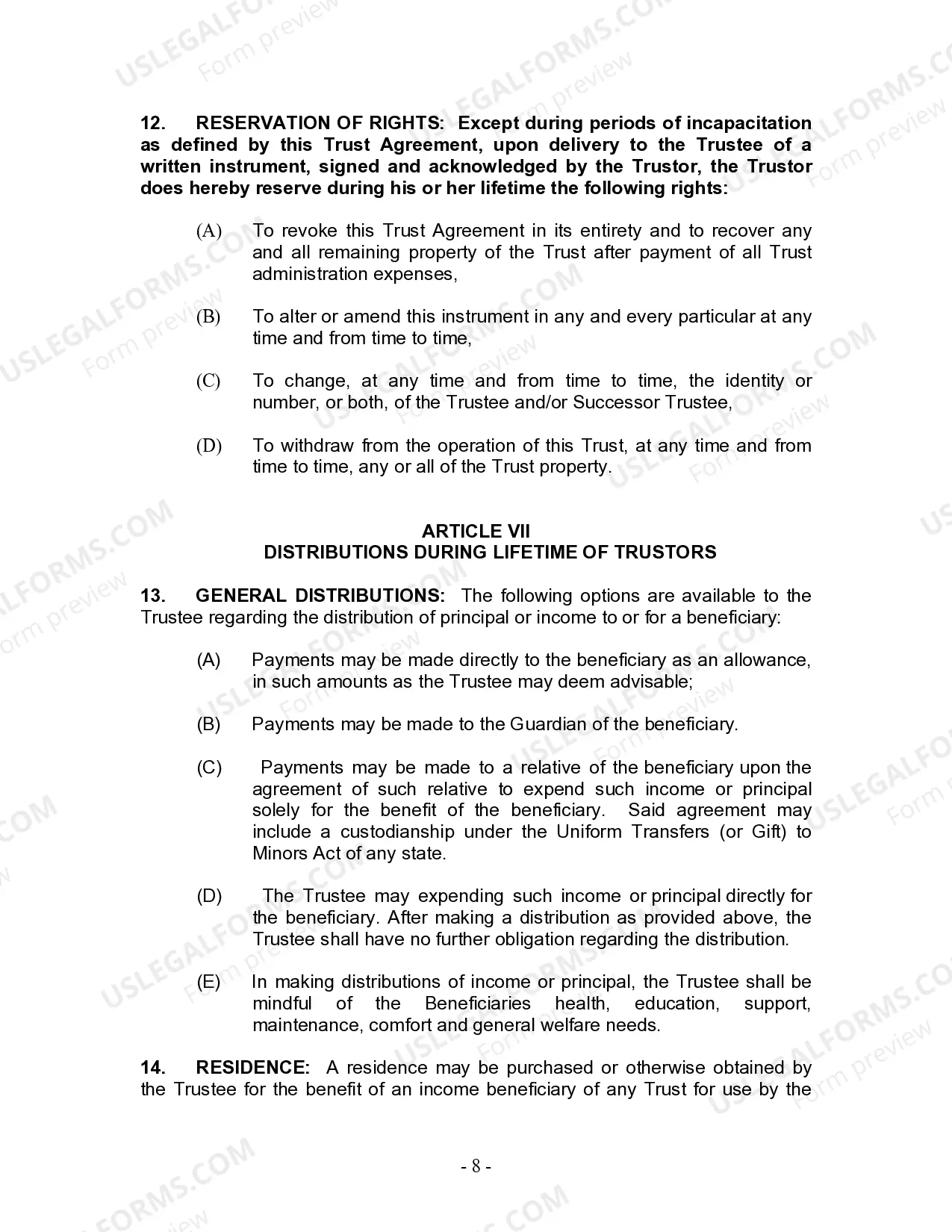
- Distributions: Specifies how and when distributions to beneficiaries occur.



When to use this document
This form is ideal for couples who are married and do not have children. It is particularly useful when they want to ensure their assets are managed according to their wishes during their lifetime and passed on according to their instructions after death. This can include scenarios such as retirement planning, protection of assets from probate, and ensuring privacy regarding asset distribution after death.
Who can use this document
- Married couples without children looking to manage their estate.
- Individuals seeking to avoid probate for their assets after death.
- Couples wanting flexibility in managing their assets during their lifetime.
- Those who desire privacy in their estate planning and asset distribution.
Completing this form step by step
- Identify the trustors by entering the names of both husband and wife at the beginning of the document.
- Name the trust by filling out the chosen title in the designated section.
- List the details of the assets being transferred into the trust on the attached schedule or exhibit.
- Designate the trustees, including successor trustees if applicable, ensuring clarity on who will manage the trust.
- Have both trustors sign and date the document in the presence of a notary public if required.
Notarization requirements for this form
To make this form legally binding, it must be notarized. Our online notarization service, powered by Notarize, lets you verify and sign documents remotely through an encrypted video session.
Get your form ready online
Our built-in tools help you complete, sign, share, and store your documents in one place.
Make edits, fill in missing information, and update formatting in US Legal Forms—just like you would in MS Word.
Download a copy, print it, send it by email, or mail it via USPS—whatever works best for your next step.
Sign and collect signatures with our SignNow integration. Send to multiple recipients, set reminders, and more. Go Premium to unlock E-Sign.
If this form requires notarization, complete it online through a secure video call—no need to meet a notary in person or wait for an appointment.
We protect your documents and personal data by following strict security and privacy standards.

Make edits, fill in missing information, and update formatting in US Legal Forms—just like you would in MS Word.
Download a copy, print it, send it by email, or mail it via USPS—whatever works best for your next step.
Sign and collect signatures with our SignNow integration. Send to multiple recipients, set reminders, and more. Go Premium to unlock E-Sign.

If this form requires notarization, complete it online through a secure video call—no need to meet a notary in person or wait for an appointment.

We protect your documents and personal data by following strict security and privacy standards.
Avoid these common issues
- Failing to list all assets to be included in the trust.
- Not designating successor trustees, leading to uncertainty about trust management.
- Inaccurately completing the trustor and beneficiary sections, which can cause legal issues.
- Neglecting to have the document notarized when required.
Why use this form online
- Convenience of downloading and filling out the form at your own pace.
- Editability allows for adjustments before finalizing the document.
- Access to professionally drafted legal language tailored for Virginia.
- Cost-effective compared to hiring a lawyer for basic estate planning needs.
Looking for another form?

Form popularity
FAQ
To inherit under Virginia's intestate succession statutes, a person must outlive you by 120 hours. So, if you and your brother are in a car accident and he dies a few hours after you do, his estate would not receive any of your property. (Virginia Code § 64.2-2201.) Half-relatives.
The term usually means your nearest blood relative. In the case of a married couple or a civil partnership it usually means their husband or wife. Next of kin is a title that can be given, by you, to anyone from your partner to blood relatives and even friends.
Heirs/Heirs at Law: the persons who would inherit the decedent's estate if the decedent died intestate, as determined by law at the time of the decedent's death.
Virginia is a common law property state. This means that in cases of intestacy, the estate is automatically inherited by the spouse.Therefore, if there is a surviving spouse, the spouse will receive the deceased's portion of all marital properties.
If a person does not have a will and they die, their assets pass according to Virginia's laws of intestate succession. If a person does not have any children, all of the assets pass to the spouse.If the person does not have a spouse or children, the assets pass to the decedent's parents.
Next of kin under Virginia law generally means the closest living relatives of the decedent. The Virginia Supreme Court has stated that the term next of kin is a nontechnical term whose commonly accepted meaning is 'nearest in blood. ' Elmore v. Virginia Nat'l Bank, 232 Va.
WHO INHERITS THE PROPERTY OF AN INTESTATE? someone other than the surviving spouse in which case, one-third goes to the surviving spouse and the remaining two-thirds is divided among all children. f0a7 if no surviving spouse, all passes to the children and their descendants.
How Is Next of Kin Determined? To determine next of kin in California, go down the list until someone exists in the category listed.For example, if decedent had no surviving spouse or registered domestic partner, but was survived by adult children, then the adult children would be next of kin.