Virginia Landlord Tenant Lease Co-Signer Agreement
Overview of this form
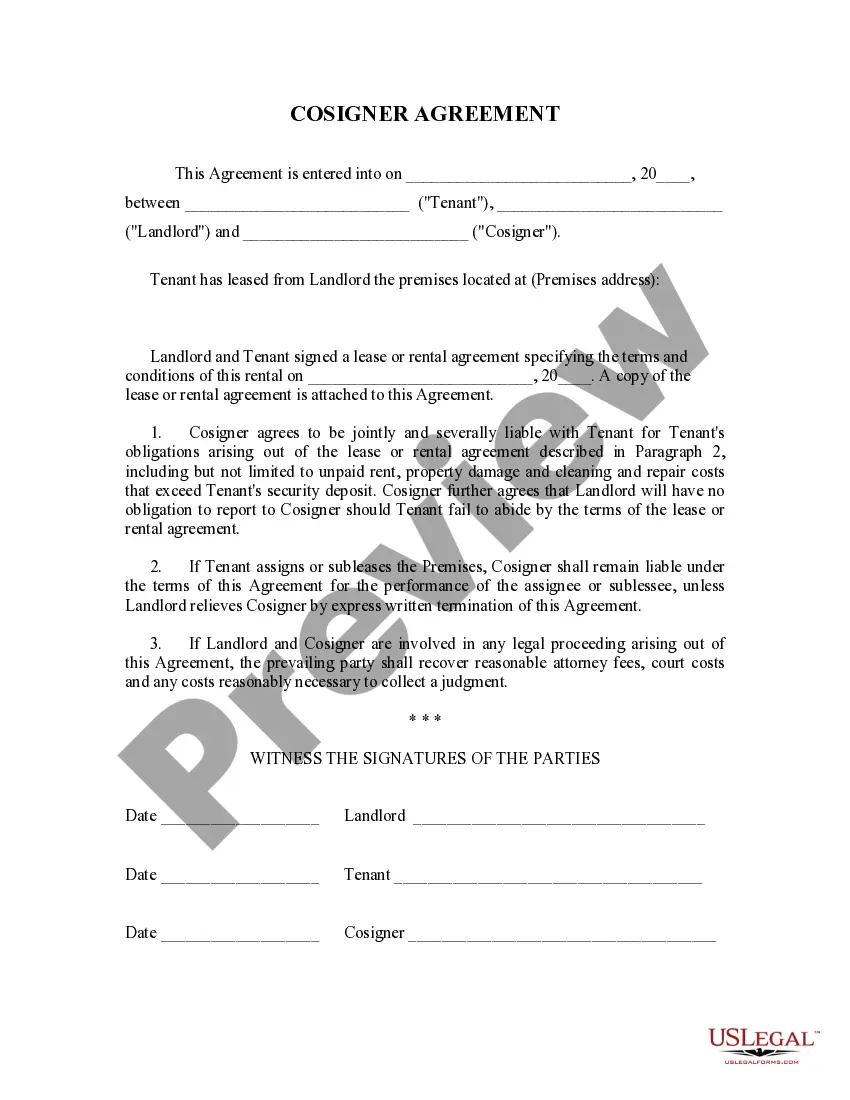
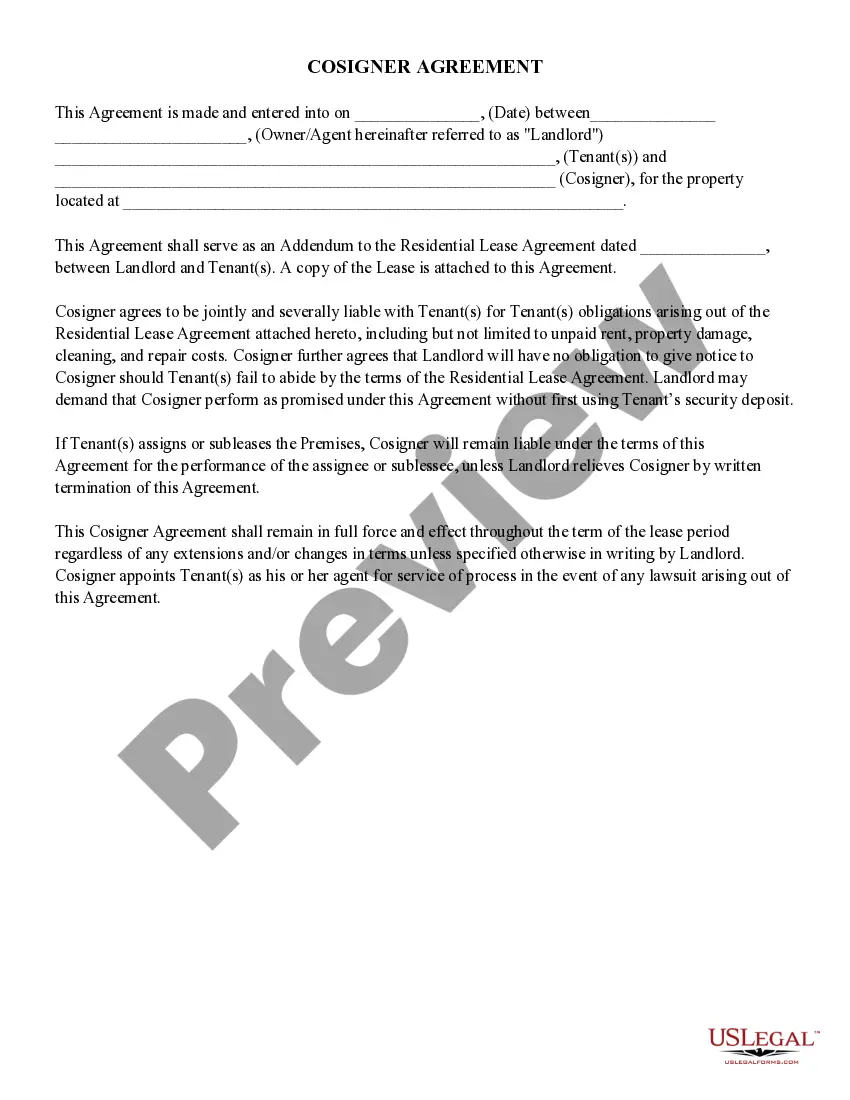
The Landlord Tenant Lease Co-Signer Agreement is a legal document that outlines the responsibilities of a cosigner in a rental agreement. It is designed to provide assurance to landlords by assigning liability to the cosigner if the tenant fails to meet their rental obligations, such as paying rent or covering damages. This agreement differs from a standard lease, as it specifically includes the cosigner's role and responsibilities, ensuring that both parties know their obligations in the rental relationship.
Key components of this form
- Date of agreement initiation
- Identification of parties involved: Tenant, Landlord, and Cosigner
- Details of the leased premises
- Terms regarding liability if the tenant subleases or assigns the lease
- Provision for legal fees in case of disputes
Common use cases
This form is useful in situations where a landlord requires additional security for a lease. It is typically employed when the tenant has insufficient credit or financial history to qualify for the lease on their own. The cosigner agrees to take on the responsibility for obligations outlined in the lease, giving landlords greater confidence in receiving timely payments and maintaining property conditions.
Who should use this form
- Landlords seeking additional security in rental agreements
- Tenants who may require a cosigner to secure a lease due to financial constraints
- Individuals acting as cosigners, who are willing to guarantee the tenant's obligations
Instructions for completing this form
- Identify the parties: Enter the names of the Tenant, Landlord, and Cosigner.
- Specify the premises: Provide the address of the rental property.
- Fill in the date of agreement initiation.
- Clarify liability terms regarding subleases or assignments, if applicable.
- Have all parties review the document and sign, dating their signatures.
Notarization requirements for this form
This form does not typically require notarization unless specified by local law. It is advisable to check local requirements regarding the execution of lease agreements to ensure compliance.
Get your form ready online
Our built-in tools help you complete, sign, share, and store your documents in one place.
Make edits, fill in missing information, and update formatting in US Legal Forms—just like you would in MS Word.
Download a copy, print it, send it by email, or mail it via USPS—whatever works best for your next step.
Sign and collect signatures with our SignNow integration. Send to multiple recipients, set reminders, and more. Go Premium to unlock E-Sign.
If this form requires notarization, complete it online through a secure video call—no need to meet a notary in person or wait for an appointment.
We protect your documents and personal data by following strict security and privacy standards.

Make edits, fill in missing information, and update formatting in US Legal Forms—just like you would in MS Word.

Download a copy, print it, send it by email, or mail it via USPS—whatever works best for your next step.

Sign and collect signatures with our SignNow integration. Send to multiple recipients, set reminders, and more. Go Premium to unlock E-Sign.

If this form requires notarization, complete it online through a secure video call—no need to meet a notary in person or wait for an appointment.

We protect your documents and personal data by following strict security and privacy standards.
Common mistakes to avoid
- Not clearly defining the roles of each party involved.
- Failing to include necessary details about the rental property.
- Inadequate review of state-specific legal requirements.
- Leaving out signatures or dates, making the agreement unenforceable.
Advantages of online completion
- Easy access to professionally drafted legal templates.
- Convenience of downloading and printing the form for use at any time.
- Editable fields allow for personalized information to be filled in quickly.
- Reliable resources ensure that forms are compliant with legal standards.
Legal use & context
- This agreement legally binds the cosigner to the tenant's lease obligations.
- Enforceability may vary by jurisdiction; local laws should be considered.
- It serves as a financial safety net for landlords, making the leasing process more secure.
Quick recap
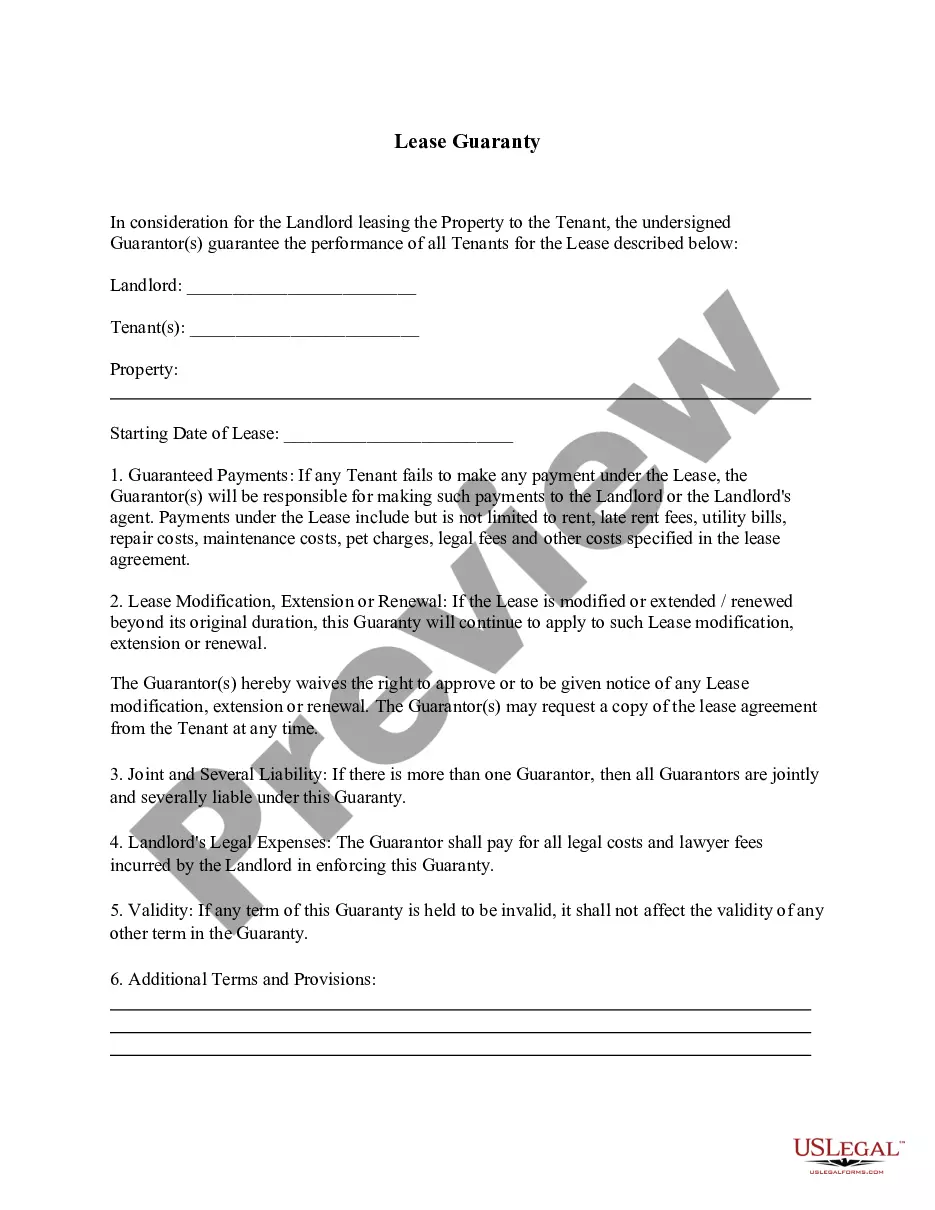
- The Landlord Tenant Lease Co-Signer Agreement secures tenant obligations through a third-party guarantee.
- It is important for landlords, tenants with financial limitations, and supportive cosigners.
- Ensure all parties understand the terms and keep a signed copy of the agreement.
Looking for another form?
Form popularity
FAQ
According to Nolo, a cosigner is a person designated to make the rental payments if the tenant does not pay.However, if a lease doesn't have this provision, then the only people who need to sign the lease are the people responsible for paying the rent.
Being a co-signer itself does not affect your credit score. Your score may, however, be negatively affected if the main account holder misses payments.You will owe more debt: Your debt could also increase since the consignee's debt will appear on your credit report.
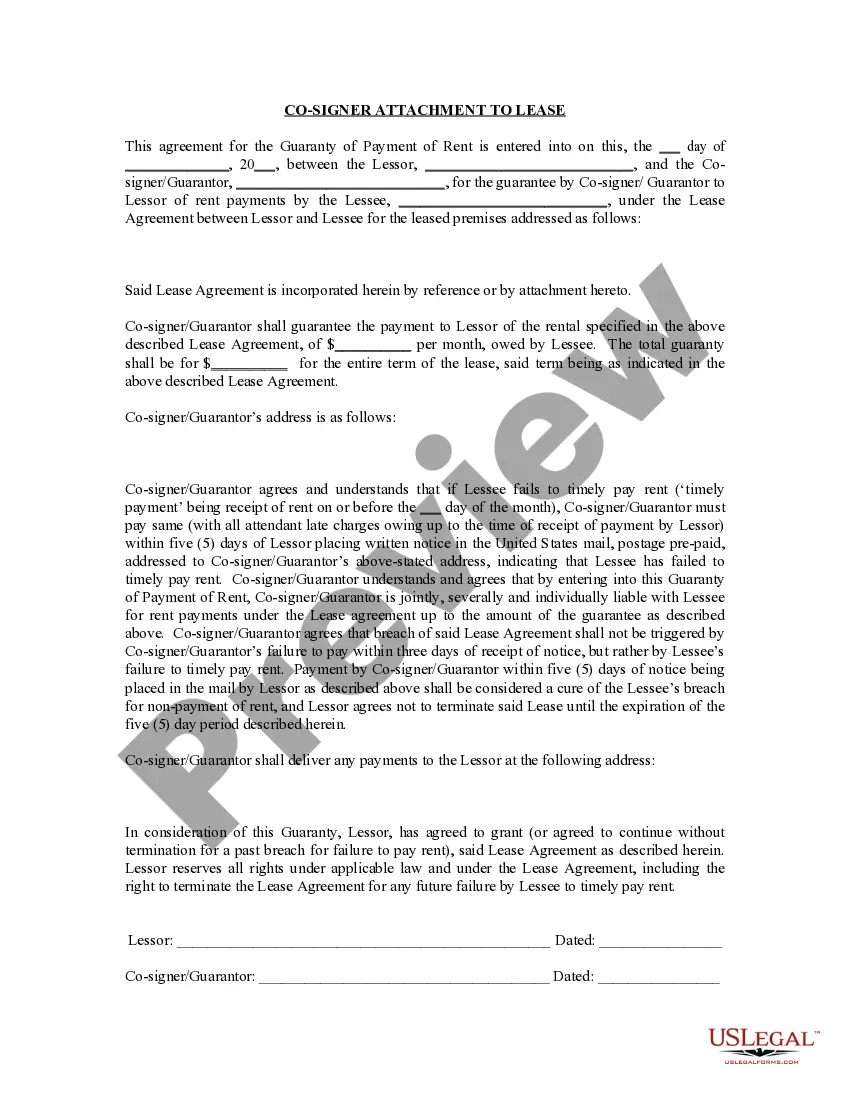
Co-signing a lease means that a third-party individual like a parent, sibling or friend assumes the responsibility of the lease if the primary lessee is unable to do so. As a co-signer, this means that you'll be responsible for ensuring that the rent is paid and fulfilled.
Some landlords agree to consider cosigners as long as they pass a background check, while other landlords don't allow them at all. Since there are no laws that require you to accept a cosigner, according to RentPrep, it's up to you to determine what makes the most sense for your property.
As a general rule, unlike so many things in life, co-signing is pretty much forever. In the case of a lease, this means that the co-signer is responsible for the lease for the duration of the agreement, whether it's a six-month lease, a yearlong lease or for some other period.
As a cosigner on a lease, you're not only helping someone out, you're taking on a ton of risk. For instance, if the lease holder doesn't make their payments on time, it will negatively affect your credit report and credit score.
Co-signers have equal responsibility for payment of monthly rental costs, while a guarantor is generally sought for payment only when the primary signer is unable to make the rental payment.
The cosigner, simply by signing on to the debt, is liable for the debt without the creditor needing to to take any additional actions. The guarantor is only liable for the debt after the creditor has exhausted all other options of collections from the original borrower.
A co-signer is a third party who is responsible if you are unable to pay rent. This person does not typically live in the apartment with you, but he or she is equally liable for your lease.