Virginia Interrogatories to Defendant for Motor Vehicle Accident
What this document covers
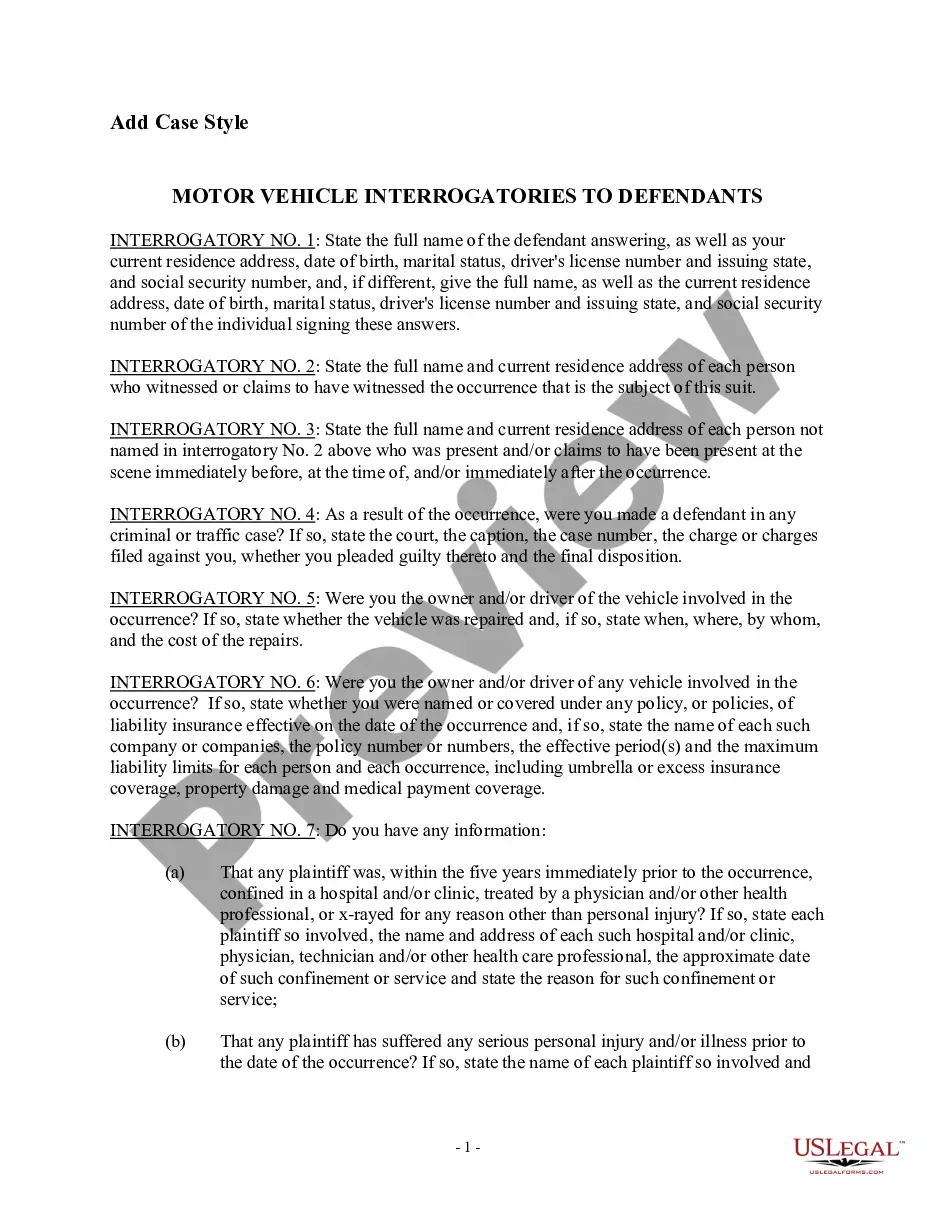
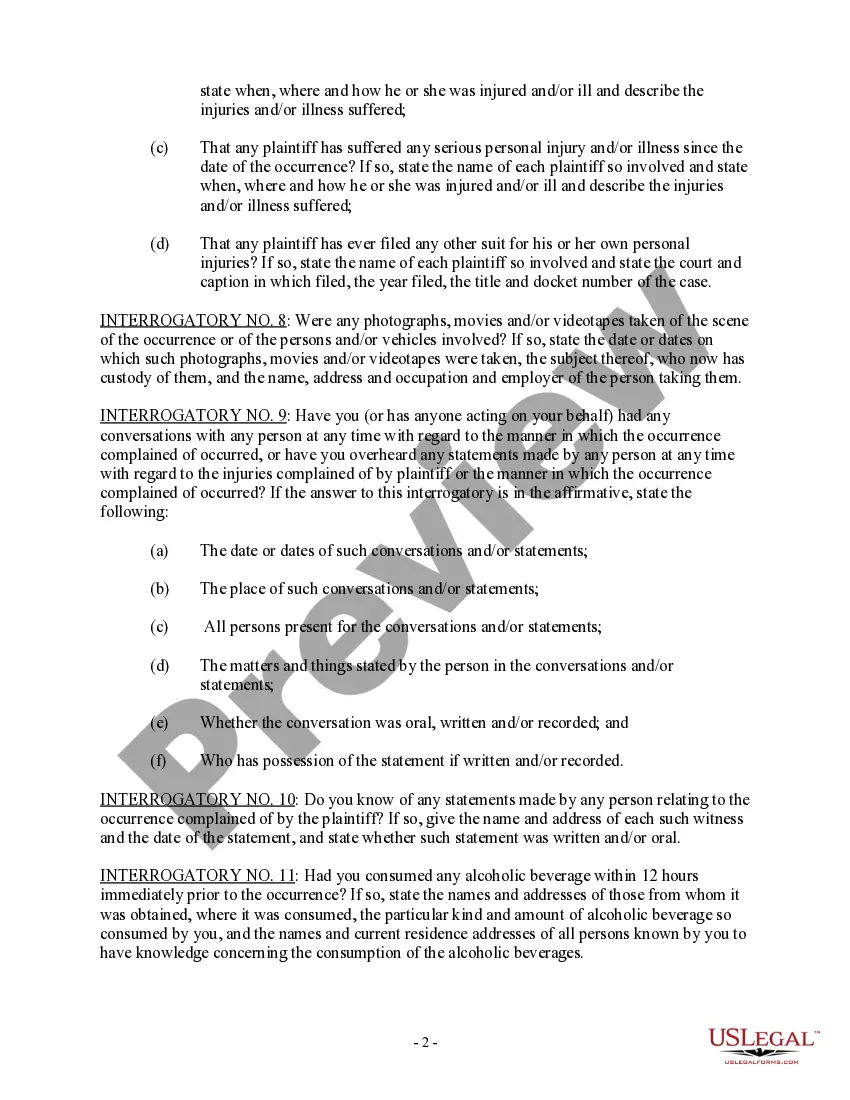
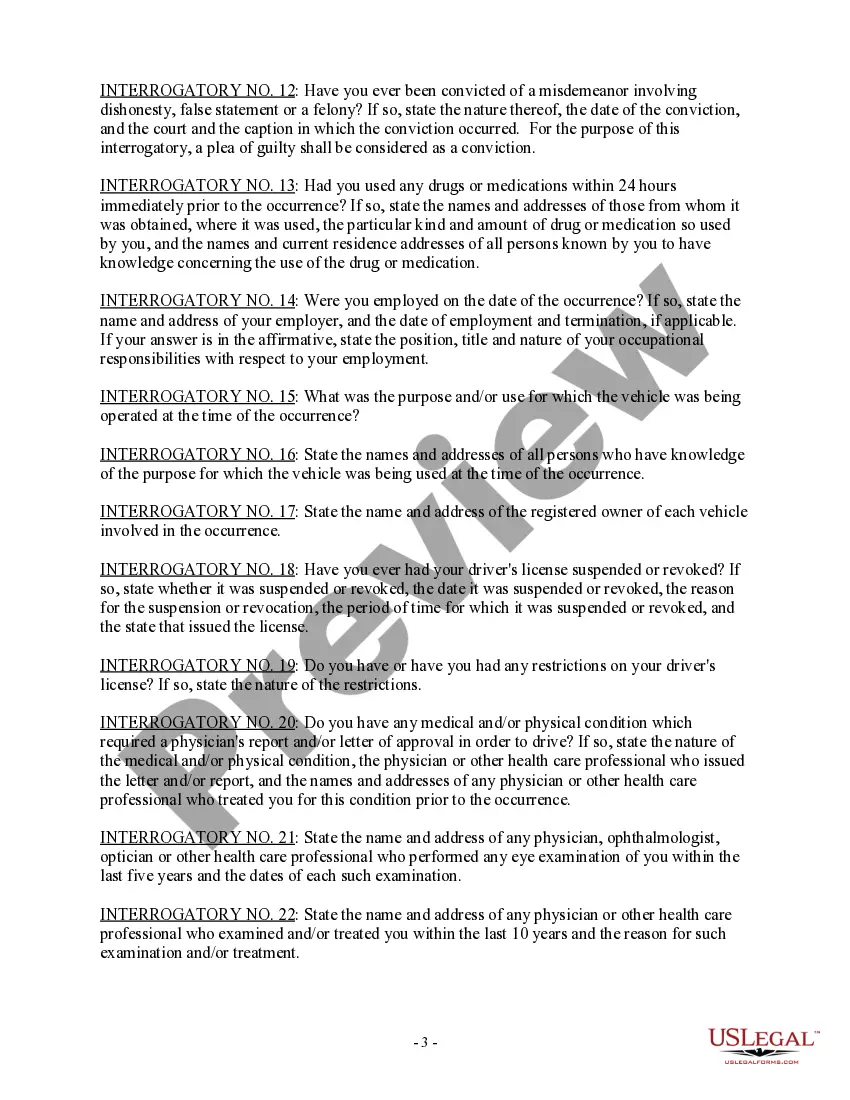
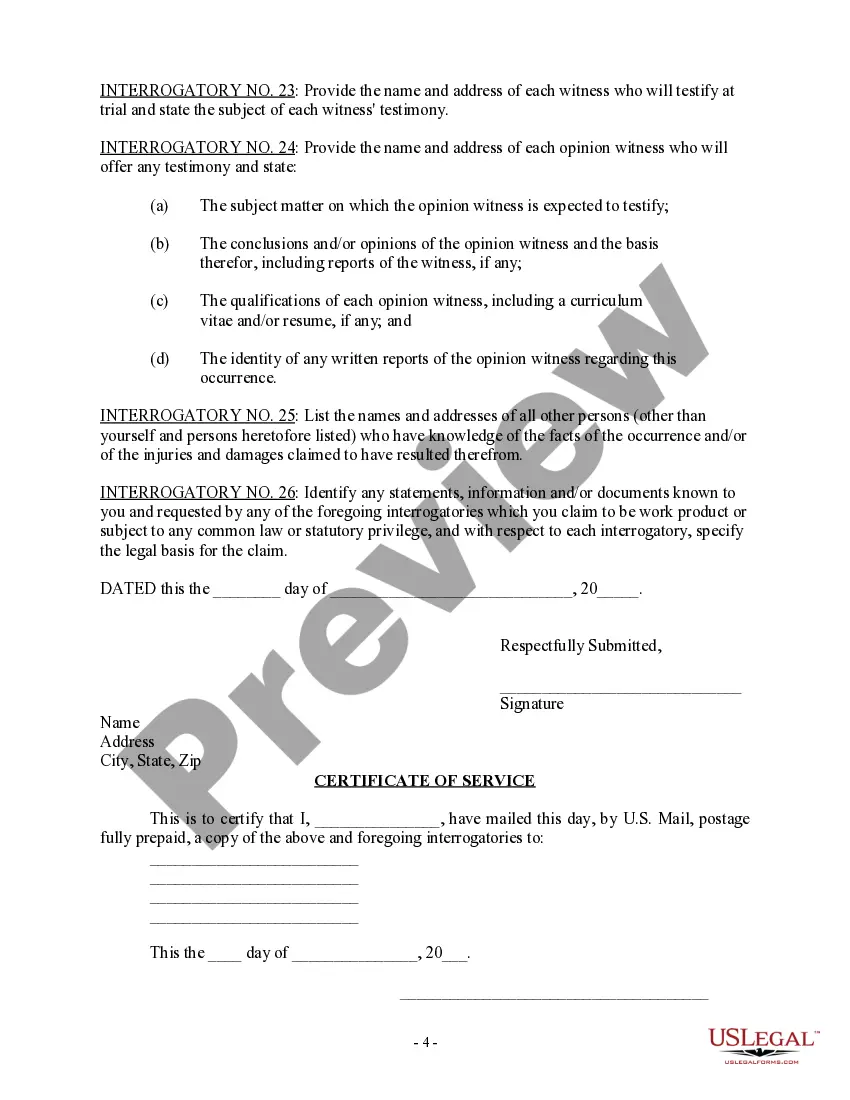
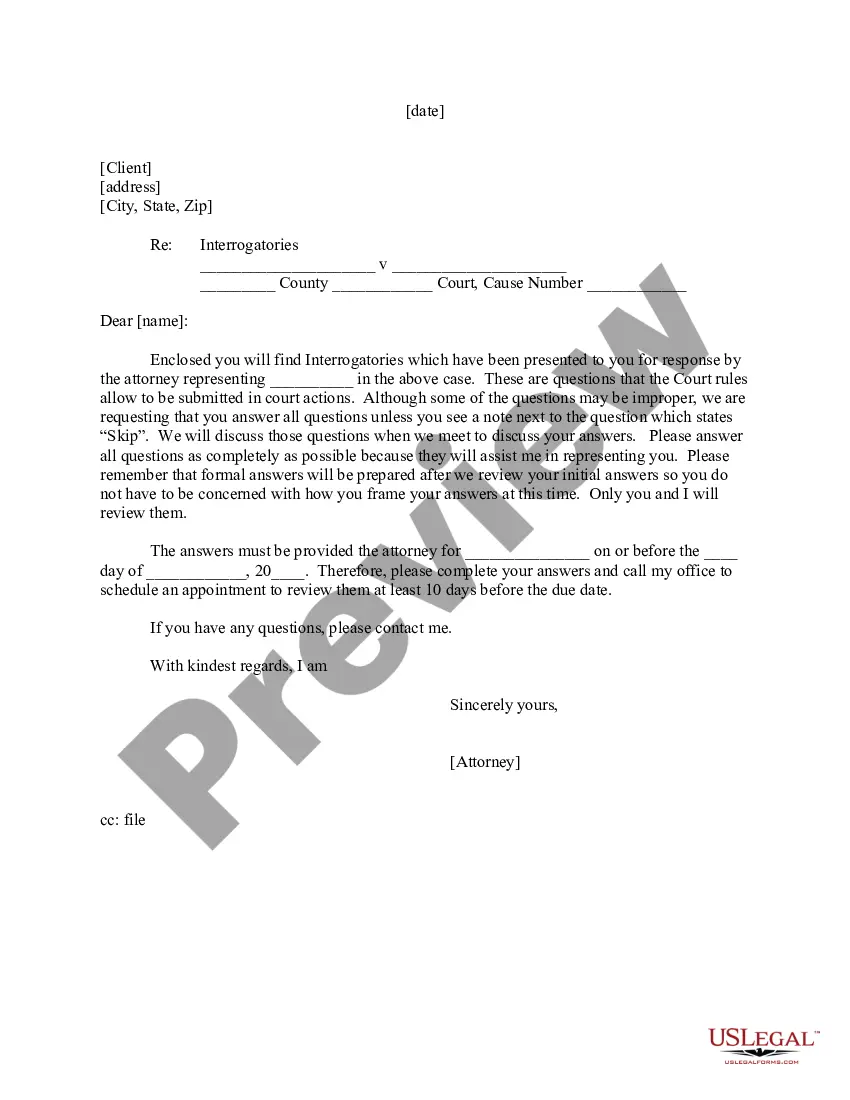
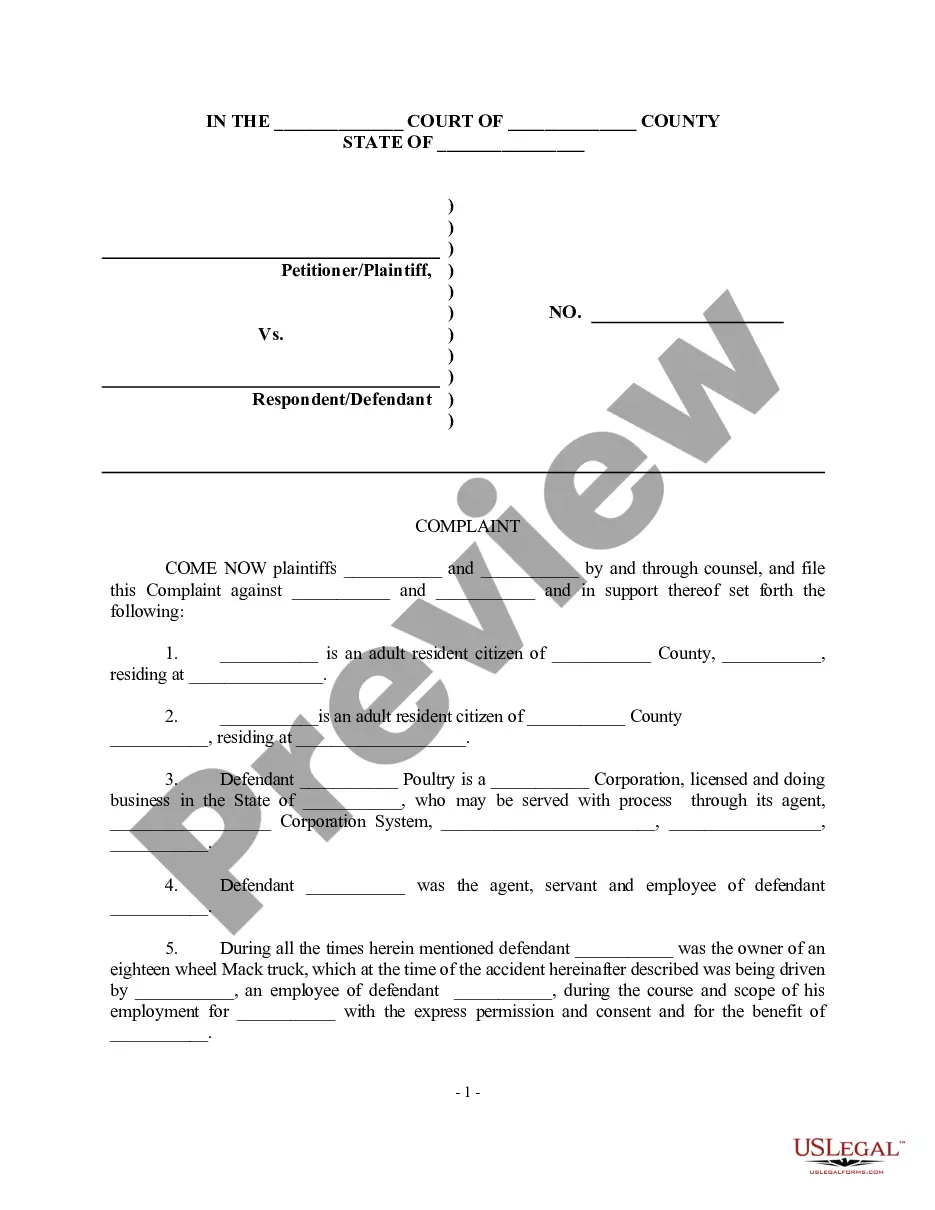
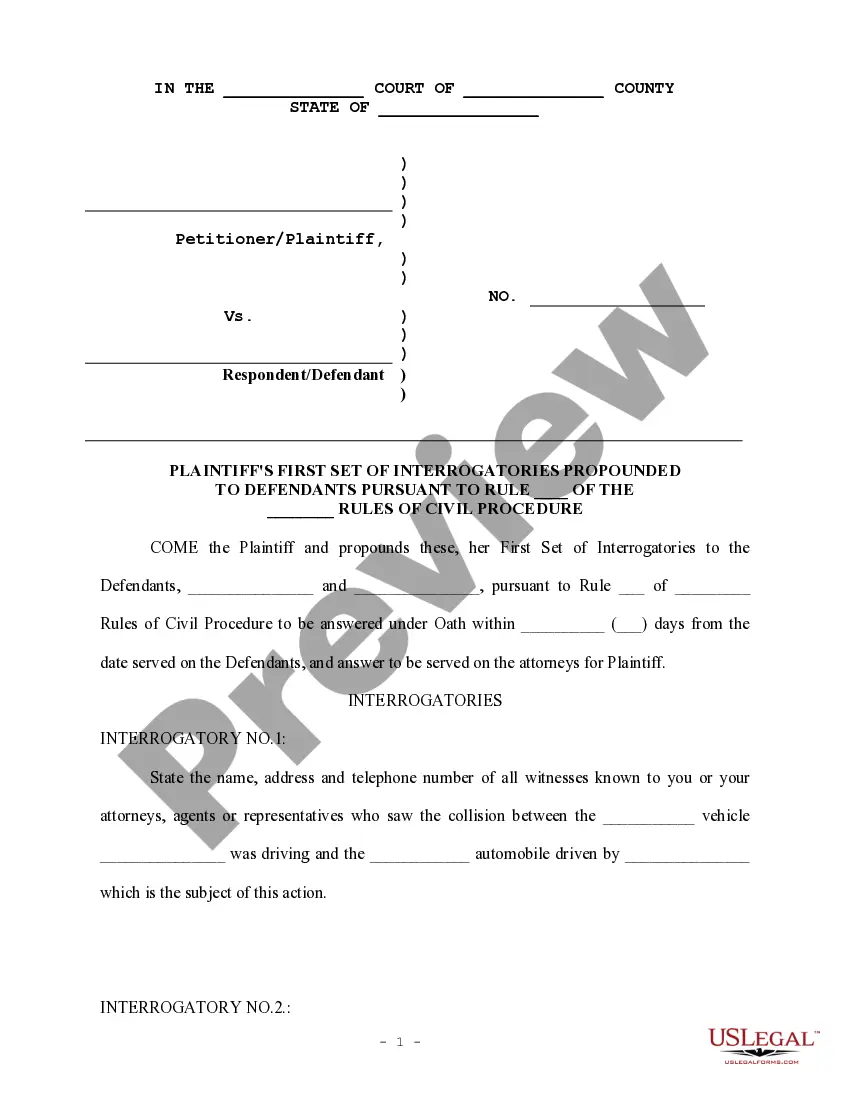
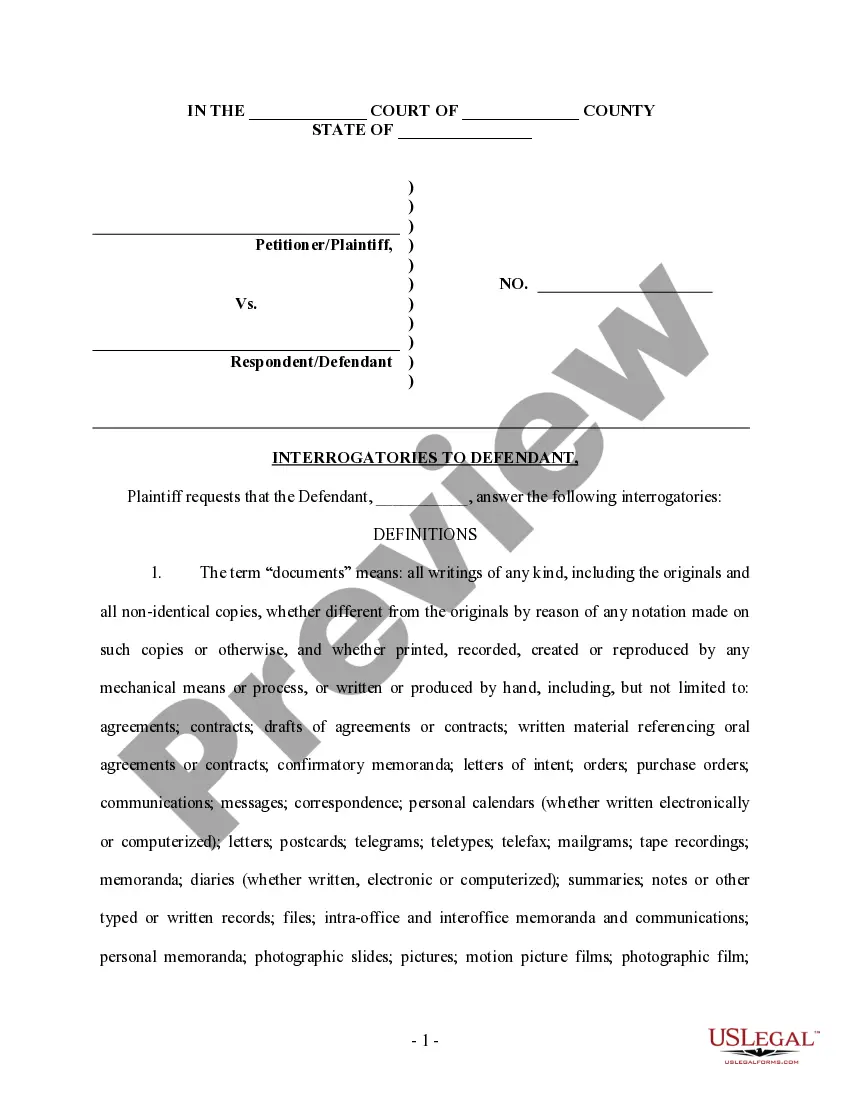
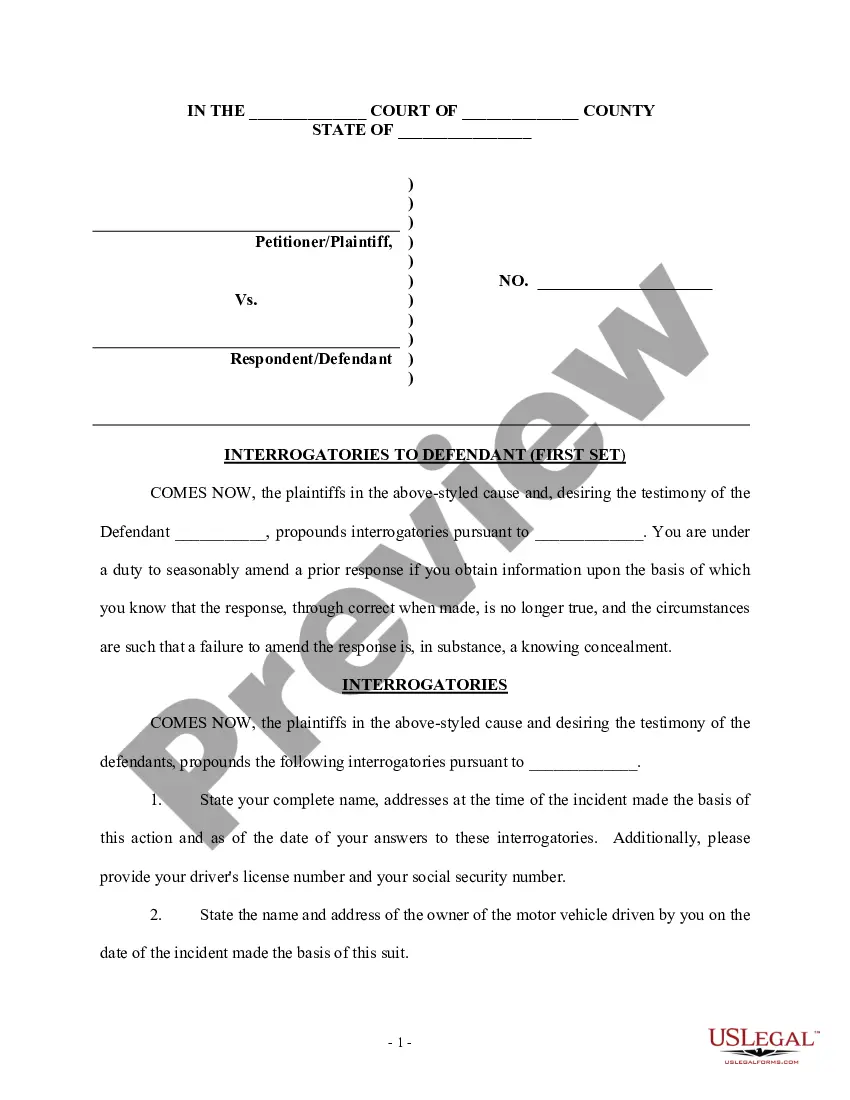
The Interrogatories to Defendant for Motor Vehicle Accident is a legal form used to gather information from the defendant involved in a vehicle incident. This form includes a set of 28 questions designed to clarify the details and circumstances surrounding the accident. It assists in the discovery process by ensuring that all relevant information is disclosed, which is essential for building a case. Unlike general interrogatories, this specific form focuses on motor vehicle accidents, making it tailored for attorneys and parties engaged in litigation related to such incidents.
Main sections of this form
- Identification details of the defendant, including personal information and driving history.
- Information on witnesses to the accident, including names and contact details.
- Details regarding any previous injuries or medical conditions relevant to the plaintiff's claims.
- Questions about vehicle ownership, insurance policies, and any previous legal issues faced by the defendant.
- Requests for evidence, such as photographs or audio/video recordings related to the accident.

Common use cases
This form should be used during the pre-trial discovery phase in a legal case involving a motor vehicle accident. It is particularly useful if the plaintiff seeks detailed information about the defendant's actions, conditions, and other relevant aspects that may impact the case outcome. When you need to understand how the defendant views the circumstances of the accident or to uncover any additional evidence that may exist, this form is key.
Who this form is for
This form is intended for:
- Plaintiffs who are pursuing a legal claim against a defendant in a motor vehicle accident case.
- Attorneys representing plaintiffs in such cases, seeking to gather comprehensive information for litigation.
- Defendants in legal actions who must respond to inquiries regarding the accident.
Instructions for completing this form
To complete the Interrogatories to Defendant for Motor Vehicle Accident, follow these steps:
- Enter the full case style at the top of the document.
- Provide the required personal information as requested in the initial questions.
- List the names and addresses of all witnesses as required.
- Respond to each interrogatory clearly and thoroughly, ensuring all relevant details are included.
- Sign and date the document, and complete the certificate of service as needed.
Notarization guidance
Notarization is not commonly needed for this form. However, certain documents or local rules may make it necessary. Our notarization service, powered by Notarize, allows you to finalize it securely online anytime, day or night.
Get your form ready online
Our built-in tools help you complete, sign, share, and store your documents in one place.
Make edits, fill in missing information, and update formatting in US Legal Forms—just like you would in MS Word.
Download a copy, print it, send it by email, or mail it via USPS—whatever works best for your next step.
Sign and collect signatures with our SignNow integration. Send to multiple recipients, set reminders, and more. Go Premium to unlock E-Sign.
If this form requires notarization, complete it online through a secure video call—no need to meet a notary in person or wait for an appointment.
We protect your documents and personal data by following strict security and privacy standards.

Make edits, fill in missing information, and update formatting in US Legal Forms—just like you would in MS Word.

Download a copy, print it, send it by email, or mail it via USPS—whatever works best for your next step.

Sign and collect signatures with our SignNow integration. Send to multiple recipients, set reminders, and more. Go Premium to unlock E-Sign.

If this form requires notarization, complete it online through a secure video call—no need to meet a notary in person or wait for an appointment.

We protect your documents and personal data by following strict security and privacy standards.
Common mistakes to avoid
- Failing to provide complete and accurate personal information in the initial interrogatories.
- Neglecting to inform all witnesses mentioned in the interrogatories.
- Overlooking the requirement to review all responses for consistency and accuracy.
- Not keeping a copy of the completed form for your records.
- Missing the deadline for submitting the responses to the opposing party.
Advantages of online completion
- Convenient online access to the form for immediate download when needed.
- Editability allows you to tailor responses according to specific case details.
- Guidance based on expert legal insights to ensure the responses are comprehensive.
- Ability to easily track changes and maintain proper documentation for legal purposes.
Legal use & context
- This form serves as a tool for obtaining facts relevant to a legal case involving a motor vehicle accident.
- Responses to the interrogatories can be used as part of the evidence in court proceedings.
- Failure to respond properly to these interrogatories may hinder a defendant's legal standing in the case.
Quick recap
- The Interrogatories to Defendant for Motor Vehicle Accident is essential for gathering specific information related to vehicle incidents.
- Filling out this form accurately and thoroughly can significantly impact the legal proceedings.
- Timeliness in submission and comprehensiveness of responses are crucial to avoid legal pitfalls.
- This form serves multiple jurisdictions, but always check local requirements for additional compliance.
Looking for another form?
Form popularity
FAQ
You may object to Form Interrogatories, but be careful to use the proper objection. Using the wrong one or using every single one may lead the court to view you as misusing the discovery process and make you pay sanctions.
You must answer each interrogatory separately and fully in writing under oath, unless you object to it. You must explain why you object. You must sign your answers and objections.
You must answer each interrogatory separately and fully in writing under oath, unless you object to it. You must explain why you object. You must sign your answers and objections.
Your answers to the interrogatories should usually be short, clear, and direct and should answer only the question that is being asked. This is not the time to set out your entire case or defense to the other side. Take the time to make sure your answers are correct and truthful.
Your answers to the interrogatories should usually be short, clear, and direct and should answer only the question that is being asked. This is not the time to set out your entire case or defense to the other side. Take the time to make sure your answers are correct and truthful.
Your name and address. The Court's name. The title of the case. Case number. Fill your name in as the Requesting Party. On the following pages, choose which questions you wish to ask by checking boxes next to the questions you wish to ask.
So, can you refuse to answer interrogatories? The answer is, no, you may not. You must answer a Rule 33 interrogatory within 30 days of being served with it. That answer must either permit inspection of the requested information or object to the production of the information for a specific reason.
Personal/Corporate information of opposing party. Identifying information of witnesses. Contact information & background of expert witnesses. Insurance information.
In law, interrogatories (also known as requests for further information) are a formal set of written questions propounded by one litigant and required to be answered by an adversary in order to clarify matters of fact and help to determine in advance what facts will be presented at any trial in the case.