Virginia Letter from Tenant to Landlord with Demand that landlord provide proper outdoor garbage receptacles
Overview of this form
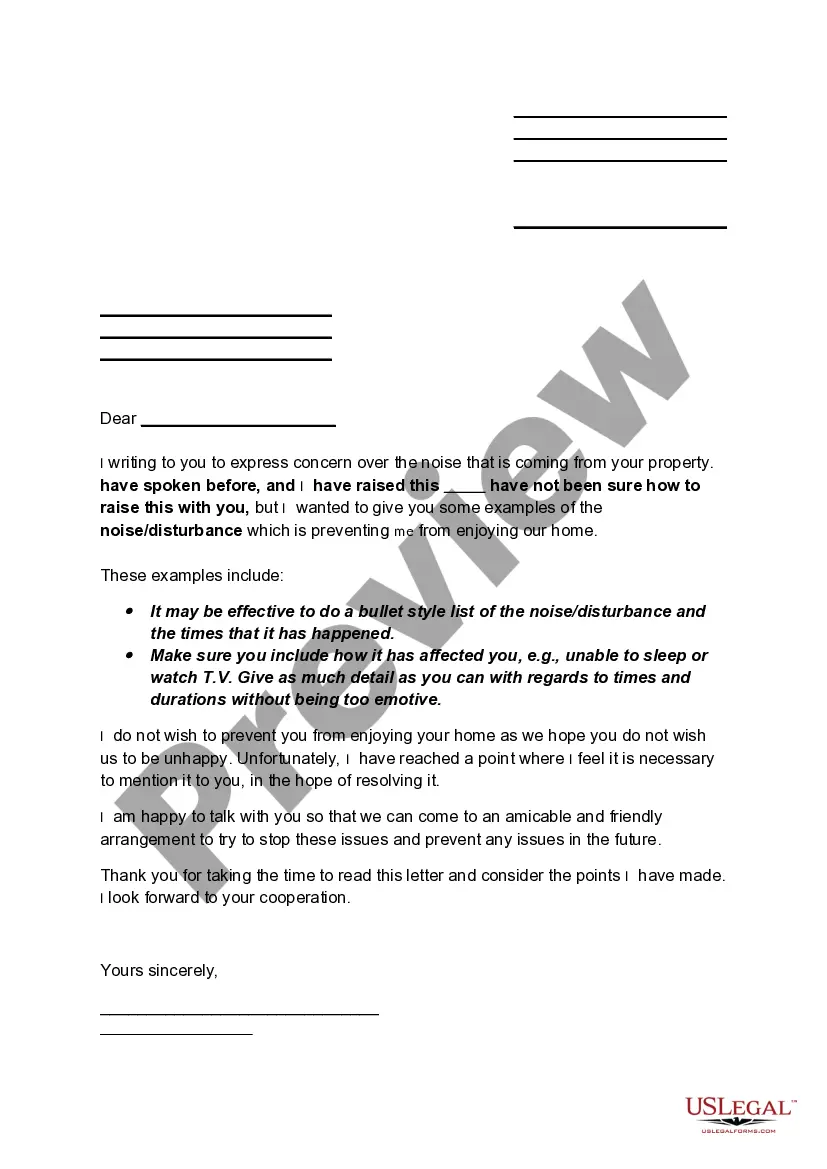
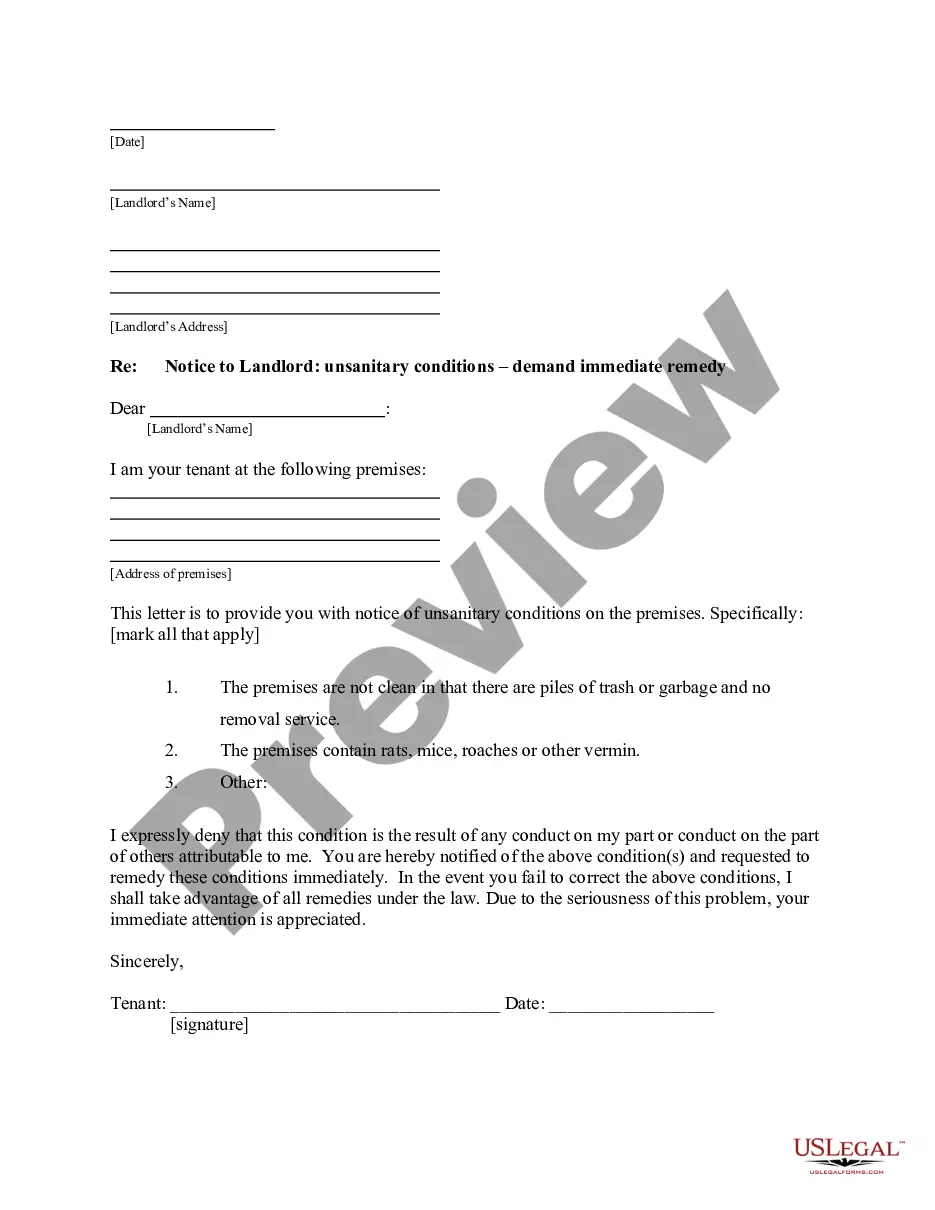
This Letter from Tenant to Landlord with Demand for proper outdoor garbage receptacles allows tenants to formally notify their landlord of unsanitary conditions due to the absence of garbage bins. By using this form, the tenant asserts that the landlord is in violation of the lease agreement and requests immediate rectification of the issue. This letter differs from other tenant-landlord communication documents by focusing specifically on the lack of adequate outdoor garbage receptacles, which can impact the health and sanitation of the property.
Key components of this form
- Identification of the tenant and landlord.
- Statement of the specific issue regarding garbage receptacles.
- A clear request for the landlord to address and rectify the problem.
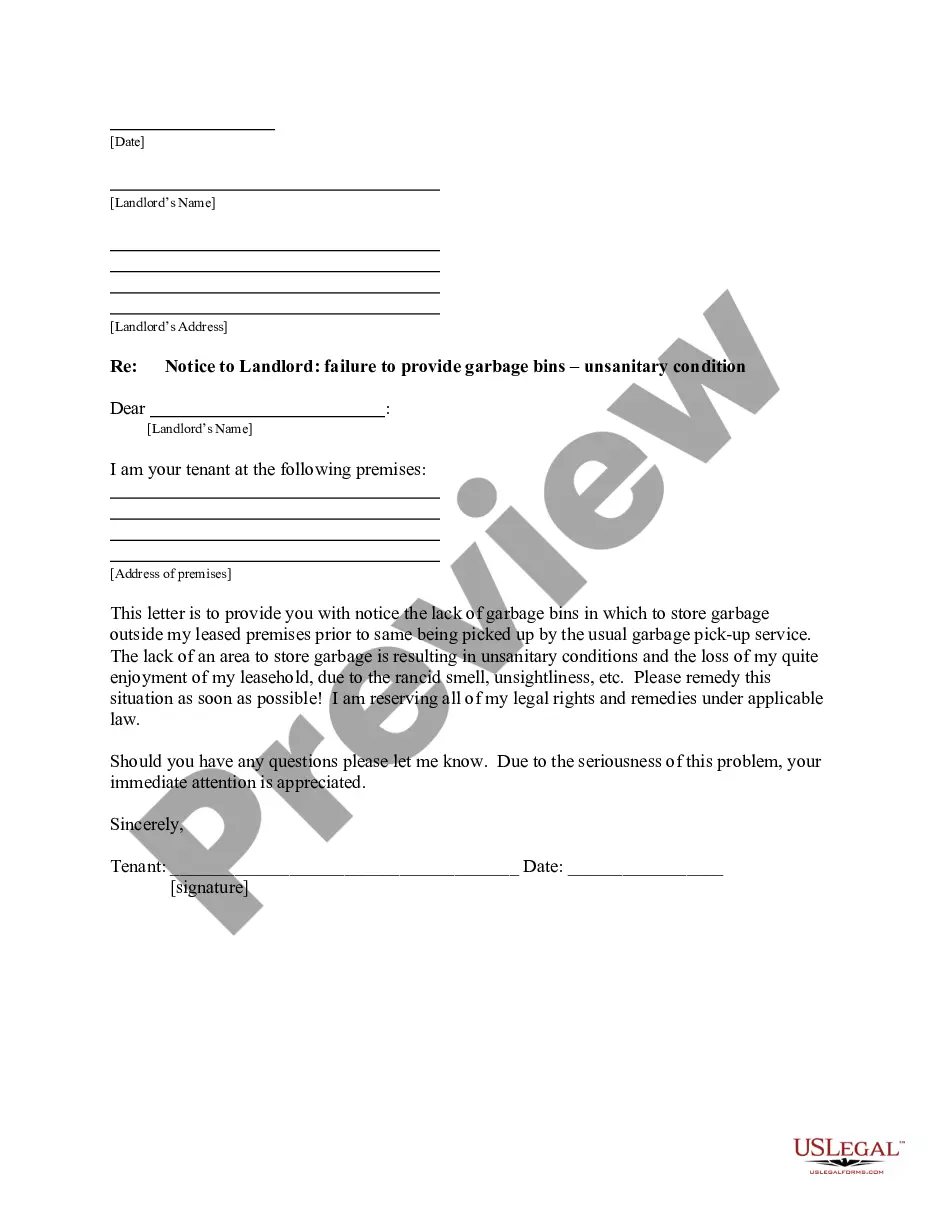
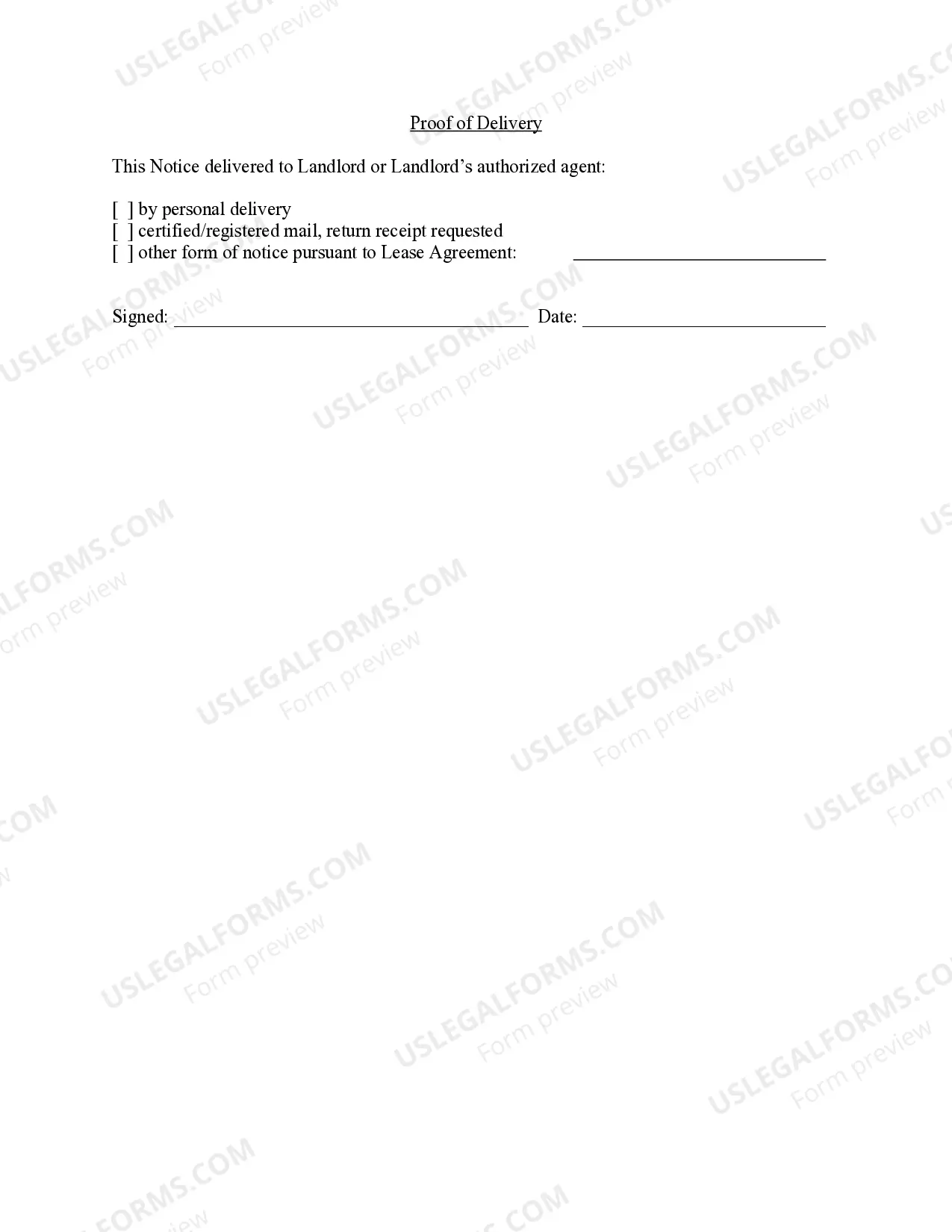
- Proof of delivery options, including personal delivery and certified mail.
- Space for tenant's signature and date.


When to use this form
This form is appropriate to use when a tenant notices that their landlord has failed to provide proper outdoor garbage receptacles, leading to unsanitary conditions. It serves as an official notice to the landlord, indicating the urgency of the complaint and demanding prompt action to remedy the situation. Situations may include overflowing trash areas, unpleasant odors, or health concerns due to inadequate waste management.
Intended users of this form
This form is intended for:
- Tenants living in residential properties.
- Individuals who have a lease agreement with their landlord.
- Those experiencing unsanitary conditions due to lack of proper garbage disposal facilities.
How to complete this form
- Identify the parties involved by entering the names of the tenant and landlord.
- Clearly describe the issue regarding the lack of outdoor garbage receptacles.
- Specify the demand for immediate action to provide proper garbage bins.
- Sign the form with the tenant's signature and date it.
- Choose the delivery method for notifying the landlord, such as personal delivery or certified mail.
Does this document require notarization?
Notarization is generally not required for this form. However, certain states or situations might demand it. You can complete notarization online through US Legal Forms, powered by Notarize, using a verified video call available anytime.
Get your form ready online
Our built-in tools help you complete, sign, share, and store your documents in one place.
Make edits, fill in missing information, and update formatting in US Legal Forms—just like you would in MS Word.
Download a copy, print it, send it by email, or mail it via USPS—whatever works best for your next step.
Sign and collect signatures with our SignNow integration. Send to multiple recipients, set reminders, and more. Go Premium to unlock E-Sign.
If this form requires notarization, complete it online through a secure video call—no need to meet a notary in person or wait for an appointment.
We protect your documents and personal data by following strict security and privacy standards.

Make edits, fill in missing information, and update formatting in US Legal Forms—just like you would in MS Word.

Download a copy, print it, send it by email, or mail it via USPS—whatever works best for your next step.

Sign and collect signatures with our SignNow integration. Send to multiple recipients, set reminders, and more. Go Premium to unlock E-Sign.

If this form requires notarization, complete it online through a secure video call—no need to meet a notary in person or wait for an appointment.

We protect your documents and personal data by following strict security and privacy standards.
Avoid these common issues
- Failing to clearly describe the sanitation issues caused by inadequate garbage bins.
- Not providing a specific request for action.
- Omitting the date and the tenant's signature.
- Using an incorrect delivery method that does not ensure the landlord receives the notice.
Why use this form online
- Convenience of completing the form from home.
- Immediate access to a legally sound template drafted by licensed attorneys.
- Editability allows tenants to customize the form to fit their specific situation.
- Access to guidance on proper procedures for delivering the notice.
Looking for another form?
Form popularity
FAQ
As a landlord you must: keep your rented properties safe and free from health hazards. make sure all gas and electrical equipment is safely installed and maintained. provide an Energy Performance Certificate for the property.
There are general things that most landlords pay for like property maintenance, repairs and taxes and there are other items that may be more specific to a certain landlord, such as a property management fees or security costs.
As a landlord you must: keep your rented properties safe and free from health hazards. make sure all gas and electrical equipment is safely installed and maintained. provide an Energy Performance Certificate for the property.
Location. Safety and Security. School District. Parking. Move-In Ready Condition. Appliances Included. Upgrades and Renovations. Age of Property.
Complying with all state and local health and building codes. Maintaining structural components and a reasonably weather-protected unit. Providing the necessary heat, electric, and hot and cold water facilities. Making any requested repairs promptly.
Your landlord discriminates against you. Your landlord takes your security deposit illegally. Your rental unit is inhabitable. The property owner interferes with your right to quiet enjoyment. Your landlord fails to make the necessary repairs.
Review Your Lease Before You Sign. Research Local Laws. Keep Records. Pay Your Rent. Maintain Respectful Communication. Seek an Agreeable Solution. Request Repairs in Writing. What Do You Think?
If you think your landlord is violating the Fair Housing Act, you can get that landlord in trouble by filing a complaint at HUD.gov. Your remedy for breach of quiet enjoyment is to terminate the lease and move or sue in small claims court.
Supply Proper Trash Receptacles: Provide Running Water: Maintain Common Areas of the Property: Perform Repairs: Make Sure All Vital Services Are Working: Keep Their Unit Free From Sanitary Hazards: Keep Their Unit Free From Safety Hazards: