Virginia Letter from Landlord to Tenant as Notice to remove Wild Animals in Premises
What this document covers
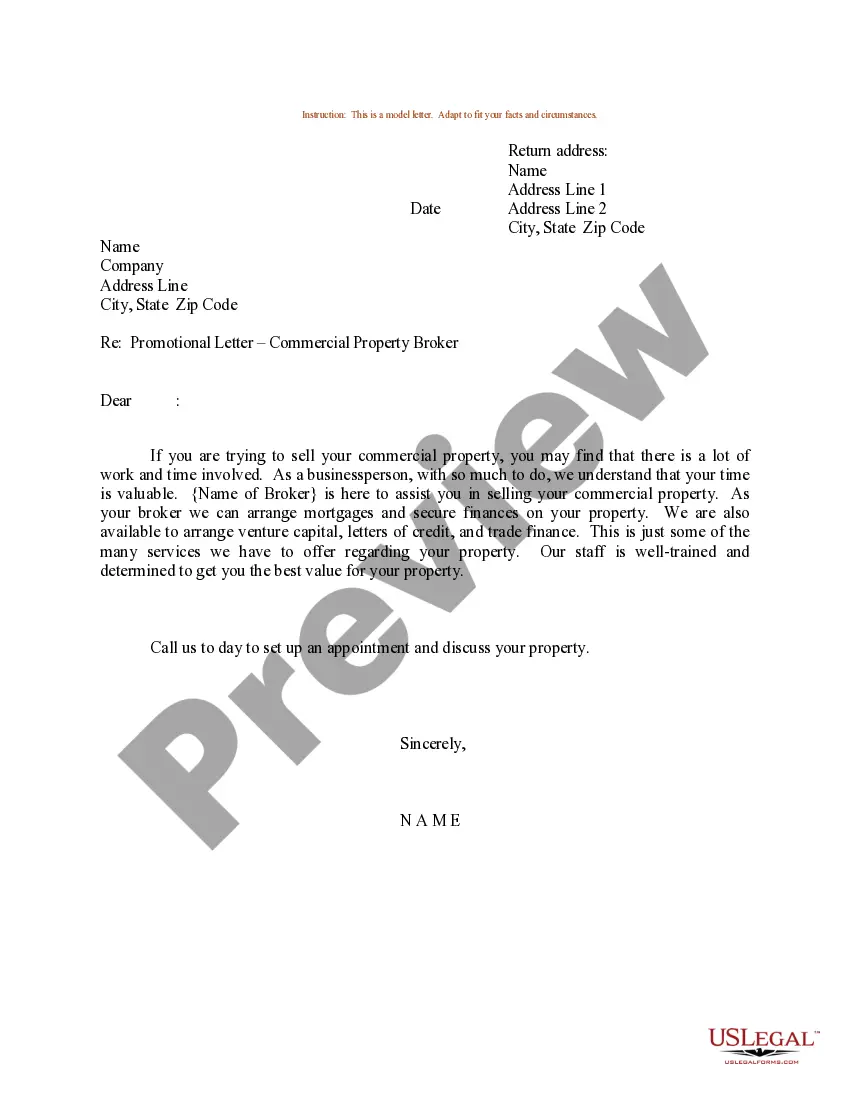
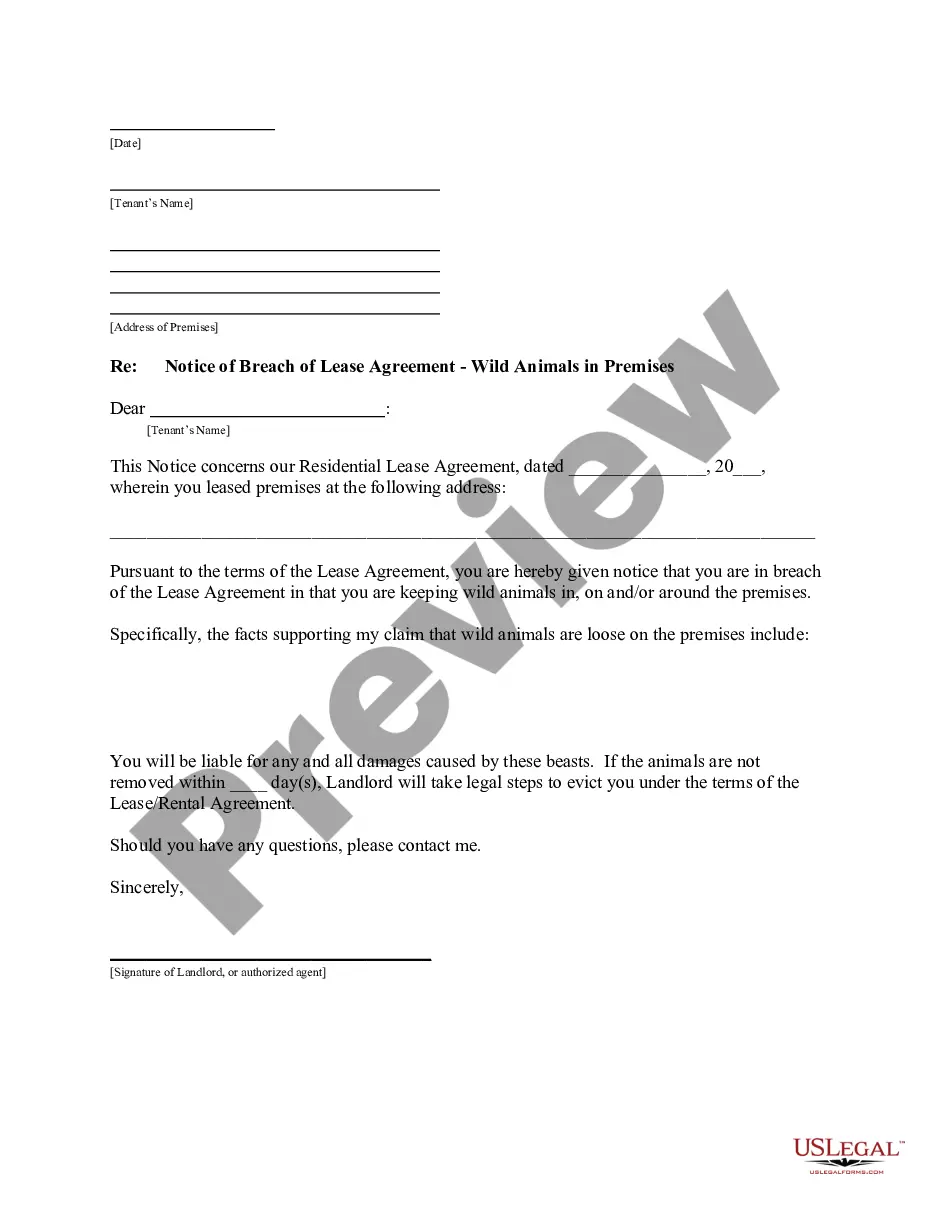
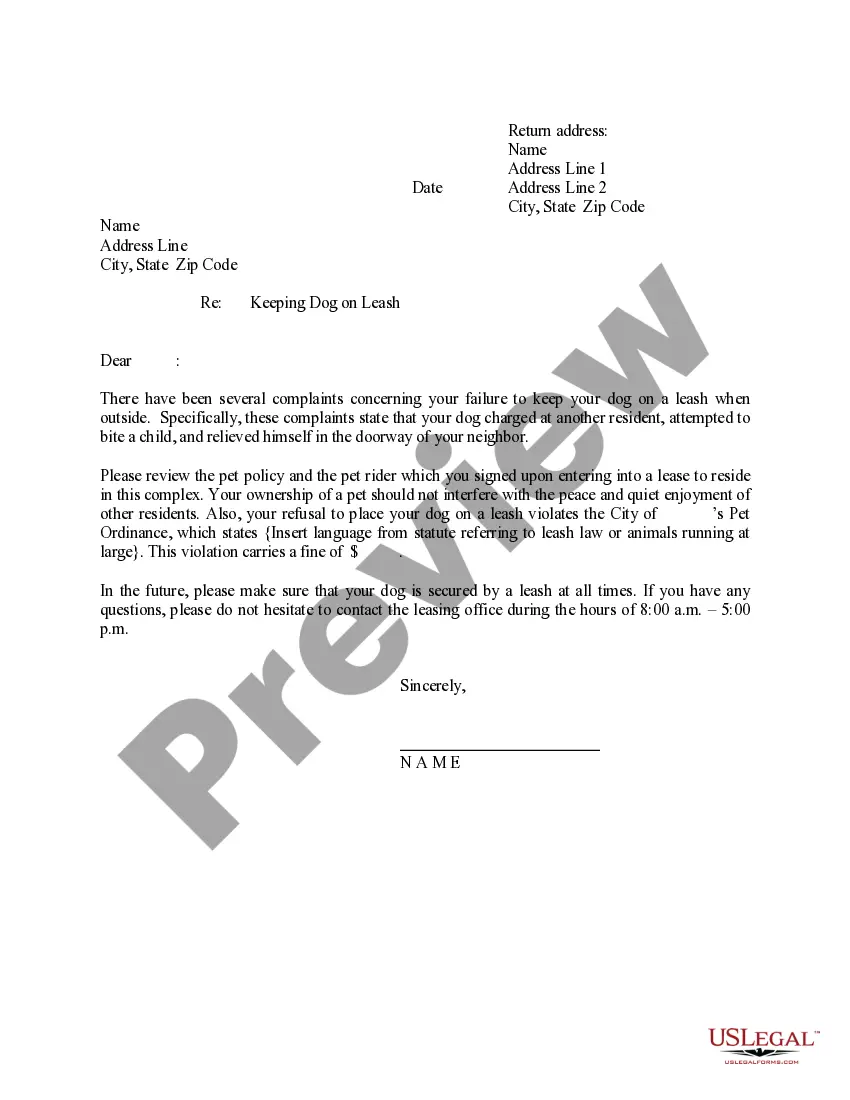
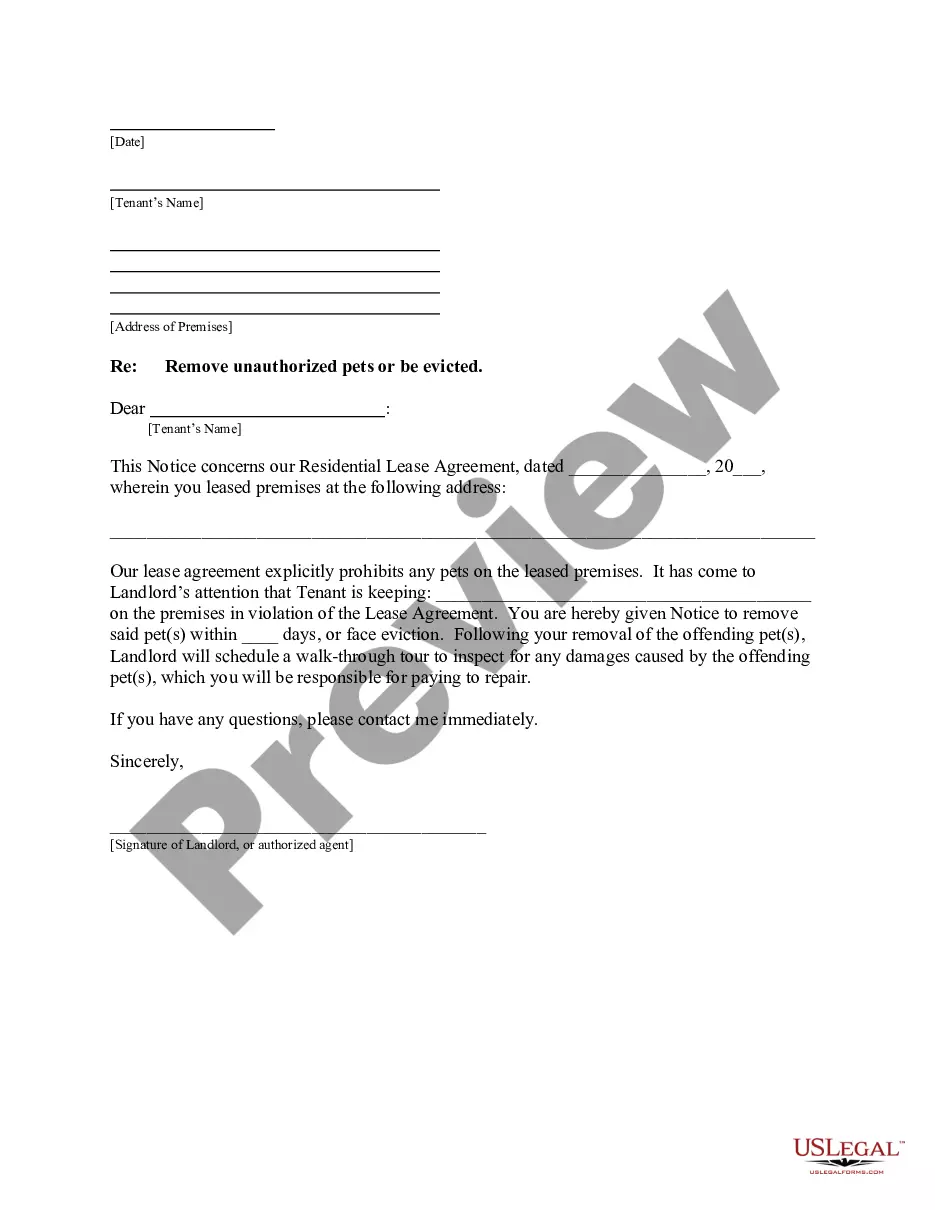
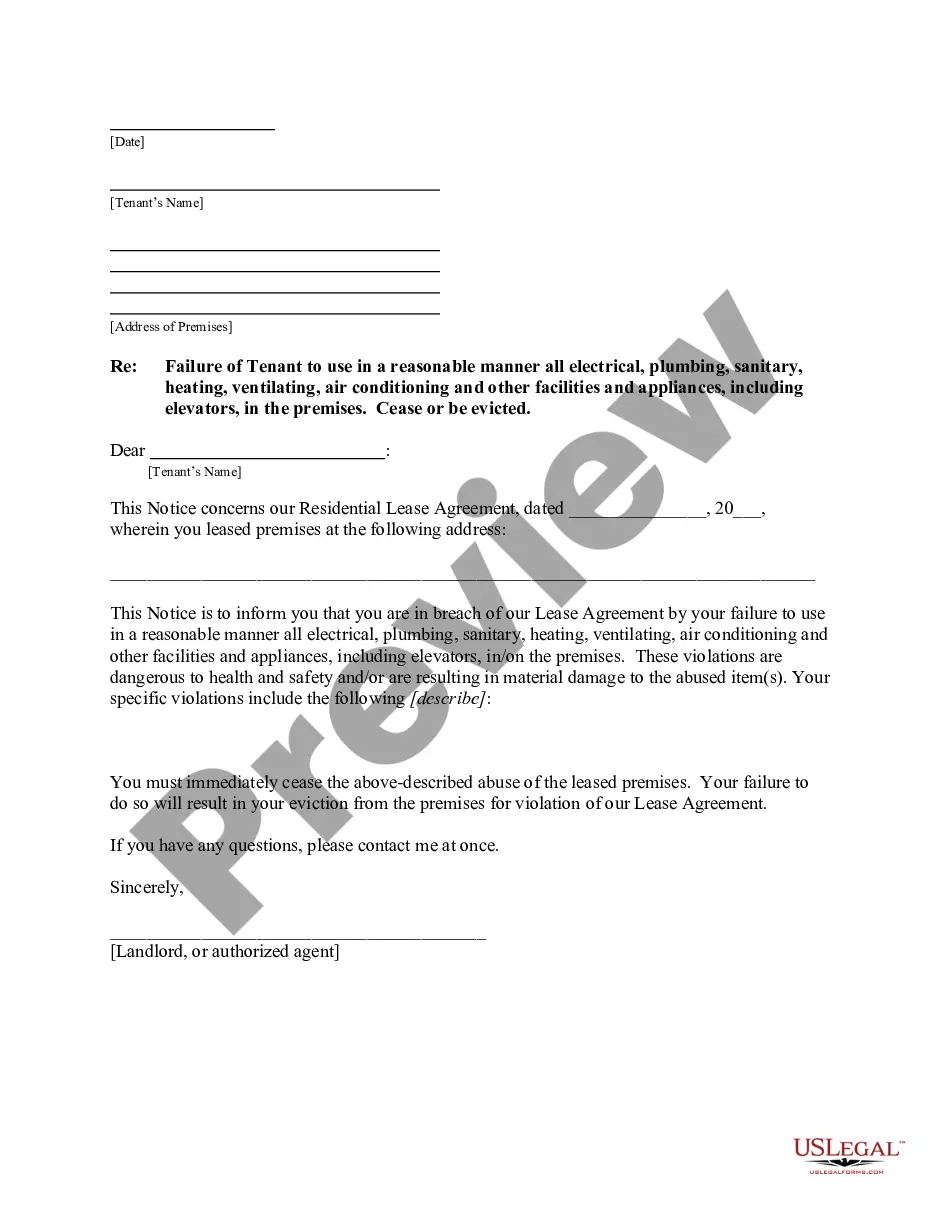
This Letter from Landlord to Tenant as Notice to Remove Wild Animals in Premises is a legal document used by landlords to formally notify tenants about a breach of lease terms concerning the presence of wild animals on the property. This form outlines the specific terms violated and serves as a warning to the tenant to rectify the situation. It provides a clear basis for any further action the landlord may take if the issue is not resolved, differentiating it from general lease violation notices.
What’s included in this form
- Identification of the landlord and tenant involved in the lease agreement.
- Specific reference to the lease terms that have been breached.
- Details of the wild animals kept on the premises, as known by the landlord.
- Signature line for the landlord or authorized agent.
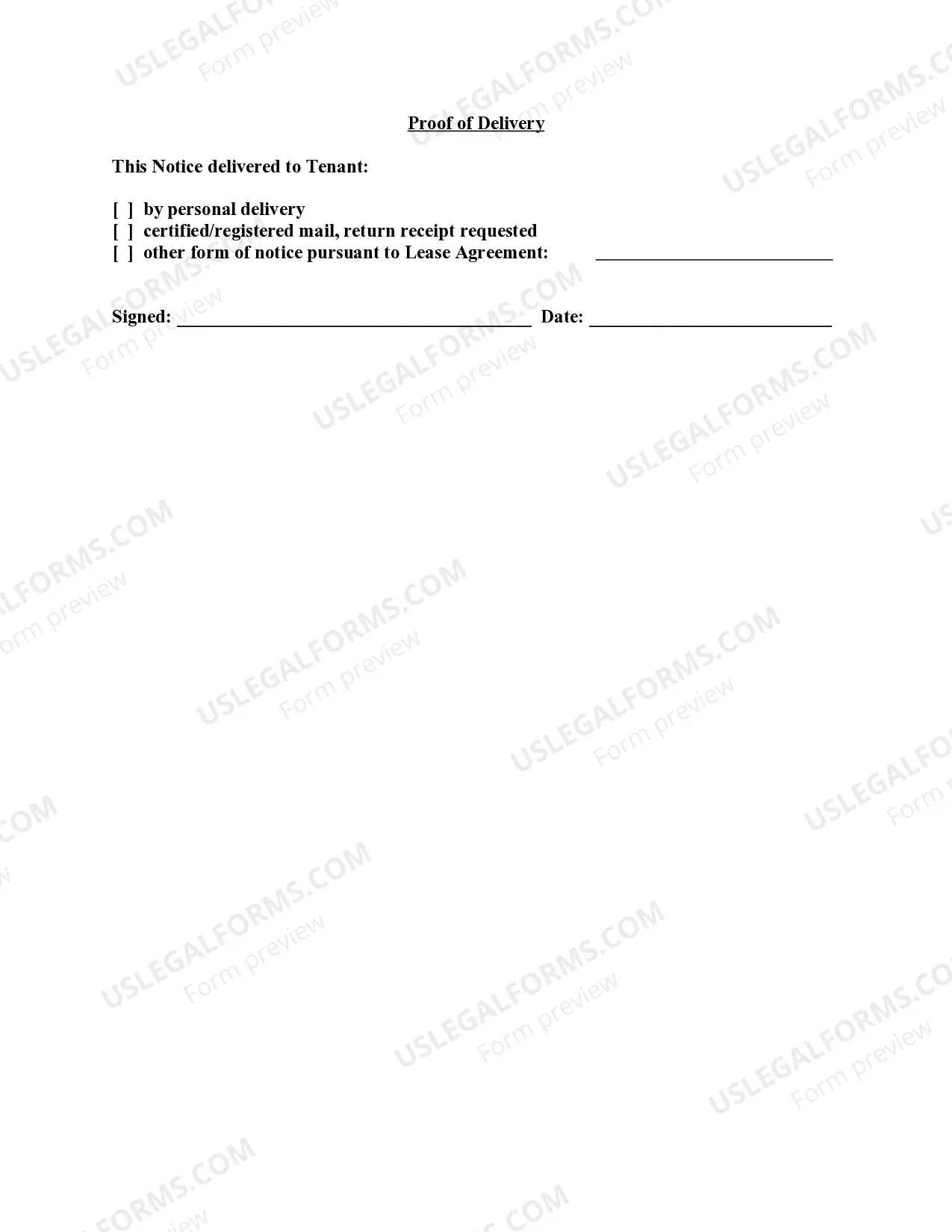
- Proof of delivery options including personal delivery and mail methods.
When to use this document
This form should be used when a landlord discovers that a tenant is keeping wild animals on the rental property, which violates the lease agreement. Situations may include tenants having exotic pets, stray animals, or wildlife that pose risks to safety or property. It is essential for landlords to document this issue formally before pursuing any further action, such as eviction or legal proceedings.
Who can use this document
This letter is intended for:
- Landlords who manage rental properties and wish to enforce lease agreements.
- Property managers acting on behalf of landlords in notifying tenants of lease violations.
- Tenants who have received such a letter and need to understand their obligations.
Completing this form step by step
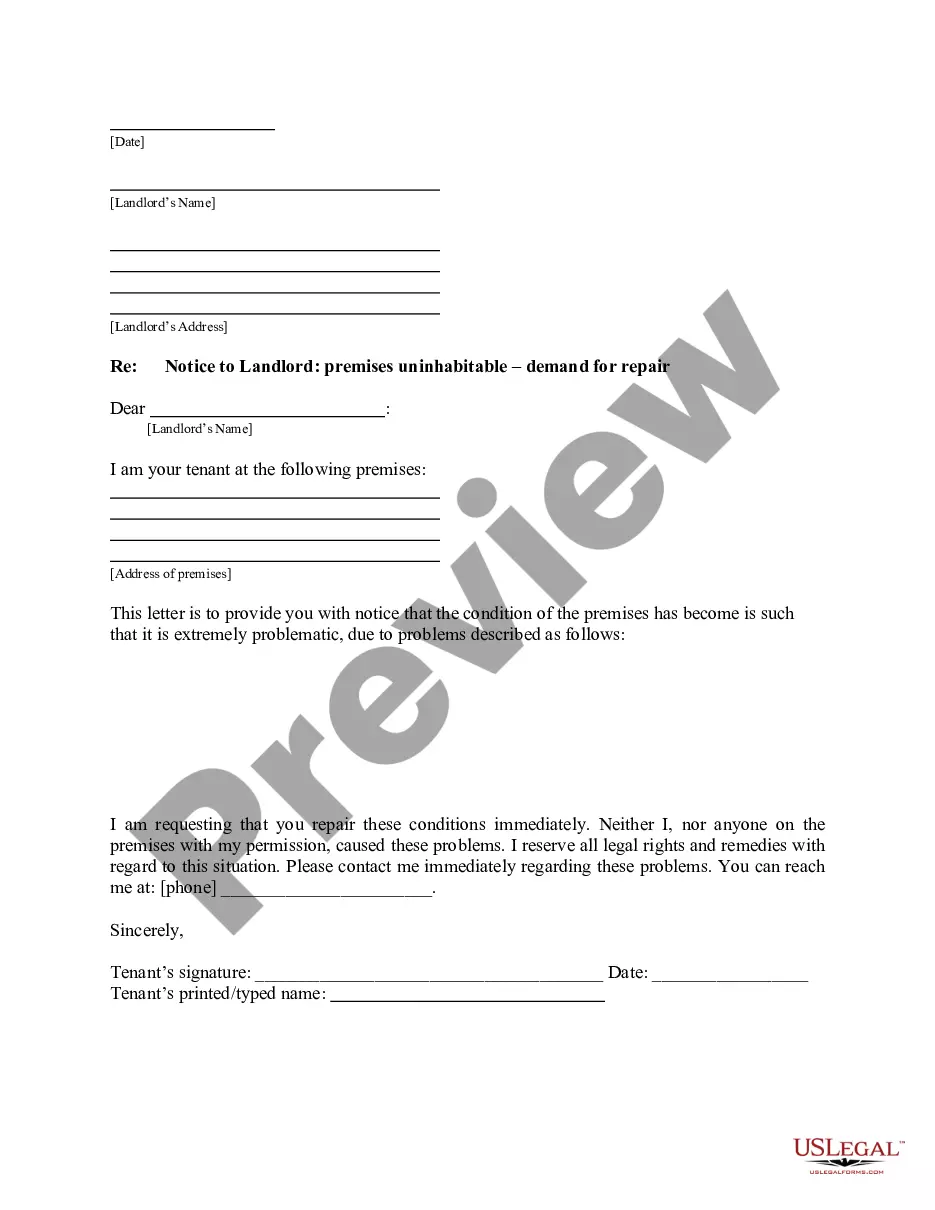
- Identify and enter the names and addresses of both the landlord and the tenant.
- Specify the terms of the lease agreement that have been breached regarding wild animals.
- Document the known details about the wild animals on the premises.
- Sign the form as the landlord or authorized agent.
- Choose the method of delivery (personal delivery or mail) and follow through to ensure the notice has been delivered.
Does this document require notarization?
Notarization is generally not required for this form. However, certain states or situations might demand it. You can complete notarization online through US Legal Forms, powered by Notarize, using a verified video call available anytime.
Get your form ready online
Our built-in tools help you complete, sign, share, and store your documents in one place.
Make edits, fill in missing information, and update formatting in US Legal Forms—just like you would in MS Word.
Download a copy, print it, send it by email, or mail it via USPS—whatever works best for your next step.
Sign and collect signatures with our SignNow integration. Send to multiple recipients, set reminders, and more. Go Premium to unlock E-Sign.
If this form requires notarization, complete it online through a secure video call—no need to meet a notary in person or wait for an appointment.
We protect your documents and personal data by following strict security and privacy standards.

Make edits, fill in missing information, and update formatting in US Legal Forms—just like you would in MS Word.

Download a copy, print it, send it by email, or mail it via USPS—whatever works best for your next step.

Sign and collect signatures with our SignNow integration. Send to multiple recipients, set reminders, and more. Go Premium to unlock E-Sign.

If this form requires notarization, complete it online through a secure video call—no need to meet a notary in person or wait for an appointment.

We protect your documents and personal data by following strict security and privacy standards.
Common mistakes to avoid
- Failing to include specific details about the wild animals in question.
- Not referencing the exact lease terms breached.
- Neglecting to sign the form before delivery.
- Using improper delivery methods that do not provide proof of receipt.
Advantages of online completion
- Conveniently download and customize the form to suit individual needs.
- Access professionally drafted content made by licensed attorneys, ensuring legal accuracy.
- Edit and save the form as needed, allowing flexibility in handling tenant communications.
Legal use & context
- This notice serves to legally inform the tenant of a lease violation.
- It creates a formal record of the landlord's attempts to address the issue.
- Failure to comply with this notice may lead to further legal actions, including eviction proceedings.
Quick recap
- This form helps landlords officially notify tenants of lease violations regarding wild animals.
- Clarity in the notice can aid in resolving the issue amicably.
- Properly completing and delivering this notice is crucial for potential legal actions.
Looking for another form?
Form popularity
FAQ
Your landlord or their representatives may be allowed reasonable access to carry out inspections or repairs, but must first get your permission. According to Section 11, from The Landlord and Tenant Act 1985, your landlord needs to give you at least 24 hour notice before they come around and visit for any reason.
If you've been given notice since 29 August 2020, your landlord must give you 6 months to leave. You might have to leave much sooner if you're evicted using a section 8 notice, depending on the reason for eviction.at least 6 months for any notice given on or after 24 July 2020.
Sue the landlord and whoever for up to $10,000 in small claims court for trespassing, breach of contract, invasion of privacy, and breach of quiet enjoyment; if you are two or more tenants, each can separately sue them for up to $10,000, and a joint action is not required.
When you rent a property from a landlord it becomes your home. They should only enter the property without you being present, if you have given permission for them to do so, or in a genuine emergency.
As a renter in Virginia, you have legal protections under the Virginia Residential Landlord and Tenant Act (VRLTA) that include the right to: A fair application fee. A fair security deposit. A decent and safe place to live.
Complaints involving such issues should be directed to the Virginia Fair Housing Office at 888.551. 3247 or 804.367. 8530.
The big take-away is that in most circumstances a landlord cannot enter a property without agreement from the tenant. And If the landlord ignores the law and enters the property without permission, the tenant may be able to claim damages or gain an injunction to prevent the landlord doing it again.
Restrictions on landlord's right to access rental property (Virginia landlords must provide 24 hours' notice of entry, but are not required to provide notice if the entry follows a tenant's request for maintenance) (Va.special protections for tenants who are victims of domestic violence (see Va.
There's no legal limit on how many monthly or weekly advance payments you can be charged. Some landlords will ask for 6 months' rent in advance or more. It is illegal for landlords to disguise extra fees in rent in advance payments. You can't be charged more than what your rent would be for that period.