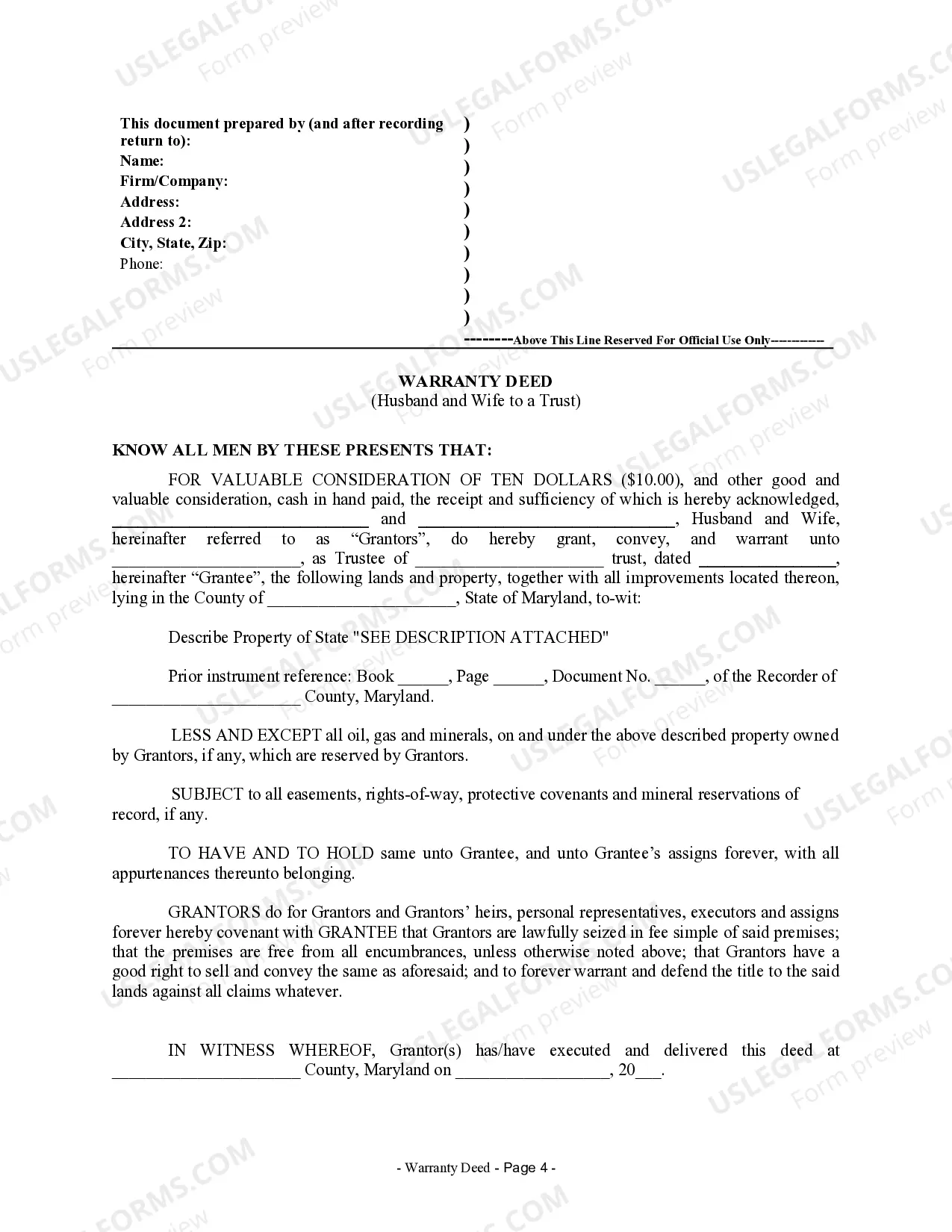
Deed Wife Trust
Description
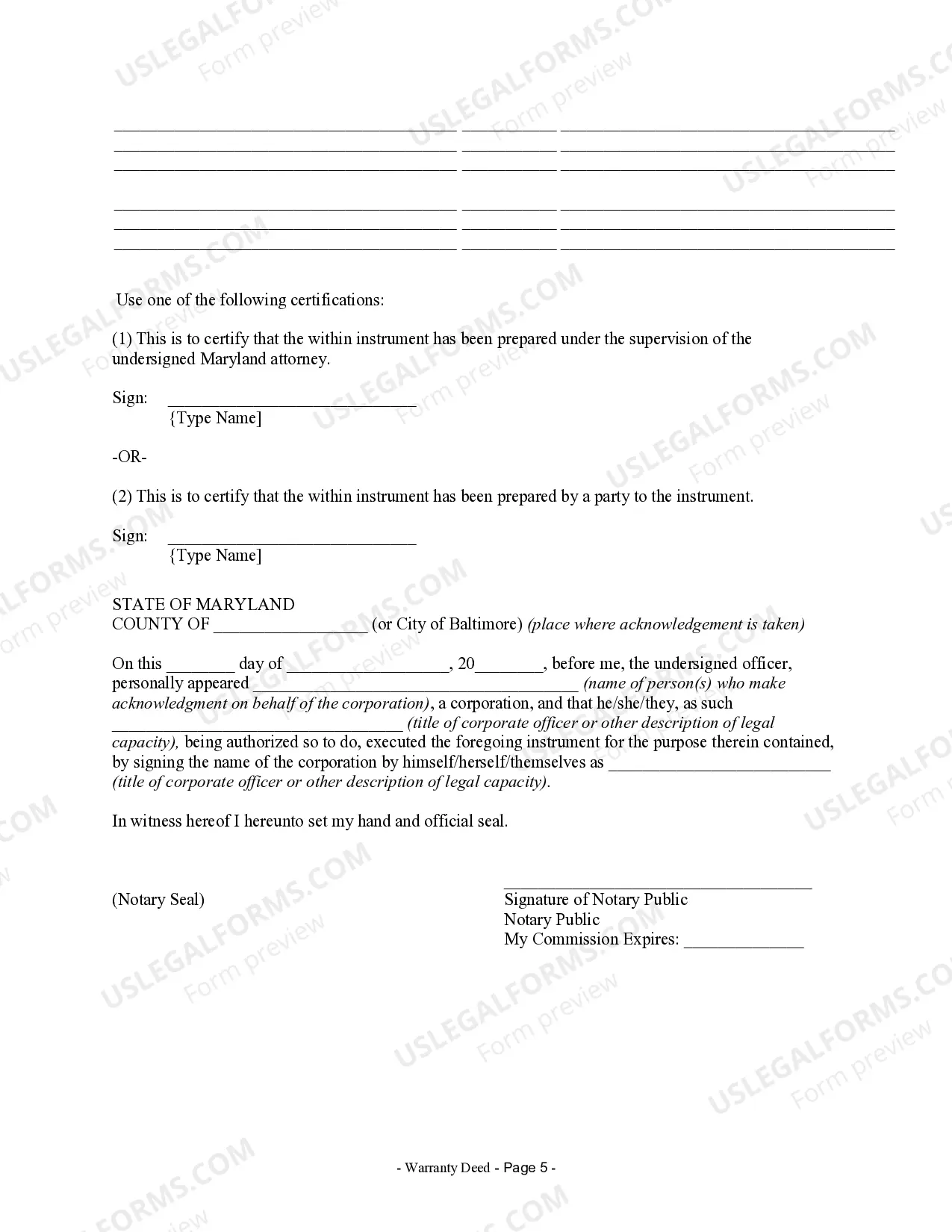
How to fill out Maryland Warranty Deed From Husband And Wife To A Trust?
You are welcome to the largest legal files library, US Legal Forms. Here you will find any template including Maryland Warranty Deed from Husband and Wife to a Trust templates and save them (as many of them as you wish/need). Make official papers in a several hours, rather than days or even weeks, without having to spend an arm and a leg on an lawyer. Get the state-specific sample in clicks and be assured understanding that it was drafted by our state-certified attorneys.
If you’re already a subscribed consumer, just log in to your account and then click Download near the Maryland Warranty Deed from Husband and Wife to a Trust you require. Because US Legal Forms is web-based, you’ll generally get access to your downloaded files, no matter what device you’re utilizing. Locate them inside the My Forms tab.
If you don't have an account yet, what are you awaiting? Check our instructions listed below to begin:
- If this is a state-specific document, check its applicability in your state.
- View the description (if available) to understand if it’s the right example.
- See more content with the Preview function.
- If the sample fulfills all of your needs, click Buy Now.
- To create an account, choose a pricing plan.
- Use a credit card or PayPal account to sign up.
- Save the template in the format you need (Word or PDF).
- Print out the document and fill it with your/your business’s information.
As soon as you’ve filled out the Maryland Warranty Deed from Husband and Wife to a Trust, give it to your legal professional for confirmation. It’s an extra step but an essential one for being certain you’re fully covered. Join US Legal Forms now and get access to a mass amount of reusable examples.