Maryland Warranty Deed from Husband and Wife to a Trust
Overview of this form
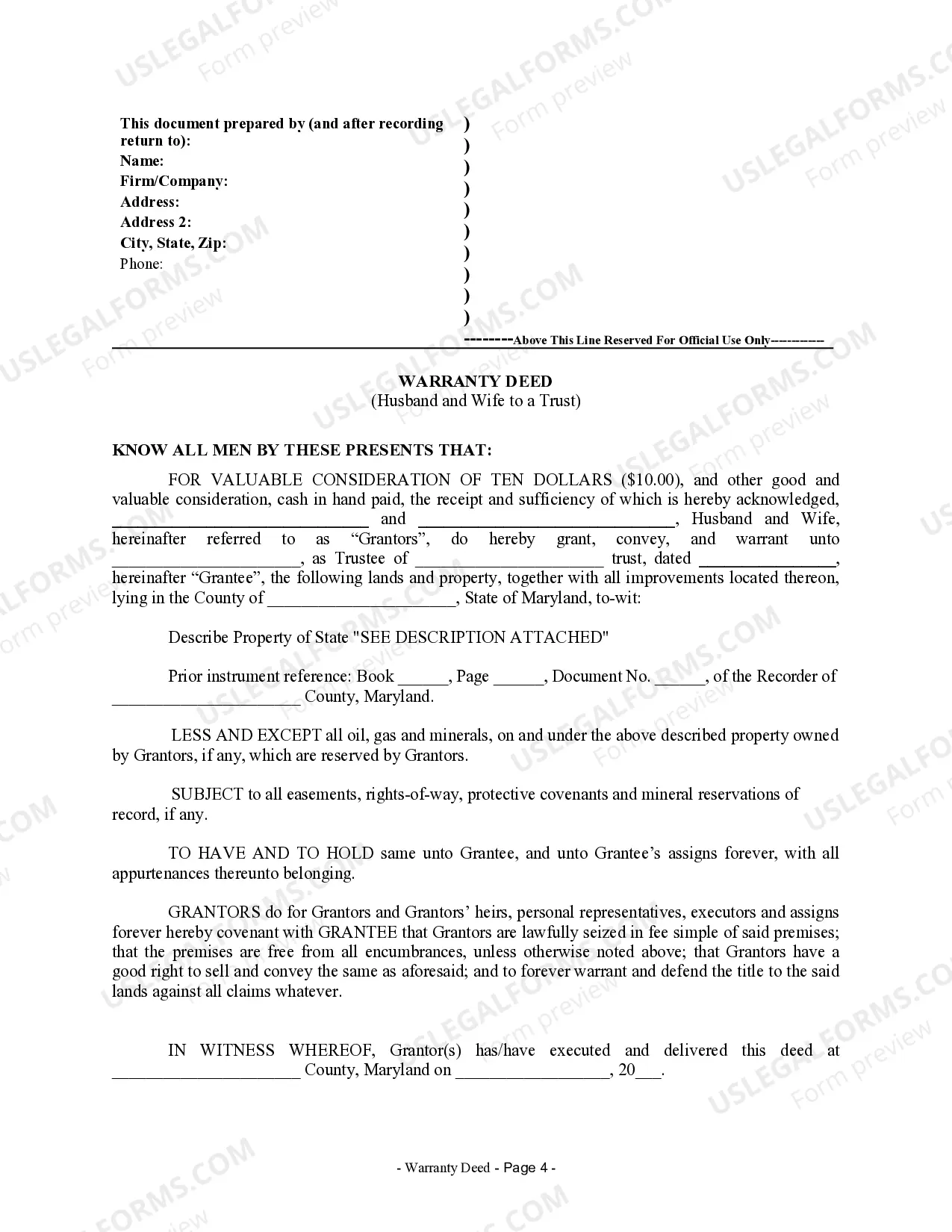
A Warranty Deed from Husband and Wife to a Trust is a legal document that transfers property ownership from a married couple (the grantors) to a trust (the grantee). This form ensures that the property title is conveyed with certain assurances, known as warranties, protecting the trust against claims to the property. Unlike other deeds, this warranty deed explicitly reserves rights to any oil, gas, or minerals beneath the land, providing a clear boundary in ownership rights. It's essential for ensuring secure property transfers within estate planning or when transferring assets to a trust for management or future distribution.
Key components of this form
- Identification of the grantors (husband and wife) and the grantee (trust).
- Description of the real property being transferred.
- Clear statement of the property rights being retained by the grantors, including oil, gas, and mineral rights.
- Covenants by the grantors ensuring lawful ownership and freedom from encumbrances.
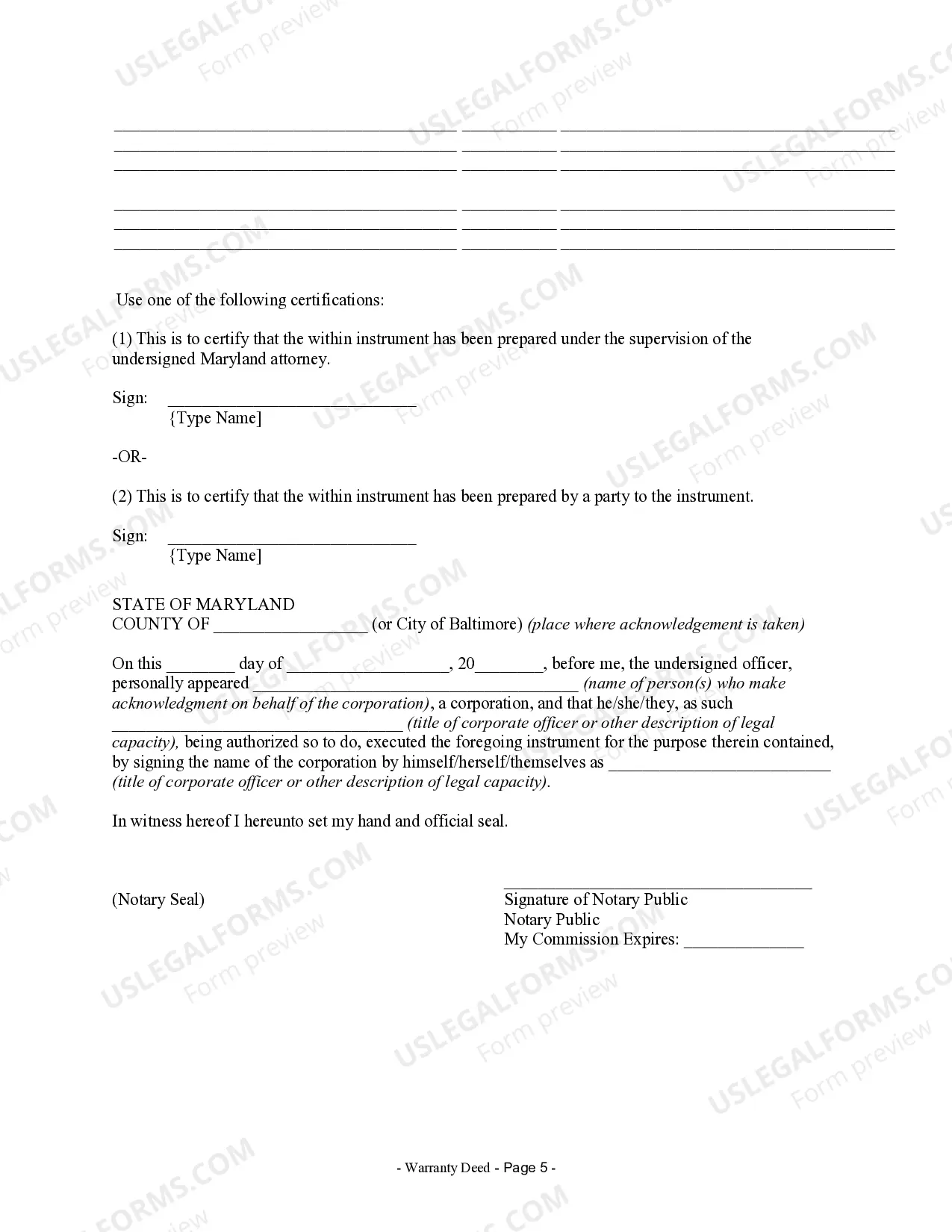
- Signatures of the grantors and a certification of preparation by a Maryland attorney.





When this form is needed
You should use this Warranty Deed from Husband and Wife to a Trust when you are transferring property ownership as part of an estate planning strategy, such as placing assets into a trust to manage for the benefit of future generations. This form is particularly useful when a couple wishes to ensure their property is held in a trust, allowing for better control and distribution of their estate after their passing.
Who this form is for
This form is intended for:
- Married couples wishing to transfer their jointly owned property into a trust.
- Trustees managing properties for the benefit of beneficiaries.
- Individuals involved in estate planning who want to protect their assets.
Instructions for completing this form
- Identify the parties involved: enter the names of the husband and wife as grantors and the name of the trust and trustee as the grantee.
- Specify the property: provide a detailed description of the property being transferred.
- Indicate any reservations, such as oil, gas, or mineral rights, if applicable.
- Enter the county and date of signing at the bottom of the form.
- Have both grantors sign the document and complete the necessary certifications.
Notarization guidance
This form needs to be notarized to ensure legal validity. US Legal Forms provides secure online notarization powered by Notarize, allowing you to complete the process through a verified video call, available anytime.
Get your form ready online
Our built-in tools help you complete, sign, share, and store your documents in one place.
Make edits, fill in missing information, and update formatting in US Legal Forms—just like you would in MS Word.
Download a copy, print it, send it by email, or mail it via USPS—whatever works best for your next step.
Sign and collect signatures with our SignNow integration. Send to multiple recipients, set reminders, and more. Go Premium to unlock E-Sign.
If this form requires notarization, complete it online through a secure video call—no need to meet a notary in person or wait for an appointment.
We protect your documents and personal data by following strict security and privacy standards.

Make edits, fill in missing information, and update formatting in US Legal Forms—just like you would in MS Word.

Download a copy, print it, send it by email, or mail it via USPS—whatever works best for your next step.

Sign and collect signatures with our SignNow integration. Send to multiple recipients, set reminders, and more. Go Premium to unlock E-Sign.

If this form requires notarization, complete it online through a secure video call—no need to meet a notary in person or wait for an appointment.

We protect your documents and personal data by following strict security and privacy standards.
Avoid these common issues
- Failing to accurately describe the property being transferred.
- Omitting to include the necessary reservations of rights.
- Not having both spouses sign the deed.
- Forgetting to include the certification by an attorney or party to the transaction.
Benefits of completing this form online
- Immediate access to a professionally drafted legal document, ensuring compliance with state laws.
- Edit and customize the form easily on your computer, saving time.
- A convenient way to store and manage important legal documents digitally.
Looking for another form?
Form popularity
FAQ
When they pass away, the assets are distributed to beneficiaries, or the individuals they have chosen to receive their assets. A settlor can change or terminate a revocable trust during their lifetime. Generally, once they die, it becomes irrevocable and is no longer modifiable.
A grant deed is the instrument used to transfer title to an interest in real property from one owner to someone else.A deed of trust is the security instrument given to a lender to secure a loan or other obligation. Bare naked title is deeded to the trustee, who holds the power of sale or the power to re-convey.
When you're ready to transfer trust real estate to the beneficiary who is named in the trust document to receive it, you'll need to prepare, sign, and record a deed. That's the document that transfers title to the property from you, the trustee, to the new owner.
In most cases, the surviving owner or heir obtains the title to the home, the former owner's death certificate, a notarized affidavit of death, and a preliminary change of ownership report form. When all these are gathered, the transfer gets recorded, the fees are paid, and the county issues a new title deed.
Obtain a California grant deed from a local office supply store or your county recorder's office. Complete the top line of the deed. Indicate the grantee on the second line. Enter the trustees' names and addresses.
The advantages of placing your house in a trust include avoiding probate court, saving on estate taxes and possibly protecting your home from certain creditors. Disadvantages include the cost of creating the trust and the paperwork.
Open a bank account in the name of the trust. Close out any bank accounts the grantor established for the trust and put the proceeds into the new trust bank account. Cash in any life insurance policies that name the trust as beneficiary and put the proceeds into the trust bank account.
Make sure the name of your trust is exactly the same named used in your trust and in your new deed. When using your trust to hold title to any real property in California, you should use the full legal name of your trust.
Expect to pay $1,000 for a simple trust, up to several thousand dollars. You may incur additional costs after the trust has been established if you transfer property in and out or otherwise move things around. However, the bulk of the cost will be setting it up initially.