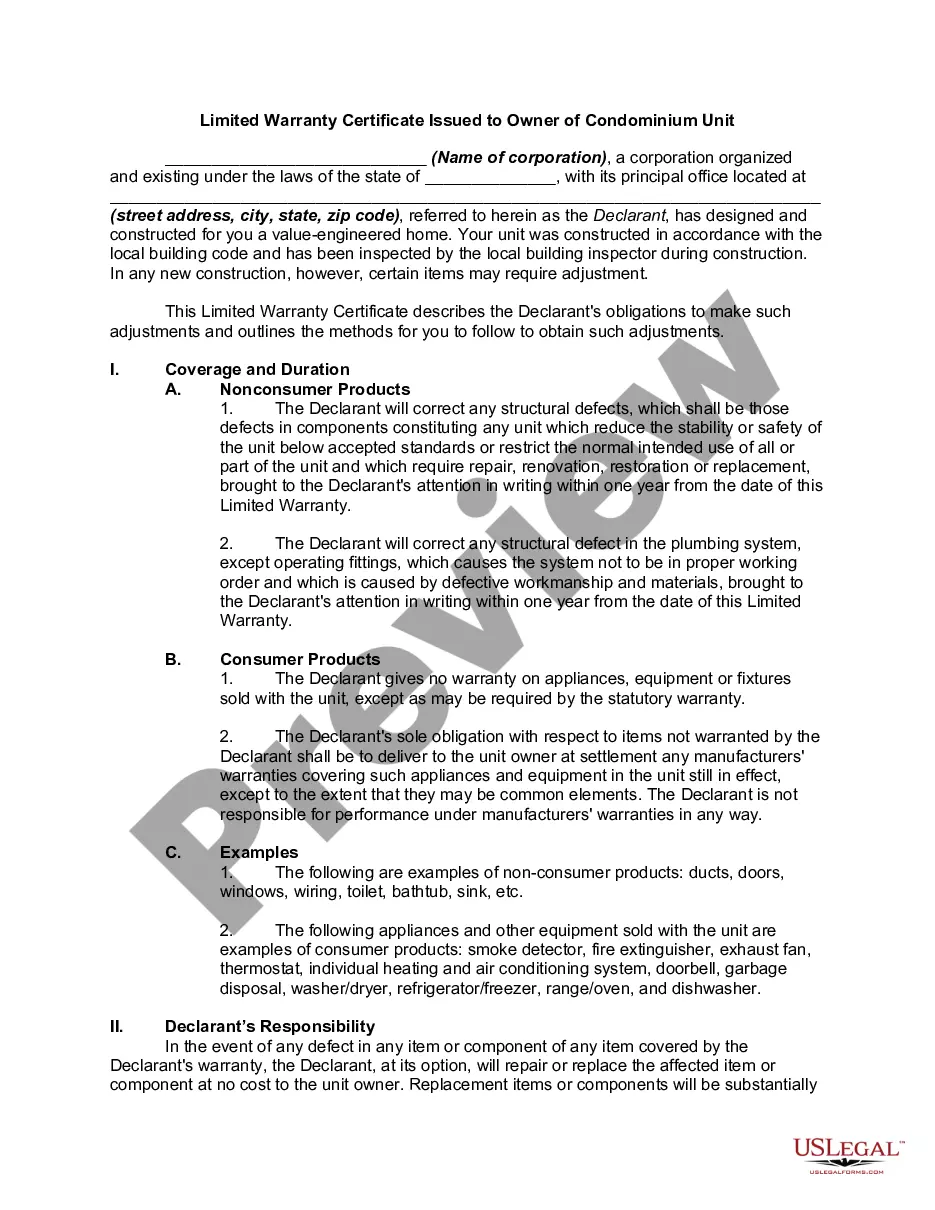
Virginia Electrical Contract for Contractor
What this document covers
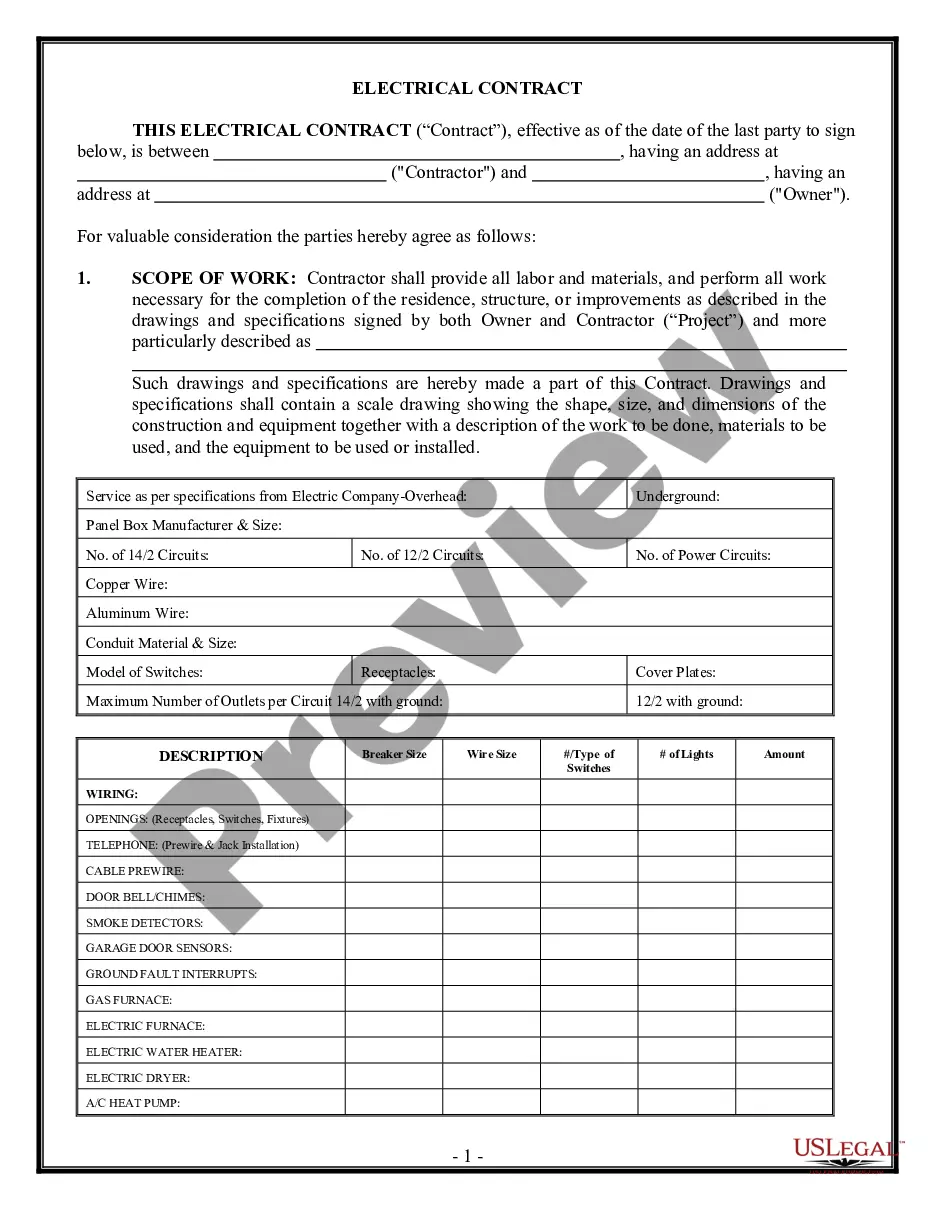
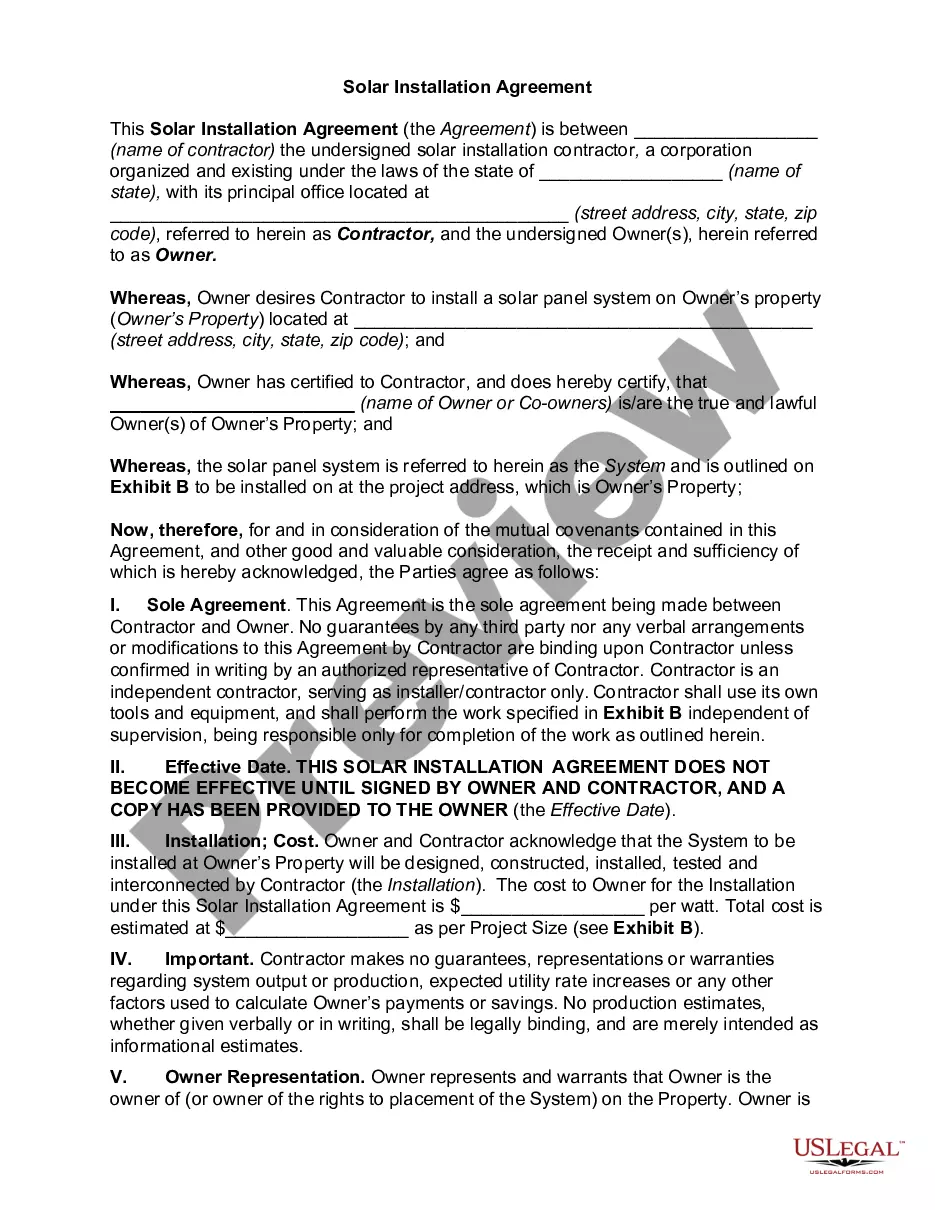
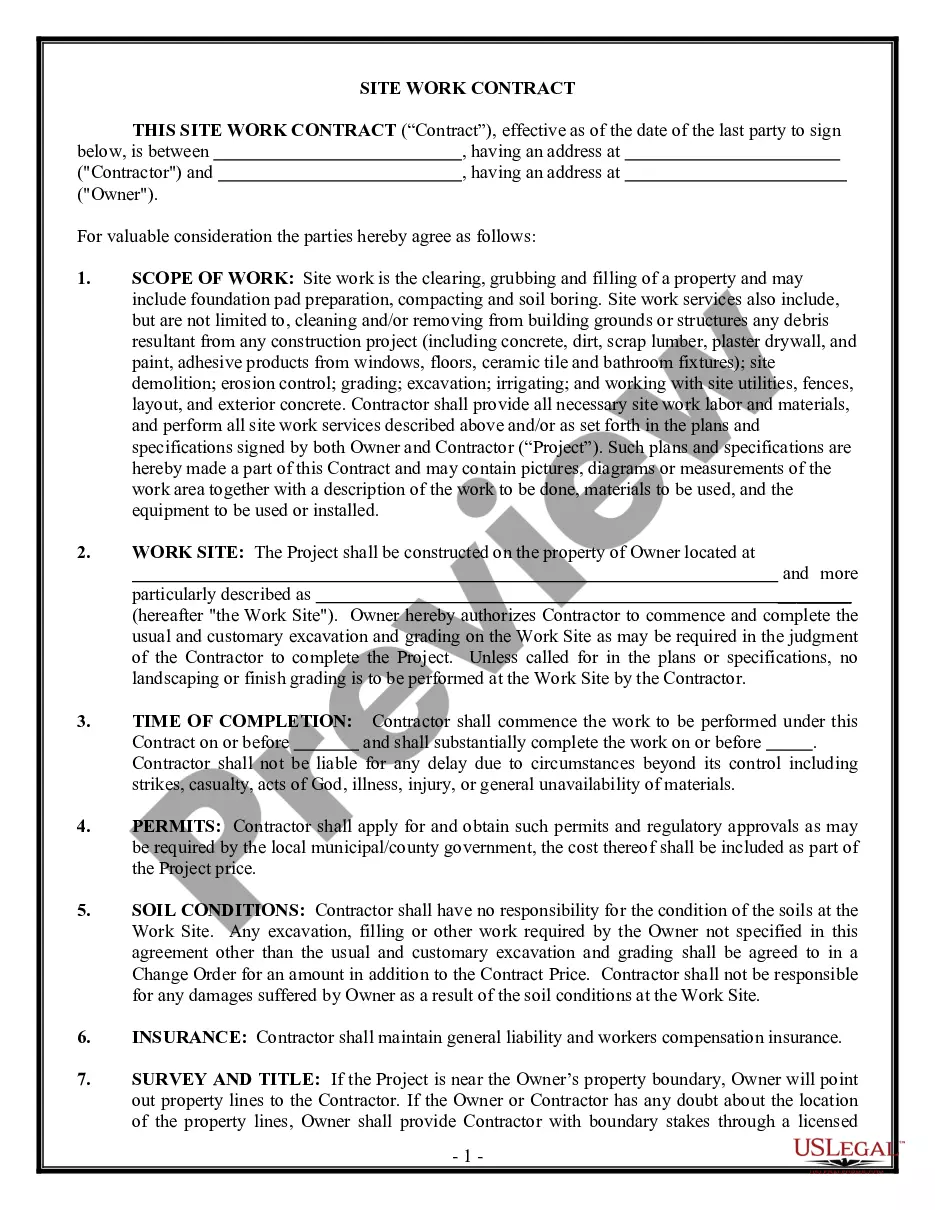
The Electrical Contract for Contractor is a legal document used between electrical contractors and property owners. This contract outlines the agreement for either a cost-plus or fixed-fee arrangement. It covers essential topics such as change orders, work site information, warranties, and insurance, ensuring both parties understand their rights and obligations. This form is specifically tailored to comply with the laws of Virginia, making it distinct from other generic contracts in the field of electrical work.
What’s included in this form
- Contractor and property owner identification details.
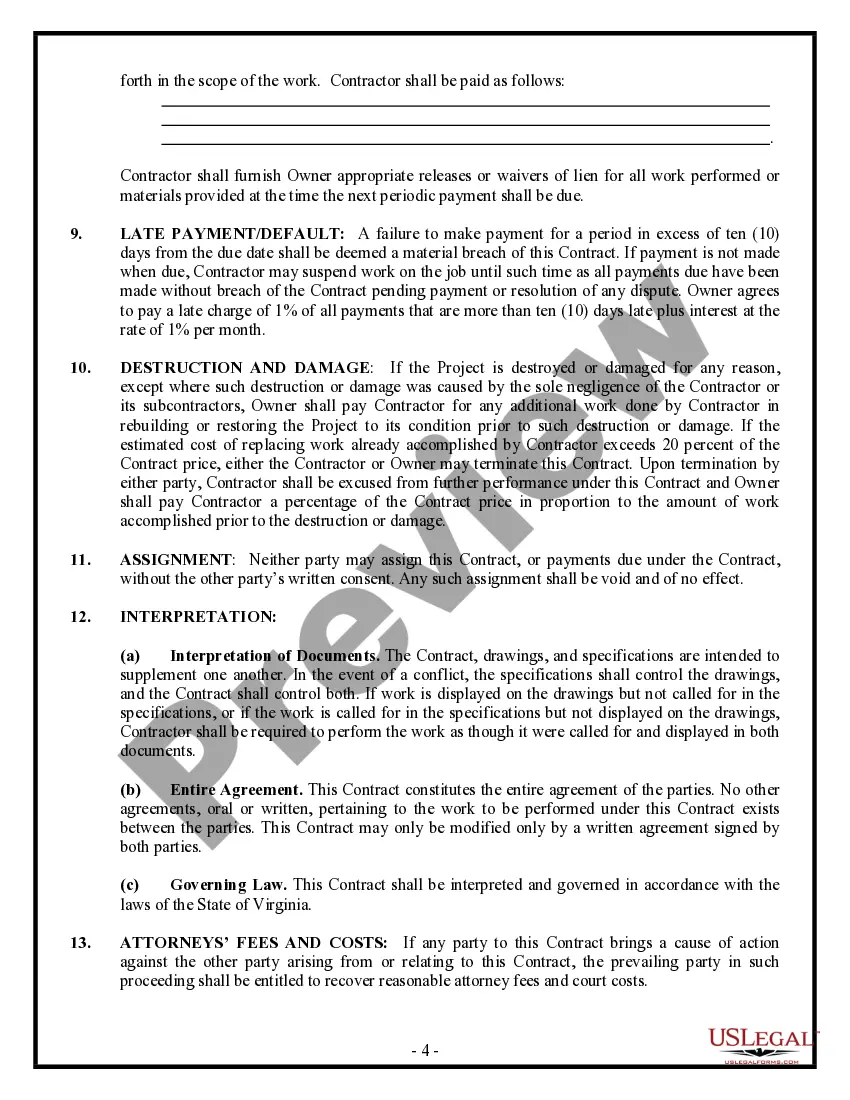
- Payment structure outlining cost-plus or fixed fee arrangements.
- Detailed provisions for change orders to manage project modifications.
- Clear work site information to define where services will be performed.
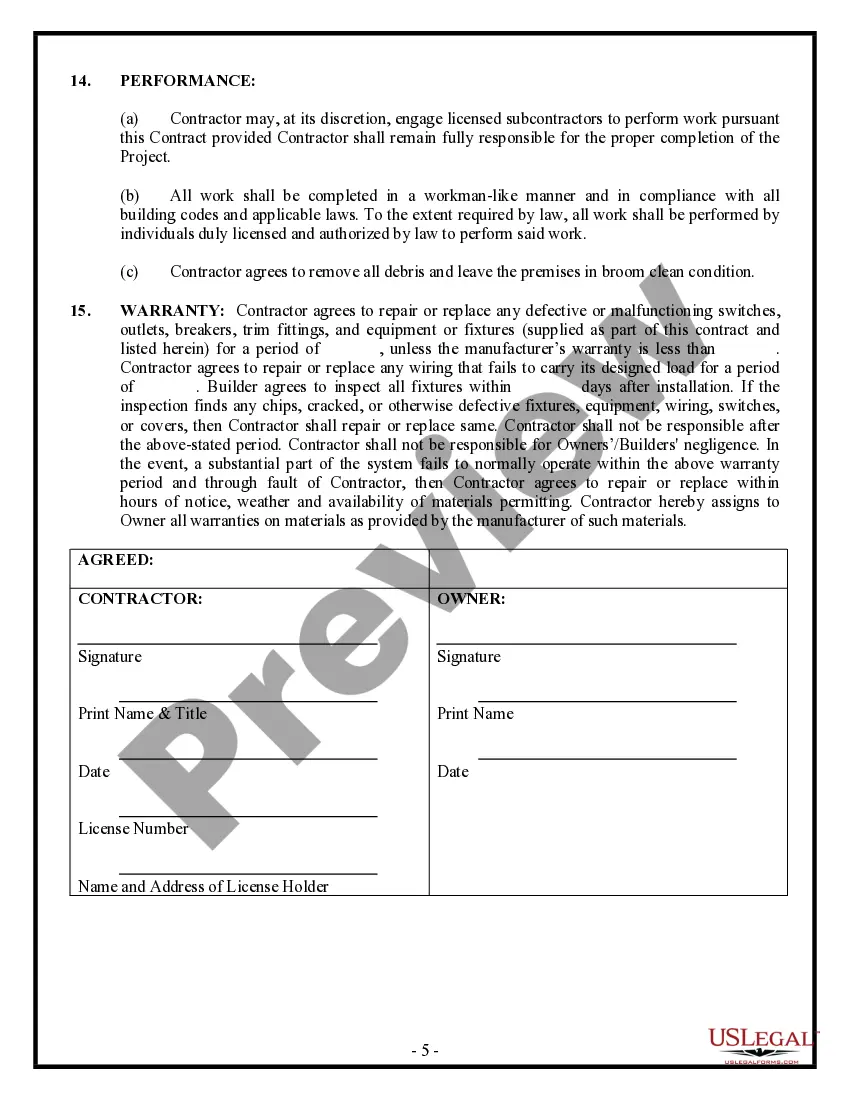
- Warranty and insurance clauses protecting both parties.


When this form is needed
This form is essential when an electrical contractor begins a project for a property owner in Virginia. Use it to formalize the scope of work, payment details, and other critical elements that guide the electrical installation or repair. It is particularly beneficial when modifications to the project may arise, as it provides a structured way to handle changes and adjustments.
Who this form is for
- Electrical contractors offering services to residential or commercial property owners.
- Property owners looking to hire an electrical contractor for projects.
- Parties needing to document the terms of an electrical work agreement clearly.
How to prepare this document
- Identify the parties involved: Enter the names and contact information of the electrical contractor and property owner.
- Specify the payment structure: Choose between cost-plus or fixed fee and outline the agreed amount.
- Detail the scope of work: Clearly describe the tasks to be undertaken by the contractor.
- Include provisions for change orders: Specify how any modifications to the work will be handled.
- Ensure warranty and insurance details are included: Outline coverage and warranties to protect both parties.
Does this form need to be notarized?
This form does not typically require notarization to be legally valid. However, some jurisdictions or document types may still require it. US Legal Forms provides secure online notarization powered by Notarize, available 24/7 for added convenience.
Get your form ready online
Our built-in tools help you complete, sign, share, and store your documents in one place.
Make edits, fill in missing information, and update formatting in US Legal Forms—just like you would in MS Word.
Download a copy, print it, send it by email, or mail it via USPS—whatever works best for your next step.
Sign and collect signatures with our SignNow integration. Send to multiple recipients, set reminders, and more. Go Premium to unlock E-Sign.
If this form requires notarization, complete it online through a secure video call—no need to meet a notary in person or wait for an appointment.
We protect your documents and personal data by following strict security and privacy standards.

Make edits, fill in missing information, and update formatting in US Legal Forms—just like you would in MS Word.

Download a copy, print it, send it by email, or mail it via USPS—whatever works best for your next step.

Sign and collect signatures with our SignNow integration. Send to multiple recipients, set reminders, and more. Go Premium to unlock E-Sign.

If this form requires notarization, complete it online through a secure video call—no need to meet a notary in person or wait for an appointment.

We protect your documents and personal data by following strict security and privacy standards.
Common mistakes
- Neglecting to specify the payment structure clearly.
- Omitting necessary change order provisions.
- Failing to include property site information.
- Not detailing warranty conditions or insurance requirements.
Advantages of online completion
- Easy access to a legally vetted form drafted by licensed attorneys.
- Convenient download and edit options, allowing you to customize the contract to suit your specific needs.
- Time-efficient process that eliminates the need for in-person consultations.
- Reliable storage of completed forms for future reference.
Looking for another form?


Form popularity
FAQ
Operating without a required contractor's license is a criminal class one misdemeanor. There can be DPOR civil penalties. Operating without a required contractor license would be a violation of the Virginia Consumer Protection Act. This is a very legitimate police power by the state.
The assessee is a Government approved AA class contractor. As such, it carries out projects like construction of hospitals, roads, bridges, etc. for Government, semi-government and other institutions, etc.
A Class C Contractor is any contractor that has single contracts from $1,000 or more but less than $10,000 or contracts totaling less than $150,000 over a one-year period. Virginia does not require Continuing Education for the Class C Contractor classification.
Small Renovation Contractors. General Contractors. Owner-Builder. Real Estate Developer. Professional Construction Manager. Program Manager. Package Builders. Sponsor-Builder.
Class B General Building Contractors, unlike both a Class A General Engineering Contractor and a Class C Specialty Contractor, may enter into direct contracts and subcontracts involving: (1) Projects involving framing or carpentry only; (2) Projects involving two or more unrelated trades other than framing or
In case of Class "A" Contractors, the firm o r individual :- i) Has sound financial capacity to execute works of the. Department in that class; and.
Class A: A Class A general contractor license/certificate holder is authorized to construct or demolish, or deconstruct, any building or structure in the City that is regulated under the building code, including all work authorized by license types below this level.
In the state of Virginia (VA), a contractor's license is legally required for any work that exceeds $1,000 in labor and materials.