Virginia Foundation Contract for Contractor
What is this form?
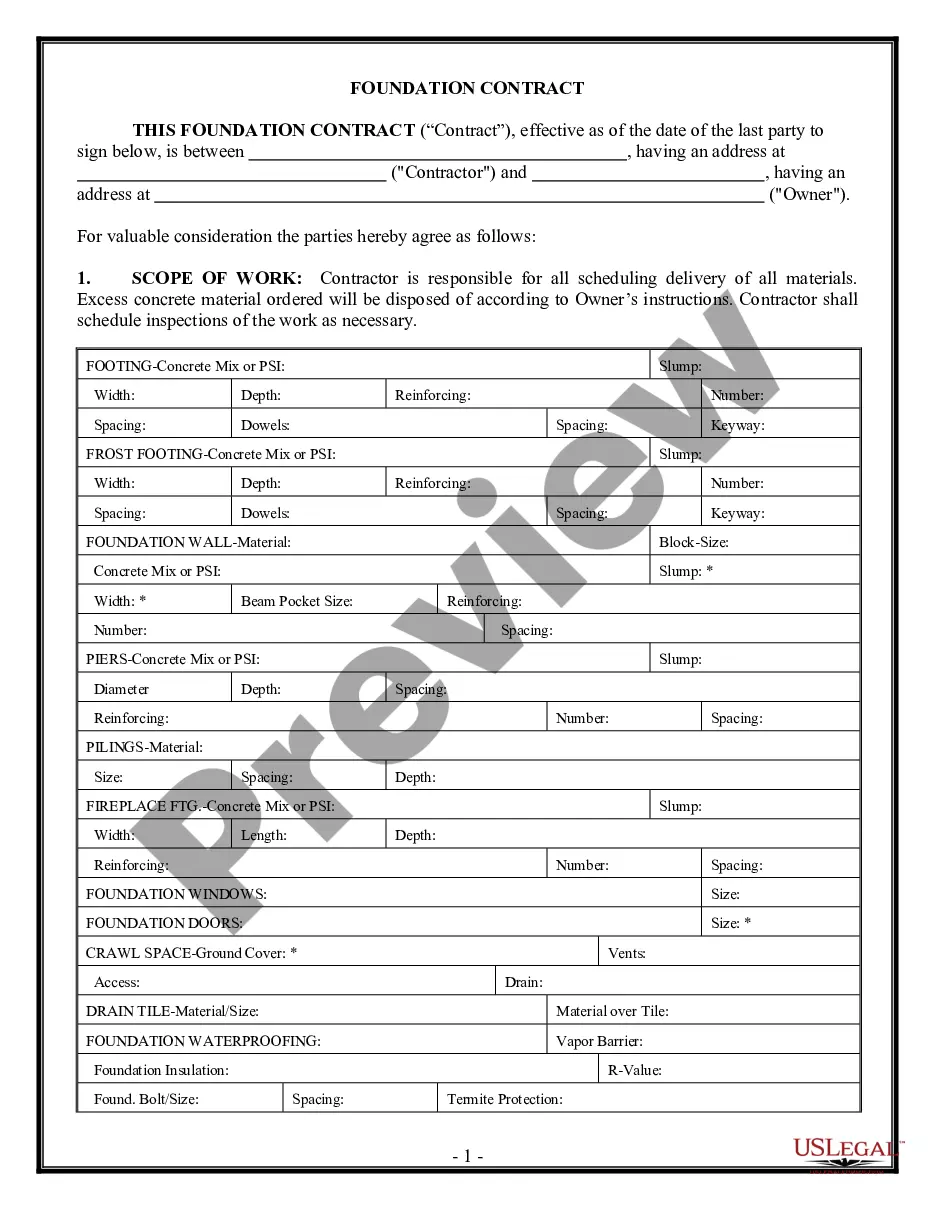
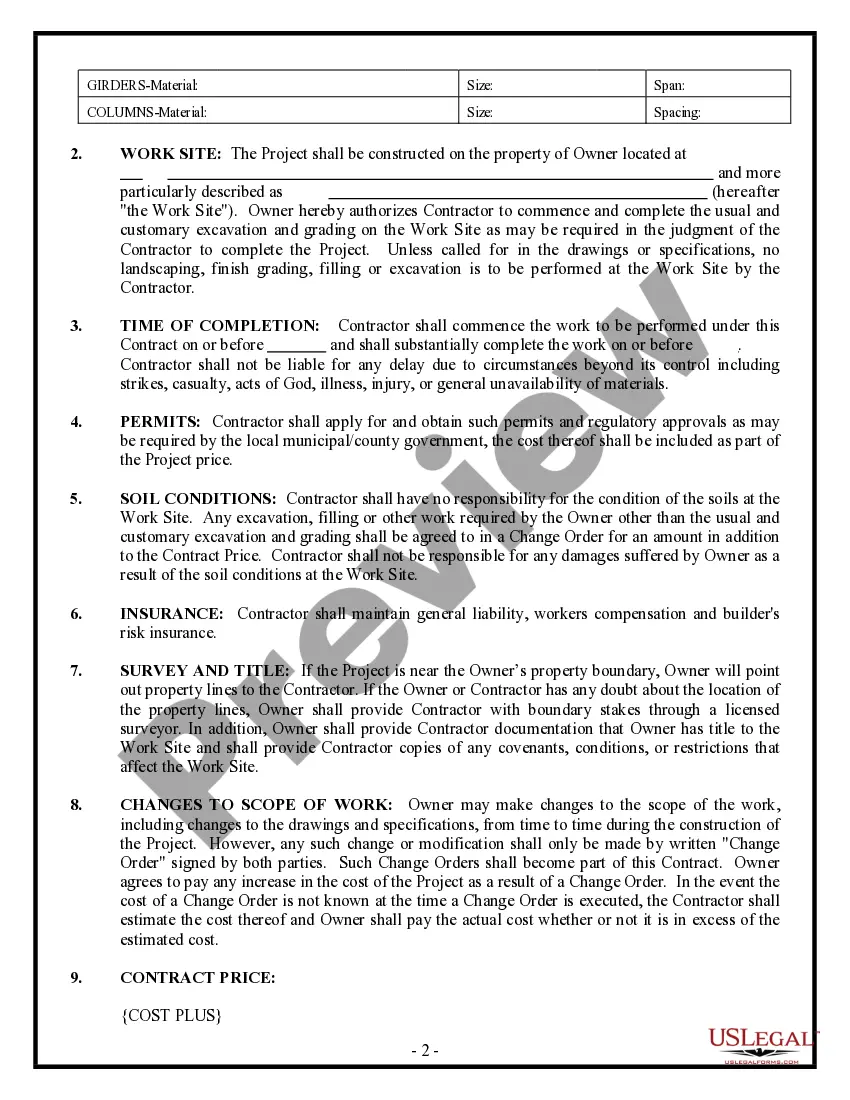
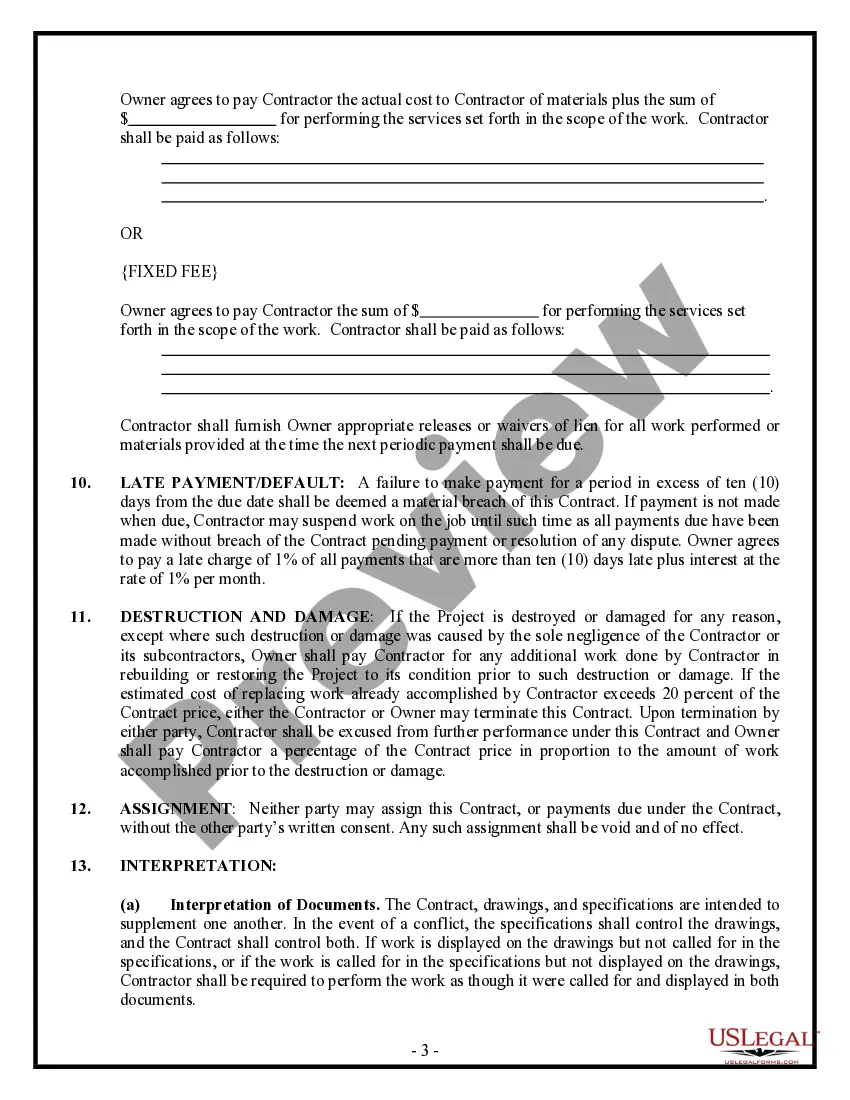
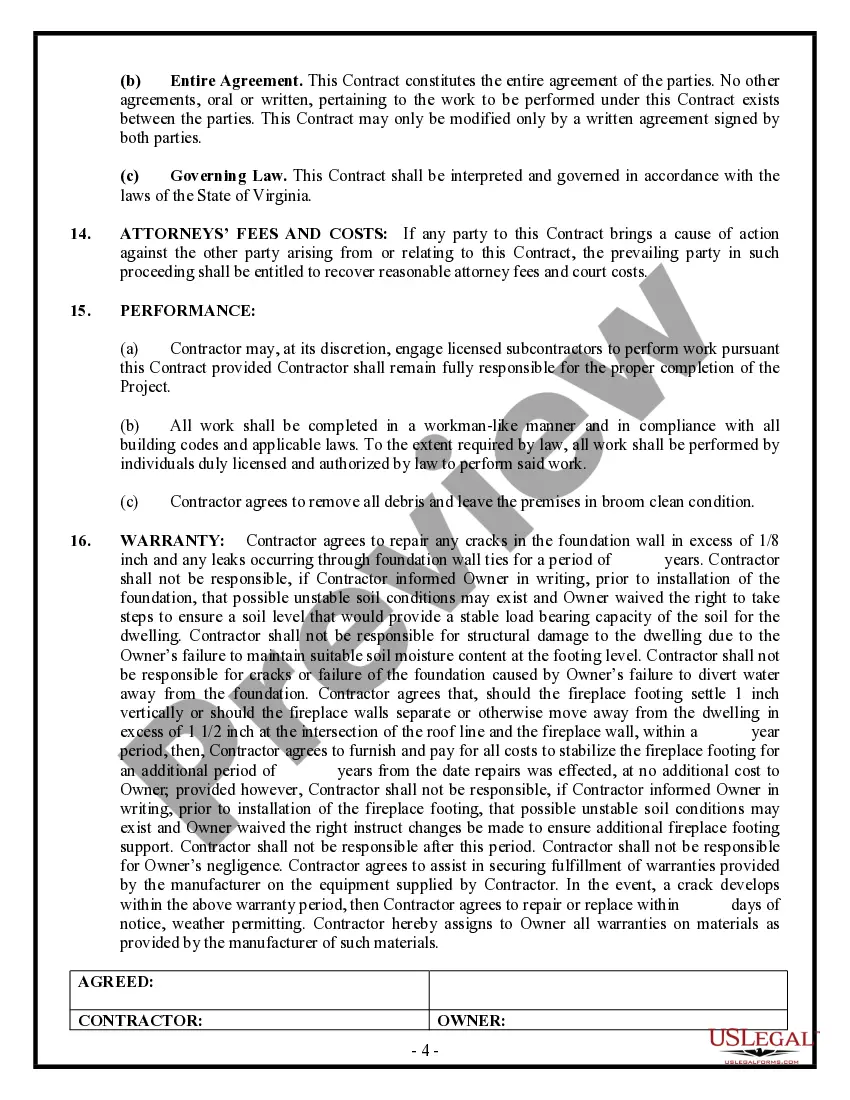
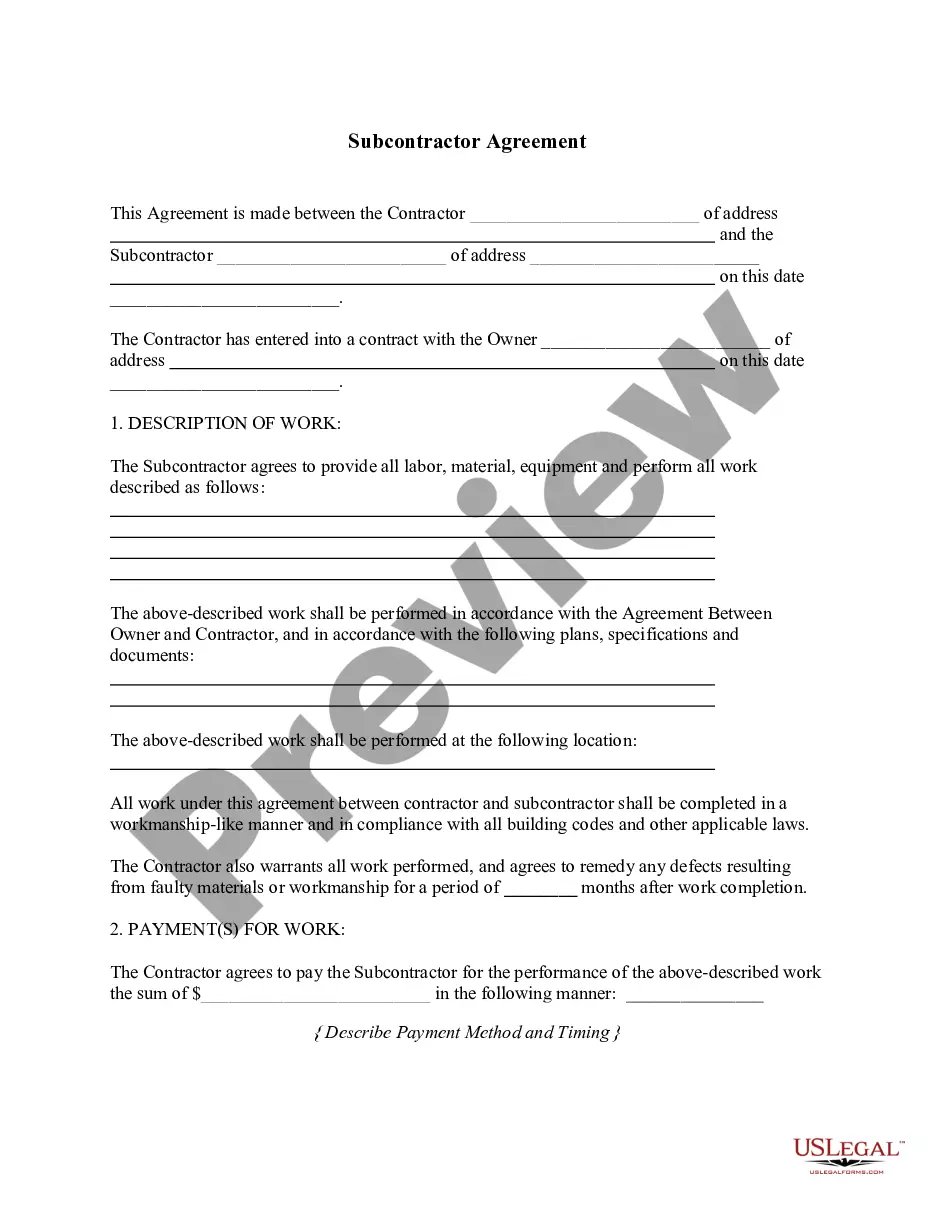
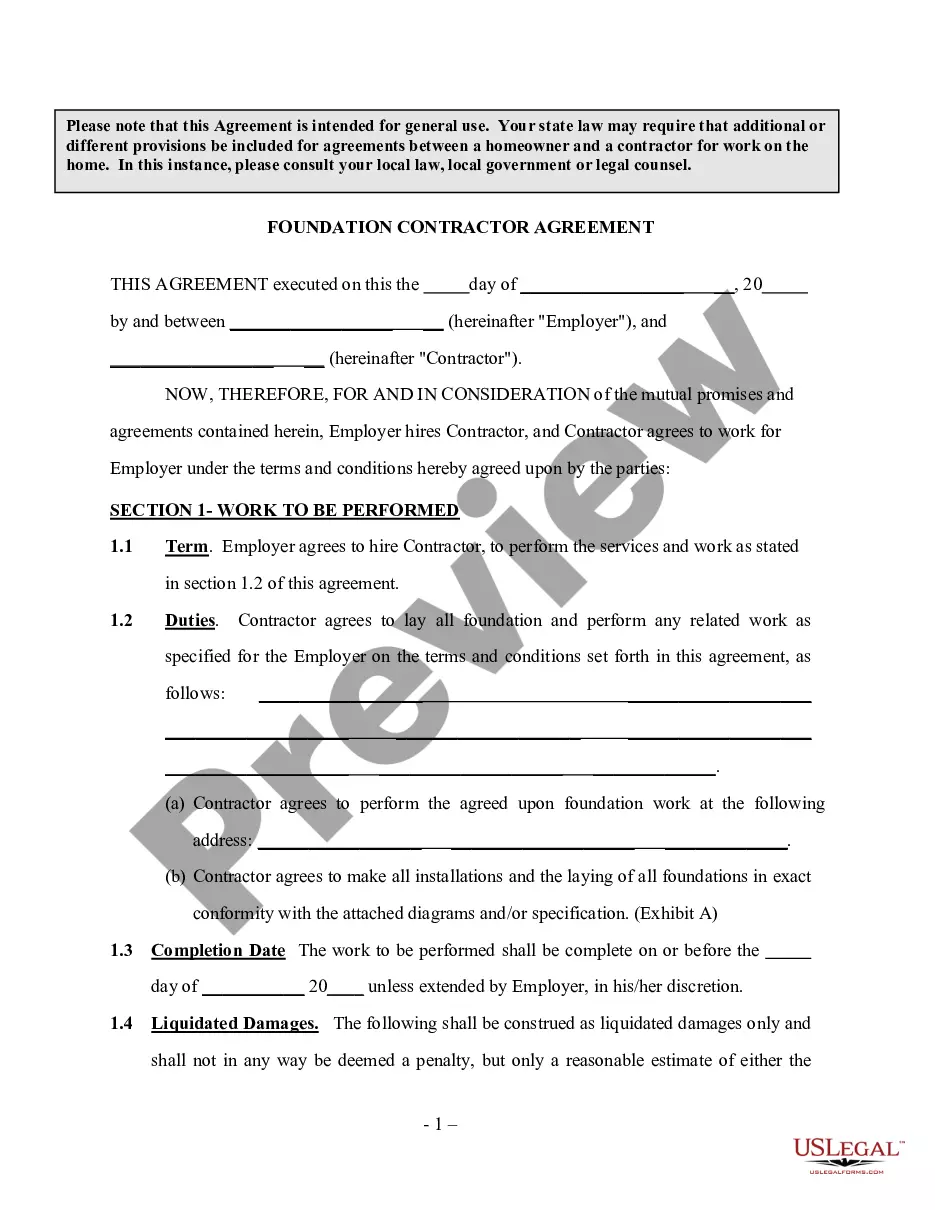
The Foundation Contract for Contractor is a legal document used by foundation contractors and property owners to outline the terms and conditions of a construction project. This contract can be structured as either a cost-plus or a fixed fee payment arrangement. It specifically addresses critical aspects such as change orders, site information, warranties, and insurance requirements. The contract is drafted to comply with Virginia state laws, making it particularly relevant for projects in that jurisdiction.
What’s included in this form
- Permits: Outlines the contractor's responsibility to obtain necessary permits.
- Soil Conditions: Specifies that the contractor is not responsible for soil conditions at the work site.
- Insurance: Requires the contractor to maintain general liability, workers compensation, and builders risk insurance.
- Changes to Scope of Work: Details procedures for change orders and associated costs.
- Late Payment/Default: Describes the consequences of late payments.
- Destruction and Damage: Addresses what happens if the project is destroyed or damaged.

Situations where this form applies
This form should be used when a property owner engages a foundation contractor for construction or renovation projects. It is particularly useful for clarifying roles, responsibilities, and payment terms before work begins, ensuring that both parties are in agreement on how project changes and unforeseen issues will be handled.
Who this form is for
- Foundation Contractors: Professionals providing foundation services who need a structured agreement with property owners.
- Property Owners: Individuals or entities planning a construction project that involves foundation work.
- Real Estate Developers: Those overseeing property development projects that require clear contractor agreements.
Instructions for completing this form
- Identify the parties: Clearly state the names and contact information of the contractor and property owner.
- Specify the project details: Describe the scope of work, including location and any relevant specifications.
- Enter payment terms: Choose between a cost plus or fixed fee arrangement and outline the payment schedule.
- Include change order procedures: Ensure both parties understand how modifications will be documented and how costs will be handled.
- Sign and date the contract: Both parties must sign the document to make it legally binding.
Is notarization required?
Notarization is generally not required for this form. However, certain states or situations might demand it. You can complete notarization online through US Legal Forms, powered by Notarize, using a verified video call available anytime.
Get your form ready online
Our built-in tools help you complete, sign, share, and store your documents in one place.
Make edits, fill in missing information, and update formatting in US Legal Forms—just like you would in MS Word.
Download a copy, print it, send it by email, or mail it via USPS—whatever works best for your next step.
Sign and collect signatures with our SignNow integration. Send to multiple recipients, set reminders, and more. Go Premium to unlock E-Sign.
If this form requires notarization, complete it online through a secure video call—no need to meet a notary in person or wait for an appointment.
We protect your documents and personal data by following strict security and privacy standards.

Make edits, fill in missing information, and update formatting in US Legal Forms—just like you would in MS Word.

Download a copy, print it, send it by email, or mail it via USPS—whatever works best for your next step.

Sign and collect signatures with our SignNow integration. Send to multiple recipients, set reminders, and more. Go Premium to unlock E-Sign.

If this form requires notarization, complete it online through a secure video call—no need to meet a notary in person or wait for an appointment.

We protect your documents and personal data by following strict security and privacy standards.
Typical mistakes to avoid
- Failing to specify payment terms clearly, which can lead to disputes down the line.
- Not addressing change orders adequately, leading to confusion about project modifications.
- Overlooking soil condition issues, which can impact project timelines and costs.
- Neglecting to obtain the necessary permits before beginning work.
Advantages of online completion
- Convenience: Downloadable and easy to access, allowing for quick use in projects.
- Editability: Users can customize the template to suit their specific project needs.
- Reliability: Forms are drafted by licensed attorneys, ensuring legal compliance.
Legal use & context
- This contract serves as a binding agreement between the contractor and property owner.
- It clarifies responsibilities concerning work site conditions, payment, and insurance.
- Non-compliance with the agreement terms can lead to legal disputes requiring resolution.
Main things to remember
- The Foundation Contract for Contractor defines the relationship and responsibilities between parties.
- Ensuring clarity in payment structures and change management is crucial for a successful project.
- This form complies with Virginia law, providing protections for both contractors and property owners.
Looking for another form?
Form popularity
FAQ
An agreement between private parties creating mutual obligations enforceable by law. The basic elements required for the agreement to be a legally enforceable contract are: mutual assent, expressed by a valid offer and acceptance; adequate consideration; capacity; and legality.
Name of contractor and contact information. Name of homeowner and contact information. Describe property in legal terms. List attachments to the contract. The cost. Failure of homeowner to obtain financing. Description of the work and the completion date. Right to stop the project.
An estimate should be the contractor's best professional assessment, including the cost of hiring any subcontractors, the price of materials, and any other labor involved.
Identifying/Contact Information. Title and Description of the Project. Projected Timeline and Completion Date. Cost Estimate and Payment Schedule. Stop Work Clause and Stop Payment Clause. Act of God Clause. Change Order Agreement. Warranty.
Define and describe the project in detail. Include what materials must be used; be as specific as possible. Include weight, brand name and other identifying features. Specify the work being performed and all equipment being used or installed.
Your general contractor should provide proof of licensing, bonding and insurance before a project starts, but it's better to have it in hand before you sign any contracts. It's important that contractors carry any licensing and/or certification required for the specific trade or skill they practice.
Get it in writing. Keep it simple. Deal with the right person. Identify each party correctly. Spell out all of the details. Specify payment obligations. Agree on circumstances that terminate the contract. Agree on a way to resolve disputes.
Timeframe or key milestones of the project; hours of work; deliverables of the project; and. way the business will pay the contractor for their services.
1Identifying/Contact Information.2Title and Description of the Project.3Projected Timeline and Completion Date.4Cost Estimate and Payment Schedule.5Stop Work Clause and Stop Payment Clause.6Act of God Clause.7Change Order Agreement.8Warranty.Everything You Need to Know about Drawing up a Construction\nwww.freshbooks.com > blog > construction-contract