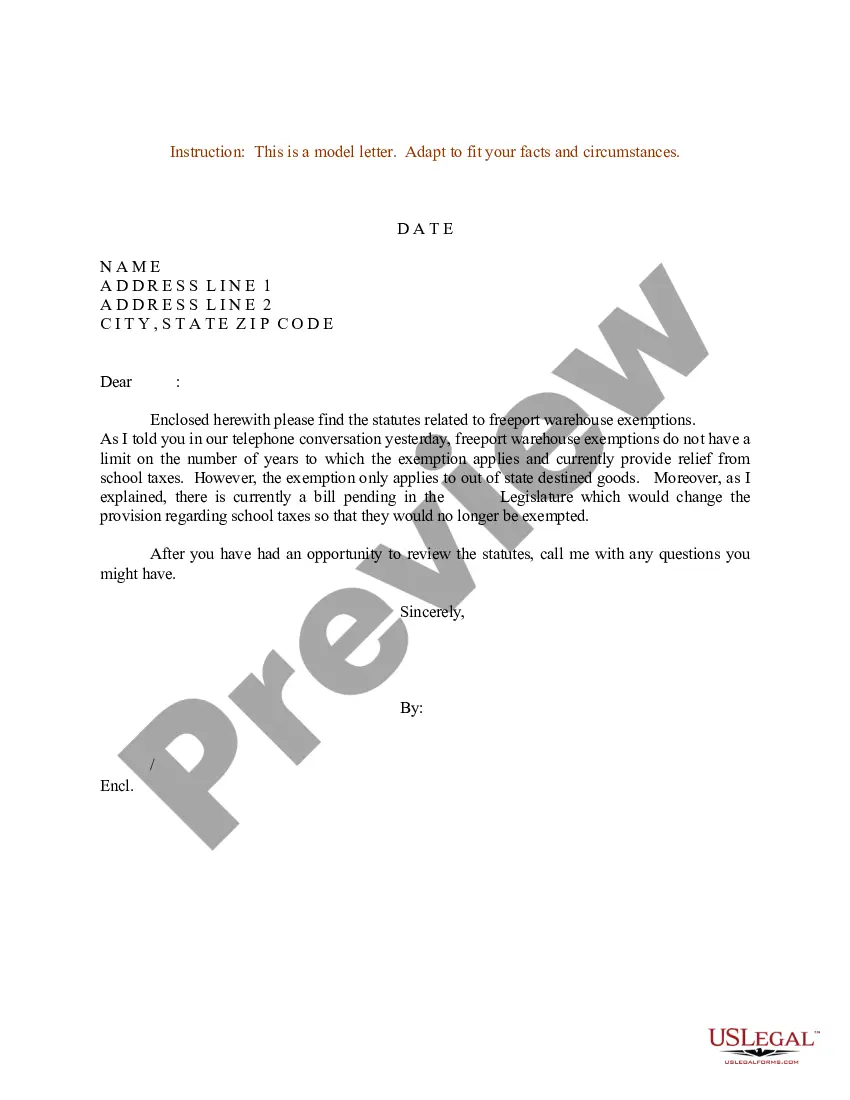
Virginia HVAC Contract for Contractor
Overview of this form
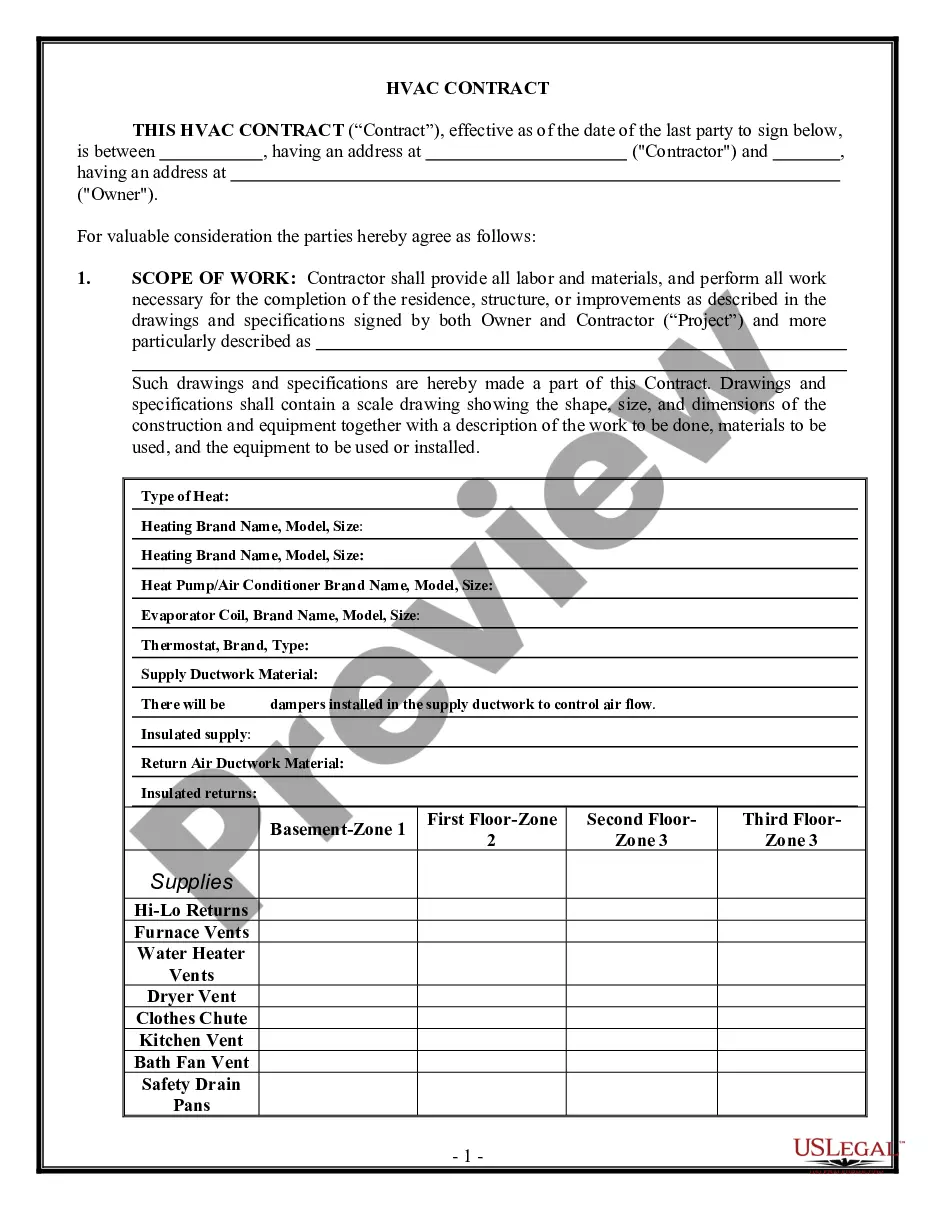
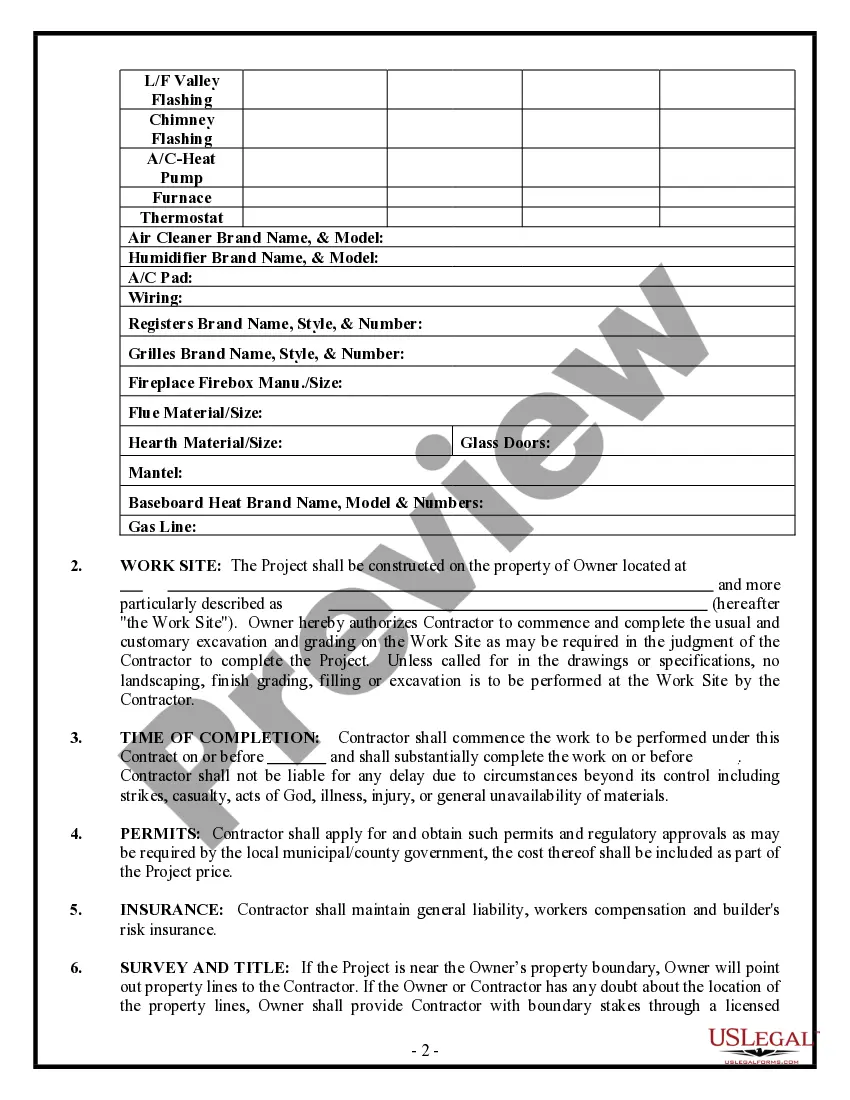
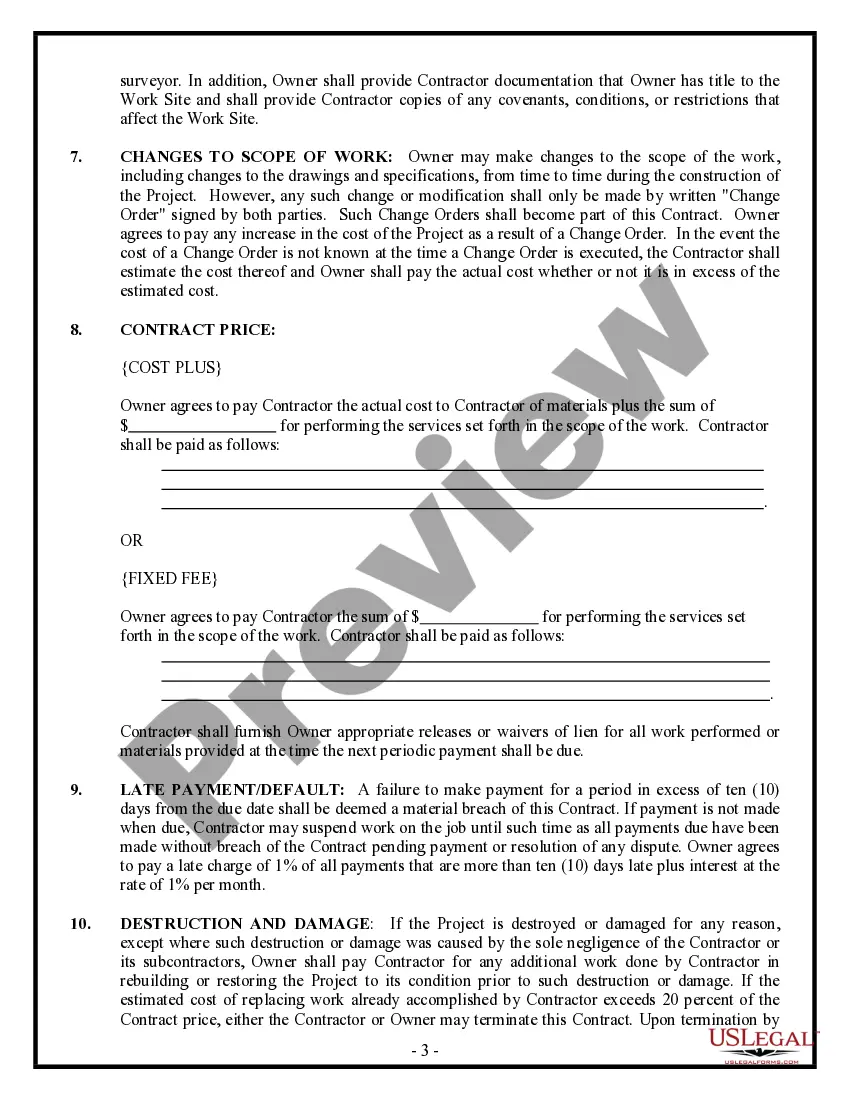
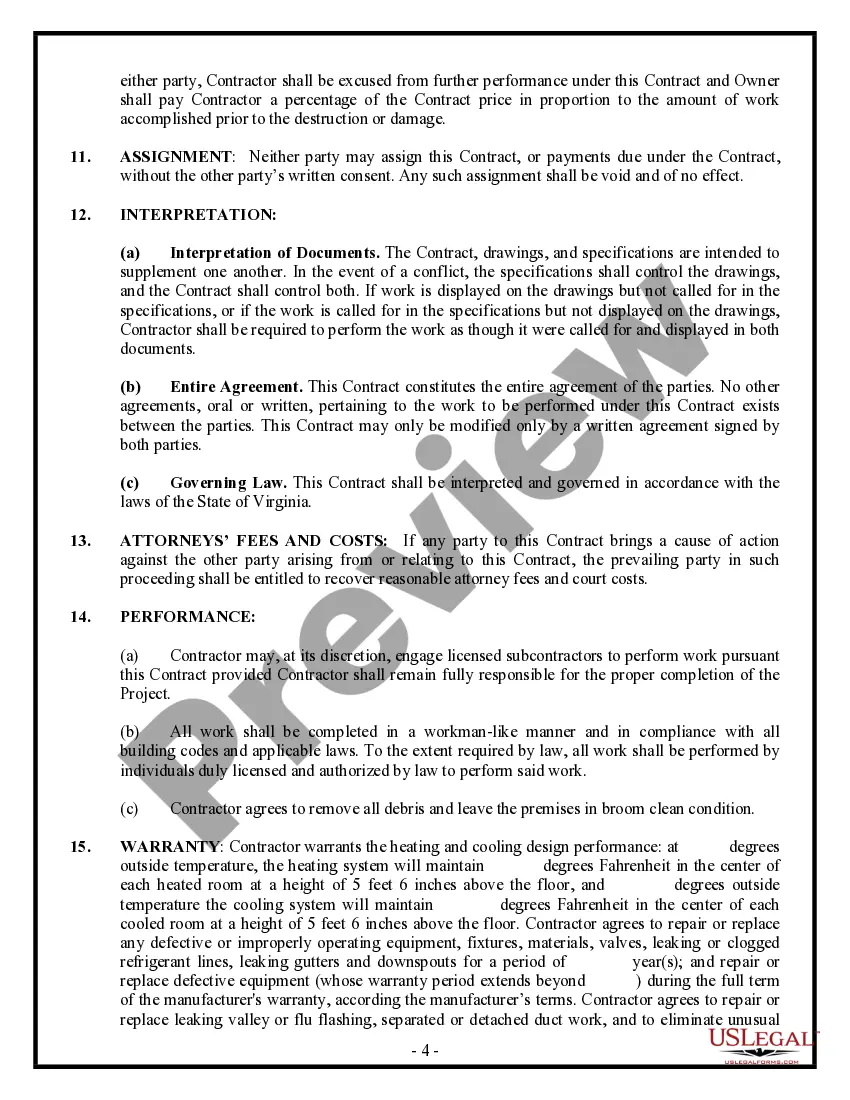
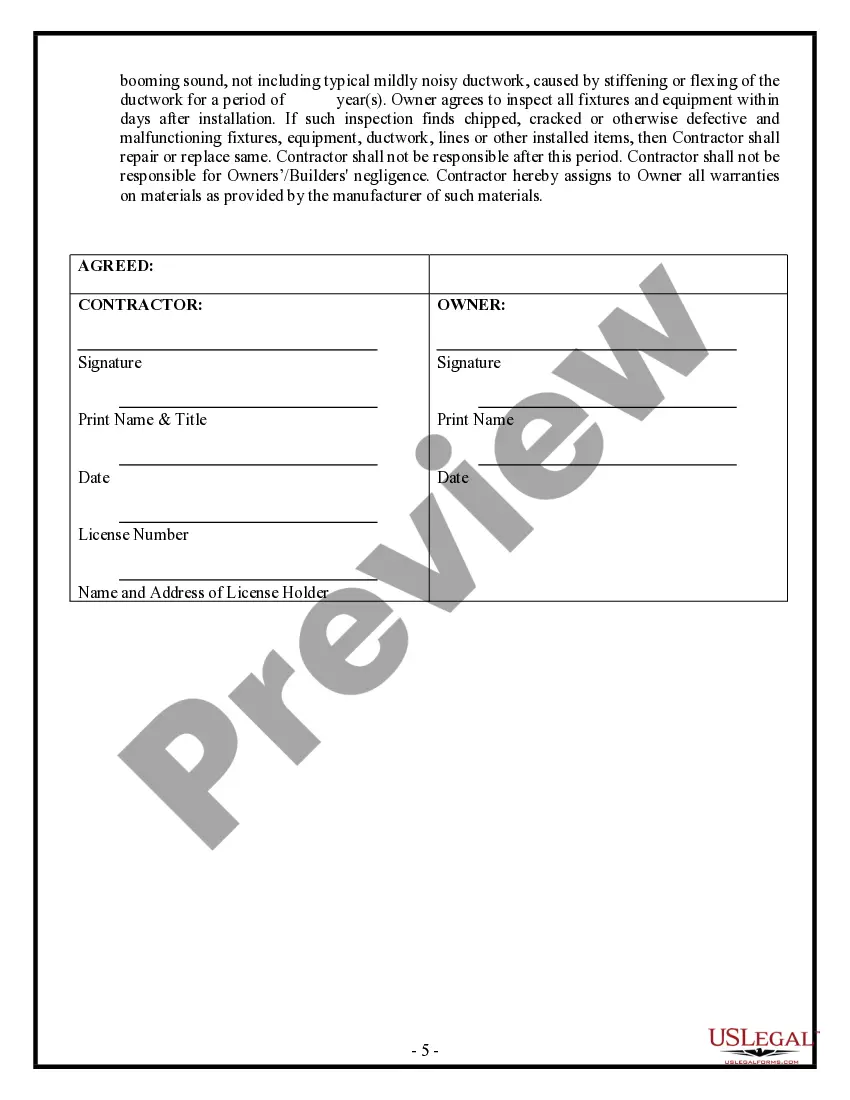
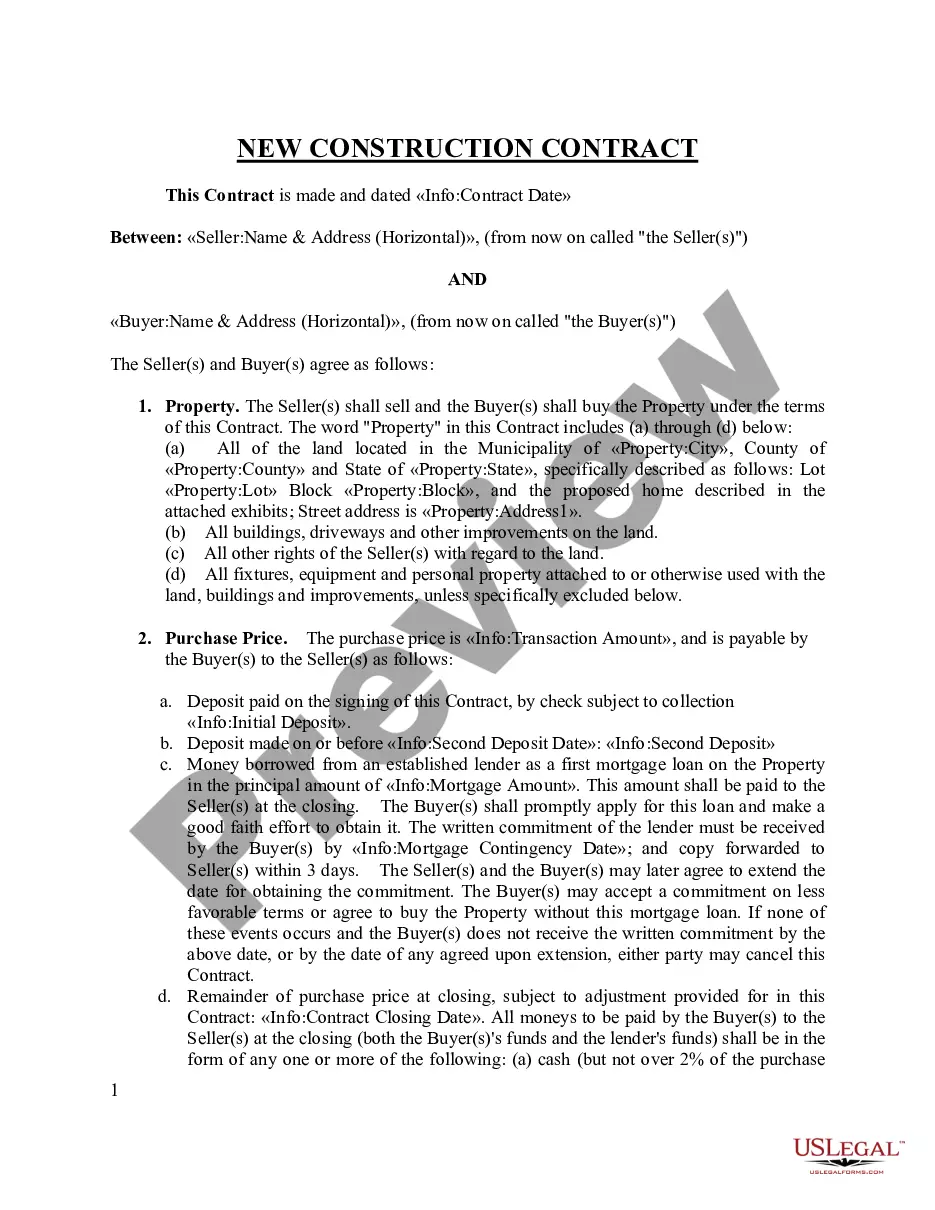
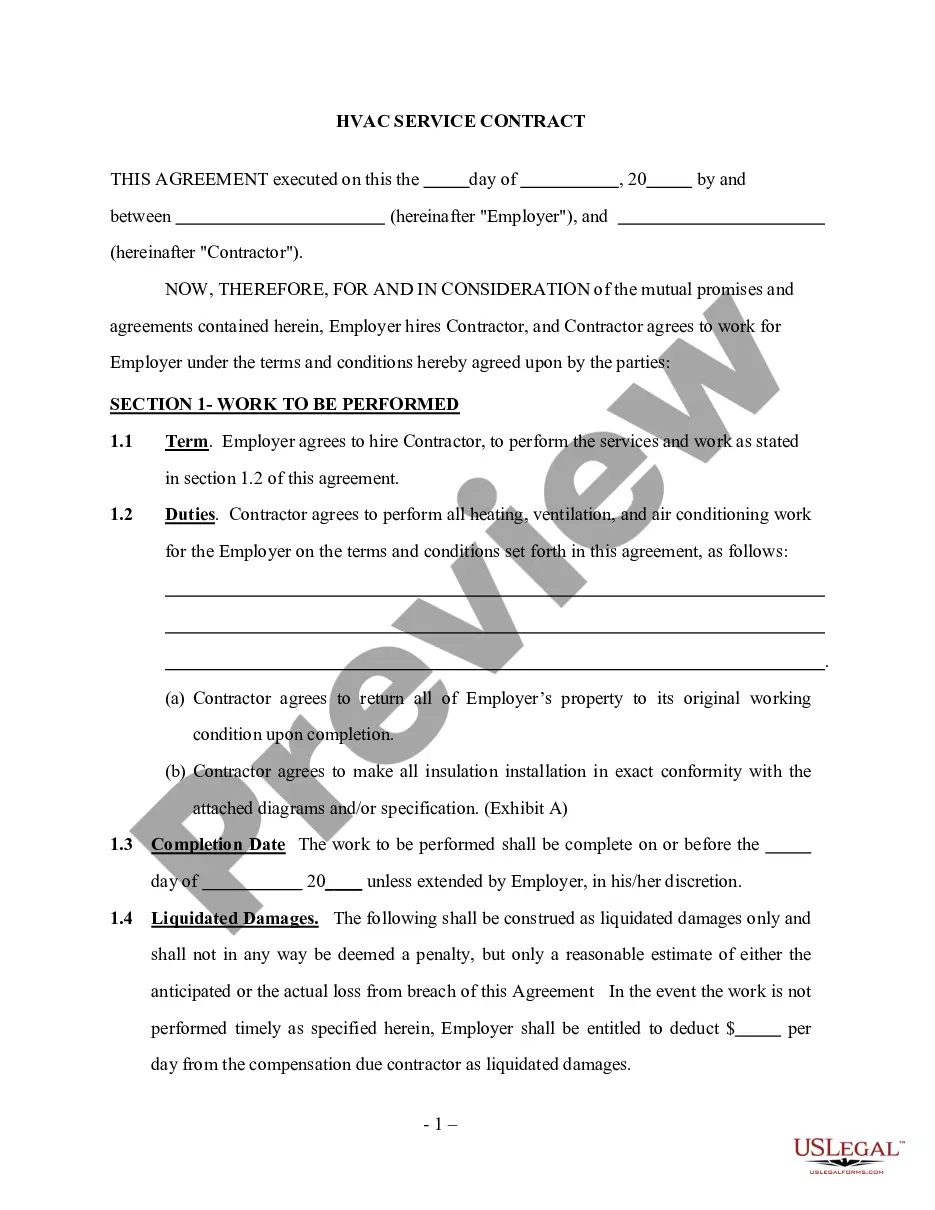
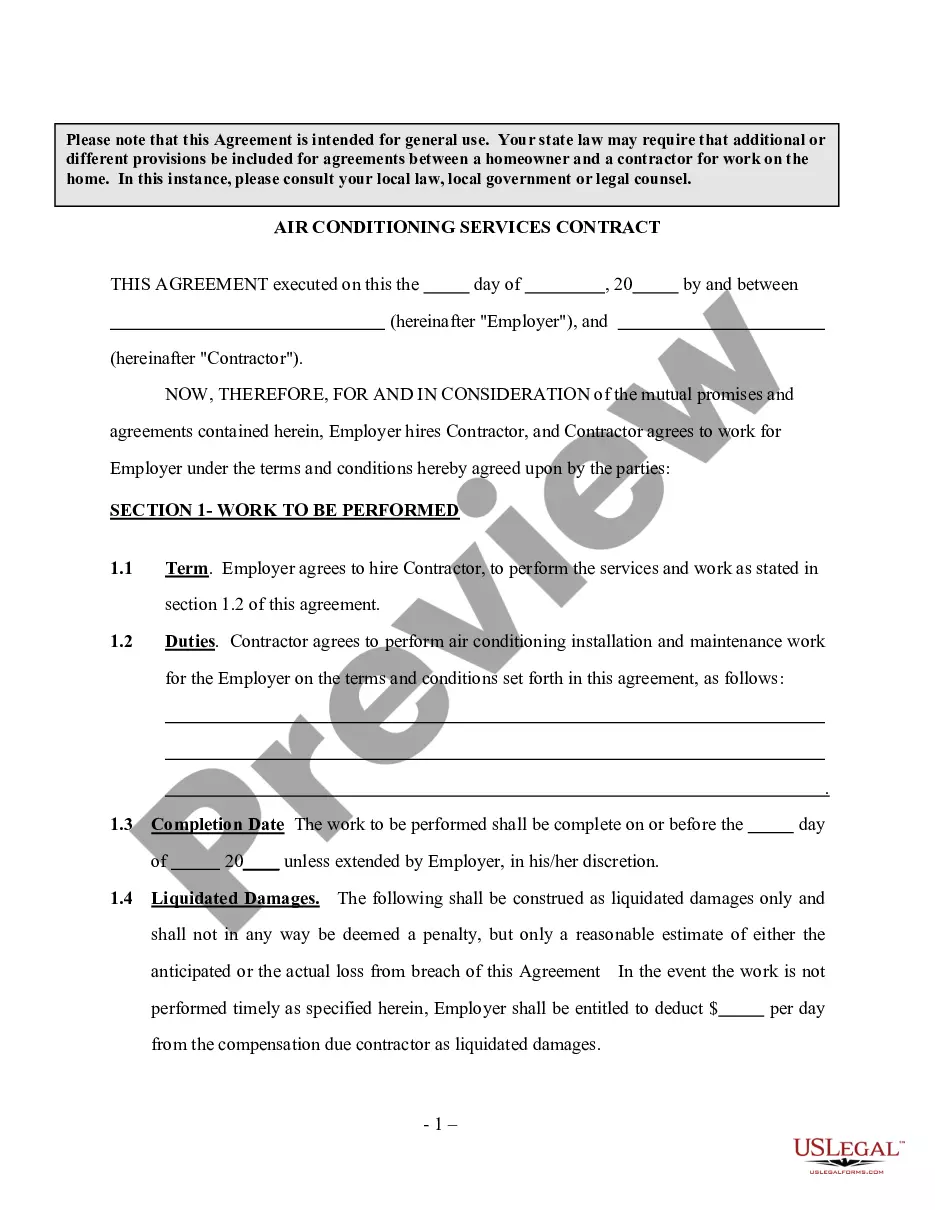
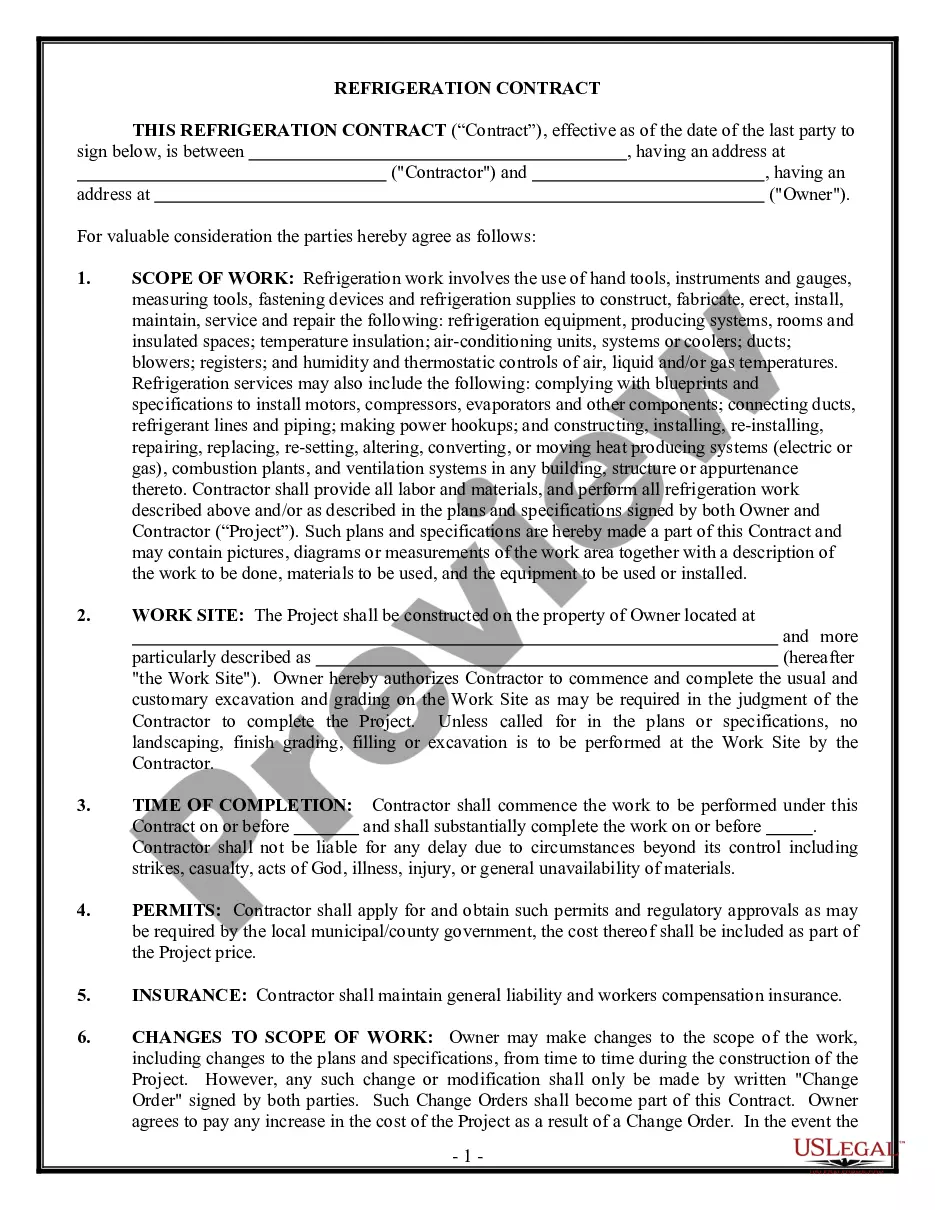
The HVAC Contract for Contractor is a legal document designed to establish a clear agreement between HVAC contractors and property owners regarding the terms of their work. This contract outlines payment arrangements, including cost-plus and fixed fee options, and details essential project elements such as permits, insurance, and changes to the scope of work. It ensures both parties understand their responsibilities and rights, making it distinct from general service agreements by focusing specifically on HVAC contracting needs.
What’s included in this form
- Permits: Requirements for obtaining necessary permits from local government.
- Insurance: Specifications on liability, workers' compensation, and builder's risk insurance needed for the project.
- Survey and title: Responsibilities for identifying property lines and verifying ownership of the work site.
- Changes to scope of work: Procedures for making changes to the project through written Change Orders.

When to use this document
This form should be used when an HVAC contractor is engaged to perform work on a property. It is essential in scenarios such as installing heating, ventilation, or air conditioning systems, or when making significant repairs or enhancements to existing systems. Additionally, it is beneficial when clarity in project scope, cost management, and responsibilities is required to avoid disputes between contractors and property owners.
Who this form is for
- HVAC contractors seeking to formalize agreements with property owners.
- Property owners hiring contractors for HVAC installation or repair services.
- Any party looking to ensure compliance with Virginia laws regarding HVAC contracting.
How to prepare this document
- Identify the parties involved: Enter the names and contact information of the contractor and property owner.
- Specify the project details: Describe the HVAC work to be performed, including any applicable timelines.
- Review and include payment terms: Choose between a cost-plus or fixed fee payment arrangement.
- Ensure compliance with local laws: Verify that all required permits are obtained and documented.
- Sign and date the contract: Both parties should sign to acknowledge their agreement to the terms outlined.
Notarization guidance
This form usually doesn’t need to be notarized. However, local laws or specific transactions may require it. Our online notarization service, powered by Notarize, lets you complete it remotely through a secure video session, available 24/7.
Get your form ready online
Our built-in tools help you complete, sign, share, and store your documents in one place.
Make edits, fill in missing information, and update formatting in US Legal Forms—just like you would in MS Word.
Download a copy, print it, send it by email, or mail it via USPS—whatever works best for your next step.
Sign and collect signatures with our SignNow integration. Send to multiple recipients, set reminders, and more. Go Premium to unlock E-Sign.
If this form requires notarization, complete it online through a secure video call—no need to meet a notary in person or wait for an appointment.
We protect your documents and personal data by following strict security and privacy standards.

Make edits, fill in missing information, and update formatting in US Legal Forms—just like you would in MS Word.

Download a copy, print it, send it by email, or mail it via USPS—whatever works best for your next step.

Sign and collect signatures with our SignNow integration. Send to multiple recipients, set reminders, and more. Go Premium to unlock E-Sign.

If this form requires notarization, complete it online through a secure video call—no need to meet a notary in person or wait for an appointment.

We protect your documents and personal data by following strict security and privacy standards.
Mistakes to watch out for
- Failing to obtain the necessary permits before work begins.
- Not clearly defining the scope of work, leading to misunderstandings.
- Neglecting to address insurance requirements, which can lead to liabilities.
- Changing project details verbally instead of through written Change Orders.
Benefits of completing this form online
- Convenience: Download and complete the form from anywhere at any time.
- Editability: Easily customize the form to suit specific project needs.
- Reliability: Use a standard, attorney-drafted template to ensure legal compliance.
Summary of main points
- The HVAC Contract for Contractor creates a clear framework for HVAC projects between contractors and property owners.
- It includes essential elements like permits, insurance, and procedures for changes to work scope.
- This form is tailored for compliance with Virginia laws, making it a reliable choice for stakeholders in the state.
Looking for another form?

Form popularity
FAQ
Becoming a contractor may be a smart move if you have the required experience or education, or simply have a passion for construction work.However, becoming a contractor takes several years of experience first, as well as licensing requirements that can be difficult to meet without the proper preparation.
In the state of Virginia (VA), a contractor's license is legally required for any work that exceeds $1,000 in labor and materials.
Start by only answering the easy questions. Read the entire exam and only answer the questions you absolutely know the answer to. If you don't know it, wait. Don't second guess yourself. There is no penalty for guessing. Don't compete with other applicants.
All contractors of any kind must complete an 8-hour Contractor Basic Business course. Courses may be taken online or in a classroom as long as they are approved by the Commonwealth of Virginia.
Class B General Building Contractors, unlike both a Class A General Engineering Contractor and a Class C Specialty Contractor, may enter into direct contracts and subcontracts involving: (1) Projects involving framing or carpentry only; (2) Projects involving two or more unrelated trades other than framing or
Create a business entity. Decide which license you need (A,B, or C as listed previously). Take a mandatory 8-Hour pre-license course (required for all license types) Pass the required exams. Complete your application and submit to the Board with the appropriate fee.
It is a common misconception that since the construction exam is open book, it is not difficult to pass. In actuality the Virginia builders license exam is more difficult to pass than similar closed book exams due to the fact that you have books available as a resource during the contractor test.
A Class C Contractor is any contractor that has single contracts from $1,000 or more but less than $10,000 or contracts totaling less than $150,000 over a one-year period. Virginia does not require Continuing Education for the Class C Contractor classification.
Operating without a required contractor's license is a criminal class one misdemeanor. There can be DPOR civil penalties. Operating without a required contractor license would be a violation of the Virginia Consumer Protection Act. This is a very legitimate police power by the state.