Utah Mutual Wills Package for Married Couple with Minor Children
Overview of this form
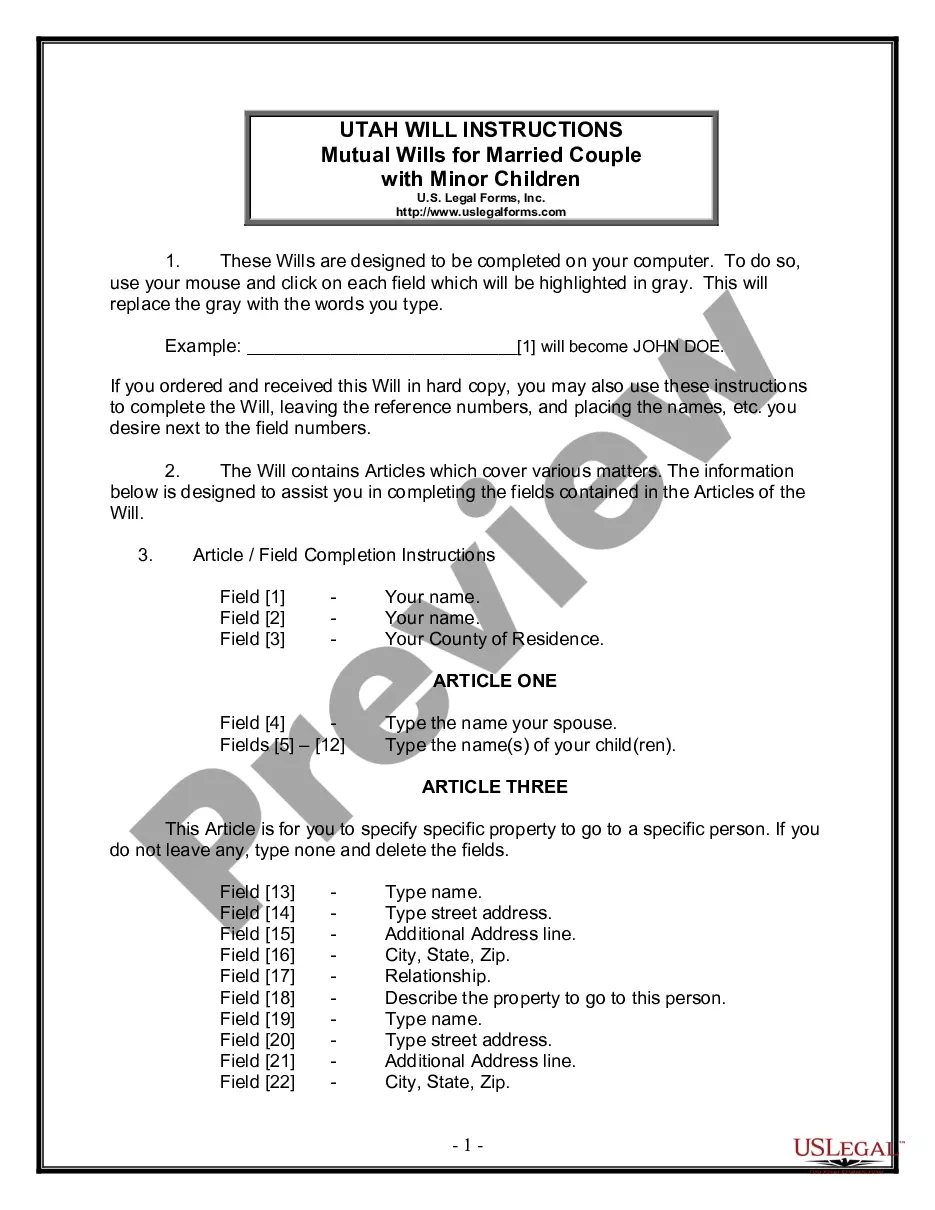
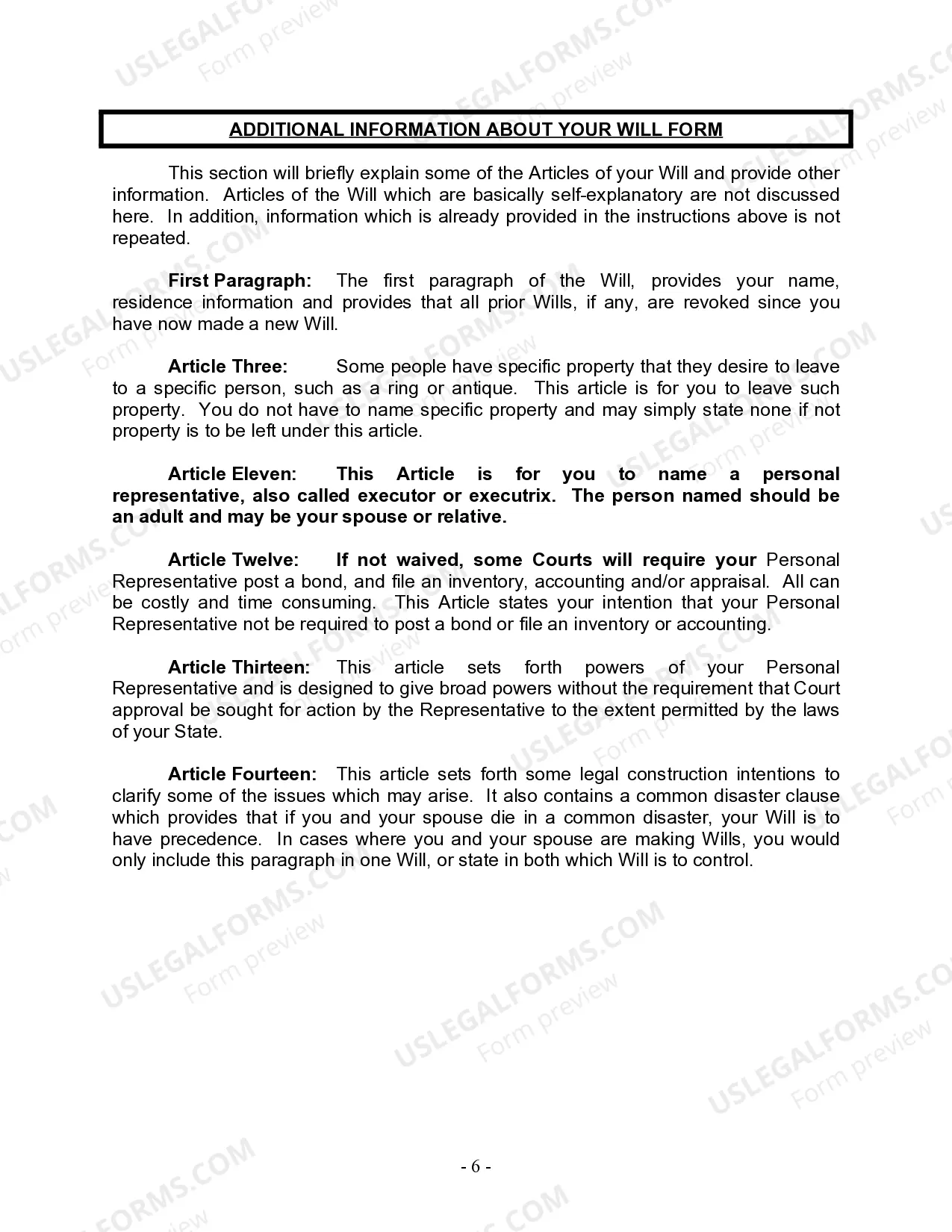
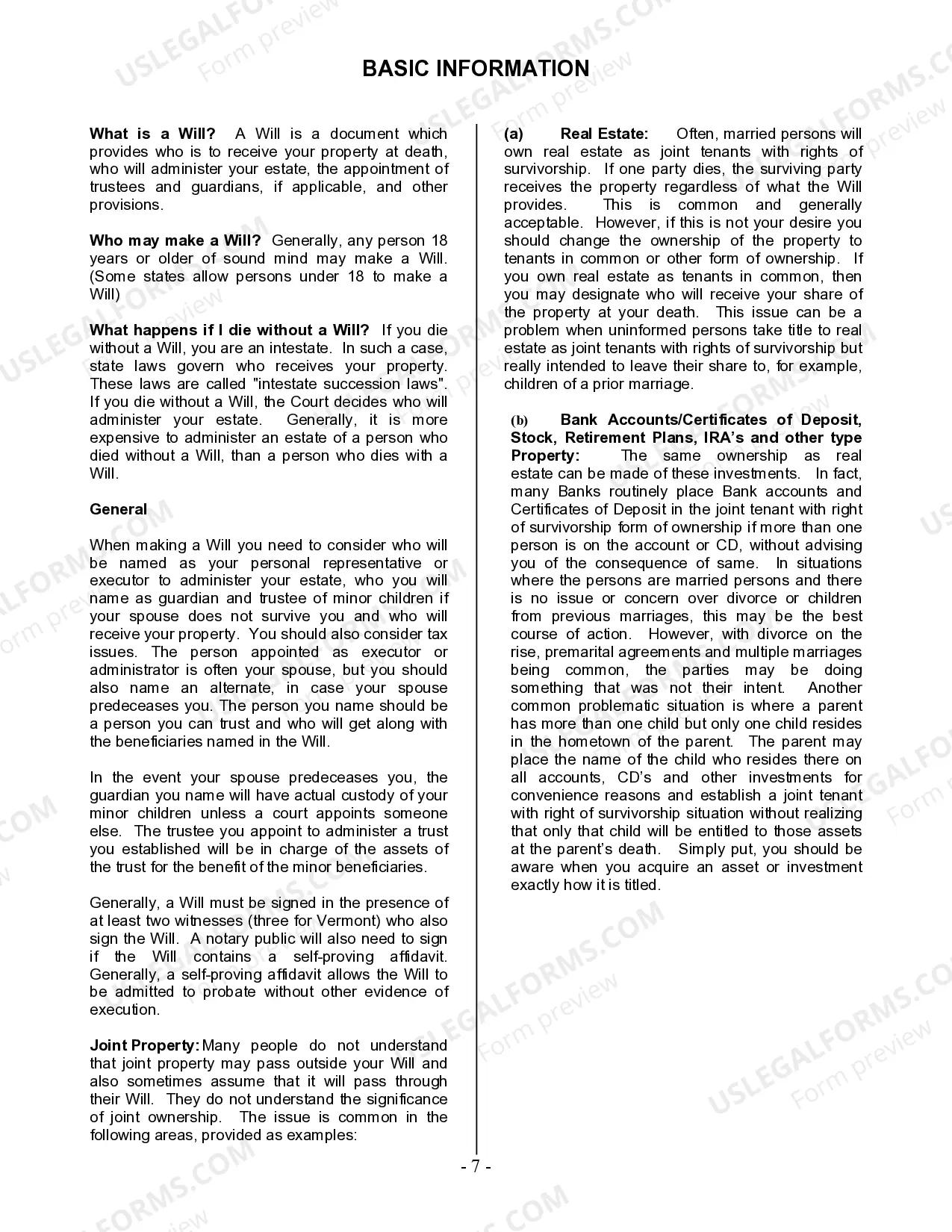
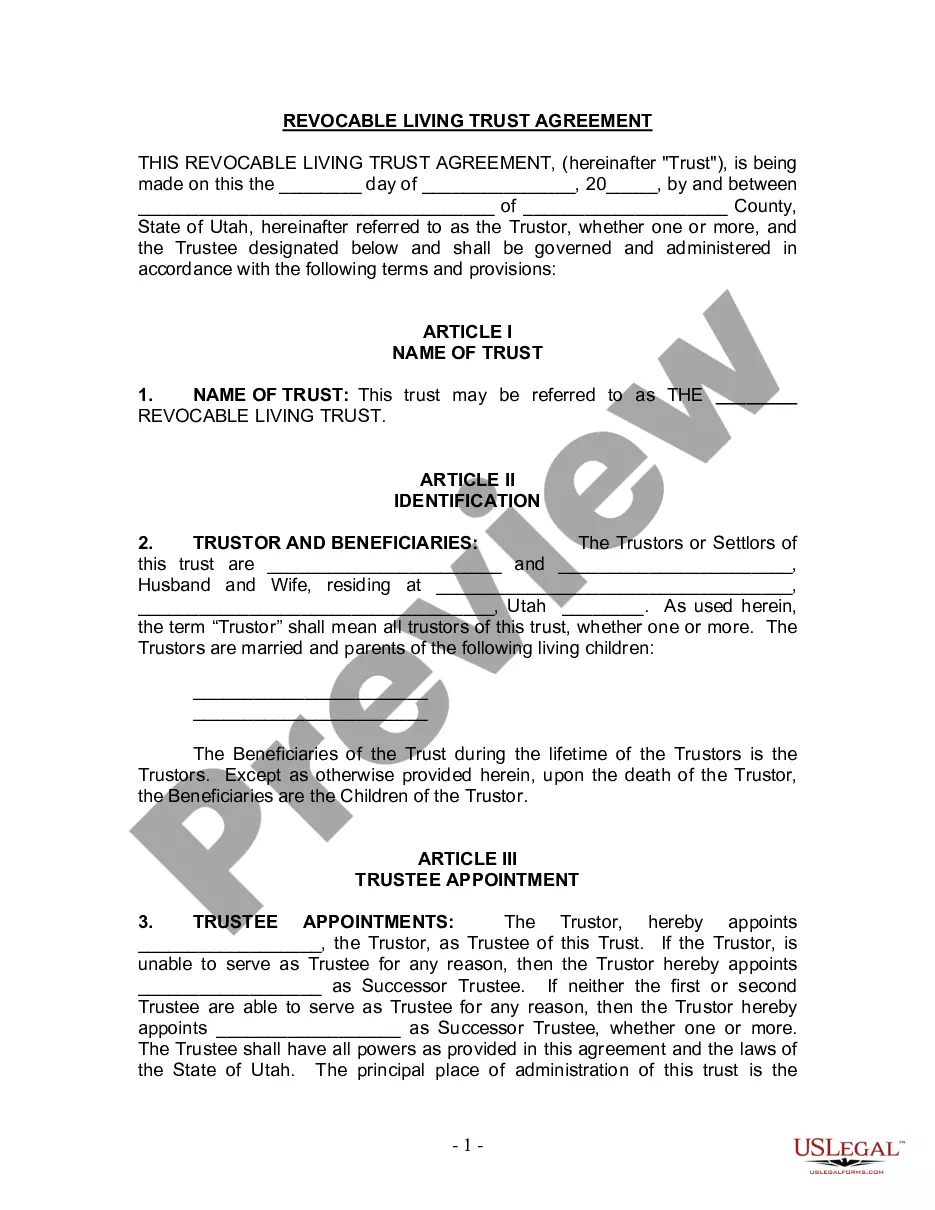
The Mutual Wills Package for Married Couple with Minor Children is a legal document set specifically designed for married couples who want to outline their wishes regarding property distribution, guardianship, and trust for their minor children in the event of their death. Unlike standard wills, mutual wills incorporate an agreement between both spouses, ensuring mutual consent on distribution to beneficiaries, which may help prevent disputes later on.
Key parts of this document
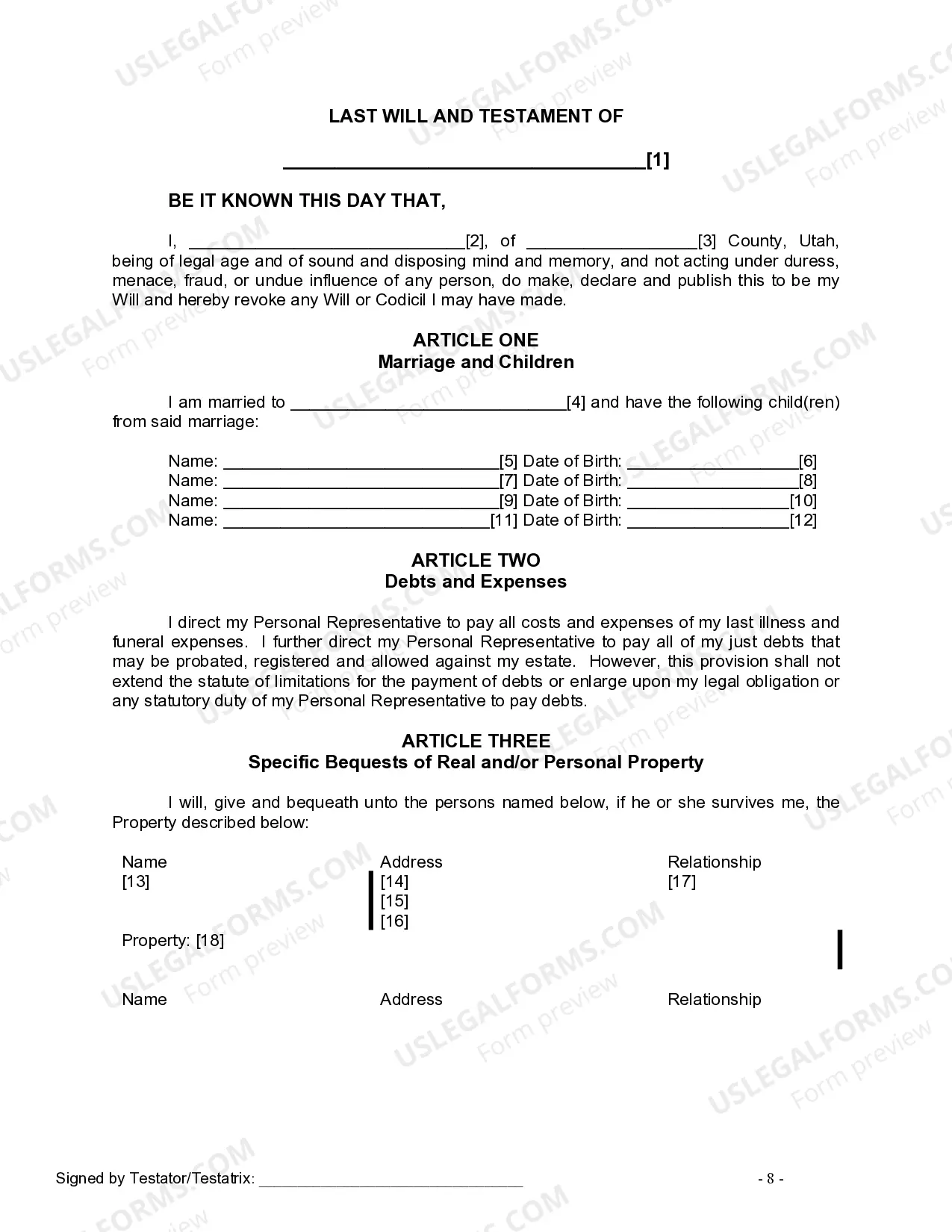
- Personal information of each spouse, including names and county of residence.
- Designations of guardians for minor children.
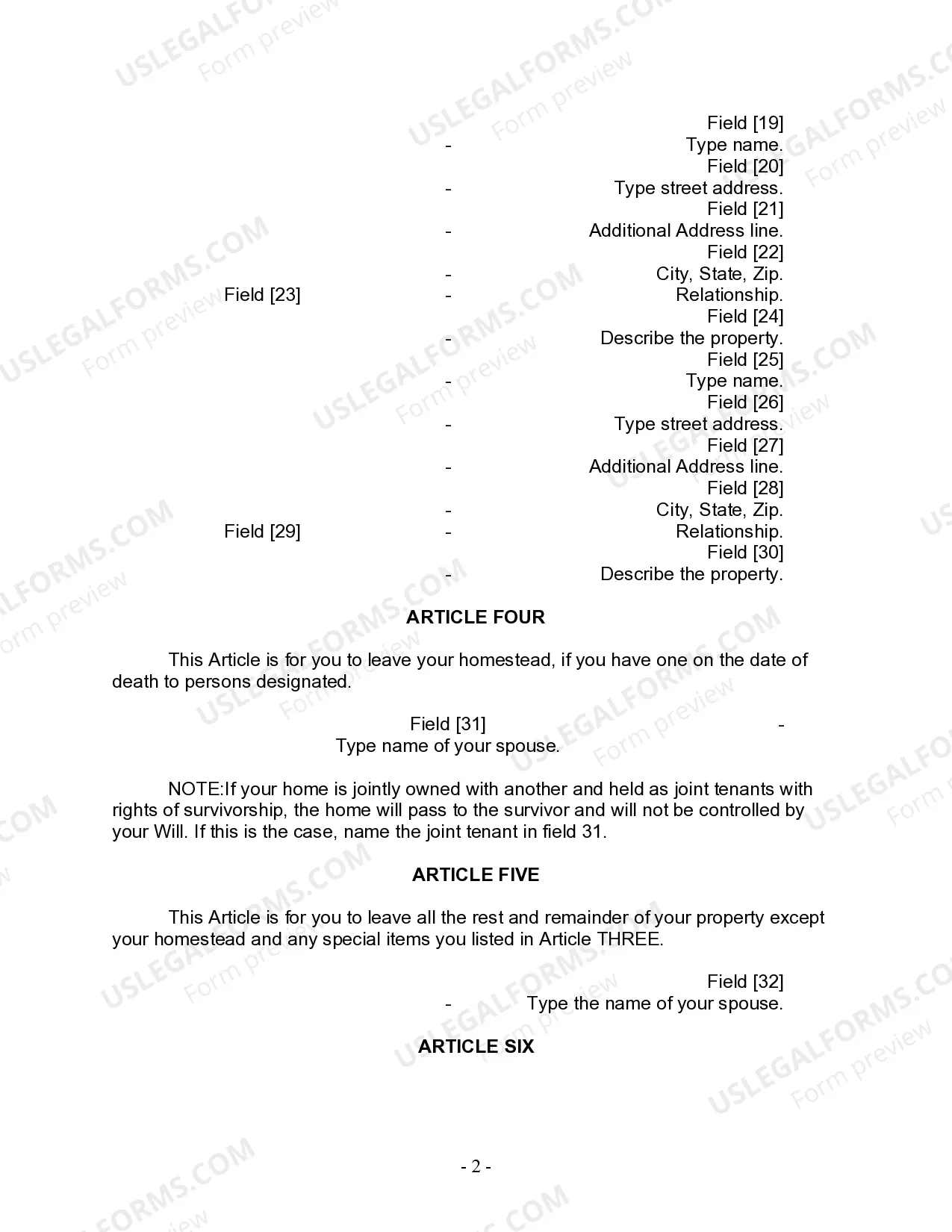
- Specific bequests of property to named individuals.
- Establishment of a trust for minor beneficiaries, including terms and conditions.
- Appointment of a personal representative to manage the estate.
- Provisions for revoking previous wills.




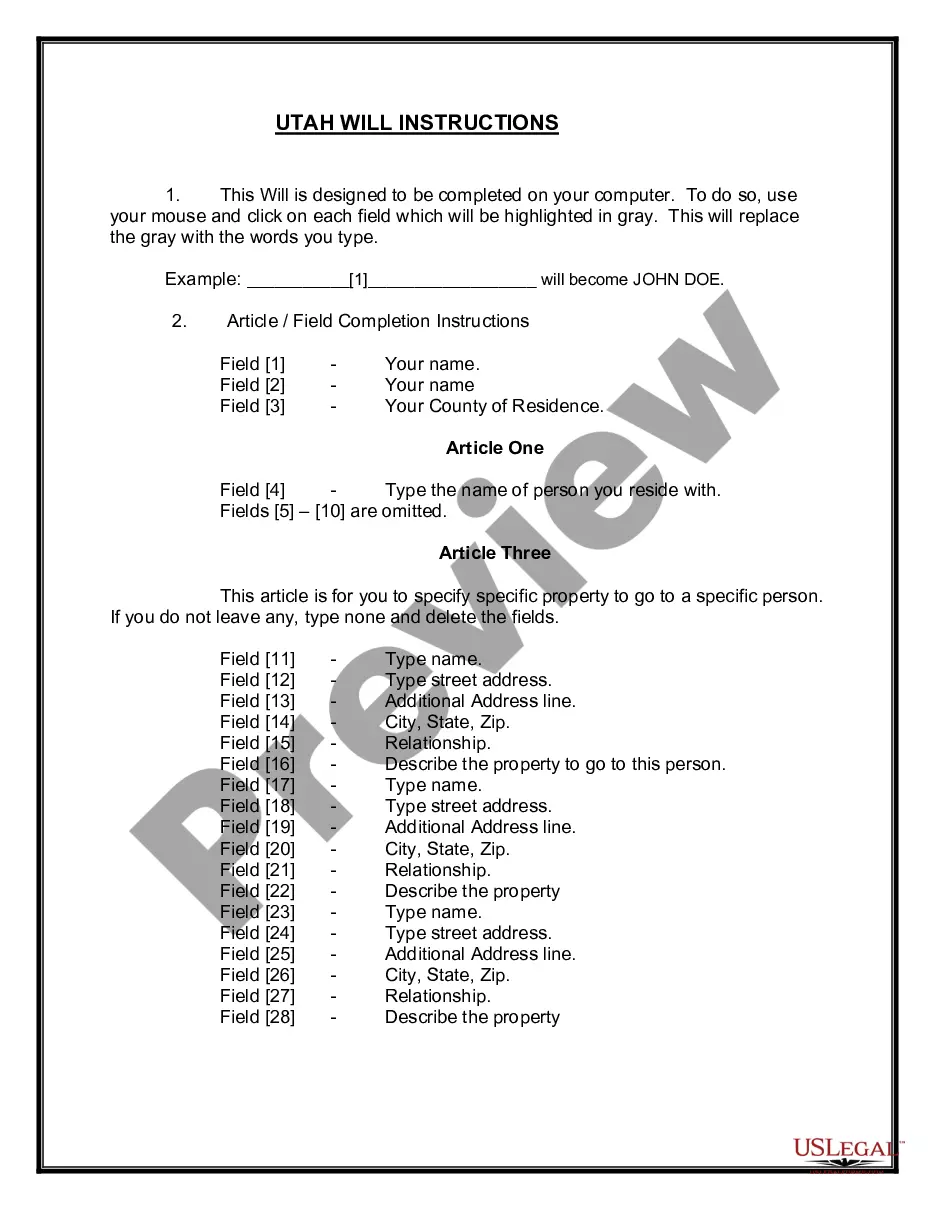
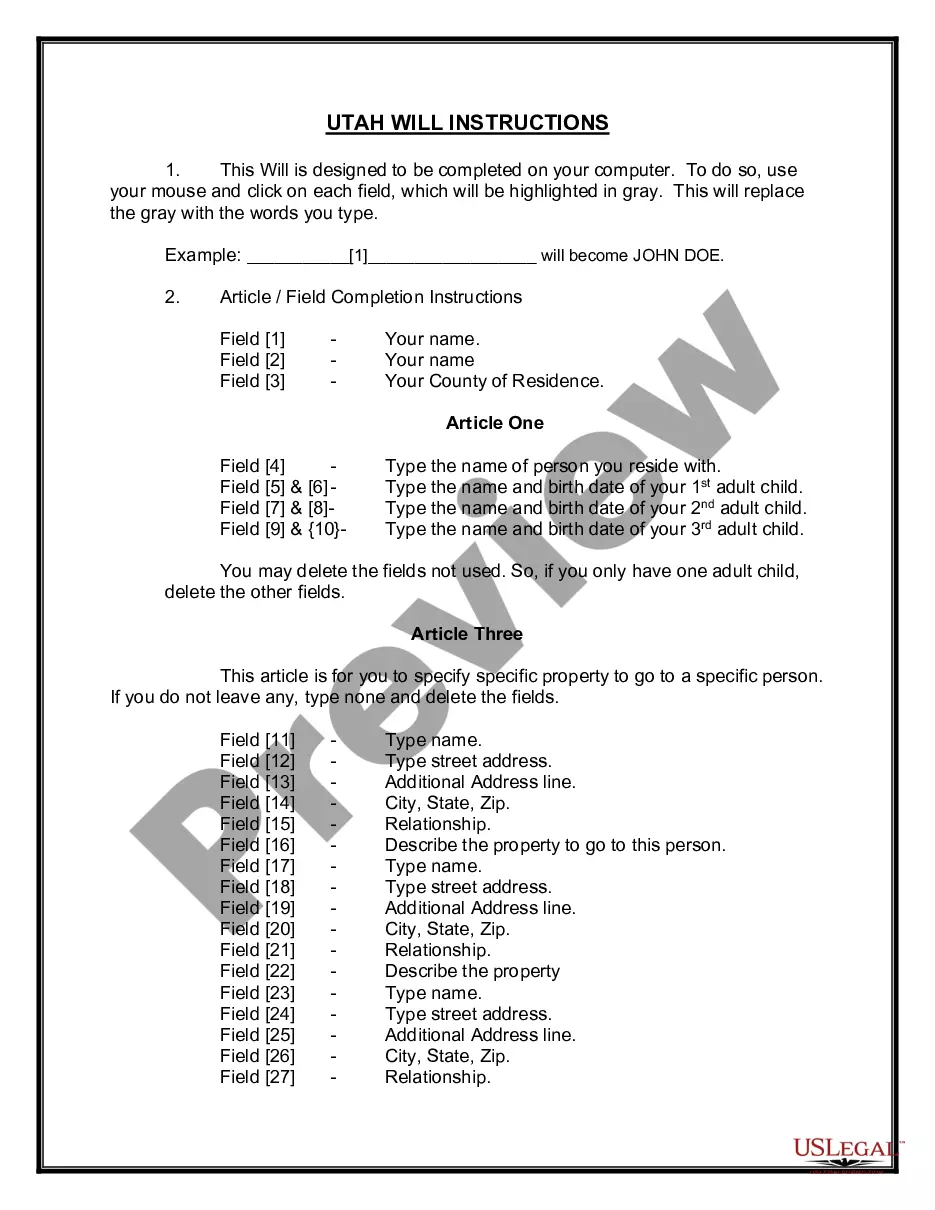
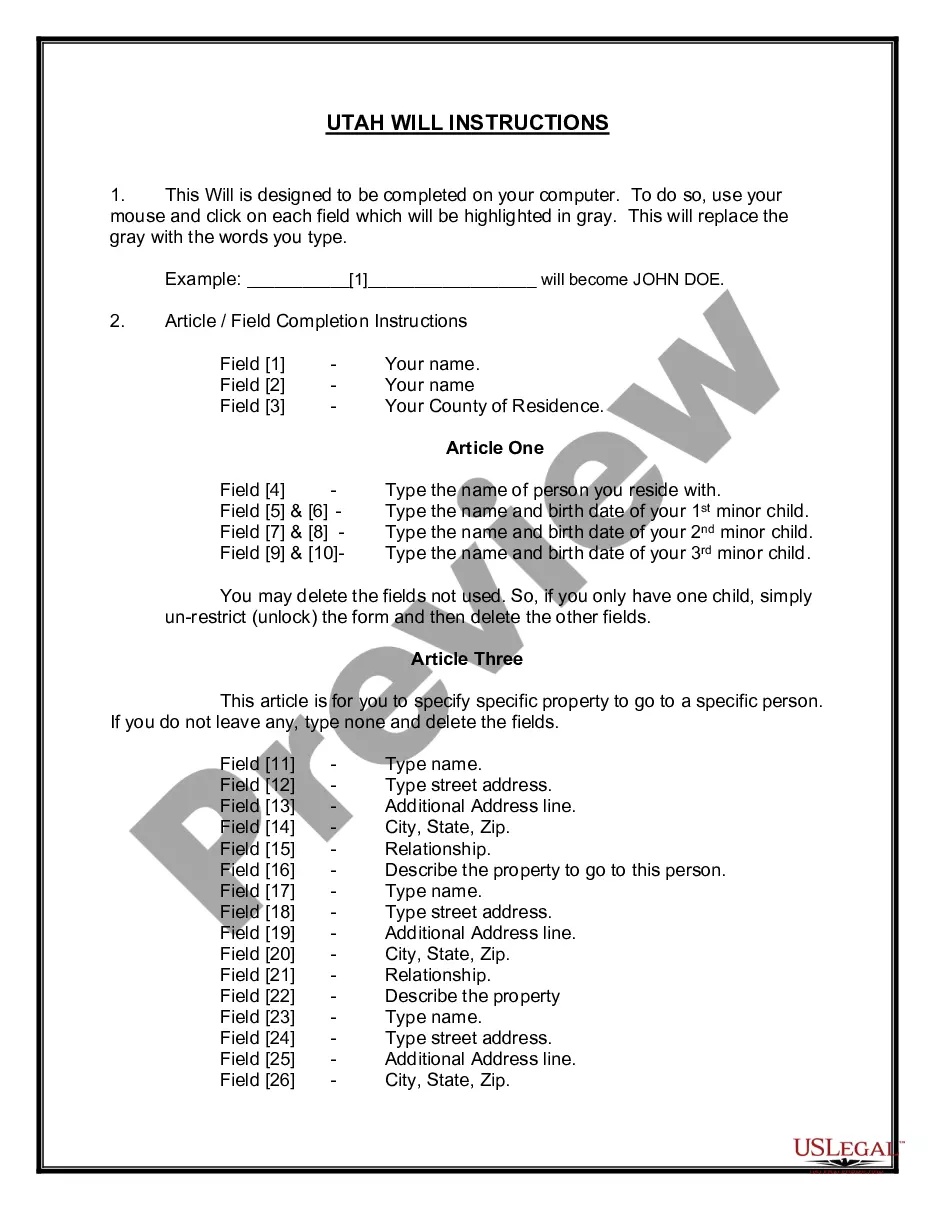
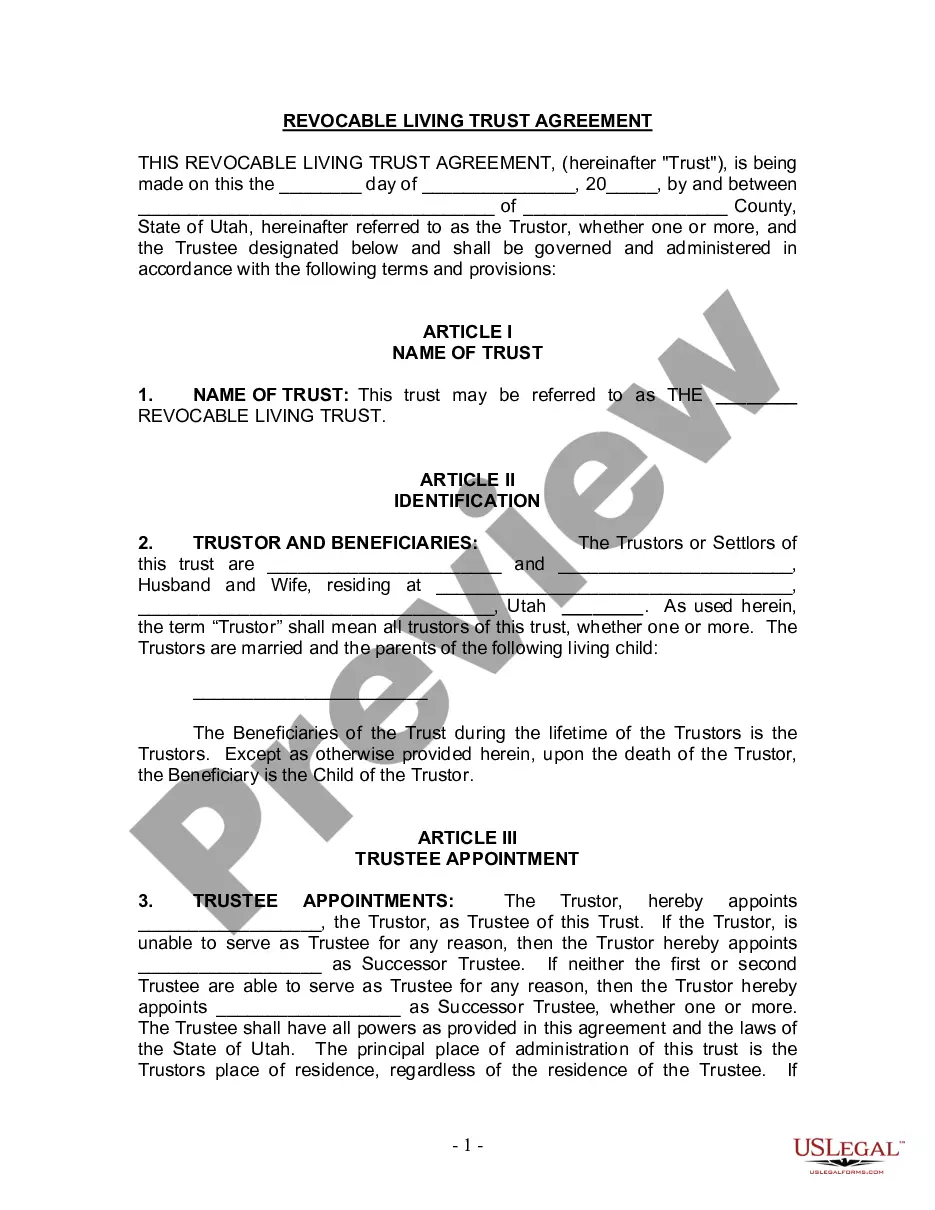
When to use this document
This form should be used when a married couple with minor children wants to create a binding agreement on how their assets will be distributed after their passing. It is particularly important in situations where both spouses wish to designate guardians for their children and ensure that their wishes regarding property distribution are honored. This form can prevent potential conflicts between surviving family members upon the death of one or both spouses.
Intended users of this form
- Married couples who share minor children.
- Couples looking to establish clear instructions for property distribution.
- Those wanting to specify guardianship arrangements for their children.
- Couples who wish to create a living trust for their children's inheritance.
How to prepare this document
- Identify the parties involved by entering the full names of each spouse.
- Specify the names and birthdates of any minor children.
- Detail specific property that each spouse wishes to leave to designated individuals or trusts.
- Select a personal representative who will execute the will and manage the estate.
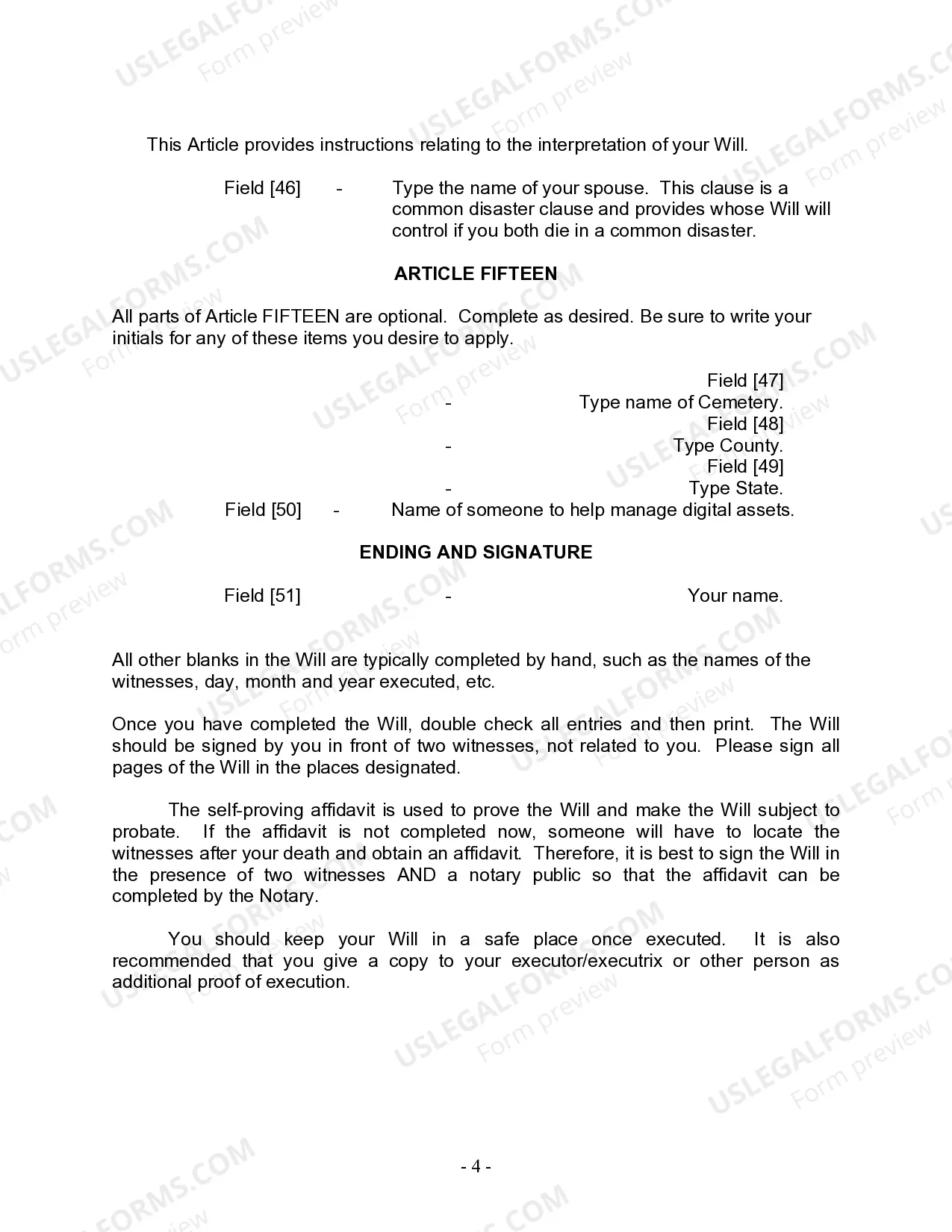
- Ensure signatures are obtained in the presence of two witnesses who are not beneficiaries.
- If applicable, include a self-proving affidavit to streamline the probate process.
Notarization requirements for this form
Yes, this form must be notarized to be legally valid. Having a notary public can help verify the identities of the signers and ensure that the will is executed correctly. US Legal Forms offers integrated online notarization, available twenty-four seven, allowing you to complete this step securely via video call without needing to travel.
Get your form ready online
Our built-in tools help you complete, sign, share, and store your documents in one place.
Make edits, fill in missing information, and update formatting in US Legal Forms—just like you would in MS Word.
Download a copy, print it, send it by email, or mail it via USPS—whatever works best for your next step.
Sign and collect signatures with our SignNow integration. Send to multiple recipients, set reminders, and more. Go Premium to unlock E-Sign.
If this form requires notarization, complete it online through a secure video call—no need to meet a notary in person or wait for an appointment.
We protect your documents and personal data by following strict security and privacy standards.

Make edits, fill in missing information, and update formatting in US Legal Forms—just like you would in MS Word.

Download a copy, print it, send it by email, or mail it via USPS—whatever works best for your next step.

Sign and collect signatures with our SignNow integration. Send to multiple recipients, set reminders, and more. Go Premium to unlock E-Sign.

If this form requires notarization, complete it online through a secure video call—no need to meet a notary in person or wait for an appointment.

We protect your documents and personal data by following strict security and privacy standards.
Common mistakes to avoid
- Failing to update the wills after major life changes, such as the birth of additional children or a change in marital status.
- Not having the wills signed in front of the required number of witnesses.
- Leaving out specific provisions for guardianship, potentially leading to disputes.
- Overlooking state-specific signing requirements, which can affect the validity of the will.
Advantages of online completion
- Convenience of completing the forms anytime and anywhere with internet access.
- Editability allows for easy updates as personal circumstances change.
- Access to legal templates crafted by licensed attorneys, ensuring compliance with relevant laws.
- Streamlined process helps save time compared to traditional legal consultations.
Legal use & context
- This form serves as a legal instrument to clearly outline the wishes of both spouses regarding their estate.
- It minimizes the potential for disputes among heirs by providing clear instructions.
- Mutual wills are recognized in courts, simplifying the probate process after one or both spouses pass away.
What to keep in mind
- The Mutual Wills Package for Married Couples with Minor Children is essential for couples wanting to ensure effective estate management.
- This form includes critical components like property specifications, trusts, and guardianship details to protect minor children.
- Legal compliance through appropriate appointees and witness signatures is vital for the will's enforceability.
Looking for another form?
Form popularity
FAQ
You can make your own will in Utah, using Nolo's do-it-yourself will software or online will programs. However, you may want to consult a lawyer in some situations. For example, if you think that your will might be contested or if you want to disinherit your spouse, you should talk with an attorney.
No, in Utah, you do not need to notarize your will to make it legal. However, Utah allows you to make your will "self-proving" and you'll need to go to a notary if you want to do that. A self-proving will speeds up probate because the court can accept the will without contacting the witnesses who signed it.
Under Utah law, a will must be filed with the court with reasonable promptness after the death of the testator. Utah Code § 75-2-902. So, after you pass away, your will should be filed in your local probate court by the person named to be your personal representative (also called an executor or administrator).
A will lasts forever unless the testator revokes it or other conditions are met. Immediately after someone creates it, the language takes effect in that, if you die the next day, your personal representative ensures that your wishes are carried out.
Wills Don't Expire There's no expiration date on a will. If a will was validly executed 40 years ago, it's still valid.
Yes. Handwritten (holographic) wills are valid in Utah if they meet certain requirements. What do I need in a holographic will? A holographic will should be entirely in your own handwriting.
Witnesses: A Utah will must be signed by at least two witnesses, each of whom have signed within a reasonable time after witnessing the signing of the will or the testator's acknowledgement of the signature or of the will. Writing: A Utah will must be in writing. Beneficiaries: A testator can leave property to anyone.