Utah Living Trust for Husband and Wife with One Child
Understanding this form
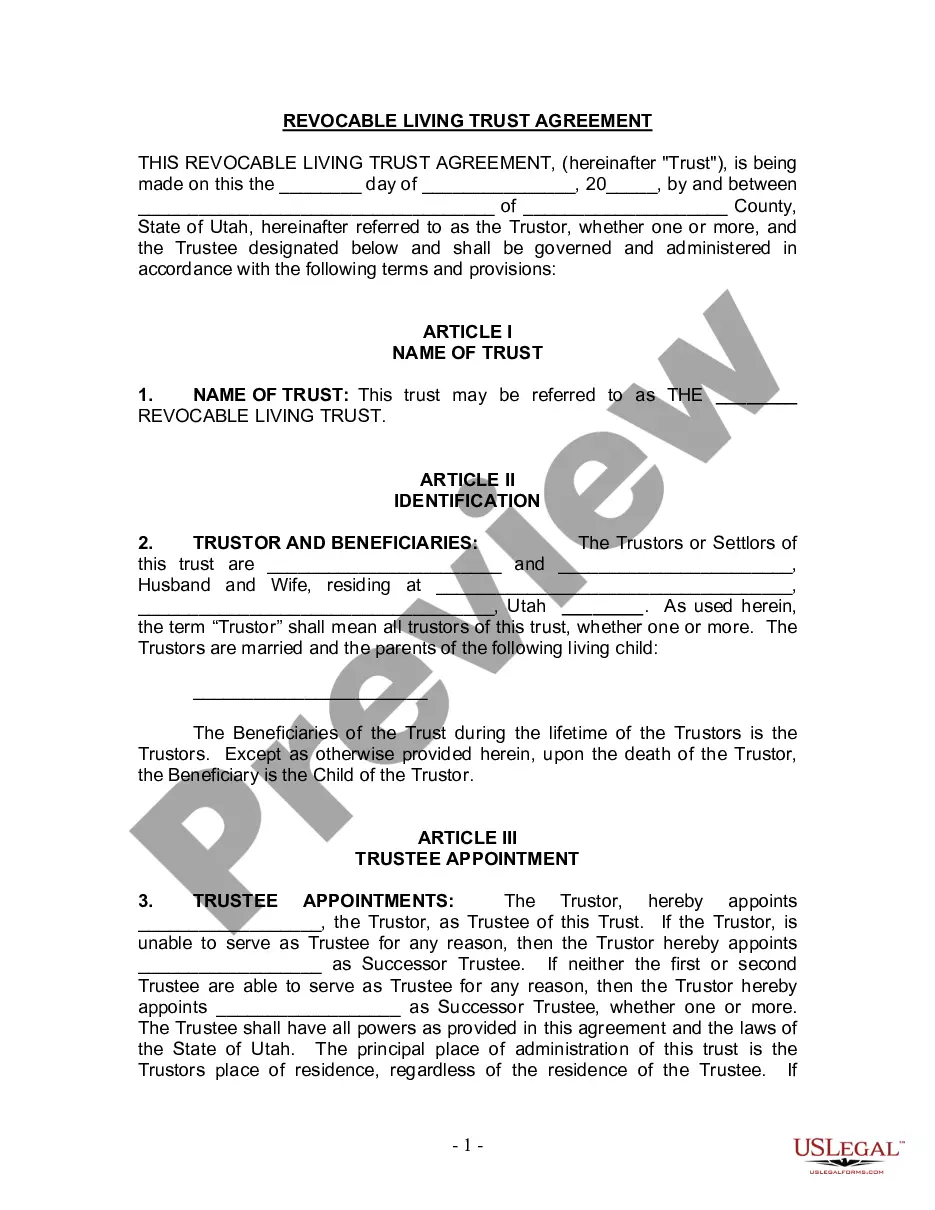
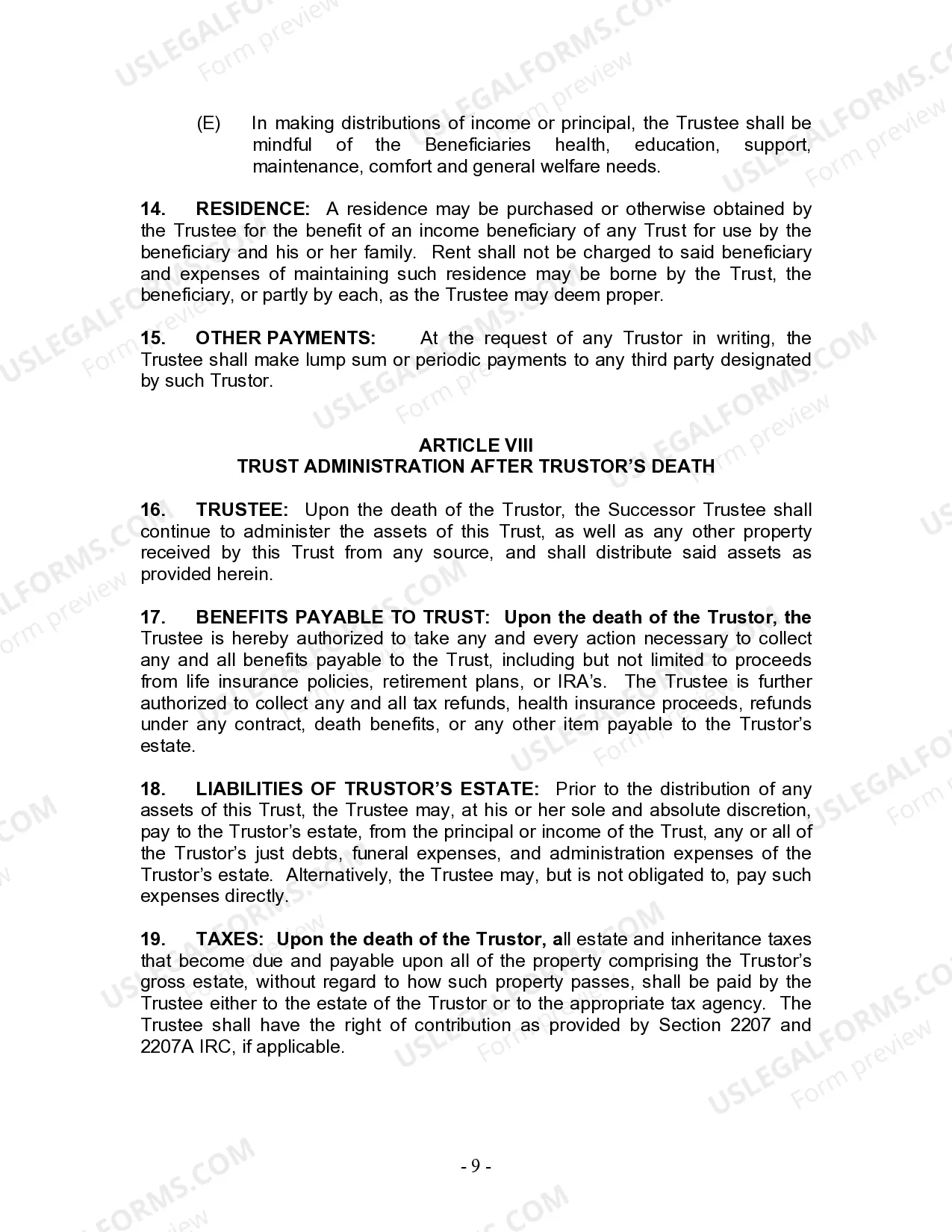
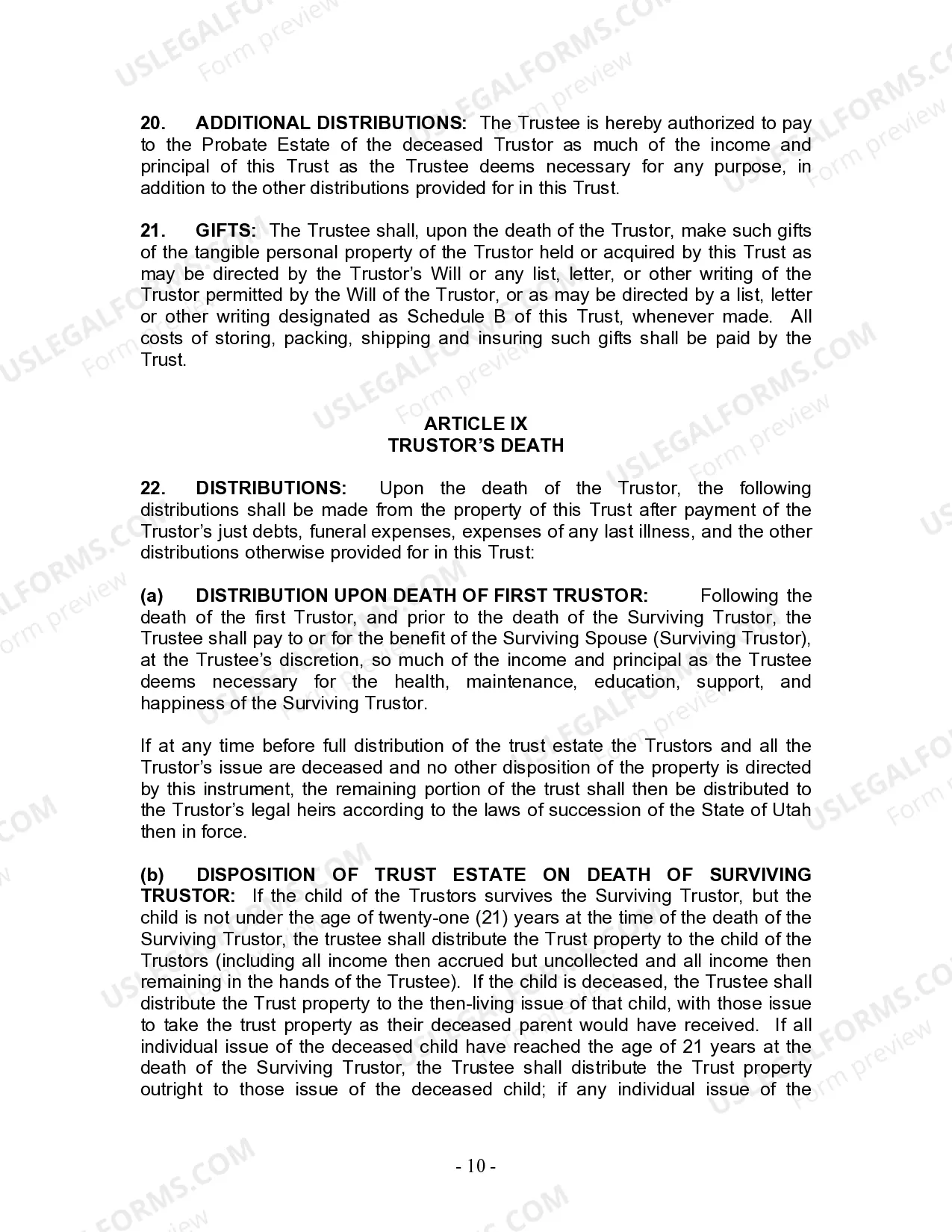
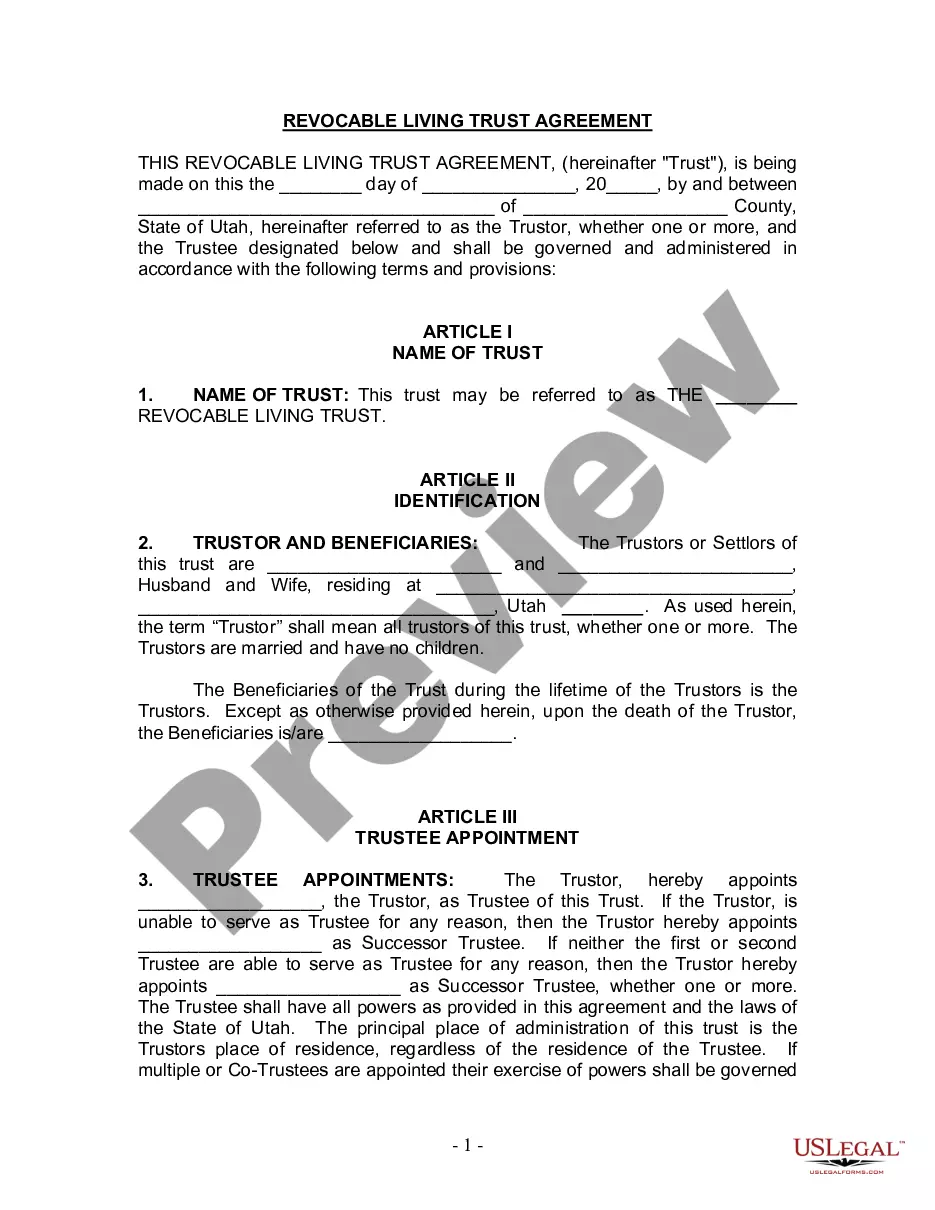
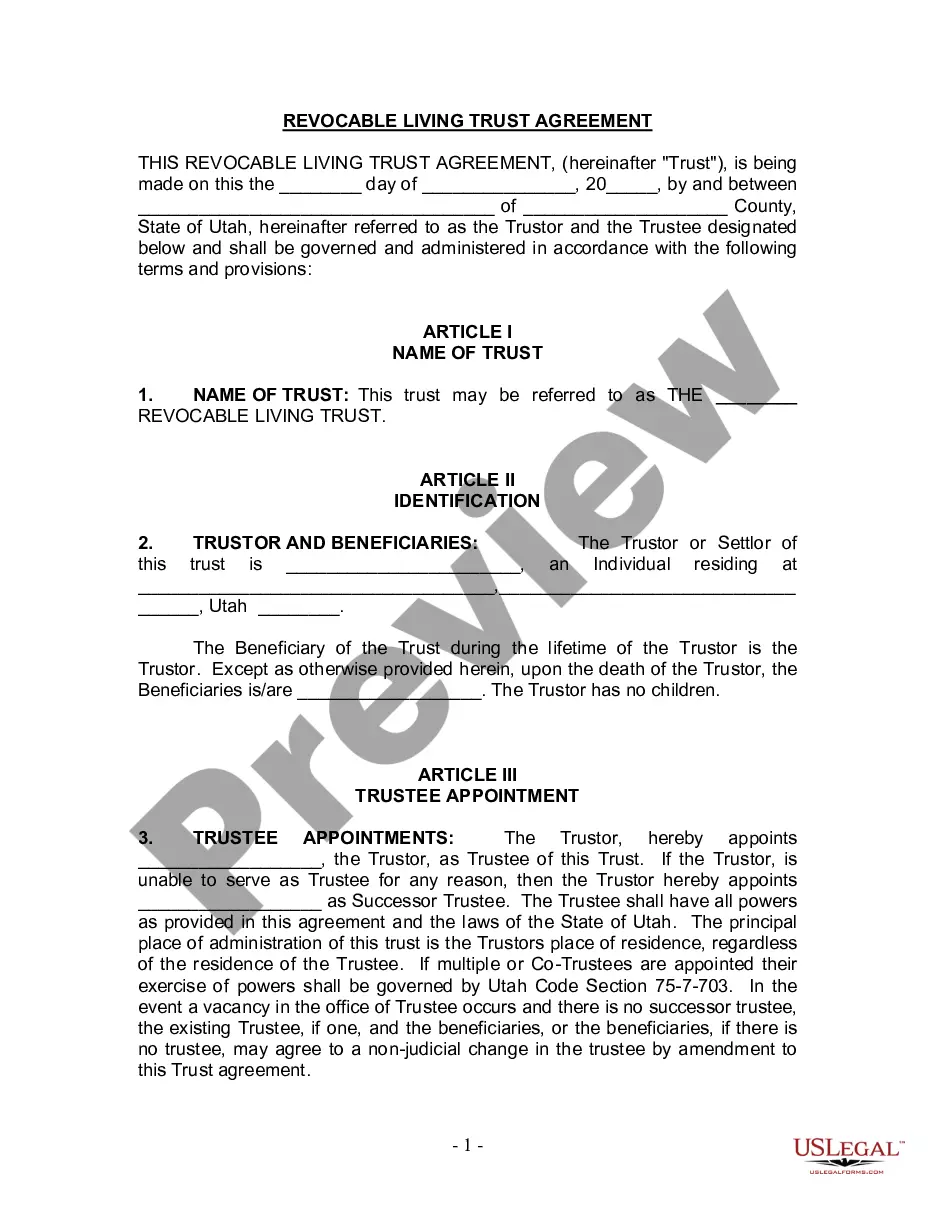
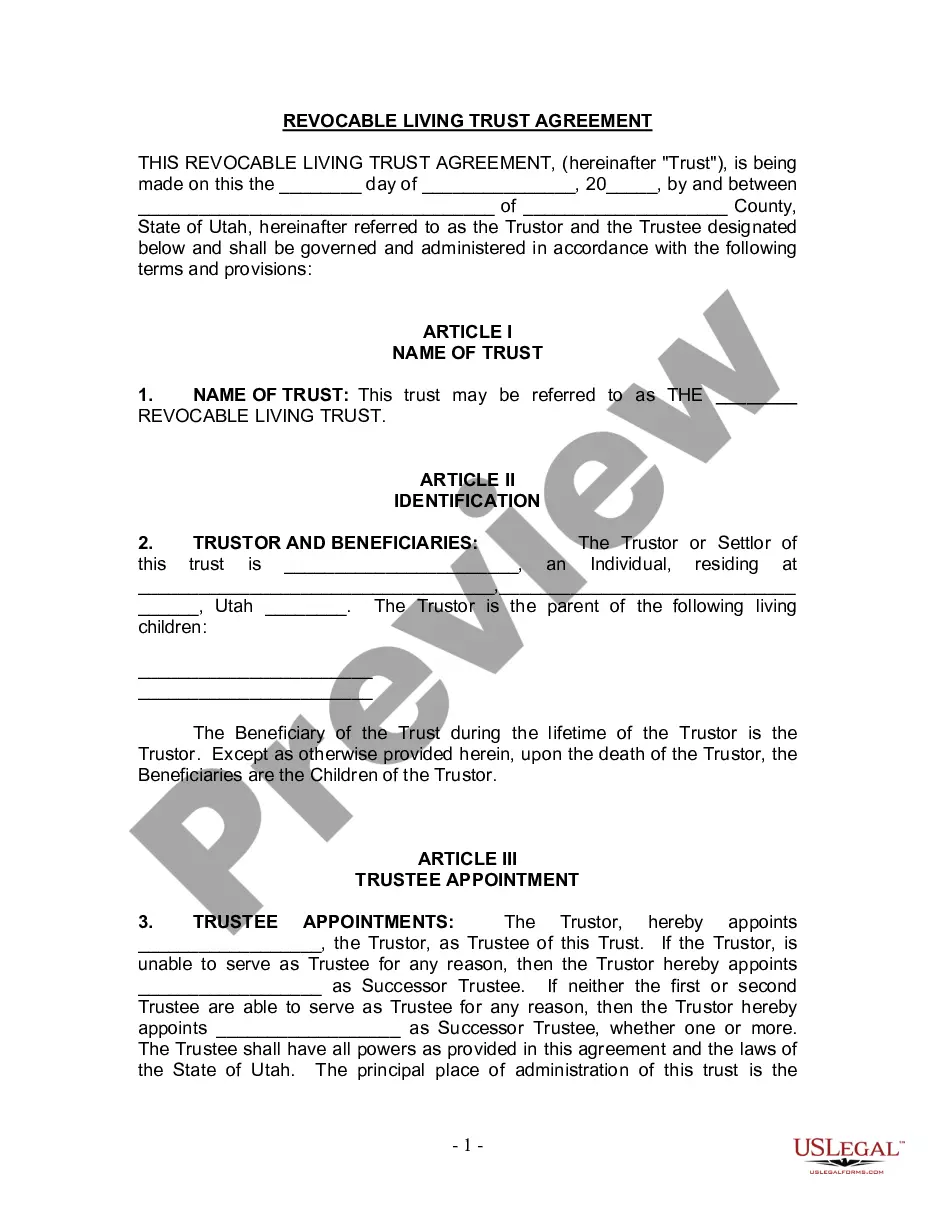
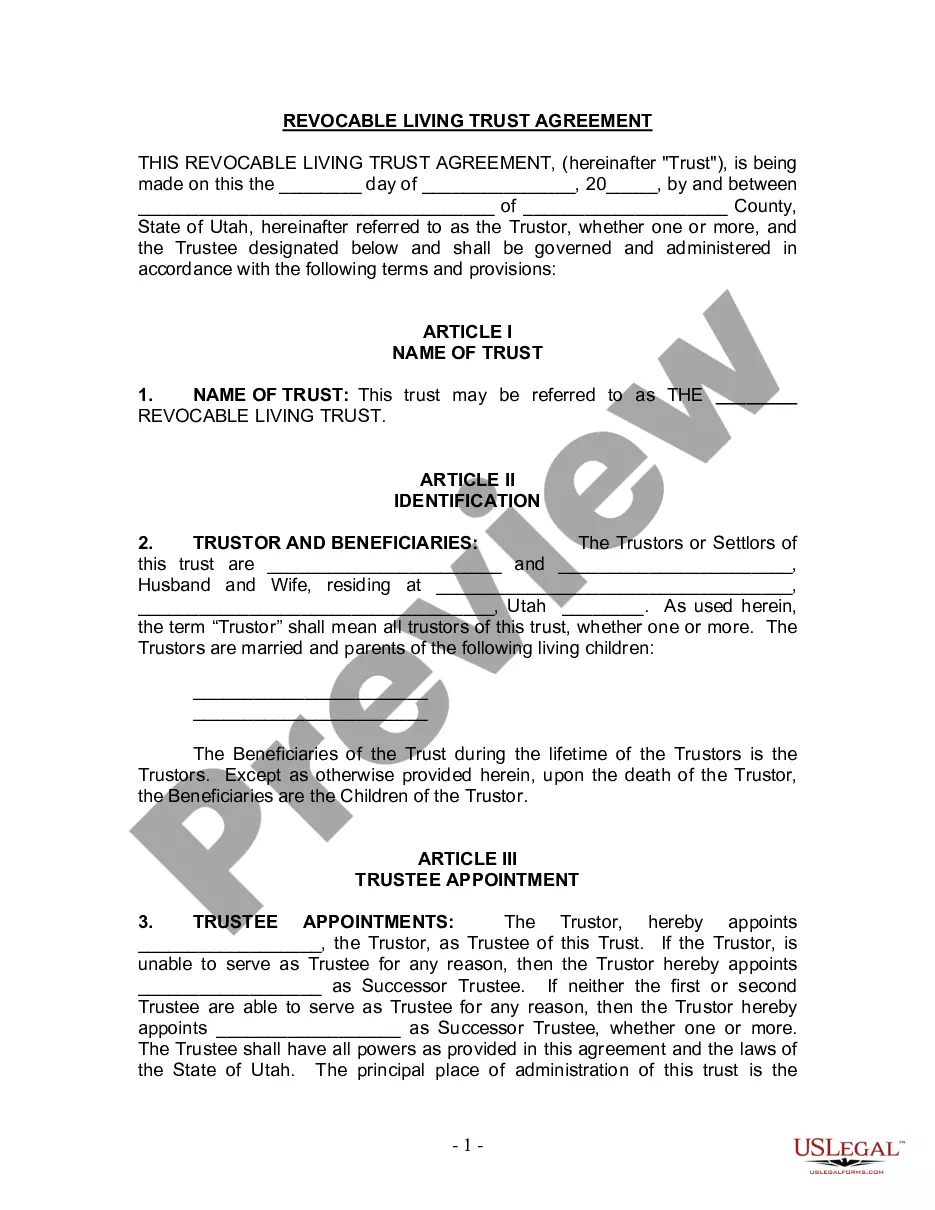
This Living Trust for Husband and Wife with One Child is a legal document that allows a married couple to manage their assets during their lifetime and specify how those assets will be distributed to their child upon their death. Unlike a last will and testament, a living trust provides the advantage of avoiding probate, ensuring a more straightforward transfer of property. This form is specifically tailored for couples in Utah who want to secure their estate planning while maintaining control over their assets while they are alive.
Key components of this form
- Name of the trust and identification of trustors (husband and wife).
- Appointment of a trustee, which can include the trustors themselves.
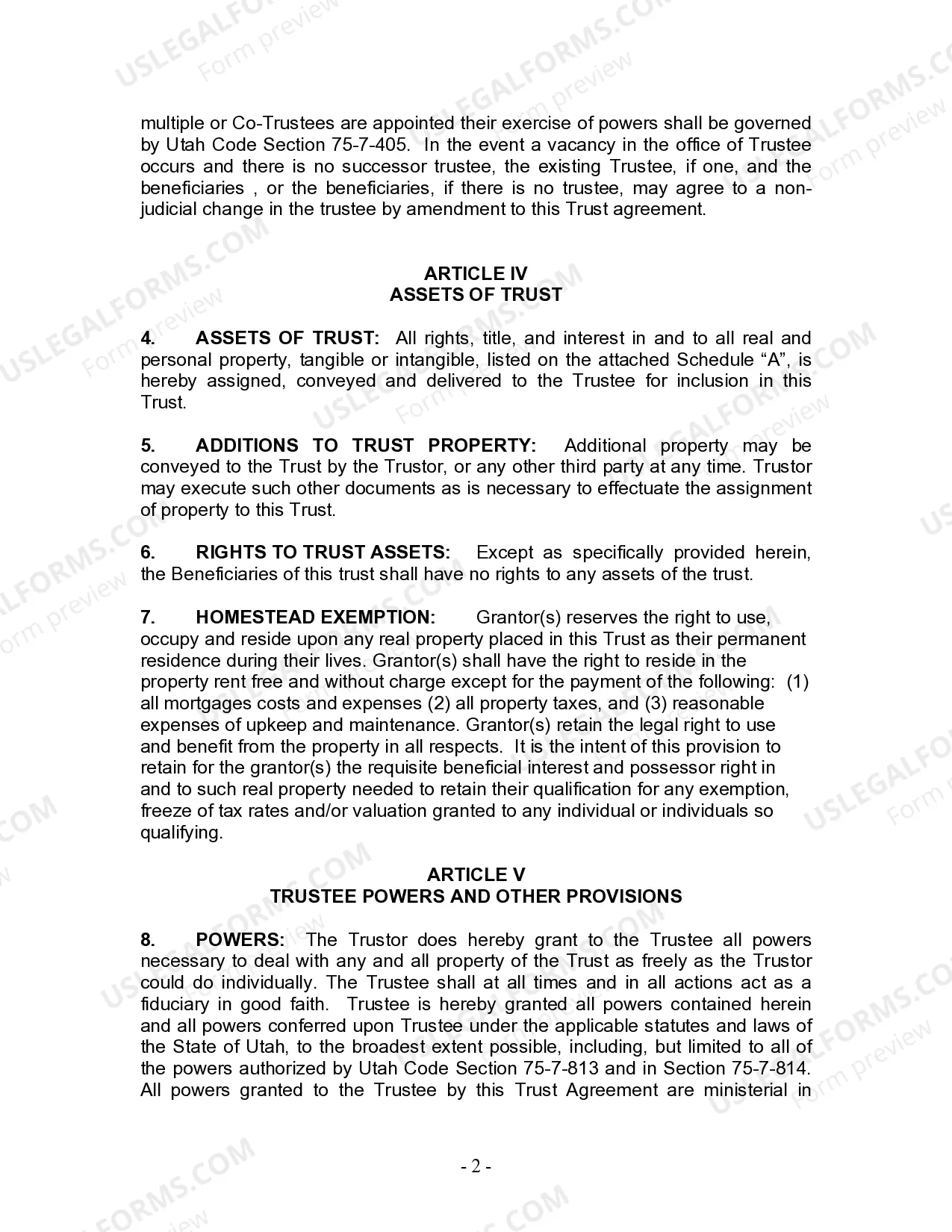
- Specifications regarding the trust property and asset allocation.
- Guidelines for distributions during the trustors' lives and after their deaths.
- Criteria for handling the trust in case of incapacity or death of the trustors.
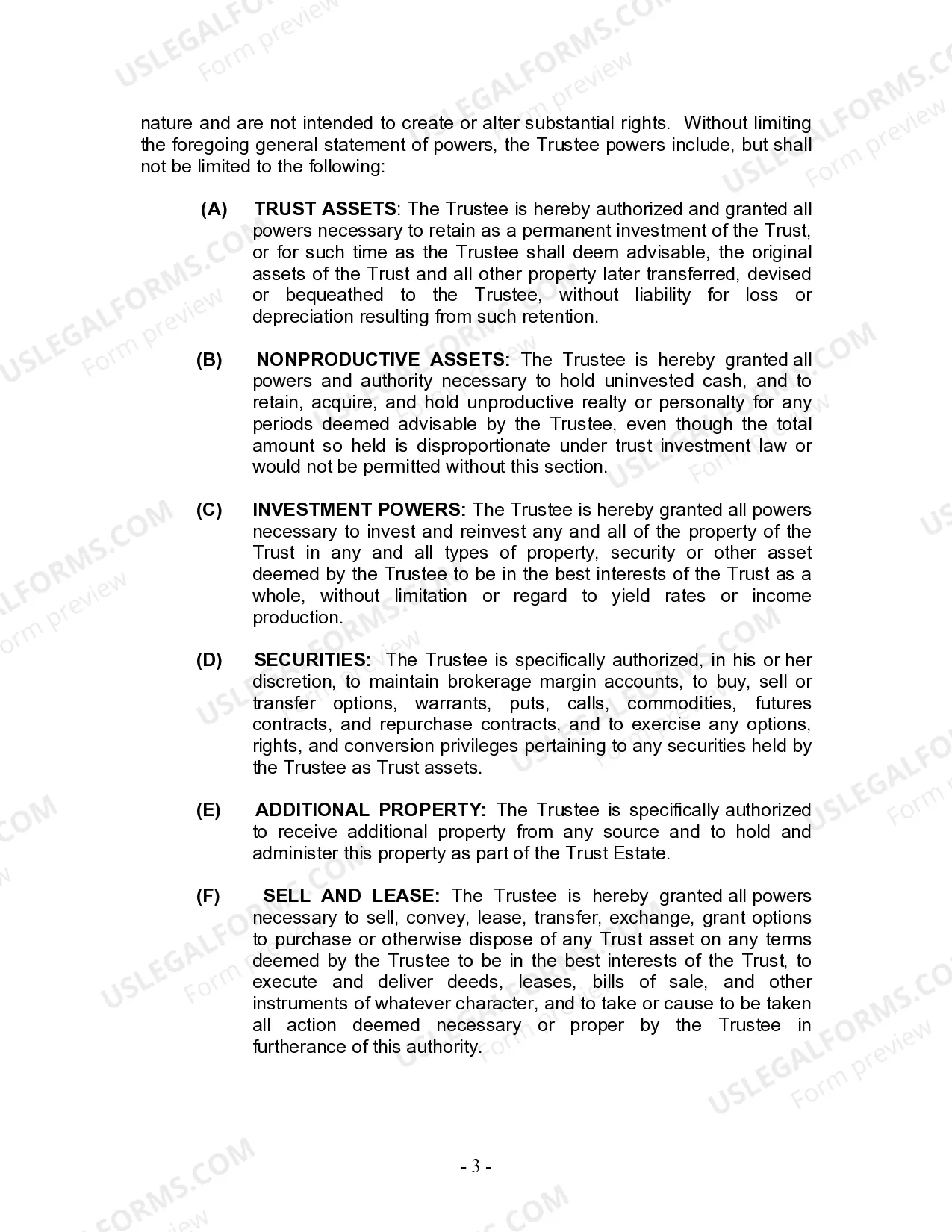
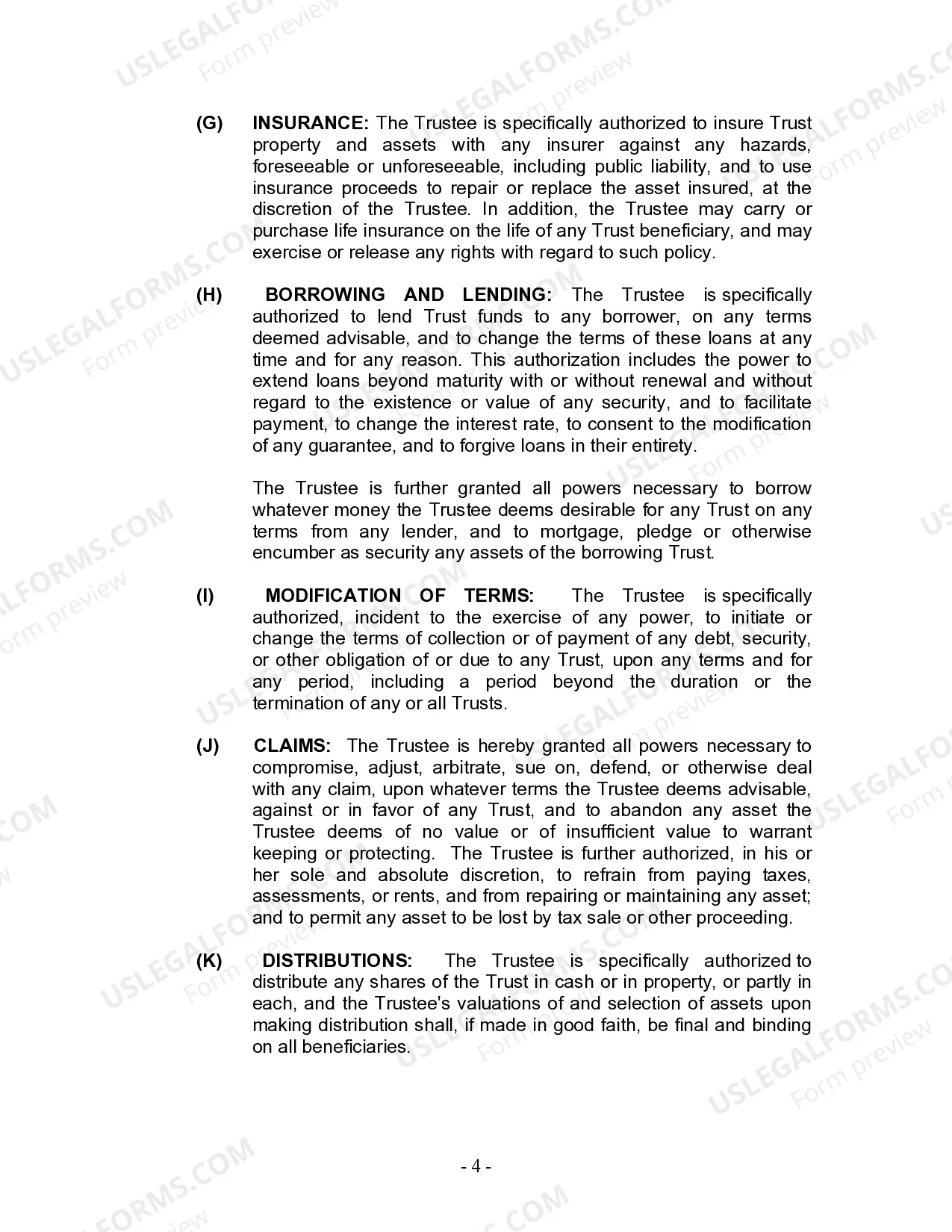
- Provisions for successor trustees and their powers.

When to use this form
This form is ideal for married couples who wish to establish a financial plan that directs how their assets will be managed during their lifetime and distributed after their death. It is particularly beneficial for couples with one child who want to ensure that their child receives their inheritance without the complications of probate. Additionally, if either spouse has concerns about potential incapacity or wishes to maintain control over their estate, this form is useful in outlining clear management and distribution guidelines.
Who this form is for
- Married couples residing in Utah with one child.
- Couples looking to avoid probate for their estate.
- Individuals who want to maintain control over their assets during their lifetime.
- Those seeking to specify clear instructions regarding their estate for future generations.
Completing this form step by step
- Identify the trustors, specifically the names of the husband and wife.
- Designate the trustee, who can be one or both of the trustors.
- Detail the specific assets to be included in the trust and provide their identification.
- Specify guidelines for distributing assets during the trustors' lifetimes and after their death.
- Sign the document in the presence of a notary public if required by local regulations.
Does this document require notarization?
Notarization is required for this form to take effect. Our online notarization service, powered by Notarize, lets you verify and sign documents remotely through an encrypted video session, available 24/7.
Get your form ready online
Our built-in tools help you complete, sign, share, and store your documents in one place.
Make edits, fill in missing information, and update formatting in US Legal Forms—just like you would in MS Word.
Download a copy, print it, send it by email, or mail it via USPS—whatever works best for your next step.
Sign and collect signatures with our SignNow integration. Send to multiple recipients, set reminders, and more. Go Premium to unlock E-Sign.
If this form requires notarization, complete it online through a secure video call—no need to meet a notary in person or wait for an appointment.
We protect your documents and personal data by following strict security and privacy standards.

Make edits, fill in missing information, and update formatting in US Legal Forms—just like you would in MS Word.

Download a copy, print it, send it by email, or mail it via USPS—whatever works best for your next step.

Sign and collect signatures with our SignNow integration. Send to multiple recipients, set reminders, and more. Go Premium to unlock E-Sign.

If this form requires notarization, complete it online through a secure video call—no need to meet a notary in person or wait for an appointment.

We protect your documents and personal data by following strict security and privacy standards.
Common mistakes
- Failing to include all necessary assets in the trust documentation.
- Not properly designating a successor trustee.
- Ignoring local laws that may affect the trust's validity.
- Neglecting to update the trust after significant life changes.
Why use this form online
- Convenient access to legal documents from home.
- Editable format allows for personalized adjustments.
- Reliable resources drafted by licensed attorneys.
- Streamlined process for completing and managing documentation.
Looking for another form?
Form popularity
FAQ
Separate trusts may offer better protection from creditors, if this is a concern. For example, at the death of the first spouse, the deceased spouse's trust becomes irrevocable, which makes it harder to access by creditors. And yet the surviving spouse can still access it for income and other needs.
At the time of your death, the assets in your family trust are protected by the exemption, and the assets in your marital trust are protected by the marital deduction. No estate taxes are due.
Q: Can a person have more than one trust? A: Yes, it is not that uncommon for a person to be the beneficiary of multiple trusts. However, caution should be used. Trusts come in many shapes and sizes and can serve multiple purposes and can be established by you or by someone else for your benefit.
Typically, when a married couple utilizes a Revocable Living Trust based estate plan, each spouse creates and funds his or her own separate Revocable Living Trust. This results in two trusts. However, in the right circumstances, a married couple may be better served by creating a single Joint Trust.
To be clear, yes, you may have one, two, or more living trusts. As with all estate planning questions, though, whether or not multiple trusts make sense for you depends on your circumstances.
Q: Can a person have more than one trust? A: Yes, it is not that uncommon for a person to be the beneficiary of multiple trusts. However, caution should be used. Trusts come in many shapes and sizes and can serve multiple purposes and can be established by you or by someone else for your benefit.
In California, surviving spouses already receive all of the community property upon the death of their spouse.However, creating a joint will is still an option in California, and while it might help a couple save some time and money on their estate plan, it can also lead to some complex problems.
Joint trusts are easier to fund and maintain.In a joint trust, after the death of the first spouse, the surviving spouse has complete control of the assets. When separate trusts are used, the deceased spouses' trust becomes irrevocable and the surviving spouse has limited control over assets.