Utah Special or Limited Power of Attorney for Real Estate Sales Transaction By Seller
Overview of this form
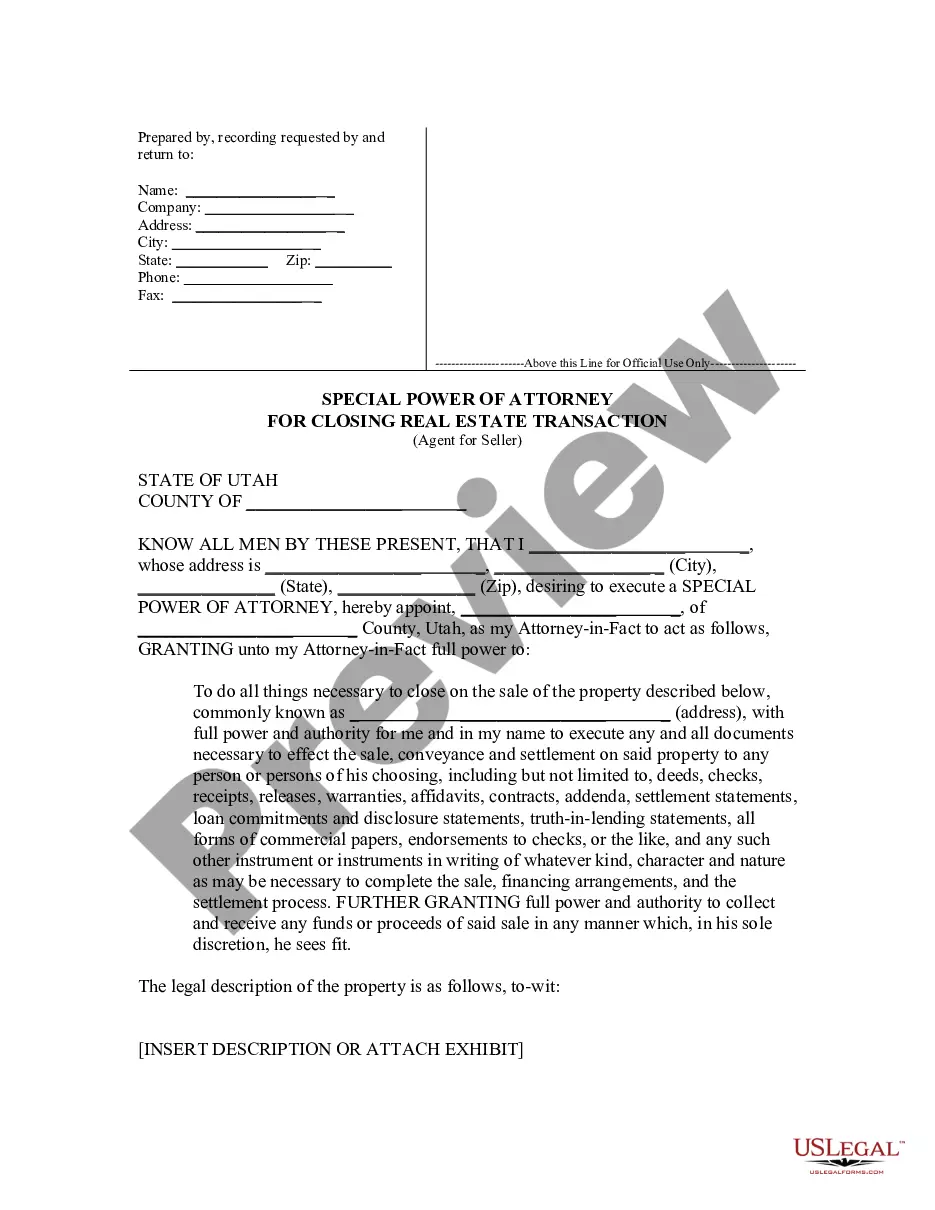
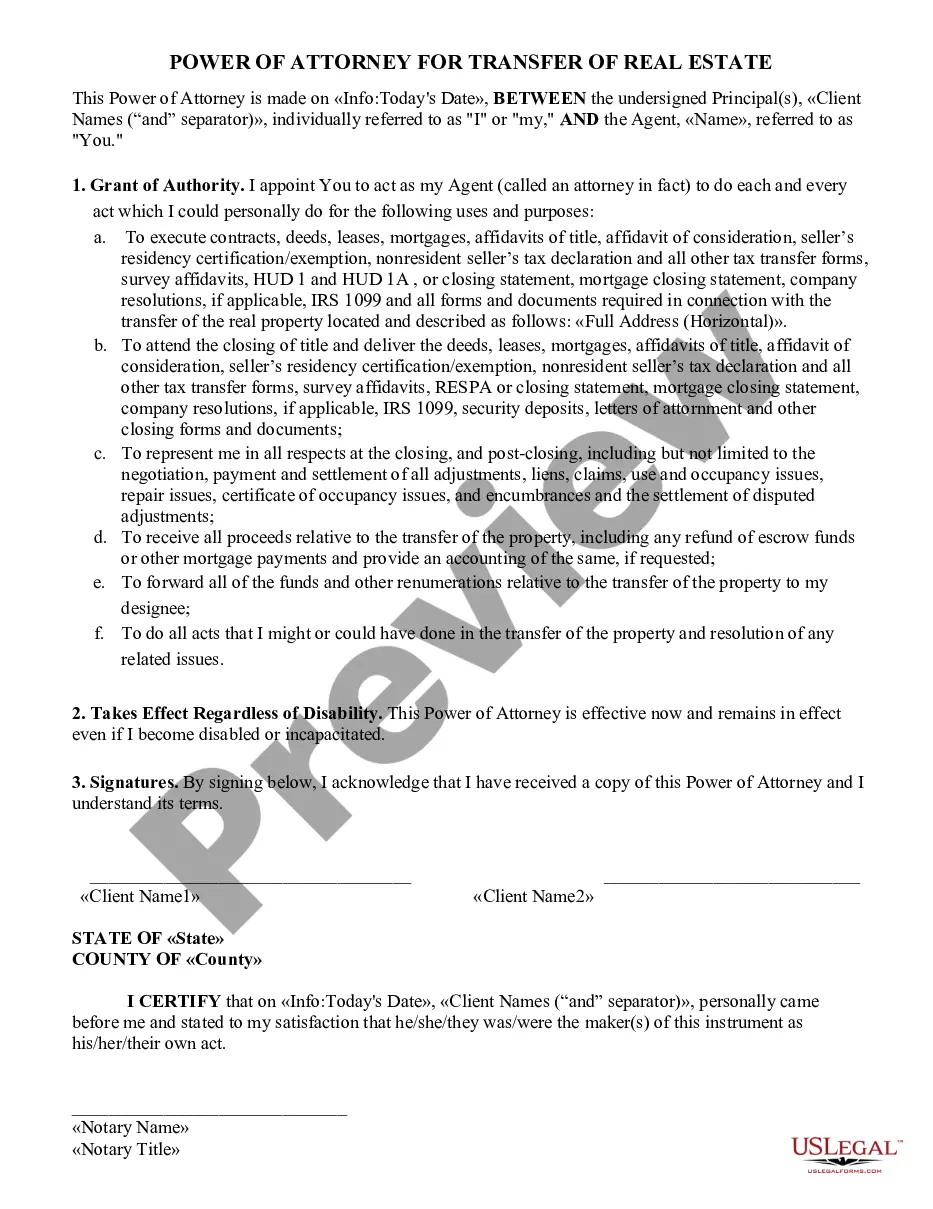
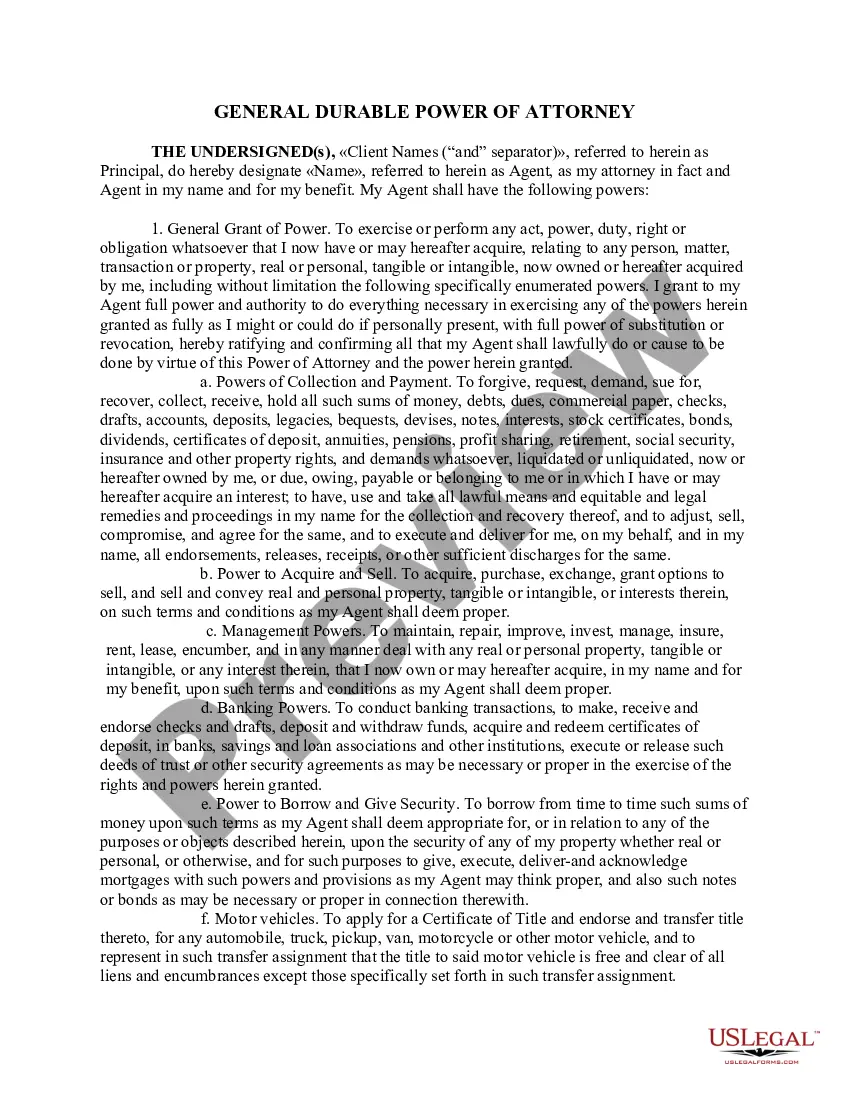
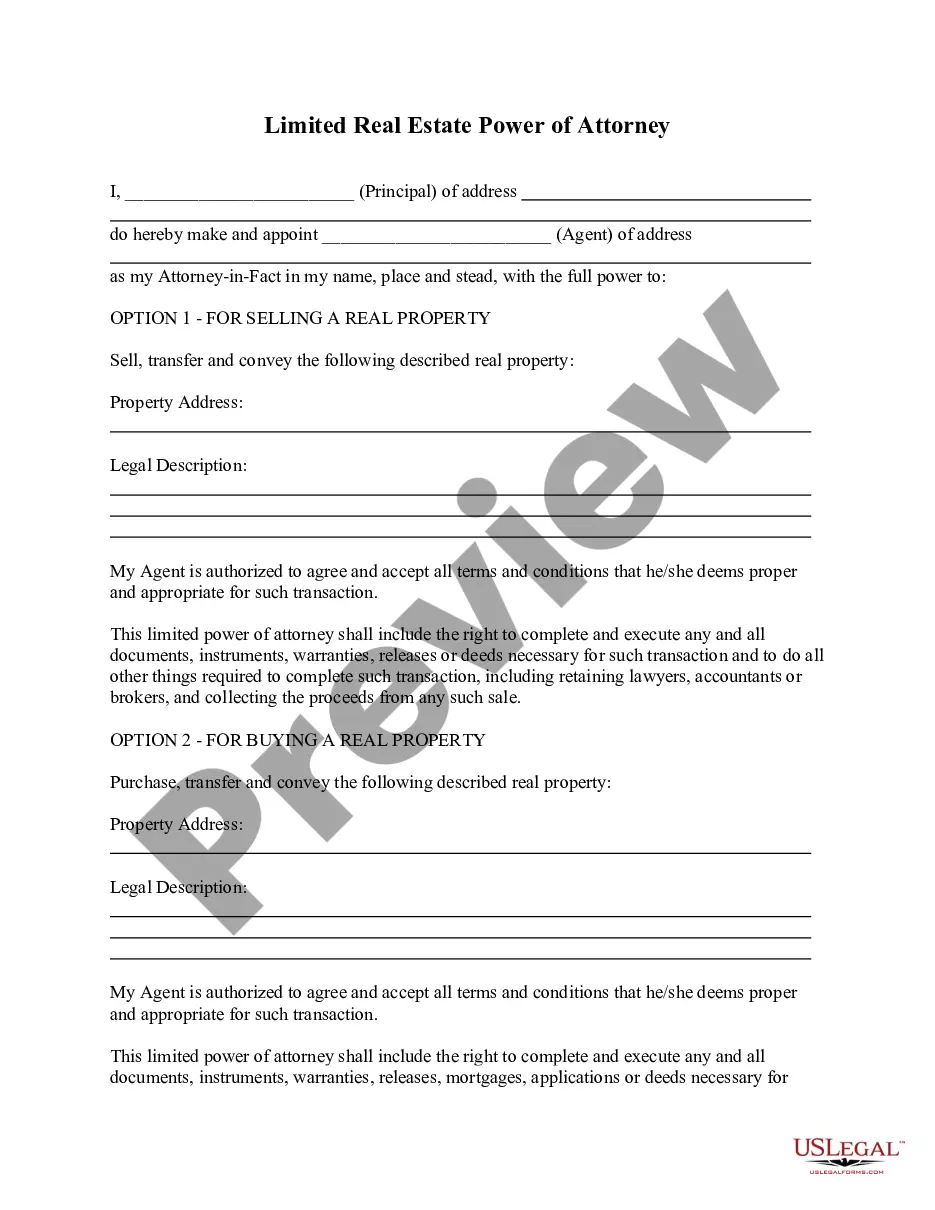
The Special or Limited Power of Attorney for Real Estate Sales Transaction By Seller is a legal document that allows a seller to appoint an attorney-in-fact to handle the sale of their real estate property. This specific form grants the agent the authority to manage all aspects of the real estate transaction, including signing necessary documents on behalf of the seller. Unlike a general power of attorney, which grants broader powers, this form is limited specifically to real estate transactions, making it suitable for sellers who need assistance during the sale process.
What’s included in this form
- Principal details: Name and address of the seller granting authority.
- Attorney-in-fact: Name and details of the person appointed to act on behalf of the seller.
- Property information: Description and address of the real estate being sold.
- Powers granted: Specific powers including authority to execute documents, collect funds, and manage the sale.
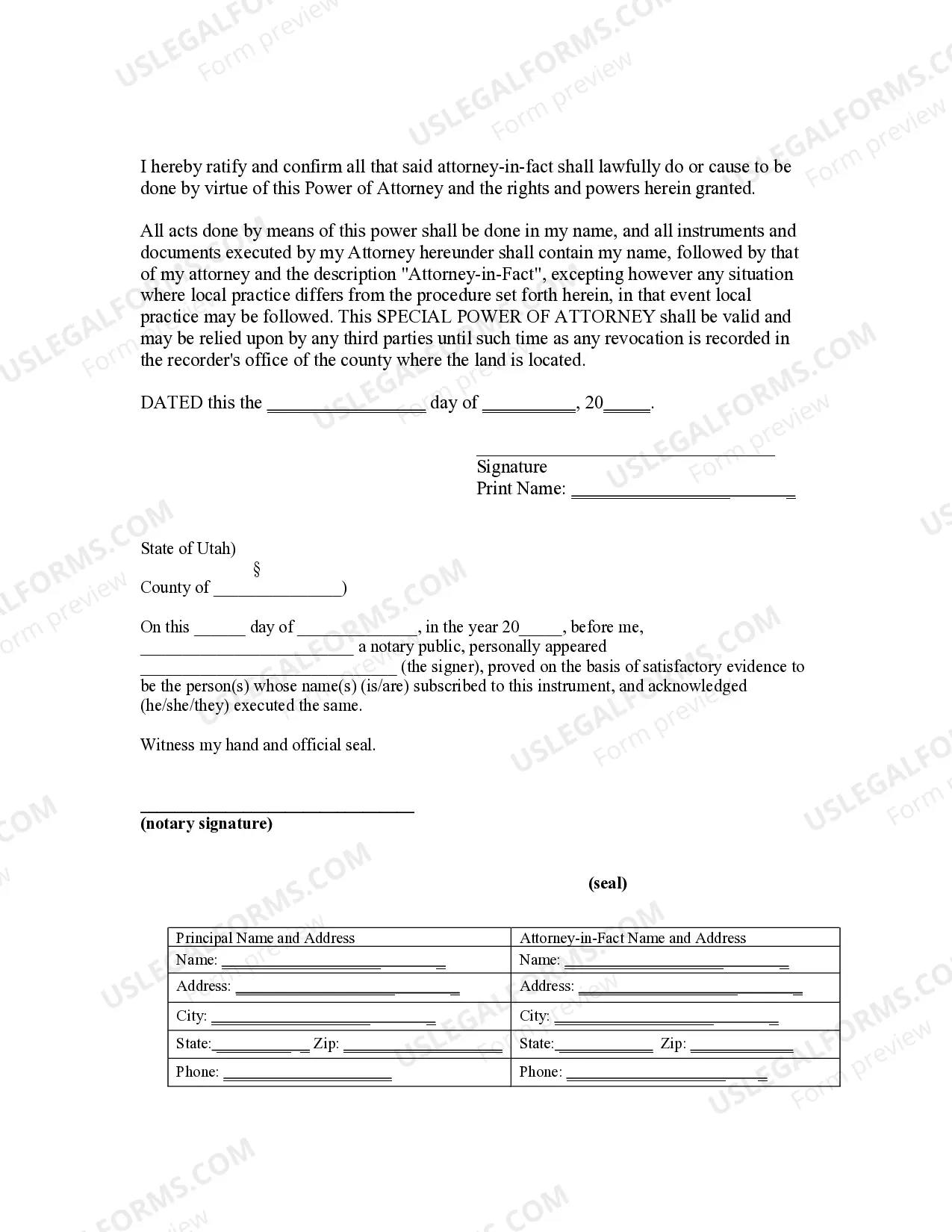
- Notary acknowledgment: Signature line and notary section for legal validation.
When to use this form
This form is essential when a property seller cannot be present to finalize the sale of their real estate. For instance, it may be necessary if the seller is out of state or unable to attend the closing due to personal circumstances. It ensures that the sale can proceed smoothly while enabling the appointed agent to act formally on the seller's behalf.
Intended users of this form
- Property sellers who require representation during a real estate transaction.
- Individuals who are unable to attend the closing but wish to authorize someone to manage the sale.
- Contractors or real estate professionals acting on behalf of a seller in a specific transaction.
How to complete this form
- Identify the parties: Fill in the names and addresses of both the seller and the attorney-in-fact.
- Specify the property: Clearly describe the real estate being sold, including the address and legal details.
- Authorize powers: Grant the attorney-in-fact the specific powers necessary to complete the sale.
- Sign and date: The seller must sign and date the document, ensuring the date is recorded correctly.
- Notarization: Arrange for the notarization of the form to validate the authority granted.
Notarization requirements for this form
This form must be notarized to be legally valid. US Legal Forms provides secure online notarization powered by Notarize, allowing you to complete the process through a verified video call.
Get your form ready online
Our built-in tools help you complete, sign, share, and store your documents in one place.
Make edits, fill in missing information, and update formatting in US Legal Forms—just like you would in MS Word.
Download a copy, print it, send it by email, or mail it via USPS—whatever works best for your next step.
Sign and collect signatures with our SignNow integration. Send to multiple recipients, set reminders, and more. Go Premium to unlock E-Sign.
If this form requires notarization, complete it online through a secure video call—no need to meet a notary in person or wait for an appointment.
We protect your documents and personal data by following strict security and privacy standards.

Make edits, fill in missing information, and update formatting in US Legal Forms—just like you would in MS Word.

Download a copy, print it, send it by email, or mail it via USPS—whatever works best for your next step.

Sign and collect signatures with our SignNow integration. Send to multiple recipients, set reminders, and more. Go Premium to unlock E-Sign.

If this form requires notarization, complete it online through a secure video call—no need to meet a notary in person or wait for an appointment.

We protect your documents and personal data by following strict security and privacy standards.
Common mistakes to avoid
- Failing to provide a complete legal description of the property.
- Not specifying the powers being granted to the attorney-in-fact.
- Signing the form without a notary present, if required.
- Leaving out important identifying information for either party.
Advantages of online completion
- Convenience: Complete the form from anywhere, eliminating the need for in-person visits.
- Editability: Easily modify the document as needed before finalization.
- Reliability: Ensure the form is drafted by licensed attorneys familiar with legal requirements.
Legal use & context
- This form is legally binding once signed and notarized, allowing the attorney-in-fact to act fully on behalf of the seller.
- Should be recorded with the local authorities to protect against disputes.
- Local laws may impose additional requirements or stipulations regarding the execution of power of attorney forms.
Main things to remember
- The Special or Limited Power of Attorney enables sellers to appoint an agent to handle real estate transactions.
- It's essential for sellers unable to attend closing actions personally.
- Accuracy in detailing property and powers granted is crucial for legitimacy.
Looking for another form?
Form popularity
FAQ
Name, signature, and address of the principal. Name, signature, and address of the agent. Properties and activities under the authority of the agent. Date of effect and termination of authority. Compensation to services of the agent.
The non-durable power of attorney is used only for a set period of time and usually for a particular transaction in which you grant your agent authority to act on your behalf. Once the transaction is completed, or should the principal become incapacitated during this time, the non-durable power of attorney ceases.
What's the difference between durable and general power of attorney? A general power of attorney ends the moment you become incapacitated.A durable power of attorney stays effective until the principle dies or until they act to revoke the power they've granted to their agent.
The durable power of attorney is almost always required. This instrument gives another person specific powers to sign for an individual in a real estate transaction where the exact name and description of the property is stated in the document.
General Power of Attorney. Durable Power of Attorney. Special or Limited Power of Attorney. Springing Durable Power of Attorney.
In Utah, there is a special form for making the medical power of attorney.You do not need an attorney to complete the form. The form also does not have to be notarized. You do need a disinterested witness.
In many states, notarization is required by law to make the durable power of attorney valid. But even where law doesn't require it, custom usually does. A durable power of attorney that isn't notarized may not be accepted by people with whom your attorney-in-fact tries to deal.
Remember that all of the authorized agents under the power of attorney or representatives in an estate must sign the listing agreement, disclosure documents, etc. For example, when there are two executors in an estate, then they both must sign the Listing Contract.