Maryland Complex Will with Credit Shelter Marital Trust for Large Estates
About this form
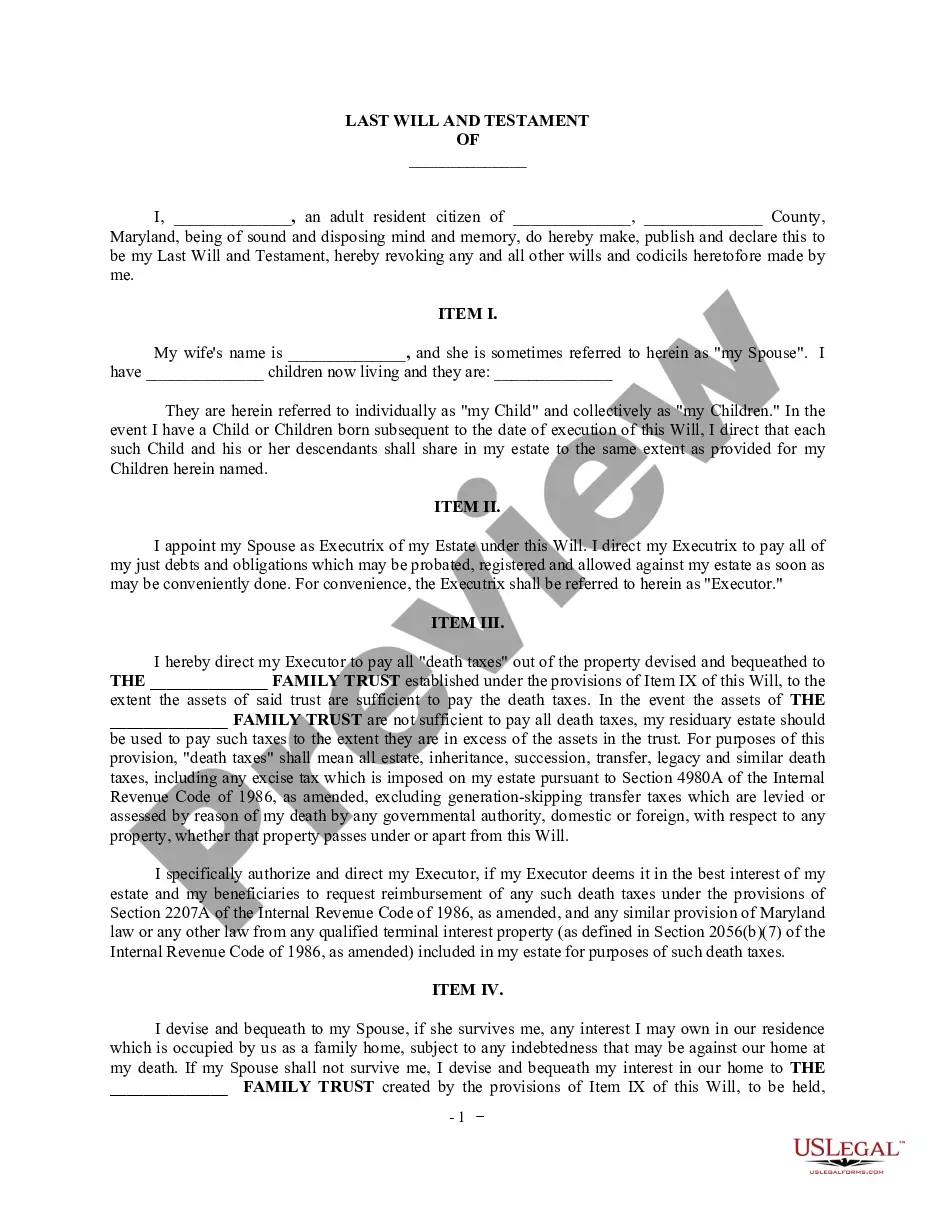
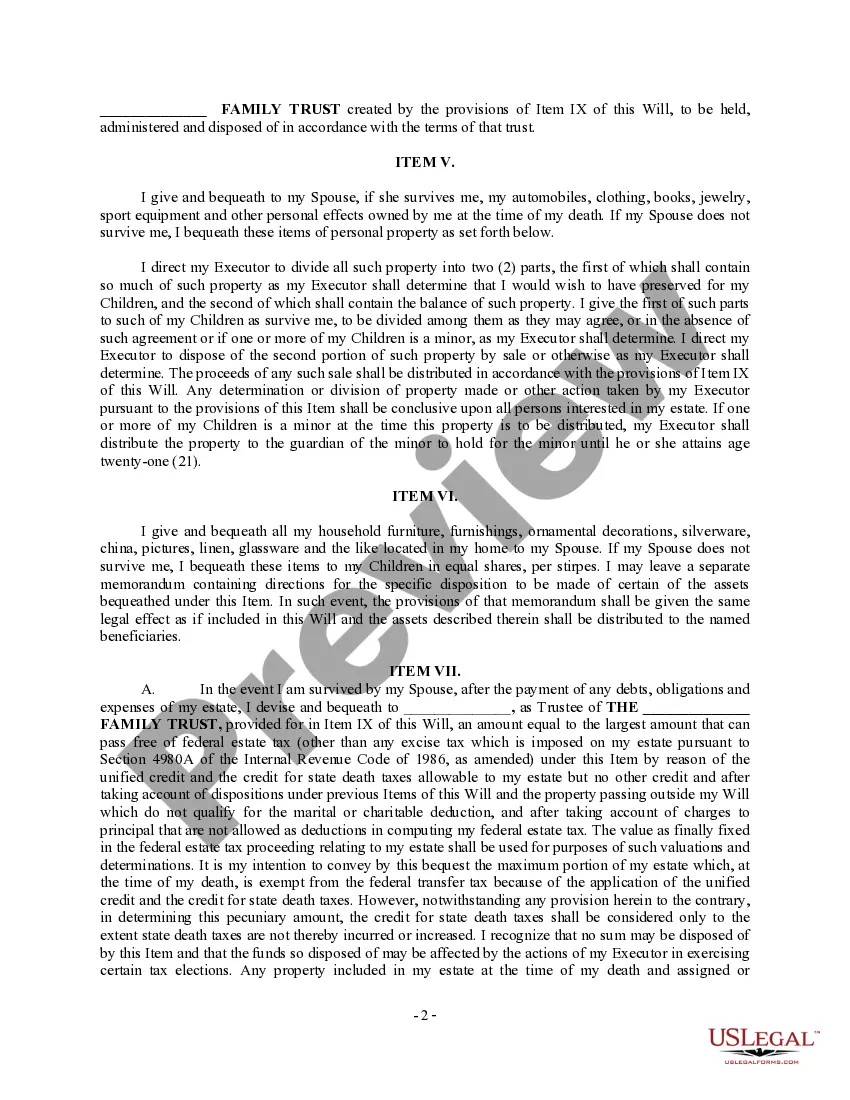
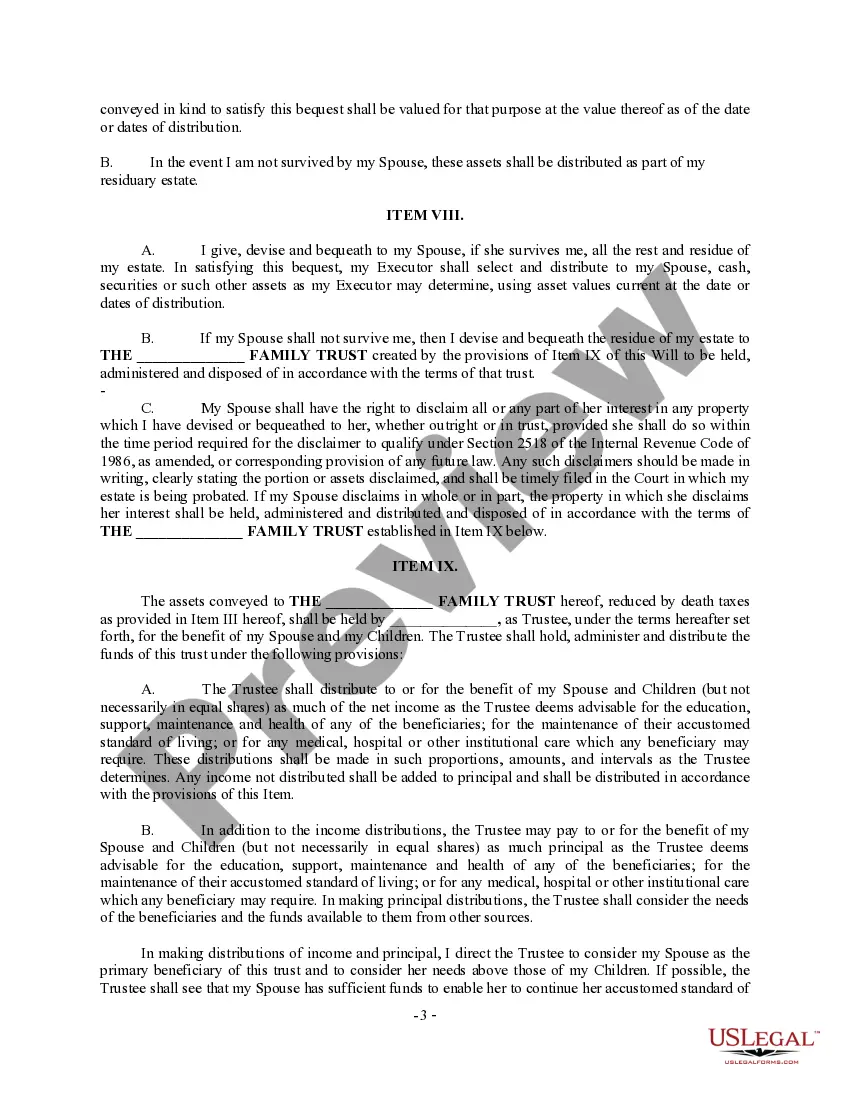
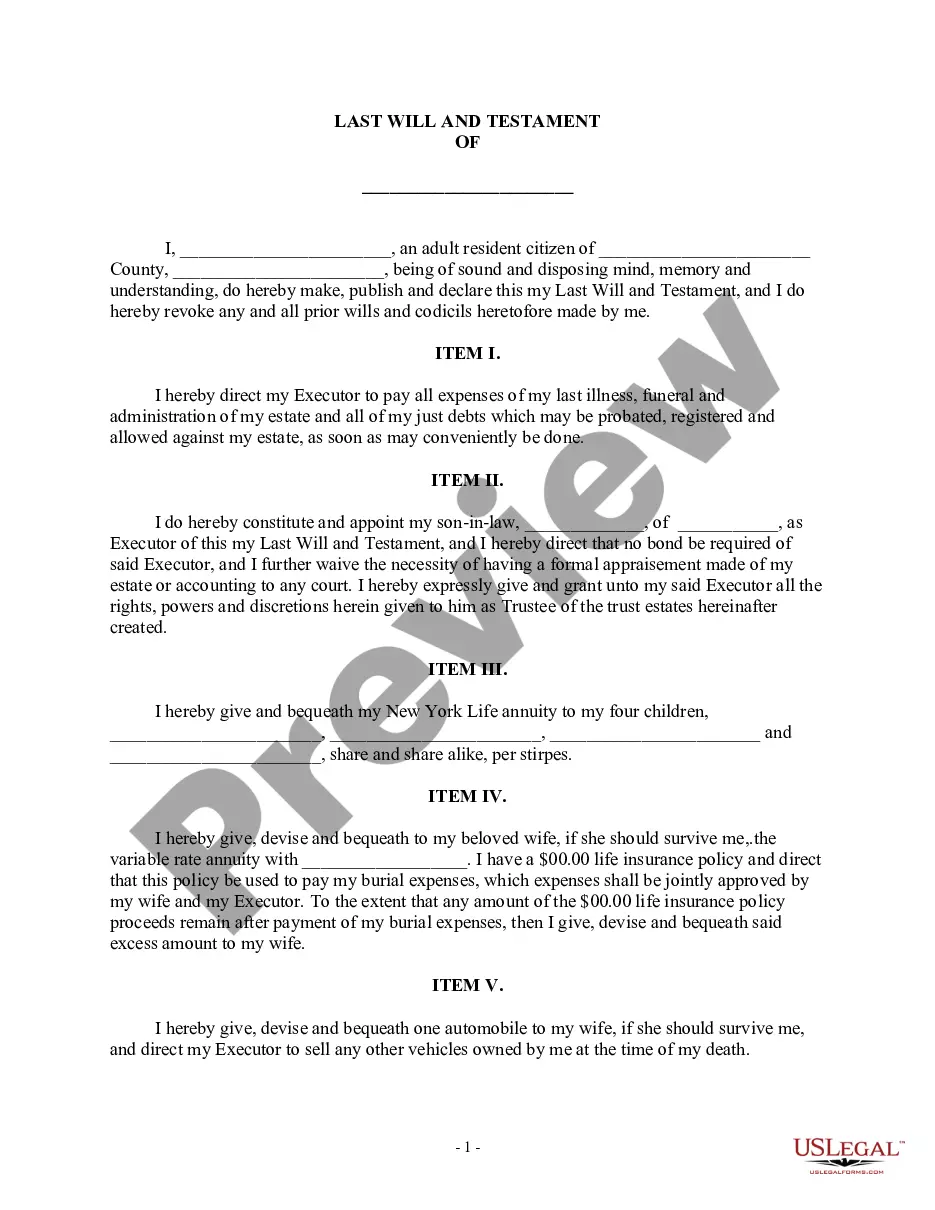
The Complex Will with Credit Shelter Marital Trust for Large Estates is a specialized legal document designed to help couples maximize the transfer of their estate while minimizing estate taxes. This form allows a testator to establish a trust that can hold a significant portion of their estate tax-free, thereby enabling a surviving spouse to pass additional assets to their heirs without tax implications. It differs from a standard will by providing more detailed tax planning strategies that are essential for larger estates.
Key components of this form
- Executor appointment: Designation of a spouse or alternate as executor to manage the estate.
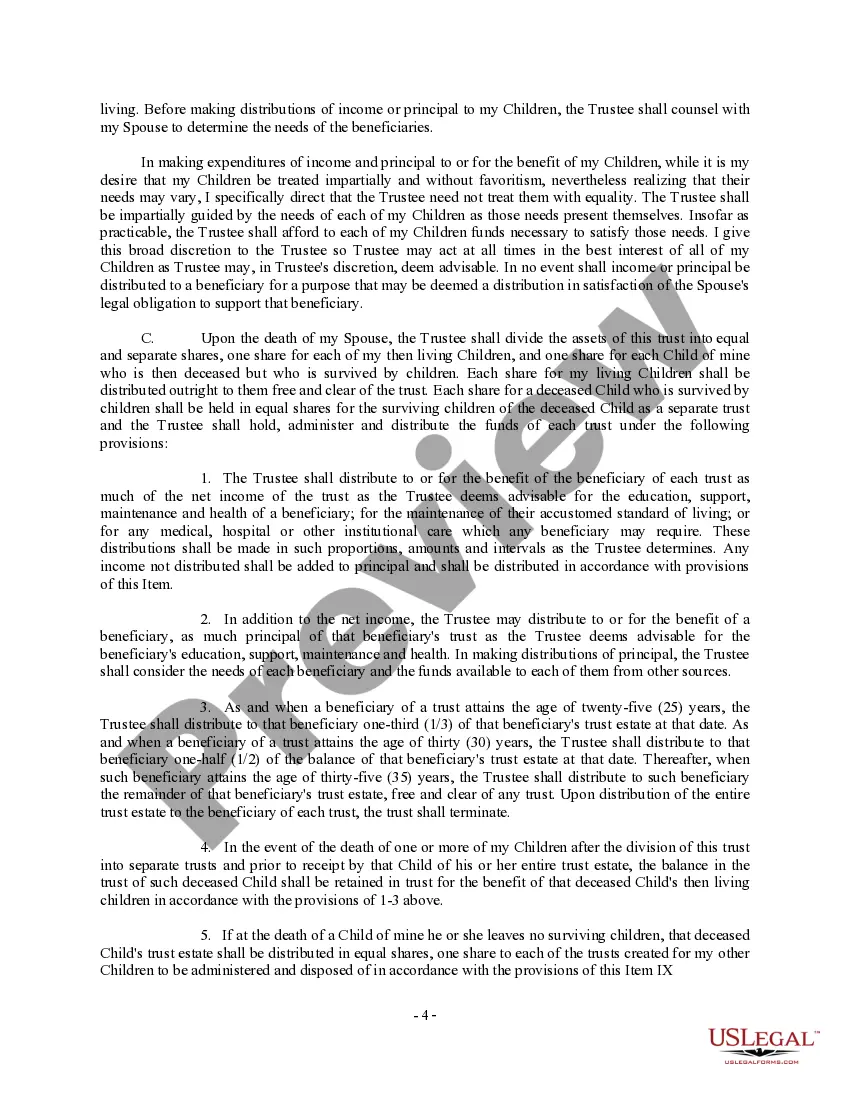
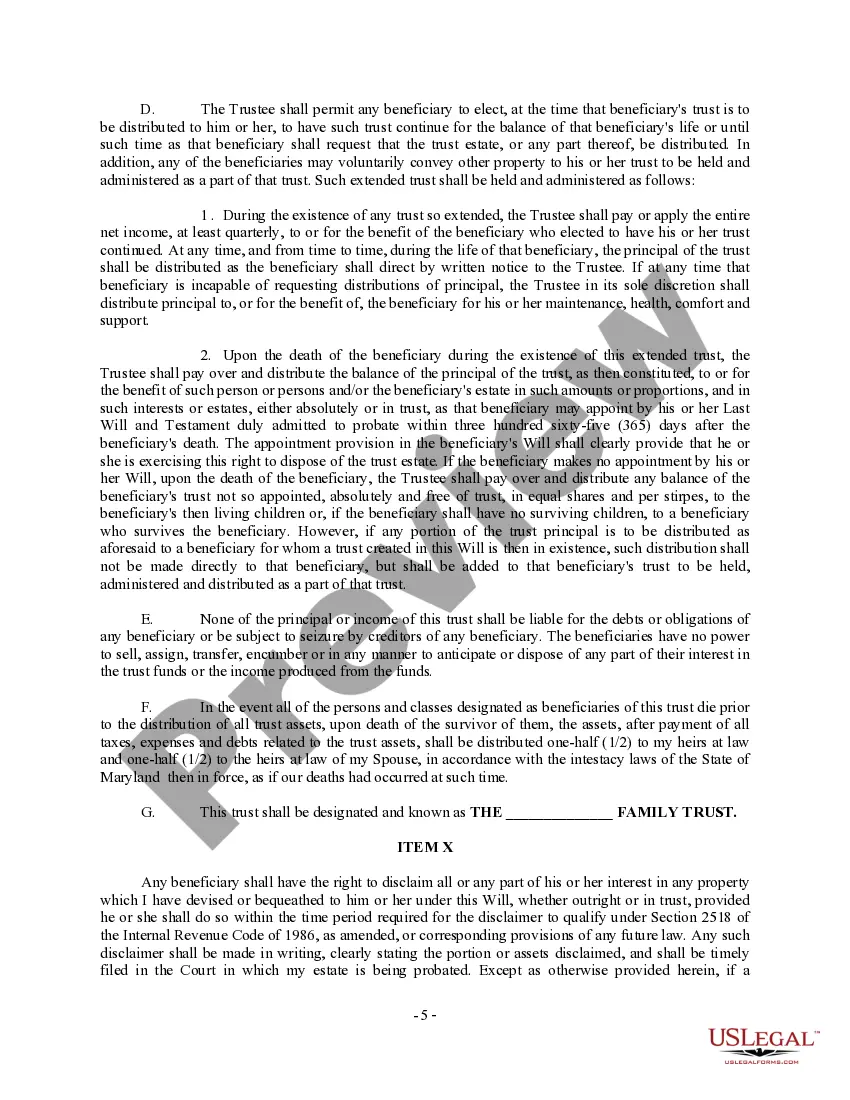
- Credit shelter trust: Specifications for establishing a trust to hold up to the maximum tax-free amount, benefiting children and minimizing taxes.
- Property bequests: Detailed instructions on the distribution of properties, including homes and personal belongings.
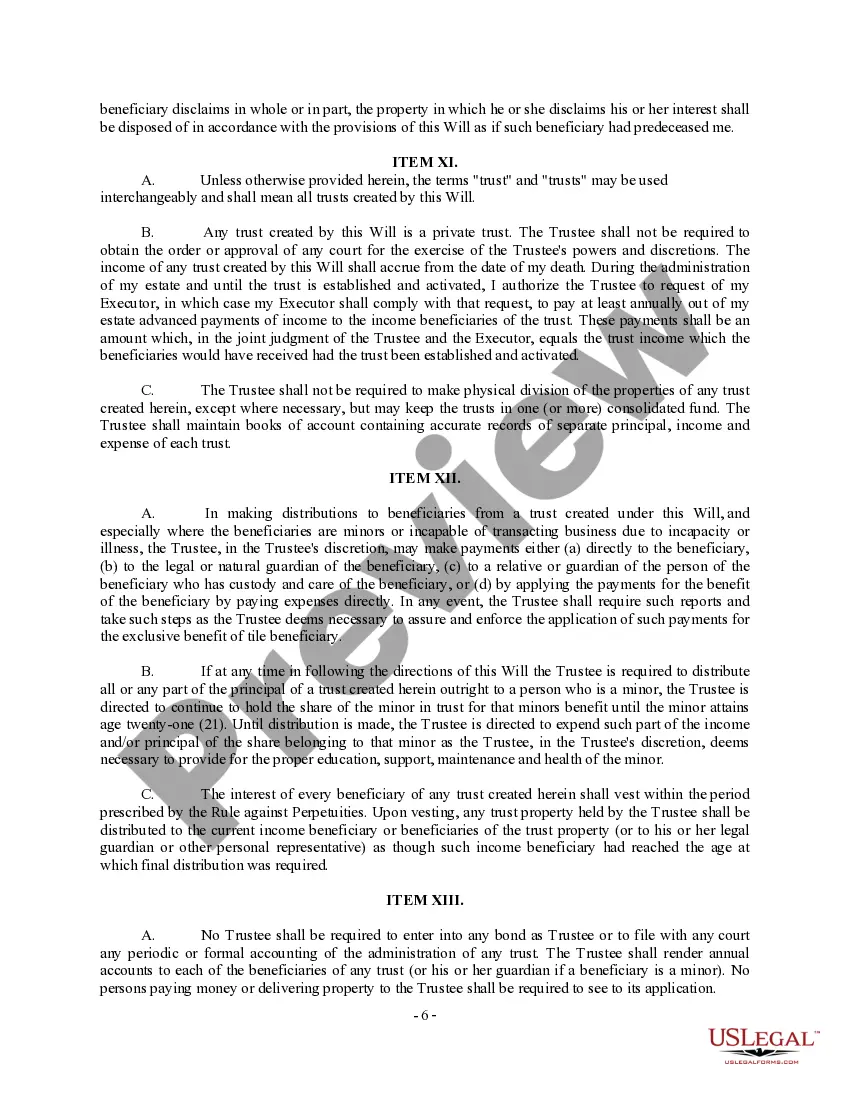
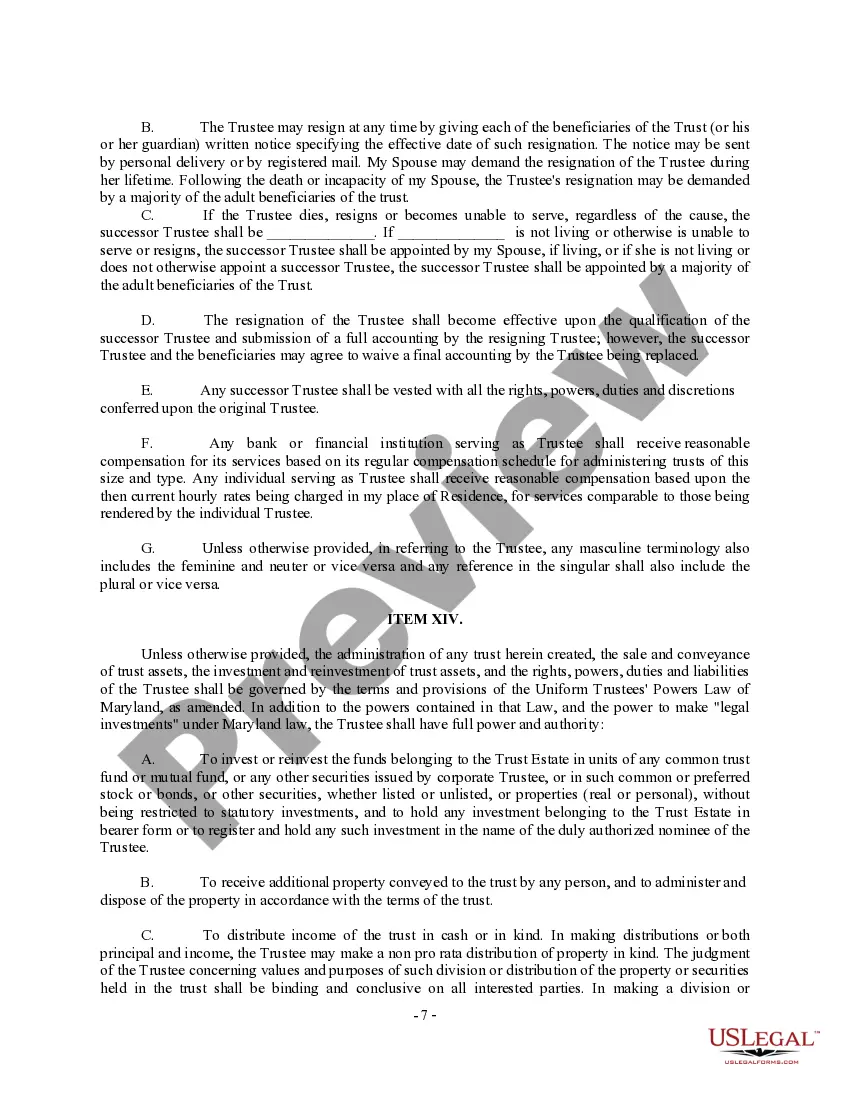
- Trust management: Guidelines for how the trust will be administered for the benefit of the spouse and children.




When to use this document
This form should be used by couples who have a substantial estate and wish to ensure that their assets are managed and transferred in a tax-efficient manner. It is appropriate when one or both partners are in a second marriage, when children from previous relationships are involved, or when the estate exceeds current exemption limits applicable to estate taxes. Additionally, individuals anticipating changes in their financial situation may consider using this form to protect their assets.
Intended users of this form
- Couples with large combined estates looking for effective estate tax strategies.
- Individuals planning for the financial future of their children and partners.
- Those who wish to ensure that their assets are passed down according to specific terms after their death.
- Families with previous marital structures that necessitate clear trust directions.
How to complete this form
- Identify the testator and spouse by entering their full names and relevant personal details.
- Designate an executor and alternate executor to ensure proper management of the estate.
- Specify the amount to be allocated to the credit shelter trust to maximize tax-free transfers.
- Outline the distribution of remaining properties, ensuring clarity on what each party receives.
- Sign the will in the presence of witnesses, ensuring that all legal requirements are met for validity.
Notarization guidance
This document requires notarization to meet legal standards. US Legal Forms provides secure online notarization powered by Notarize, allowing you to complete the process through a verified video call, available 24/7.
Get your form ready online
Our built-in tools help you complete, sign, share, and store your documents in one place.
Make edits, fill in missing information, and update formatting in US Legal Forms—just like you would in MS Word.
Download a copy, print it, send it by email, or mail it via USPS—whatever works best for your next step.
Sign and collect signatures with our SignNow integration. Send to multiple recipients, set reminders, and more. Go Premium to unlock E-Sign.
If this form requires notarization, complete it online through a secure video call—no need to meet a notary in person or wait for an appointment.
We protect your documents and personal data by following strict security and privacy standards.

Make edits, fill in missing information, and update formatting in US Legal Forms—just like you would in MS Word.

Download a copy, print it, send it by email, or mail it via USPS—whatever works best for your next step.

Sign and collect signatures with our SignNow integration. Send to multiple recipients, set reminders, and more. Go Premium to unlock E-Sign.

If this form requires notarization, complete it online through a secure video call—no need to meet a notary in person or wait for an appointment.

We protect your documents and personal data by following strict security and privacy standards.
Common mistakes to avoid
- Neglecting to name an alternate executor, which can cause delays in estate administration.
- Failing to update beneficiaries in the trust after significant life events, such as divorce or birth of new children.
- Not signing the will in front of the required witnesses or not complying with state-specific witnessing laws.
- Overlooking mandatory provisions for certain types of property intended to be placed in the trust.
Benefits of completing this form online
- Convenience of completing the form from home, saving time and travel costs.
- Editability that allows customization to fit specific needs and details of your estate.
- Access to reliable templates drafted by licensed attorneys, ensuring legal accuracy.
Quick recap
- The Complex Will with Credit Shelter Marital Trust is essential for effective estate tax planning for large estates.
- It allows for significant tax-free transfers, benefitting both the surviving spouse and their children.
- Properly completing this form ensures your assets are managed according to your wishes and minimizes taxable estate transfers.
Looking for another form?

Form popularity
FAQ
Costs of setting up the trust. A trust agreement is a more complicated document than a basic will. Costs of funding the trust. Your living trust is useless if it doesn't hold any property. No income tax advantages. A will may still be required.
First, in a standard credit shelter trust, there is no step-up in basis at the death of the surviving spouse.Second, the credit shelter trust is a separate taxpayer and requires its own tax return, Form 1041.
Yes, the surviving spouse may serve as trustee of the credit shelter trust.All of the assets in the credit shelter trust, including any appreciation in value during the surviving spouse's lifetime, pass free of estate tax to the beneficiaries.
At the time of your death, the assets in your family trust are protected by the exemption, and the assets in your marital trust are protected by the marital deduction. No estate taxes are due.
A marital trust allows the couple's heirs to avoid probate and take less of a hit from estate taxes by taking full advantage of the unlimited marital deductiona provision that enables spouses to pass assets to each other without tax consequences.
A marital trust starts as a revocable living trust. A surviving spouse can be its trustee.
A marital trust is a type of irrevocable trust that allows you to transfer assets to a surviving spouse tax free. It can also shield the estate of the surviving spouse before the remaining assets pass on to your children.
Credit shelter trusts are also known as AB Trusts or Bypass Trusts. This is because CSTs are essentially bypass trusts in which each spouse has a separate "taxable" estate. These estates are known as A trust and B trust.