Construction Contract for Building a House
Understanding this form
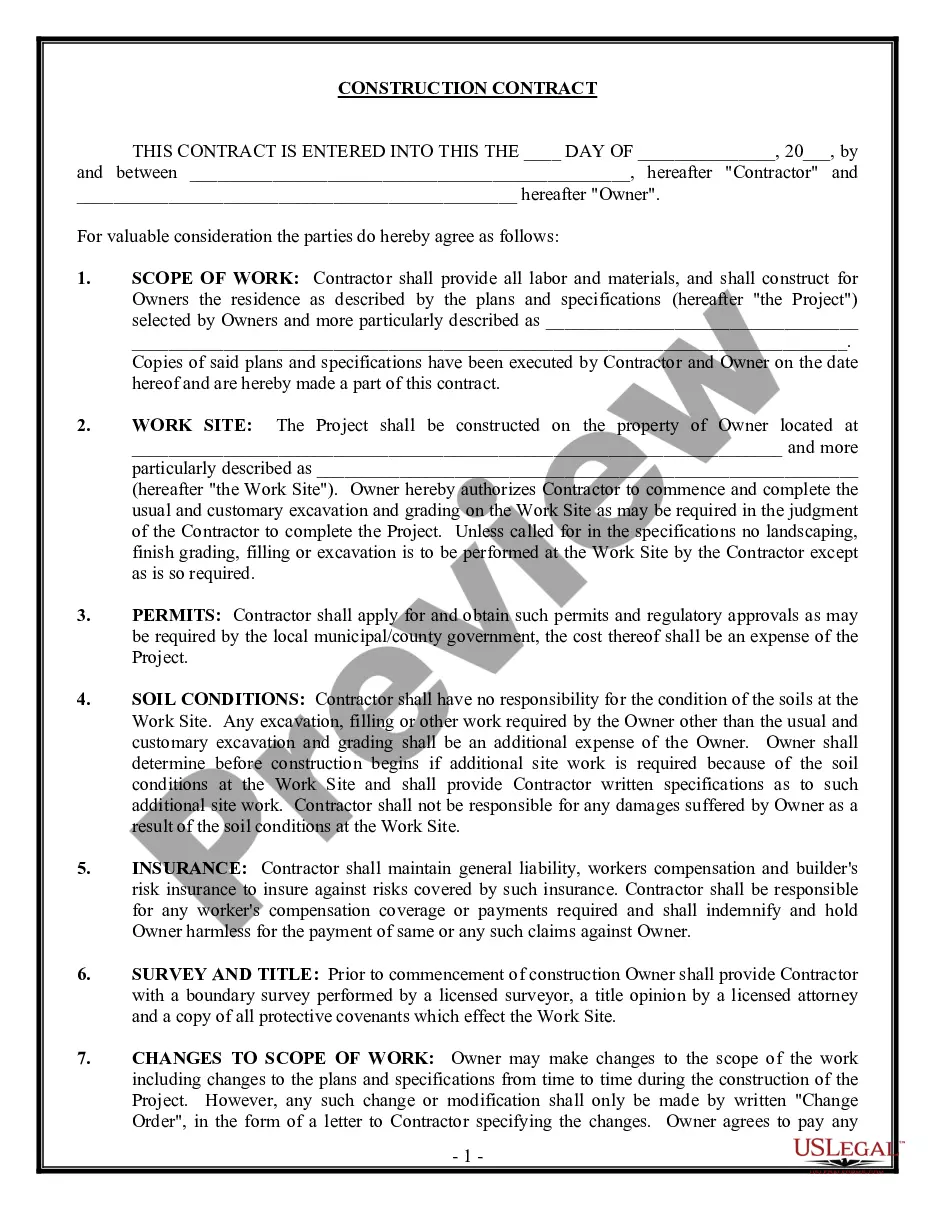
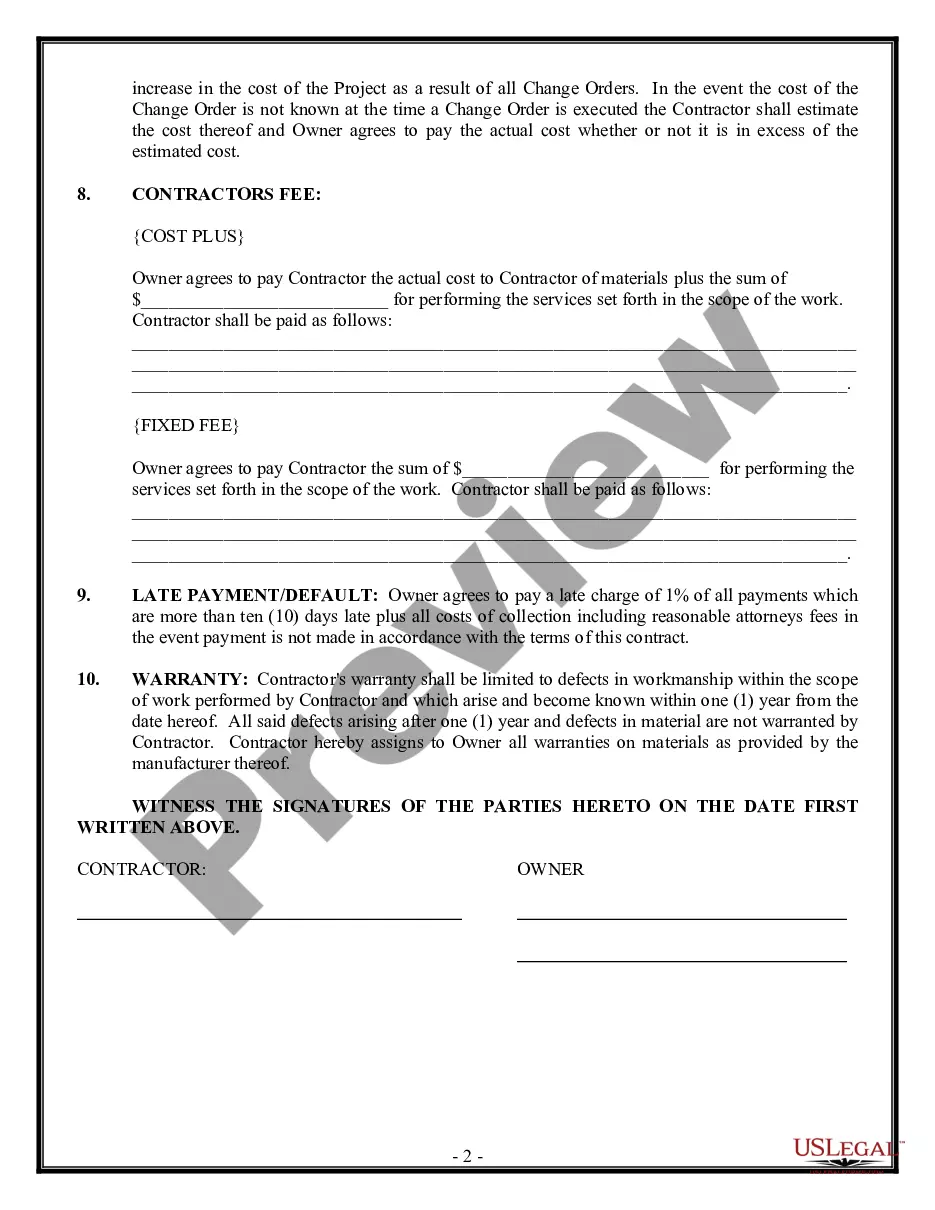
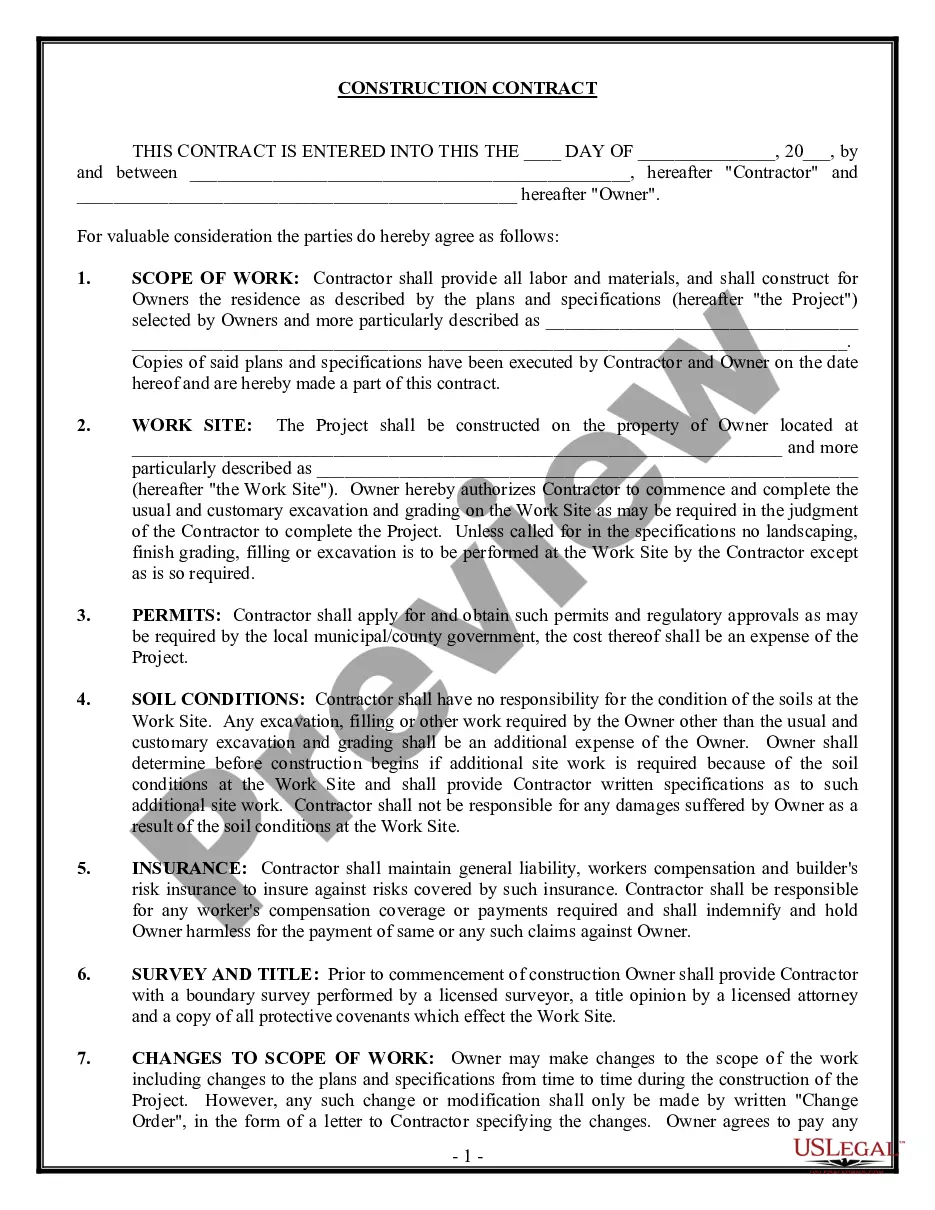
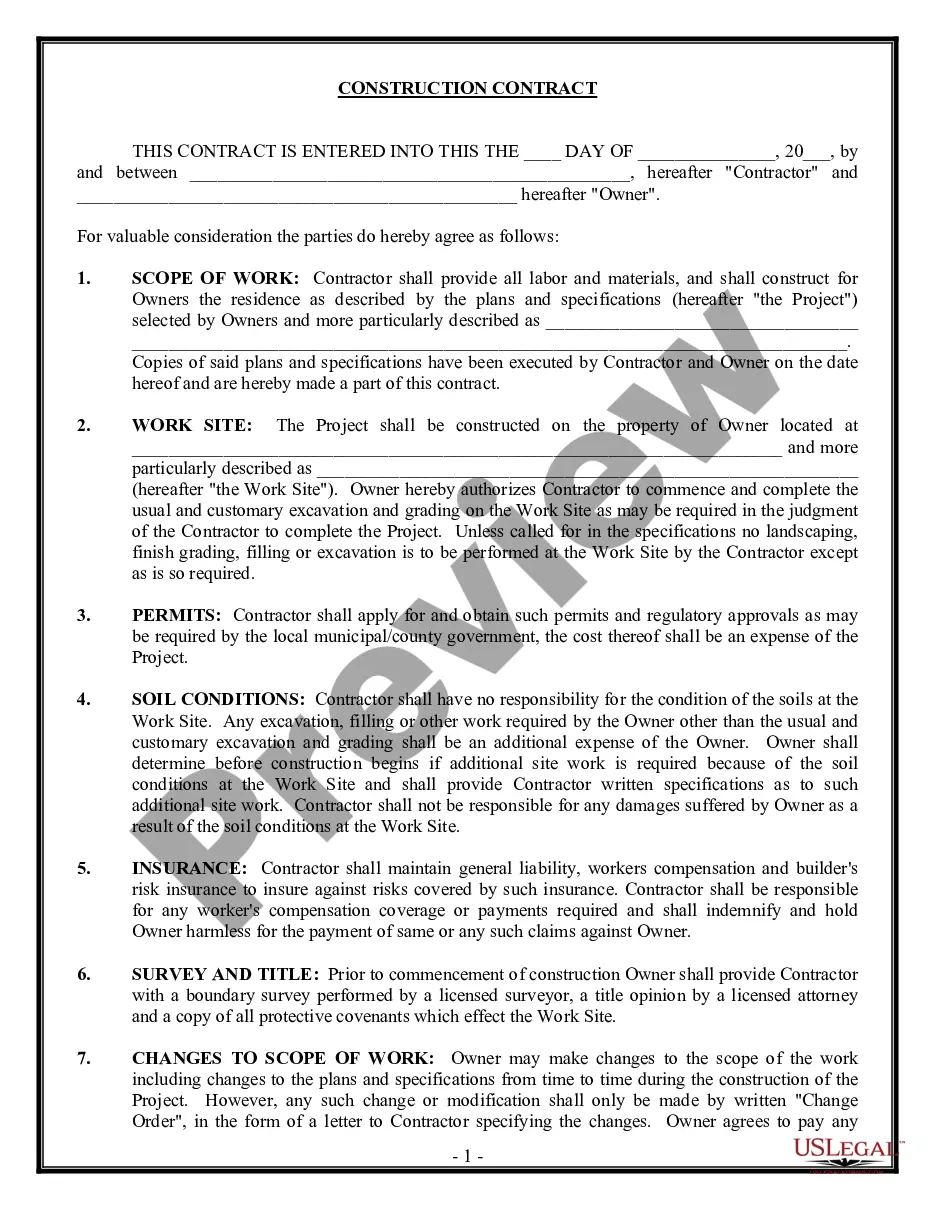
The Construction Contract for Building a House is a legal document that establishes an agreement between a property owner and a contractor for constructing a residential building. This contract outlines the scope of work, the location of the project, and insurance requirements, providing clarity on both parties' obligations. It differs from other construction agreements by focusing specifically on residential projects and including detailed provisions regarding defects in workmanship and the conditions for changes to the project.
Main sections of this form
- Scope of work: Detailed description of the construction project and specifications.
- Work site: Defines the location where the construction will take place.
- Permits: Responsibilities regarding local permits and regulatory approvals.
- Insurance: Specifies insurance requirements, including general liability and workerâs compensation.
- Changes to the scope of work: Conditions under which changes can be made and how they affect the project cost.
- Warranty: Information regarding the contractor's warranty for workmanship and materials.
When this form is needed
This form should be used when an owner engages a contractor to build a new house or make significant renovations to an existing residential property. It is suitable for situations where clarity of the project's scope, timelines, and financial agreements is crucial to avoid disputes. The contract protects the rights and responsibilities of both parties during the construction process.
Who this form is for
- Homeowners looking to hire a contractor for building or renovating their home.
- Contractors engaged in residential construction projects.
- Real estate developers managing residential construction projects.
Instructions for completing this form
- Identify the parties: Enter the names of the contractor and the owner.
- Specify the project details: Provide a detailed description of the planned construction.
- Enter work site information: Include the exact location of the project.
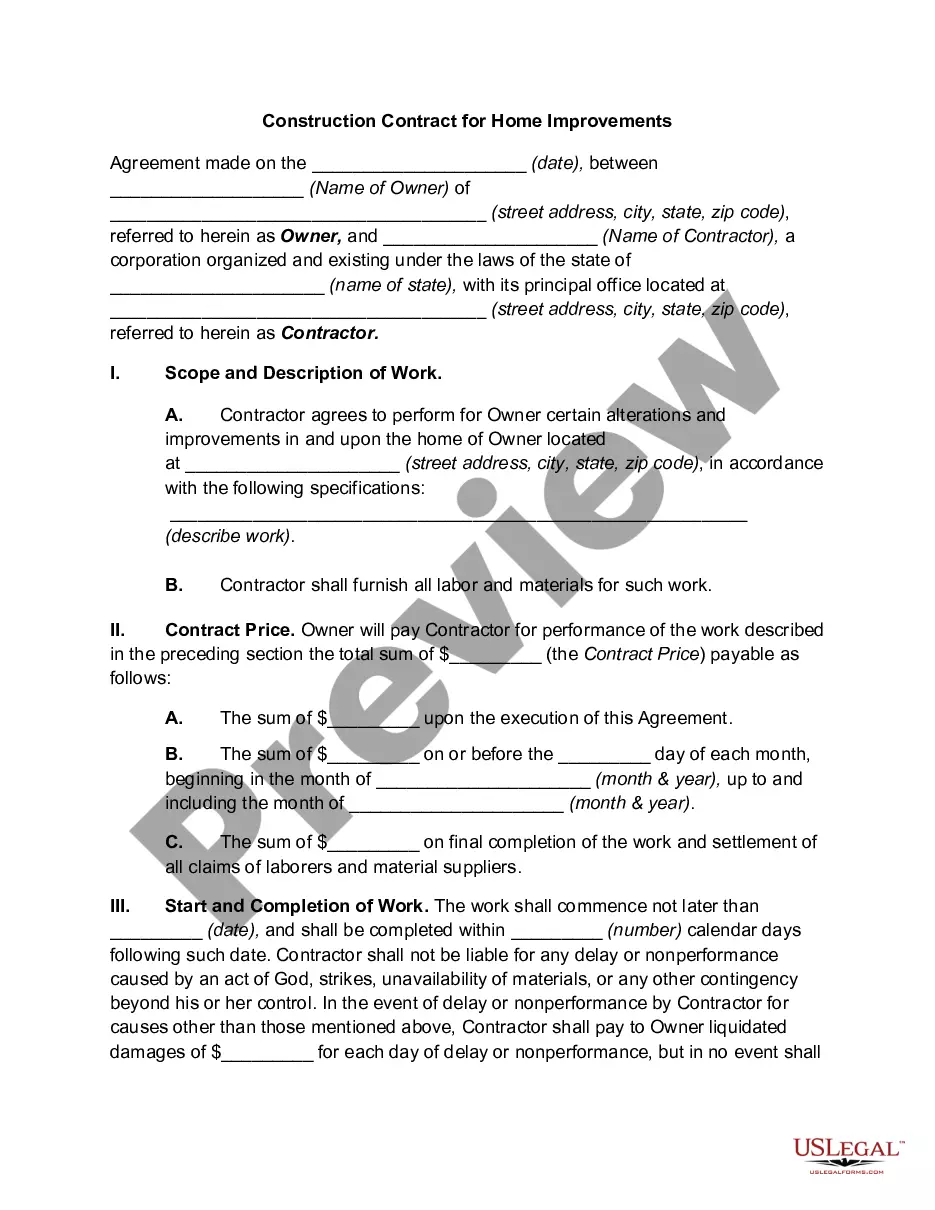
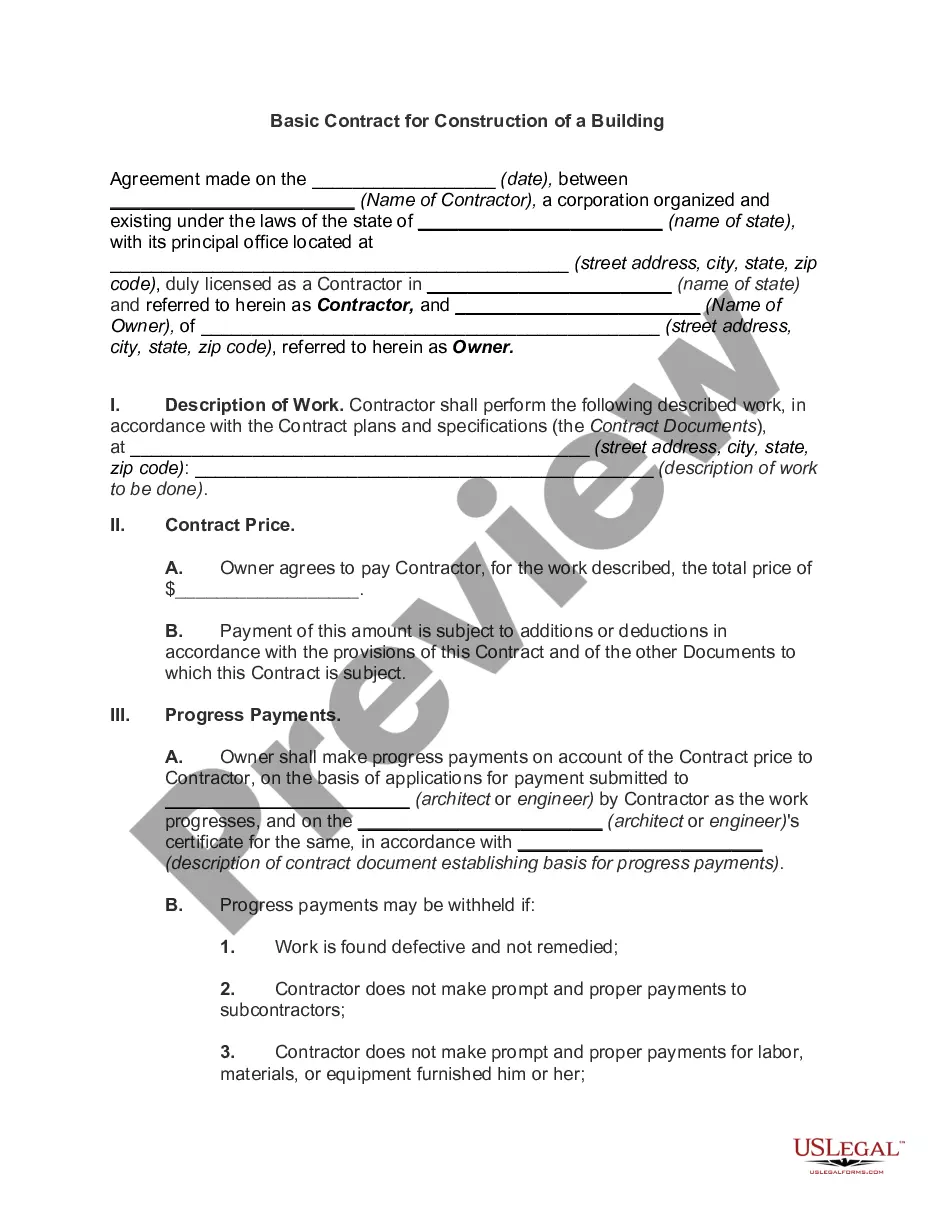
- Fill out cost and payment terms: Agree on and document payment structure, whether cost plus or fixed fee.
- Sign and date the contract: Both parties should sign and date the document to make it legally binding.
Is notarization required?
This form does not typically require notarization unless specified by local law. However, verifying local requirements is advisable for legal validity.
Get your form ready online
Our built-in tools help you complete, sign, share, and store your documents in one place.
Make edits, fill in missing information, and update formatting in US Legal Forms—just like you would in MS Word.
Download a copy, print it, send it by email, or mail it via USPS—whatever works best for your next step.
Sign and collect signatures with our SignNow integration. Send to multiple recipients, set reminders, and more. Go Premium to unlock E-Sign.
If this form requires notarization, complete it online through a secure video call—no need to meet a notary in person or wait for an appointment.
We protect your documents and personal data by following strict security and privacy standards.

Make edits, fill in missing information, and update formatting in US Legal Forms—just like you would in MS Word.

Download a copy, print it, send it by email, or mail it via USPS—whatever works best for your next step.

Sign and collect signatures with our SignNow integration. Send to multiple recipients, set reminders, and more. Go Premium to unlock E-Sign.

If this form requires notarization, complete it online through a secure video call—no need to meet a notary in person or wait for an appointment.

We protect your documents and personal data by following strict security and privacy standards.
Common mistakes
- Not providing a clear scope of work, leading to misunderstandings.
- Failing to document any changes to the scope of work properly.
- Neglecting to include specific payment terms or timelines for payment.
- Omitting necessary signatures which can invalidate the contract.
Benefits of using this form online
- Convenience: Instantly download and fill out the form from any device.
- Editability: Easily modify the template to fit your specific needs.
- Reliability: Assurance that the form is drafted by licensed attorneys to meet legal standards.
Looking for another form?
Form popularity
FAQ
Identifying/Contact Information. Title and Description of the Project. Projected Timeline and Completion Date. Cost Estimate and Payment Schedule. Stop Work Clause and Stop Payment Clause. Act of God Clause. Change Order Agreement. Warranty.
Standard construction contracts should have the following information and clauses: Name of contractor and contact information. Include the contractor's license number along with phone number, email address, and company address. Name of homeowner and contact information.
The five requirements for creating a valid contract are an offer, acceptance, consideration, competency and legal intent.
Writing Your Construction Contract. Write the title and a little preamble. Your title should describe the purpose of the contract. The preamble should simply state basics like: the date the agreement was entered into, the parties' names, the project, the work site location, and work commencement and end dates.
Who the parties are. The description of the works in a concise summary. The documents that must be referred to. Any design responsibilities the contractor has. Any compliance requirements, such as from planning, building control, party walls and utility companies.
Your general contractor should provide proof of licensing, bonding and insurance before a project starts, but it's better to have it in hand before you sign any contracts. It's important that contractors carry any licensing and/or certification required for the specific trade or skill they practice.
General Requirements are used as the clearinghouse for items that do not apply directly to construction, the cost of which are customarily spread out over the entire project. These costs are also referred to as project overhead. For estimating purposes, either term is acceptable.
Identifying/Contact Information. Title and Description of the Project. Projected Timeline and Completion Date. Cost Estimate and Payment Schedule. Stop Work Clause and Stop Payment Clause. Act of God Clause. Change Order Agreement. Warranty.
Look for assistance from others who may have bid on construction contracts in the past or review a list bid service companies you can find through FedSpending.org or USASpending.gov. In addition to helping you locate and complete bid documents, a bid service may also alert you to available subcontracting opportunities.