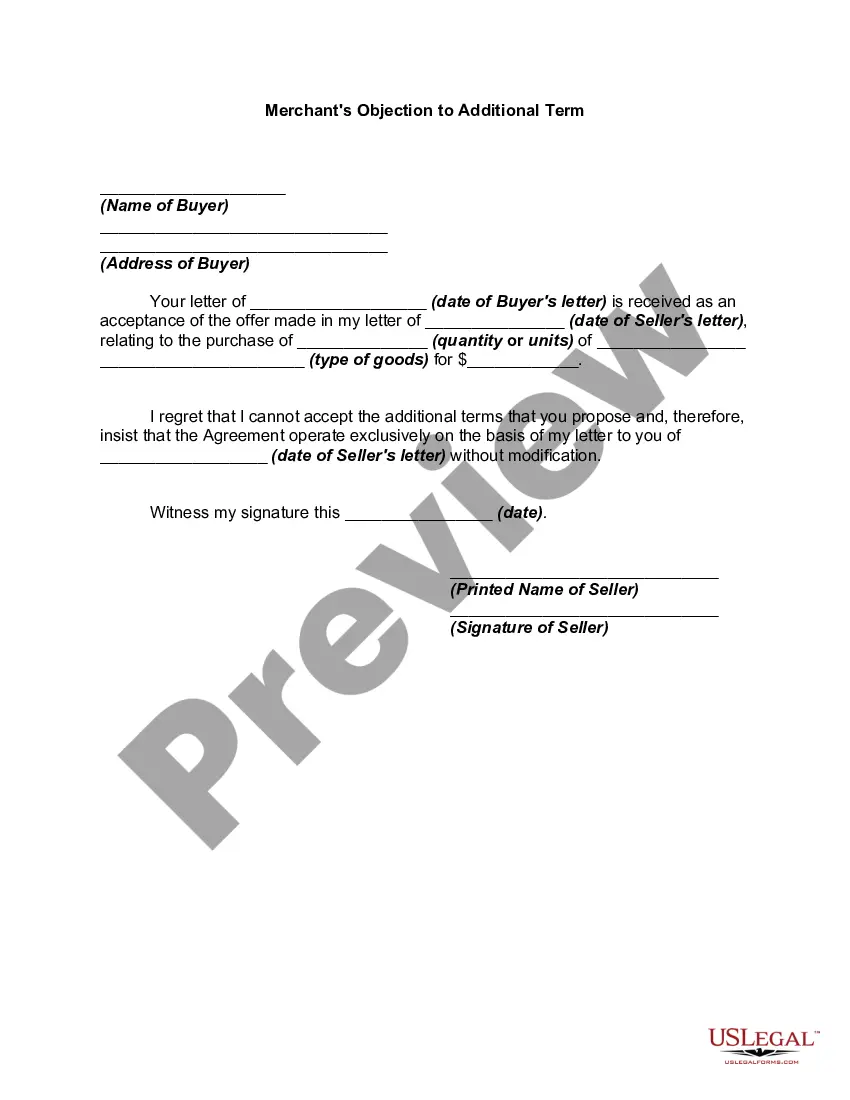
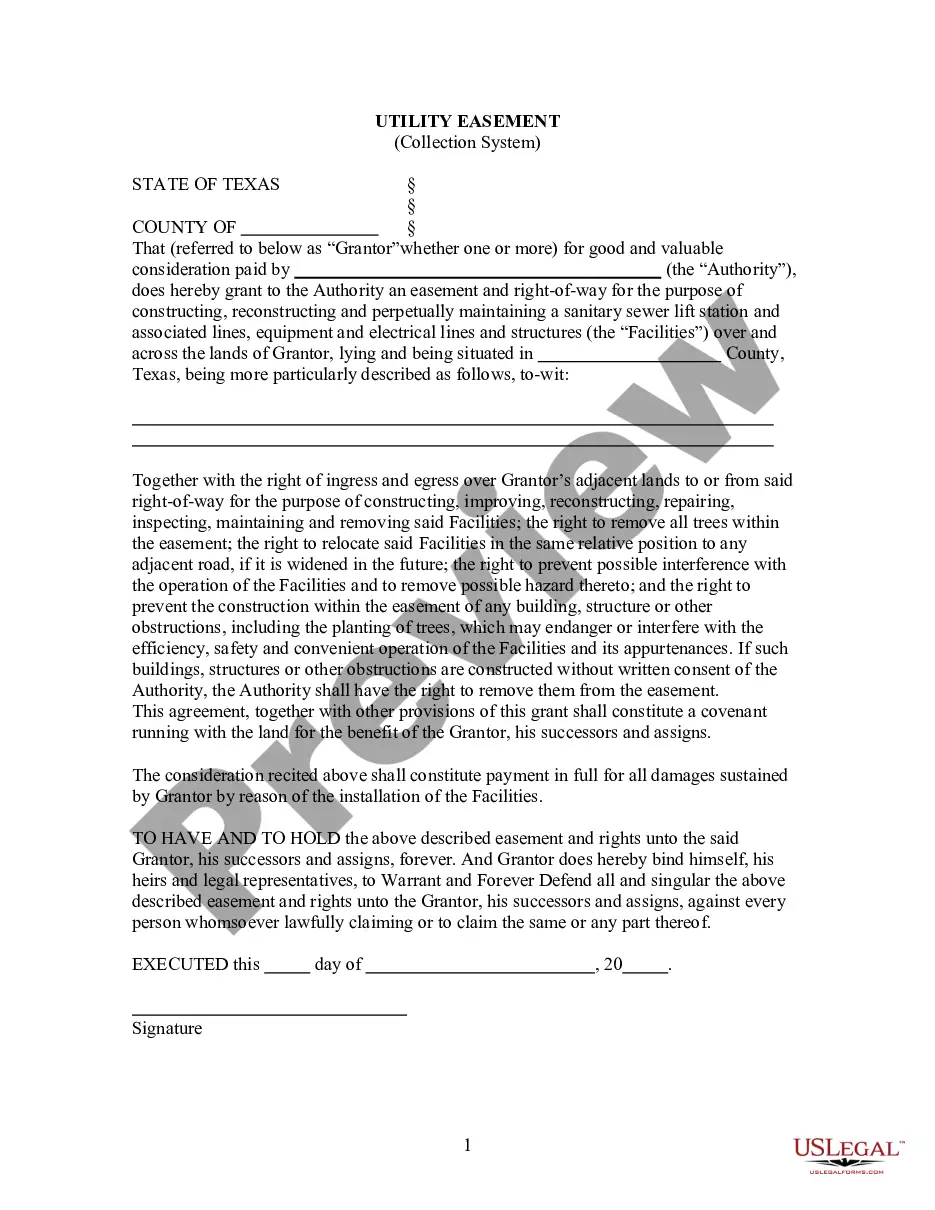
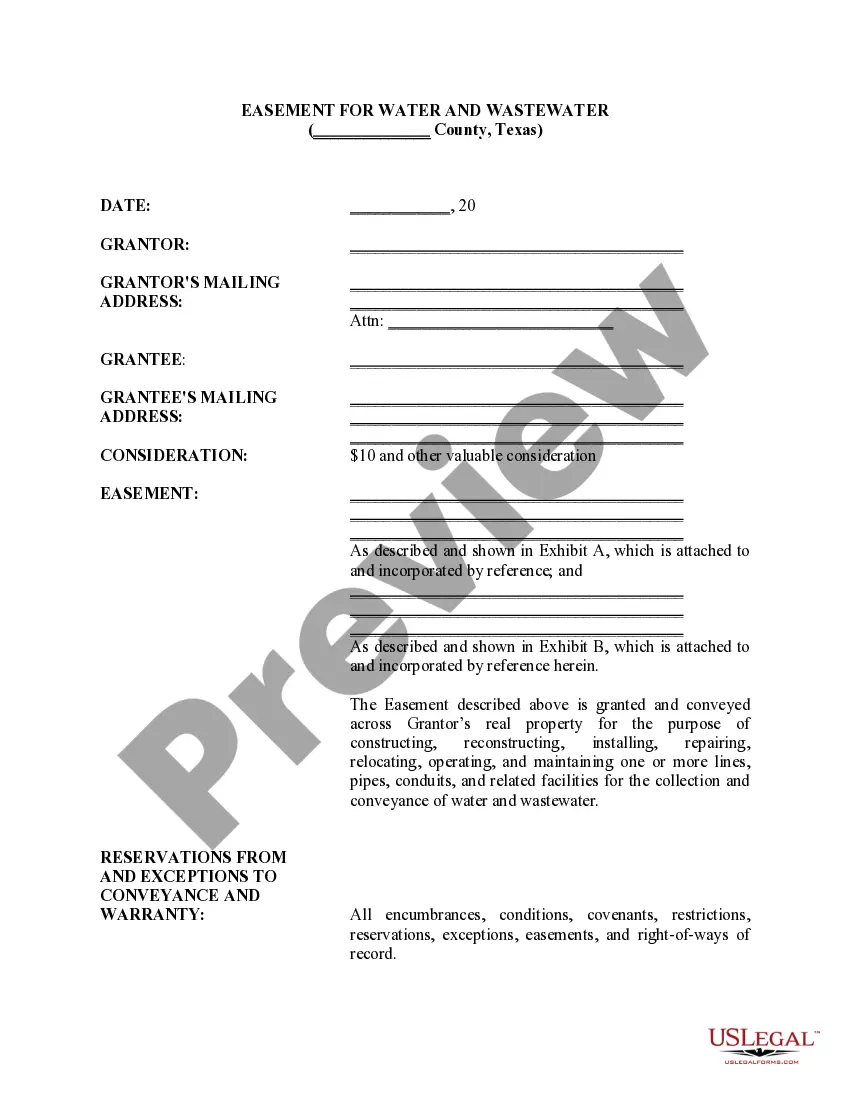
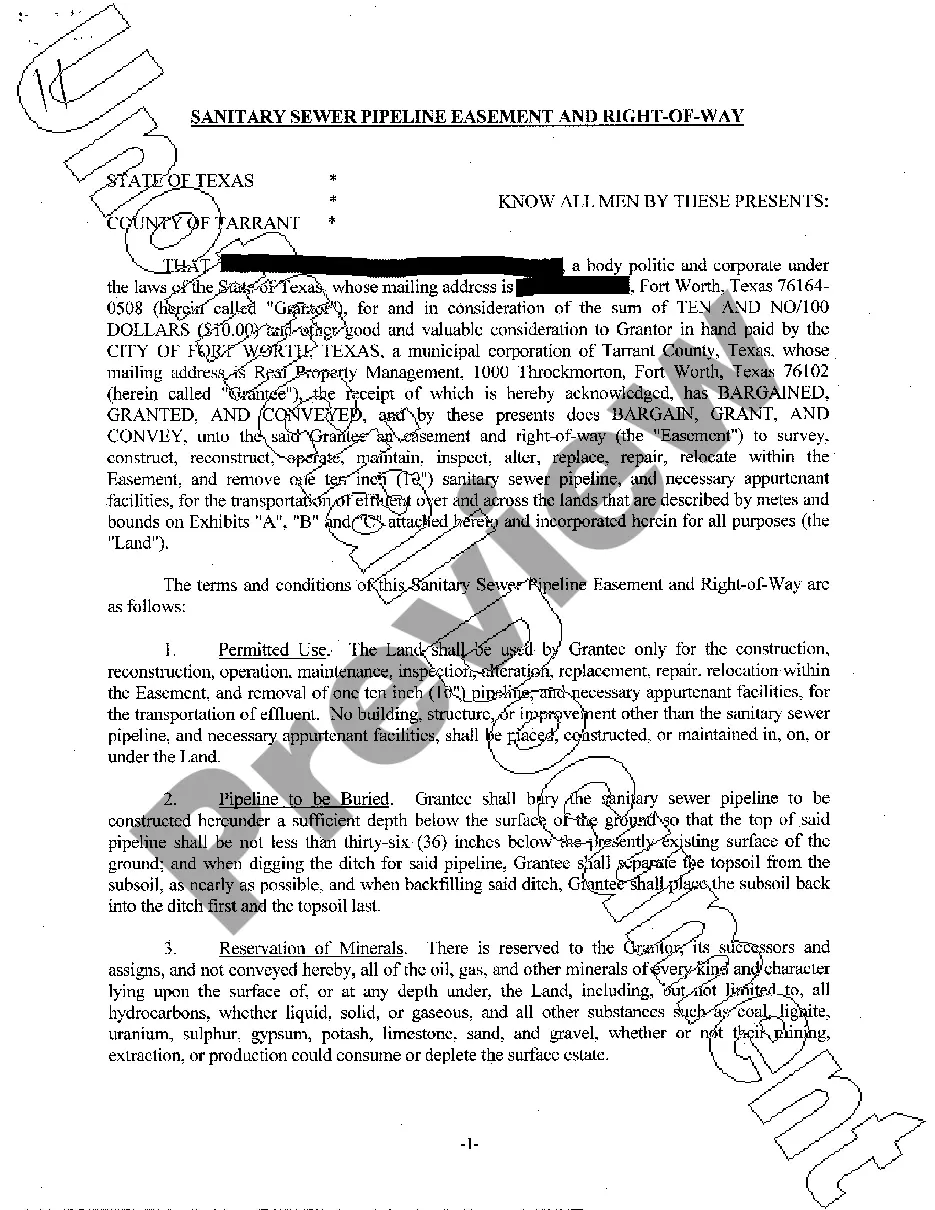
Texas Utility Easement for Sanitary Sewer Station and Associated Lines
About this form
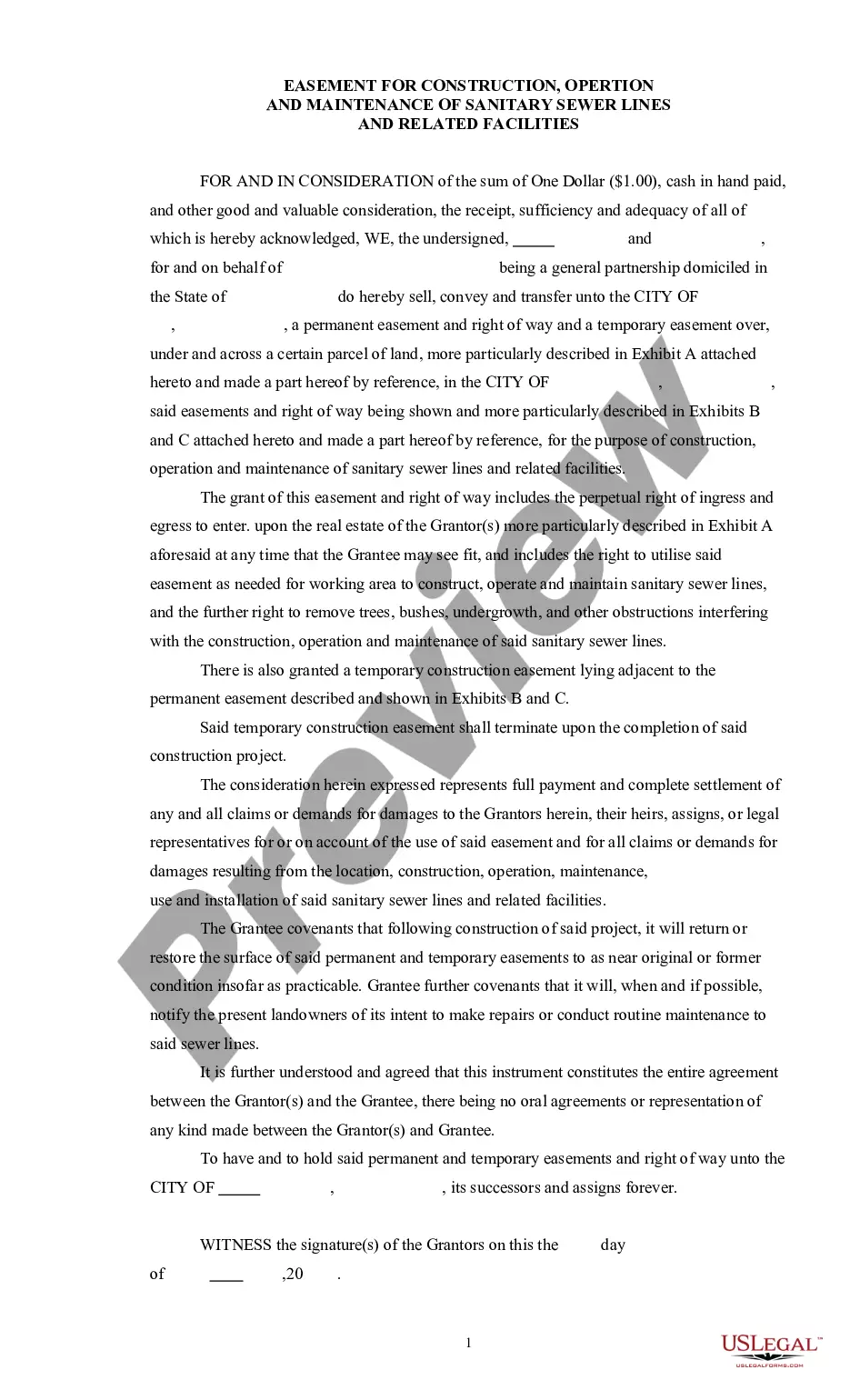
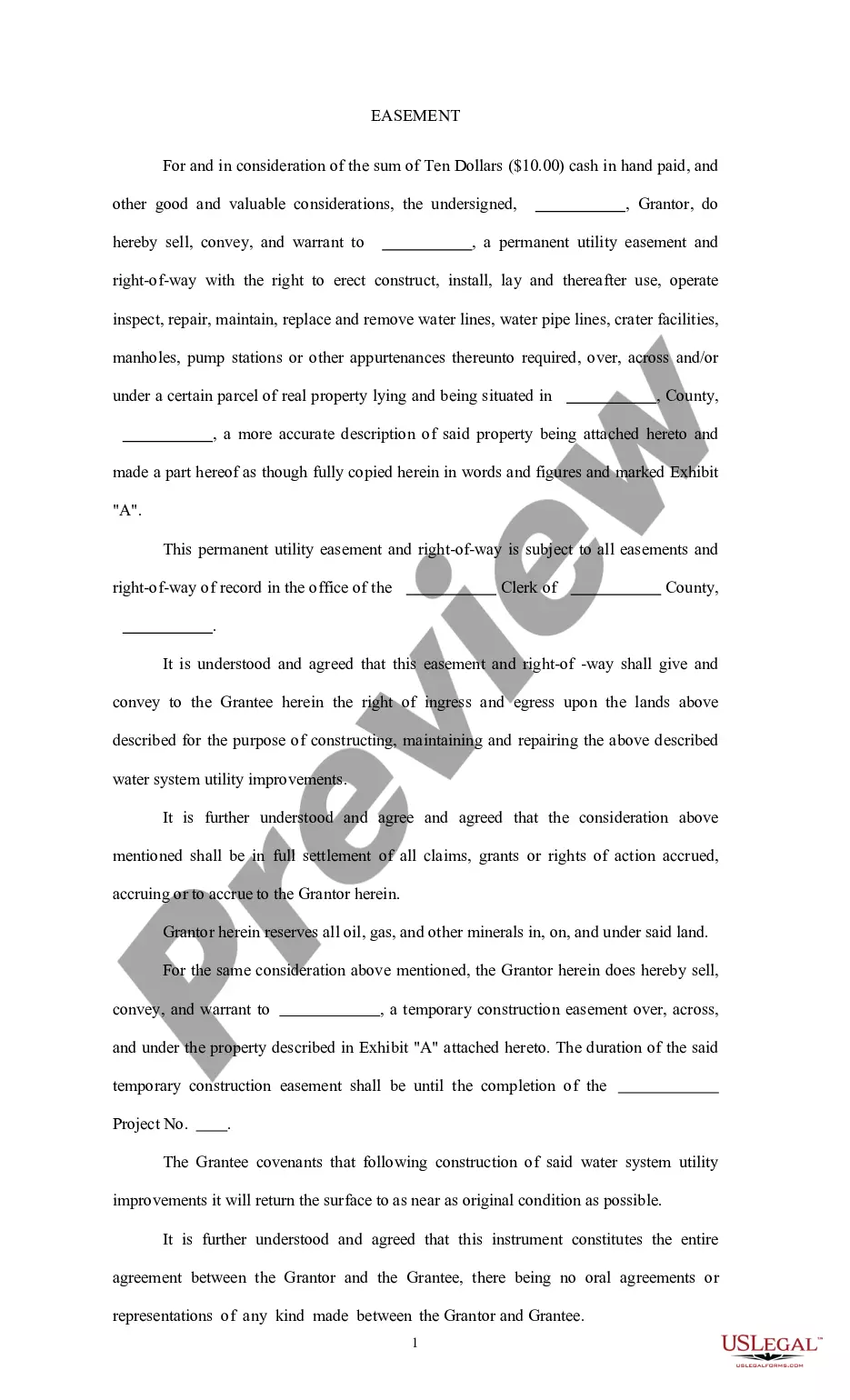
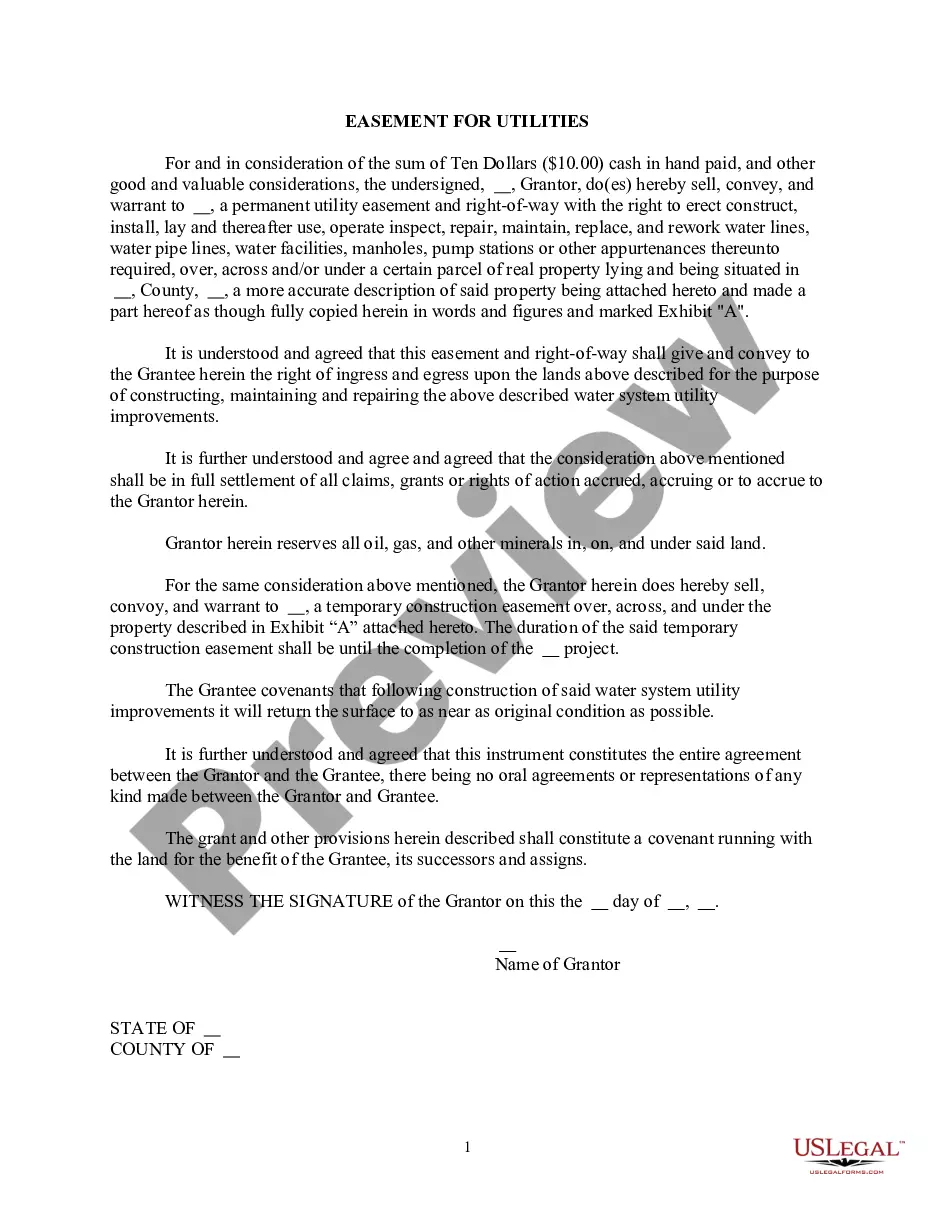
The Utility Easement for Sanitary Sewer Station and Associated Lines is a legal document allowing for the maintenance and construction of a sanitary sewer station and its related facilities. This form grants utility companies the right to access another personâs property to install, repair, or maintain sewer lines and associated structures. Unlike general easement forms, this document is specifically tailored for sanitary sewer systems, ensuring all legal requirements are met for the benefit of both parties involved.
Main sections of this form
- Description of the easement and its purpose.
- Identification of the Grantor (property owner) and Grantee (utility company).
- Details regarding the extent and limitations of the easement.
- Provisions for maintenance responsibilities and access rights.
- Compensation terms for any damages sustained by the Grantor during installation.
When to use this document
This form is used when a utility company needs access to private property to install or maintain sanitary sewer systems. Situations may include new construction of sewer lines, upgrades to existing infrastructure, or routine maintenance and repairs. If you are a property owner being approached by a utility provider, this document ensures that the legal rights and responsibilities are clearly established.
Intended users of this form
- Property owners allowing easement rights for sanitary sewer installations.
- Utility companies seeking to establish a legal easement for sewer maintenance.
- Real estate developers requiring an easement for new construction projects.
- Landowners needing to document terms and conditions for sewer access by utilities.
Instructions for completing this form
- Identify the parties involved: specify the Grantor and Grantee.
- Clearly describe the property where the easement will apply.
- Detail the scope of the easement, including the type of infrastructure involved.
- Include any compensation terms for damage or disruption caused by the installation.
- Enter the dates, and ensure all parties sign the document to validate the agreement.
Notarization requirements for this form
This form does not typically require notarization unless specified by local law. However, verifying local regulations regarding easements is advisable to ensure compliance.
Get your form ready online
Our built-in tools help you complete, sign, share, and store your documents in one place.
Make edits, fill in missing information, and update formatting in US Legal Forms—just like you would in MS Word.
Download a copy, print it, send it by email, or mail it via USPS—whatever works best for your next step.
Sign and collect signatures with our SignNow integration. Send to multiple recipients, set reminders, and more. Go Premium to unlock E-Sign.
If this form requires notarization, complete it online through a secure video call—no need to meet a notary in person or wait for an appointment.
We protect your documents and personal data by following strict security and privacy standards.

Make edits, fill in missing information, and update formatting in US Legal Forms—just like you would in MS Word.

Download a copy, print it, send it by email, or mail it via USPS—whatever works best for your next step.

Sign and collect signatures with our SignNow integration. Send to multiple recipients, set reminders, and more. Go Premium to unlock E-Sign.

If this form requires notarization, complete it online through a secure video call—no need to meet a notary in person or wait for an appointment.

We protect your documents and personal data by following strict security and privacy standards.
Mistakes to watch out for
- Failing to accurately identify the parties involved.
- Not describing the easement area and its limitations clearly.
- Overlooking compensation terms for potential damages to the property.
- Not securing signatures from all required parties.
Benefits of using this form online
- Convenient access to professionally drafted legal forms.
- Edit and customize the form to meet your specific needs.
- Secure download ensures you have a reliable copy for your records.
- Quick turnaround, allowing you to complete your legal paperwork efficiently.
Looking for another form?



Form popularity
FAQ
Utility easements are one of the most common types of easements for private property, which generally allow public utility companies access to the property for the purpose of installing, repairing and maintaining utility lines.
Absent an express agreement to the contrary, the owner of the dominant estate has a duty to maintain the easement, and the owner of the servient estate has no right to interfere with the dominant estate. Roberts v. Freindswood Dev. Co., 886 S.W.
A Right of Way Easement is a form of Easement annexed to land which grants a right to travel over a part of the landowner's property. This right of way is usually granted to neighbouring landowners. The legal rights of the attached landowners to use and maintain the right of way may not always be clear.
When the said equipment, devices and other property is/are installed as designated by Cooperative, the Easement herein granted shall be a thirty (30) foot wide easement located fifteen (15) feet on both sides of the center conductor of the electric distribution line as built by Cooperative with an additional fifteen (
A: Firstly you should establish whether there is any legal right of way to the property.With an easement your mother may insist your neighbour removes the fence obstructing her right of way. That access has been blocked for two years is likely to be irrelevant. Easements can also be abandoned.
A prescriptive easement allows someone other than the original property owner to gain the rights to use a property. Prescriptive easements often arise on rural land when landowners fail to realize part of their land is being used, perhaps by a neighbor.
If an authority has an easement registered over your land, they have the right to access the easement to maintain or repair the easement land or their equipment on the land.
What are Easements and Rights-of-Way? Easements are nonpossessory interests in real property. More simply, an easement is the right to use another's property for a specific purpose. Rights-of-way are easements that specifically grant the holder the right to travel over another's property.
An easement provides the right to use an owner's property for a particular purpose. A WCID110 utility easement allows WCID110 the right to use an owner's property for specific purposes such as to construct, repair, maintain, operate, and manage utility facilities.