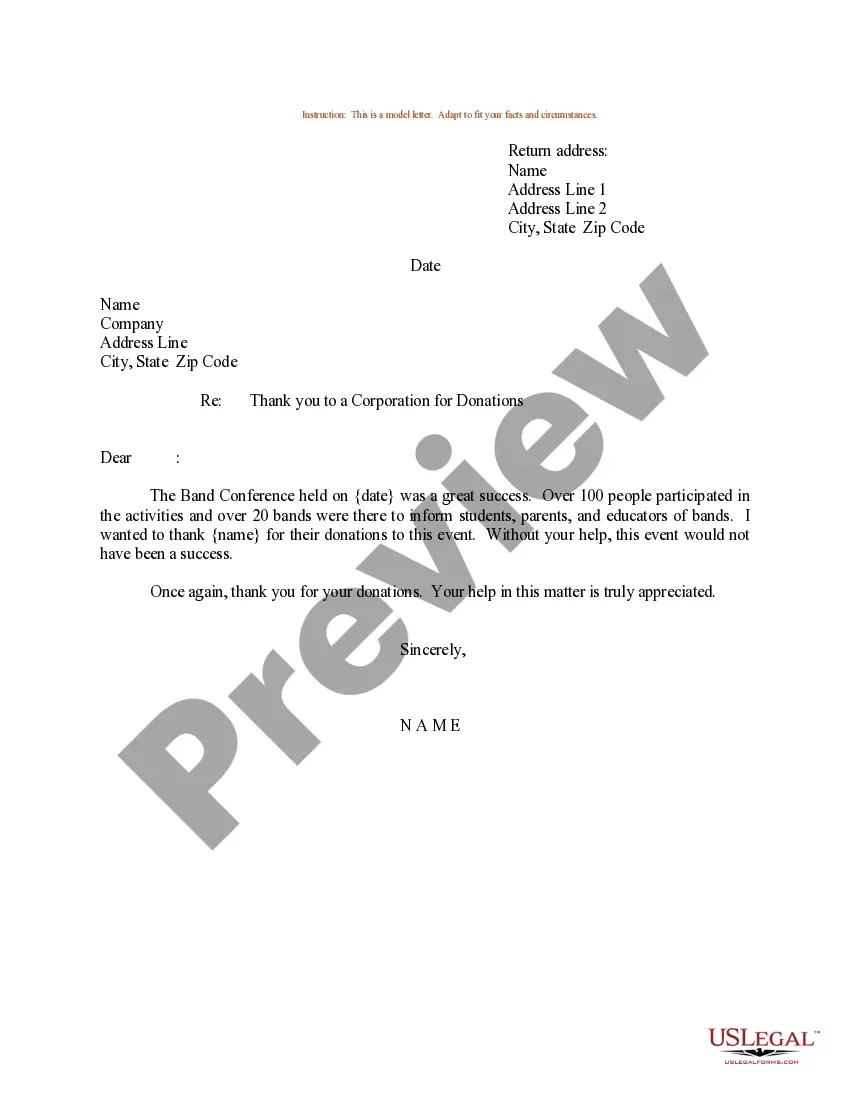
Texas Living Trust for Individual Who is Single, Divorced or Widow or Widower with Children
About this form
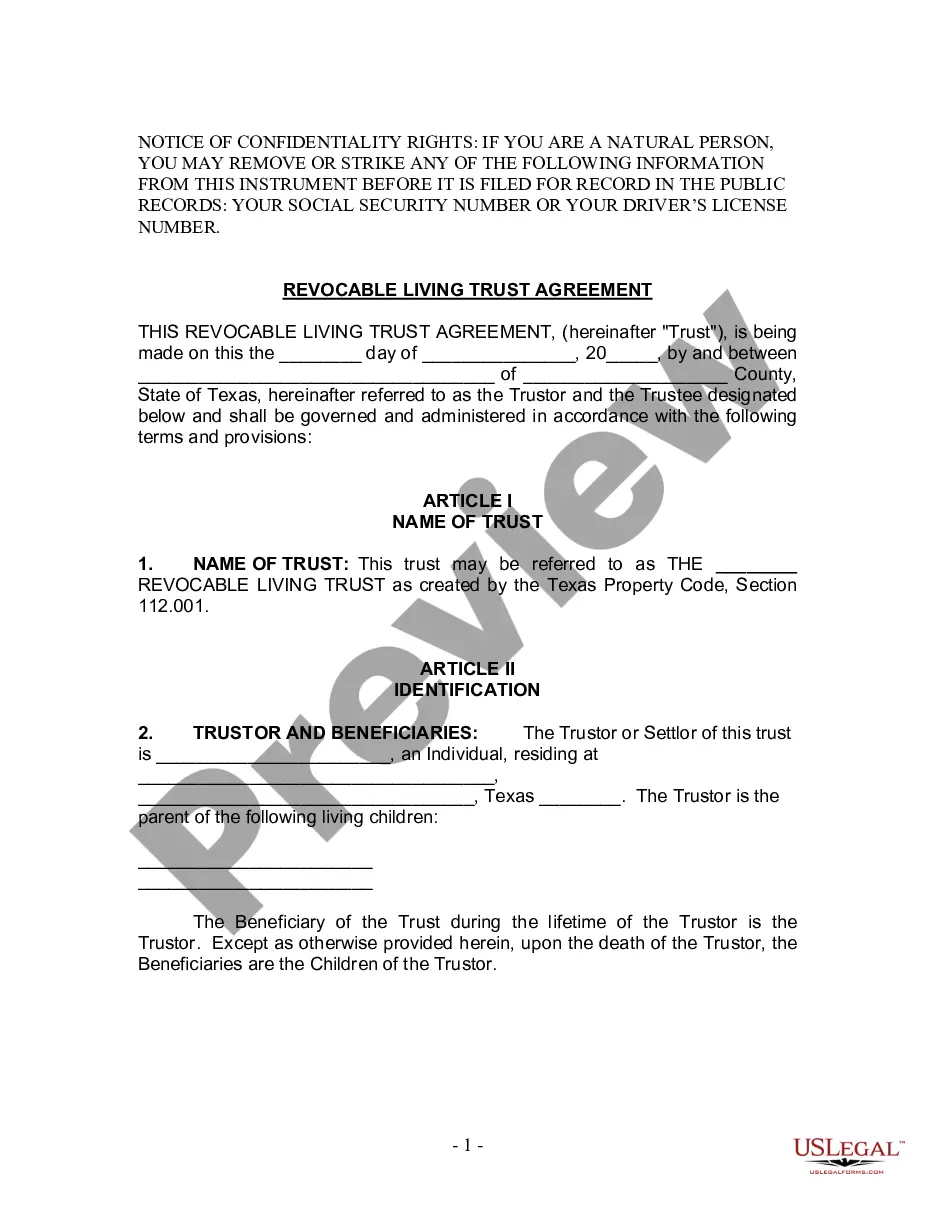
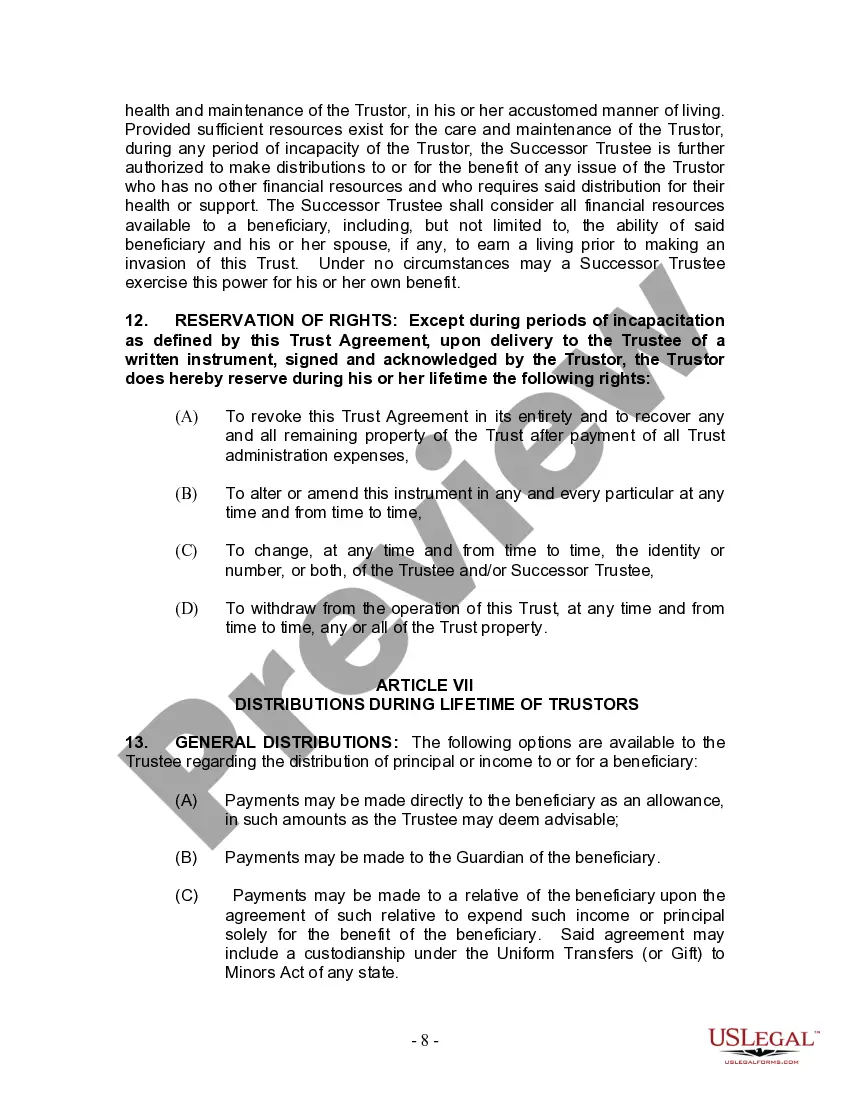
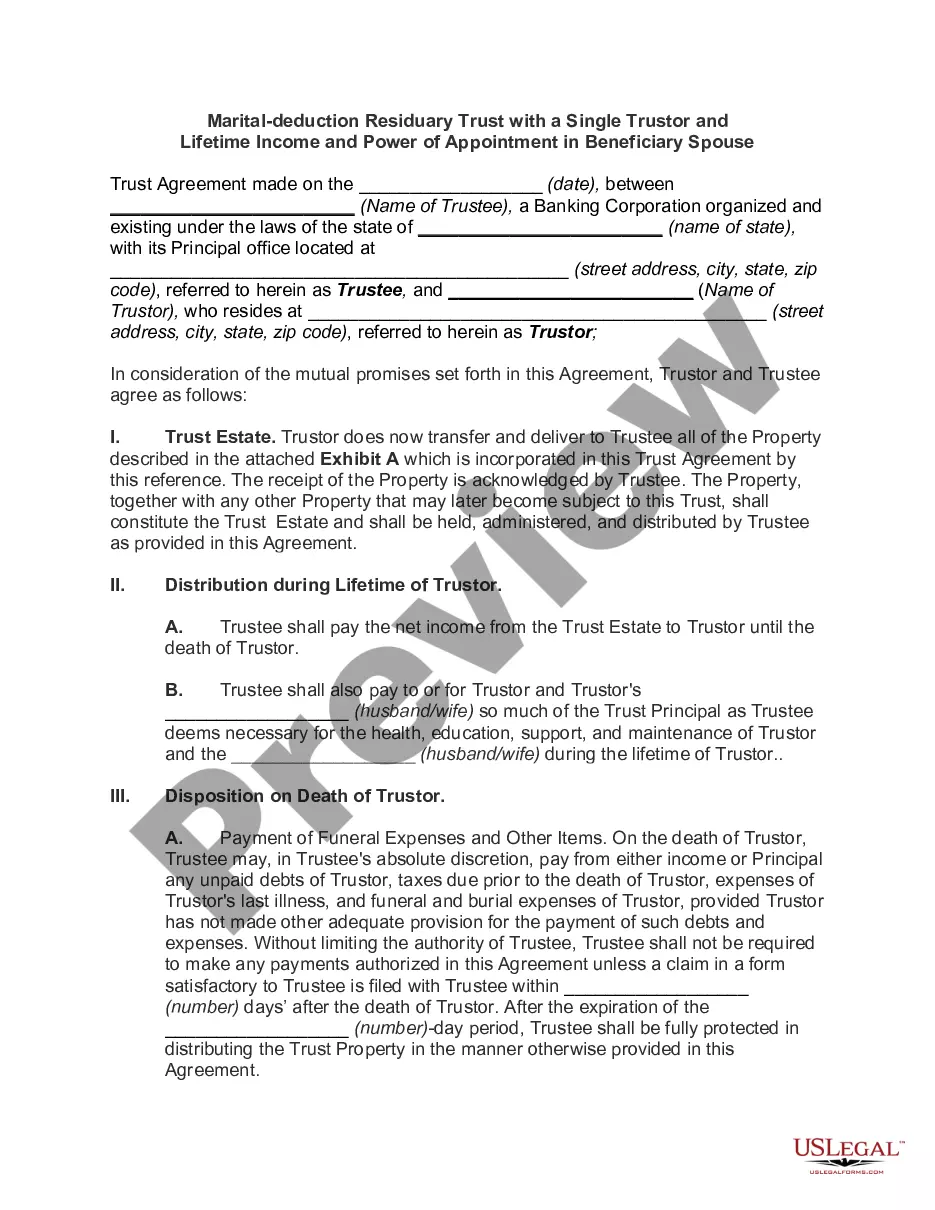
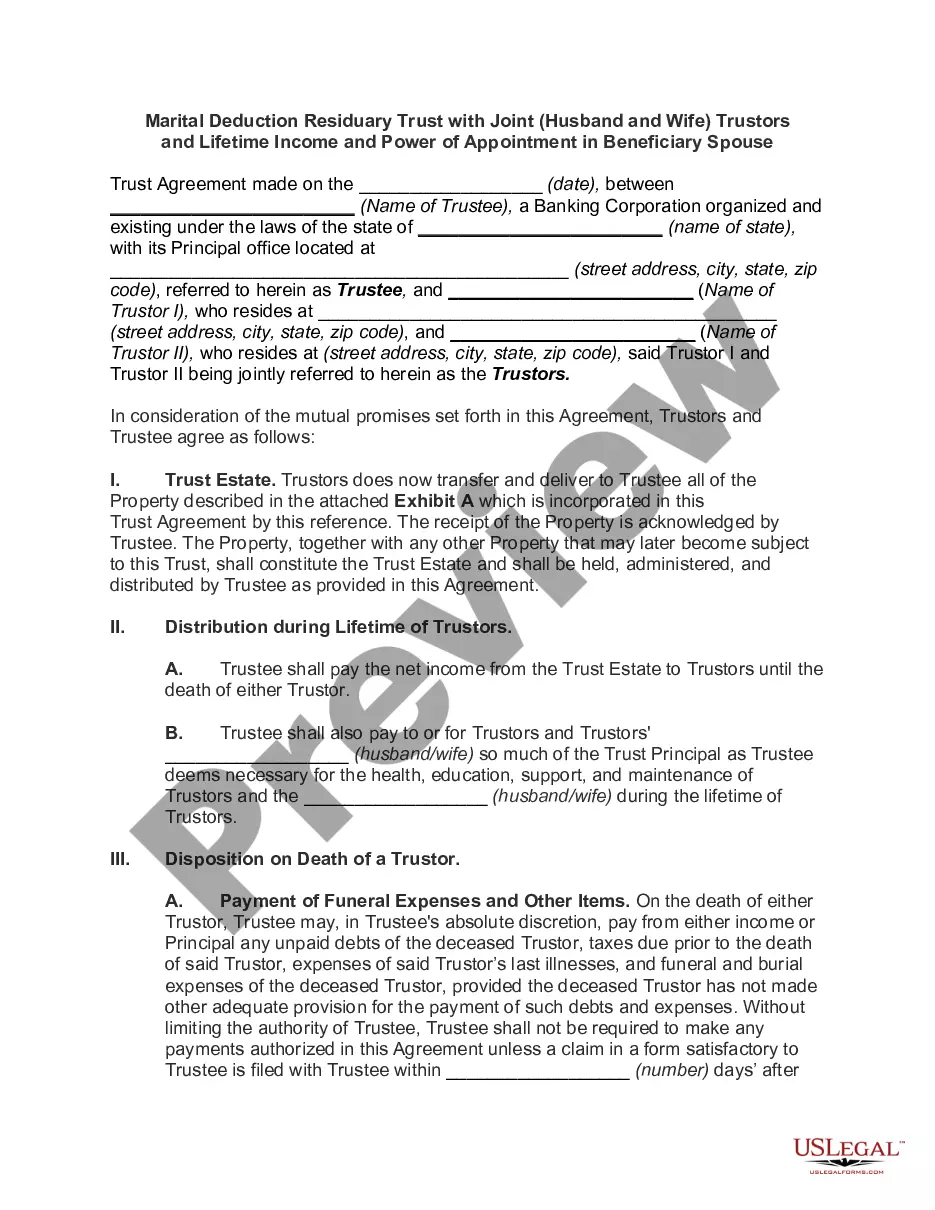
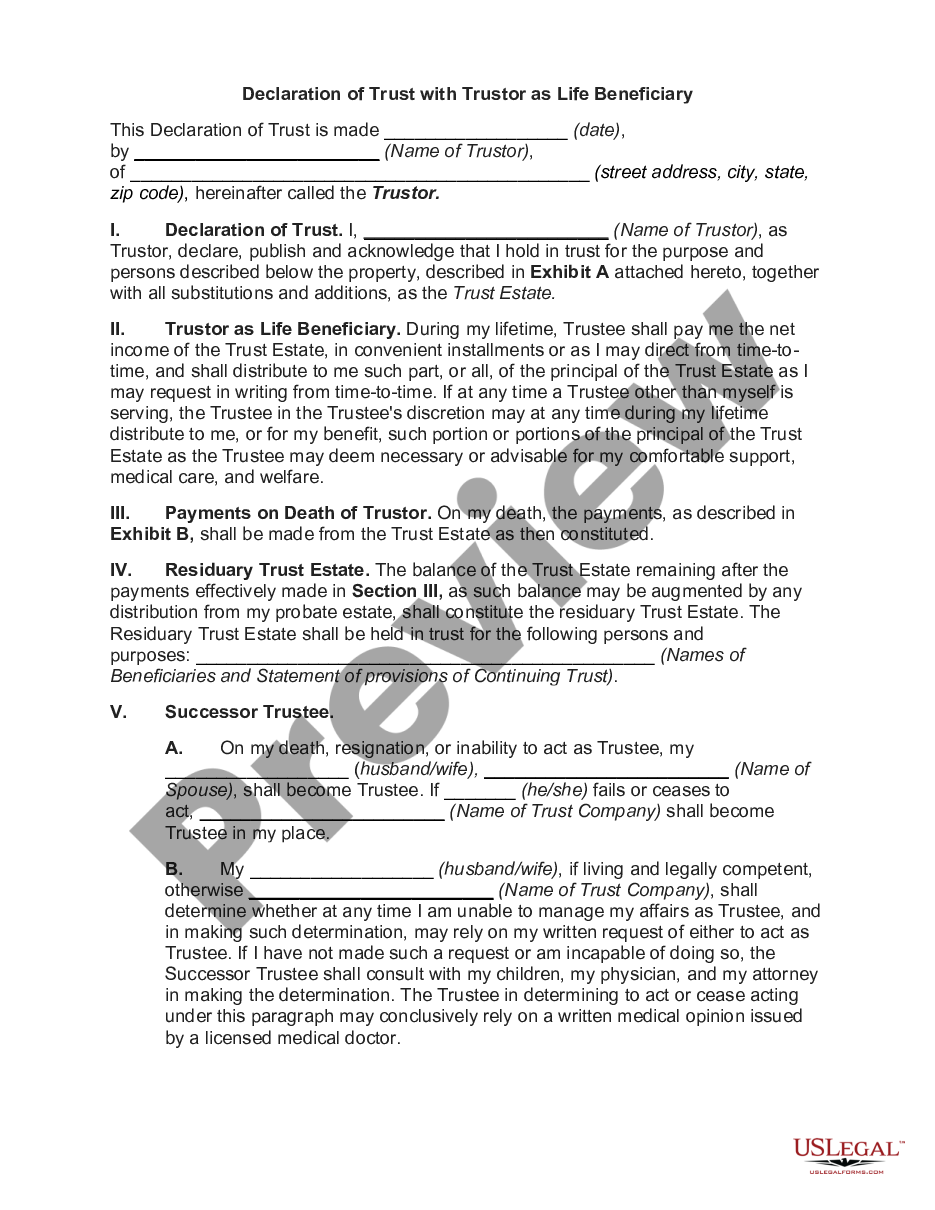
This Living Trust for Individual Who is Single, Divorced or Widow or Widower with Children is a legal document that establishes a revocable living trust tailored for individuals who are single, divorced, or widowed and have children. Unlike a will, a living trust allows for the management of your assets during your lifetime and can help avoid the probate process after your death. The creator of the trust, known as the Trustor, can also act as the trustee, maintaining control over the trust property.
What’s included in this form
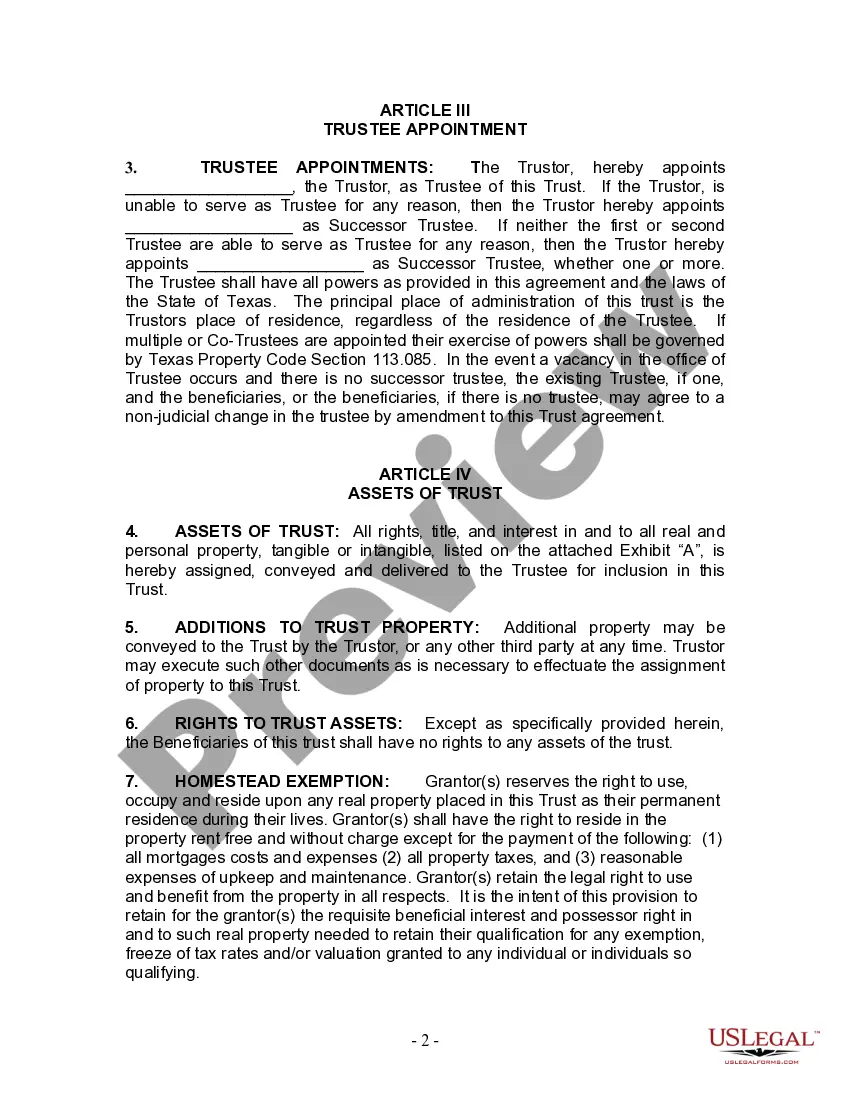
- Name of Trust: Designation of the trust as a revocable living trust.
- Trustor Identification: Details about the Trustor, including name and address.
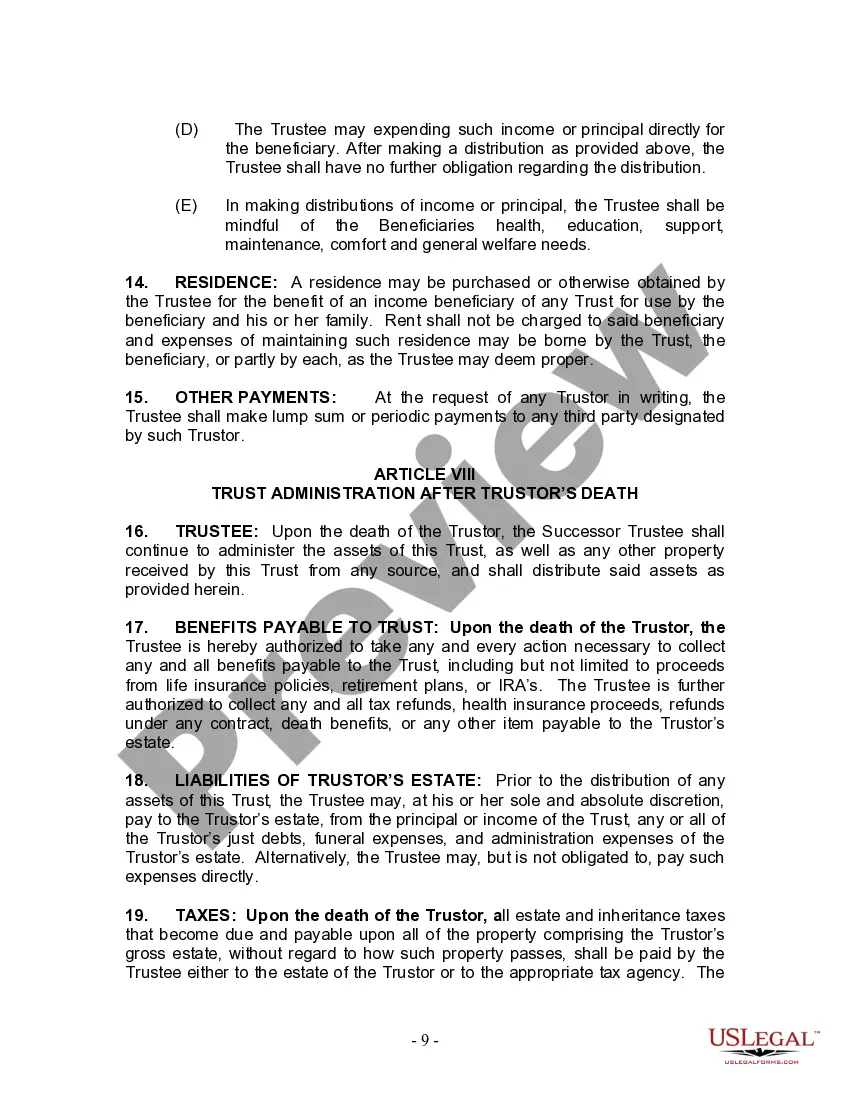
- Beneficiaries: Identification of the Trustor's children as beneficiaries upon the Trustor's death.
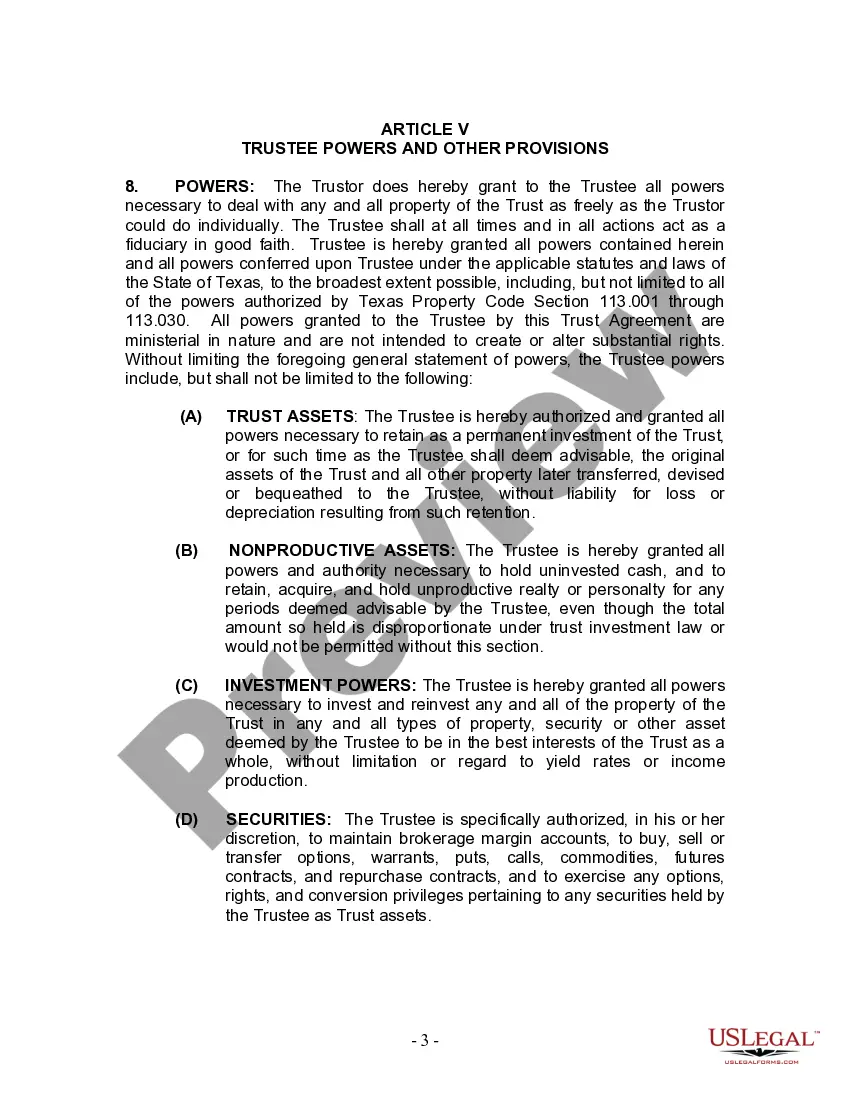
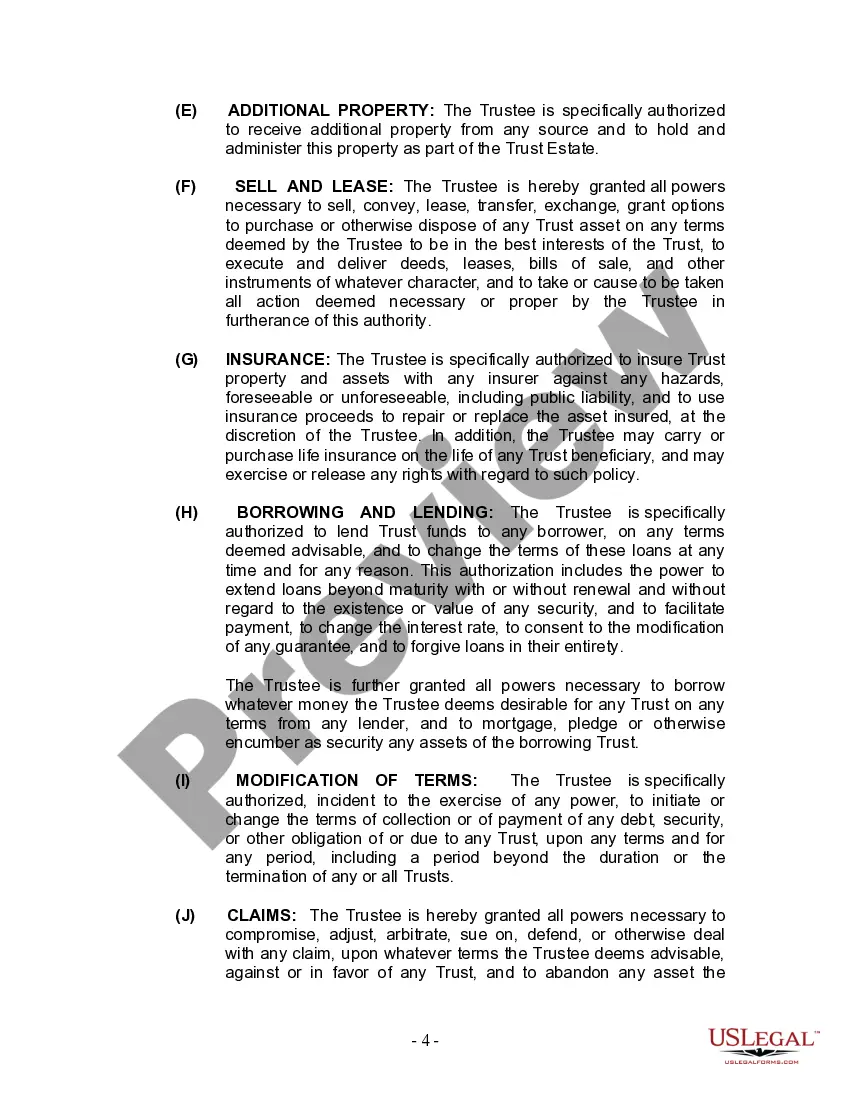
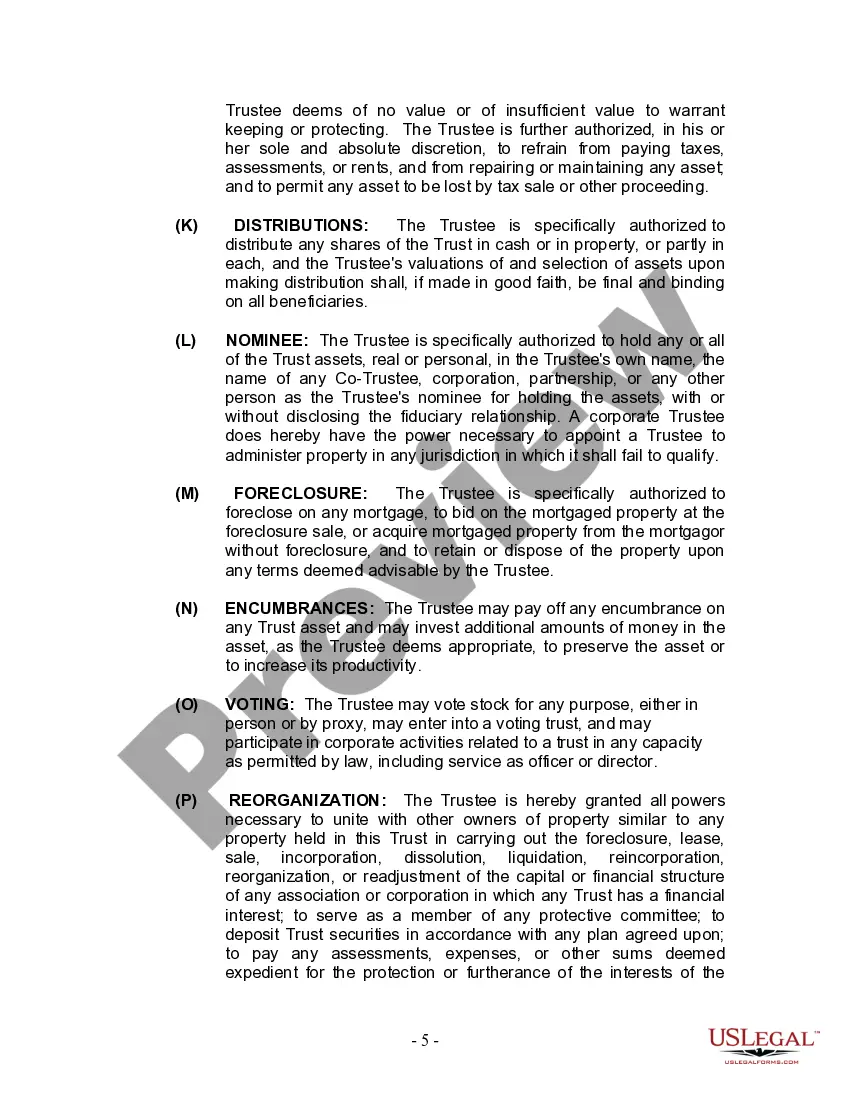
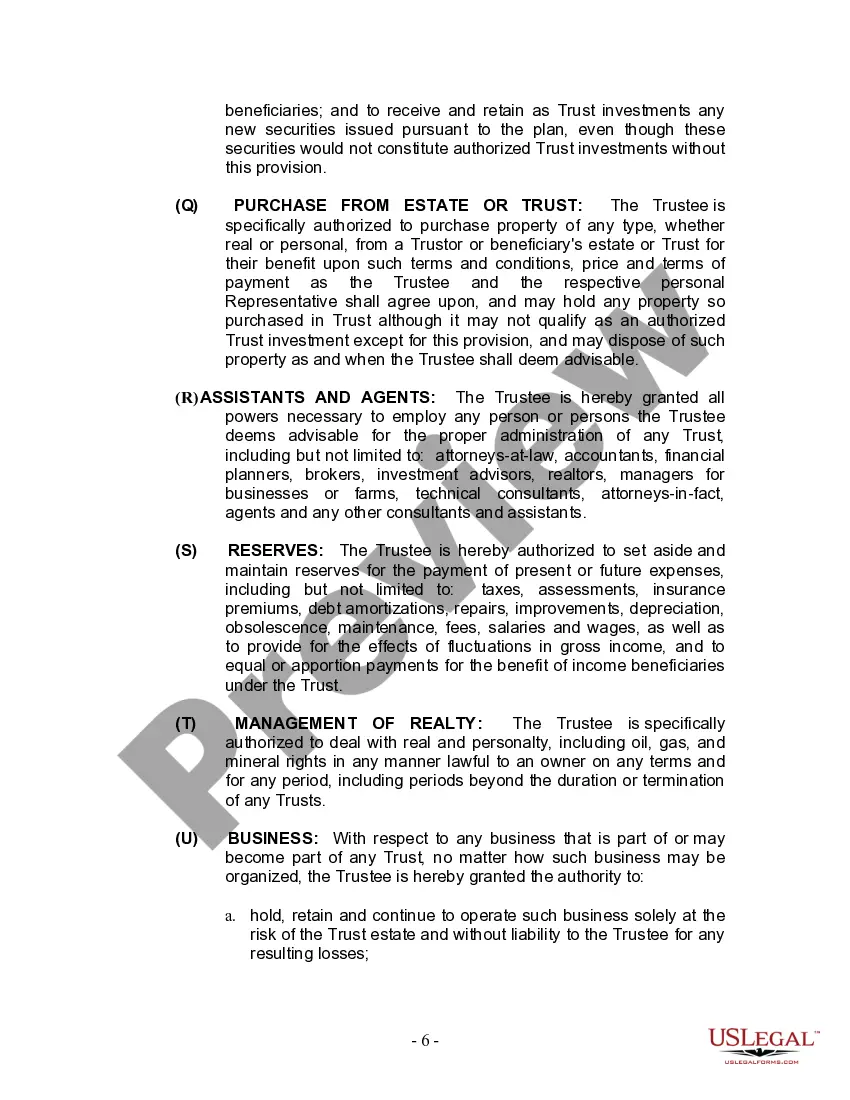
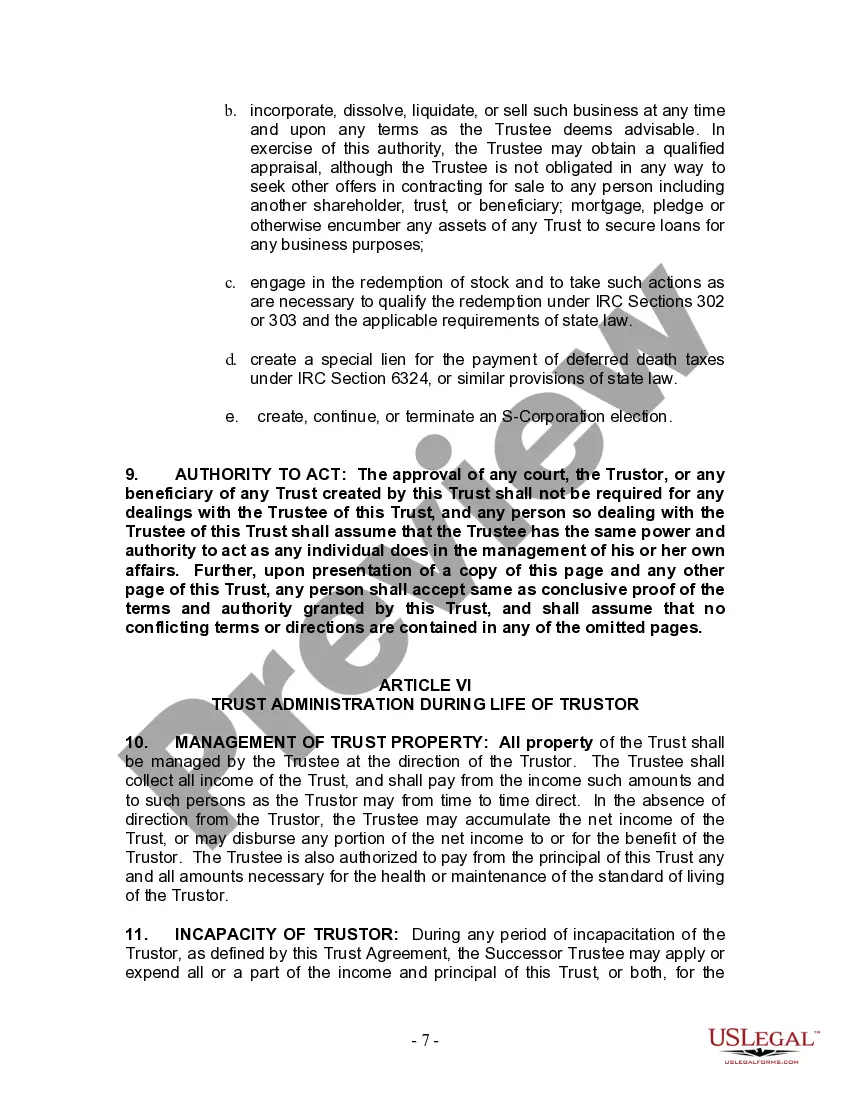
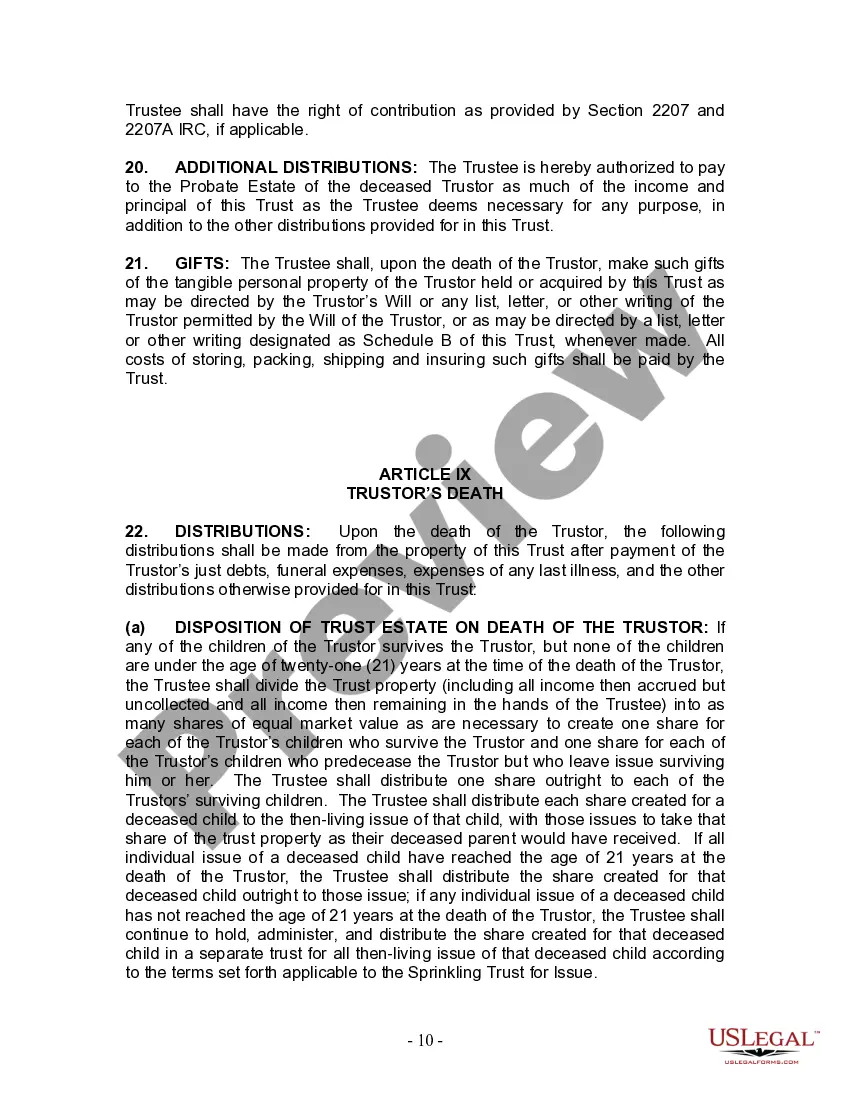
- Trustee Powers: Outline of the powers granted to the Trustee for managing trust assets.
- Distribution Provisions: Guidelines for how trust assets will be distributed upon the Trustor's death.



When to use this document
This form is beneficial for individuals who want to ensure their assets are managed and distributed according to their wishes after they pass away. It is particularly useful for those who wish to avoid the lengthy probate process, have minor children, or want to maintain control over their assets while alive.
Who needs this form
- Individuals who are single, divorced, or widowed.
- Parents with one or more children.
- Anyone seeking to manage their property and assets during their lifetime.
- Individuals who want their estate to pass outside of probate upon death.
How to prepare this document
- Identify the parties involved: Enter the names of the Trustor and the Trustee.
- Specify the trust assets: List all properties and assets to be included in the trust.
- Name the beneficiaries: Clearly outline who will benefit from the trust.
- Enter dates and signatures: Fill in the dates and ensure all parties sign in the appropriate places.
- Consider notarization: If required, find a notary public to complete the process.
Notarization guidance
To make this form legally binding, it must be notarized. Our online notarization service, powered by Notarize, lets you verify and sign documents remotely through an encrypted video session.
Get your form ready online
Our built-in tools help you complete, sign, share, and store your documents in one place.
Make edits, fill in missing information, and update formatting in US Legal Forms—just like you would in MS Word.
Download a copy, print it, send it by email, or mail it via USPS—whatever works best for your next step.
Sign and collect signatures with our SignNow integration. Send to multiple recipients, set reminders, and more. Go Premium to unlock E-Sign.
If this form requires notarization, complete it online through a secure video call—no need to meet a notary in person or wait for an appointment.
We protect your documents and personal data by following strict security and privacy standards.

Make edits, fill in missing information, and update formatting in US Legal Forms—just like you would in MS Word.

Download a copy, print it, send it by email, or mail it via USPS—whatever works best for your next step.

Sign and collect signatures with our SignNow integration. Send to multiple recipients, set reminders, and more. Go Premium to unlock E-Sign.

If this form requires notarization, complete it online through a secure video call—no need to meet a notary in person or wait for an appointment.

We protect your documents and personal data by following strict security and privacy standards.
Avoid these common issues
- Not clearly identifying all assets to be included in the trust.
- Failing to name a successor trustee.
- Not updating the trust after major life events (e.g., divorce, remarriage).
- Leaving out critical details about beneficiaries or their shares.
Advantages of online completion
- Convenience: Easily fill out and download the trust document from home.
- Editability: Make changes as needed before finalizing the document.
- Cost-effective: Avoid legal fees by using a standardized, attorney-drafted template.
- Accessibility: Access the forms anytime without the need for an appointment.
Main things to remember
- A living trust provides control over asset management during life and after death.
- It simplifies asset transfer while avoiding probate.
- Ideal for individuals who are single parents or those who are divorced or widowed.
- Ensures that children are designated beneficiaries for a smoother financial future.
Looking for another form?
Form popularity
FAQ
No, you don't need a lawyer to set up a trust, but it might be a good idea to seek legal advice to ensure the trust is set up correctly and that you have considered all long-term financial and estate planning aspects of the trust.Some living trusts are revocable, which means the trust can be changed at any time.
The first step is determining which type of trust you'll need. Next, you'll want to take stock of your assets and property. You'll also need to choose a trustee. Make the trust document. Sign the trust document in front of a notary. Put the property you want inside the trust.
Although a typical will package costs $1,000 to $1,200, and a trust can run $2,500, a legal insurance plan like Texas Legal can save Texans hundreds or even thousands on their estate planning costs.
Although a typical will package costs $1,000 to $1,200, and a trust can run $2,500, a legal insurance plan like Texas Legal can save Texans hundreds or even thousands on their estate planning costs.
A living trust in Texas allows you to use your assets during your lifetime and securely transfer them to your beneficiaries after your death. A revocable living trust (also called an inter vivos trust) offers a variety of benefits as an estate planning tool.
Paperwork. Setting up a living trust isn't difficult or expensive, but it requires some paperwork. Record Keeping. After a revocable living trust is created, little day-to-day record keeping is required. Transfer Taxes. Difficulty Refinancing Trust Property. No Cutoff of Creditors' Claims.
When a person owns real property in another state, having a living trust will avoid the necessity for two probate proceedings, one in each state, which makes a living trust more desirable than a Will. Also, a living trust provides a significant lifetime advantage if a person becomes incapacitated.