Tennessee Relative Caretaker Legal Documents Package
Overview of this form package
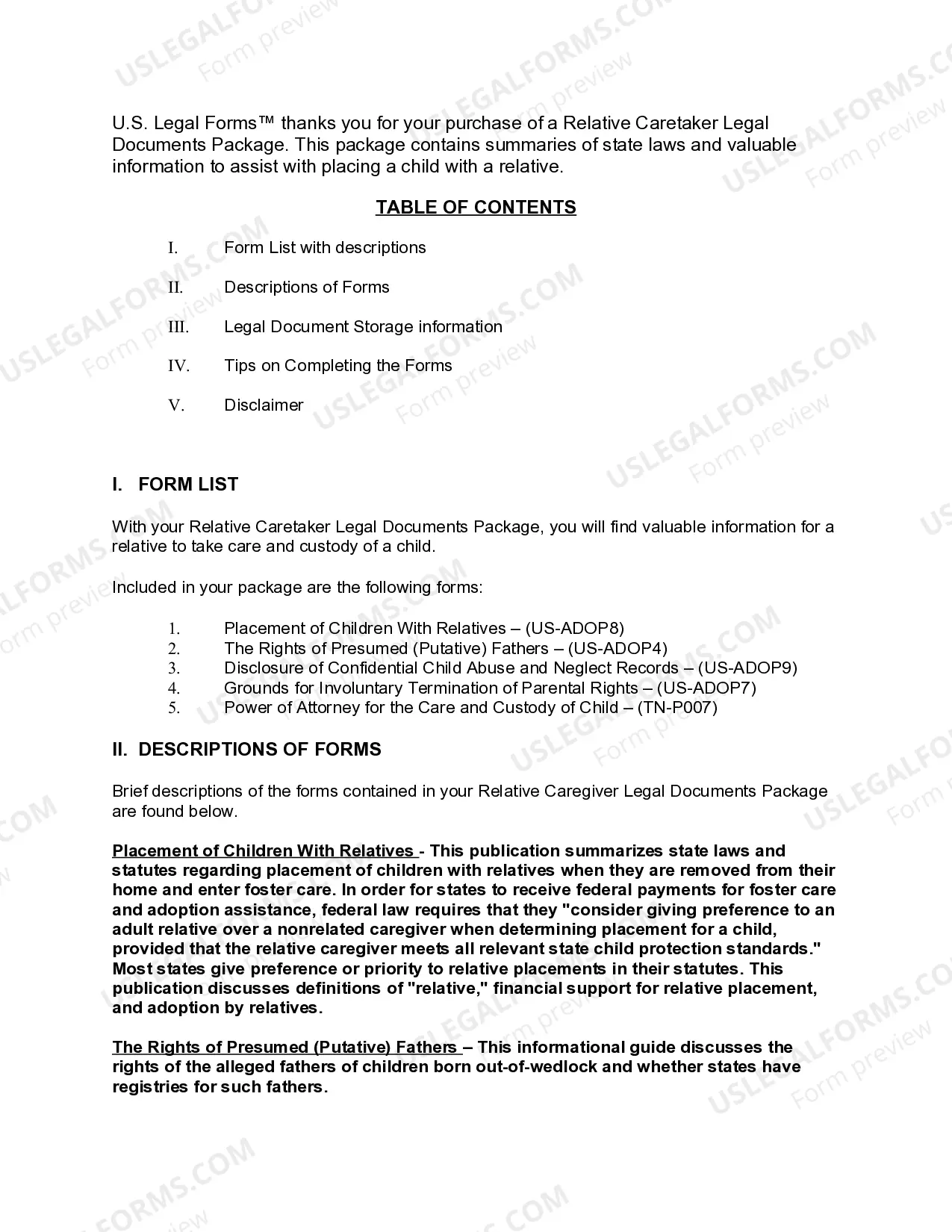
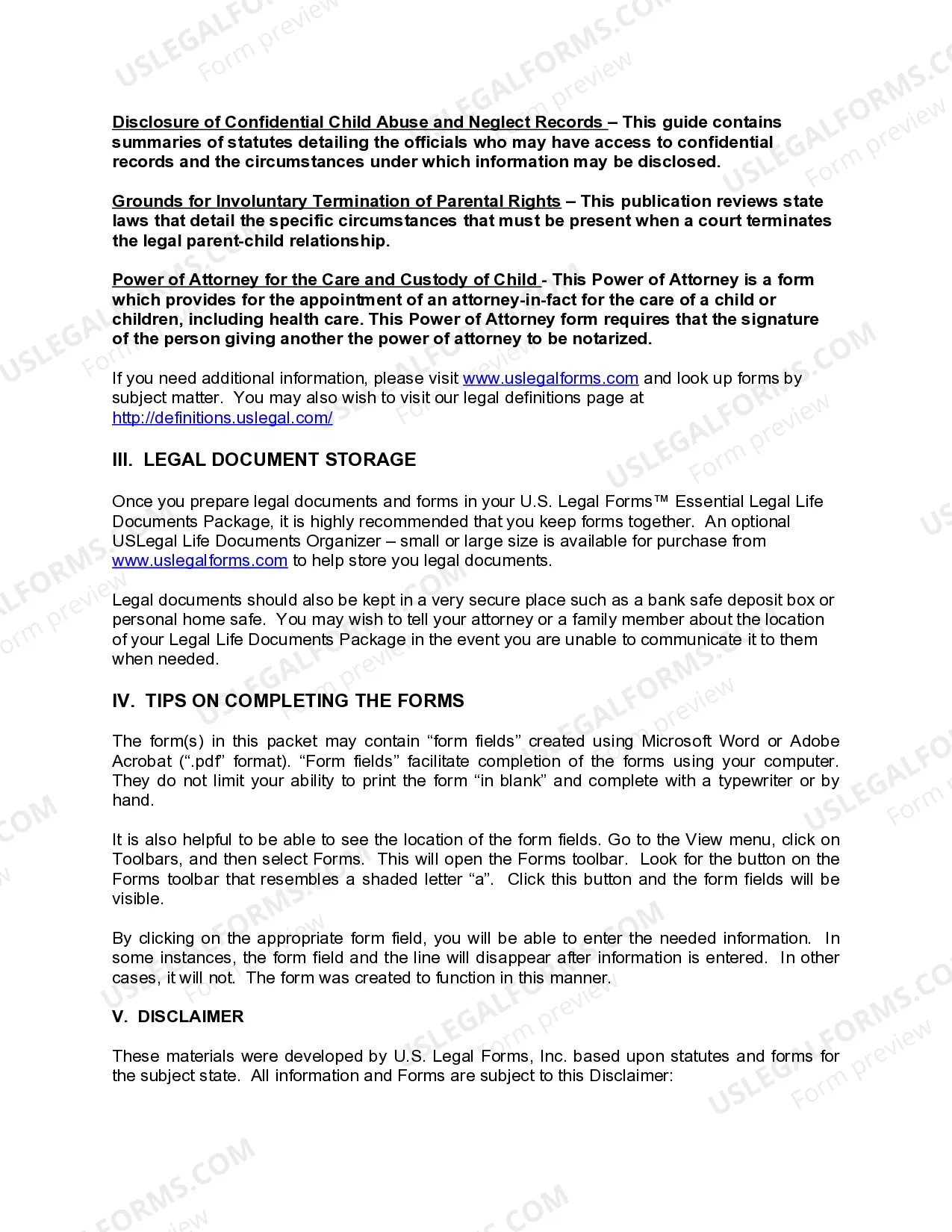
The Tennessee Relative Caretaker Legal Documents Package provides families with essential legal tools and information for placing a child with a relative. This package stands out because it combines multiple resources into one convenient purchase, offering a savings of more than 50% over individual purchases of guides or forms. It helps relatives navigate the legal aspects of child care and custody in Tennessee.
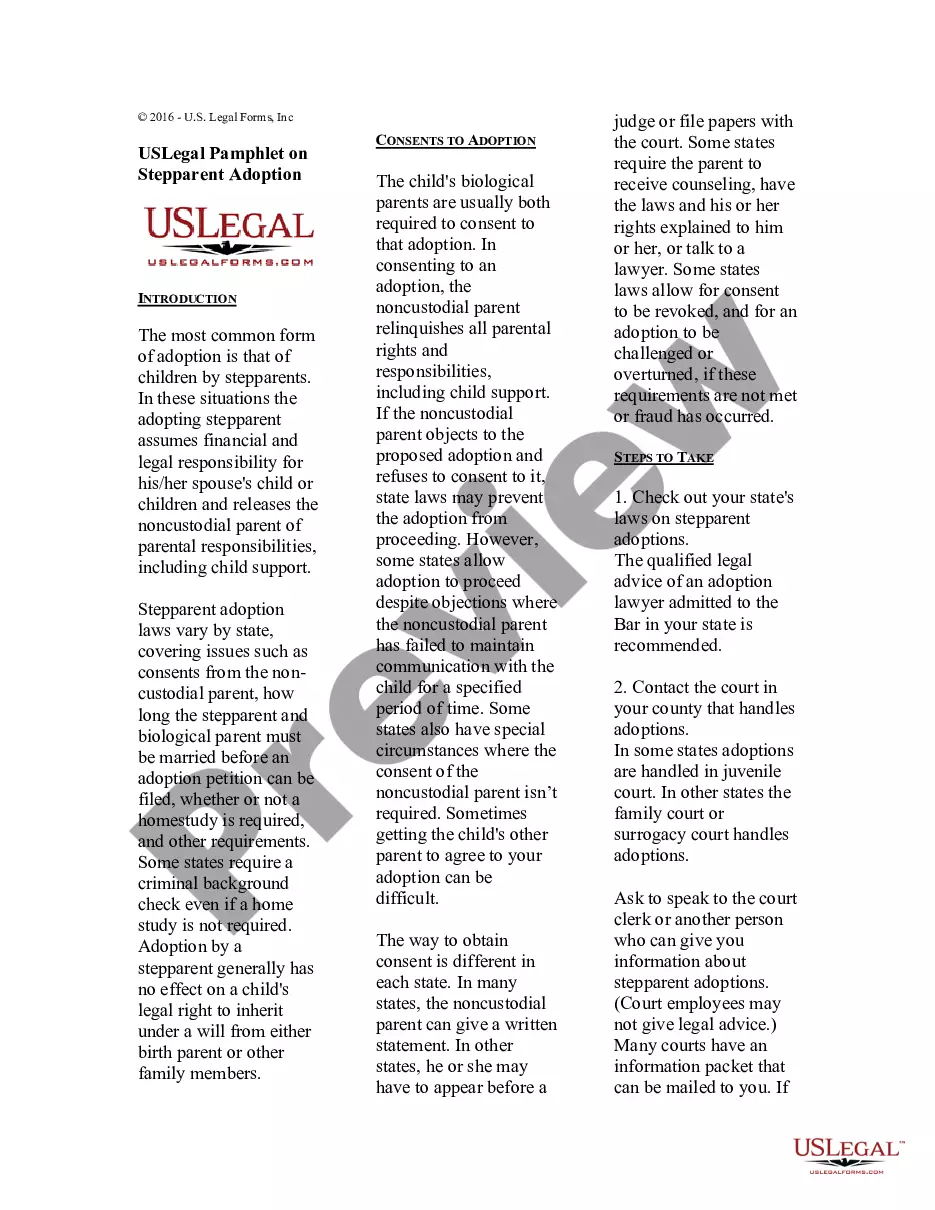
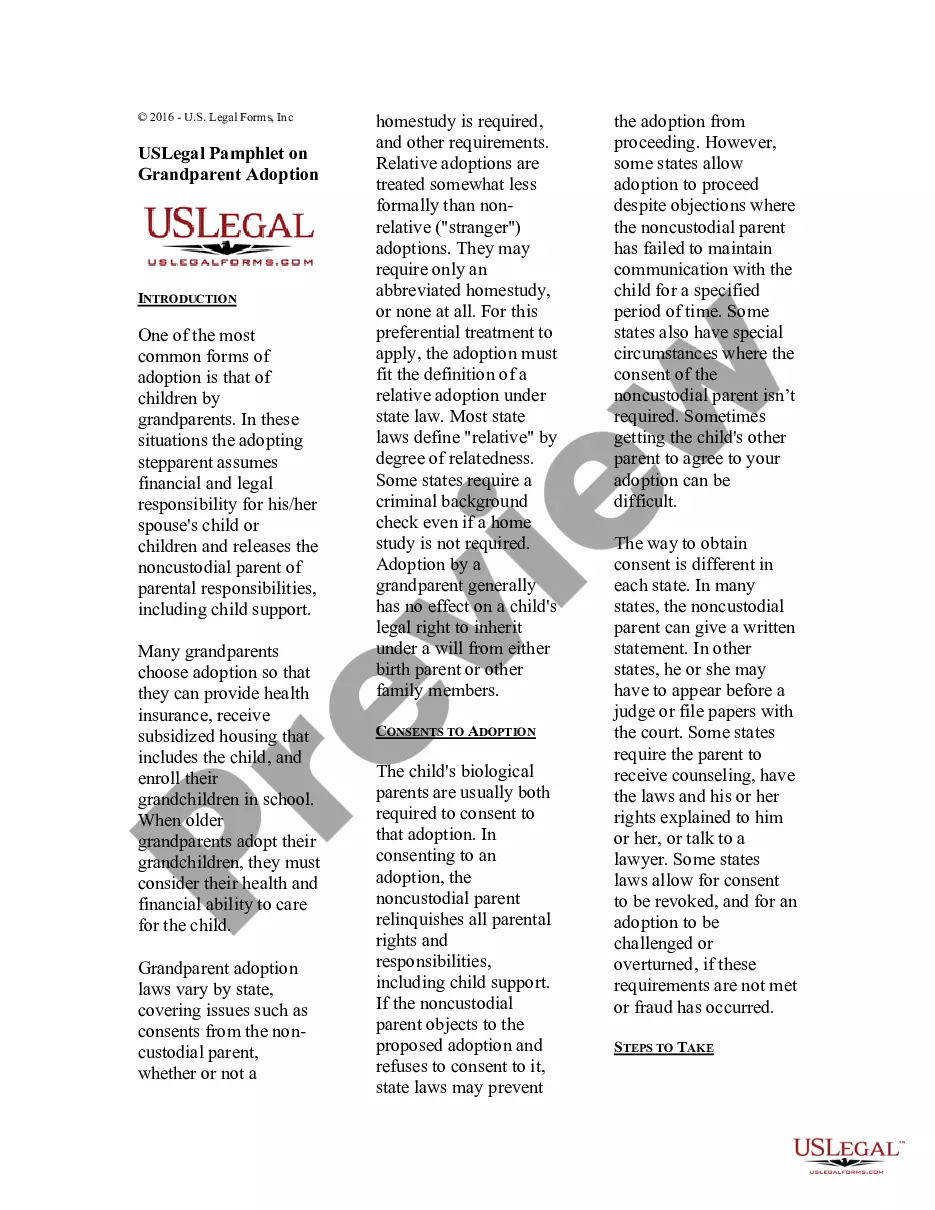
Forms provided in this package



When this form package is needed
This package is ideal when a child needs to be placed with a relative due to circumstances such as family crisis, parental incapacity, or foster care placement. It provides the necessary legal documentation and guidance to ensure that relatives understand their rights and responsibilities, facilitating a smooth transition for the child.
Who this form package is for
- Relatives seeking legal custodianship or guardianship of a child.
- Family members involved in child welfare decisions.
- Putative fathers wanting to understand their rights regarding a child born out of wedlock.
- Individuals needing to navigate child custody laws in Tennessee.
Steps to complete these forms
- Review the included forms and guides to understand the process.
- Identify the child and relative caregiver involved in the placement.
- Complete the Power of Attorney form with necessary details and ensure notarization.
- Keep the completed legal documents in a secure location.
- Consult an attorney if needed for further assistance.
Notarization guidance for this package
Some forms in this package require notarization to be legally valid. US Legal Forms provides secure online notarization powered by Notarize, allowing you to complete the process through a verified video call, available 24/7.
Get your form ready online
Our built-in tools help you complete, sign, share, and store your documents in one place.
Make edits, fill in missing information, and update formatting in US Legal Forms—just like you would in MS Word.
Download a copy, print it, send it by email, or mail it via USPS—whatever works best for your next step.
Sign and collect signatures with our SignNow integration. Send to multiple recipients, set reminders, and more. Go Premium to unlock E-Sign.
If this form requires notarization, complete it online through a secure video call—no need to meet a notary in person or wait for an appointment.
We protect your documents and personal data by following strict security and privacy standards.

Make edits, fill in missing information, and update formatting in US Legal Forms—just like you would in MS Word.

Download a copy, print it, send it by email, or mail it via USPS—whatever works best for your next step.

Sign and collect signatures with our SignNow integration. Send to multiple recipients, set reminders, and more. Go Premium to unlock E-Sign.

If this form requires notarization, complete it online through a secure video call—no need to meet a notary in person or wait for an appointment.

We protect your documents and personal data by following strict security and privacy standards.
Common mistakes
- Failing to notarize the Power of Attorney form when required.
- Not fully understanding the definitions of "relative" as it pertains to custody.
- Neglecting to keep documents in a secure and accessible location.
- Overlooking details about the rights of putative fathers in custody arrangements.
Benefits of completing this package online
- Convenient access to important legal documents from anywhere.
- Editable forms that allow easy customization for specific situations.
- Reliable guidance from professionally drafted materials by licensed attorneys.
Looking for another form?








Form popularity
FAQ
Kinship foster care is when a friend or family member becomes an official foster carer for a child.It is required to give preference to placing the child with a relative, friend or other 'connected person' if that is in the child's best interests, but only if that person is assessed and approved as a foster carer.
Kinship care refers to the care of children by relatives or, in some jurisdictions, close family friends (often referred to as fictive kin). Relatives are the preferred resource for children who must be removed from their birth parents because it maintains the children's connections with their families.
Kinship care program allows for a child who needs to come into care to be placed immediately with someone familiar. Kinship caregivers: take care of the day-to-day needs of the child residing in their care, including the child's physical, emotional, spiritual and cultural needs.
21 years of age or older, In good health. Able to demonstrate an ability and interest in caring for children. Able to provide a safe living environment for a child.
Family and Friends Care or Kinship Care is an arrangement whereby a child who cannot be cared for by their parent(s) or other person with Parental Responsibility, goes to live with a relative, friend or other connected person.
What is Kinship Care? Kinship care refers to the care of children by relatives or, in some jurisdictions such as California, non-relative extended family members (NREFMs often referred to as fictive kin).Informal kinship care commonly refers to relatives raising children who are not in the foster care system.
Kinship care arrangements fall roughly into three categories: (1) informal kinship care, (2) voluntary kinship care, and (3) formal kinship care. Informal kinship care refers to arrangements made by parents and other family members without any involvement from either the child welfare agency or the juvenile court.
The full assessment must be conducted within 16 weeks of the child being placed with you, and this can be extended for a further 8 weeks in specific circumstances.