Mississippi Appeal
What is this form?
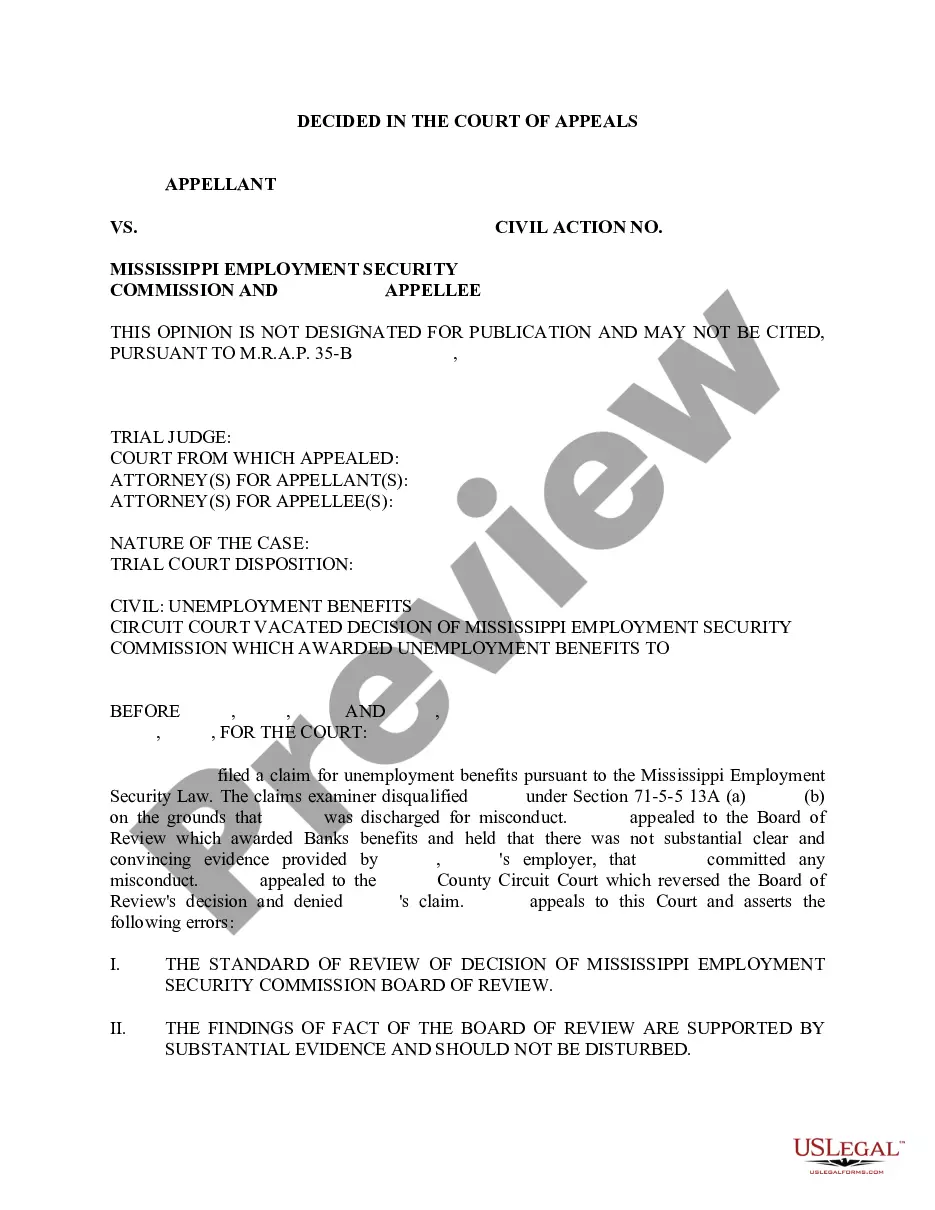
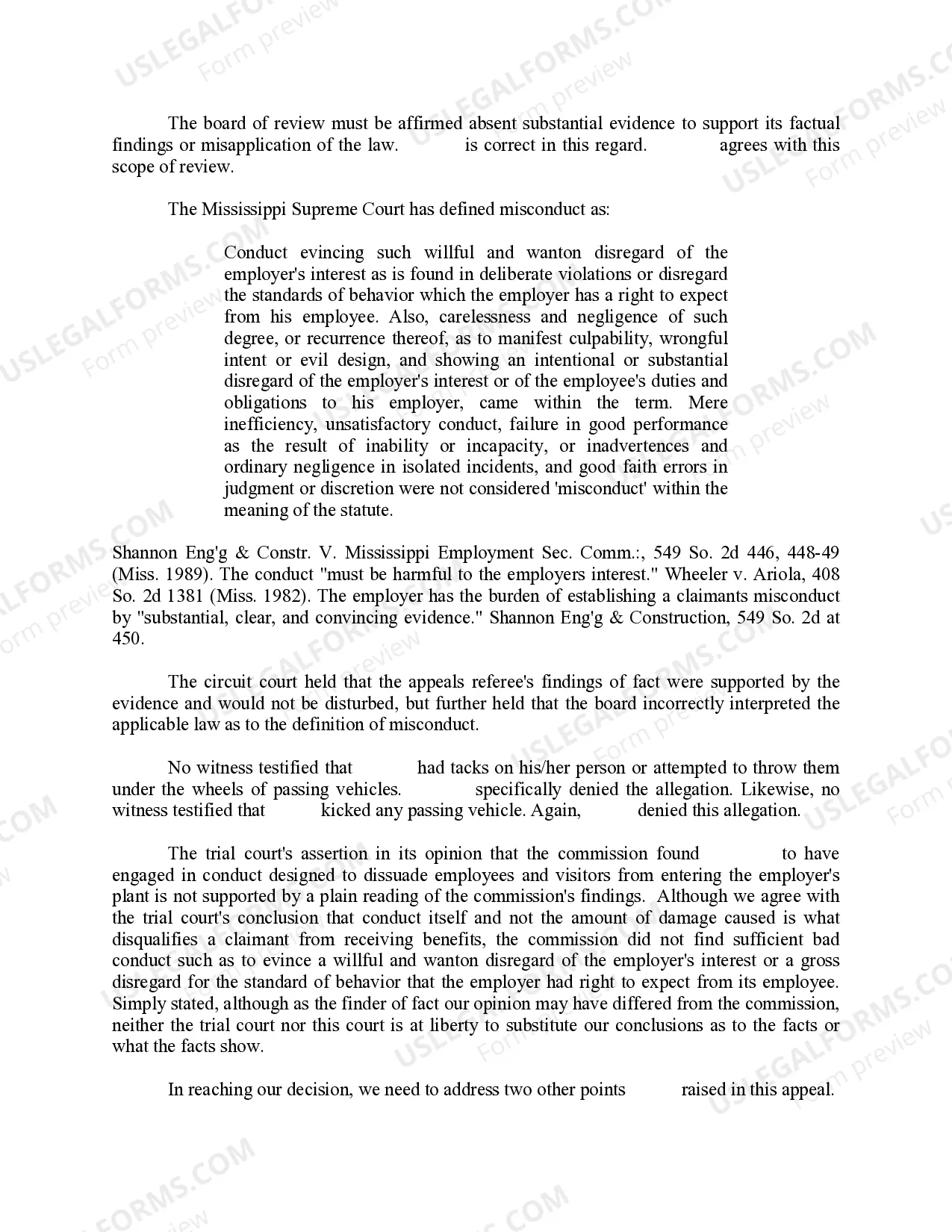
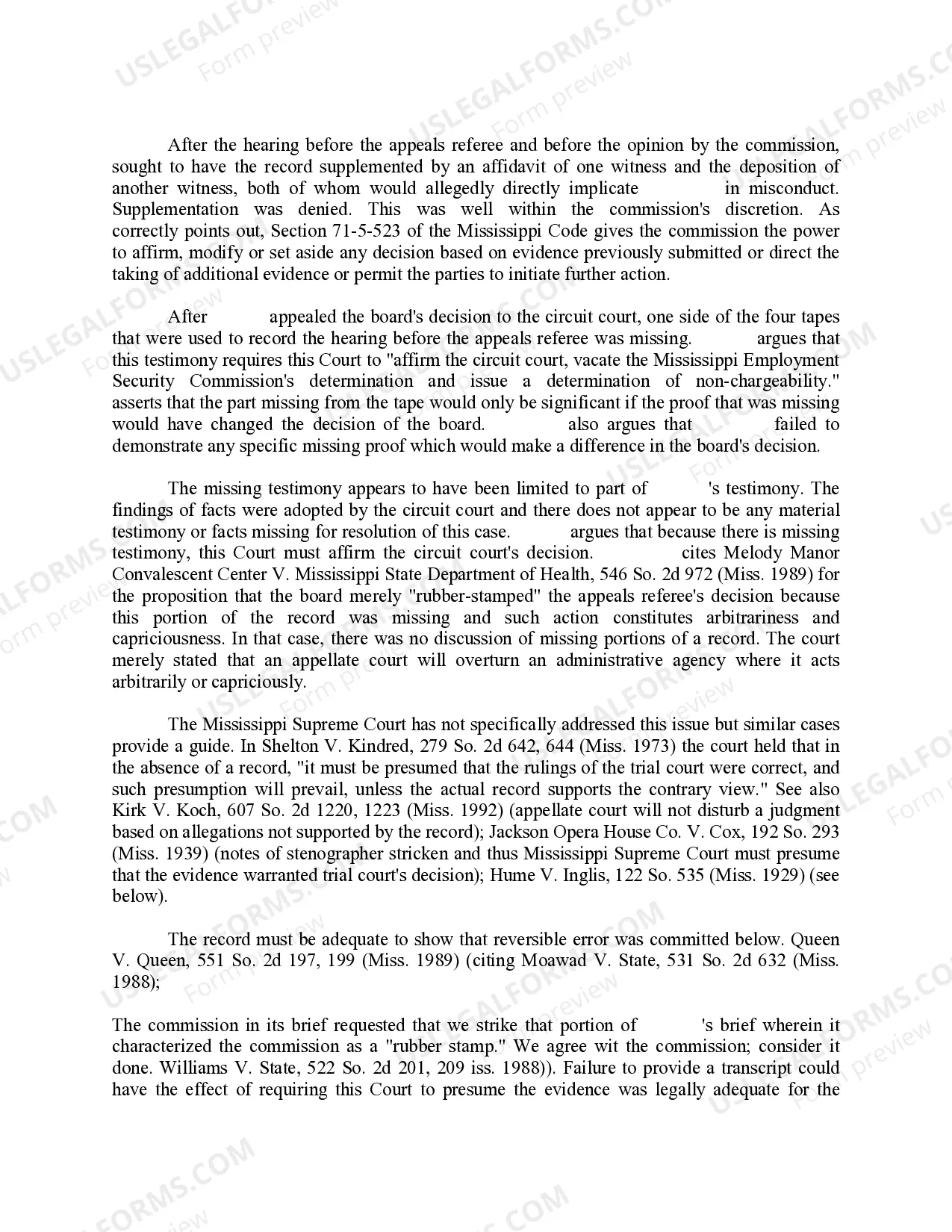
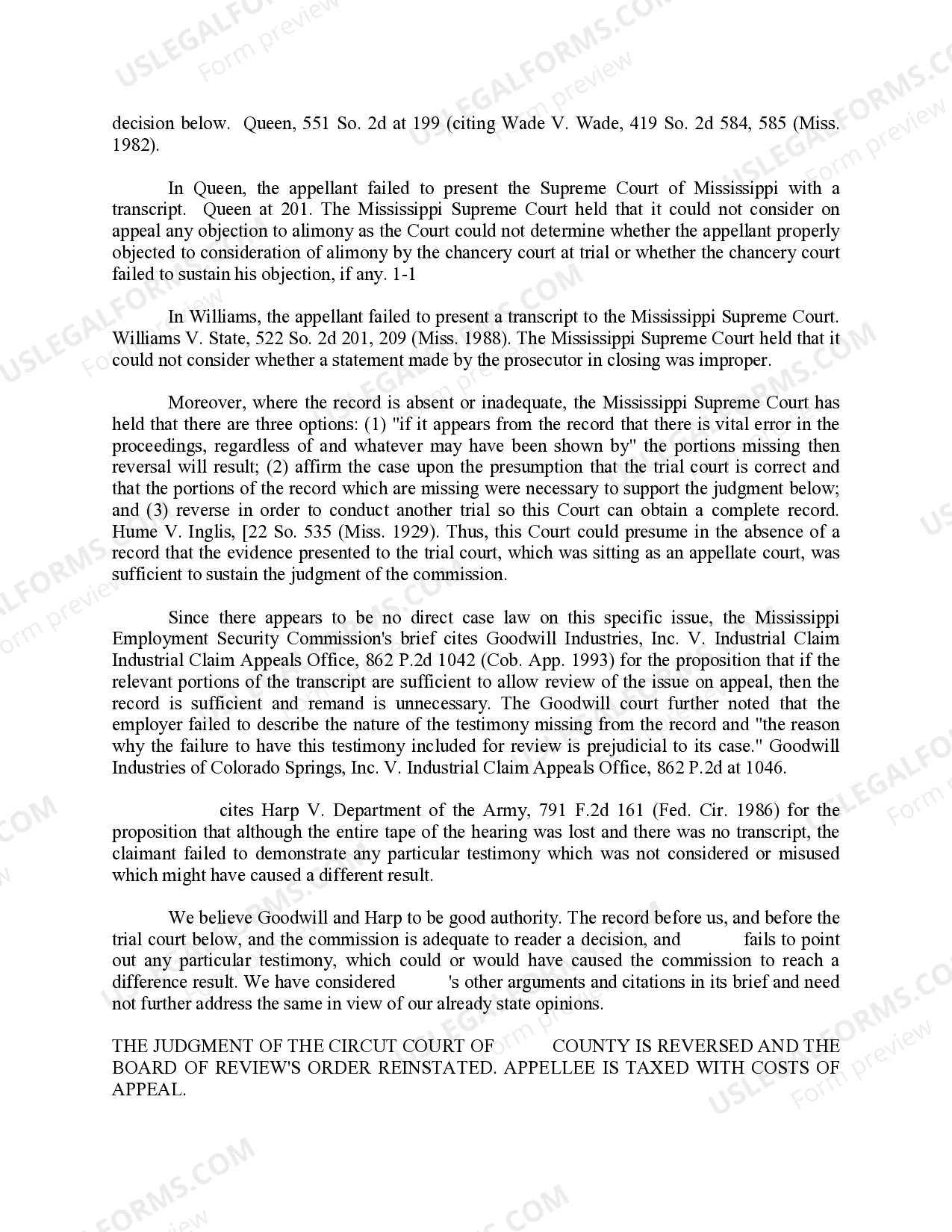
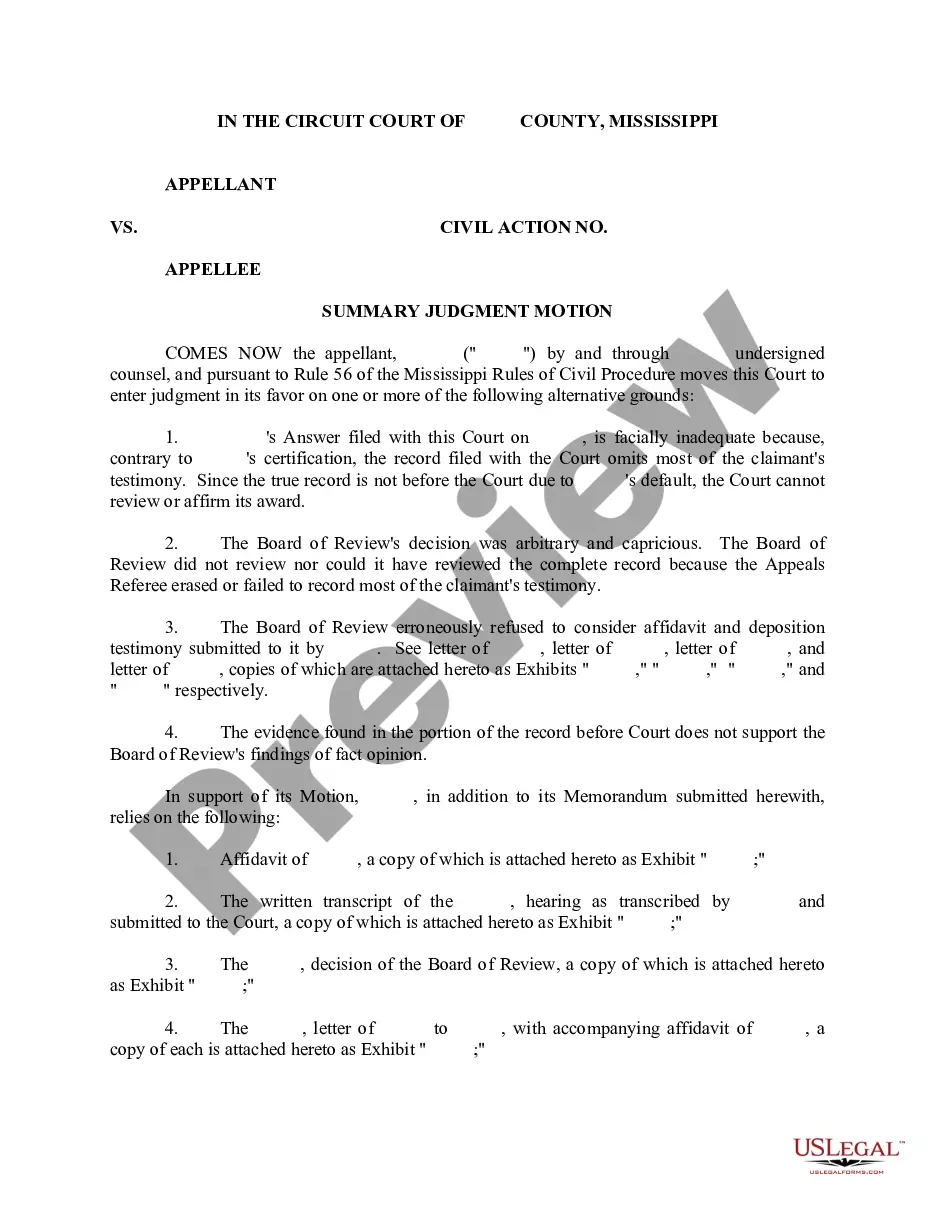
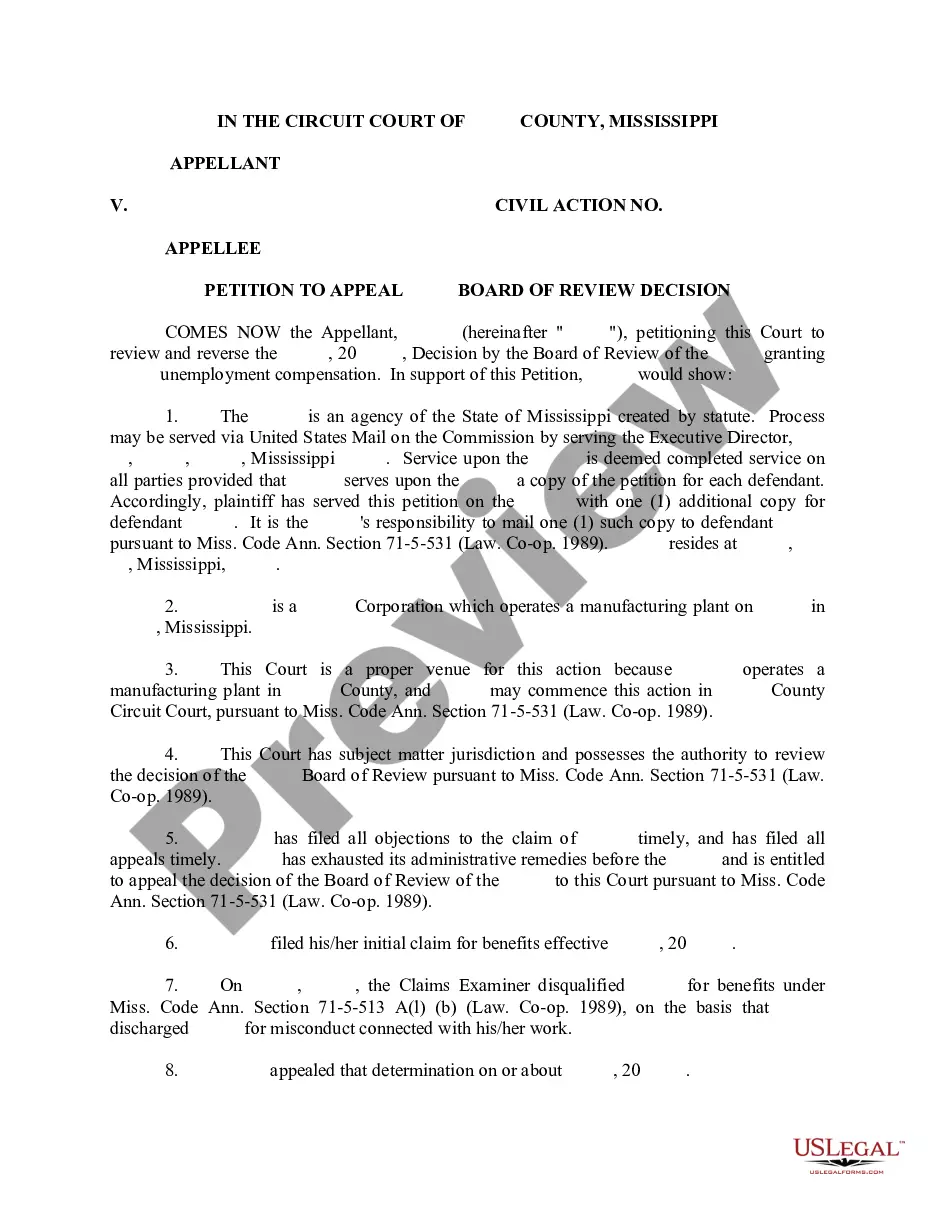
The Appeal form is a legal document used in Mississippi to request a higher court to review the findings of a lower trial court. This form is essential for individuals or parties dissatisfied with a trial court's decision and seeks to challenge that ruling. Unlike other legal forms, such as a notice of appeal, this document details specific grounds for the appeal, including evidence and legal standards that were allegedly misapplied in the original trial.
Main sections of this form
- Case identification details, including names of the parties involved.
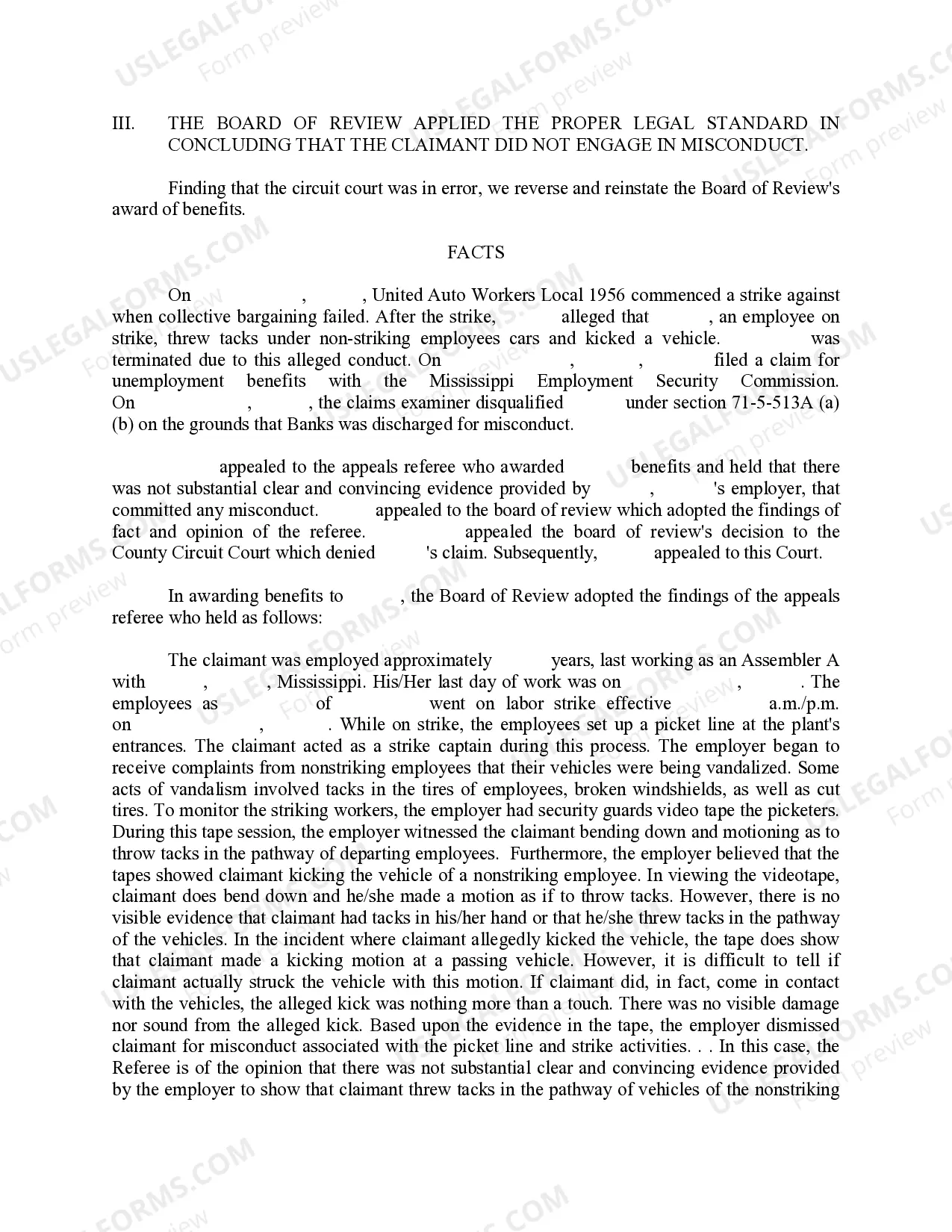
- Statement of the trial court's findings and the grounds for appeal.
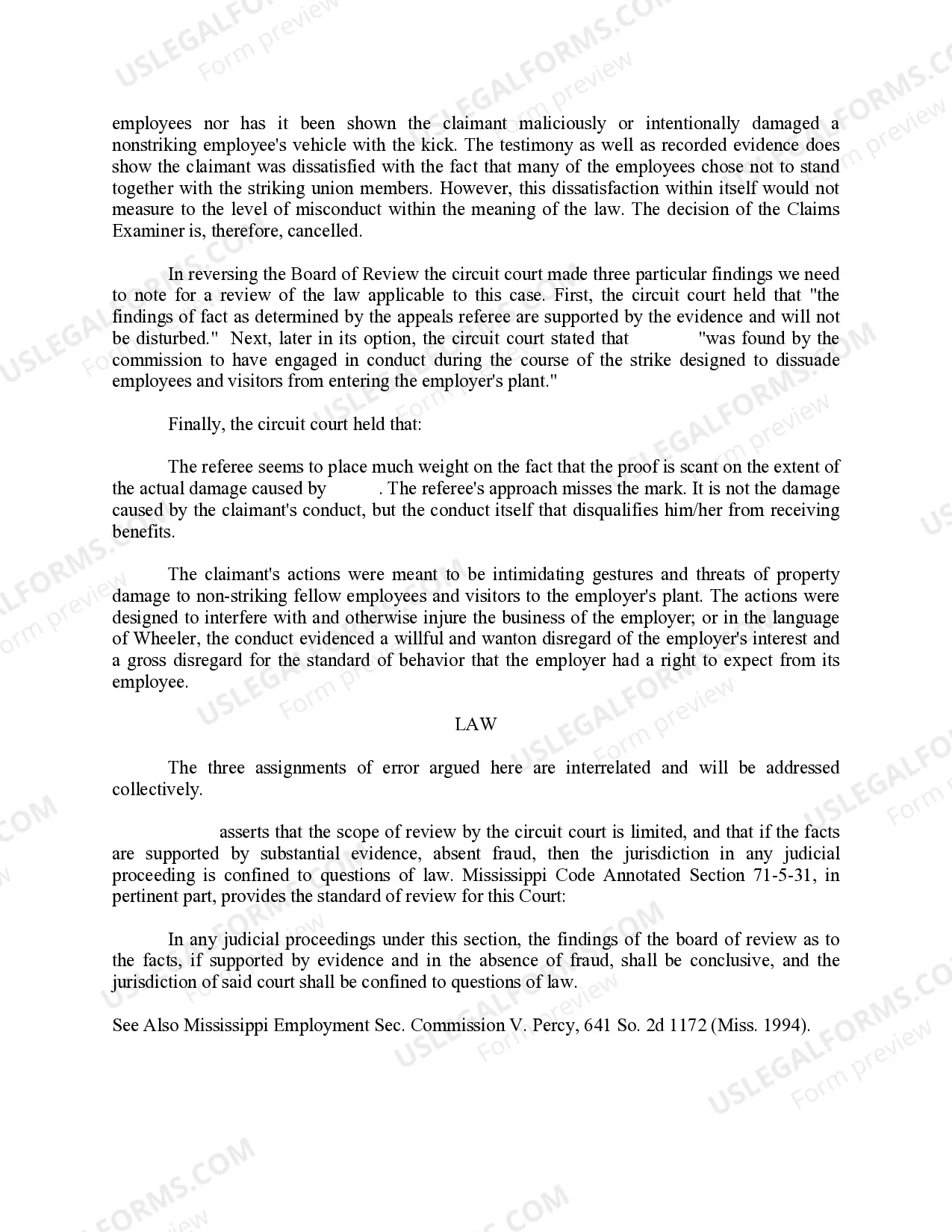
- Arguments supporting the appeal based on legal standards and evidence.
- Request for the appellate court to review and potentially reverse the lower court's decision.
- Signature line for the appellant or their attorney.

Common use cases
This form should be used when you believe that a trial court made an error in its judgment that adversely affects your rights or interests. Situations where this form is applicable include disputes over legal rulings, application of the law, or factual determinations made by the lower court. For instance, if you were denied benefits due to a claimed misconduct and you believe the court misinterpreted the evidence, you may file this appeal.
Who should use this form
This form is intended for:
- Individuals or parties who have participated in a trial and disagree with the court's judgment.
- Claimants seeking to challenge the decisions made by administrative or lower courts.
- Attorneys filing on behalf of their clients who wish to appeal a court decision.
Steps to complete this form
- Identify the parties involved in the appeal and include their full names and addresses.
- Provide a clear statement of the trial court's findings you are appealing against.
- List the specific grounds for your appeal, citing any relevant laws or evidence.
- Sign and date the document, ensuring all required signatures are included.
- Submit the completed form according to the guidelines specified for appeals in Mississippi.
Does this document require notarization?
This form does not typically require notarization unless specified by local law. It is essential to check with court requirements where the appeal is being filed to determine if notarization is necessary.
Get your form ready online
Our built-in tools help you complete, sign, share, and store your documents in one place.
Make edits, fill in missing information, and update formatting in US Legal Forms—just like you would in MS Word.
Download a copy, print it, send it by email, or mail it via USPS—whatever works best for your next step.
Sign and collect signatures with our SignNow integration. Send to multiple recipients, set reminders, and more. Go Premium to unlock E-Sign.
If this form requires notarization, complete it online through a secure video call—no need to meet a notary in person or wait for an appointment.
We protect your documents and personal data by following strict security and privacy standards.

Make edits, fill in missing information, and update formatting in US Legal Forms—just like you would in MS Word.

Download a copy, print it, send it by email, or mail it via USPS—whatever works best for your next step.

Sign and collect signatures with our SignNow integration. Send to multiple recipients, set reminders, and more. Go Premium to unlock E-Sign.

If this form requires notarization, complete it online through a secure video call—no need to meet a notary in person or wait for an appointment.

We protect your documents and personal data by following strict security and privacy standards.
Avoid these common issues
- Failing to file the appeal within the specified time limits.
- Not including all necessary parties in the appeal.
- Providing insufficient evidence or grounds for the appeal.
- Neglecting to proofread for accuracy before submission.
Benefits of completing this form online
- Convenient access to complete and download the form from any location.
- Editable templates that allow users to fill in their information easily.
- Instant updates to ensure compliance with any changes in Mississippi law.
- Easy storage and retrieval of the completed forms for future reference.
Legal use & context
- The Appeal form is used to initiate a review process by a higher court.
- It establishes a formal request for reconsideration of a lower court's ruling.
- Filing an appeal does not guarantee a reversal; it must be based on substantial legal grounds.
Main things to remember
- The Appeal form is crucial for contesting lower court decisions in Mississippi.
- Complete and accurate information increases the chances of a successful appeal.
- Understanding the grounds for appeal and legal precedents is vital.
Looking for another form?

Form popularity
FAQ
This appeal must be made within (15) days of the date of mailing of the notice demanding payment. Your request should be mailed to MDES, Appeals Department, P.O. Box 1699, Jackson, MS 39215-1699.
Appeals are decided by panels of three judges working together. The appellant presents legal arguments to the panel, in writing, in a document called a "brief." In the brief, the appellant tries to persuade the judges that the trial court made an error, and that its decision should be reversed.
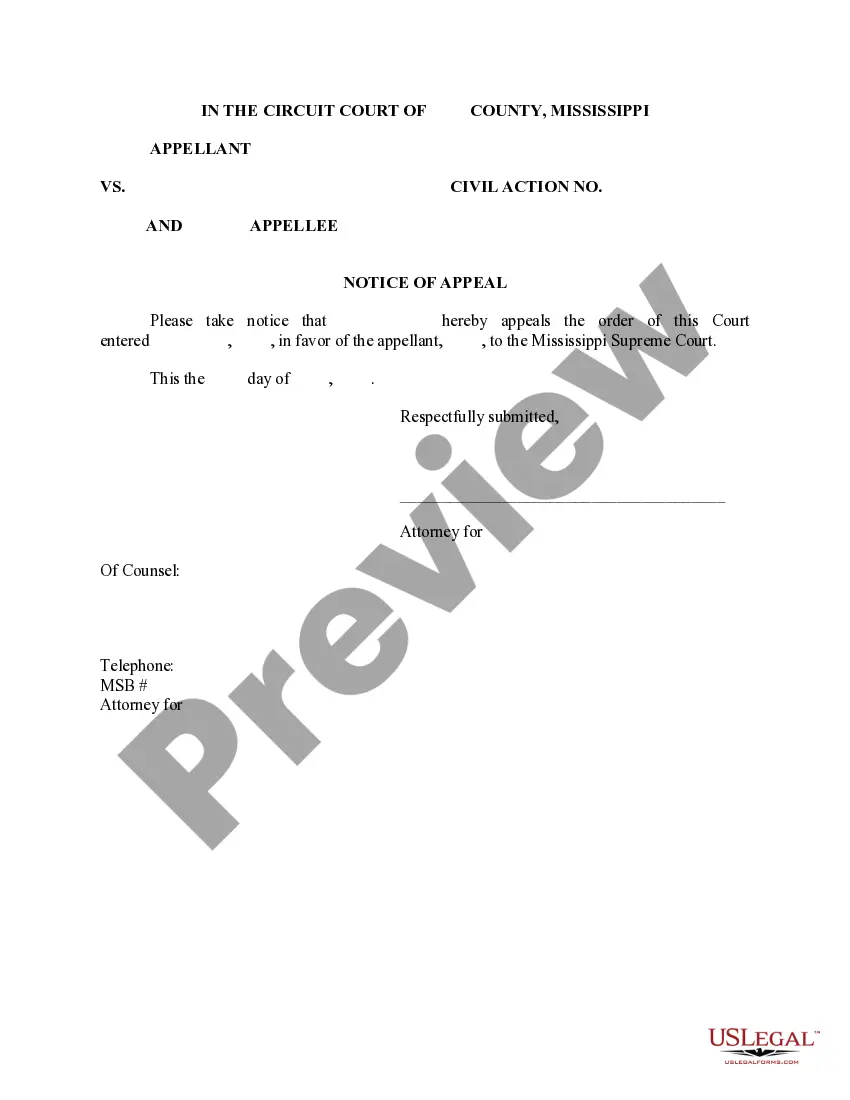
The party appealing is called the appellant, or sometimes the petitioner. The other party is the appellee or the respondent. The appeal is instituted with the filing of a notice of appeal.
The judge made an error of law. The facts of the case and/or the evidence introduced in the trial court do not support the judge's decision. The judge abused his/her discretion
There are basically 3 stages to a civil appeal in Mississippi. First, you file your notice of appeal and other preliminary documents. Critically, you MUST file your notice of appeal within 30 days of the trial court's final judgment. In some cases, you should file a post-trial motion within 10 days of the judgment.
To appeal a Circuit Court decision, an appellant must file a Notice of Appeal in the Circuit Court, serve the other party, and pay the accompanying fee. (See the Revised Schedule of Circuit Court Charges, Costs and Fees.) The appellant must pay a filing fee to the Court of Special Appeals as well.
Rate of about 40 percent in defendants' appeals of trials. Plaintiffs achieve reversal in about 4 percent of all filed cases ending in trial judgments and suffer affirmance in about 16 percent of such cases. This yields a reversal rate of about 18 percent in plaintiffs' appeals of trials.
In law, an appeal is the process in which cases are reviewed by a higher authority, where parties request a formal change to an official decision. Appeals function both as a process for error correction as well as a process of clarifying and interpreting law.
Filing the Notice of Appeal. Abandonment or Settlement. Waiver of Fees. Designating the Record. Civil Case Information Sheet. Briefs. Oral Argument. The Court's Decision.