Oregon Sheetrock Drywall Contract for Contractor
Overview of this form
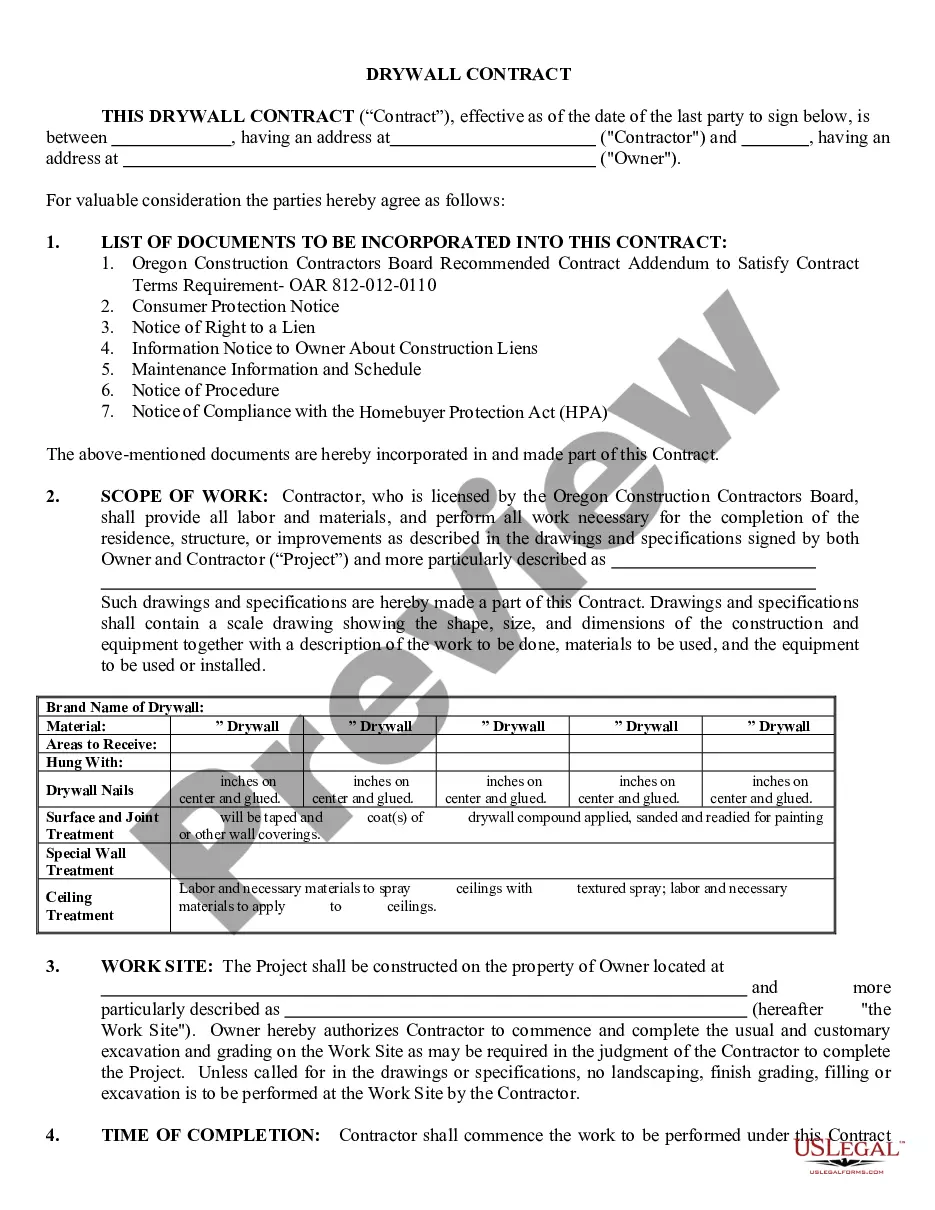
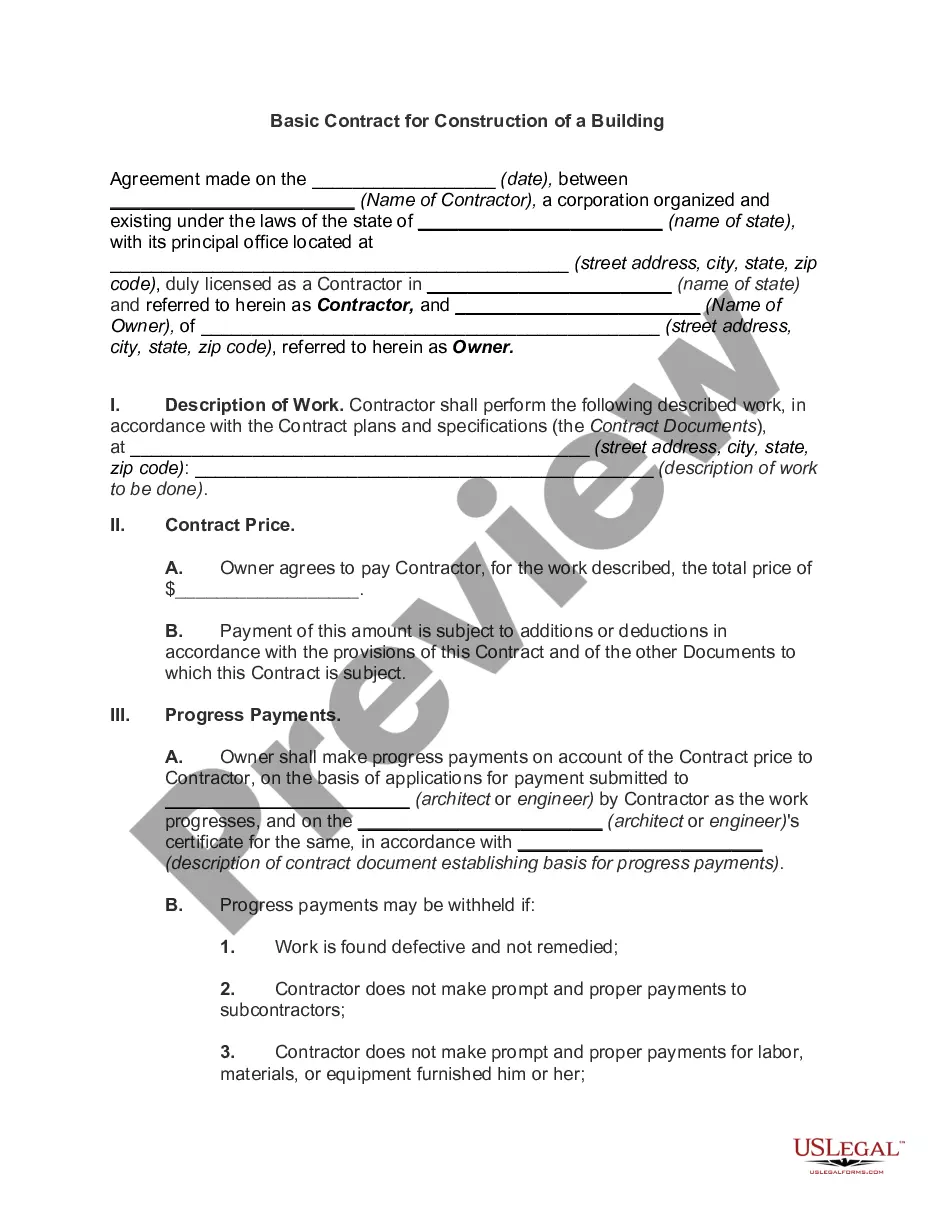
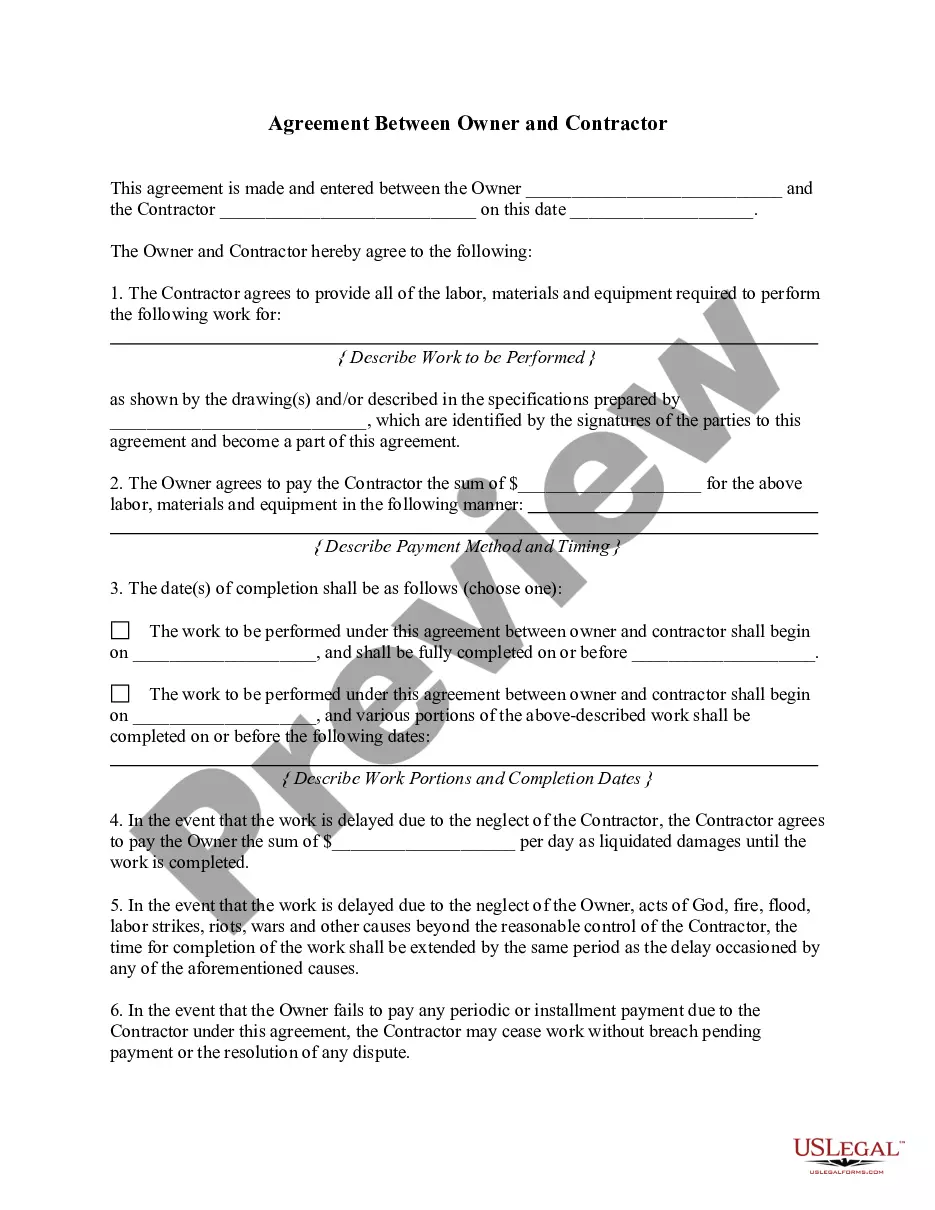
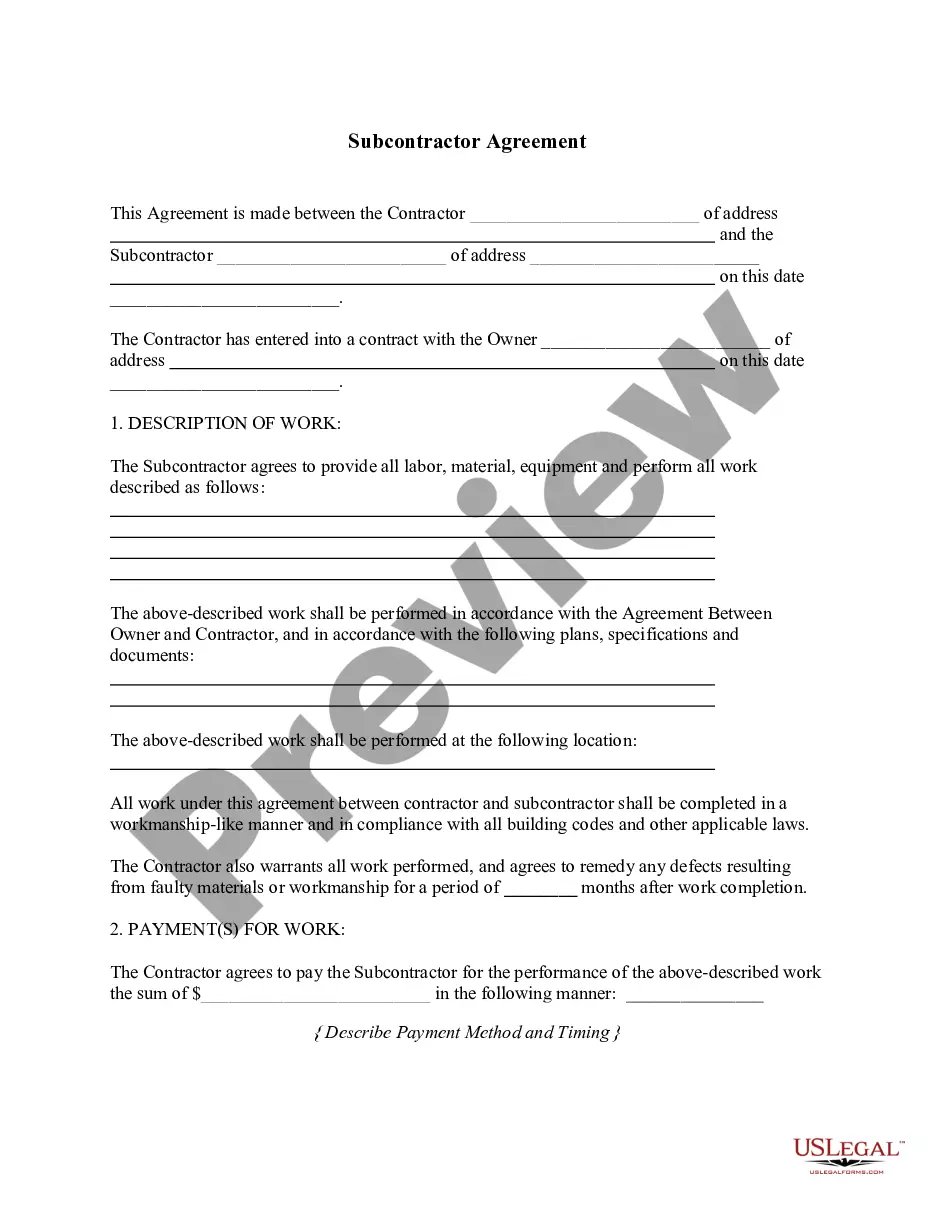
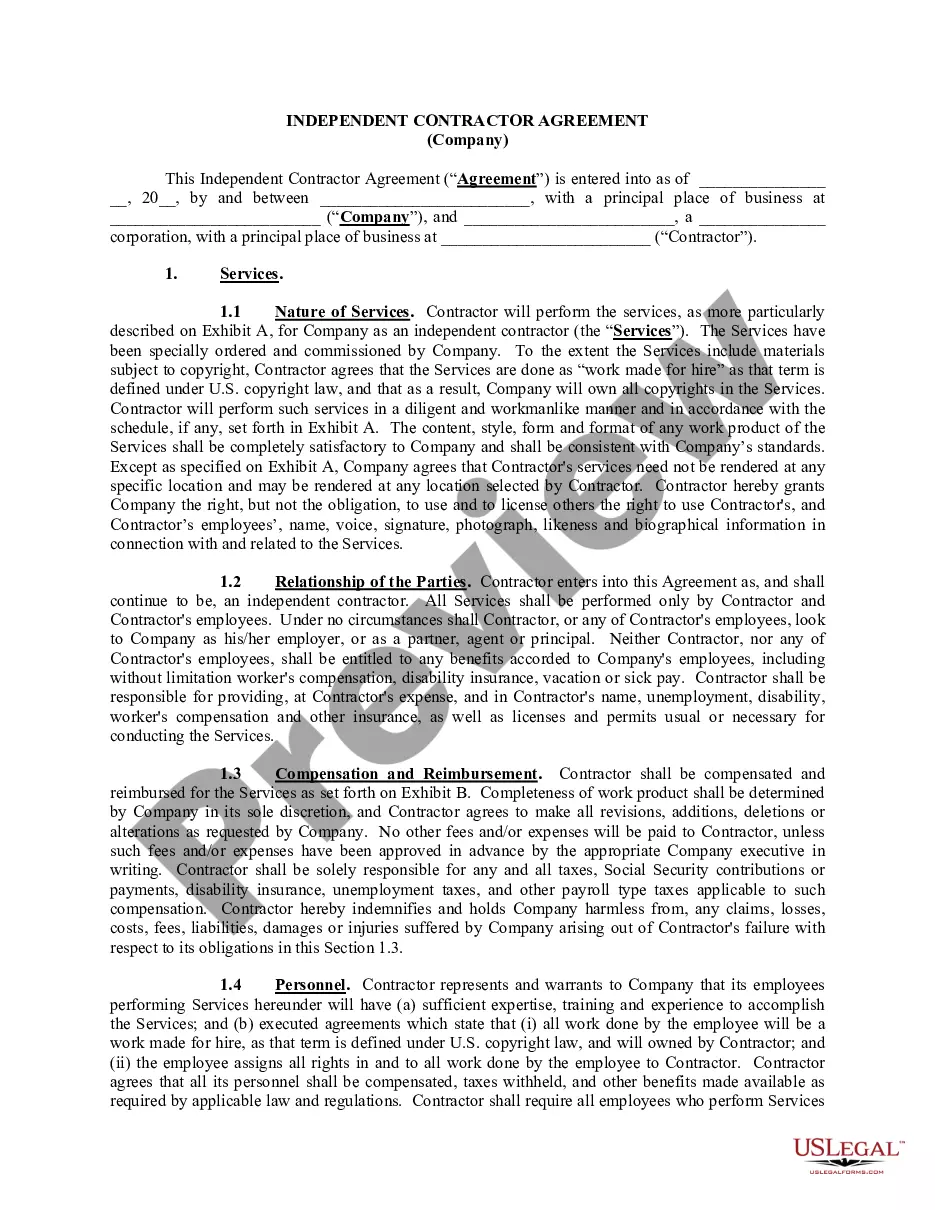
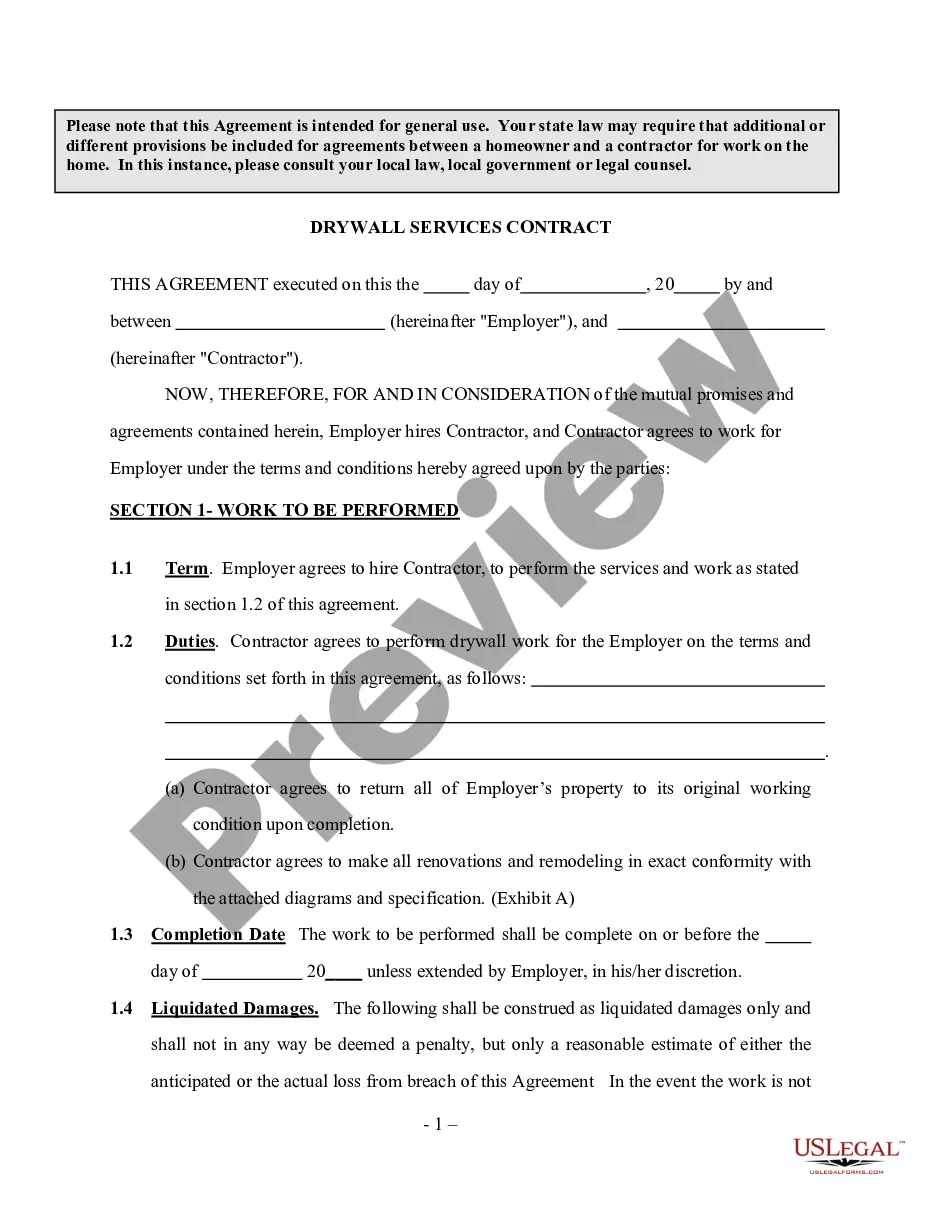
The Sheetrock Drywall Contract for Contractor is a legally binding agreement tailored for transactions between drywall contractors and property owners in Oregon. This contract addresses payment arrangements, either fixed fee or cost-plus, and includes crucial provisions about change orders, warranties, and insurance. Unlike other contracts, this one specifically adheres to the regulations set forth by Oregon law, ensuring that both parties are adequately protected throughout the course of the drywall project.
Key components of this form
- Payment arrangement details: specifies either a fixed fee or cost-plus agreement.
- Change orders: outlines the process for making changes to the project scope.
- Permits and regulatory approvals: ensures all required permits are secured by the contractor.
- Insurance requirements: mandates contractor liability and workers' compensation coverage.
- Destruction and damage clauses: addresses responsibilities if the project is damaged or destroyed.
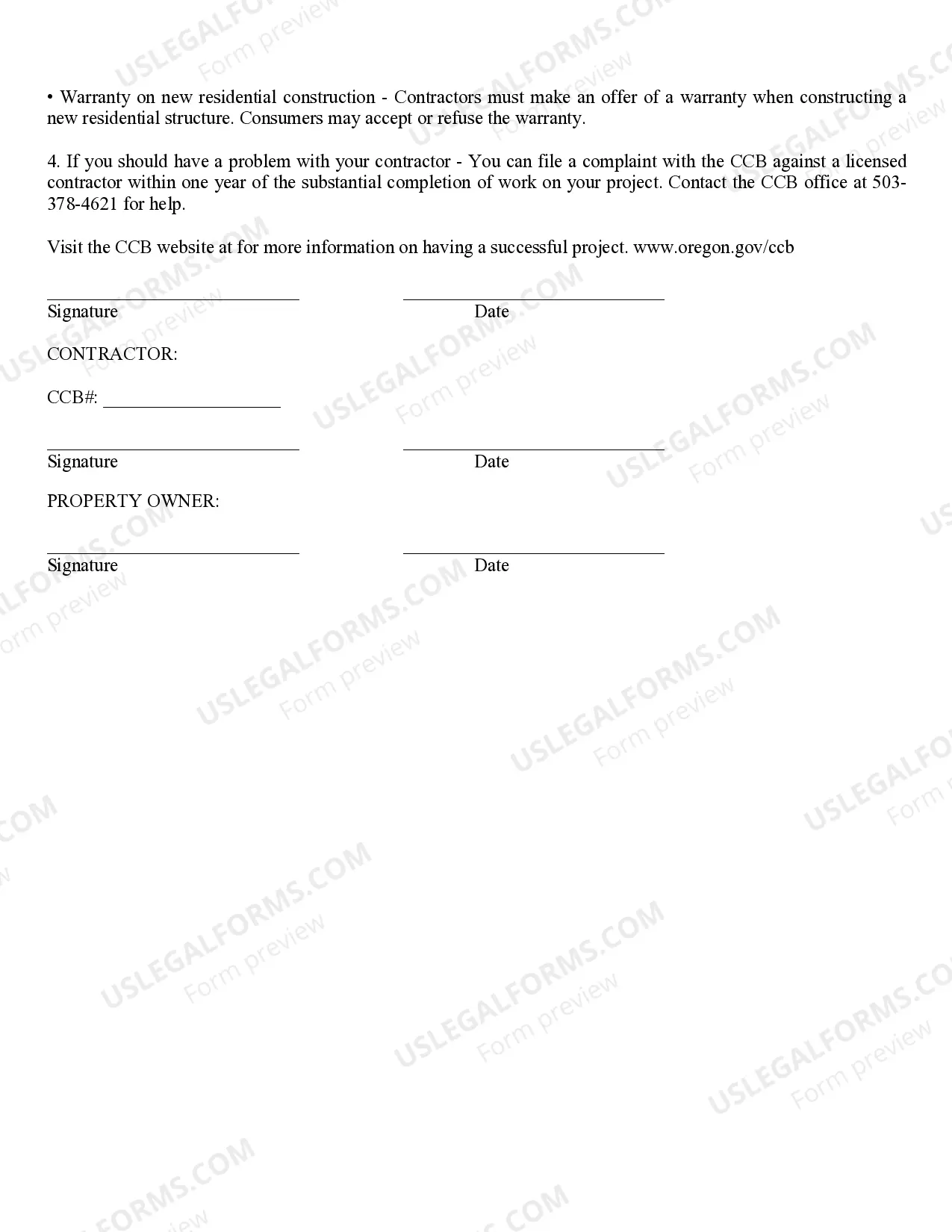
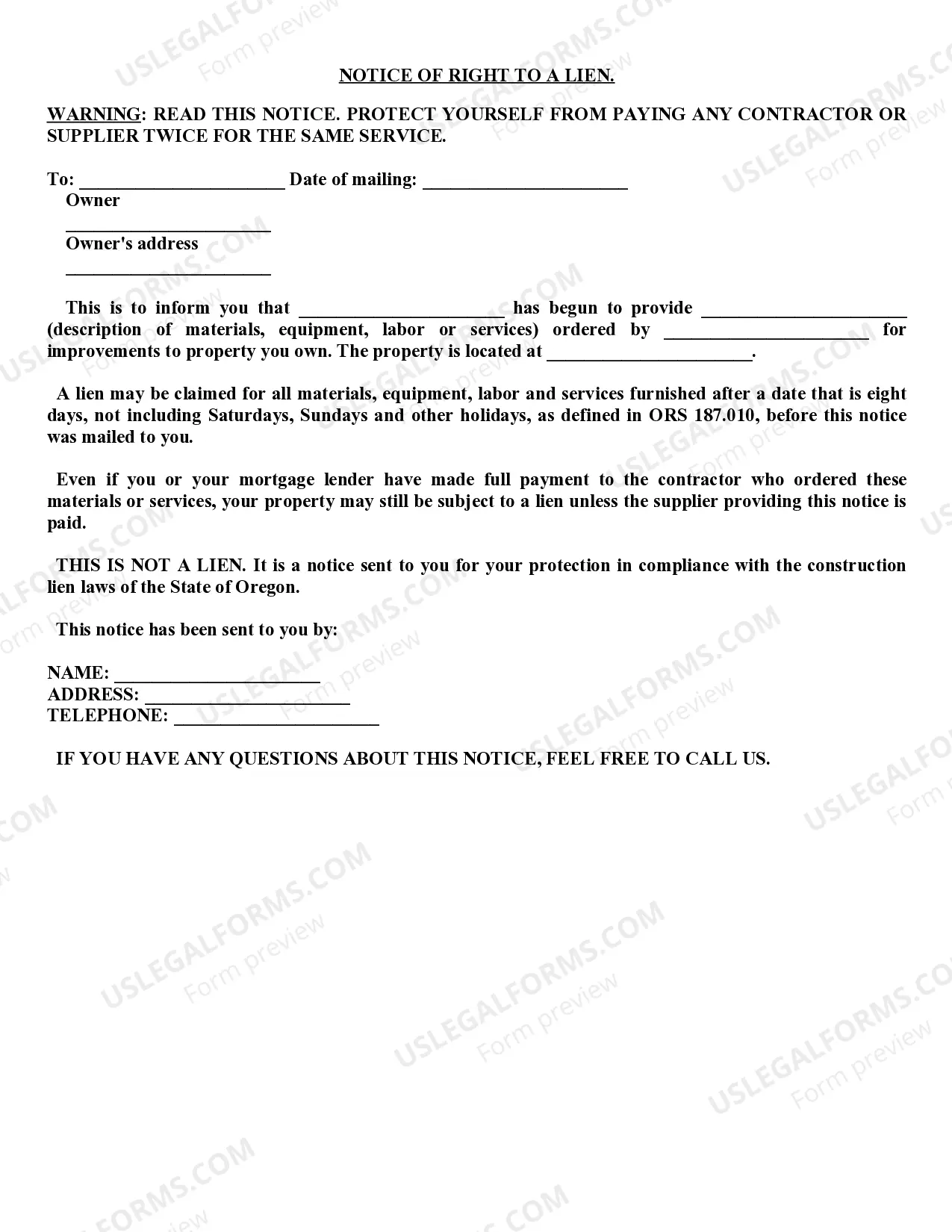
- Consumer protection notices: informs the property owner about their rights and protections.




Common use cases
This form should be used when a property owner hires a drywall contractor for residential projects in Oregon. It is particularly relevant for homeowners looking to establish clear expectations and protections regarding the scope of work, payment terms, and legal obligations. This contract is essential when significant renovations or new constructions involving drywall installation are planned.
Who needs this form
- Homeowners in Oregon planning a drywall project.
- Drywall contractors working with residential properties.
- Property owners wanting to formalize agreements to avoid disputes.
- Individuals unfamiliar with construction contracts who need a clear framework.
Completing this form step by step
- Identify the parties involved: Fill in the names and contact information of both the homeowner and the contractor.
- Specify the project details: Describe the scope of the drywall work to be performed, including specifications and timelines.
- Outline payment terms: Choose and indicate whether the payment will be a fixed fee or based on costs incurred.
- Document change order procedures: Include terms regarding how any changes to the project will be managed.
- Sign and date the contract: Ensure both parties sign and date to validate the agreement.
Does this document require notarization?
This form does not typically require notarization to be legally valid. However, some jurisdictions or document types may still require it. US Legal Forms provides secure online notarization powered by Notarize, available 24/7 for added convenience.
Get your form ready online
Our built-in tools help you complete, sign, share, and store your documents in one place.
Make edits, fill in missing information, and update formatting in US Legal Forms—just like you would in MS Word.
Download a copy, print it, send it by email, or mail it via USPS—whatever works best for your next step.
Sign and collect signatures with our SignNow integration. Send to multiple recipients, set reminders, and more. Go Premium to unlock E-Sign.
If this form requires notarization, complete it online through a secure video call—no need to meet a notary in person or wait for an appointment.
We protect your documents and personal data by following strict security and privacy standards.

Make edits, fill in missing information, and update formatting in US Legal Forms—just like you would in MS Word.

Download a copy, print it, send it by email, or mail it via USPS—whatever works best for your next step.

Sign and collect signatures with our SignNow integration. Send to multiple recipients, set reminders, and more. Go Premium to unlock E-Sign.

If this form requires notarization, complete it online through a secure video call—no need to meet a notary in person or wait for an appointment.

We protect your documents and personal data by following strict security and privacy standards.
Mistakes to watch out for
- Failing to detail the scope of work may lead to misunderstandings.
- Not documenting change orders in writing can cause disputes over extra costs.
- Ignoring insurance requirements can expose both parties to liability.
- Leaving out signatures from both parties can render the contract invalid.
Advantages of online completion
- Conveniently available for instant download and customization.
- Drafted by licensed attorneys to ensure legal compliance.
- Easily editable to fit specific project needs and terms.
- Provides peace of mind by formalizing agreements between parties.
Legal use & context
- This contract is enforceable in Oregon, provided all terms are adhered to.
- Failure to comply with the contract terms may result in legal disputes.
- The contract protects both the property owner and the contractor under Oregon construction law.
Quick recap
- Utilizing the Sheetrock Drywall Contract helps ensure clarity and legal protection for both parties involved.
- It is essential to follow Oregon-specific guidelines when completing the contract.
- Documenting all aspects of the agreement can prevent future disputes and misunderstandings.
Looking for another form?


Form popularity
FAQ
The threshold for performing certain work without a contractor license increased from $500 to $1,000. To qualify for the exemption, a contractor must perform work that is casual, minor or inconsequential. This means that the work cannot: Be structural in nature.
Drywall CostsDrywall installation costs $1,845, with a typical range of $1,019 and $2,874. This translates into a price of $1 to $3 per square foot for materials and labor. Most homeowners pay $2 per square foot, depending on the number of rooms and the level of finish.
Calculate how many drywall sheets you will need by dividing the total square footage of area by 32 (if you're using 4-by-8 sheets) or by 48 (if you're using 4-by-12 sheets). If you want to get the cost, just multiply the total number of sheets by the price per sheet. Remember to add local taxes and delivery charges.
In large commercial projects, the drywall contractor is one of the last specialty trades to work on a building. After the mechanical, electrical, and plumbing work has been completed, the project is at the stage for the drywall contractor to construct framing, install insulation, and place drywall.
Register your drywall-finishing business name with your state's secretary of state. Fill out any necessary applications for tax identification numbers. Complete the paperwork if you plan to operate as a limited liability company, also known as an LLC, or as a corporation. Obtain a local business license.
You must have a minimum of 4 years journeyman experience as well as pass a two-part exam issued by the Contractor State Licensing Board. California offers a study guide for the exam as well. Other states may offer this, depending on the exam and the region.
For minor repairs, expect to pay an average of $60 to $90 per hour for handyperson repair, or about $50 to 75 per square foot. To make DIY repairs, the price of materials comes to around $45 for a job requiring only one 4 by 8 foot sheet of drywall.
Cost to tape and mud drywall The national average for a total drywalling job, from start to finish, is $1.30 to $4 per square foot. Hanging just the unfinished drywall panels costs $0.24 to $2.25 per square foot. To finish the drywall, it costs $1 to $1.65 per square foot.
Multiply drywall square footage by the going rate Once you have determined your sheet count and corresponding drywall square footage, you can multiply this by the contractor's square footage rate. You can use the total drywall square footage numbers to estimate both material and labor.