Oregon Affidavit of Indigence - Required for Court Appointed Attorney - Agreement to Repay - In Forma Pauperis
What is this form?
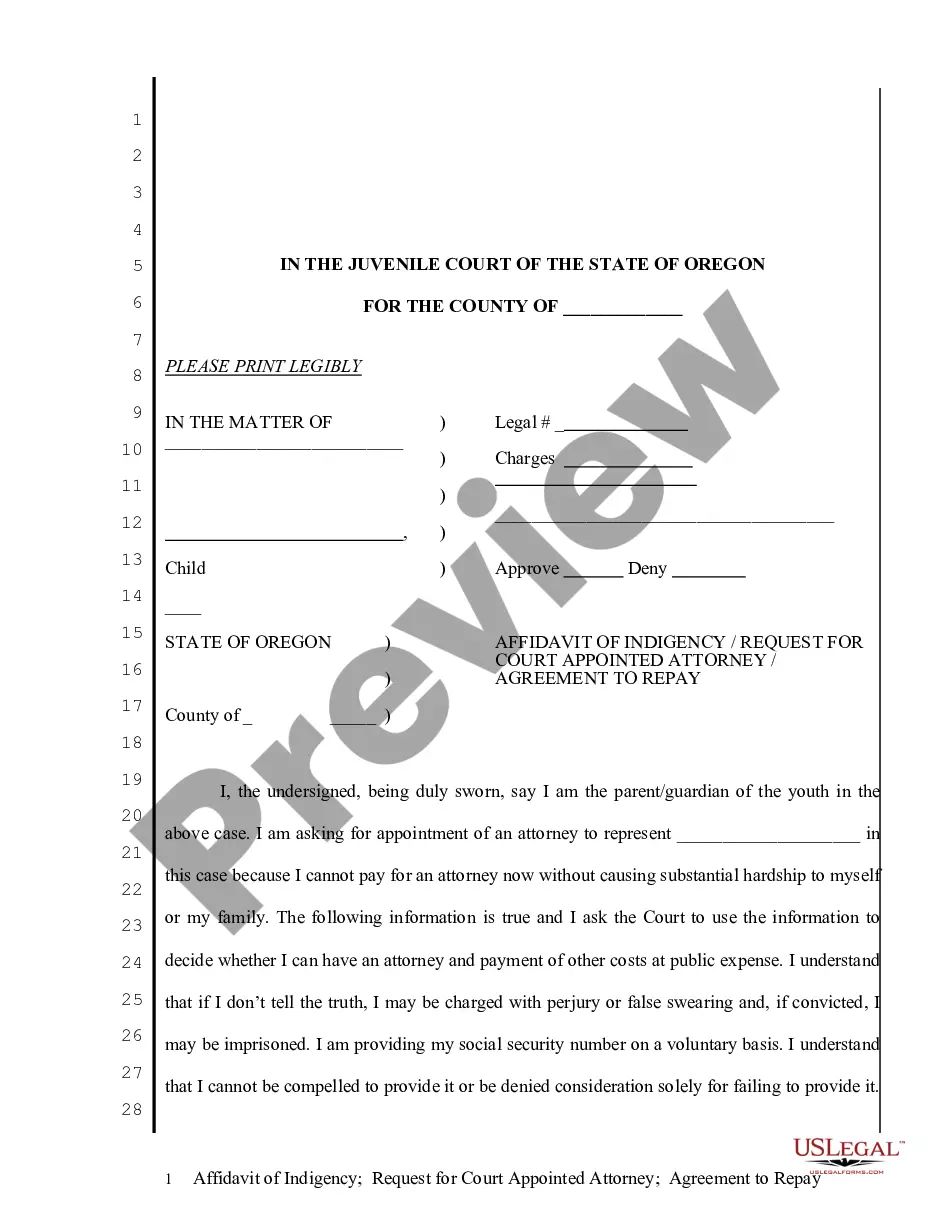
The Affidavit of Indigence is a legal document required in Oregon for individuals seeking a court-appointed attorney due to financial hardship. This affidavit is an important step for those who cannot afford legal fees and need representation in domestic litigation. It differs from other court forms by specifically addressing the financial status of the applicant and including an agreement to repay the court for attorney fees if financially able in the future.
What’s included in this form
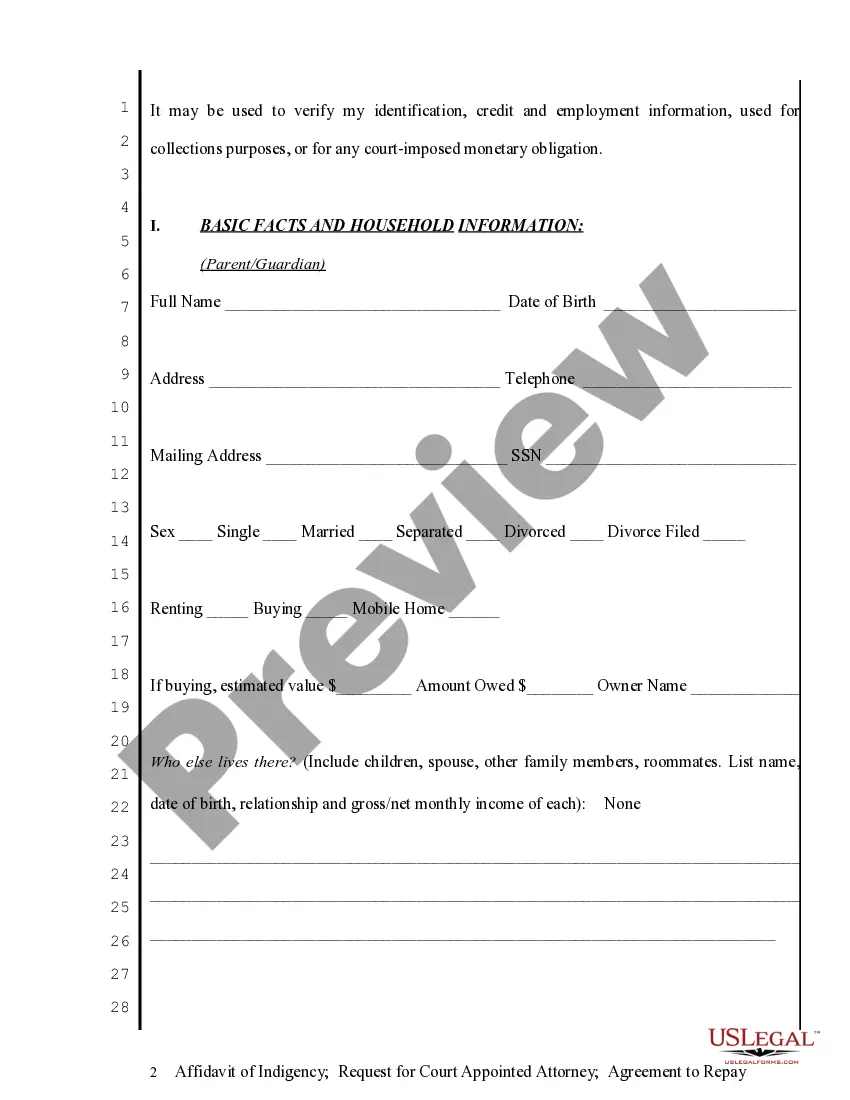
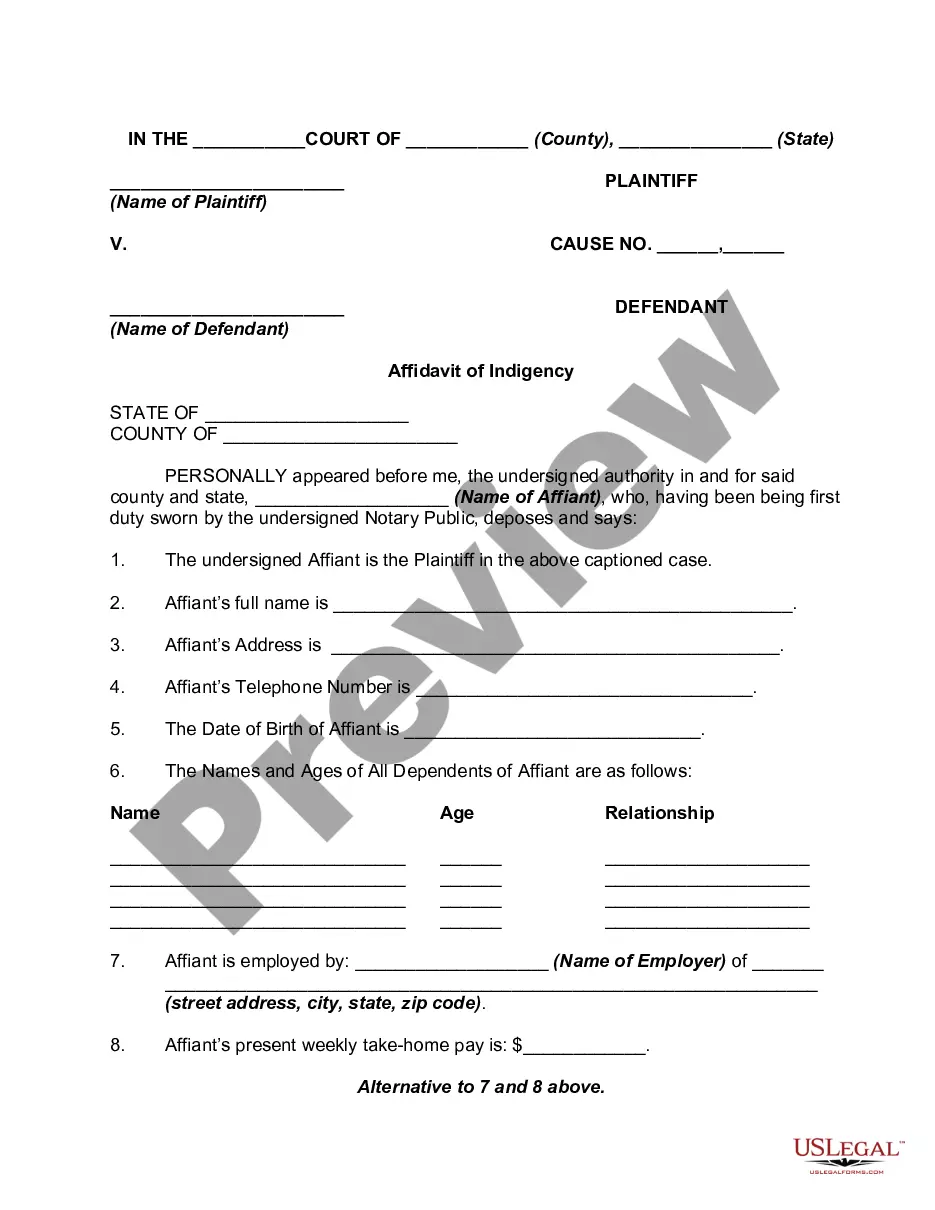
- Information about the parent or guardian, including name, address, and date of birth.
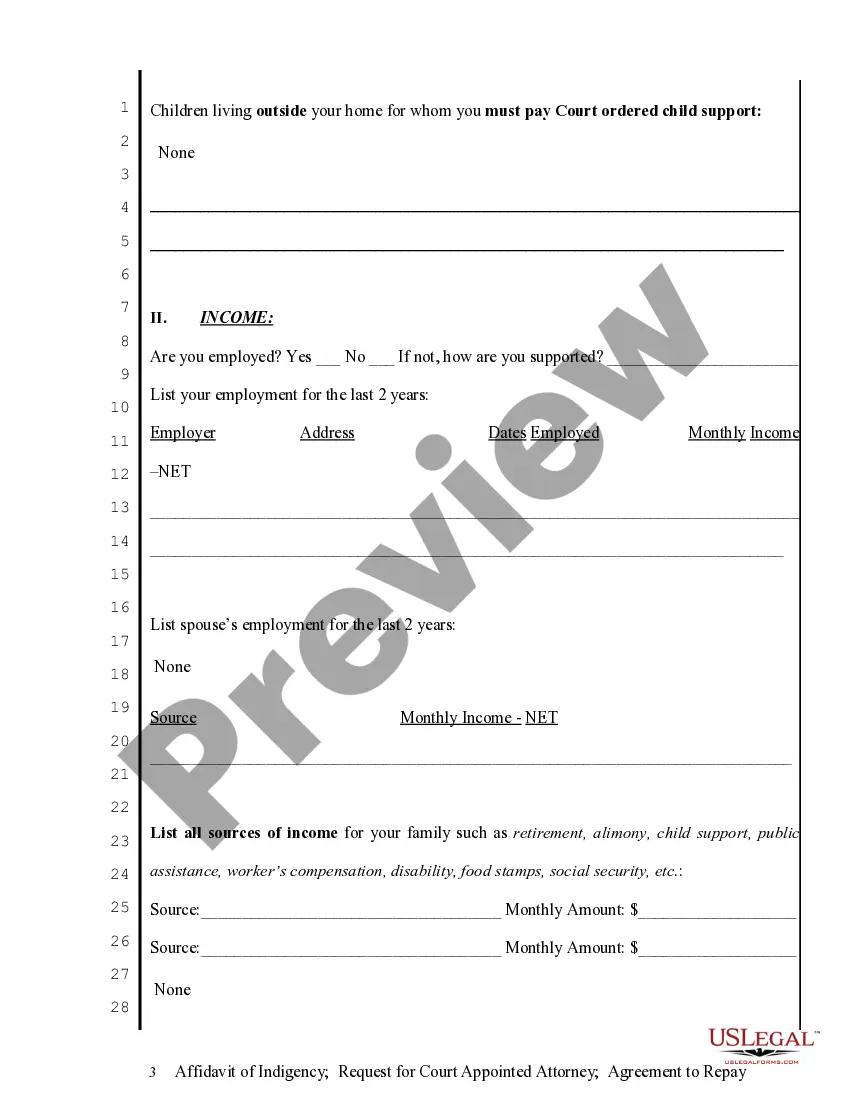
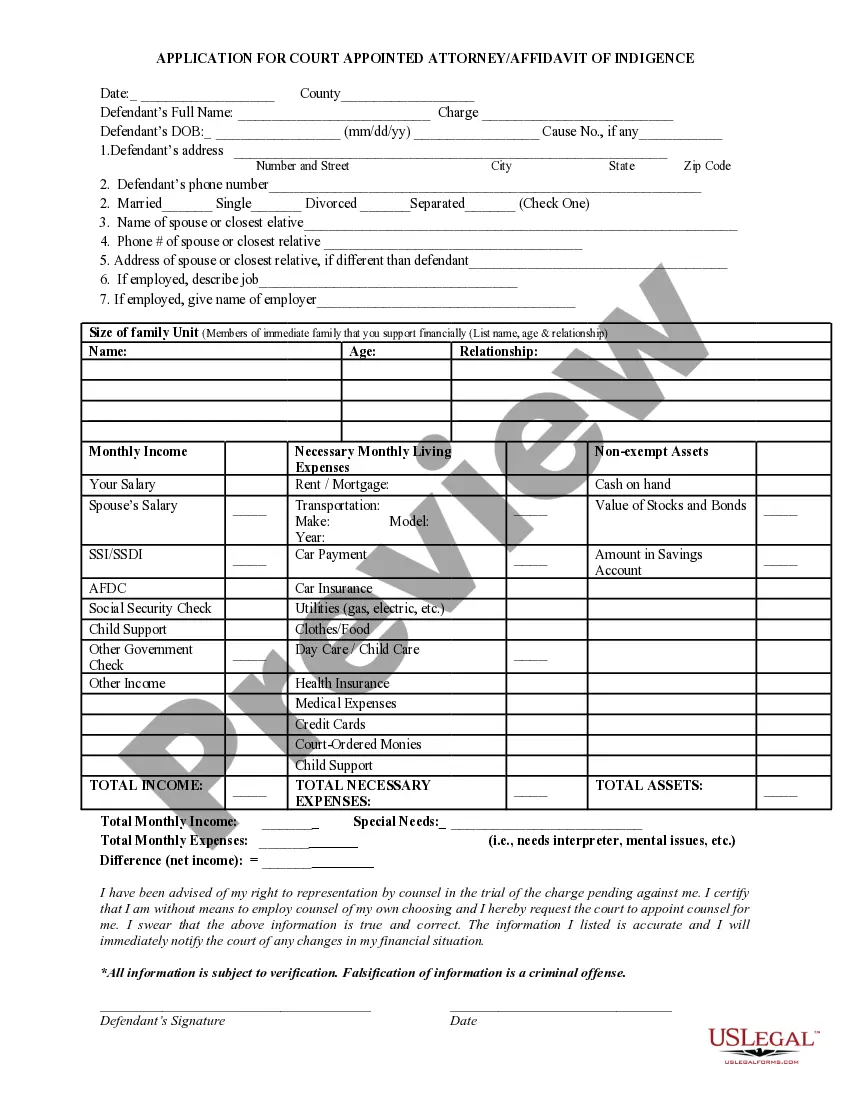
- Details of household members, their relationships, and their monthly income.
- Statement of income sources, including employment history and any public assistance received.
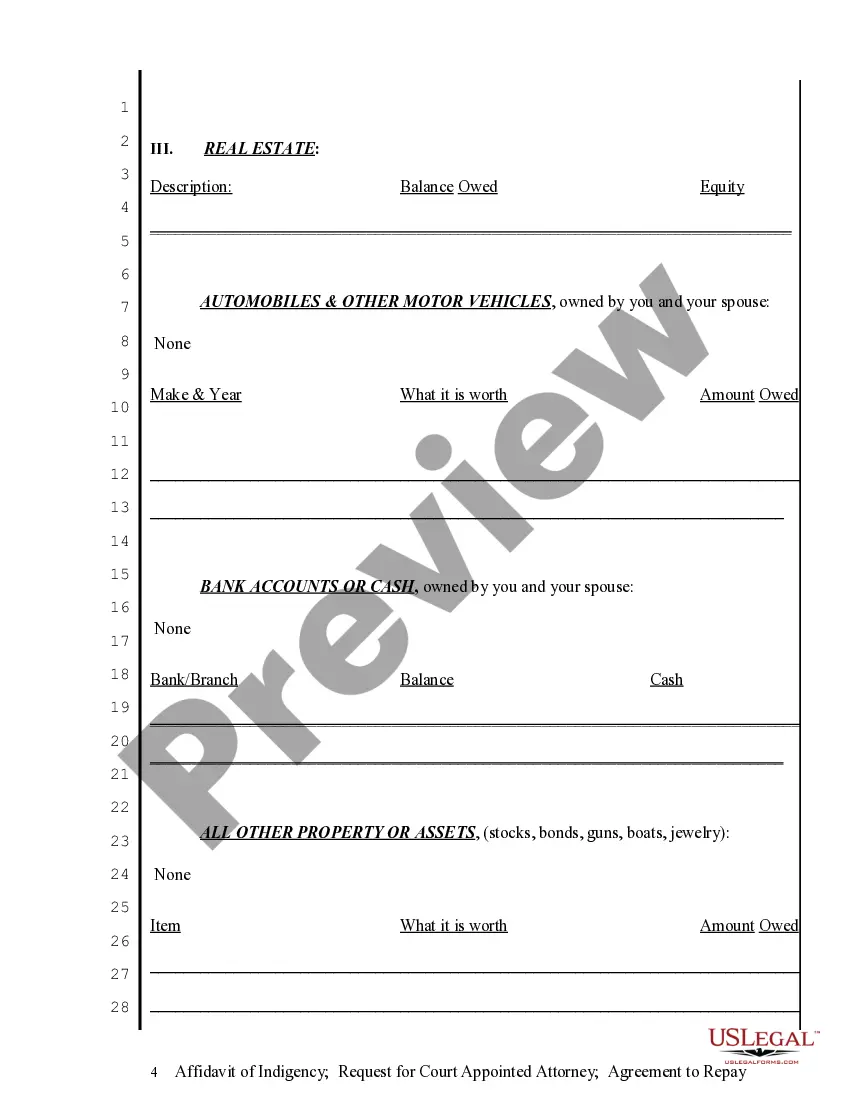
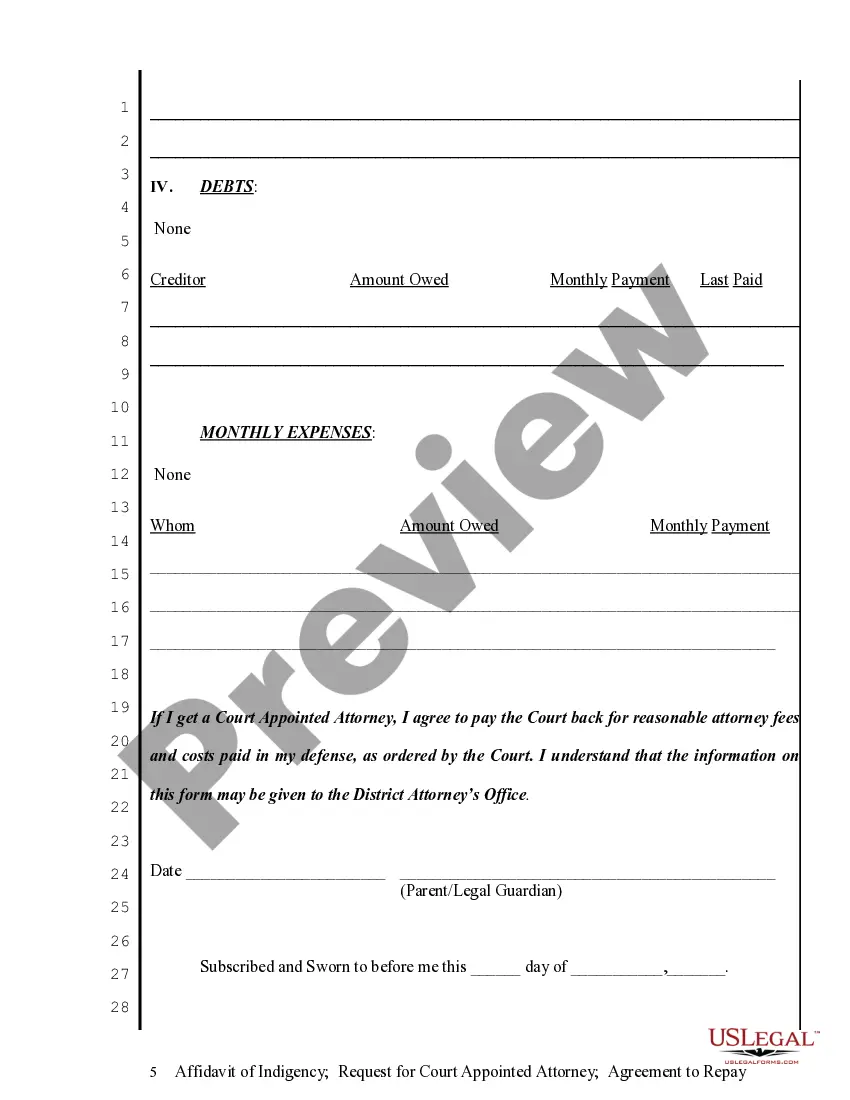
- Real estate and vehicle ownership information, detailing value and debts owed.
- Disclosure of all debts and monthly expenses to assess financial need.
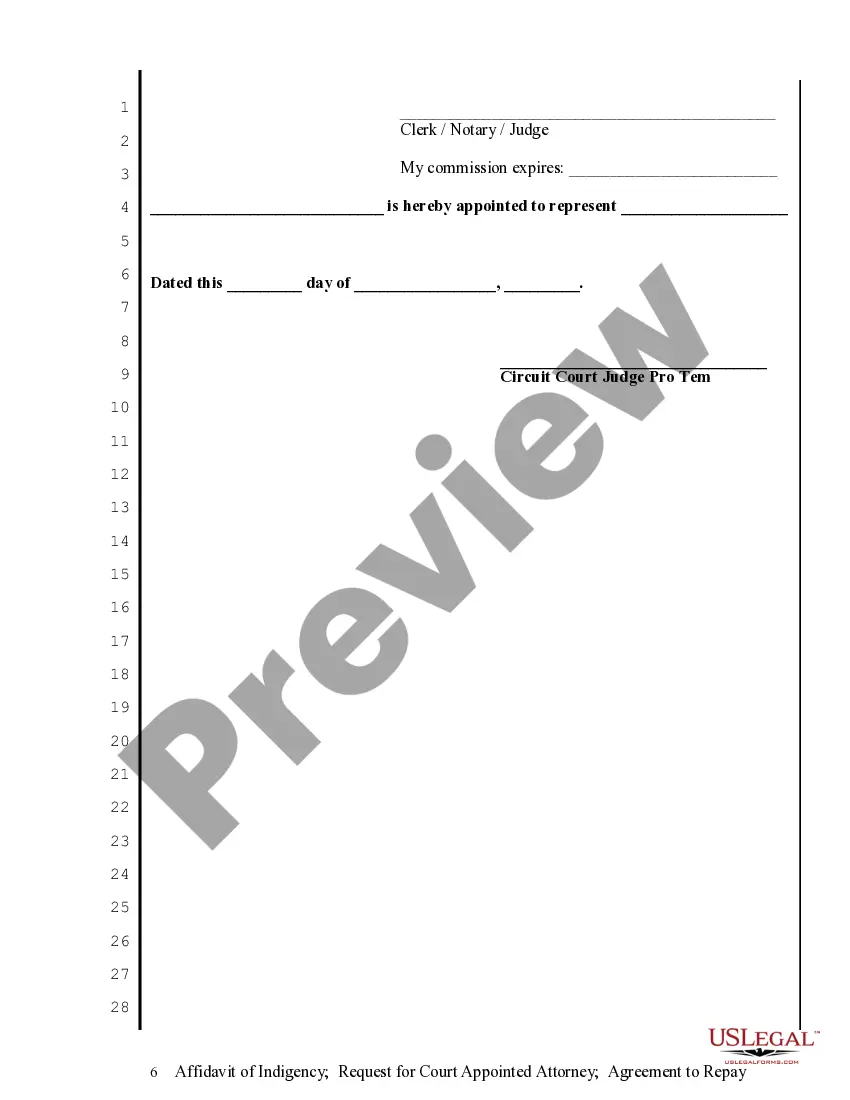
- A commitment to repay attorney fees if the court provides a court-appointed attorney.
Situations where this form applies
This form should be used when a parent or guardian is involved in a legal matter concerning a minor child and needs legal representation but cannot afford to pay for an attorney. Situations may include child custody disputes, juvenile delinquency cases, or other vital legal proceedings where representation is necessary for the child's best interest.
Who can use this document
This form is intended for:
- Parents or guardians of minors involved in court proceedings.
- Individuals facing financial hardship seeking assistance for legal representation.
- Those needing to provide legal documentation to demonstrate their inability to pay for an attorney upfront.
How to complete this form
- Begin by filling in the basic facts, including your full name, address, and contact information.
- List all household members and provide details about their income and relationship to the child.
- Indicate all sources of income, such as salaries, public aid, or benefits, and provide accurate figures.
- Detail any real estate or vehicles owned, including current values and debts owed.
- Complete the section on debts and monthly expenses to give a full financial picture.
- Sign the affidavit in front of a notary or as instructed by the court.
Does this form need to be notarized?
This form must be notarized to be legally valid. US Legal Forms provides secure online notarization powered by Notarize, allowing you to complete the process through a verified video call.
Get your form ready online
Our built-in tools help you complete, sign, share, and store your documents in one place.
Make edits, fill in missing information, and update formatting in US Legal Forms—just like you would in MS Word.
Download a copy, print it, send it by email, or mail it via USPS—whatever works best for your next step.
Sign and collect signatures with our SignNow integration. Send to multiple recipients, set reminders, and more. Go Premium to unlock E-Sign.
If this form requires notarization, complete it online through a secure video call—no need to meet a notary in person or wait for an appointment.
We protect your documents and personal data by following strict security and privacy standards.

Make edits, fill in missing information, and update formatting in US Legal Forms—just like you would in MS Word.

Download a copy, print it, send it by email, or mail it via USPS—whatever works best for your next step.

Sign and collect signatures with our SignNow integration. Send to multiple recipients, set reminders, and more. Go Premium to unlock E-Sign.

If this form requires notarization, complete it online through a secure video call—no need to meet a notary in person or wait for an appointment.

We protect your documents and personal data by following strict security and privacy standards.
Common mistakes to avoid
- Failure to provide complete and accurate information about household income.
- Not listing all sources of income, including public assistance or informal support.
- Neglecting to sign the form or complete it in front of a notary where required.
- Omitting details about debts or monthly expenses, which could affect a financial assessment.
Why complete this form online
- Convenience of filling out the form from home without the need for in-person visits.
- Editability allows for easy corrections and adjustments before printing.
- Access to professionally drafted forms ensures they meet the legal standards needed for court submission.
Looking for another form?


Form popularity
FAQ
You must fill out a form called an Affidavit of Indigency.This form tells the court you cannot afford the fees related to your case. If the clerk or a judge approves the form, you will not have to pay.
Indigent means to be a poor or needy person. Our laws look at how much money a person has, how much debt they have and how many assets they have to determine whether or not they can afford to hire their own representation or if they need a court-appointed attorney to represent them.
If you don't have enough money to pay the court fees, you can ask a judge to waive the fees. Your fees should be waived if you can prove that any of the following are true: You get government benefits because you are poor (for example, food stamps, TANF, Medicaid, SSI or public housing).
An applicant, including an applicant who is a minor or an adult tax-dependent person, is indigent if the applicant's income is equal to or below 200 percent of the then-current federal poverty guidelines prescribed for the size of the household of the applicant by the United States Department of Health and Human