South Dakota Warranty Deed from Limited Partnership or LLC is the Grantor, or Grantee
Overview of this form
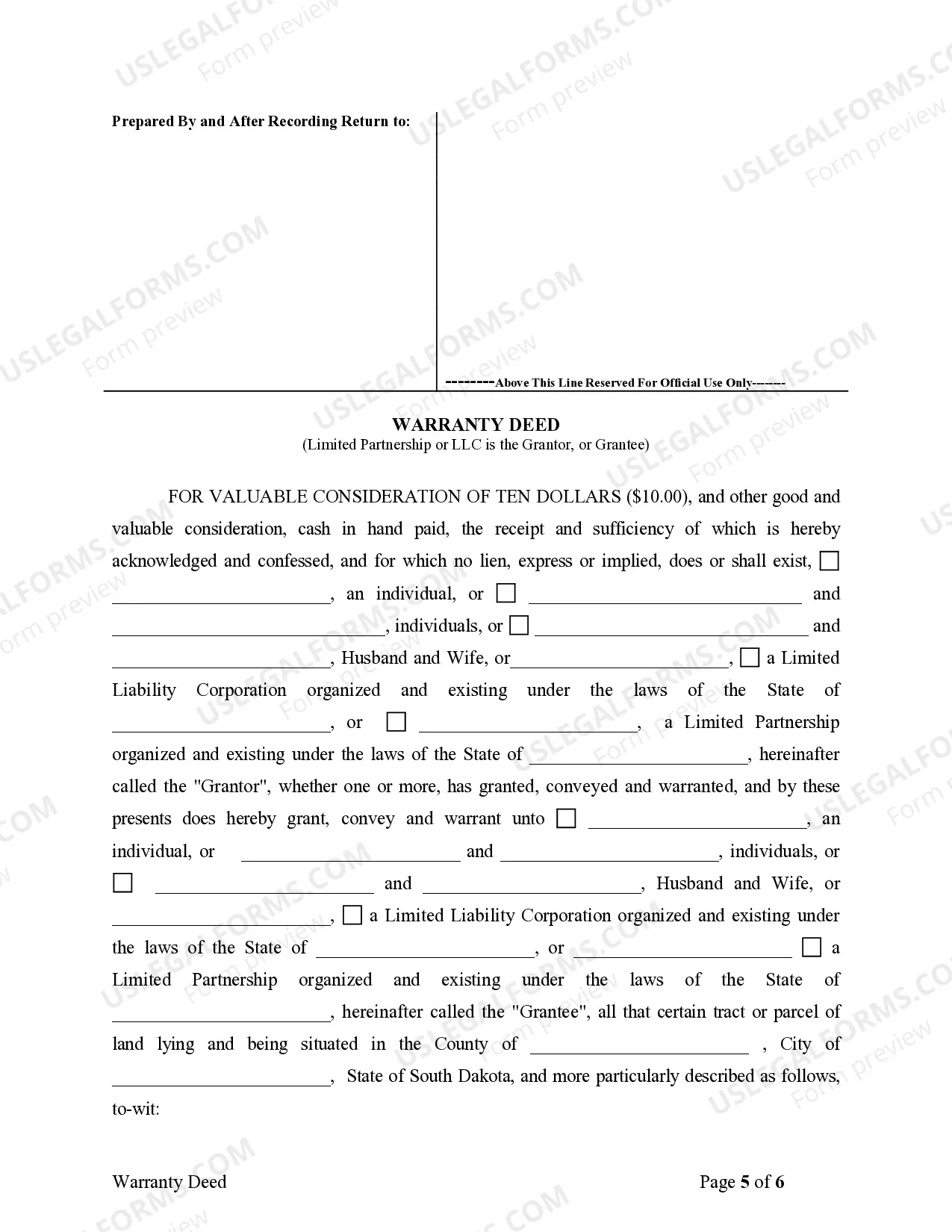
The Warranty Deed from Limited Partnership or LLC serves as a legal document for transferring property ownership. This specific form is distinct because it allows either the grantor or the grantee to be a limited partnership or limited liability company (LLC). By using this form, entities can convey real estate interests formally and securely, ensuring that all parties involved are protected under the law.
What’s included in this form
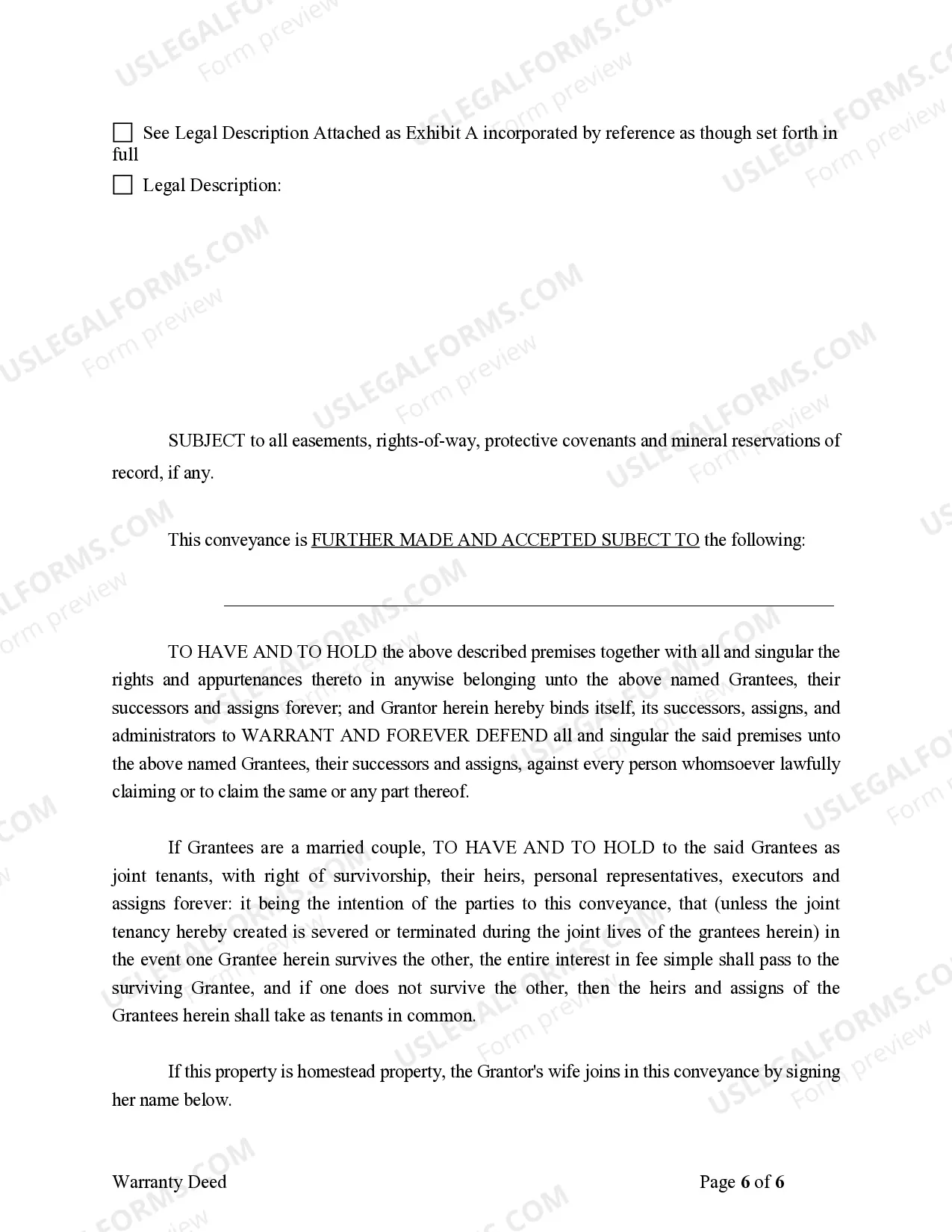
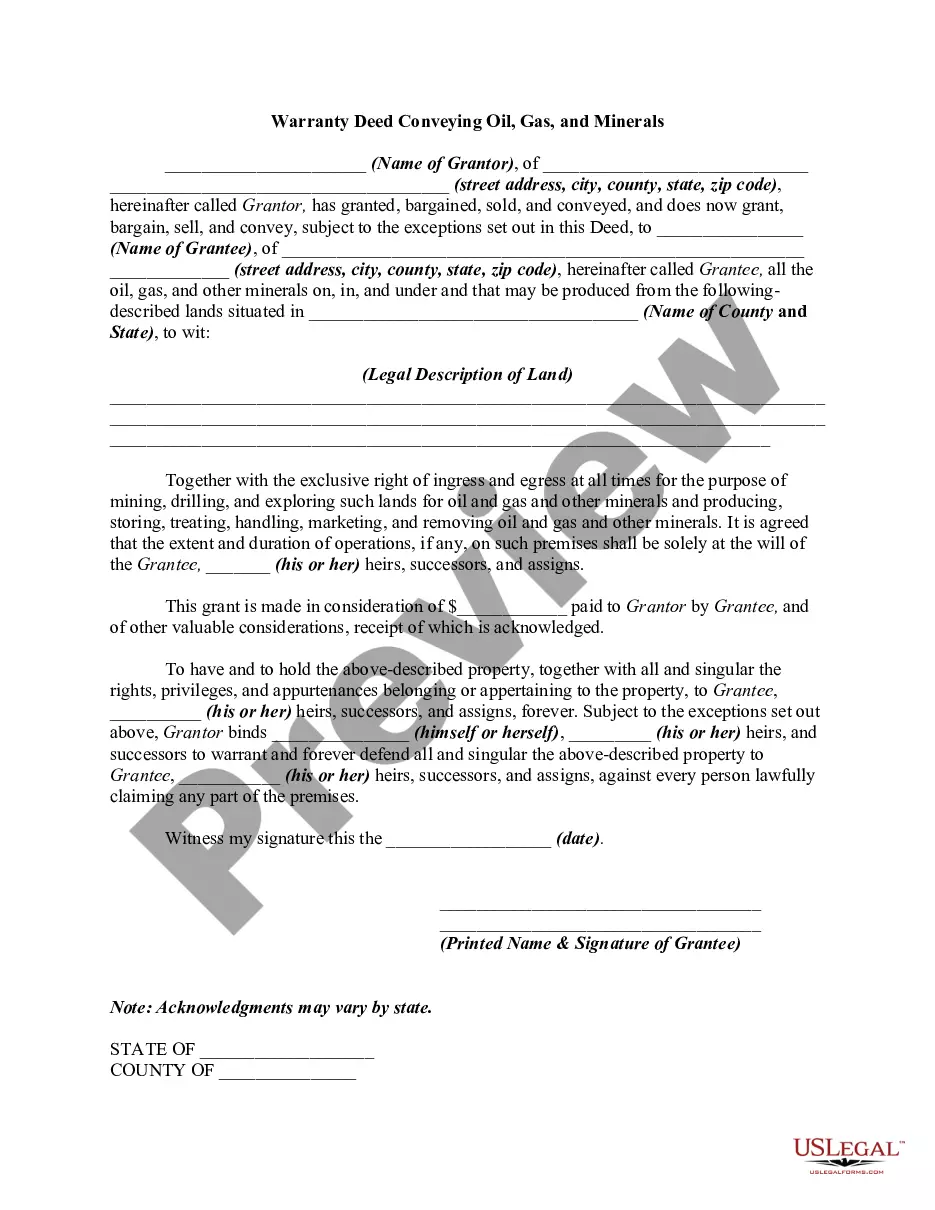
- Details of the property being transferred, including legal description.
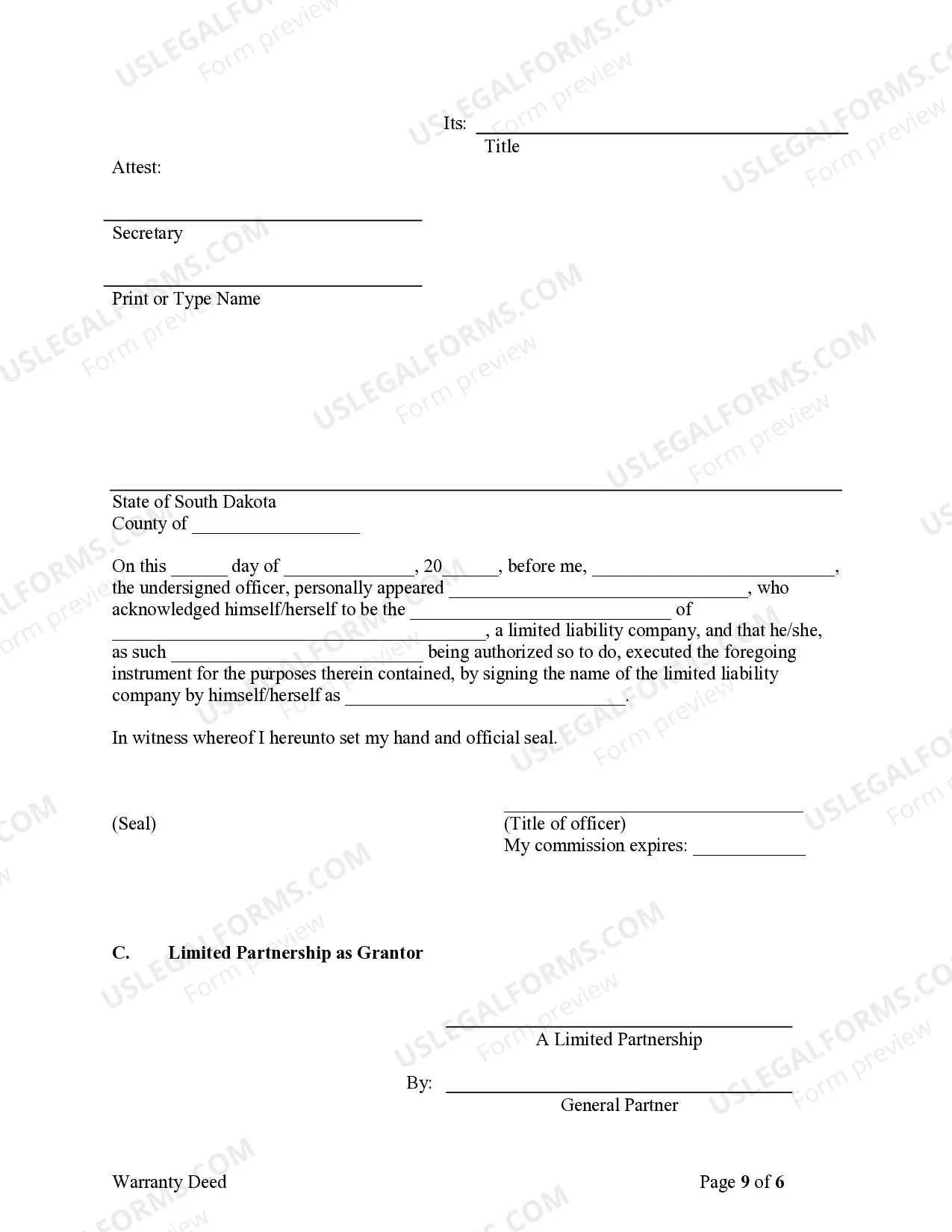
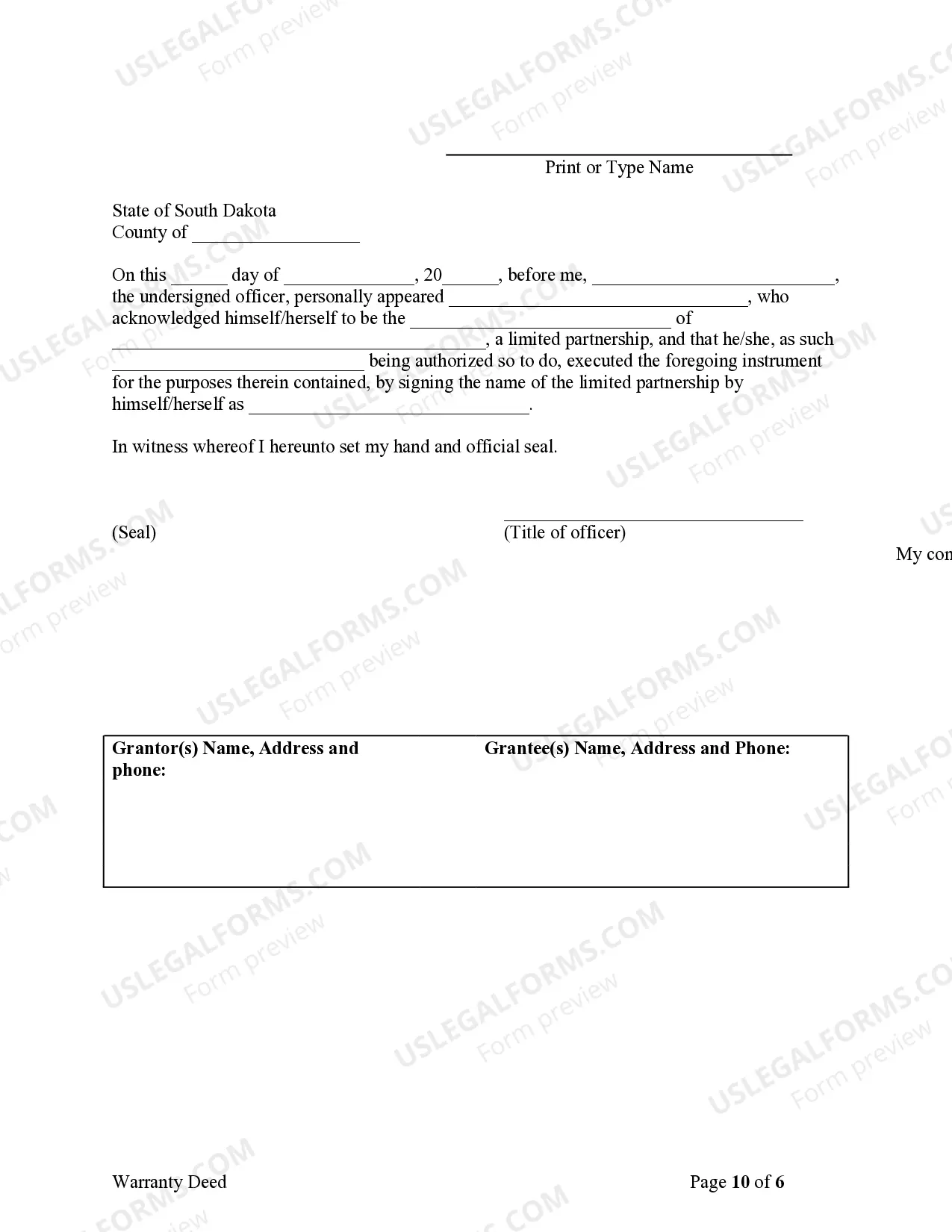
- Identification of the grantor and grantee, specifying if they are a partnership or LLC.
- Statement of consideration, outlining the nature of the transaction.
- Warranties of title, ensuring that the grantor has ownership rights to transfer.
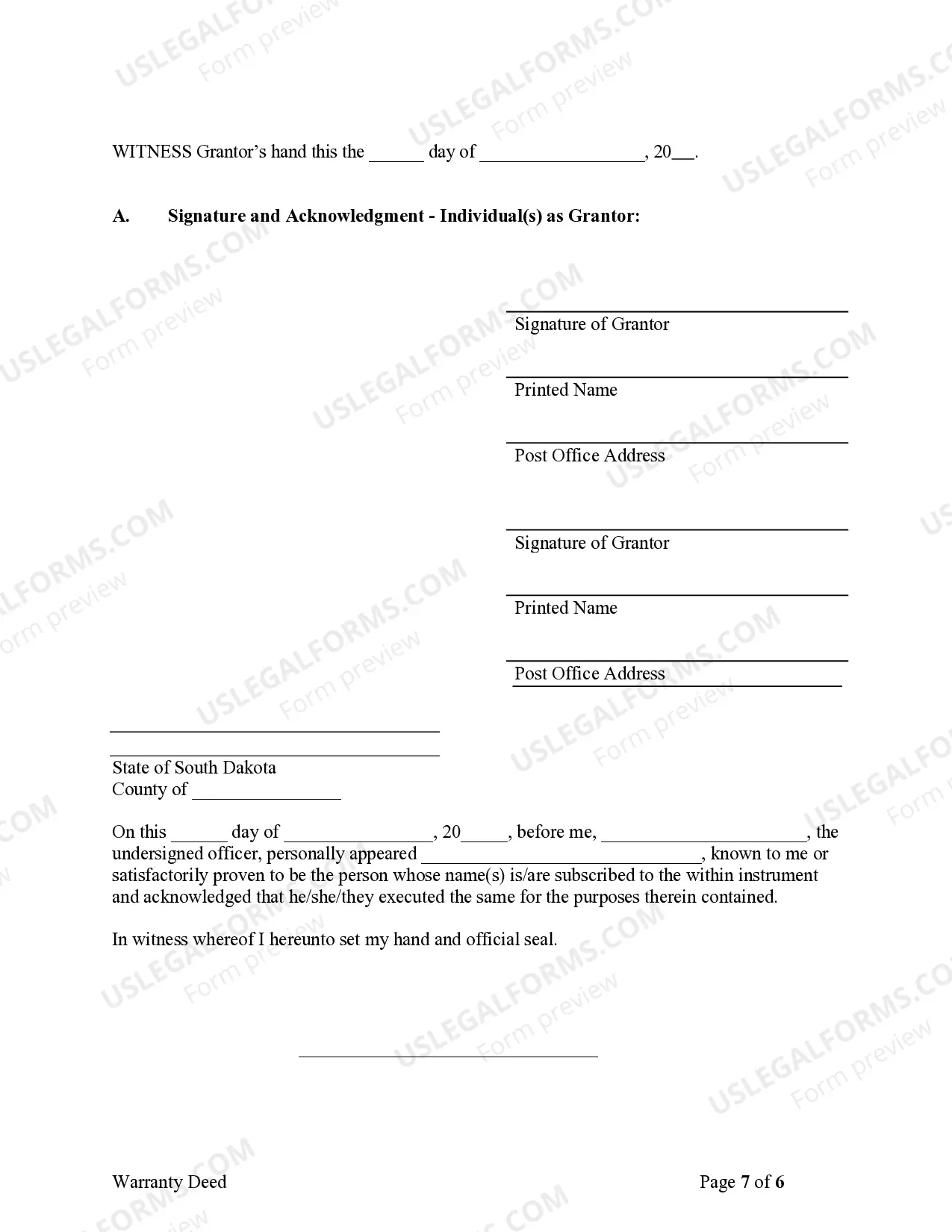
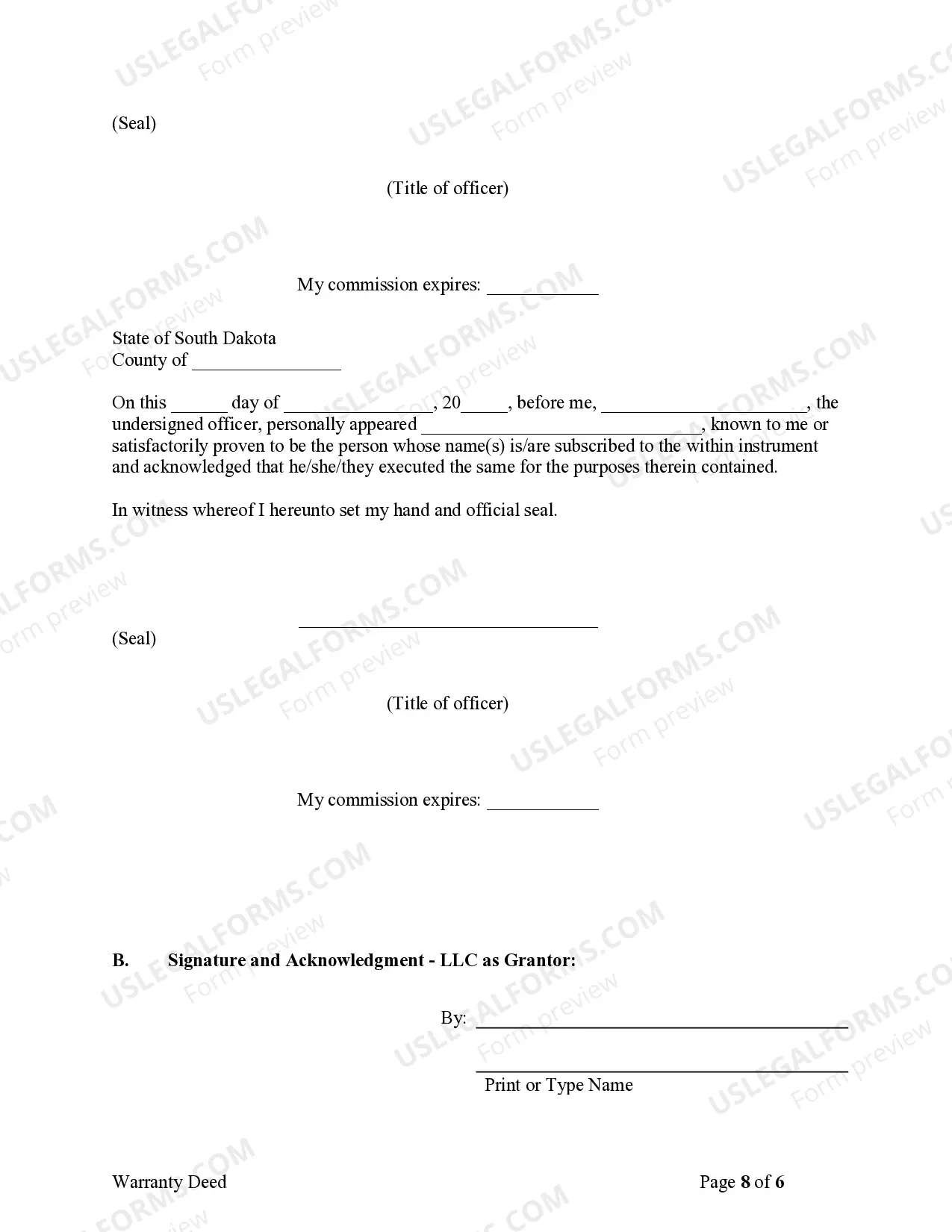
- Notary acknowledgment section for the signing parties.




Situations where this form applies
This Warranty Deed should be used when a limited partnership or LLC is either granting or receiving title to real property. Typical scenarios include real estate sales, transfers due to mergers or property exchanges between entities, or conveyances as part of estate planning. It is essential when clear legal transfer and protections are required for commercial or residential properties.
Who can use this document
- Limited partnerships or LLCs involved in real estate transactions.
- Real estate professionals facilitating property transfers between entities.
- Individuals acting on behalf of a partnership or LLC in property matters.
Completing this form step by step
- Identify the parties: Enter the names of the grantor (the entity transferring the property) and the grantee (the entity receiving the property).
- Specify the property: Provide the legal description and address of the property being transferred.
- Enter transaction details: Note the consideration involved in the transfer, whether it's a sale or other arrangements.
- Complete the notary section: Ensure that all signatures are acknowledged by a notary public to validate the transaction.
- Review and file: After completion, review the document for accuracy and file it as required under state law.
Does this document require notarization?
Yes, this form must be notarized to be legally valid. Notarization ensures the authenticity of the signatures and the overall validity of the document. U.S. Legal Forms provides an integrated online notarization process that is secure and available 24/7, simplifying the legal requirements.
Get your form ready online
Our built-in tools help you complete, sign, share, and store your documents in one place.
Make edits, fill in missing information, and update formatting in US Legal Forms—just like you would in MS Word.
Download a copy, print it, send it by email, or mail it via USPS—whatever works best for your next step.
Sign and collect signatures with our SignNow integration. Send to multiple recipients, set reminders, and more. Go Premium to unlock E-Sign.
If this form requires notarization, complete it online through a secure video call—no need to meet a notary in person or wait for an appointment.
We protect your documents and personal data by following strict security and privacy standards.

Make edits, fill in missing information, and update formatting in US Legal Forms—just like you would in MS Word.

Download a copy, print it, send it by email, or mail it via USPS—whatever works best for your next step.

Sign and collect signatures with our SignNow integration. Send to multiple recipients, set reminders, and more. Go Premium to unlock E-Sign.

If this form requires notarization, complete it online through a secure video call—no need to meet a notary in person or wait for an appointment.

We protect your documents and personal data by following strict security and privacy standards.
Common mistakes to avoid
- Failing to include all necessary signatures, especially from all grantors.
- Not providing a complete legal description of the property.
- Neglecting to have the document notarized when required.
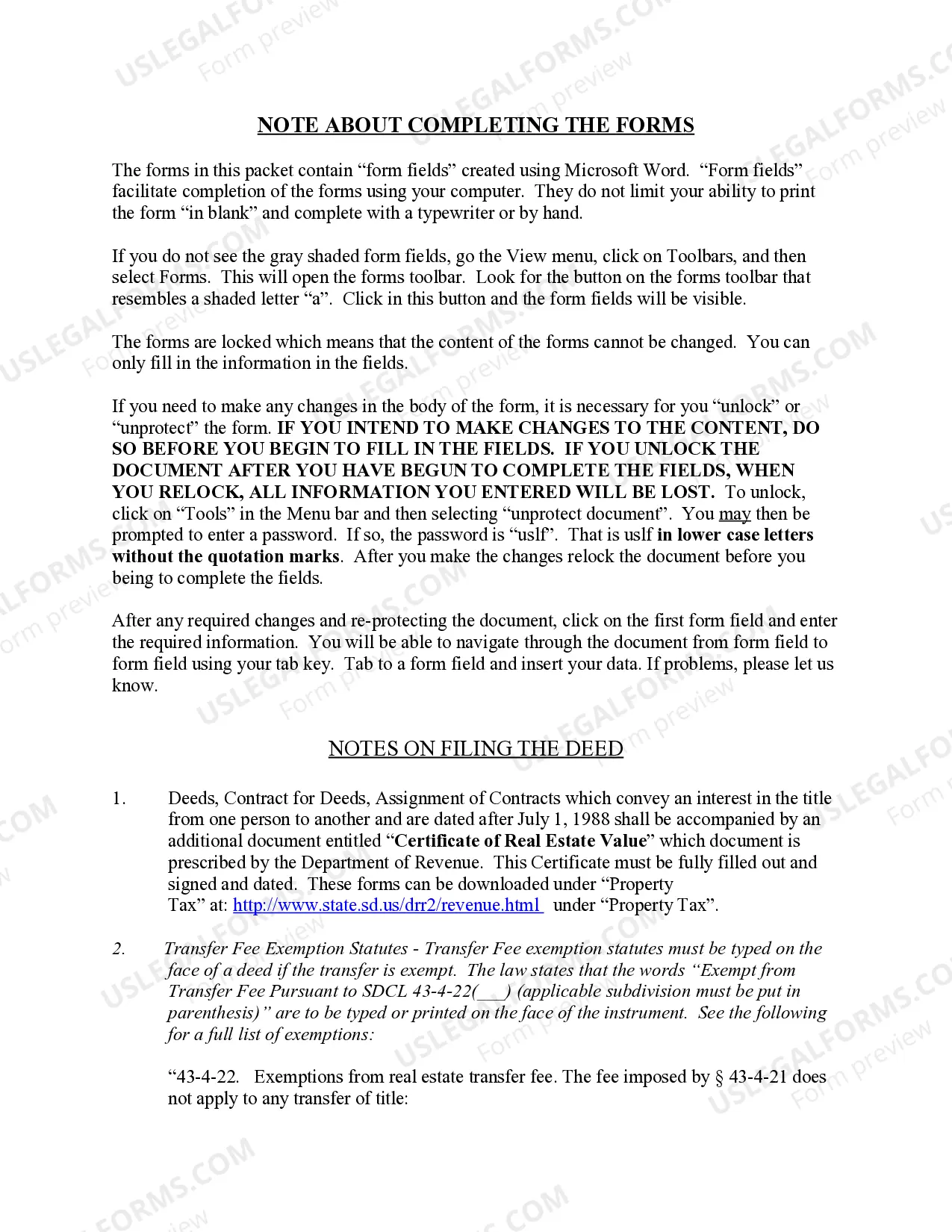
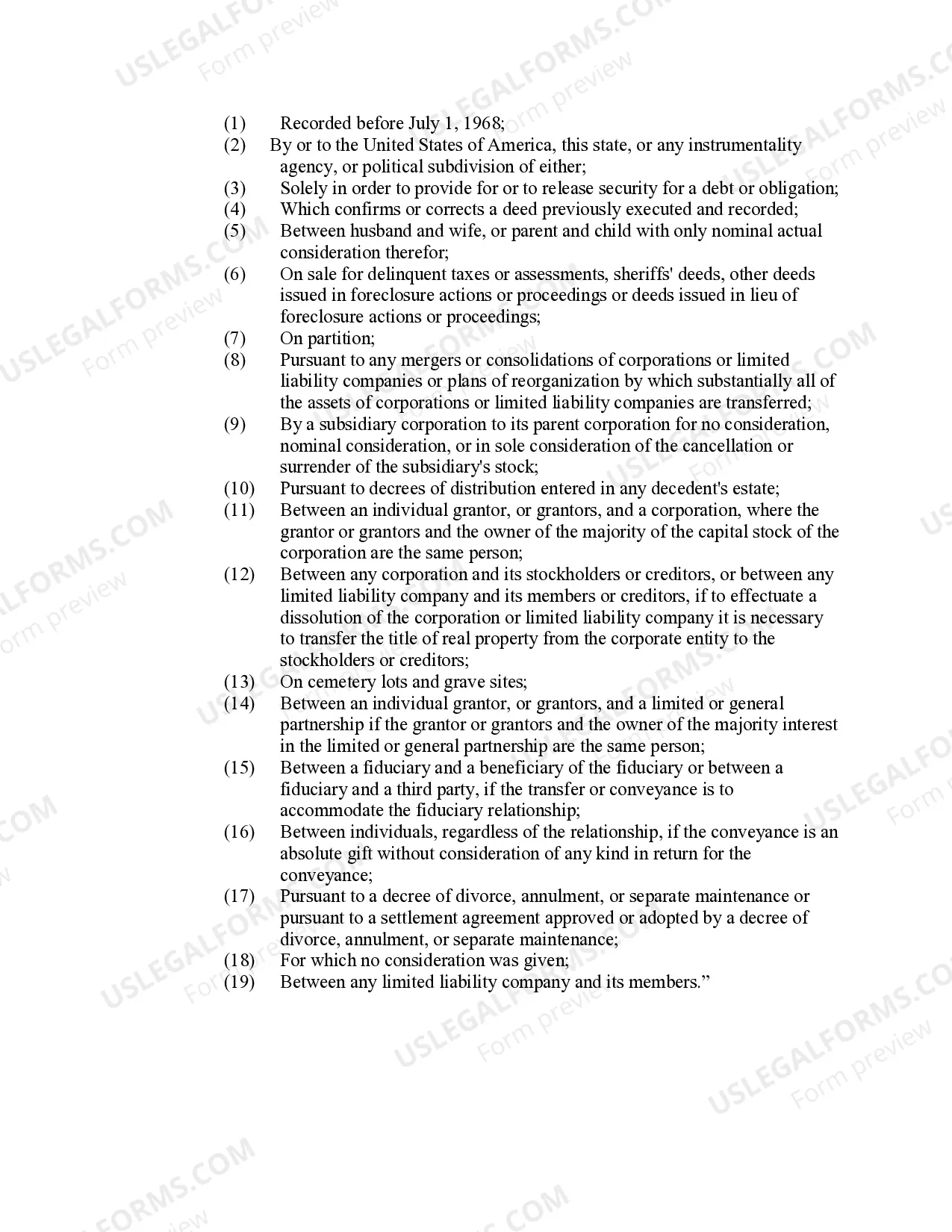
- Omitting required notes regarding transfer fee exemptions.
Why complete this form online
- Convenience: Download and complete the form at your convenience without needing to schedule an appointment.
- Editability: Fill out the form digitally, ensuring clarity and reducing the risk of errors.
- Compliance: Stay updated with state-specific legal requirements and guidance embedded in the forms.
Looking for another form?
Form popularity
FAQ
No, California does not require that the Grantee sign a warranty deed. However, some states and counties require that the deed be signed by the Grantee in addition to the Grantor.
The grantor is the person who is giving away the title or interest in the real property the borrower. The grantee is the person receiving the property.
In a Warranty Deed, the grantee is the person who the interest in a property is being transferred to. For example, if you are buying a property from someone else, you are the grantee, and the person selling it is the grantor.
Grantors the party who transfers title in real property (seller, giver) to another (buyer, recipient, donee) by grant deed or quitclaim deed. Guarantors a person or entity that agrees to be responsible for another's debt or performance under a contract if the other fails to pay or perform.
No, in most states, the Grantee is not required to sign the Quitclaim Deed. However, some counties do require that the Quitclaim Deed be signed by the Grantee in addition to the Grantor.
The Grantor is the seller (on deeds), or borrower (on mortgages). The Grantor is usually the one who signed the document.
Key Takeaways. A grantee is the recipient of something, such as a college grant or real estate property. A grantor is a person or entity that transfers to another person or entity the interest or ownership rights to an asset. Legal documents, such as deeds, detail the transfer of assets between grantors and grantees.
The grantor is the owner, and the grantee is the buyer who is acquiring an equitable interest but not bare legal interest in a property. It's essential that a deed clearly states the grantee, grantor, and a description of the property involved in the transaction.