South Dakota Essential Legal Life Documents for New Parents
What is this form package?
The South Dakota Essential Legal Life Documents for New Parents form package provides vital legal documents tailored for new parents who wish to address significant changes related to their child's arrival. This package distinguishes itself by including state-specific forms crafted by licensed attorneys, ensuring they comply with South Dakota law. With this package, new parents gain peace of mind by preparing essential documents needed to protect their family's interests and make informed decisions regarding their children.
Forms included in this package
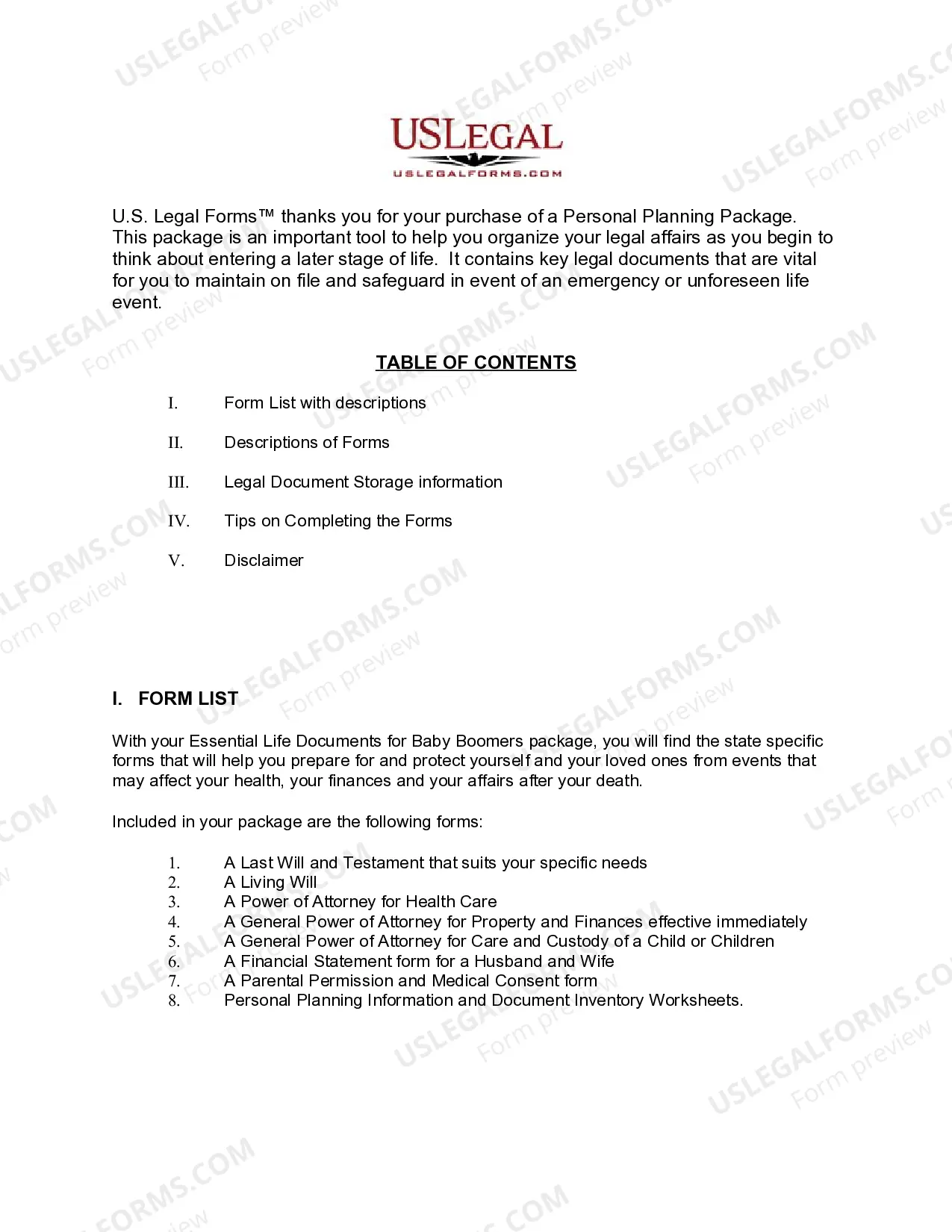
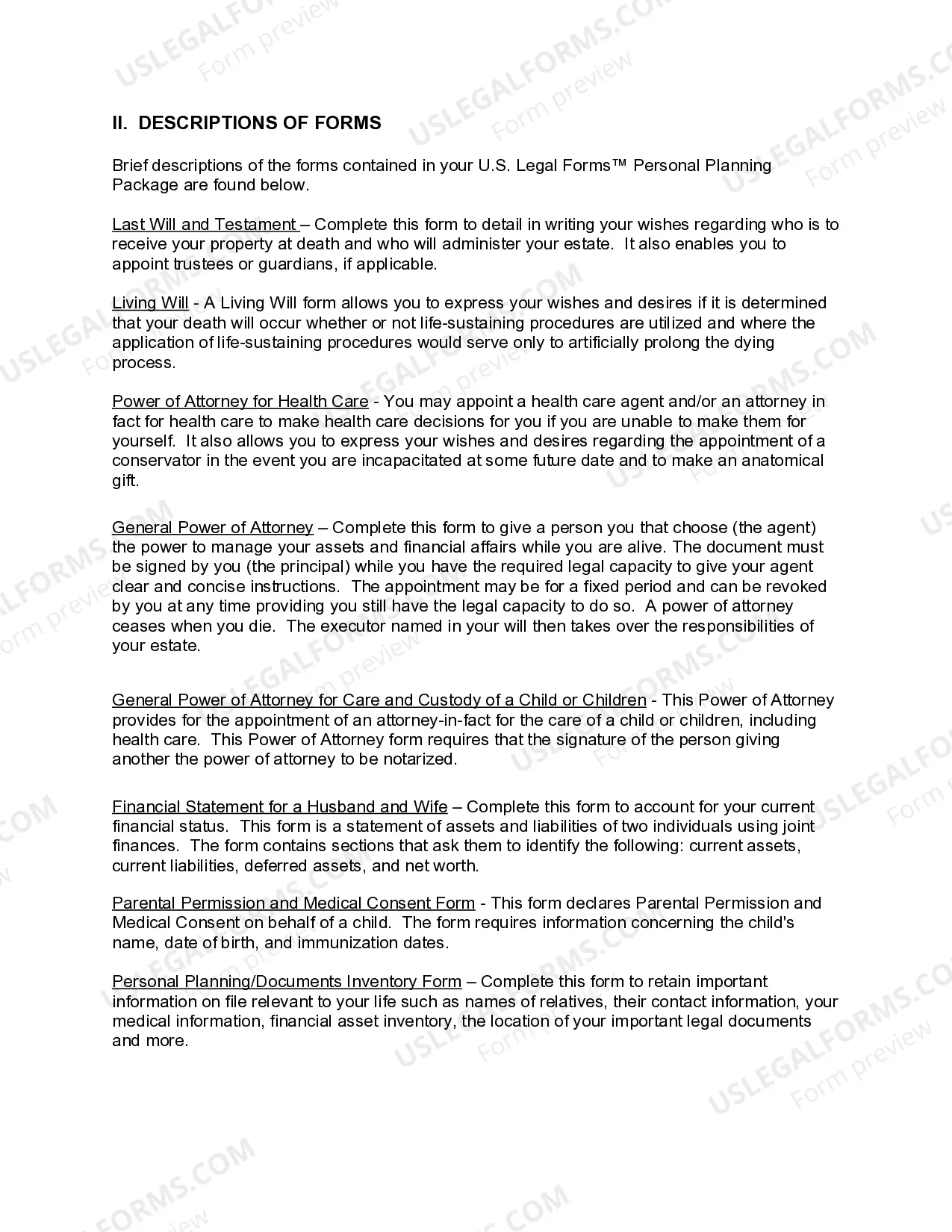
- General Durable Power of Attorney for Property and Finances or Financial Effective Immediately
- General Power of Attorney for Care and Custody of Child or Children
- Power of Attorney for Health Care - Durable Power of Attorney for Healthcare
- Statutory Living Will
- Financial Statement Form - Husband and Wife Joint
- Parental Permission and Medical Consent Form
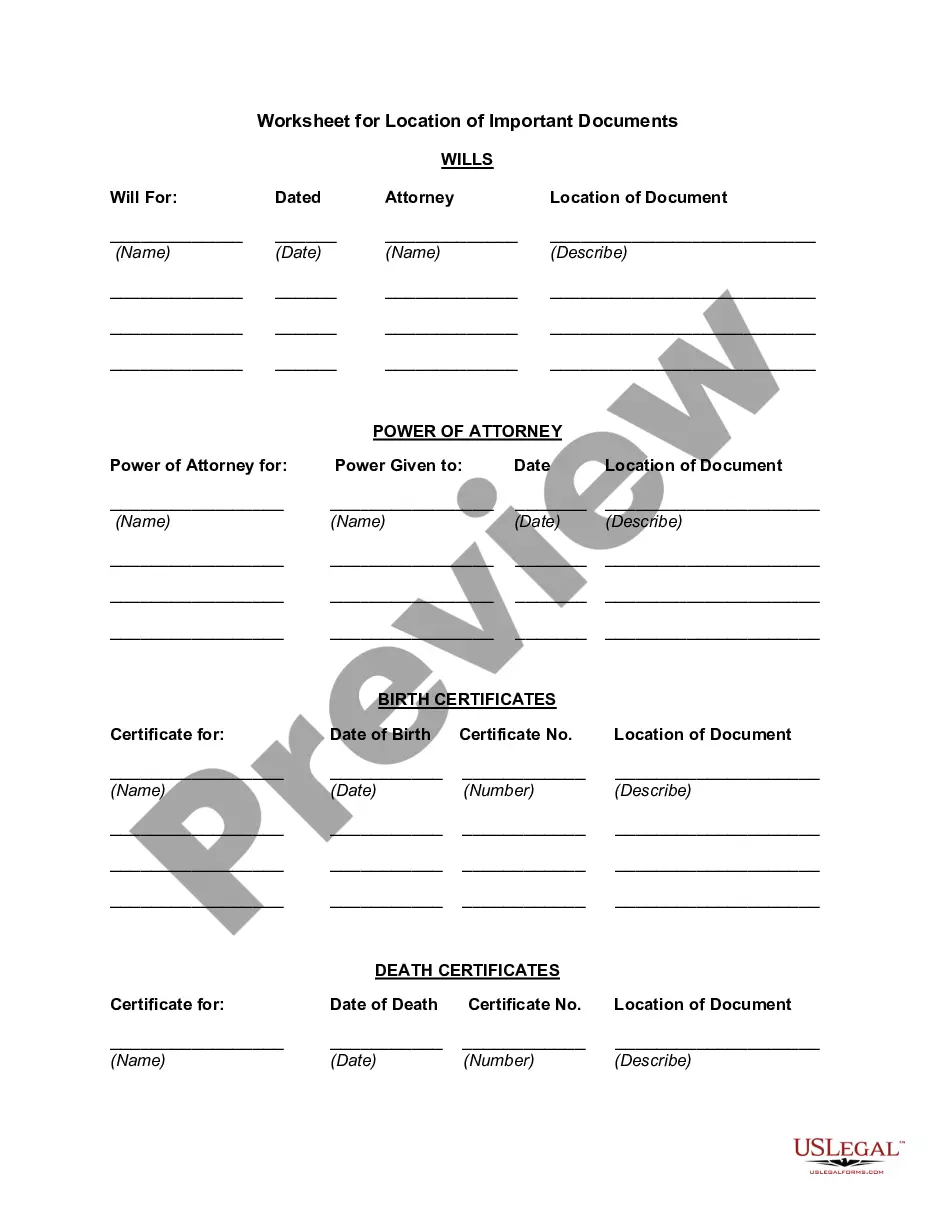
- Personal Planning Information and Document Inventory Worksheets - A Legal Life Document
Situations where these forms applies
This form package is necessary for new parents in various situations, such as:
- Establishing a legal framework for guardianship and child care in case of emergencies.
- Making medical and financial decisions on behalf of your child.
- Planning for the future through wills and living wills, especially concerning important life changes.
- Ensuring that your wishes regarding health care and child custody are clearly documented.
Who should use this form package
- New parents seeking essential legal protections for their children.
- Guardians looking to formalize their roles and responsibilities legally.
- Expecting parents wanting to prepare in advance for their child's arrival.
- Anyone who desires to ensure their health care and financial wishes are respected.
How to prepare this document
- Review all included forms and ensure you understand their purposes.
- Gather necessary information, such as personal details, medical preferences, and financial assets.
- Complete each form by filling in the required fields accurately.
- Sign the forms in the presence of notaries, if required, to validate them legally.
- Store the completed documents in a secure location, such as a safe or safety deposit box.
Notarization guidance for this package
Yes, forms in this package must be notarized to be legally valid. Notarization ensures that the signatures on the documents are verified and that the identity of the signers is confirmed. U.S. Legal Forms offers integrated online notarization services that are available 24/7, allowing you to complete this requirement conveniently from home without needing to travel.
Get your form ready online
Our built-in tools help you complete, sign, share, and store your documents in one place.
Make edits, fill in missing information, and update formatting in US Legal Forms—just like you would in MS Word.
Download a copy, print it, send it by email, or mail it via USPS—whatever works best for your next step.
Sign and collect signatures with our SignNow integration. Send to multiple recipients, set reminders, and more. Go Premium to unlock E-Sign.
If this form requires notarization, complete it online through a secure video call—no need to meet a notary in person or wait for an appointment.
We protect your documents and personal data by following strict security and privacy standards.

Make edits, fill in missing information, and update formatting in US Legal Forms—just like you would in MS Word.

Download a copy, print it, send it by email, or mail it via USPS—whatever works best for your next step.

Sign and collect signatures with our SignNow integration. Send to multiple recipients, set reminders, and more. Go Premium to unlock E-Sign.

If this form requires notarization, complete it online through a secure video call—no need to meet a notary in person or wait for an appointment.

We protect your documents and personal data by following strict security and privacy standards.
Avoid these common issues
- Failing to sign or date the forms properly.
- Not seeking notarization when required, particularly for documents like powers of attorney.
- Neglecting to keep copies of completed forms for personal records.
- Overlooking state-specific language or requirements that are crucial for enforceability.
Benefits of using this package online
- Convenience of downloading forms at your own pace without needing to visit a legal office.
- Editable forms that allow personalization to fit your unique family circumstances.
- Access to documents created by licensed attorneys, ensuring reliability and compliance with local laws.
- Cost-effective option that provides significant savings compared to purchasing forms separately.
Main things to remember
- This package provides essential legal documents specifically designed for new parents in South Dakota.
- Completing these forms helps secure your family's future and make critical decisions regarding health care and finances.
- Accessibility and affordability are notable advantages of using this online package.
- Storing completed documents safely is crucial to ensuring they can be accessed when needed.
Looking for another form?
Form popularity
FAQ
In the state of South Dakota, Judges will consider a child's preference at age 14. However, the child's mental maturity and other factors will be considered as well.
Grandparent Visitation in South Dakota In South Dakota, grandparents are afforded strong legal protections.Under South Dakota's law, a court can order grandparent visitation whether or not the grandparent has filed a petition for visitation with the court.
New Jersey. Percent Living With Their Parents: 46% Connecticut. Percent Living With Their Parents: 41% New York. Percent Living With Their Parents: 40% Florida. Percent Living With Their Parents: 38% Maryland. North Dakota. South Dakota. Wyoming.
Evidence of parenting ability: Courts look for evidence that the parent requesting custody is genuinely able to meet the child's physical and emotional needs, including food, shelter, clothing, medical care, education, emotional support, and parental guidance.
The answer is usually no, a parent cannot stop a child from seeing the other parent unless a court order states otherwise.The parents have an existing court order, and a parent is violating the court order by interfering with the other parent's parenting time.
Fill out your court forms. Have your forms reviewed. Make at least 2 copies of all your forms. File your forms with the court clerk. Get your court date or mediation date. Serve your papers on the other parent. File your Proof of Service.
Child Support Obligations The combined monthly net incomes of both parents must be used in determining the obligation and divided proportionately between the parents based on their respective net incomes. The noncustodial parent's proportionate share establishes the amount of the child support obligation.
In South Dakota, doesn't the mother usually get custody of the child? In the State of South Dakota, the law does not discriminate or favor one parent over the other based on gender. Mothers and fathers are equally entitled to seek and be awarded custody of their child.
The physical well-being of the child: For example, focus on your child's routine, sleeping habits, eating schedule, and after-school activities. The psychological well-being of the child: For example, making sure that the child has access to liberal visitation with the other parent.