South Dakota Commercial Rental Lease Application Questionnaire
Overview of this form
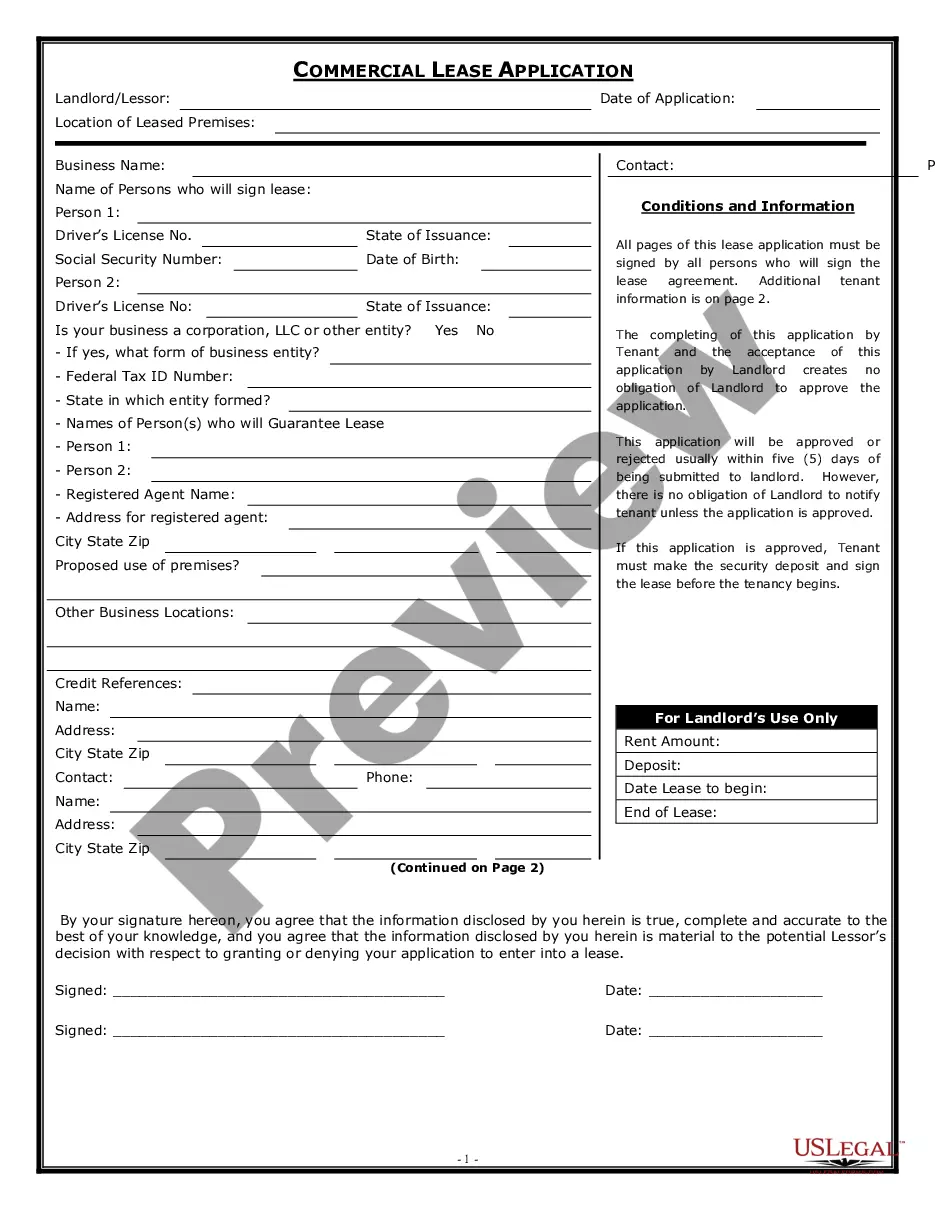
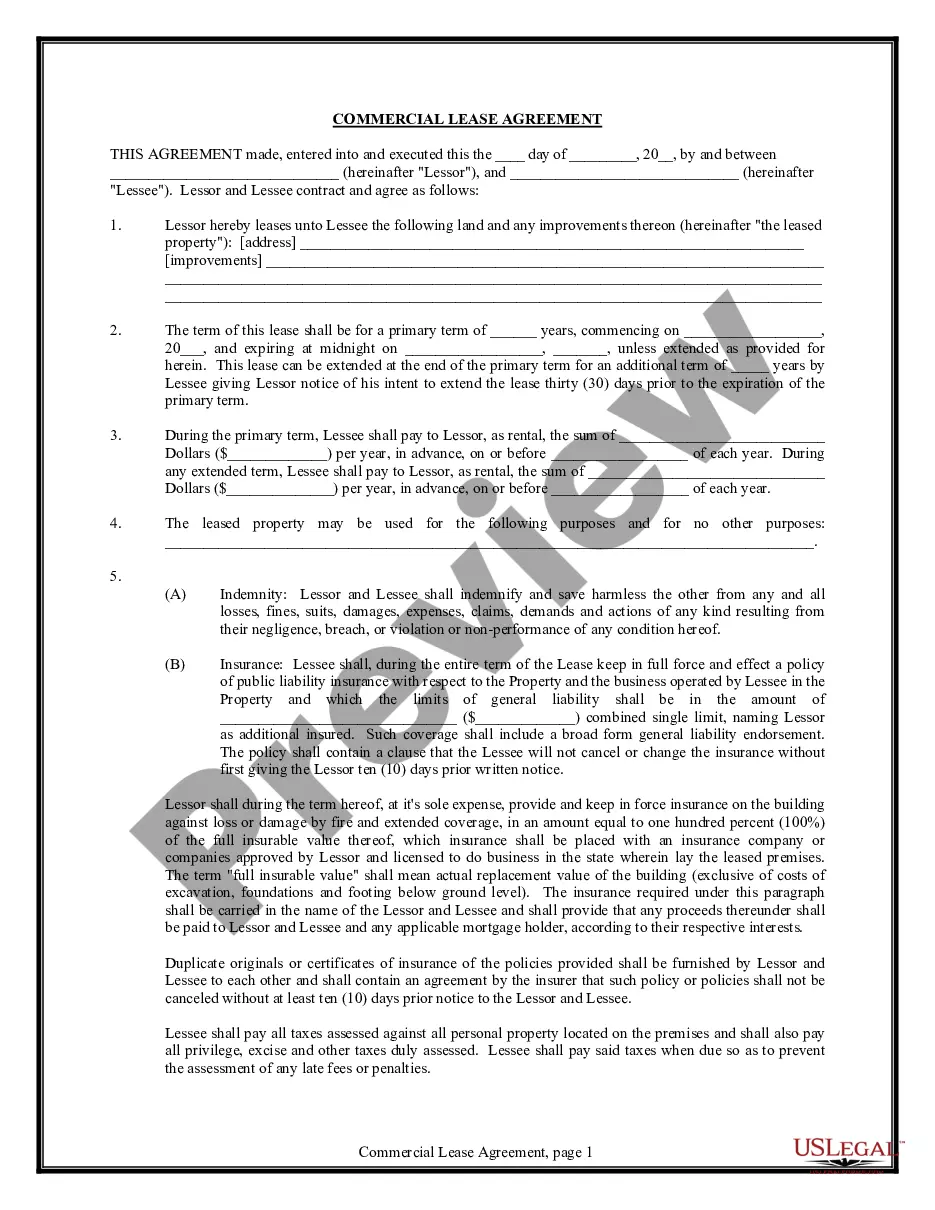
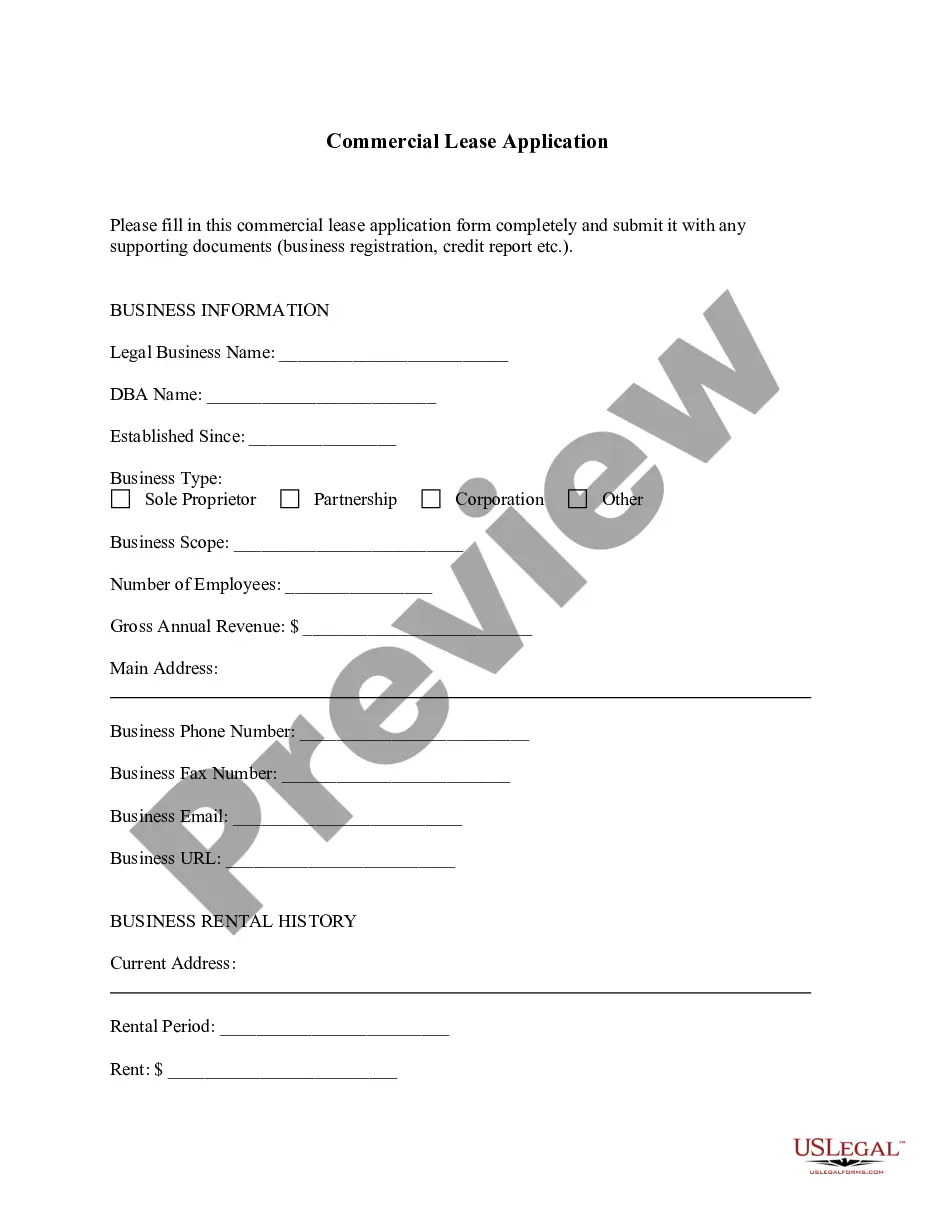
The Commercial Rental Lease Application Questionnaire is a legal document that landlords use to evaluate potential tenants for commercial property. Unlike residential leases, commercial leases are often more complex and tailored to business needs. This form differs from other lease applications by including necessary disclosures and authorization to release information, ensuring that landlords have complete and accurate information to make informed decisions.
Main sections of this form
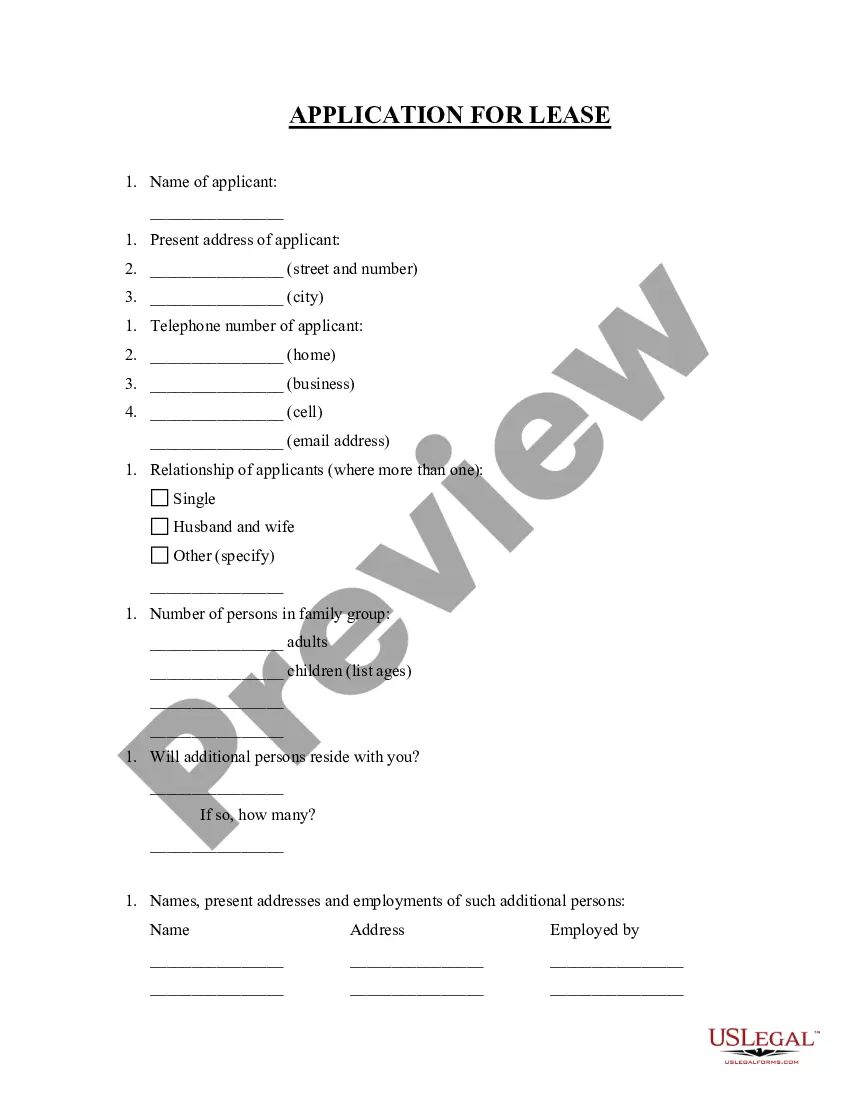
- Tenant contact information and personal details.
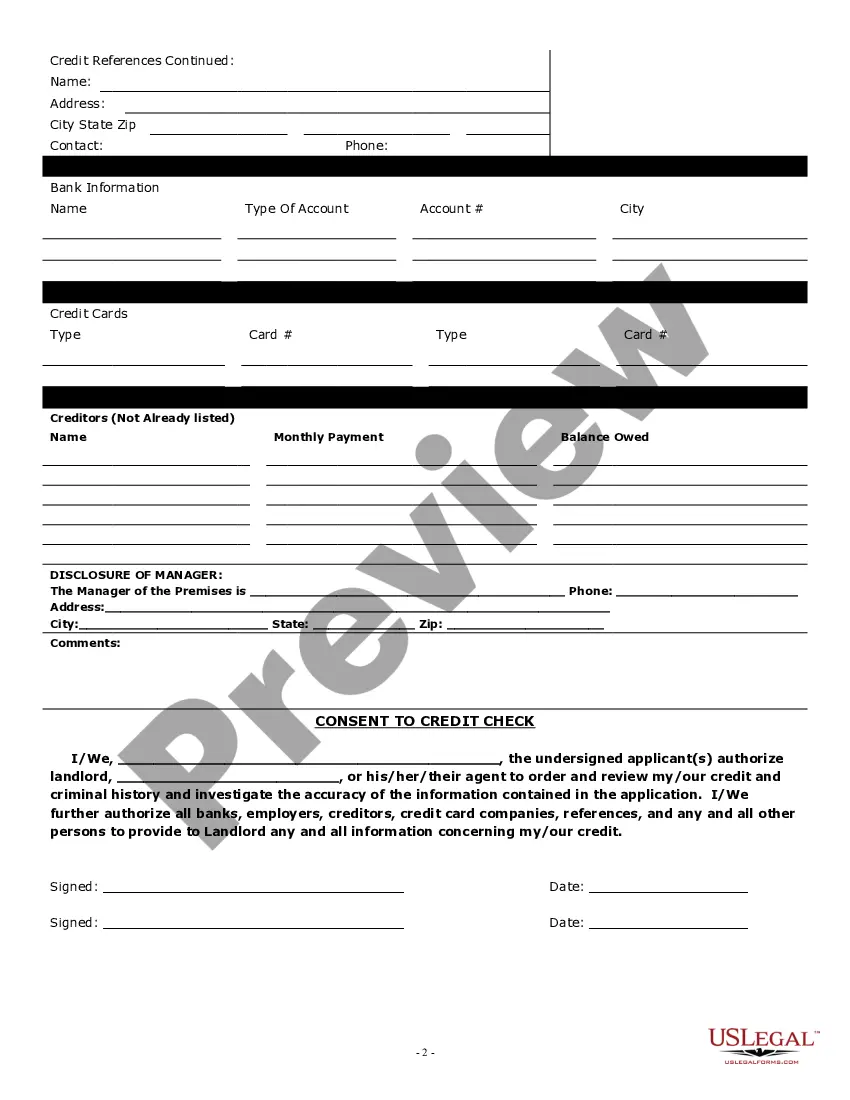
- Sections to provide credit references and banking information.
- Authorization for the landlord to conduct a credit check and verify application details.
- Space for landlord use, including rent amount and lease dates.
- Signatures of all parties involved, attesting to the accuracy of the information provided.

When this form is needed
This form should be used when a landlord needs to assess a prospective tenant's suitability before entering a commercial lease agreement. It is commonly utilized in situations where a business seeks to lease office space, retail locations, or other commercial properties, and it helps landlords make informed decisions regarding lease approvals.
Who should use this form
- Landlords or property managers seeking to lease their commercial property.
- Business owners or prospective tenants applying to rent commercial space.
- Anyone involved in the commercial leasing process who requires a structured application format.
Completing this form step by step
- Identify the parties involved in the lease, including the landlord and tenant.
- Enter the property details that will be rented.
- Provide personal and financial information, including credit references and banking details.
- Sign and date the application to certify that the information is accurate.
- Submit the completed application to the landlord for review.
Is notarization required?
This form usually doesn’t need to be notarized. However, local laws or specific transactions may require it. Our online notarization service, powered by Notarize, lets you complete it remotely through a secure video session, available 24/7.
Get your form ready online
Our built-in tools help you complete, sign, share, and store your documents in one place.
Make edits, fill in missing information, and update formatting in US Legal Forms—just like you would in MS Word.
Download a copy, print it, send it by email, or mail it via USPS—whatever works best for your next step.
Sign and collect signatures with our SignNow integration. Send to multiple recipients, set reminders, and more. Go Premium to unlock E-Sign.
If this form requires notarization, complete it online through a secure video call—no need to meet a notary in person or wait for an appointment.
We protect your documents and personal data by following strict security and privacy standards.

Make edits, fill in missing information, and update formatting in US Legal Forms—just like you would in MS Word.

Download a copy, print it, send it by email, or mail it via USPS—whatever works best for your next step.

Sign and collect signatures with our SignNow integration. Send to multiple recipients, set reminders, and more. Go Premium to unlock E-Sign.

If this form requires notarization, complete it online through a secure video call—no need to meet a notary in person or wait for an appointment.

We protect your documents and personal data by following strict security and privacy standards.
Common mistakes to avoid
- Failing to provide complete and accurate personal and financial information.
- Not signing the application, which can lead to processing delays.
- Leaving out essential authorizations for credit checks.
- Using outdated or incorrect lease terms and conditions.
Why use this form online
- You can easily download and customize the document to meet your specific leasing needs.
- Access to templates drafted by licensed attorneys ensures legal compliance.
- Convenient online access allows for immediate use without delays.
Legal use & context
- The form serves as a legal framework for potential tenants to express their interest in renting commercial property.
- It ensures transparency between landlords and tenants regarding financial responsibilities and expectations.
- Completing the application does not guarantee lease approval, allowing landlords discretion in tenant selection.
Key takeaways
- The Commercial Rental Lease Application Questionnaire is crucial for leasing commercial property.
- Correctly completing the form can enhance the chances of application approval.
- Understanding your rights and responsibilities within commercial leasing is essential.
Looking for another form?
Form popularity
FAQ
Names of all tenants. Limits on occupancy. Term of the tenancy. Rent. Deposits and fees. Repairs and maintenance. Entry to rental property. Restrictions on tenant illegal activity.
Inspect the Property and Record Any Current Damages. Know What's Included in the Rent. Can You Make Adjustments and Customizations? Clearly Understand the Terms Within the Agreement and Anticipate Problems. Communicate with Your Landlord About Your Expectations.
Settle ahead of time on your budget, your must-haves, and your nice-to-haves. Get an agent or lawyer to negotiate for you. Do negotiate on more than one location at the same time. Don't pay asked base rent. Check the square footage yourself.
The Person Liable for the Lease. Your Business Structure. How Long You Have Been in Business. The Nature of Your Business. Contact Information. Your Proposed Terms (or, Counter Offer) The Length of the Lease. Condition of the Property.
Settle ahead of time on your budget, your must-haves, and your nice-to-haves. Get an agent or lawyer to negotiate for you. Do negotiate on more than one location at the same time. Don't pay asked base rent. Check the square footage yourself.
Step 1: Write a Cover Letter. Step 2: Provide a Summary of the Proposal. Step 3: Specify the Operations of the Tenant. Step 4: Present the Cost Summary. Step 5: List the Terms of the Contract. Step 6: Mention the Benefits. >
The Letter of Intent should include the names of the parties negotiating, such as the name of the Tenant and the Property Owner/Landlord, and a list of industry standard list items. You should also include items that are important to your business when leasing commercial real estate.
ESSENTIAL ELEMENTS OF A VALID LEASE AGREEMENT. Competent Parties. Legal Purpose. Statute of Frauds. Reversionary Right. Property Description. Mutual Assent (Offer and Acceptance) Consideration.