Rhode Island Landlord Agreement to allow Tenant Alterations to Premises
What is this form?
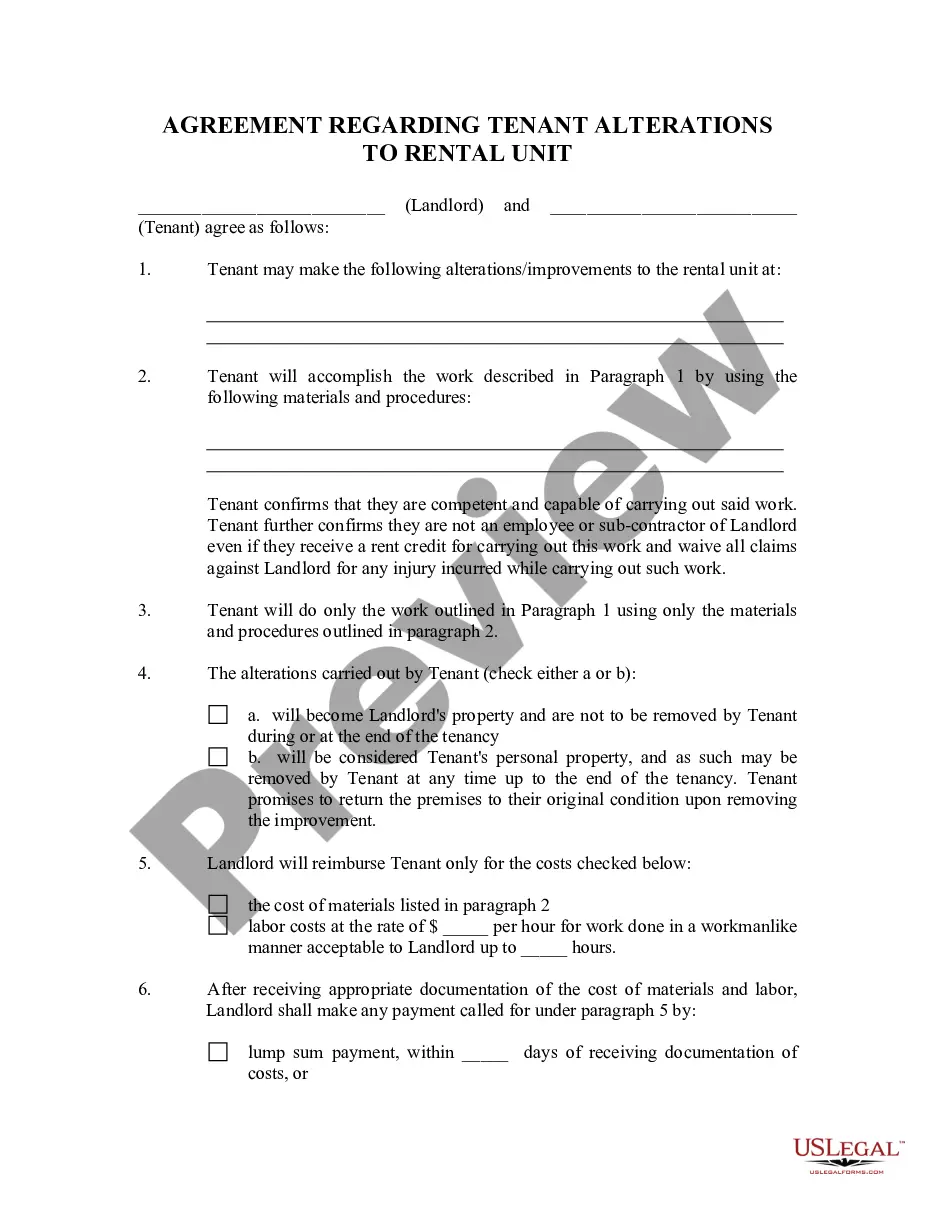
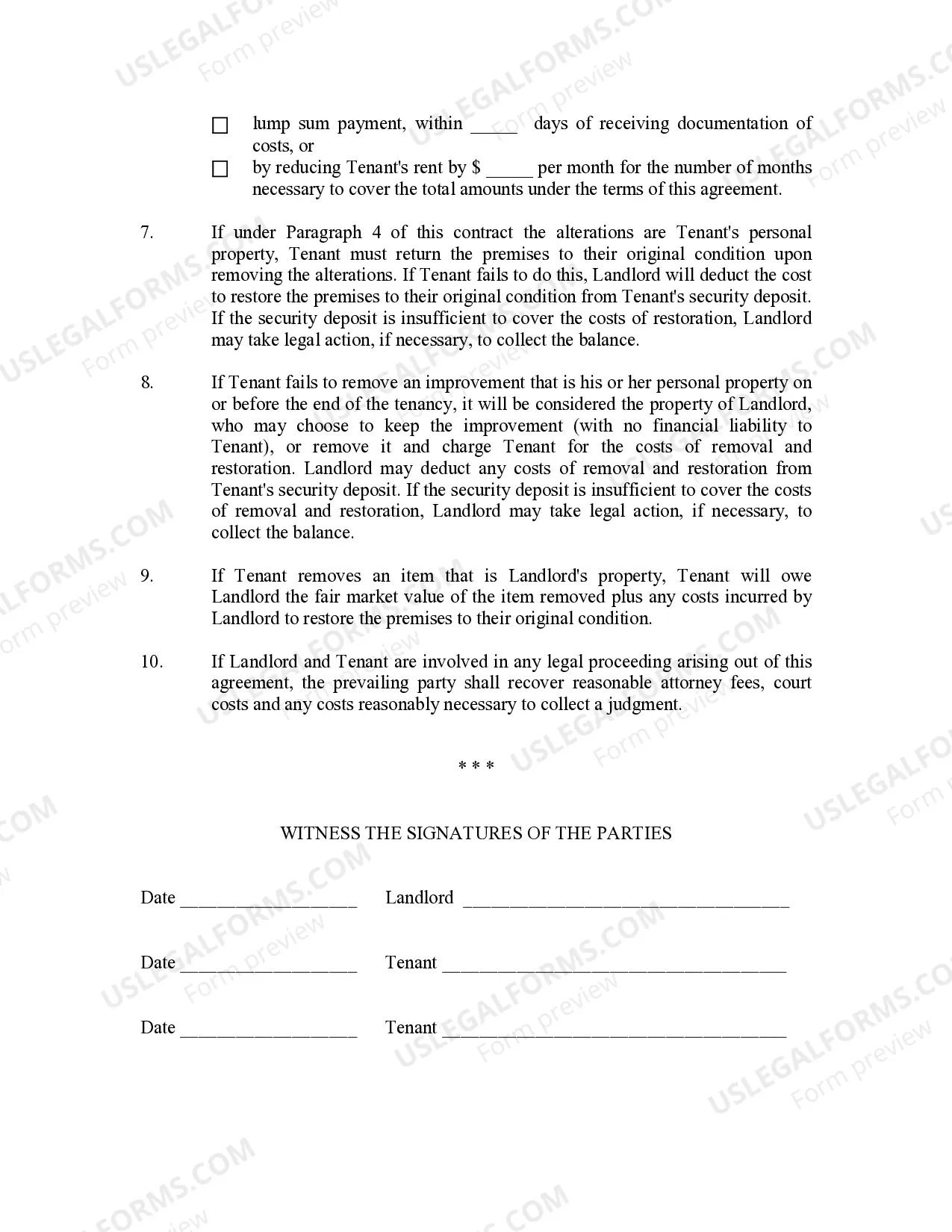
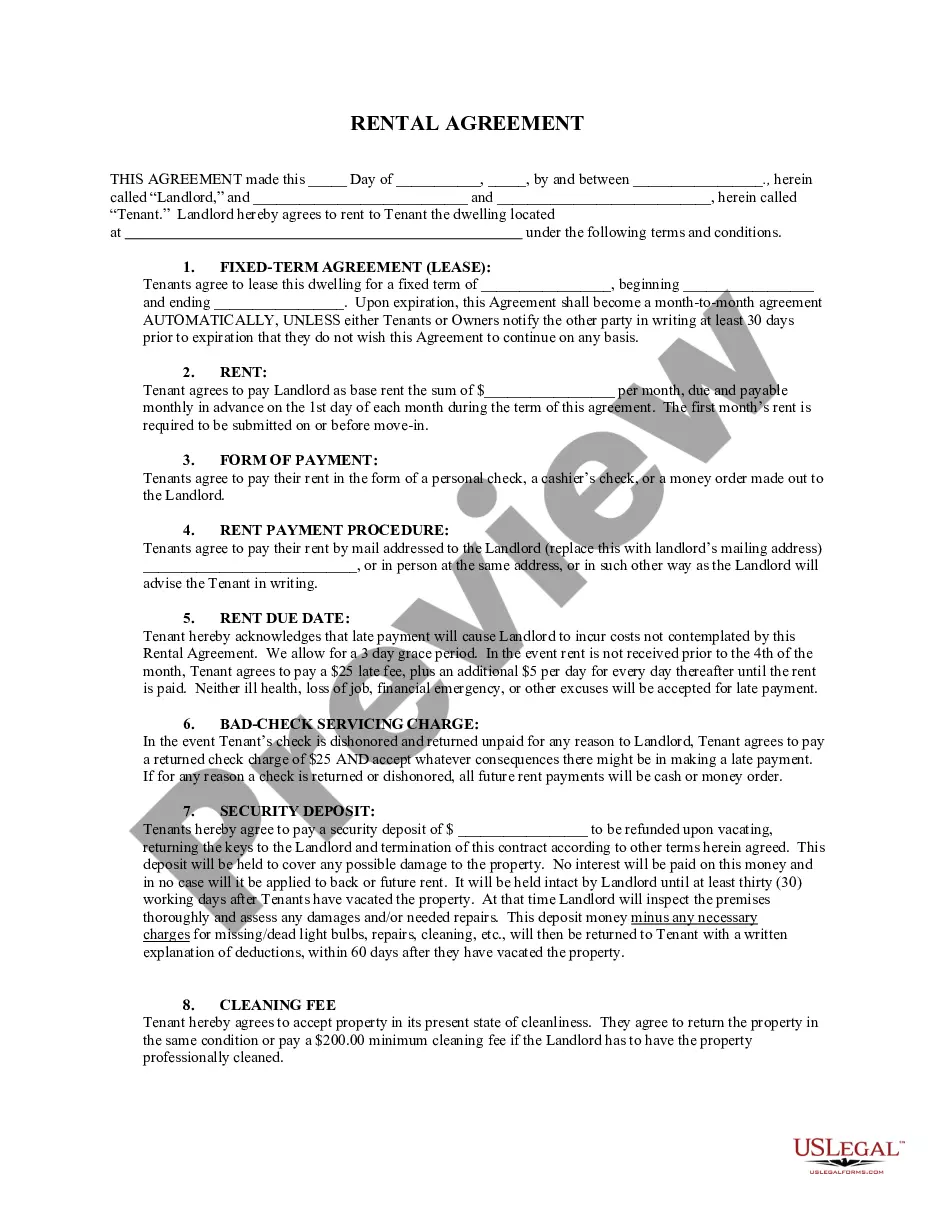
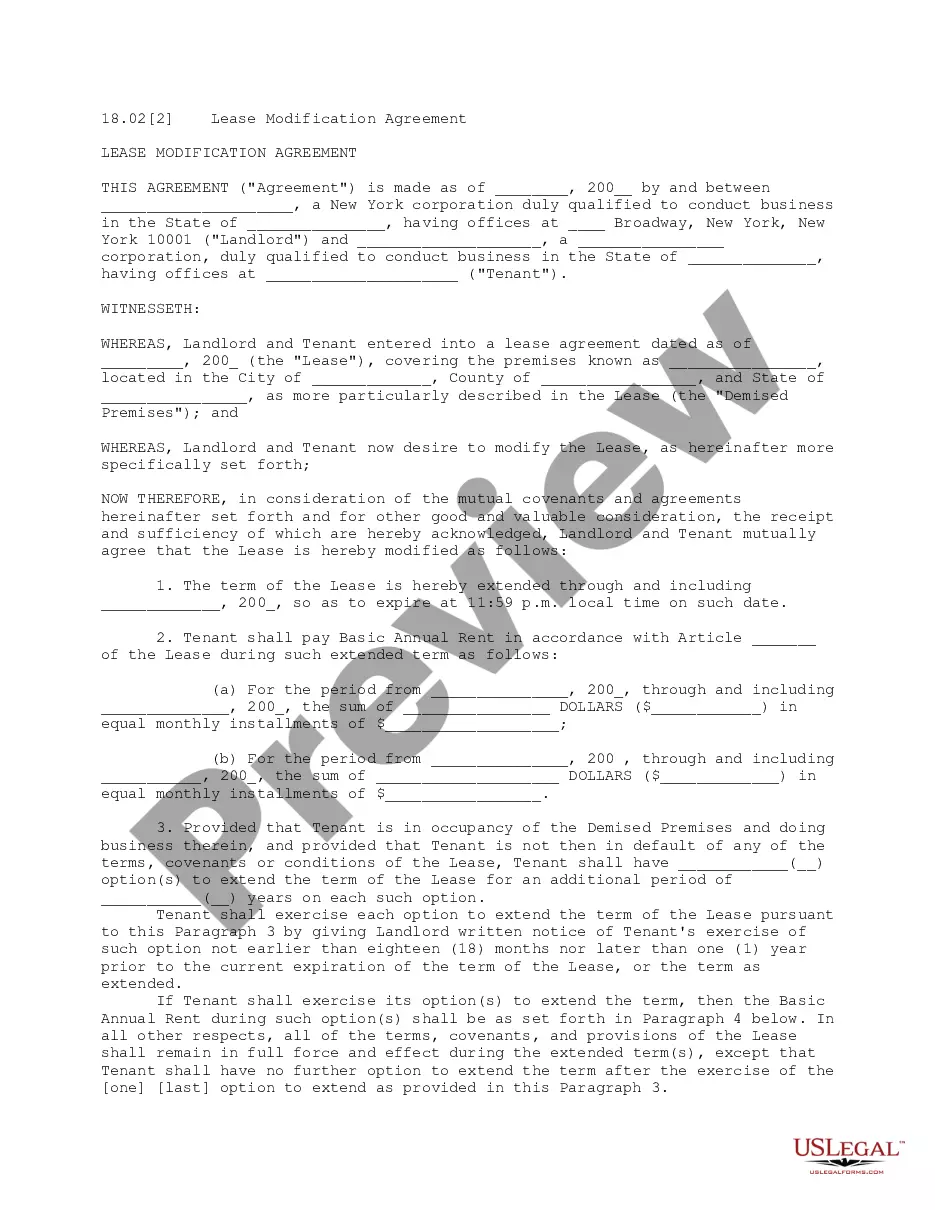
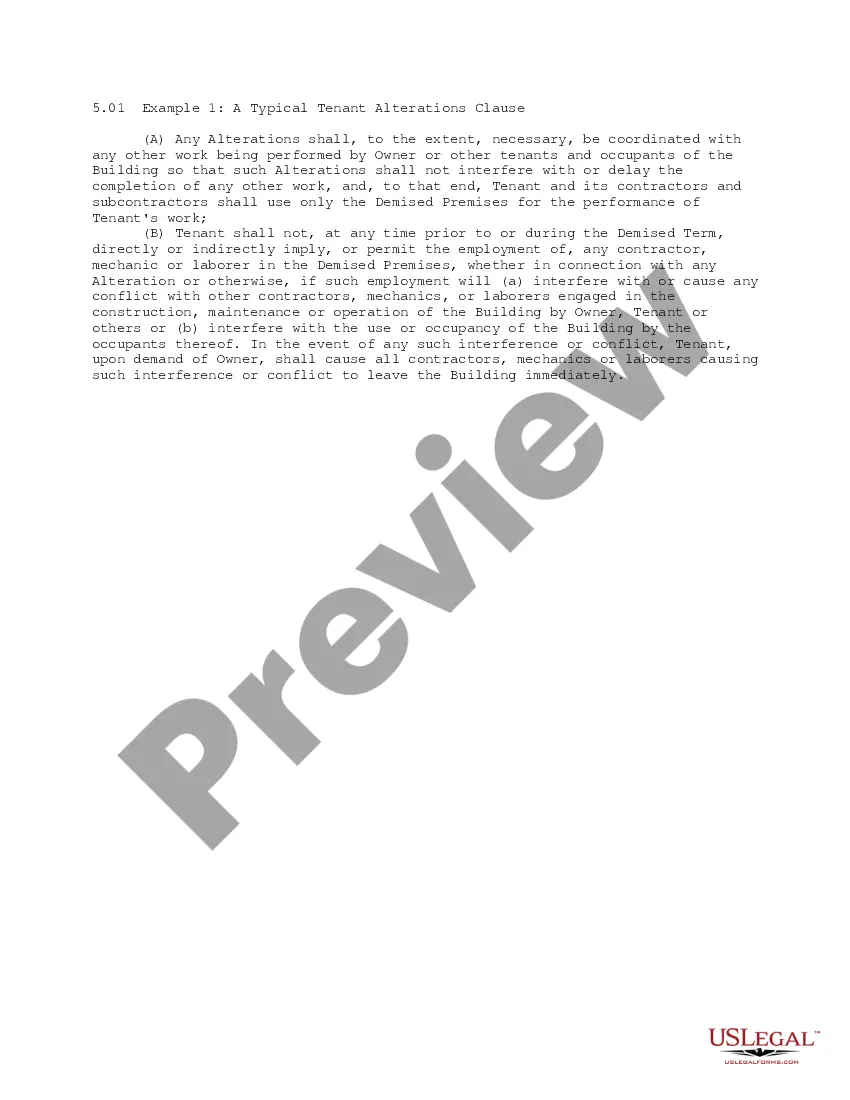
The Landlord Agreement to allow Tenant Alterations to Premises is a legal document that establishes the terms under which a tenant can make alterations to a rental property. This agreement clarifies responsibilities between landlords and tenants, covering aspects such as the ownership of improvements, payment for alterations, and the condition of the premises upon move-out. This form is essential for preventing misunderstandings that could lead to disputes, making it distinct from other rental agreements or lease forms.
Main sections of this form
- Identification of landlord and tenant.
- Details of the permitted alterations or improvements.
- Clarification on ownership of improvements and tenant obligations upon moving out.
- Agreement on payment for materials and labor costs associated with the alterations.
- Provisions for restoration of the premises to original condition.
- Legal recourse for disputes over alterations.
Situations where this form applies
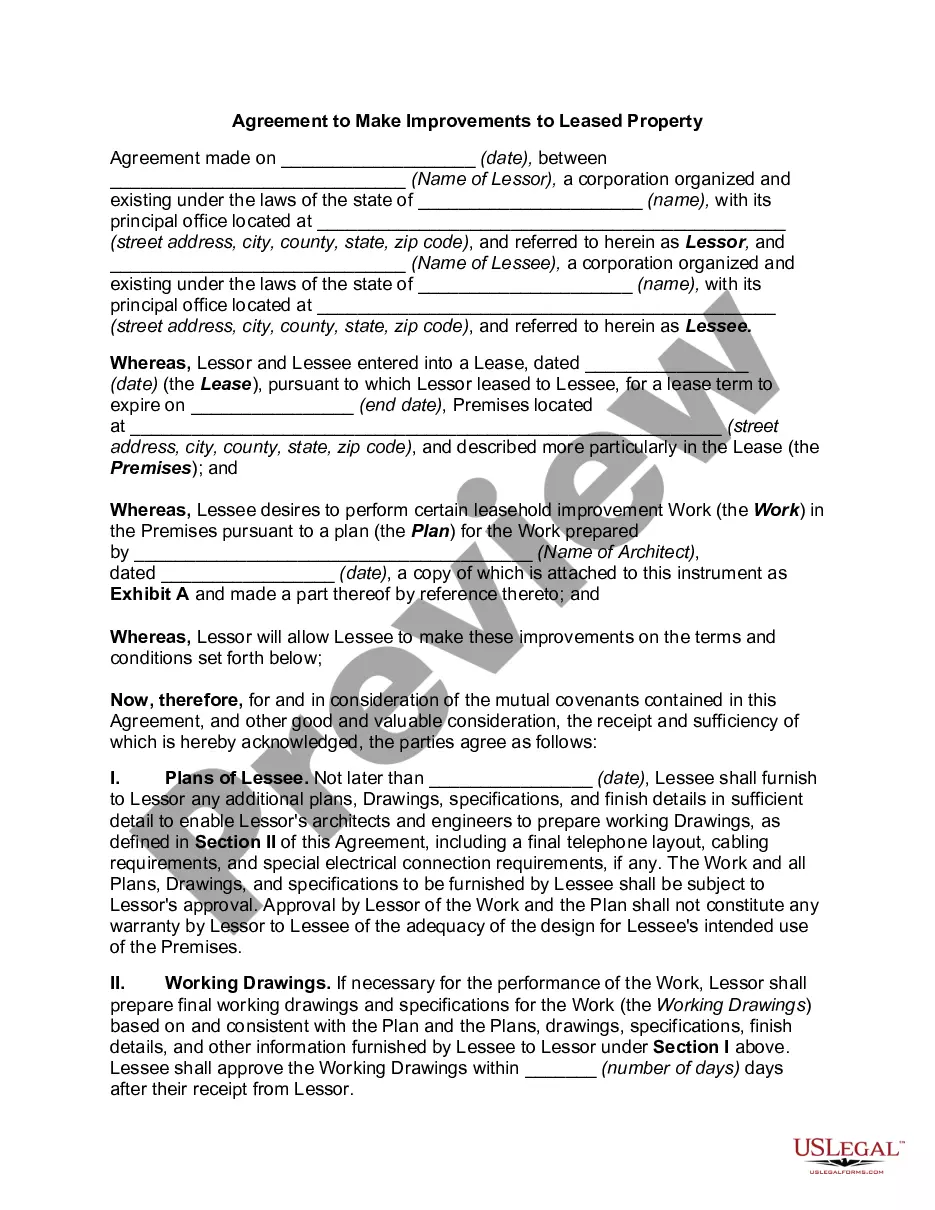
This agreement should be used when a tenant wishes to make modifications to a rental unit, such as structural changes or improvements, and needs the landlord's permission. It is particularly useful in situations where the tenant wants to personalize their living space while ensuring that both parties understand their rights and responsibilities regarding the alterations. Common scenarios include renovations, painting, or installing fixtures.
Who this form is for
This form is intended for:
- Landlords who want to provide clear guidelines for tenant alterations.
- Tenants seeking approval for changes to their rental property.
- Property managers overseeing rental agreements and tenant conditions.
How to complete this form
- Identify the parties involved in the agreement by filling in the landlord and tenant names.
- Describe in detail the alterations or improvements that the tenant is permitted to make.
- Specify who will pay for the alterations, including any material and labor costs.
- Indicate ownership of the alterations and the responsibilities concerning the restoration upon termination of tenancy.
- Ensure all parties review and sign the agreement, dating it correctly.
Notarization requirements for this form
Notarization is generally not required for this form. However, certain states or situations might demand it. You can complete notarization online through US Legal Forms, powered by Notarize, using a verified video call available anytime.
Get your form ready online
Our built-in tools help you complete, sign, share, and store your documents in one place.
Make edits, fill in missing information, and update formatting in US Legal Forms—just like you would in MS Word.
Download a copy, print it, send it by email, or mail it via USPS—whatever works best for your next step.
Sign and collect signatures with our SignNow integration. Send to multiple recipients, set reminders, and more. Go Premium to unlock E-Sign.
If this form requires notarization, complete it online through a secure video call—no need to meet a notary in person or wait for an appointment.
We protect your documents and personal data by following strict security and privacy standards.
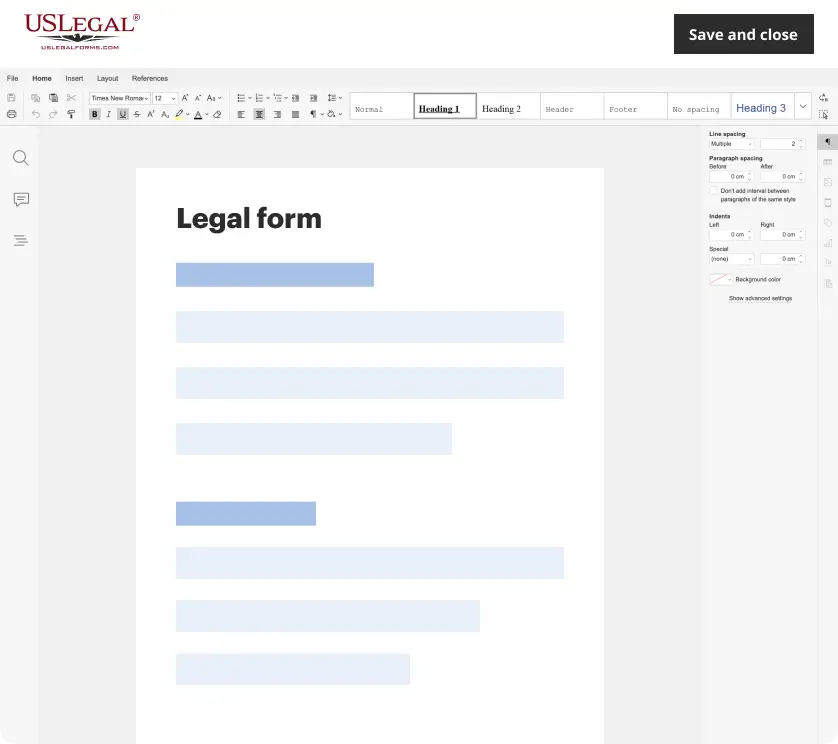
Make edits, fill in missing information, and update formatting in US Legal Forms—just like you would in MS Word.
Download a copy, print it, send it by email, or mail it via USPS—whatever works best for your next step.
Sign and collect signatures with our SignNow integration. Send to multiple recipients, set reminders, and more. Go Premium to unlock E-Sign.
If this form requires notarization, complete it online through a secure video call—no need to meet a notary in person or wait for an appointment.
We protect your documents and personal data by following strict security and privacy standards.
Typical mistakes to avoid
- Failing to clearly outline the alterations permitted, leading to misunderstandings.
- Not specifying financial responsibility for improvements, which can cause disputes later.
- Omitting tenant obligations regarding the restoration of premises to original condition.
- Not having all parties sign and date the agreement.
- Using vague language that can be misinterpreted.
Benefits of completing this form online
- Convenient access to legally vetted templates that save time.
- Editable forms allow for customization tailored to specific situations.
- Reliable documentation that helps ensure clarity in landlord-tenant relationships.
- Easy storage and retrieval for future reference or legal needs.
Looking for another form?

Form popularity
FAQ
Sue the landlord and whoever for up to $10,000 in small claims court for trespassing, breach of contract, invasion of privacy, and breach of quiet enjoyment; if you are two or more tenants, each can separately sue them for up to $10,000, and a joint action is not required.
While a landlord has a right of entry, this is balanced against your right to privacy as a tenant. Landlords are not entitled to go through your unit and belongings at will. They generally must have a valid reason to enter the unit and give you proper notice, unless you gave them permission in advance.
Rent on premises sublet refers to the rent received from leasing of the premises. It is not prepaid rent (unless specified in the question). It is a revenue income and is therefore credited to Profit and Loss Account.
Complying with all state and local health and building codes. Maintaining structural components and a reasonably weather-protected unit. Providing the necessary heat, electric, and hot and cold water facilities. Making any requested repairs promptly.
This includes keeping the property clean, safe and habitable. The landlord must adhere to all building codes, perform necessary repairs, maintain common areas, keep all vital services, such as plumbing, electricity, and heat, in good working order, must provide proper trash receptacles and must supply running water.
Premises are land and buildings together considered as a property.This usage arose from property owners finding the word in their title deeds, where it originally correctly meant "the aforementioned; what this document is about", from Latin prae-missus = "placed before".
Fundamental responsibilities of landlords include: providing and maintaining the property in a clean and reasonable standard; giving proper receipts and maintaining records of all transactions pertaining to the tenancy; paying council rates and taxes; maintaining locks to ensure the property's security; and lodging the
Under the Act, the few important rights that are given to the tenant are: Right Against Unfair Eviction: Under the Act, the landlord cannot evict the tenant without sufficient reason or cause.In some states for the landlord to evict a tenant, he/she must approach the court and obtain a court order for the same.
The Premises describes what is being leased.Sometimes the word Property is used instead of Premises in a lease. Usually this is fine. However if the Landlord owns more property than the lease covers, this can get confusing.
The landlord cannot rummage through your dresser drawers, or inspect the contents of boxes or the clothing in the closet. He can make you move items out of the closet or the under-sink cabinets to facilitate an inspection.