Pennsylvania Essential Legal Life Documents for New Parents
What is this form package?
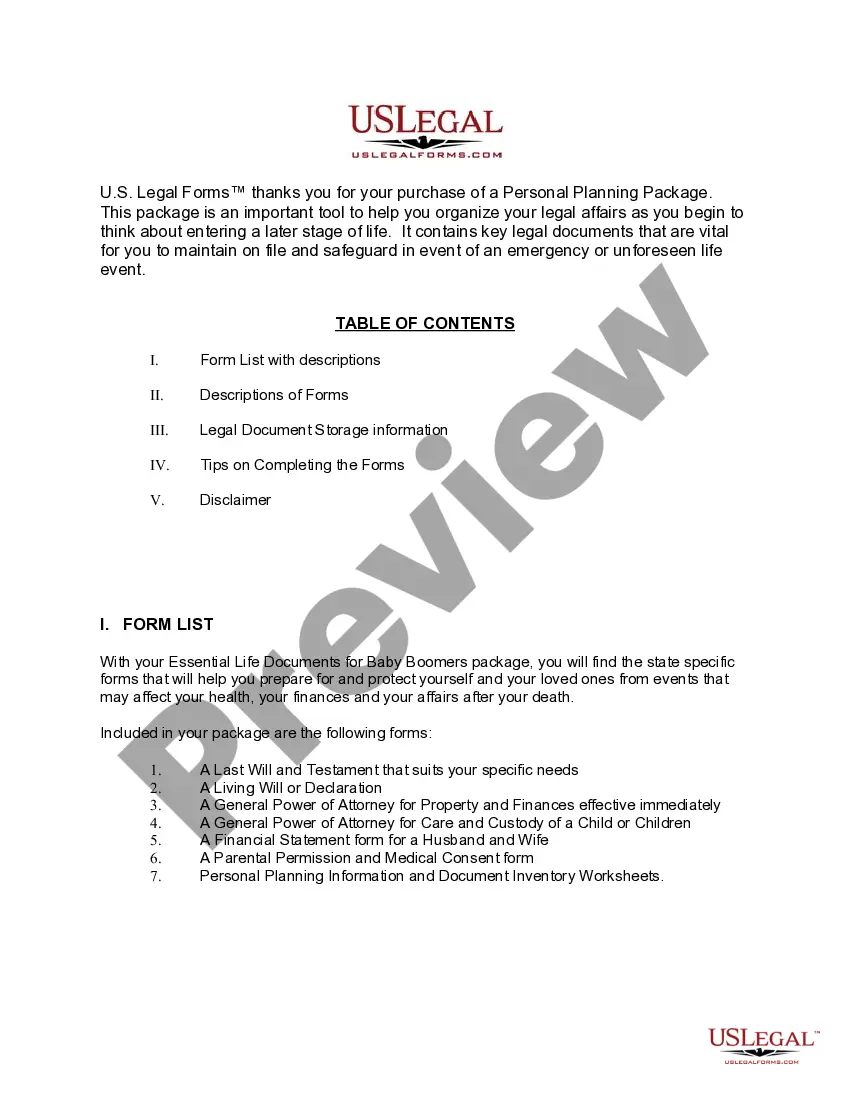
The Pennsylvania Essential Legal Life Documents for New Parents package includes vital legal documents tailored for new parents. This package is designed to help you manage significant changes in your legal life following the addition of a child. By providing these essential forms, it sets itself apart from other packages by addressing the specific needs and responsibilities that come with parenthood.
What’s included in this form package
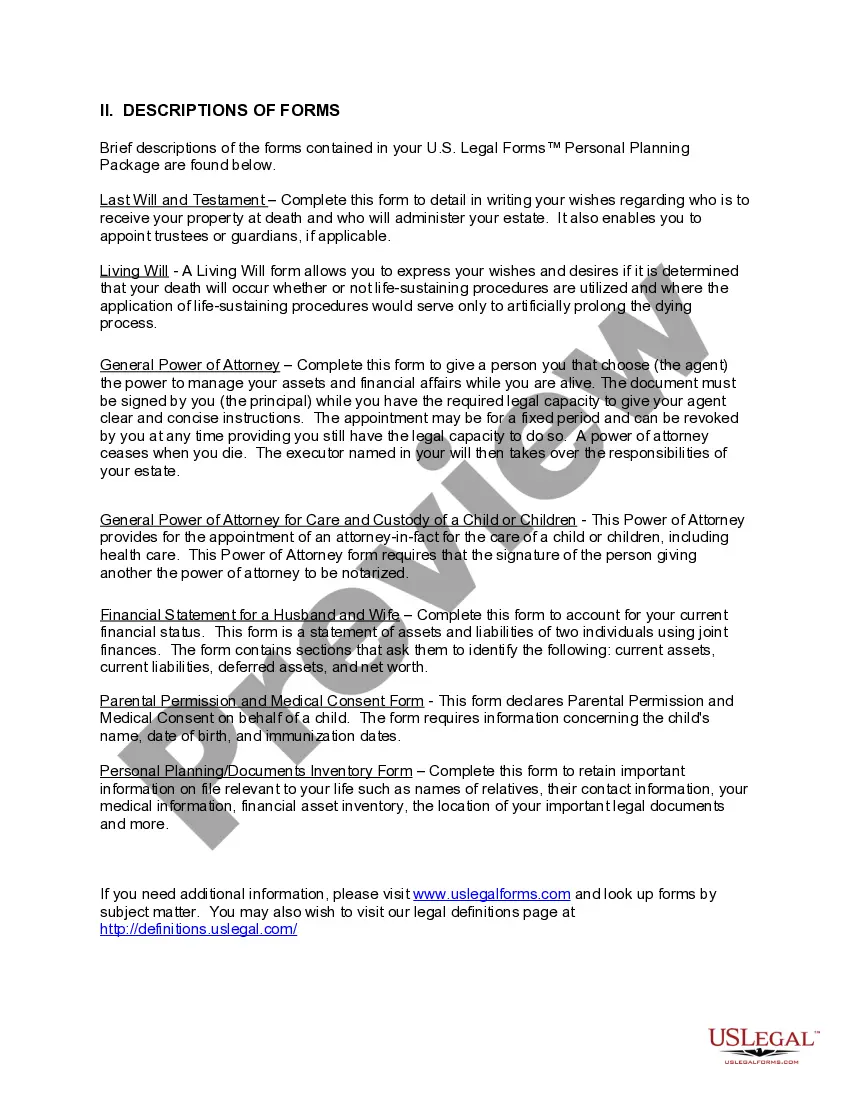
- General Durable Power of Attorney for Property and Finances or Financial Effective Immediately
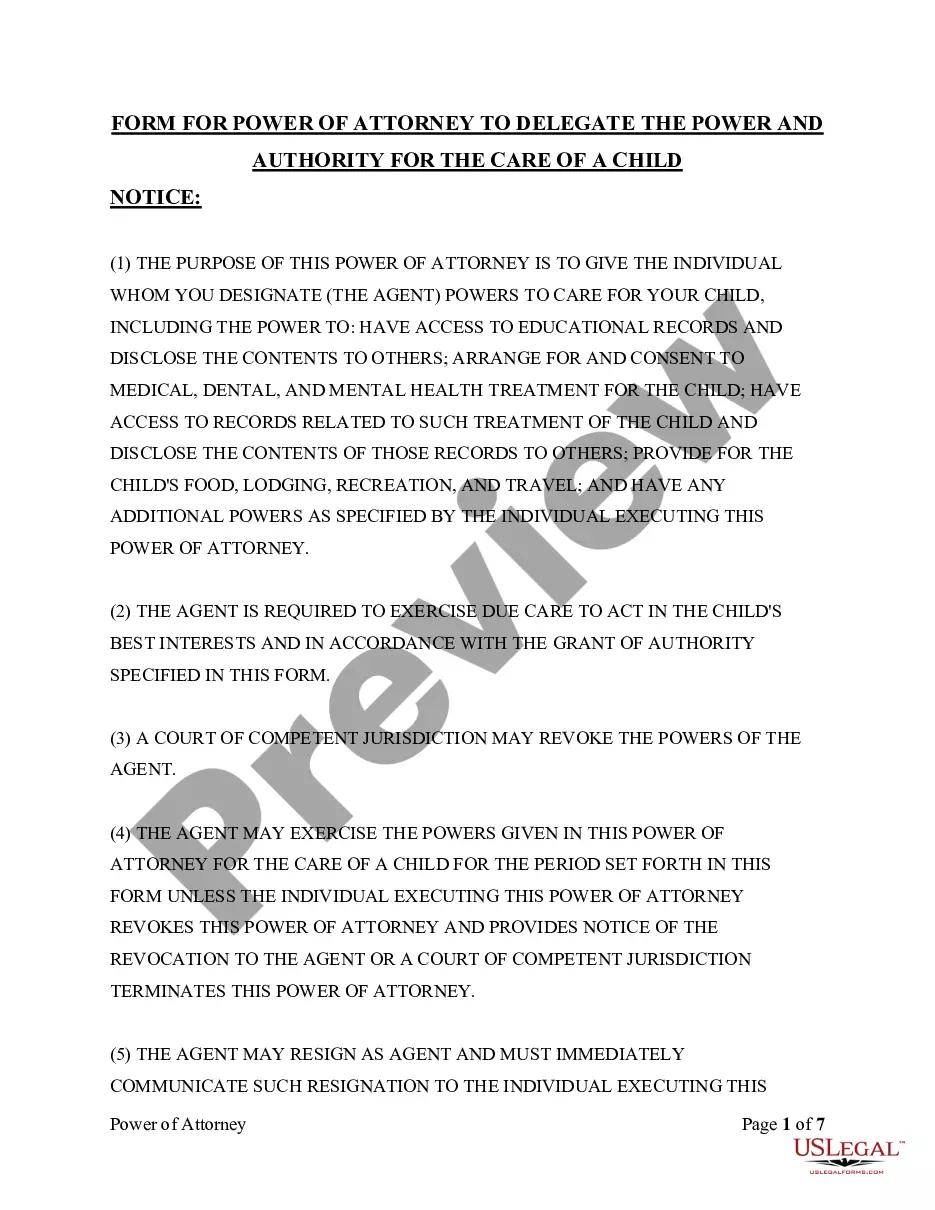
- General Power of Attorney for Care and Custody of Child or Children
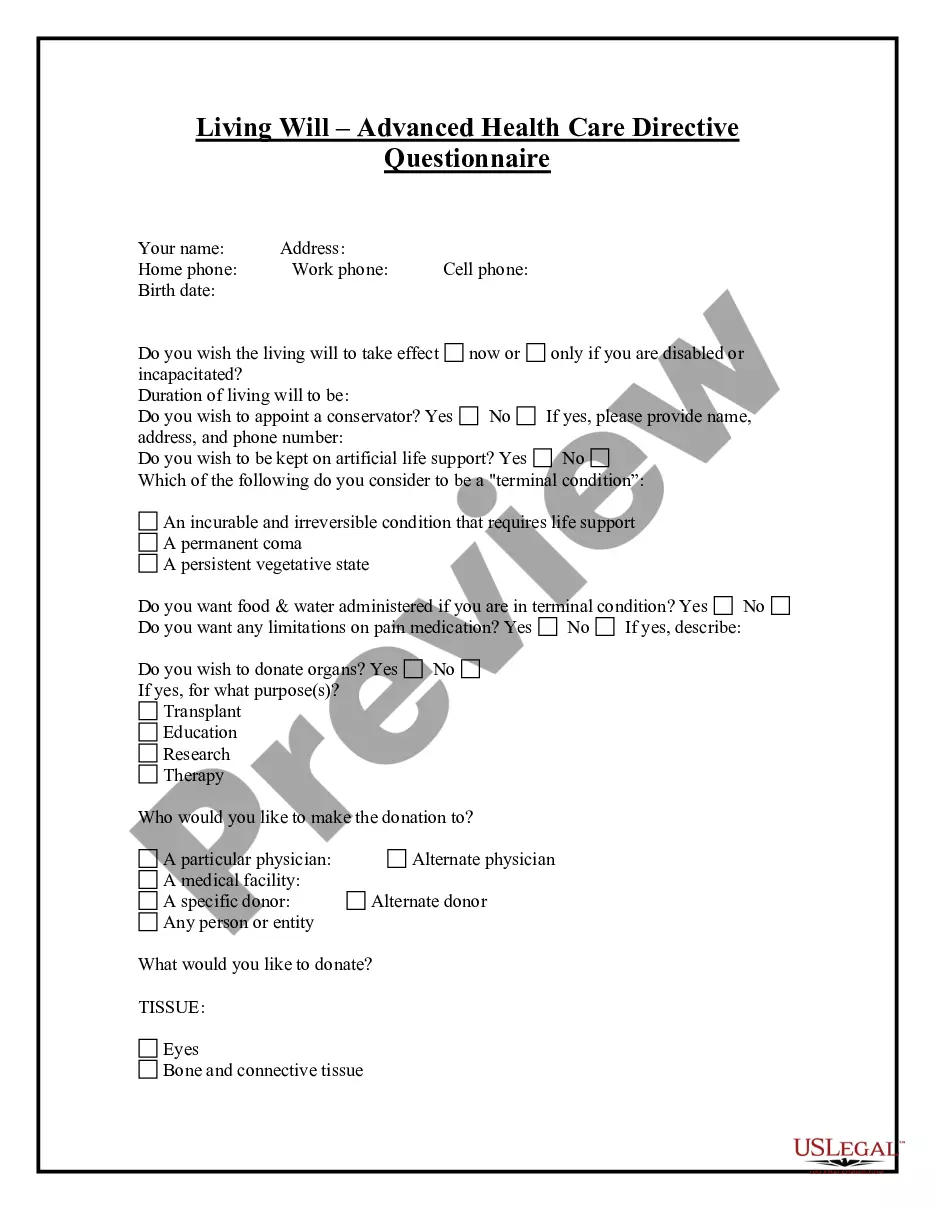
- Statutory Living Will - Advance Directive for Healthcare - Statutory form
- Financial Statement Form - Husband and Wife Joint
- Parental Permission and Medical Consent Form
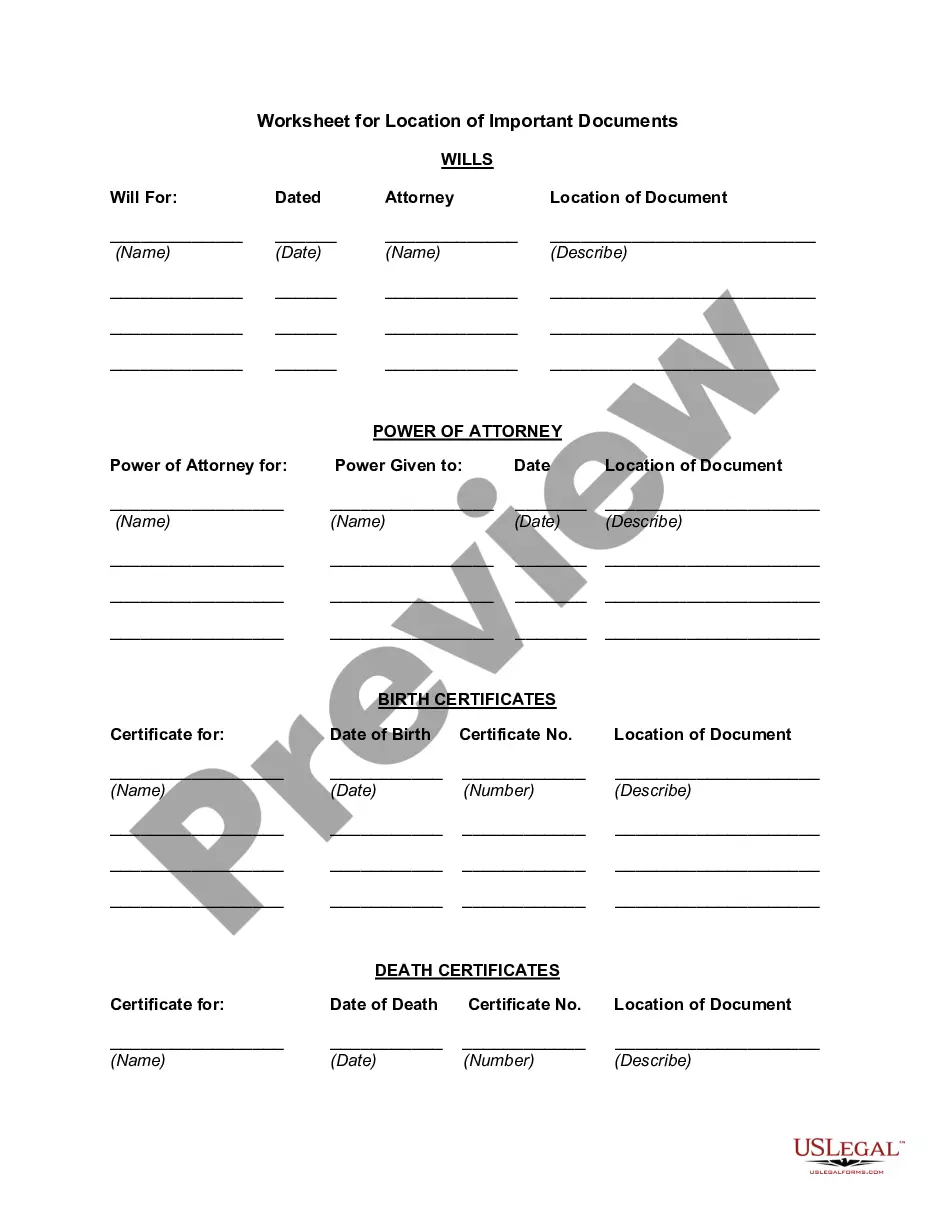
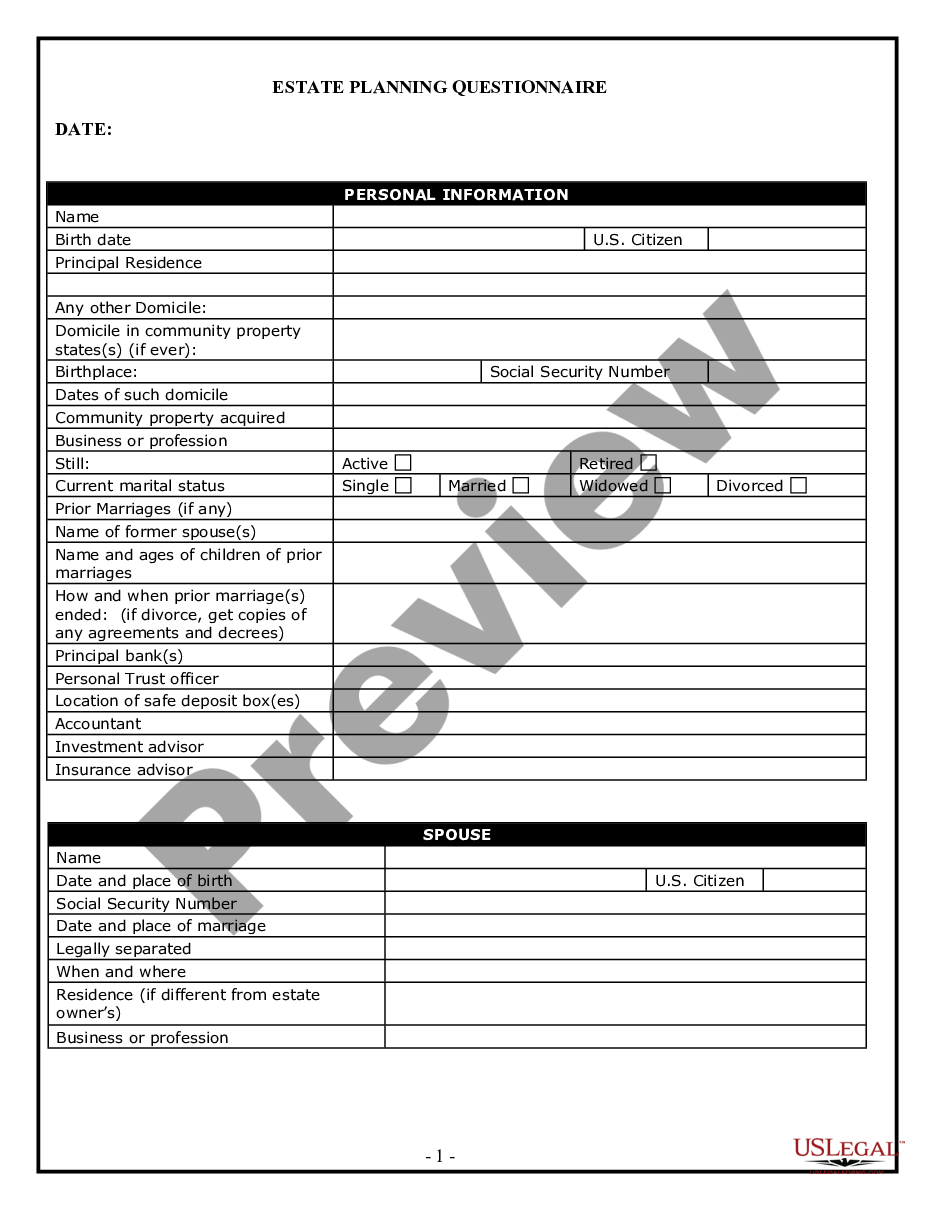
- Personal Planning Information and Document Inventory Worksheets - A Legal Life Document
When to use this document
This form package is useful in various situations, including:
- When you have recently welcomed a child and need to establish legal guardianship.
- When you want to ensure your wishes are respected regarding your health care decisions in case of an emergency.
- If you need to formally designate someone to manage your financial affairs while you are alive.
- When you seek to outline your wishes regarding your estate after passing away.
Who can use this document
- New parents looking to secure their family's future.
- Parents who want to make legal preparations for their children.
- Individuals interested in establishing clear health care and financial directives.
- Couples who share financial obligations and responsibilities.
Completing these forms step by step
- Review the included forms and understand their purpose.
- Identify the parties involved, including your designated agents.
- Fill in the necessary information, such as names, dates, and signatures.
- Have the General Power of Attorney forms notarized, if required.
- Store the completed documents in a secure location, such as a safe deposit box.
Notarization guidance for this package
Some forms in this package require notarization to be legally valid. US Legal Forms provides secure online notarization powered by Notarize, allowing you to complete the process through a verified video call, available 24/7.
Get your form ready online
Our built-in tools help you complete, sign, share, and store your documents in one place.
Make edits, fill in missing information, and update formatting in US Legal Forms—just like you would in MS Word.
Download a copy, print it, send it by email, or mail it via USPS—whatever works best for your next step.
Sign and collect signatures with our SignNow integration. Send to multiple recipients, set reminders, and more. Go Premium to unlock E-Sign.
If this form requires notarization, complete it online through a secure video call—no need to meet a notary in person or wait for an appointment.
We protect your documents and personal data by following strict security and privacy standards.
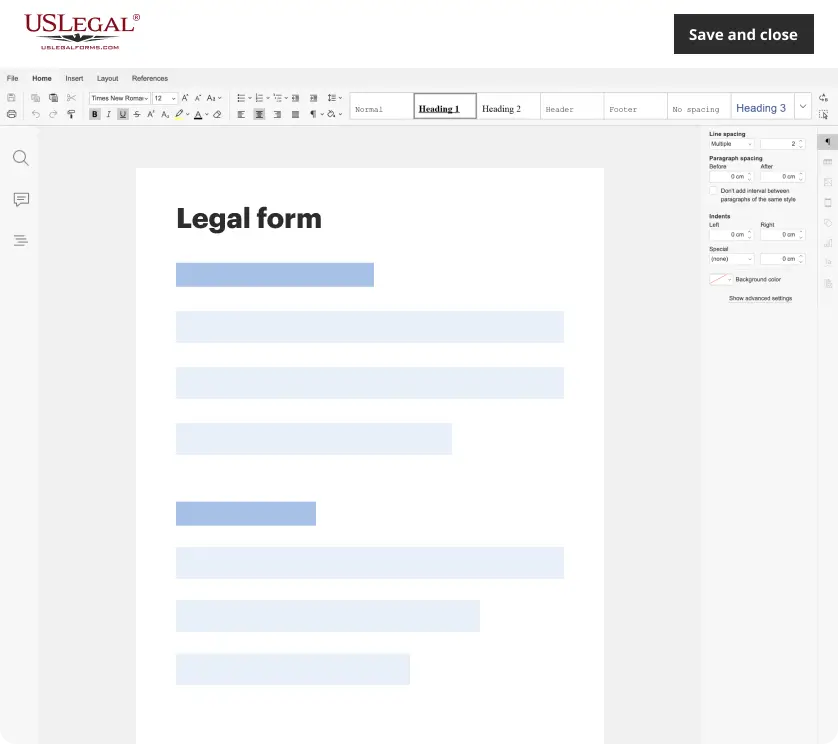
Make edits, fill in missing information, and update formatting in US Legal Forms—just like you would in MS Word.
Download a copy, print it, send it by email, or mail it via USPS—whatever works best for your next step.
Sign and collect signatures with our SignNow integration. Send to multiple recipients, set reminders, and more. Go Premium to unlock E-Sign.

If this form requires notarization, complete it online through a secure video call—no need to meet a notary in person or wait for an appointment.
We protect your documents and personal data by following strict security and privacy standards.
Common mistakes
- Failing to update documents after a significant life event.
- Not having the General Power of Attorney notarized when required.
- Omitting necessary signatures or witness requirements.
- Not storing documents in a safe and easily accessible place.
Why complete this package online
- Convenient access to important legal documents from home.
- Edit and customize documents to meet your specific needs.
- Reliable templates that have been drafted by licensed attorneys.
- Cost-effective option that saves you time and effort compared to professional legal services.
Legal use & context
- These documents are enforceable under Pennsylvania law when executed properly.
- Each form must be completed in full, signed by the appropriate parties, and notarized where indicated to maintain validity.
- Always consult with a legal professional to ensure compliance with current laws and personal circumstances.
What to keep in mind
- The package is essential for new parents seeking to establish legal frameworks for their growing family.
- State-specific forms ensure compliance with Pennsylvania laws.
- Notarization is a critical step for certain documents to ensure their legal enforceability.
- Using online forms provides the advantage of convenience and customization.
Looking for another form?

Form popularity
FAQ
At the age of fourteen (14), children are free to choose which parent to live with.
A medical directive. A durable power of attorney for healthcare and HIPAA release. A durable power of attorney for finances. A revocable living trust. A will.
A will. Also known as: a last will and testament. A living will. Also known as: an advance directive. Durable health care power of attorney. It appoints: a health care proxy. Durable financial power of attorney. It appoints: an attorney-in-fact or agent.
Under intra-district enrollment policies, students may transfer to schools within their home districts. Under inter-district enrollment policies, students may transfer to schools outside of their home districts.
At What Age Can My Child Refuse Visitation? Contrary to popular belief, there is no specific age at which a child can refuse to see a parent or comply with a custody order. In fact, Pennsylvania law defines a child as an unemancipated individual under 18 years of age.
Although the law specifically permits children at least 14-years-old to express an opinion, there is no specific age when a judge will listen to a child's opinion. California statutes also permit a child younger than 14 years old to testify regarding a custodial preference, unless the court decides it's not in the
How is custody determined in PA? In custody cases courts in Pennsylvania decide based on what is in the best interest of the child. If parents cannot settle an agreement for the court to adopt, it will issue its own controlling order.
1 attorney answer Although a child's wishes are one factor among many the court must consider in determining the child's best interests, a minor child never gets to "decide" which parent to live with.
Legal identification documents. Social Security cards. Birth certificates. Tax documents. Tax returns. W-2s and 1099 forms. Property records. Vehicle registration and titles. Medical records. Wills, powers of attorney or living will. Finance records. Pay stubs.