Oregon Notice of Right to Lien Sect. 87.023 - Individual
What this document covers
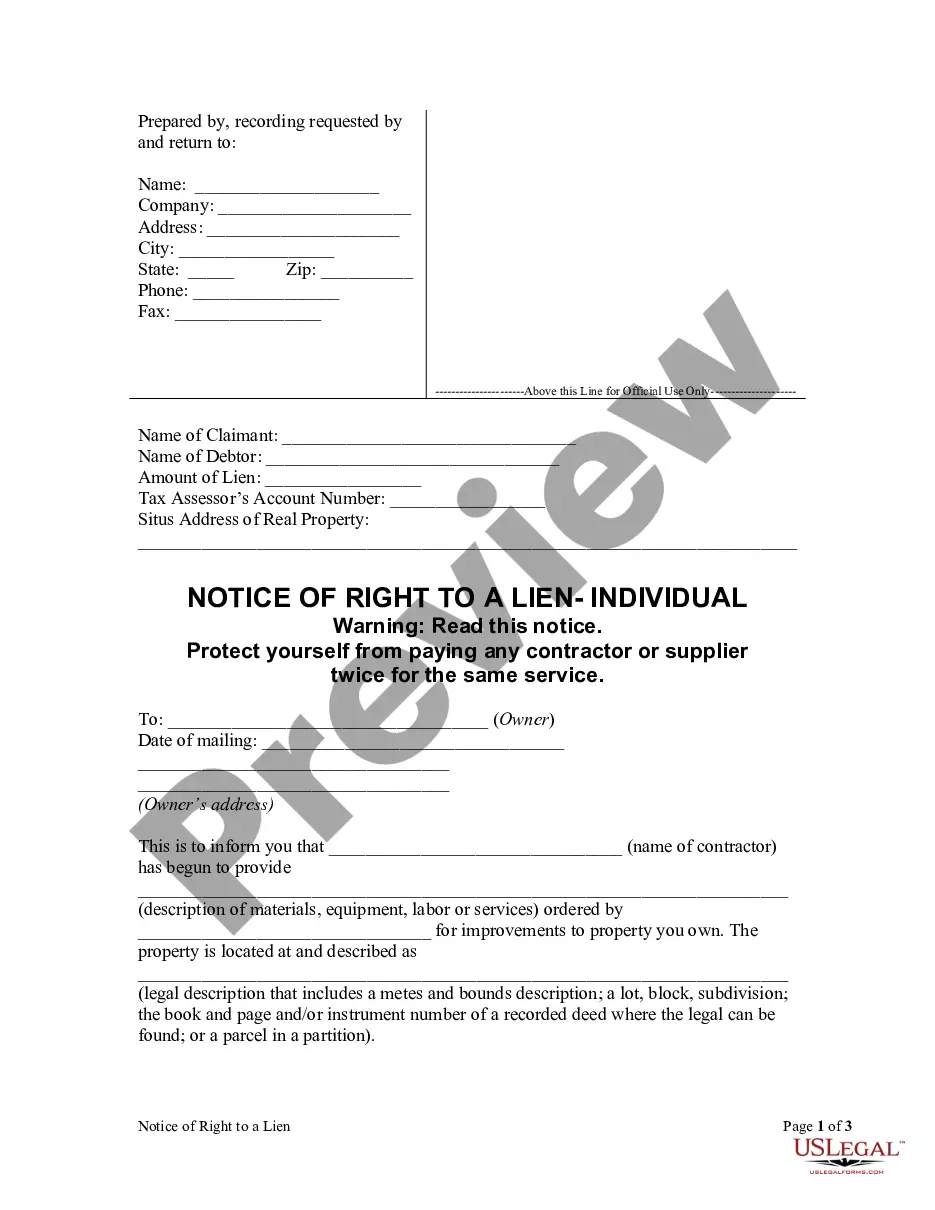
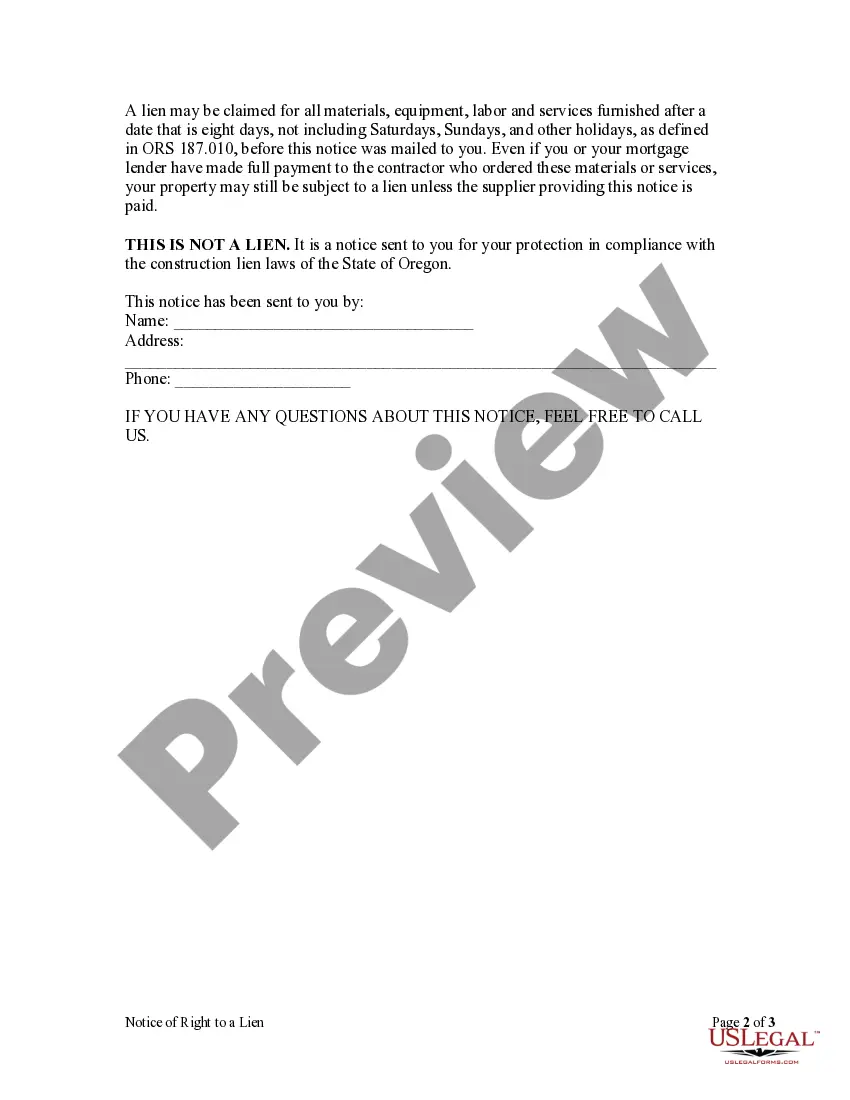
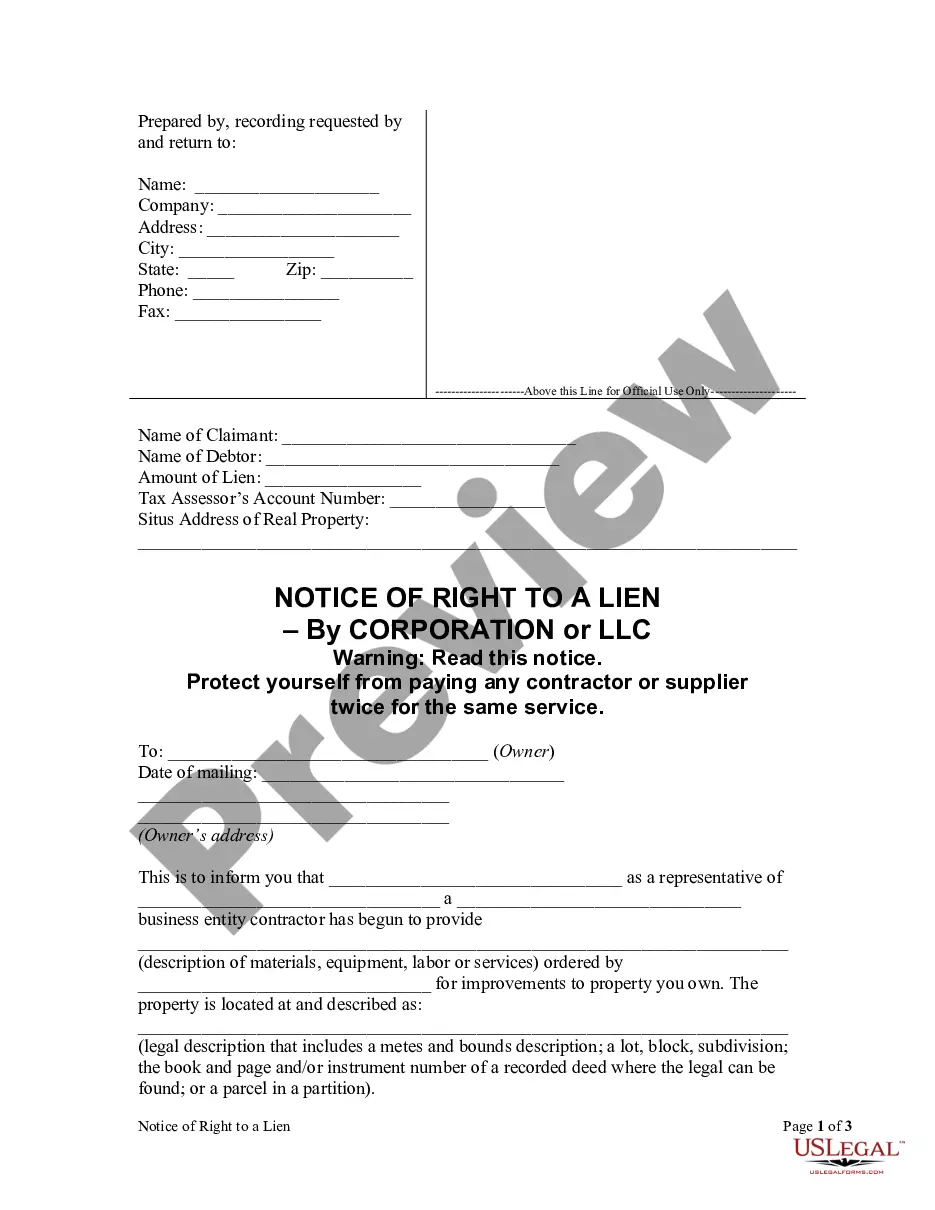
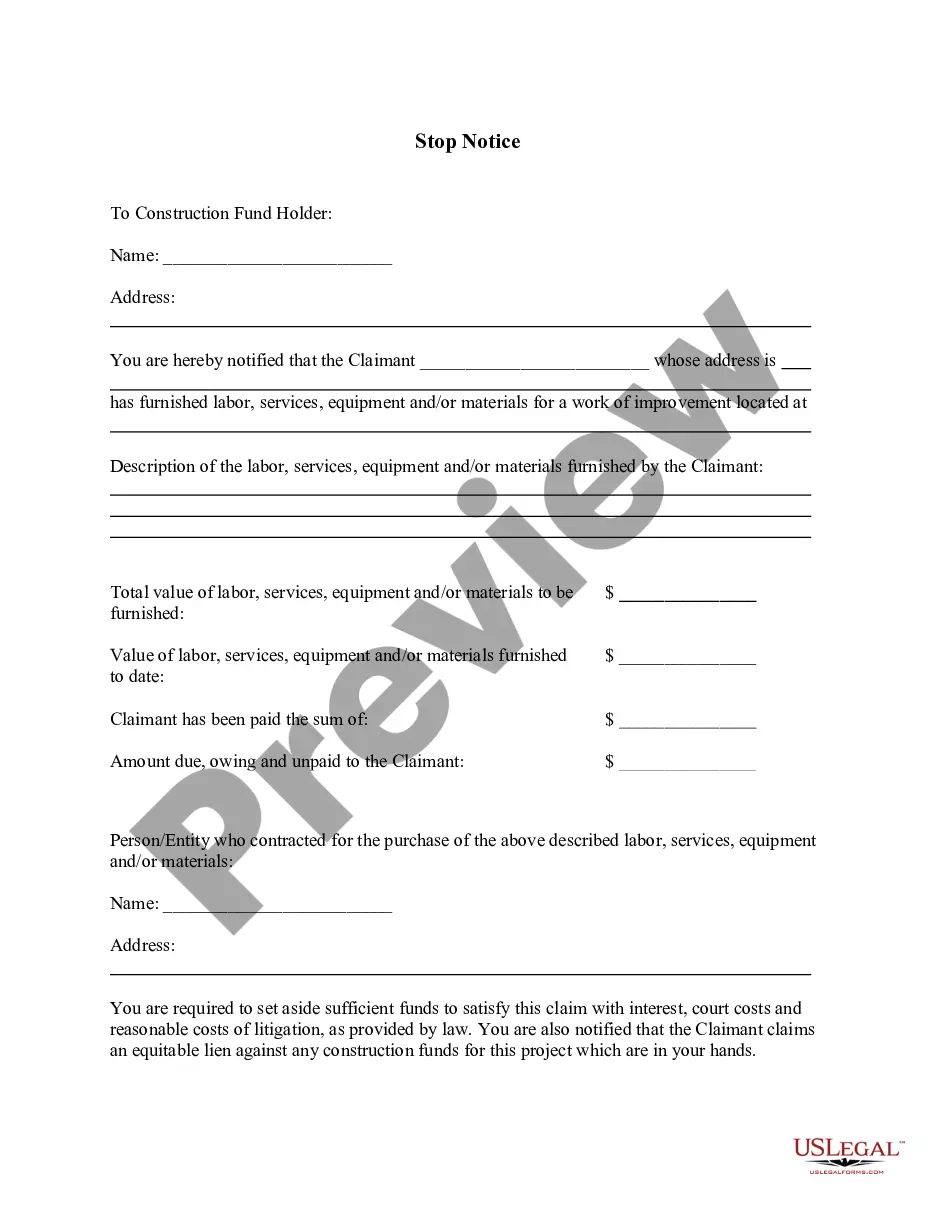
The Notice of Right to Lien Sect. 87.023 for individuals is a legal document that informs property owners of their potential liability if they fail to pay contractors or suppliers who provide materials or services for improvements to their property. This notice serves to protect the rights of those who contribute to construction projects, ensuring they can file a lien against the property if unpaid. The notice specifically applies to materials, services, and labor provided after a specified date, distinguishing it from other lien-related forms by its requirement for notification to the owner before claiming a lien.
Key parts of this document
- Name and address of the individual providing notice.
- Name and address of the property owner.
- Description of the materials, equipment, labor, or services provided.
- Date of mailing the notice.
- Legal description of the property where improvements are made.
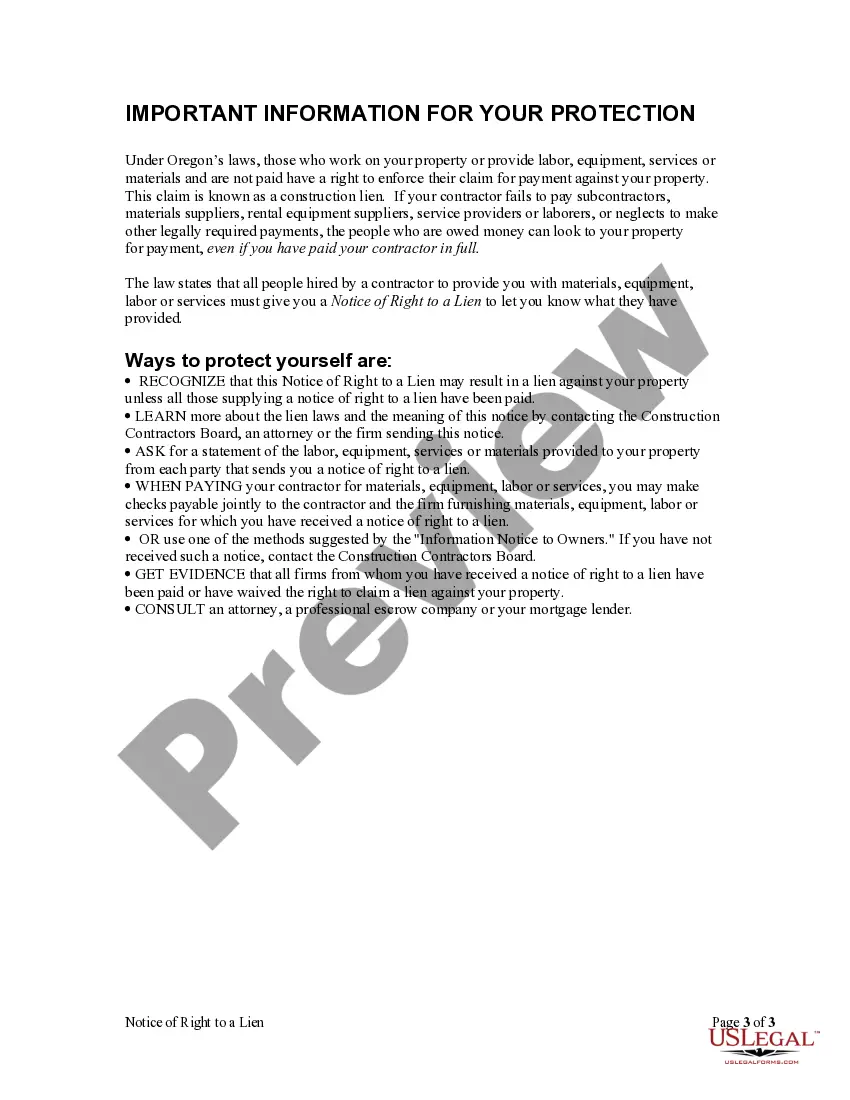
- Statement outlining the rights under Oregon's construction lien laws.
When to use this form
This form is typically used when an individual, such as a contractor or supplier, has provided materials or services for improvement projects on a property. It is important to send this notice to the property owner to ensure they are aware of the potential for a lien if payment is not made. This form protects individuals by notifying both the owner and anyone involved in the construction about services rendered, particularly when those services extend past a specified timeframe.
Who can use this document
- Contractors providing labor or materials for property improvements.
- Suppliers delivering equipment or services for construction projects.
- Subcontractors working under larger contractors.
Steps to complete this form
- Fill in your name, company name, address, and contact information at the top of the form.
- Enter the name and address of the property owner who is receiving the notice.
- Provide the name of the contractor and a detailed description of the materials or services provided.
- Write the legal description of the property, ensuring accuracy for lien claims.
- Sign and date the notice before mailing it to the property owner.
Does this document require notarization?
This form usually doesn’t need to be notarized. However, local laws or specific transactions may require it. Our online notarization service, powered by Notarize, lets you complete it remotely through a secure video session, available 24/7.
Get your form ready online
Our built-in tools help you complete, sign, share, and store your documents in one place.
Make edits, fill in missing information, and update formatting in US Legal Forms—just like you would in MS Word.
Download a copy, print it, send it by email, or mail it via USPS—whatever works best for your next step.
Sign and collect signatures with our SignNow integration. Send to multiple recipients, set reminders, and more. Go Premium to unlock E-Sign.
If this form requires notarization, complete it online through a secure video call—no need to meet a notary in person or wait for an appointment.
We protect your documents and personal data by following strict security and privacy standards.

Make edits, fill in missing information, and update formatting in US Legal Forms—just like you would in MS Word.

Download a copy, print it, send it by email, or mail it via USPS—whatever works best for your next step.

Sign and collect signatures with our SignNow integration. Send to multiple recipients, set reminders, and more. Go Premium to unlock E-Sign.

If this form requires notarization, complete it online through a secure video call—no need to meet a notary in person or wait for an appointment.

We protect your documents and personal data by following strict security and privacy standards.
Common mistakes
- Failing to mail the notice within the eight-day timeframe required by law.
- Incomplete or inaccurate property descriptions, which can invalidate the lien.
- Not sending the notice to all relevant property owners or lien stakeholders.
Benefits of using this form online
- Easy access to the latest version of the form, ensuring compliance with current laws.
- Ability to easily edit and fill out the form as needed, with no need for paper.
- Fast downloading process, allowing immediate use for urgent situations.
Looking for another form?

Form popularity
FAQ
A lien is a claim or legal right against assets that are typically used as collateral to satisfy a debt.A lien serves to guarantee an underlying obligation, such as the repayment of a loan. If the underlying obligation is not satisfied, the creditor may be able to seize the asset that is the subject of the lien.
In the state of Oregon, a lien must be filed within 75 days after the last day of performing labor or providing materials or within 75 days after the completion of construction.
A construction lien is a claim made against a property by a contractor or subcontractor who has not been paid for work done on that property. Construction liens are designed to protect professionals from the risk of not being paid for services rendered.
A Lien Demand Letter or Notice of Intent to Lien is a formal demand for payment.A lien demand letter puts a debtor on notice of your intent to lien the job site property by a specific date deadline. Increase your odds of getting paid with a lien demand letter.
A lien is a legal right or claim against a property by a creditor. Liens are commonly placed against property, such as homes and cars, so creditors, such as banks and credit unions, can collect what is owed to them. Liens can also be removed, giving the owner full and clear title to the property.
If you owe money to a creditor and don't pay, that party may sue you for the balance. If the court rules against you, the creditor can file a judgment lien against you.In a few states, if a court enters a judgment against a debtor, a lien is automatically created on any real estate the debtor owns in that county.
A security interest or legal right acquired in one's property by a creditor. A lien generally stays in effect until the underlying obligation to the creditor is satisfied.Within these categories, many liens have specific names that usually stem from the type of creditor involved.
Who you are. The services or materials you provided. The last date you provided the services or materials. How much payment should be. The date on which you will file a lien if you do not receive payment. How the debtor should pay.
Non-consensual liens arise from statutory or common law. The most notable example is a tax lien, which is imposed by law against the property of a taxpayer. If a taxpayer fails to pay the taxes owed to the government, the tax agency can seize his or her real or personal property for the amount of the lien.