Oregon Excavator Contract for Contractor
About this form
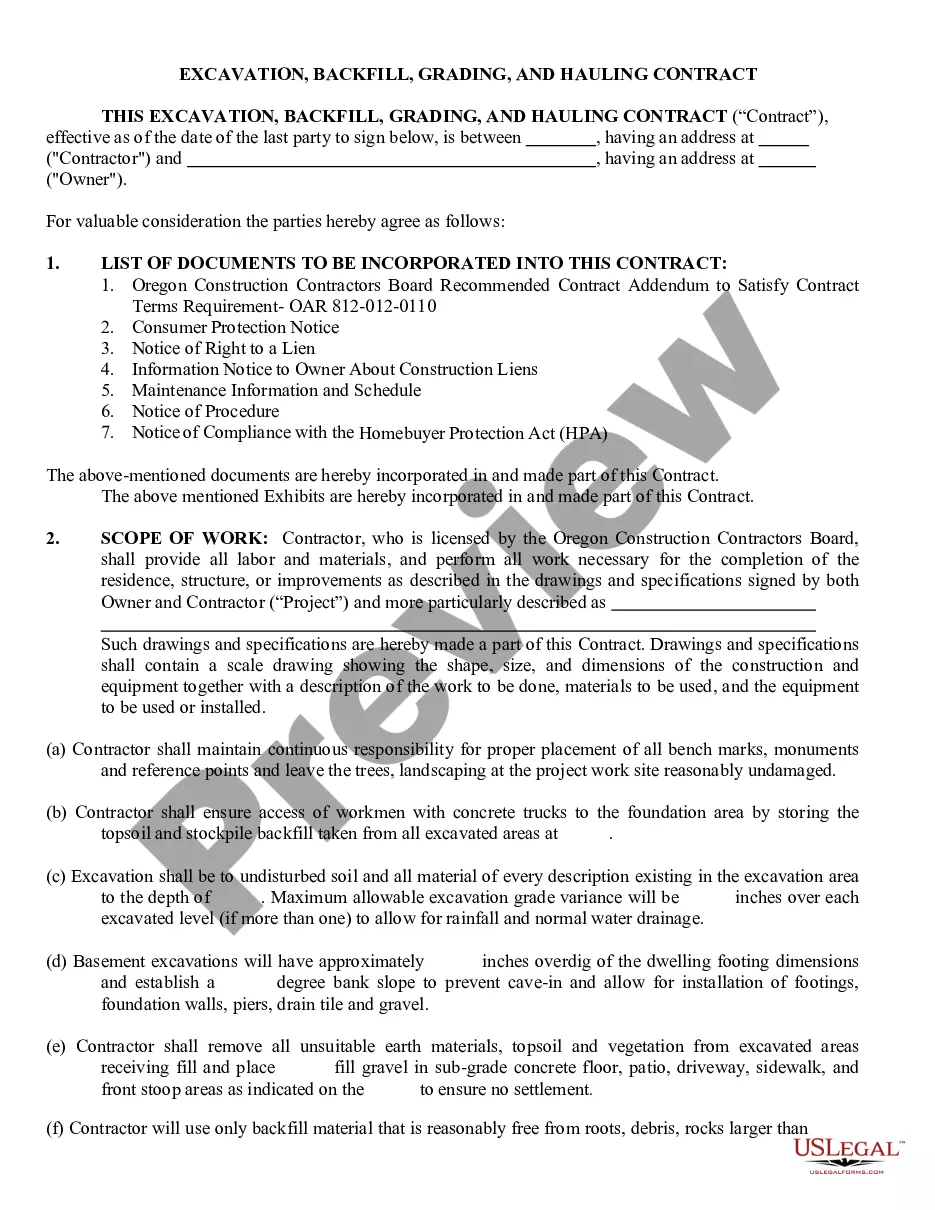
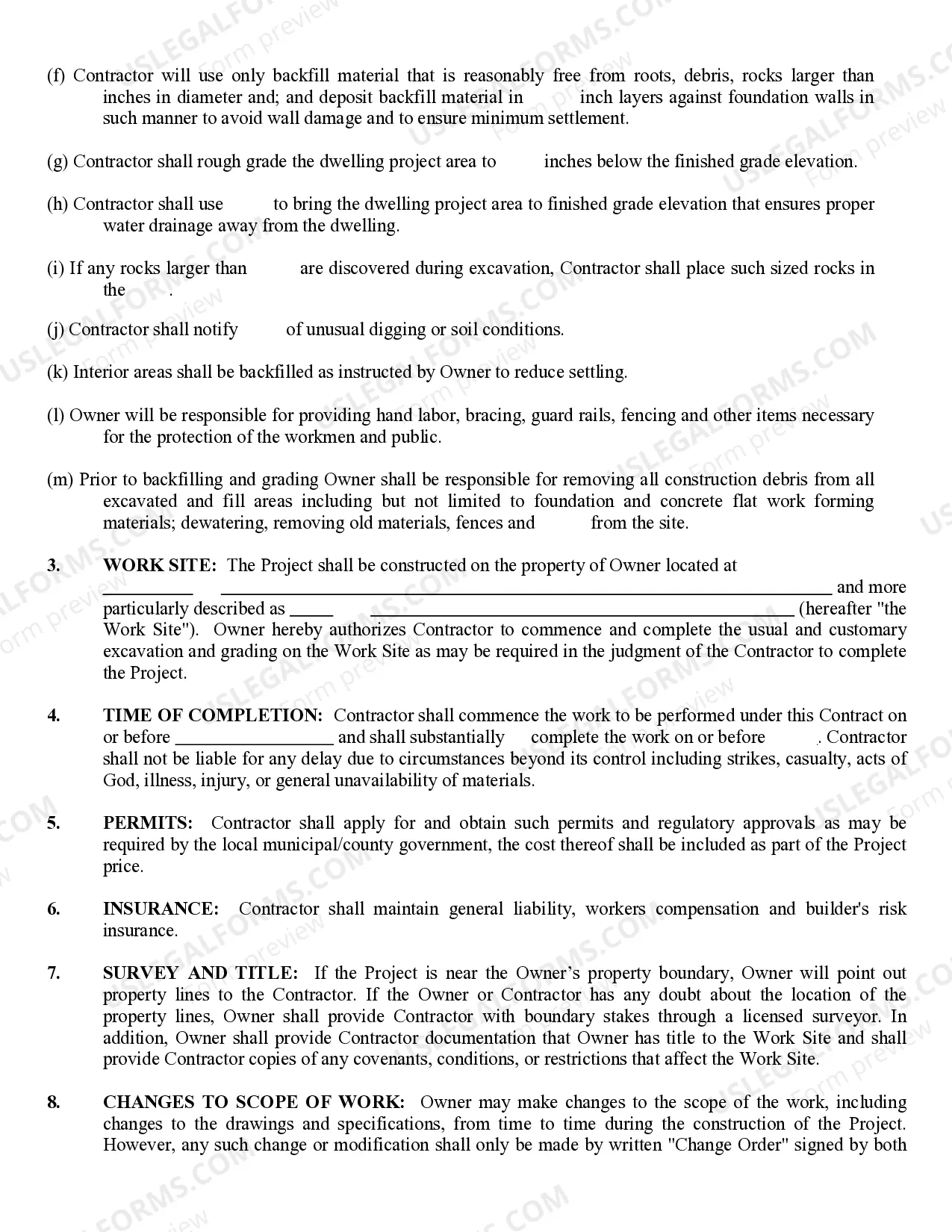
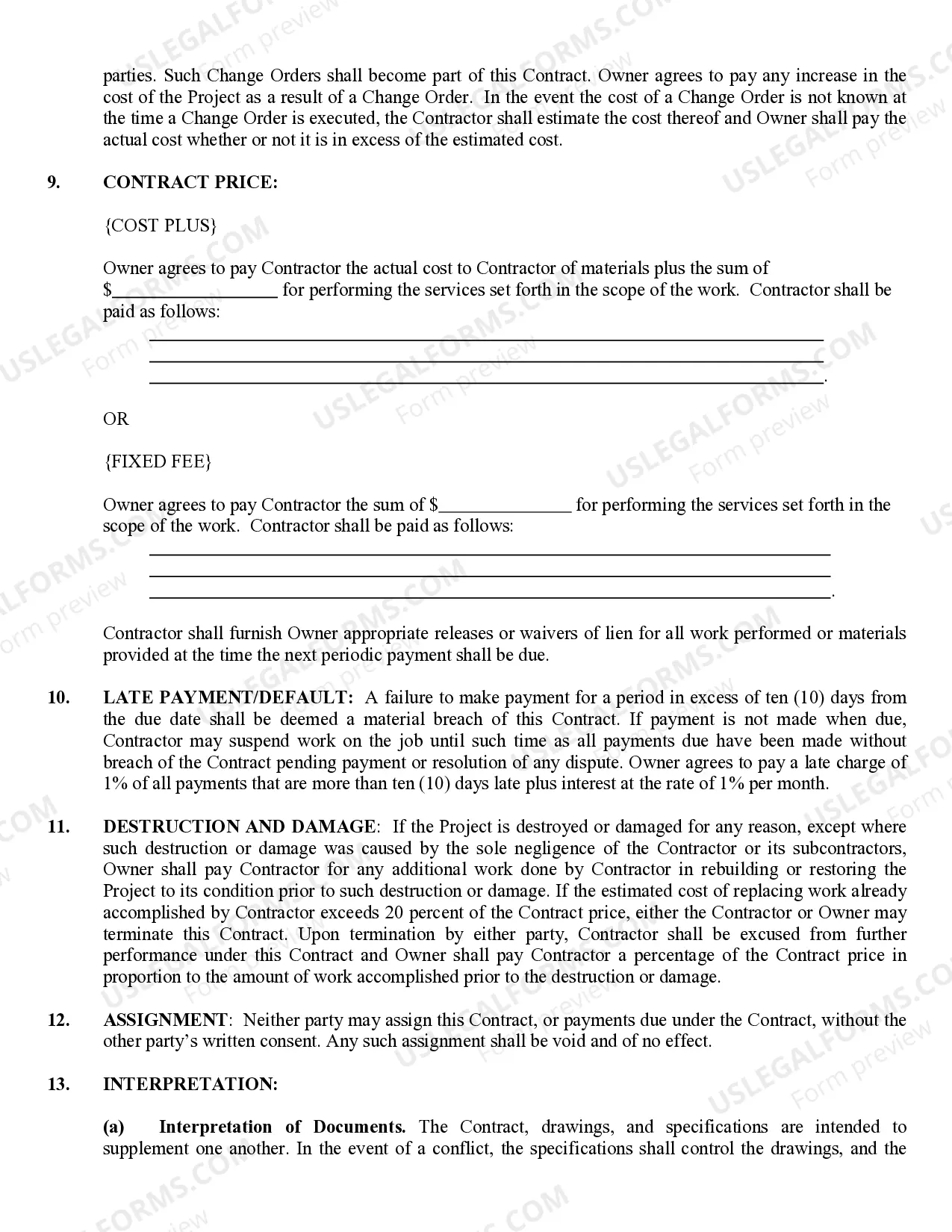
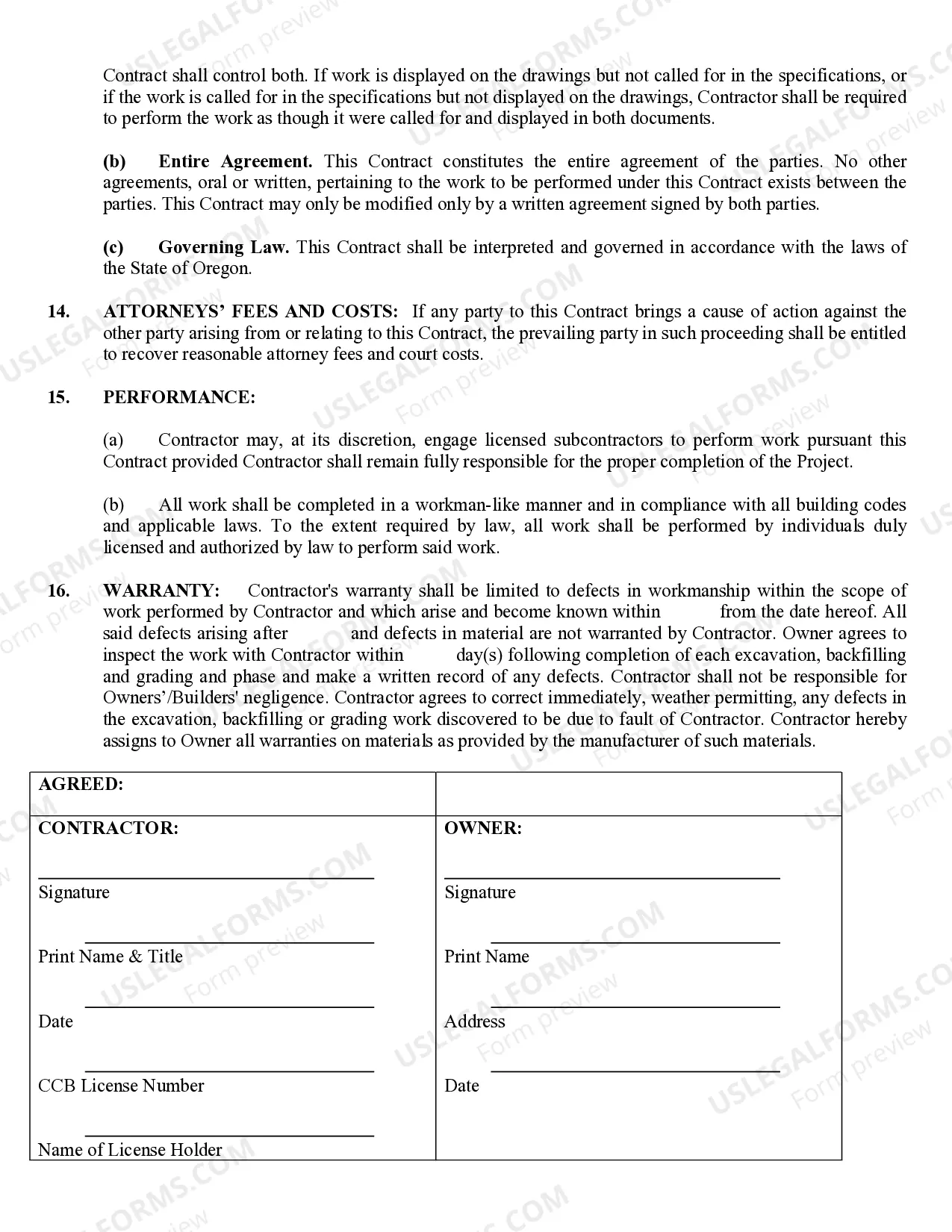
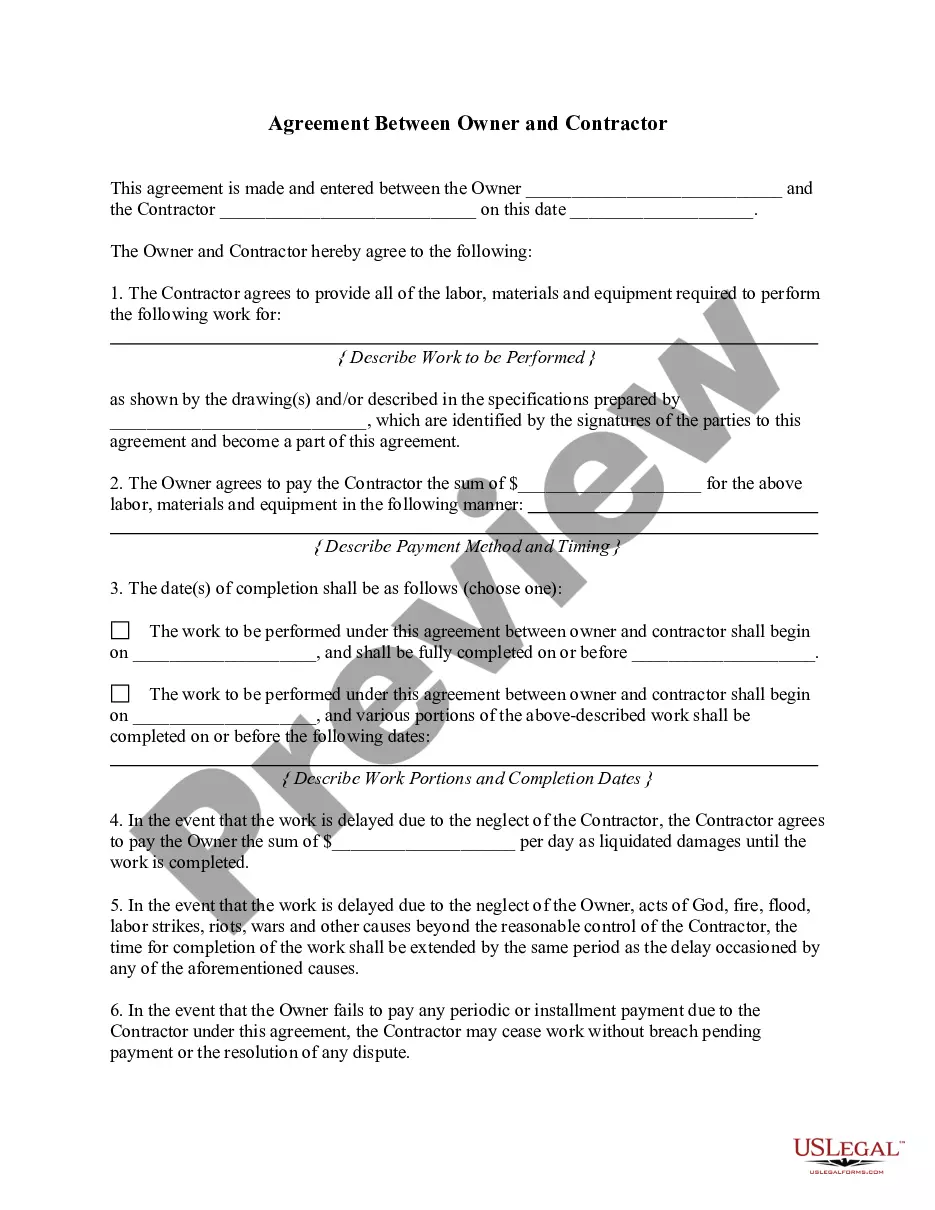
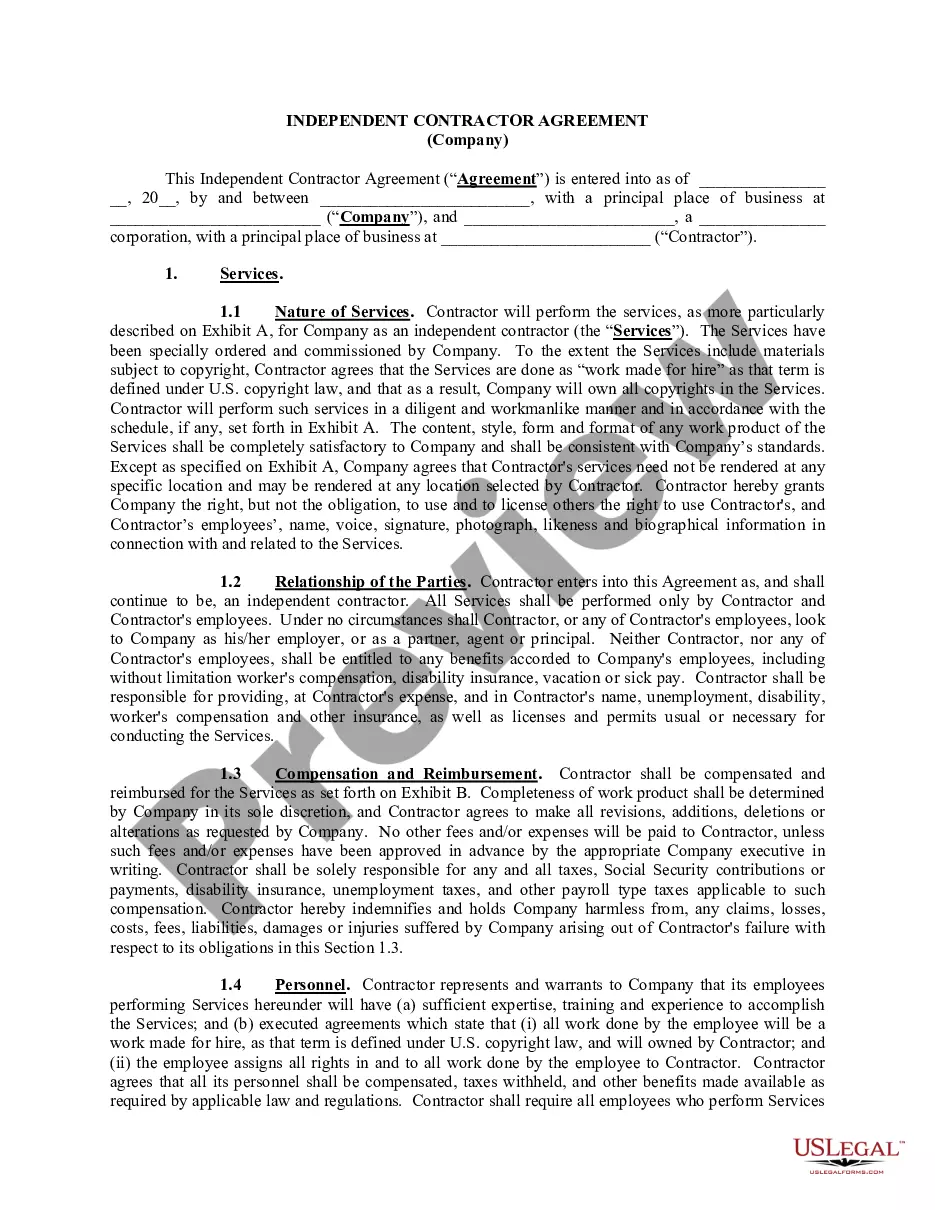
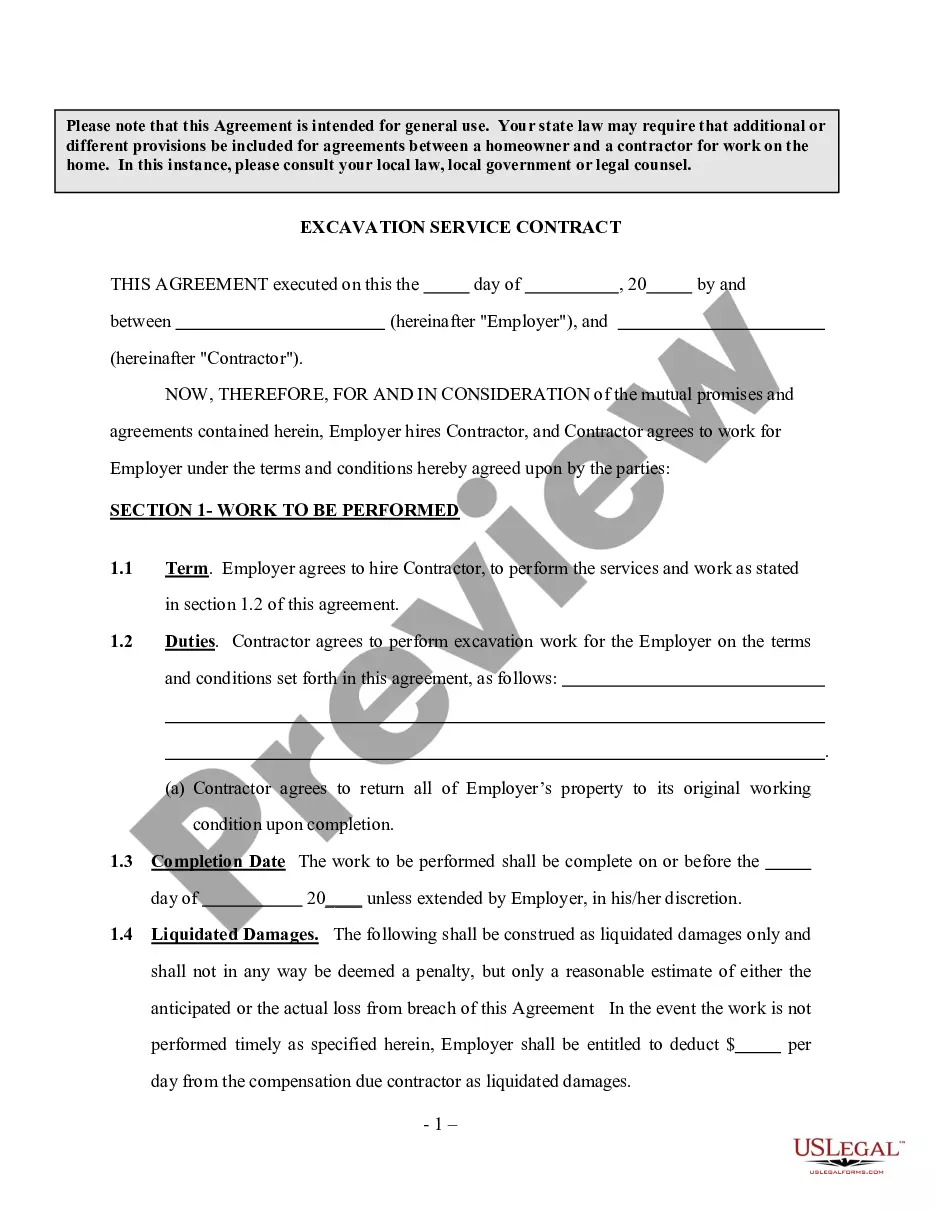
The Excavator Contract for Contractor is a legal agreement specifically designed for use between excavator contractors and property owners in Oregon. This contract outlines the terms under which excavation services will be provided and allows for either a cost-plus or fixed fee payment arrangement. It covers crucial aspects like change orders, work site information, warranties, and insurance, ensuring both parties understand their obligations and rights.
Key parts of this document
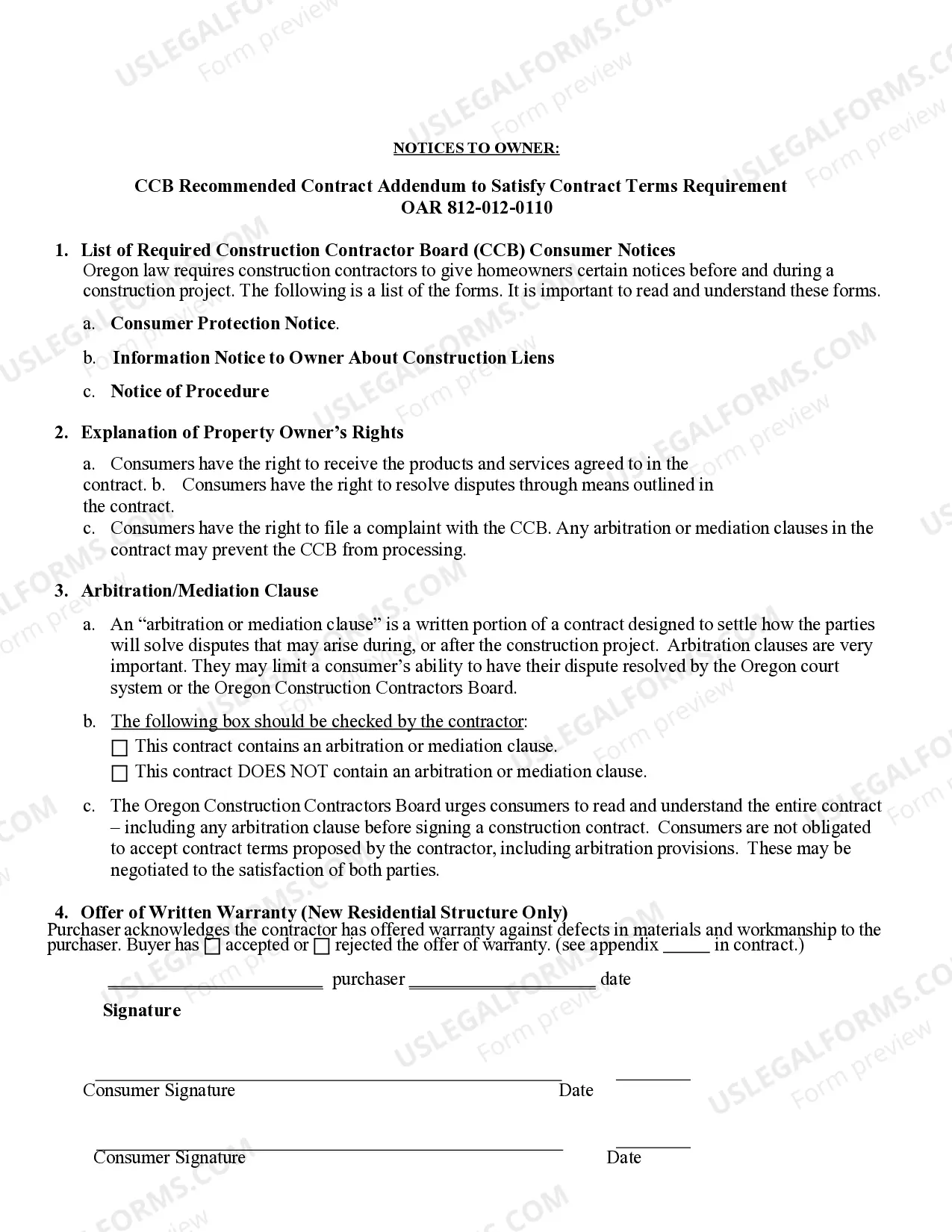
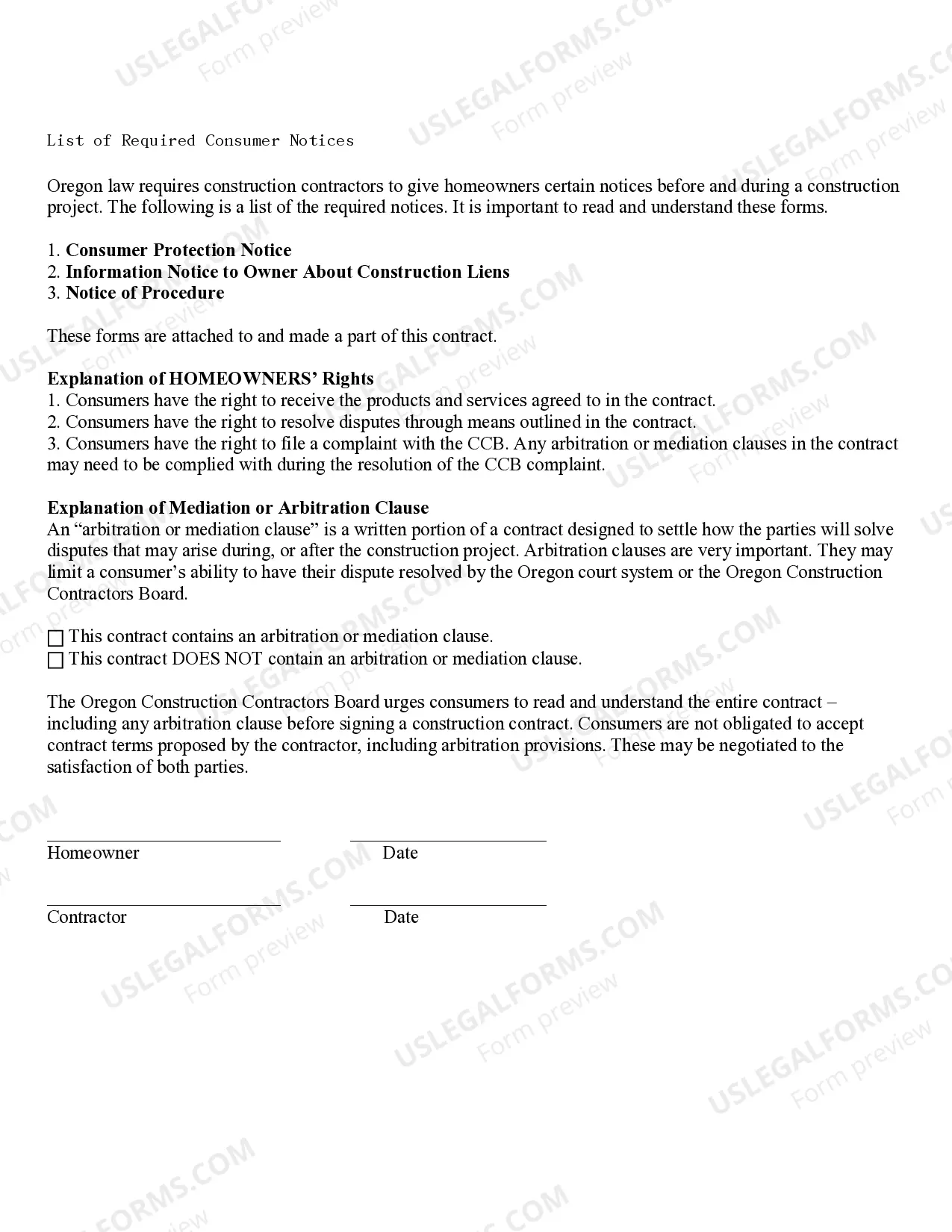
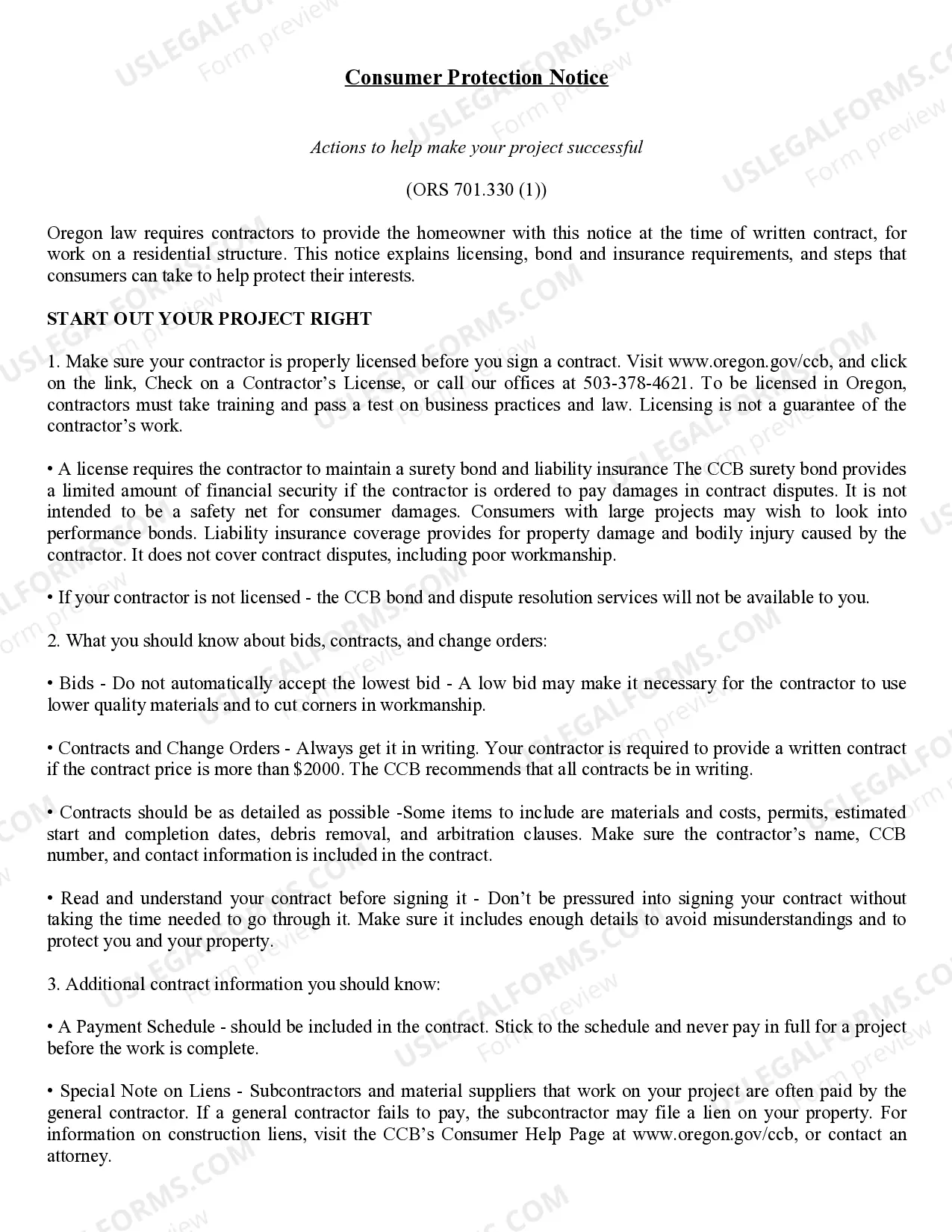
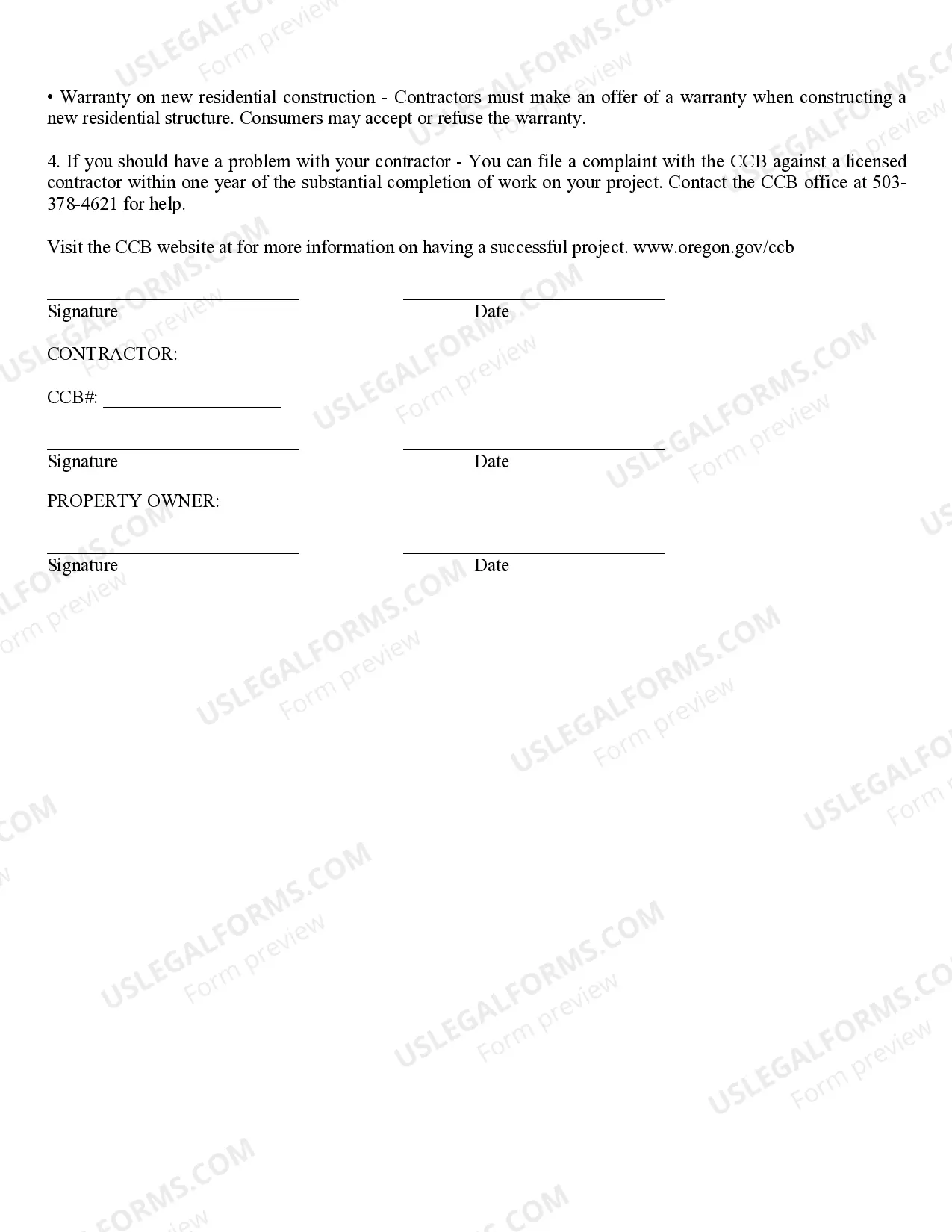
- Consumer protection notices that inform the owner of their rights.
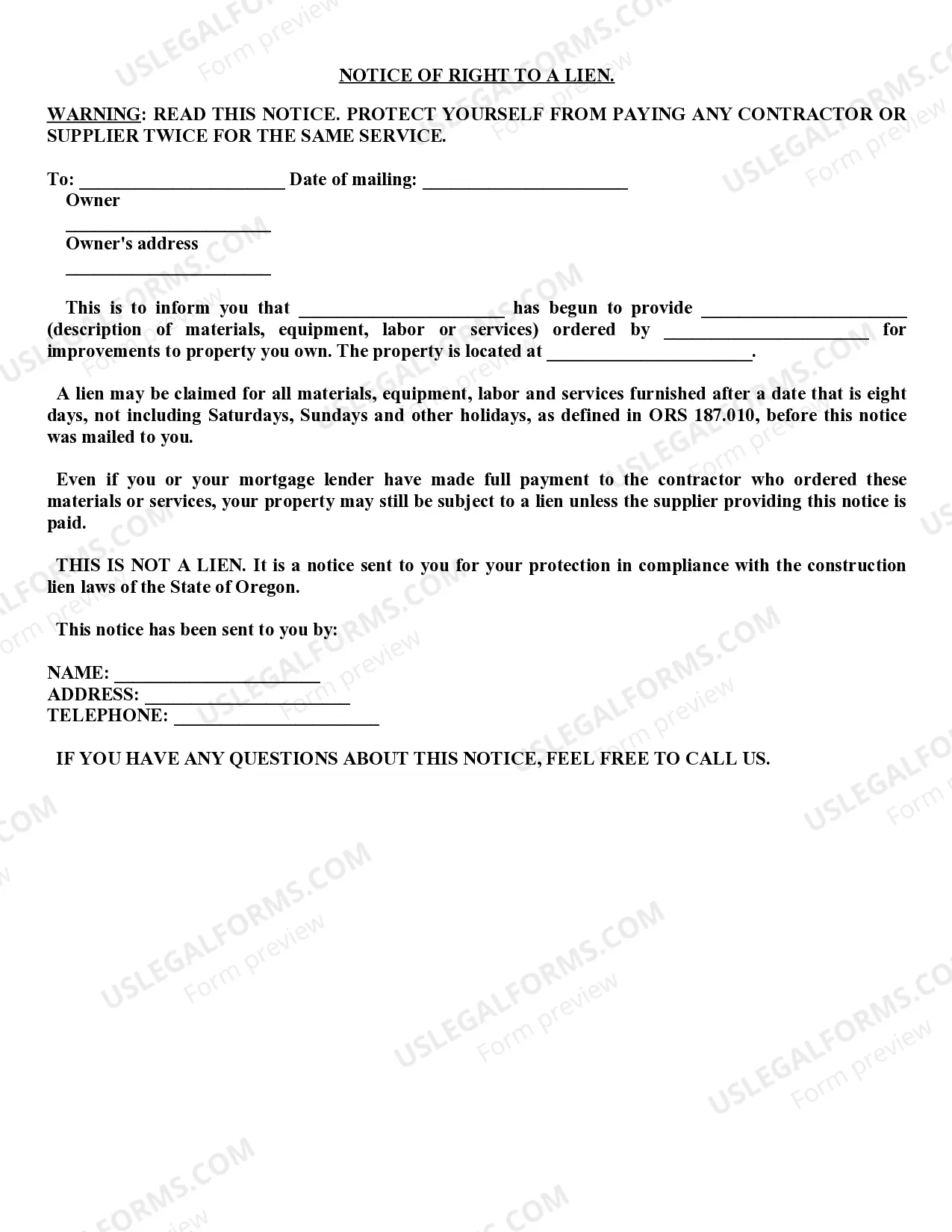
- Notice of right to a lien to protect contractors from non-payment issues.
- Details regarding the permits and insurance requirements for the contractor.
- Provisions for managing changes to the scope of work through written change orders.
- Procedures for addressing project destruction or damage.
- Clauses on assignment and interpretations of the agreement.


When this form is needed
This form should be used when property owners hire excavator contractors for construction projects. It is essential when the scope of work involves excavation and when there is a need to establish clear contractual terms to govern the work, especially regarding payment structures, project management, and legal protections against lien claims and disputes.
Who this form is for
- Excavator contractors engaged in excavation work for construction projects.
- Property owners seeking excavation services for residential or commercial construction.
- Any individual or entity that requires a formal agreement to clarify the roles and responsibilities of both parties in an excavation project.
How to prepare this document
- Identify the parties involved: the contractor and the property owner.
- Specify the project details, including the scope of work and payment structure.
- Review and incorporate necessary notices and disclosures required by Oregon law.
- Detail any required permits and the insurance coverage the contractor must maintain.
- Ensure both parties sign and date the contract to indicate agreement to the terms outlined.
Does this form need to be notarized?
This form does not typically require notarization unless specified by local law. However, both parties should ensure the document is completed correctly and signed to uphold its legality.
Get your form ready online
Our built-in tools help you complete, sign, share, and store your documents in one place.
Make edits, fill in missing information, and update formatting in US Legal Forms—just like you would in MS Word.
Download a copy, print it, send it by email, or mail it via USPS—whatever works best for your next step.
Sign and collect signatures with our SignNow integration. Send to multiple recipients, set reminders, and more. Go Premium to unlock E-Sign.
If this form requires notarization, complete it online through a secure video call—no need to meet a notary in person or wait for an appointment.
We protect your documents and personal data by following strict security and privacy standards.

Make edits, fill in missing information, and update formatting in US Legal Forms—just like you would in MS Word.

Download a copy, print it, send it by email, or mail it via USPS—whatever works best for your next step.

Sign and collect signatures with our SignNow integration. Send to multiple recipients, set reminders, and more. Go Premium to unlock E-Sign.

If this form requires notarization, complete it online through a secure video call—no need to meet a notary in person or wait for an appointment.

We protect your documents and personal data by following strict security and privacy standards.
Avoid these common issues
- Failing to obtain written change orders for modifications to the project scope.
- Not ensuring that the contractor has the required permits and insurance.
- Ignoring the consumer protection notices that must be provided to homeowners.
Why use this form online
- Convenience of downloading and customizing the contract to fit specific needs.
- Access to legally vetted templates prepared by licensed attorneys.
- Easy editing and printing options that save time compared to drafting a contract from scratch.
Legal use & context
- This contract serves as a legally binding document that protects both parties involved in excavation work.
- It delineates the rights and responsibilities that align with Oregon construction laws, reducing the risk of disputes.
Quick recap
- Always use a legally compliant contract when working with excavators in Oregon.
- Clarify all terms, particularly payment arrangements and scope of work.
- Obtain necessary permits and understand lien rights to protect your property.
Looking for another form?
Form popularity
FAQ
Wiring. Electrical outlets. Lighting fixtures.
Contract Types Overview. Express and Implied Contracts. Unilateral and Bilateral Contracts. Unconscionable Contracts. Adhesion Contracts. Aleatory Contracts. Option Contracts. Fixed Price Contracts.
A contractor or subcontractor can abandon a contract upon breach by the owner or general contractor, but cannot terminate the contract.Termination for convenience allows the owner/general contractor to stop the work for just about any reason without having to pay for anticipated profit or unperformed work.
Identifying/Contact Information. Title and Description of the Project. Projected Timeline and Completion Date. Cost Estimate and Payment Schedule. Stop Work Clause and Stop Payment Clause. Act of God Clause. Change Order Agreement. Warranty.
Begin with the Date and the Address of the Other Party. Start with the Basic Details of the Planned Work. Include Special Stipulations. State Whether There Will be a Further Agreement. Create an Area for Signatures. Sign and Date the Contract Letter.
Communicate with your recruiting partner. Give proper notice. Keep the stakes in mind. Leave the job better than you found it.
The threshold for performing certain work without a contractor license increased from $500 to $1,000. To qualify for the exemption, a contractor must perform work that is casual, minor or inconsequential. This means that the work cannot: Be structural in nature.
In order to cancel the transaction, the consumer must send the notice of cancellation form, or some other written statement indicating the intent to cancel the contract, to the creditor at the address stated on the notice. This notice need only state the consumer's intention to cancel the transaction.
If your independent contractor agreement contains a provision that allows the parties to terminate the relationship at any time, revise the agreement to include a notice provision with at least some kind of a notice period required for termination of the contract.