Oklahoma Heirship Affidavit - Descent
Overview of this form
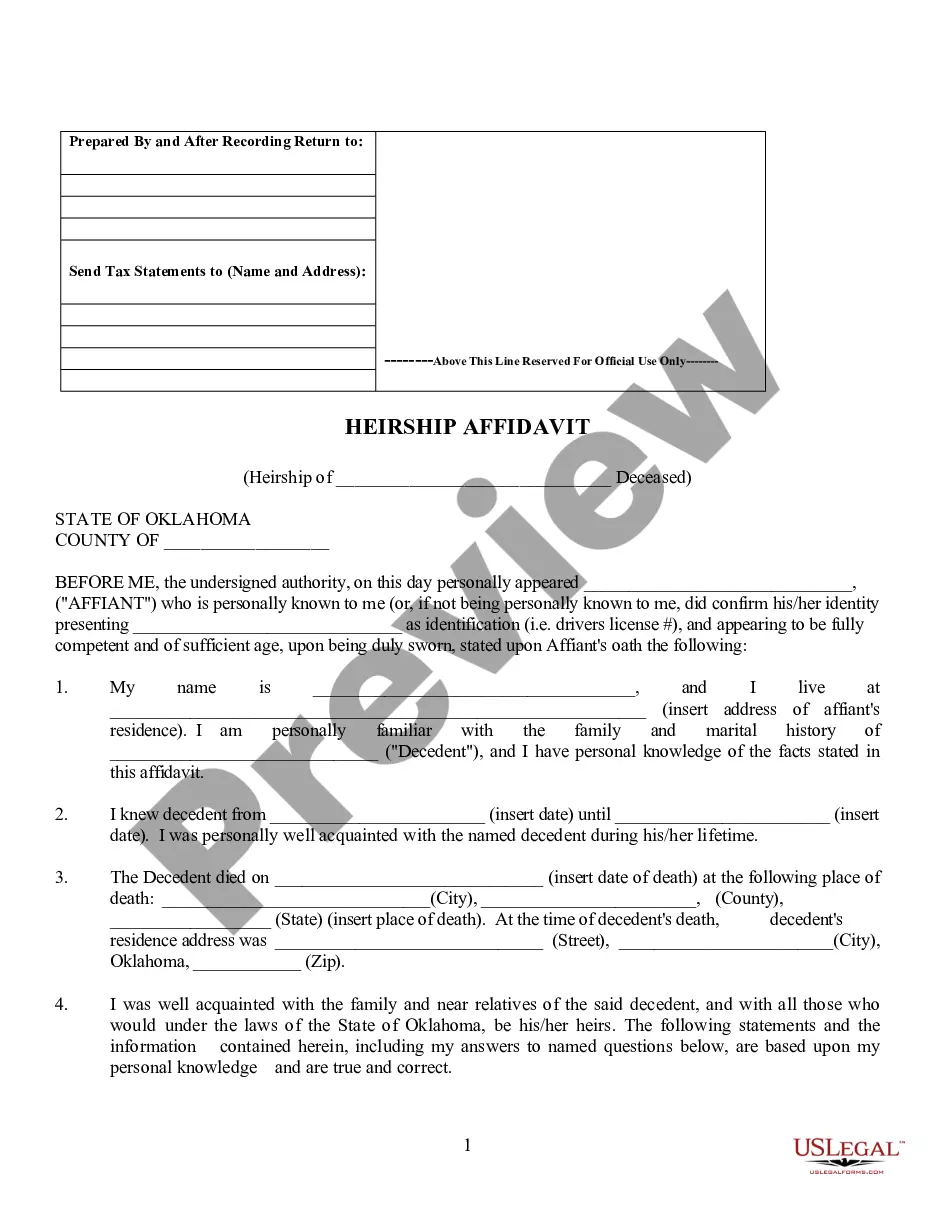
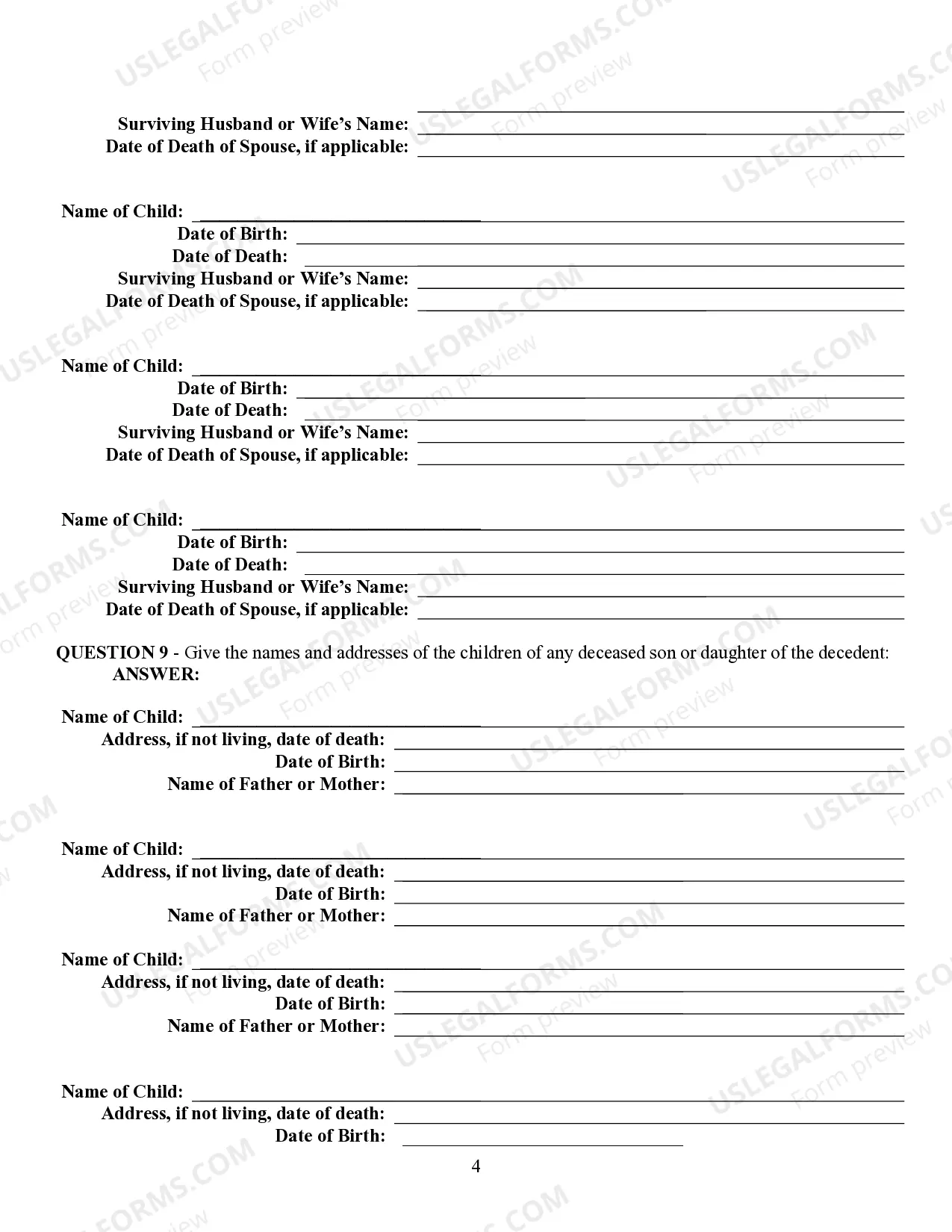
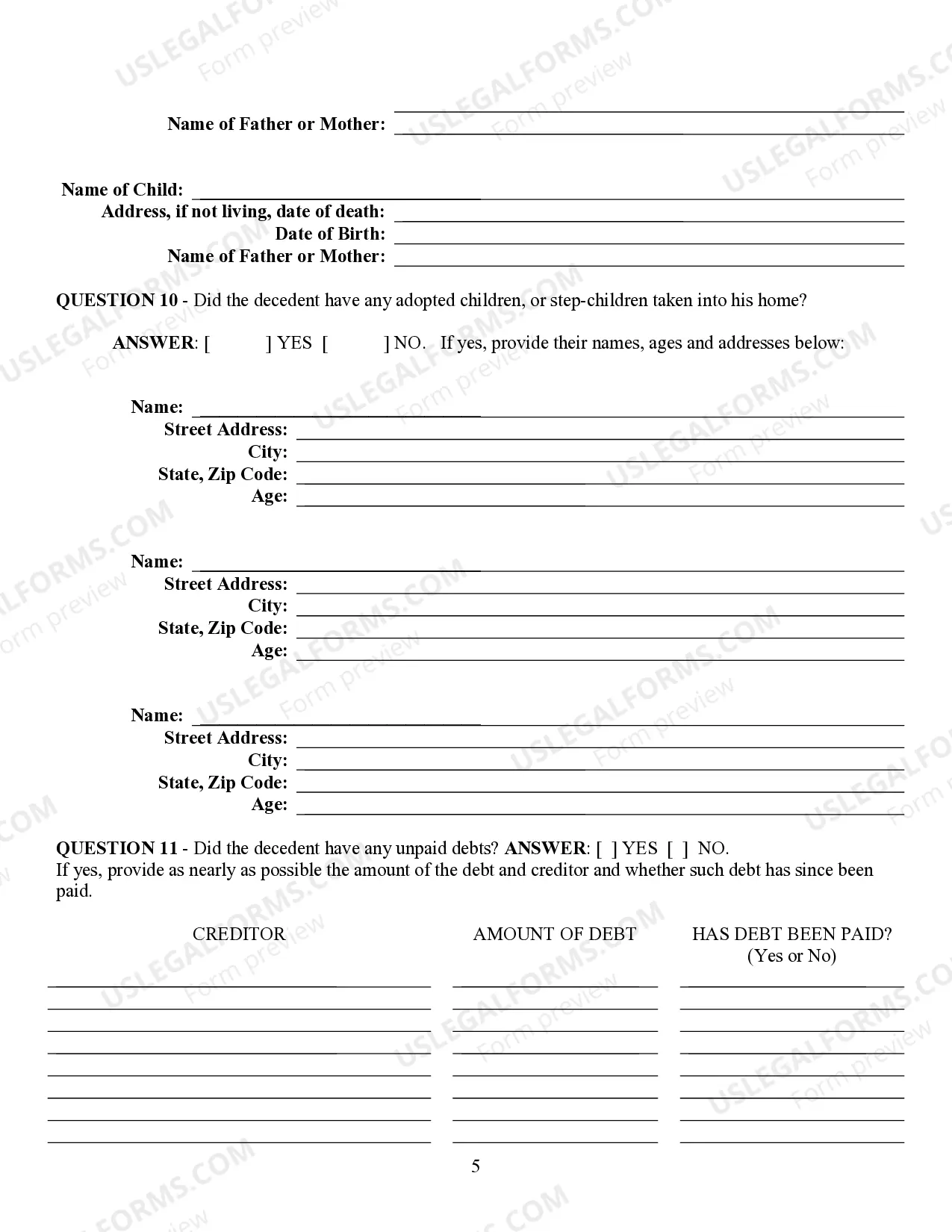
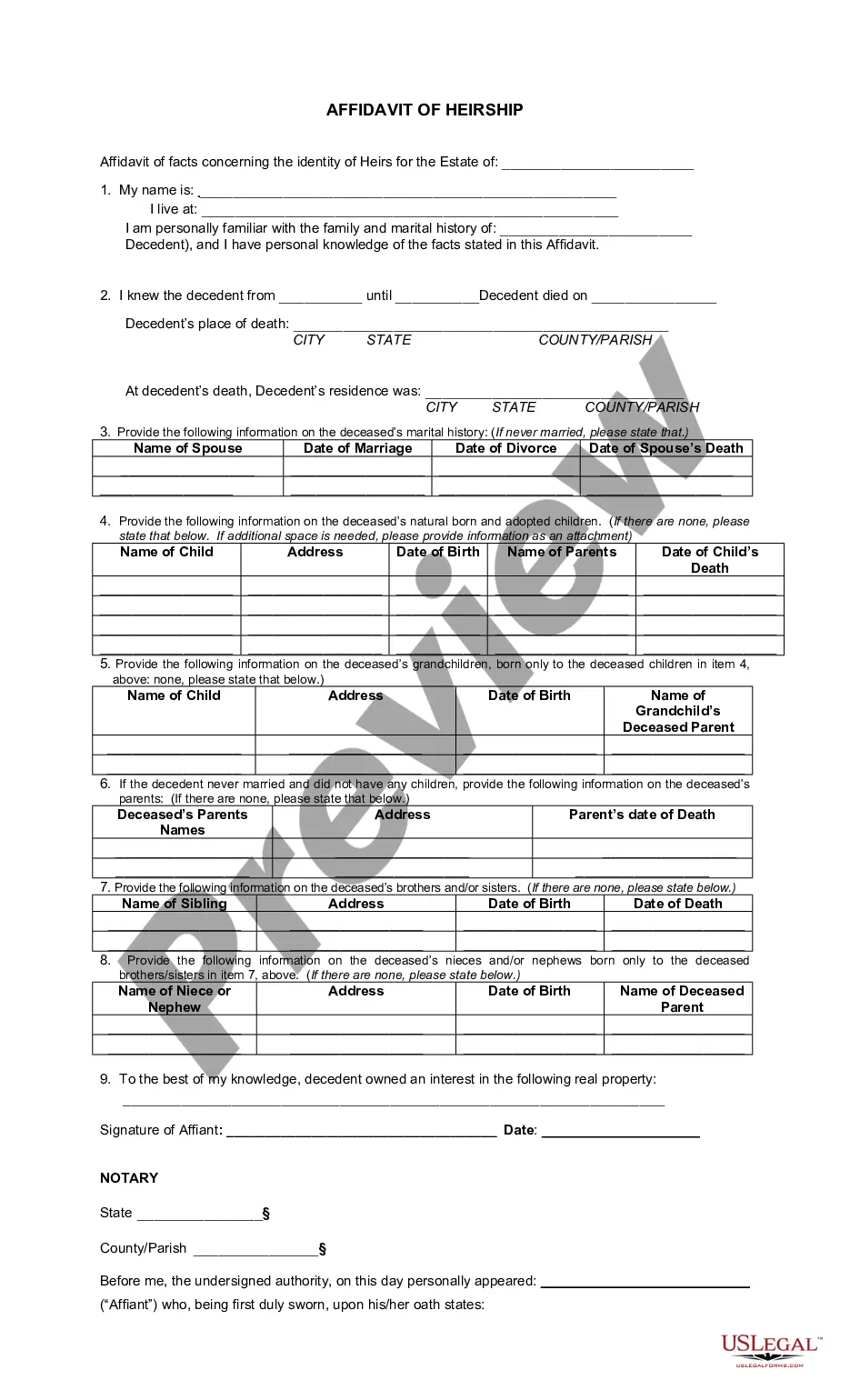
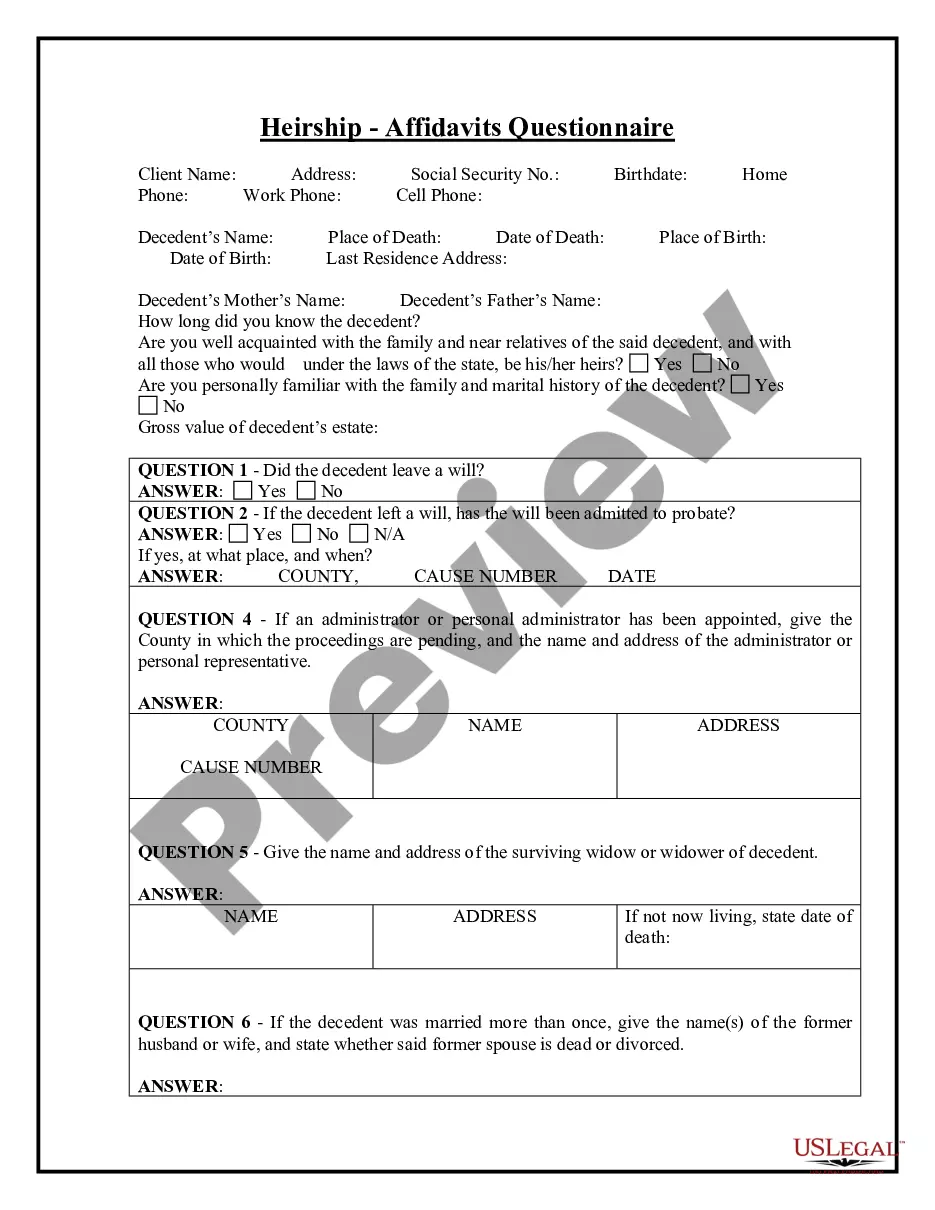
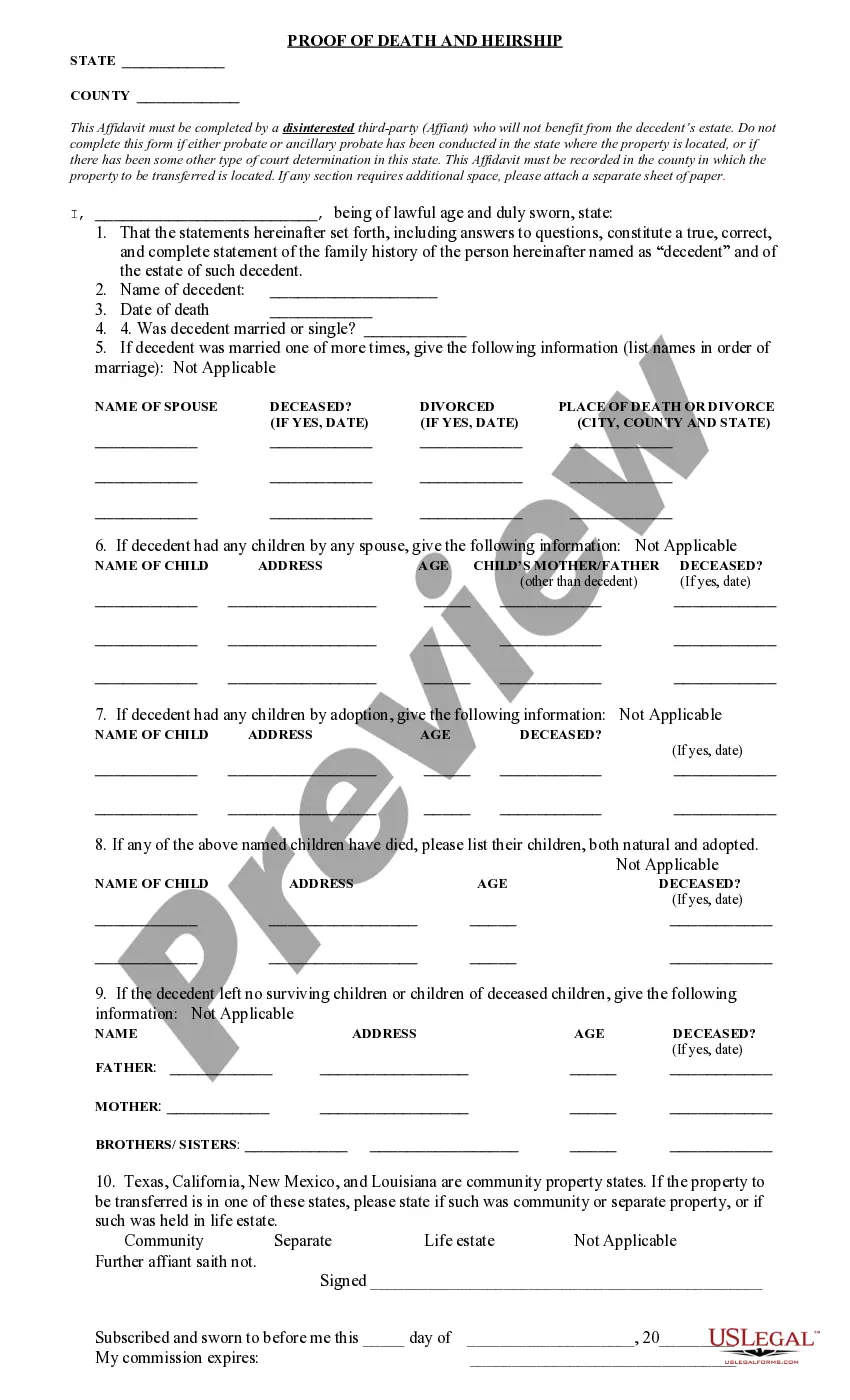
The Heirship Affidavit - Descent is a legal document used to establish the heirs of a deceased person. This affidavit serves to assert ownership of both personal and real property when someone dies without leaving a will. It differs from other probate documents by allowing non-heirs to attest to the family relations of the deceased, facilitating the transfer of property without formal estate procedures.
What’s included in this form
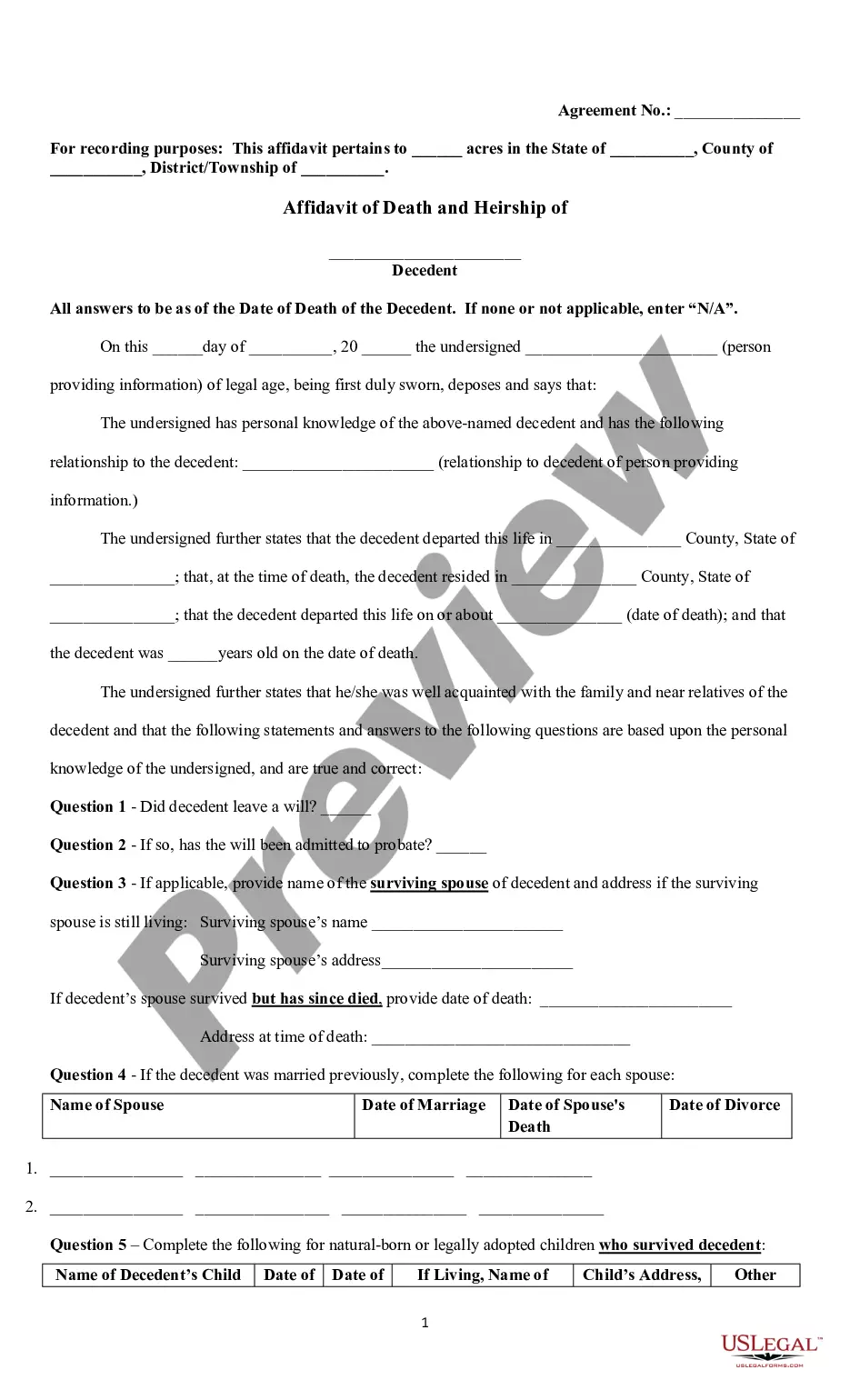
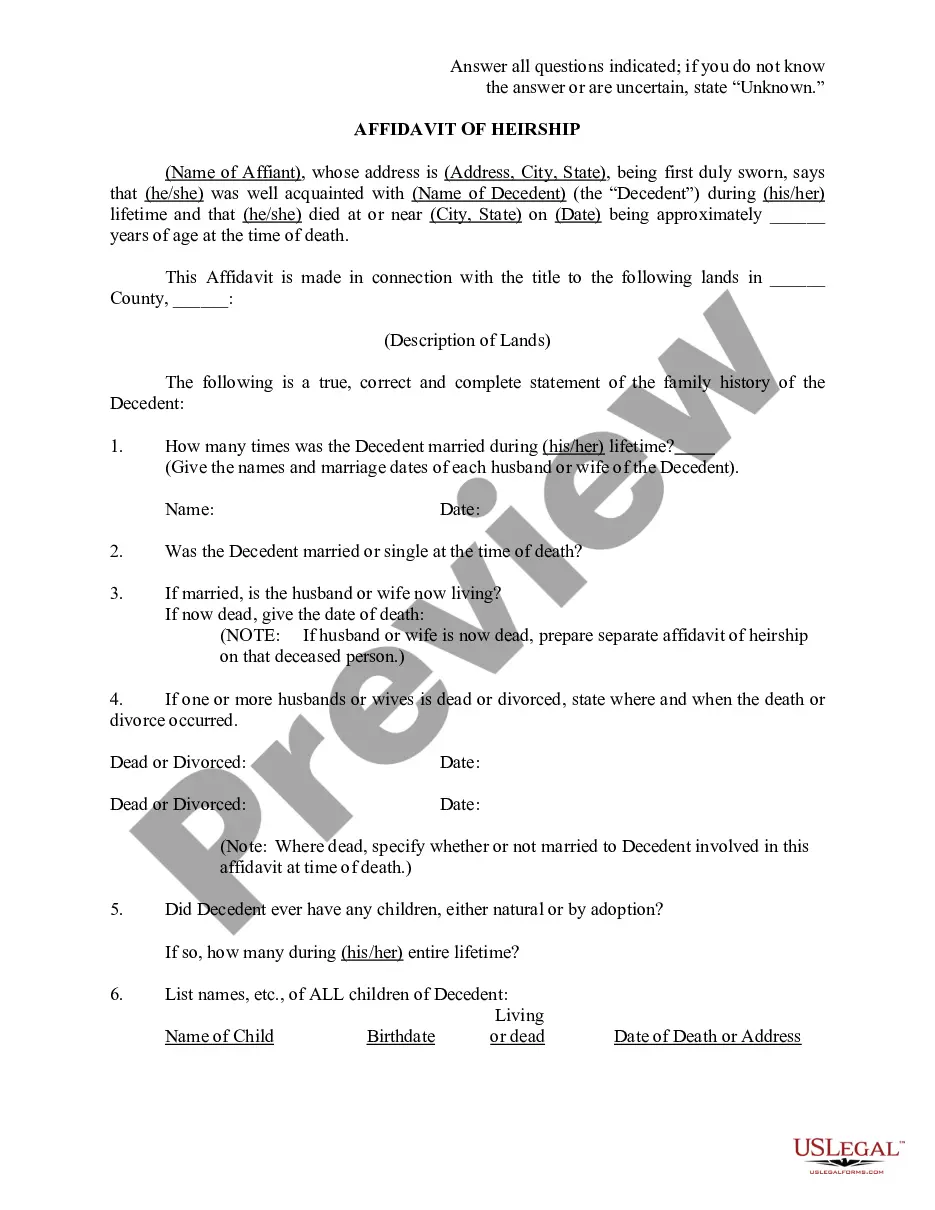
- Affiant's personal information and relationship with the decedent.
- Details of the decedent's date and place of death.
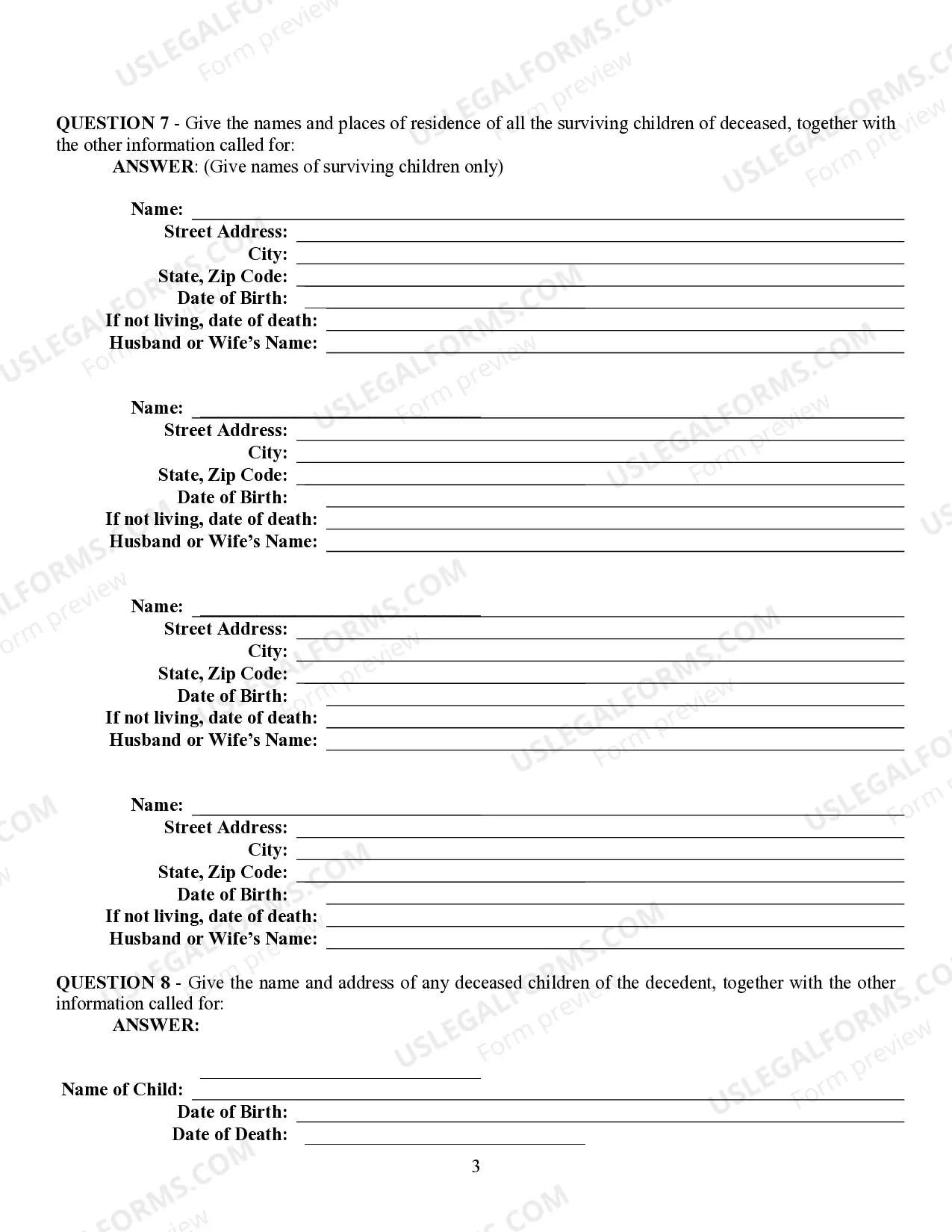
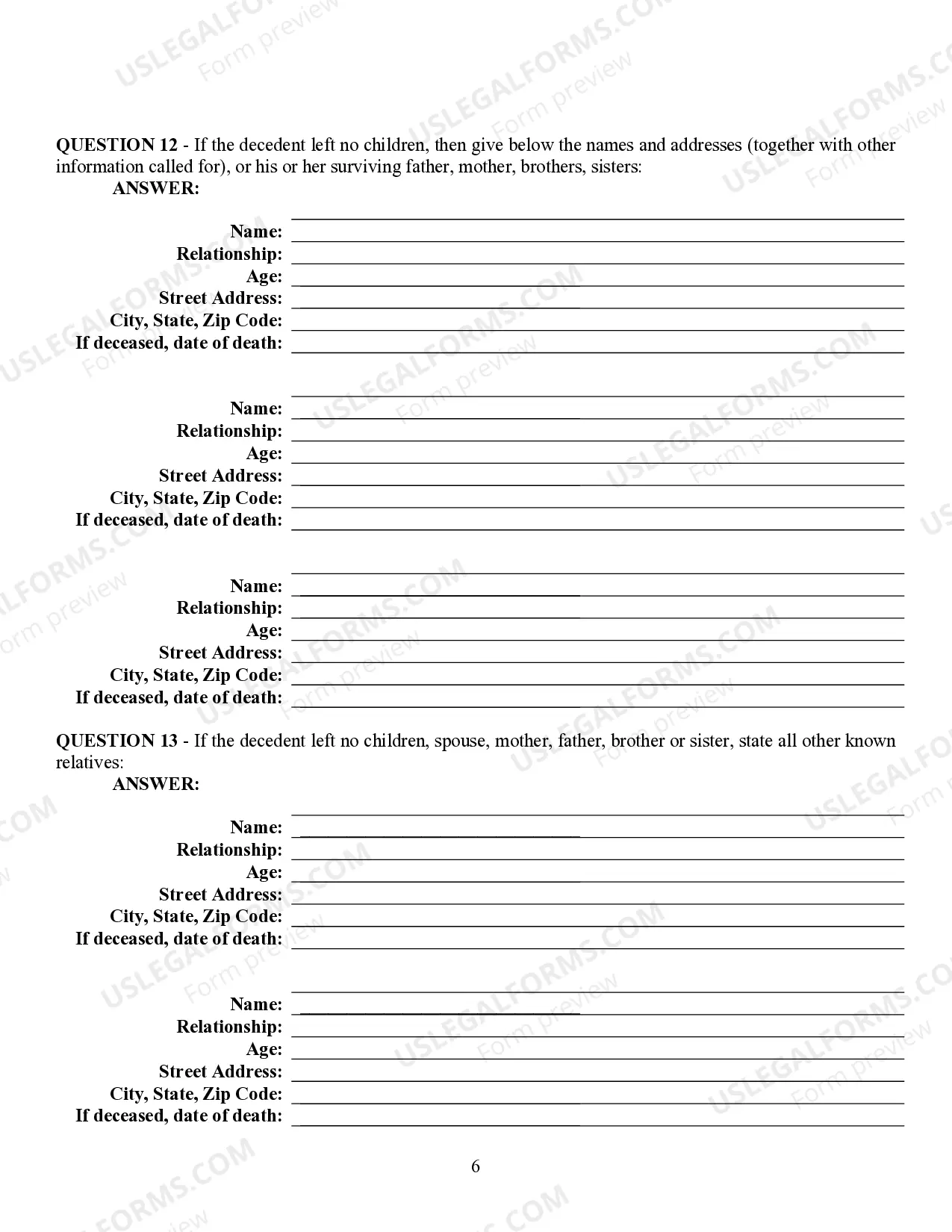
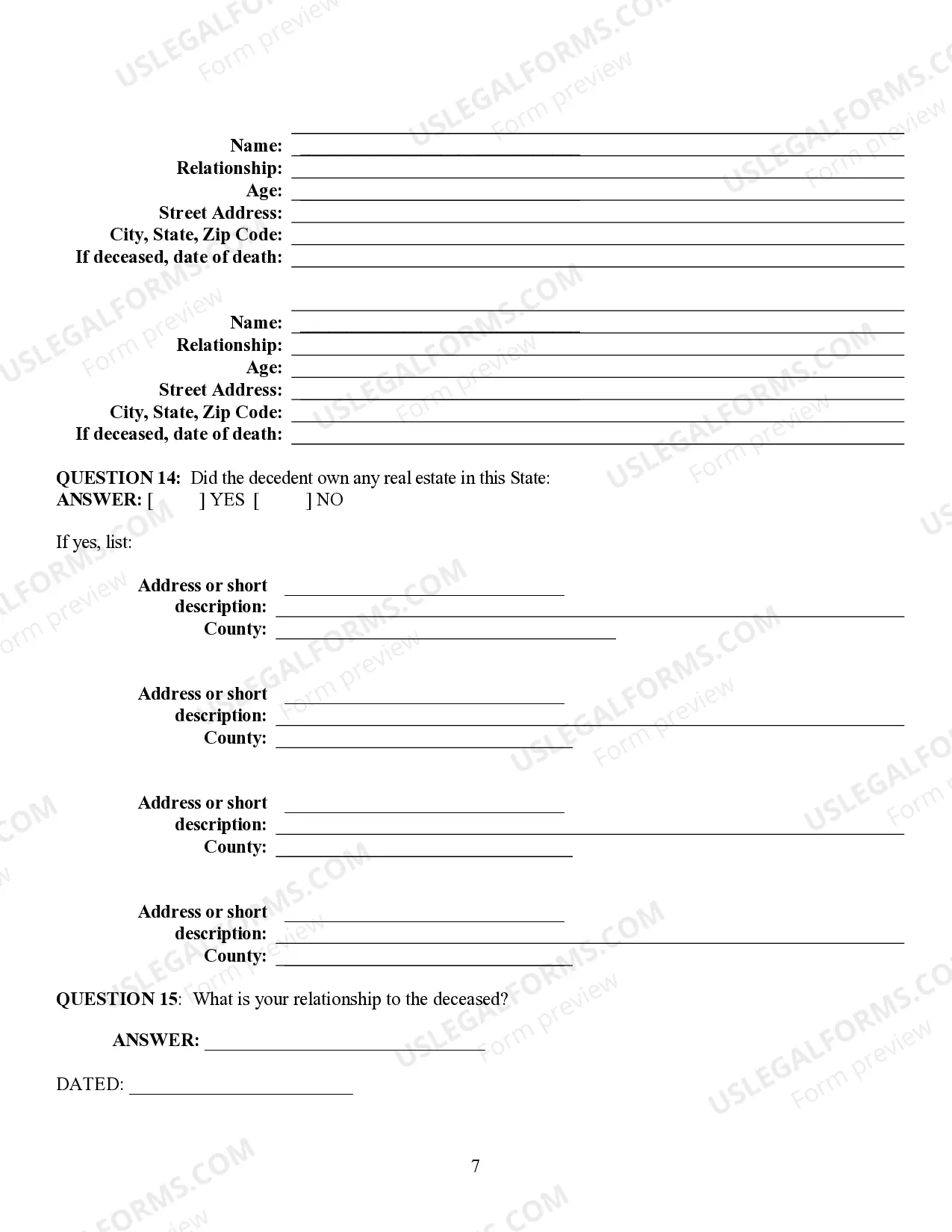
- Information about the decedent's surviving relatives and heirs.
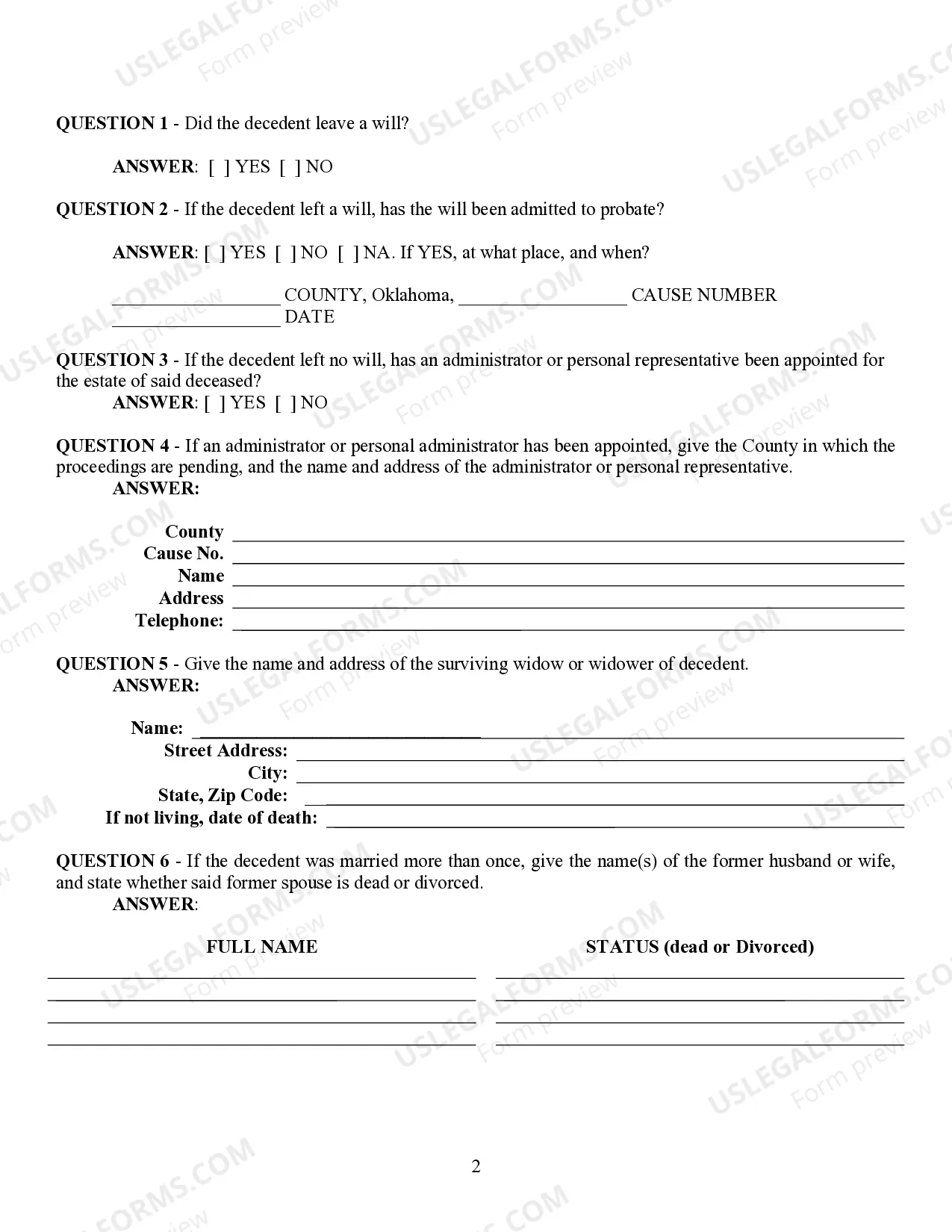
- Questions regarding any existing wills or probate proceedings.
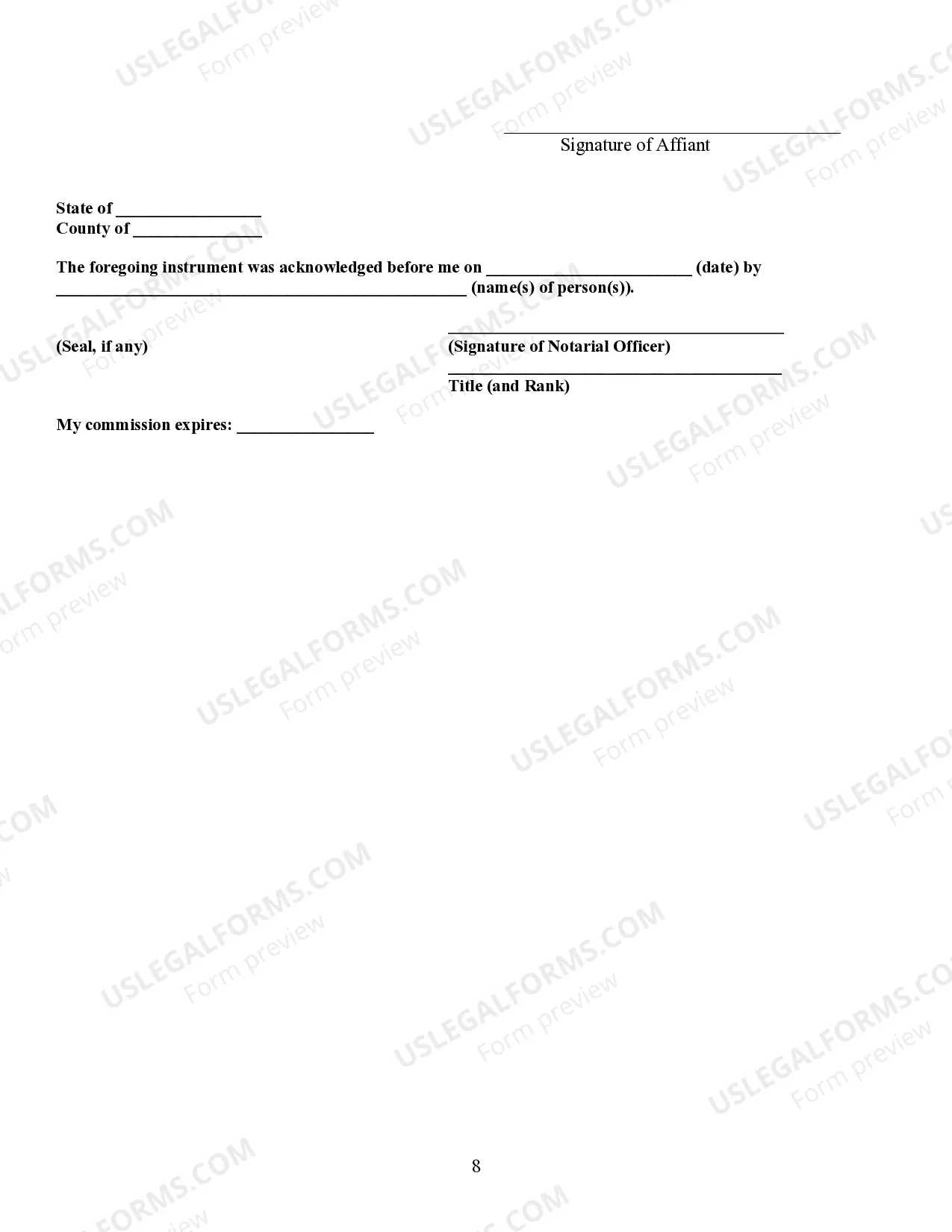
- Affidavit signature and notary acknowledgment.
Situations where this form applies
This Heirship Affidavit is essential in situations where a deceased person has not left a will (intestate) and their heirs need to establish their rights to inherit property. It is commonly used when heirs are looking to sell real estate or transfer assets without going through the formal probate process. Additionally, this form is beneficial in clarifying inheritance rights in cases of disputed claims or when multiple heirs exist.
Who needs this form
- Heirs of a deceased person who died without a will.
- Individuals who wish to confirm the familial relationship of the decedent.
- Non-heirs who have personal knowledge of the decedent's family history.
- Estate representatives or executors involved in property transfer.
How to complete this form
- Provide the affiant's name and address at the beginning of the affidavit.
- Document the decedent's full name, date of death, and place of death.
- Answer questions regarding any wills or probate actions that may have been initiated.
- List all surviving relatives and their relationship to the deceased.
- Sign the affidavit in front of a notary public to validate the document.
Notarization guidance
To make this form legally binding, it must be notarized. Our online notarization service, powered by Notarize, lets you verify and sign documents remotely through an encrypted video session.
Get your form ready online
Our built-in tools help you complete, sign, share, and store your documents in one place.
Make edits, fill in missing information, and update formatting in US Legal Forms—just like you would in MS Word.
Download a copy, print it, send it by email, or mail it via USPS—whatever works best for your next step.
Sign and collect signatures with our SignNow integration. Send to multiple recipients, set reminders, and more. Go Premium to unlock E-Sign.
If this form requires notarization, complete it online through a secure video call—no need to meet a notary in person or wait for an appointment.
We protect your documents and personal data by following strict security and privacy standards.

Make edits, fill in missing information, and update formatting in US Legal Forms—just like you would in MS Word.

Download a copy, print it, send it by email, or mail it via USPS—whatever works best for your next step.

Sign and collect signatures with our SignNow integration. Send to multiple recipients, set reminders, and more. Go Premium to unlock E-Sign.

If this form requires notarization, complete it online through a secure video call—no need to meet a notary in person or wait for an appointment.

We protect your documents and personal data by following strict security and privacy standards.
Common mistakes
- Failing to provide complete information about the decedent's heirs.
- Not having the document notarized, which can affect its acceptance.
- Leaving questions unanswered or improperly filled out.
- Using incorrect or outdated information regarding debts or prior marriages.
Benefits of using this form online
- Convenient access to template forms that can be completed at your own pace.
- Editability allows for updates before finalizing the formal document.
- Reliable templates drafted by licensed attorneys ensure compliance with legal norms.
Looking for another form?
Form popularity
FAQ
Affidavit must be filed by the new owner with the assessor for the city or township where the property is located within 45 days of the transfer.
A fee of $15 for the first page and $4 for each additional page is common. Ask if you can file the two affidavits of heirship as one document. Some counties let you file the two affidavits of heirship as one document if the decedent and property descriptions are the same.
1. This form should be completed by someone other than an Heir. This person should be someone who is familiar with the family history of the deceased (decedent), and who will obtain no benefit from the Estate. The person who fills out the form is referred to as the AFFIANT.
An affidavit of heirship is needed to transfer a deceased person's interest in real or personal property to his or her heirs when the decedent dies without leaving a last will and testament or without disposing of all of his or her property in a will.
An affidavit of heirship should be signed by two disinterested witnesses. To qualify as a disinterested witness, one must be knowledgeable about the deceased and his or her family history, but cannot benefit financially from the estate.
Find the most recent deed to the property. It is helpful to begin by locating the most recent deed to the property (the deed that transferred the property to the current grantor). Create the new deed. Sign and notarize the deed. File the deed in the county land records.
Step 1 At the top, write in the name of the decedent. Step 2 Under Section 1, write in the date of birth, the date of death, the residential address of decedent. Step 3 In Section 2, check the box that describes you as the person filling out the affidavit.
In accordance with Michigan State Law, a Property Transfer Affidavit must be filed with the local assessor's office whenever real estate or some types of personal property transfer ownership (a transfer of ownership is generally defined as: a conveyance of title to, or present interest in, a property, including
The transfer by affidavit process can be used to close a person's estate when the deceased has $50,000 or less in assets subject to administration in Wisconsin. It is an alternative to using a court process for smaller estates.