New York Revocation of Living Trust
Overview of this form
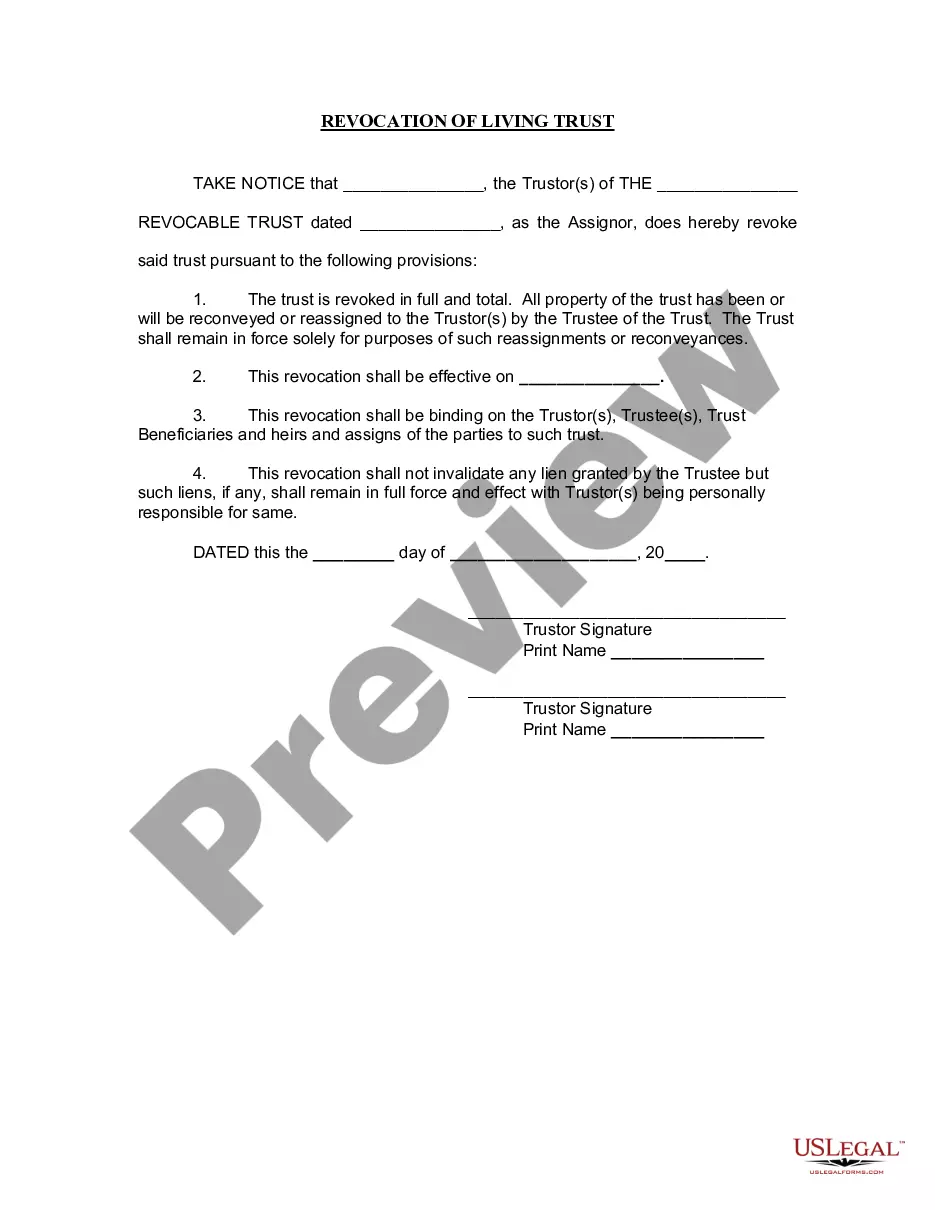
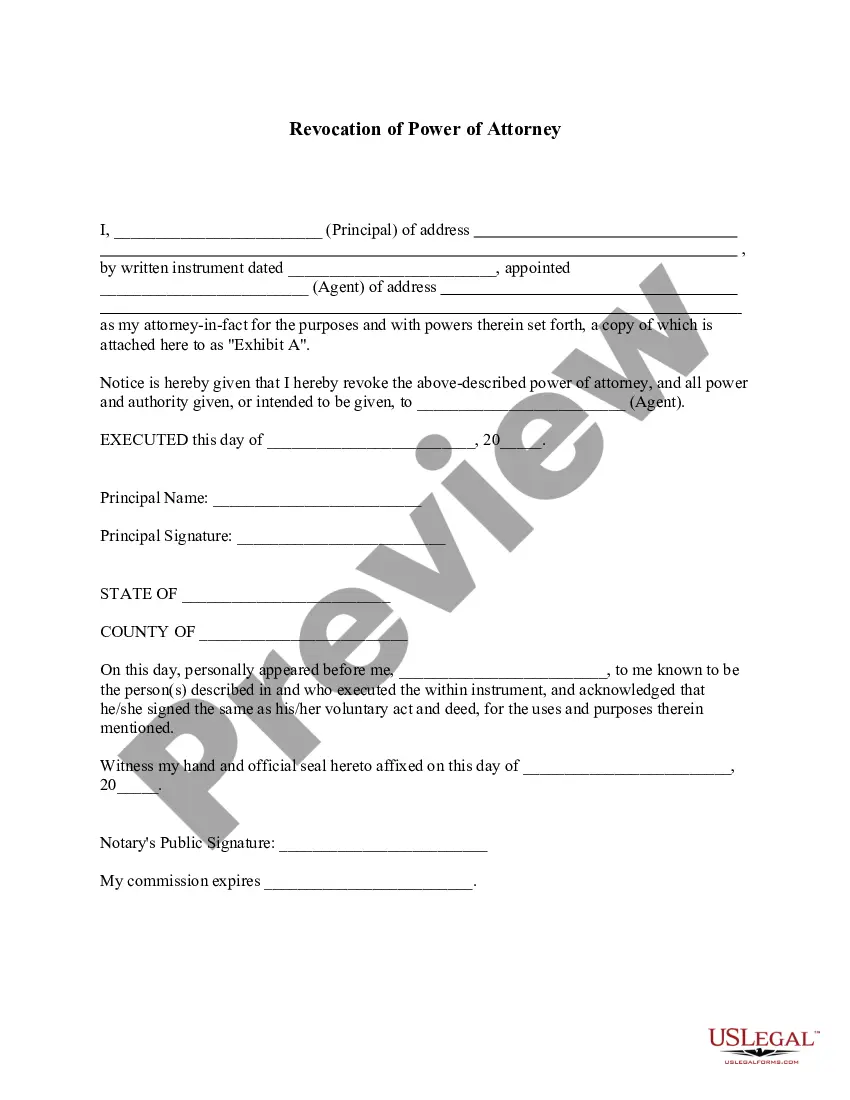
The Revocation of Living Trust form is a legal document used to terminate an existing living trust. A living trust is a type of estate planning tool that allows individuals to manage their assets during their lifetime and specify how those assets will be distributed after death. This form specifically states the full and total revocation of a particular living trust, returning the trust property to the trustors. It requires formal execution, including notarization, to be legally valid.
Key parts of this document
- Identification of the trustor(s) and the name of the revocable trust.
- A declaration of revocation that states the trust is revoked in full.
- Details regarding the reconveyance of trust property to the trustor(s).
- The effective date of the revocation.
- Signatures of the trustor(s) with spaces for names to be printed.
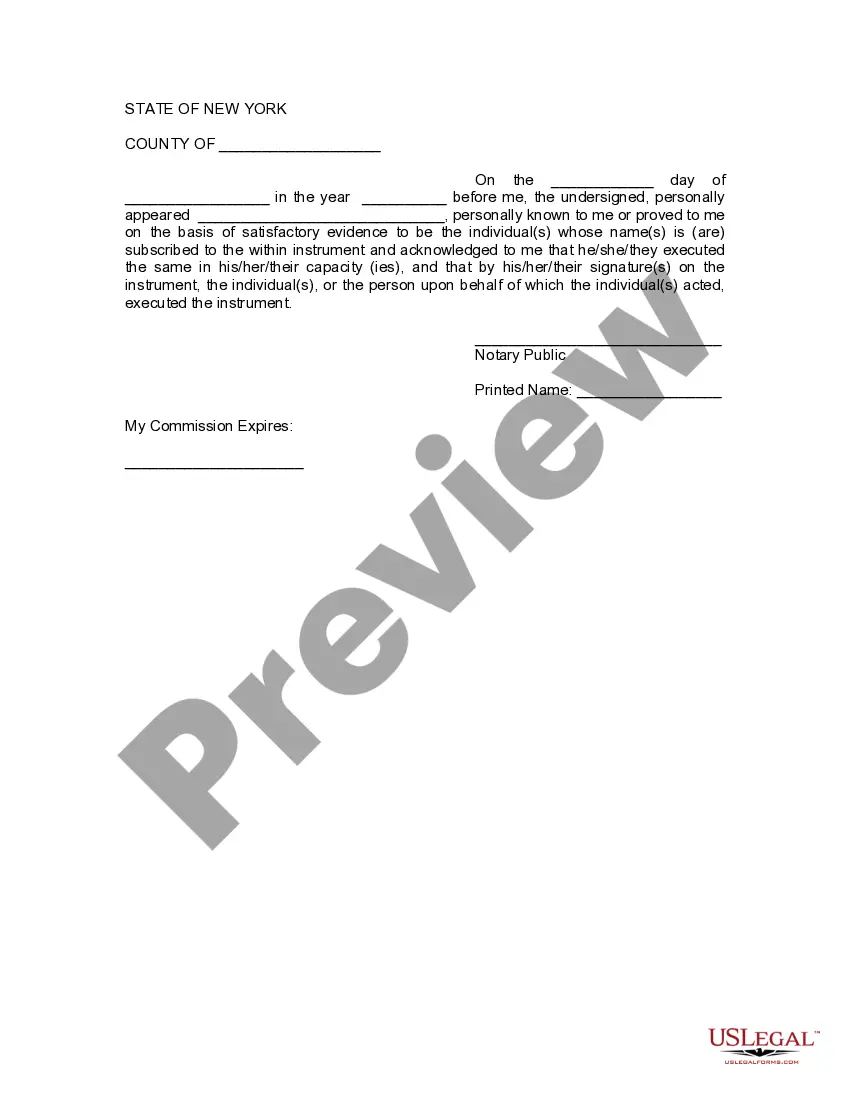
- A notarization section requiring acknowledgment of the signatures.
Common use cases
This form should be used when a trustor decides to dissolve a living trust for any reason. Common situations include changes in personal circumstances such as marriage, divorce, changes in financial status, or a decision to create a new estate plan that does not involve the existing trust. It is crucial to have this form completed and executed to ensure that assets are properly transferred back to the trustor.
Who needs this form
The following individuals may find this form beneficial:
- Trustors who wish to revoke their living trust.
- Individuals managing estate plans that no longer require the trust.
- Beneficiaries reviewing the status of a living trust that they may be impacted by.
- Trustees who need to facilitate the return of assets to the trustor(s).
Completing this form step by step
- Identify the parties involved, including the trustor(s) and the specific name of the living trust being revoked.
- Clearly state the full revocation of the trust.
- Indicate the effective date of the revocation.
- Ensure all trust property is either returned or reassigned to the trustor(s).
- Sign the form in the presence of a notary public to validate the revocation.
Does this form need to be notarized?
To make this form legally binding, it must be notarized. Our online notarization service, powered by Notarize, lets you verify and sign documents remotely through an encrypted video session.
Get your form ready online
Our built-in tools help you complete, sign, share, and store your documents in one place.
Make edits, fill in missing information, and update formatting in US Legal Forms—just like you would in MS Word.
Download a copy, print it, send it by email, or mail it via USPS—whatever works best for your next step.
Sign and collect signatures with our SignNow integration. Send to multiple recipients, set reminders, and more. Go Premium to unlock E-Sign.
If this form requires notarization, complete it online through a secure video call—no need to meet a notary in person or wait for an appointment.
We protect your documents and personal data by following strict security and privacy standards.

Make edits, fill in missing information, and update formatting in US Legal Forms—just like you would in MS Word.

Download a copy, print it, send it by email, or mail it via USPS—whatever works best for your next step.

Sign and collect signatures with our SignNow integration. Send to multiple recipients, set reminders, and more. Go Premium to unlock E-Sign.

If this form requires notarization, complete it online through a secure video call—no need to meet a notary in person or wait for an appointment.

We protect your documents and personal data by following strict security and privacy standards.
Mistakes to watch out for
- Failing to provide the full name of the trust and trustors.
- Not signing the document in front of a notary.
- Leaving the effective date blank.
- Not ensuring that all trust property is documented for reconveyance.
Why complete this form online
- Convenience of immediate access and downloadable format for easy completion.
- Editable template allows users to personalize details specific to their circumstances.
- Reliability in ensuring that the form is drafted according to legal standards.
What to keep in mind
- The Revocation of Living Trust form is essential for terminating a living trust and returning assets to the trustor(s).
- Notarization is a required step in the process for the revocation to be legally binding.
- Always review the specific legal requirements in your state to ensure compliance.
- Complete all sections accurately to avoid delays or issues in the revocation process.
Looking for another form?
Form popularity
FAQ
The New York law provides for statutory mechanisms which allow for a trust creator to amend or revoke an irrevocable trust.New York law provides that if a trust settlor obtains the acknowledged, written consent of all those beneficially interested in an un-amendable, irrevocable trust, she may amend or revoke it.
You can be the trustee of your own living trust, keeping full control over all property held in trust.In contrast to revocable trusts, irrevocable trusts cannot be revoked or modified after they are signed.
EXAMPLE: Yvonne and Andre make a living trust together. Step 1: Transfer ownership of trust property from yourself as trustee back to yourself. Step 2: A revocation prints out with your trust document. Step 3: Complete the Revocation of Trust by filling in the date, and then sign it in front of a notary public.
The terms of an irrevocable trust may give the trustee and beneficiaries the authority to break the trust. If the trust's agreement does not include provisions for revoking it, a court may order an end to the trust. Or the trustee and beneficiaries may choose to remove all assets, effectively ending the trust.
A revocation of a will generally means that the beneficiaries will no longer receive the specified property or financial assets. A beneficiary may have been depending on the trust property for various reasons. If the revocation occurs at a certain time, it can cause legal conflicts in many cases.
A trust is created by a Settlor, also called a Trustor or a Grantor, who transfers property to a Trustee. The Trustee holds that property for the trust beneficiaries.An irrevocable living trust, however, cannot be modified or revoked by the Settlor at any time nor for any reason once active.
A revocable trust, or living trust, is a legal entity to transfer assets to heirs without the expense and time of probate.A living trust also can be revoked or dissolved if there is a divorce or other major change that can't be accommodated by amending the trust.
An irrevocable trust is a type of trust where its terms cannot be modified, amended or terminated without the permission of the grantor's named beneficiary or beneficiaries.Irrevocable trusts cannot be modified after they are created, or at least they are very difficult to modify.
Yes. Generally you can refinance property placed in irrevocable trust.