New Mexico Interrogatories to Defendant for Motor Vehicle Accident
Understanding this form
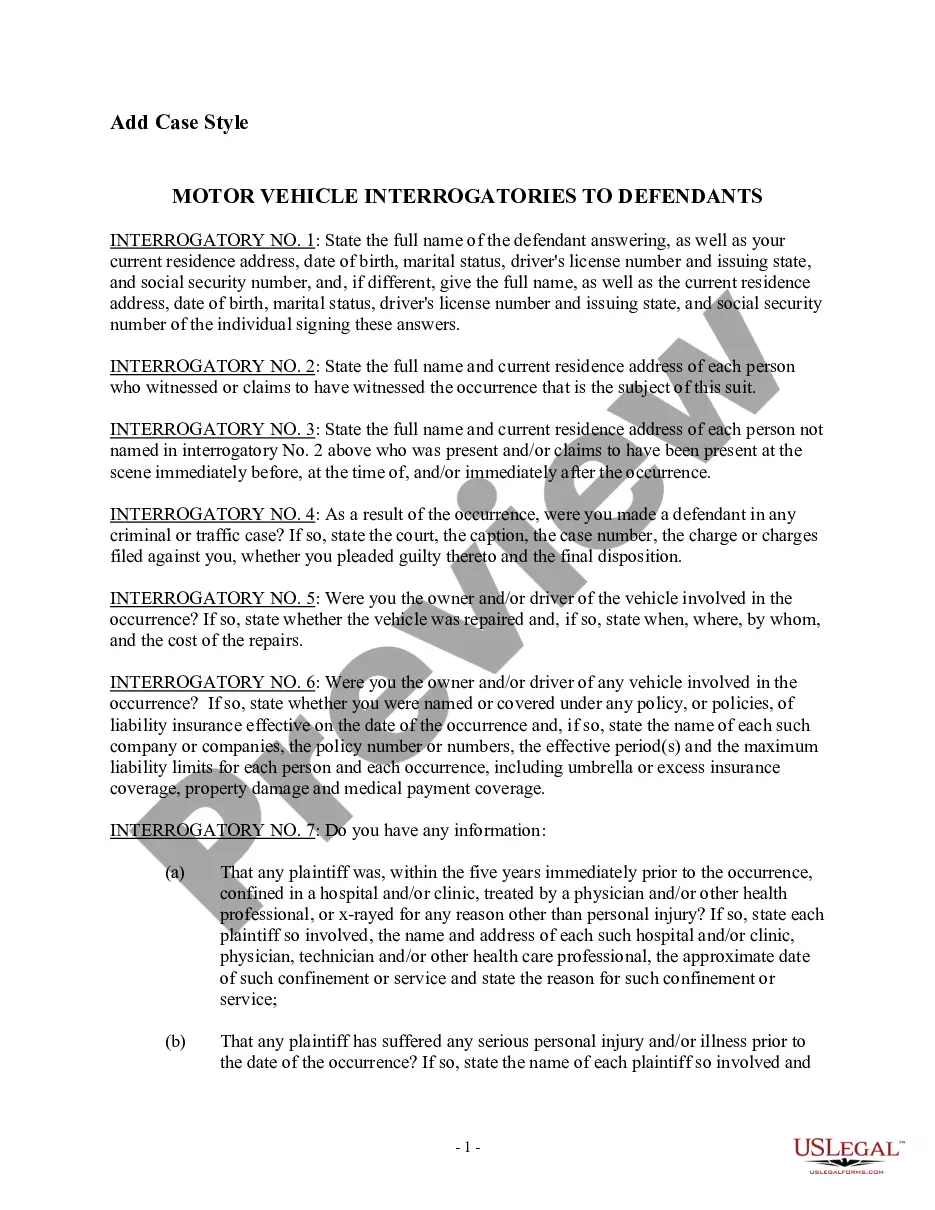
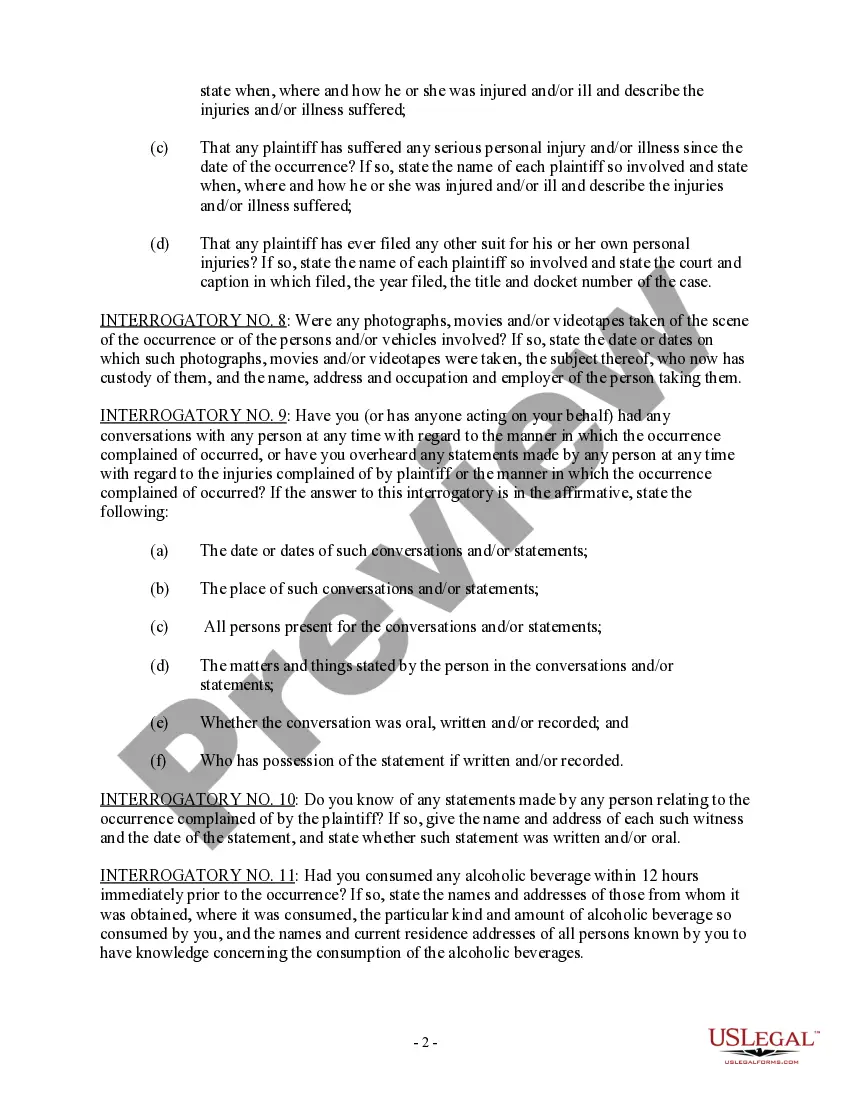
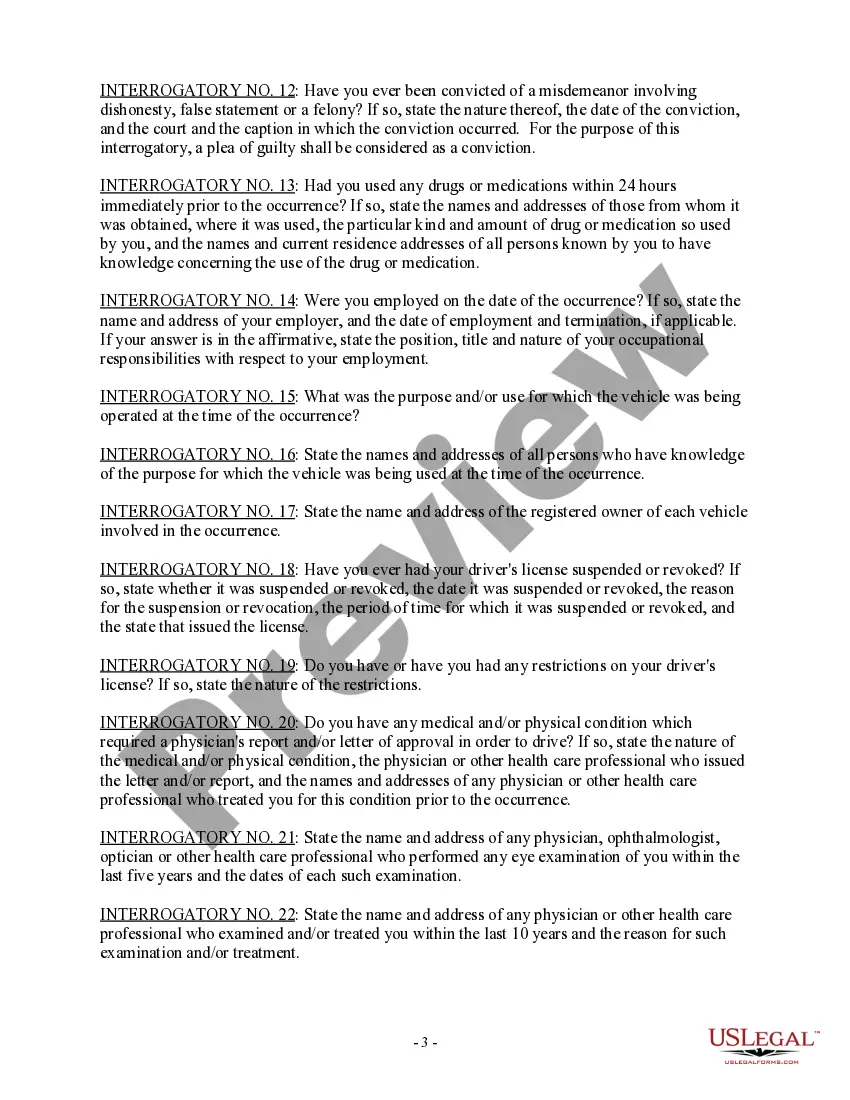
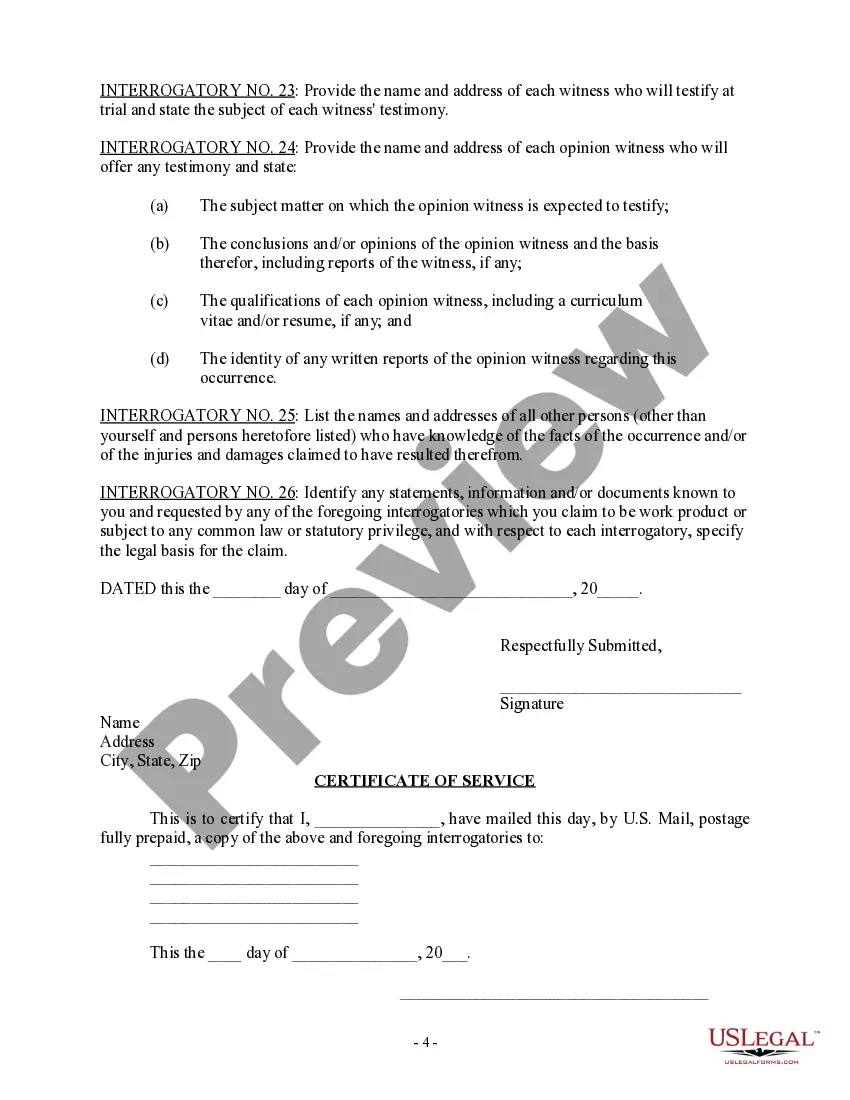
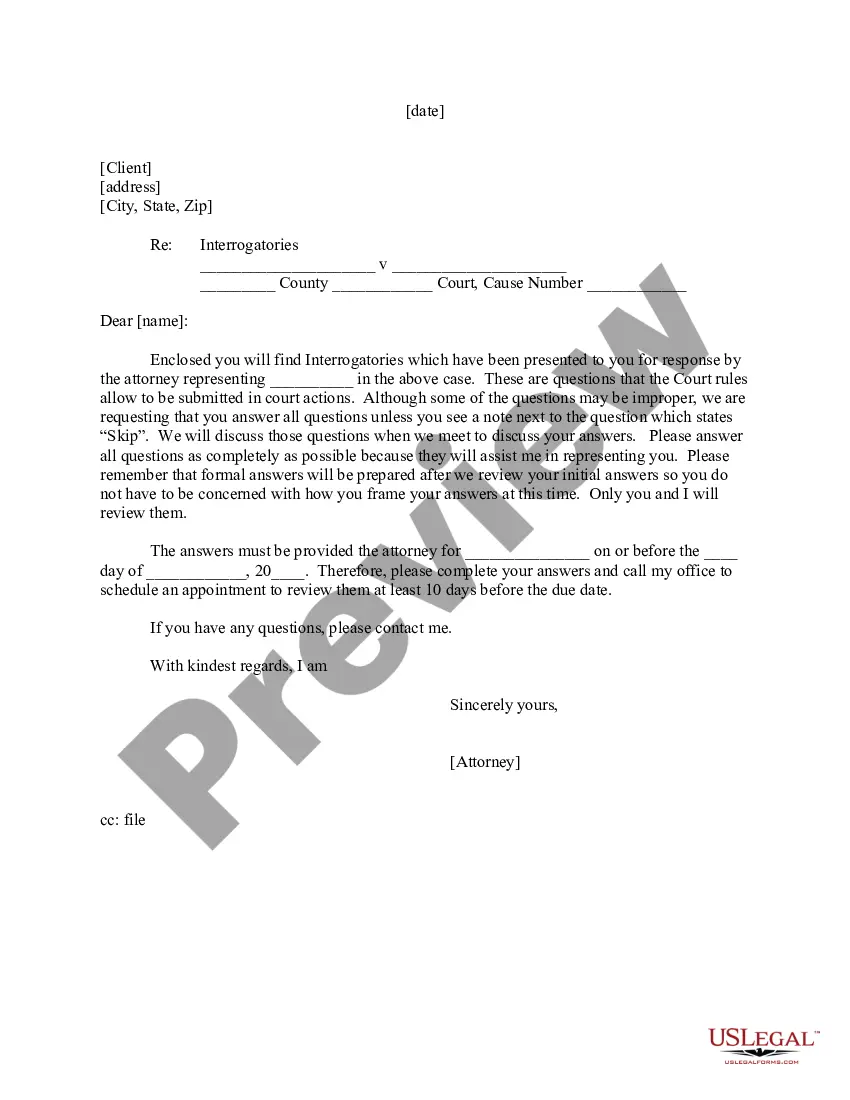
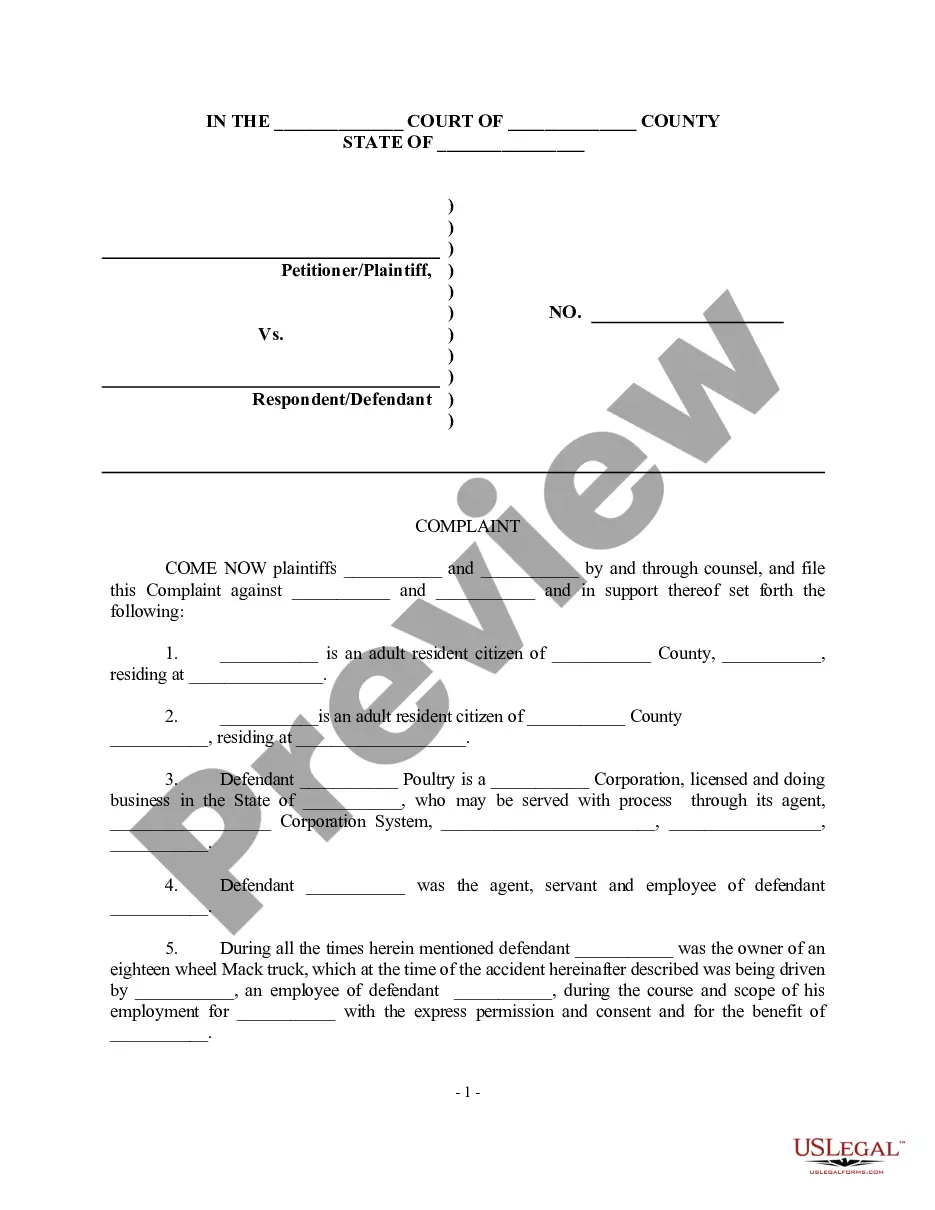
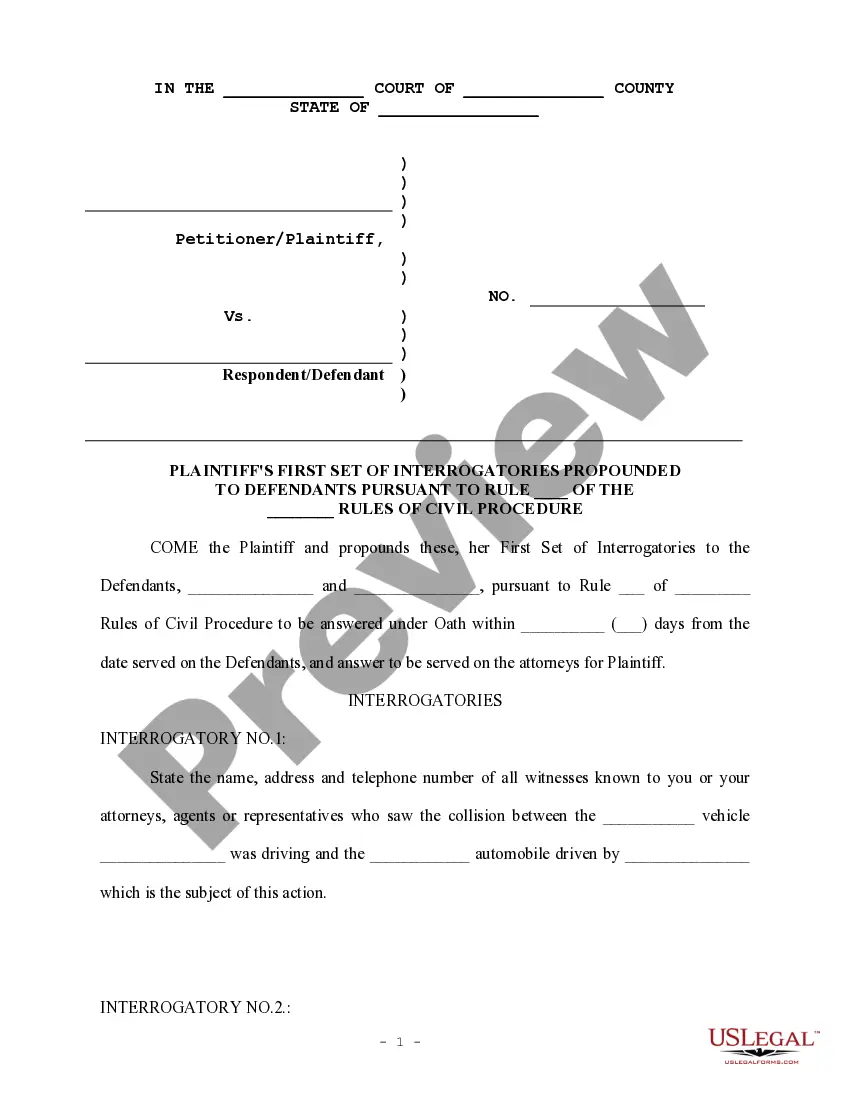
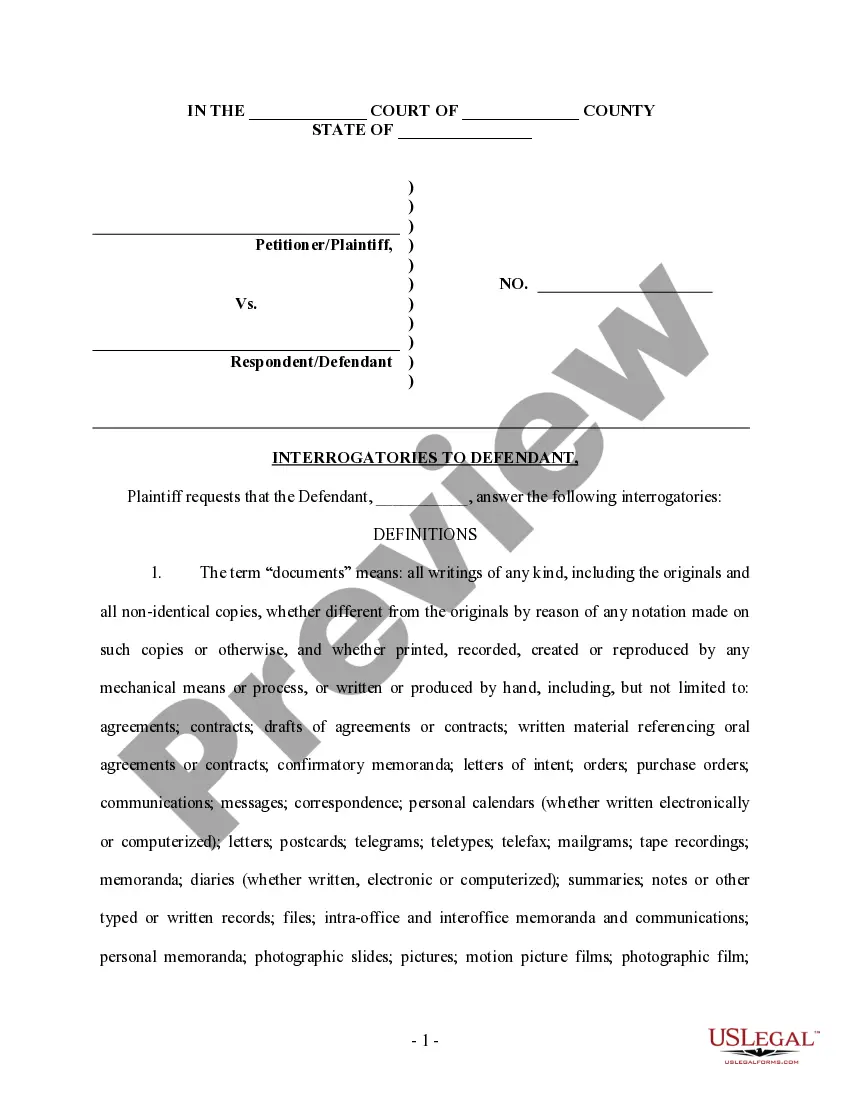
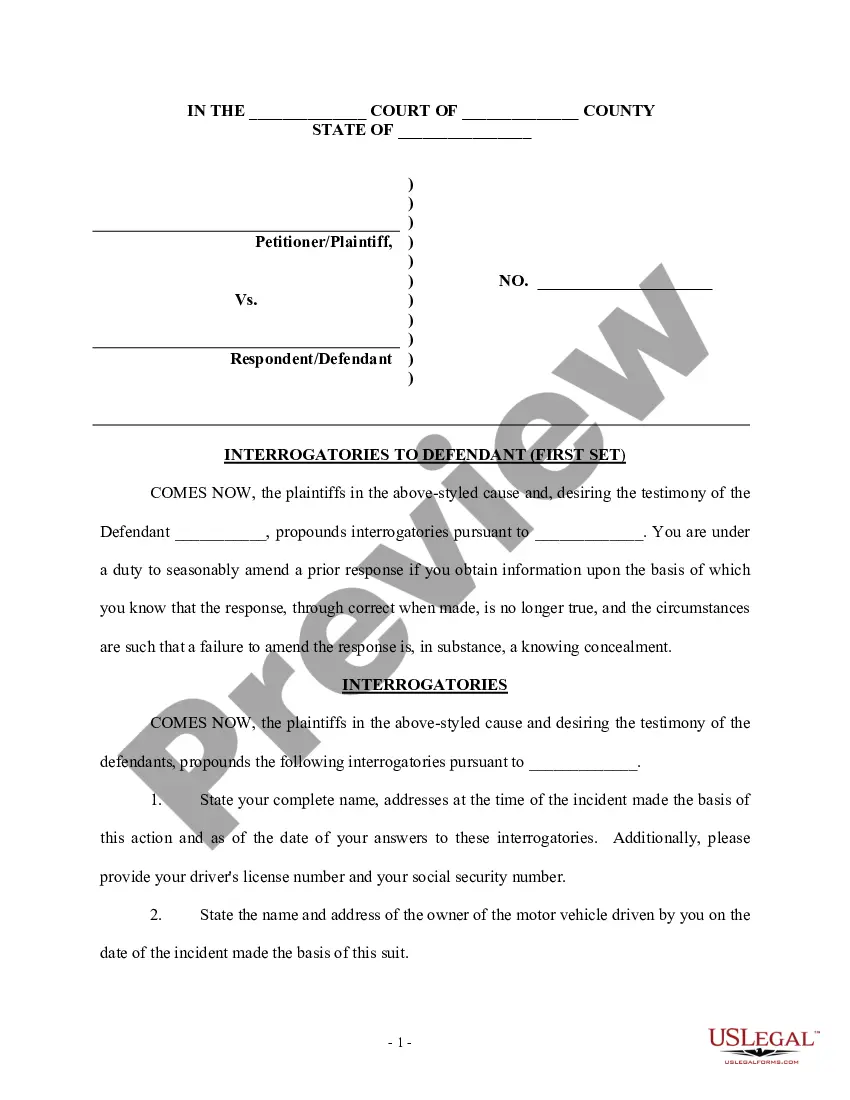
The Interrogatories to Defendant for Motor Vehicle Accident is a legal document designed to gather essential information from the defendant involved in a vehicle-related incident. This form consists of a series of 28 structured questions that assist plaintiffs in establishing facts related to an automobile accident, such as identifying witnesses, gathering evidence, and understanding the defendant's background. This form is crucial for helping plaintiffs prepare their case by obtaining necessary details about the accident and the involved parties.
Main sections of this form
- Defendant's personal details, including name, address, date of birth, and driver's license information.
- Contact information for witnesses to the accident.
- Questions regarding the defendant's employment status at the time of the accident.
- Details about any prior legal issues, including criminal or traffic charges related to the accident.
- Information regarding any insurance policies applicable to the incident.
- Documentation of any injuries or relevant medical history of the plaintiff before and after the incident.

When to use this document
This form is ideal for use in civil legal proceedings following a motor vehicle accident. If you are a plaintiff seeking to understand the full context of the accident, gather evidence, or determine liability, you should utilize this form. It is especially valuable when preparing for court, negotiating settlements, or clarifying details regarding the event and parties involved.
Who can use this document
This form is intended for:
- Plaintiffs involved in a motor vehicle accident seeking to obtain information from defendants.
- Attorneys representing plaintiffs in personal injury or liability cases related to vehicle incidents.
- Individuals who want to clarify the details surrounding a motor vehicle accident for legal purposes.
How to prepare this document
- Identify the parties involved by filling in the defendant's full name, address, date of birth, and other personal details on the first interrogatory.
- Document all relevant witnesses by providing their names and addresses in subsequent interrogatories.
- Answer detailed questions related to vehicle ownership, insurance coverage, and any incidents that may have occurred as a result of the accident.
- Review and confirm any past medical history related to the plaintiffs to ensure accurate responses to inquiries about their health before and after the incident.
- Sign and date the form, ensuring that the answers are accurate and complete before submission.
Does this form need to be notarized?
This form does not typically require notarization unless specified by local law. Always check state regulations to ensure compliance with any additional requirements.
Get your form ready online
Our built-in tools help you complete, sign, share, and store your documents in one place.
Make edits, fill in missing information, and update formatting in US Legal Forms—just like you would in MS Word.
Download a copy, print it, send it by email, or mail it via USPS—whatever works best for your next step.
Sign and collect signatures with our SignNow integration. Send to multiple recipients, set reminders, and more. Go Premium to unlock E-Sign.
If this form requires notarization, complete it online through a secure video call—no need to meet a notary in person or wait for an appointment.
We protect your documents and personal data by following strict security and privacy standards.

Make edits, fill in missing information, and update formatting in US Legal Forms—just like you would in MS Word.

Download a copy, print it, send it by email, or mail it via USPS—whatever works best for your next step.

Sign and collect signatures with our SignNow integration. Send to multiple recipients, set reminders, and more. Go Premium to unlock E-Sign.

If this form requires notarization, complete it online through a secure video call—no need to meet a notary in person or wait for an appointment.

We protect your documents and personal data by following strict security and privacy standards.
Typical mistakes to avoid
- Failing to provide full and accurate personal information.
- Omitting names of witnesses or other parties who may have relevant information.
- Not disclosing prior legal issues that could impact the case.
- Incomplete responses that do not answer all parts of the interrogatories.
Why complete this form online
- Immediate access to a comprehensive set of interrogatories tailored for vehicle accident cases.
- Easy to complete and customize for specific cases with editable fields.
- Convenience of downloading and printing the form at your own pace.
- Reliability of professionally drafted questions aimed at uncovering essential facts.
What to keep in mind
- The form is crucial for plaintiffs in gathering necessary information from defendants in vehicle accident lawsuits.
- Correctly completing this form can significantly influence the outcome of legal proceedings.
- Consulting with a legal professional when using this form can help ensure all state-specific requirements are met.
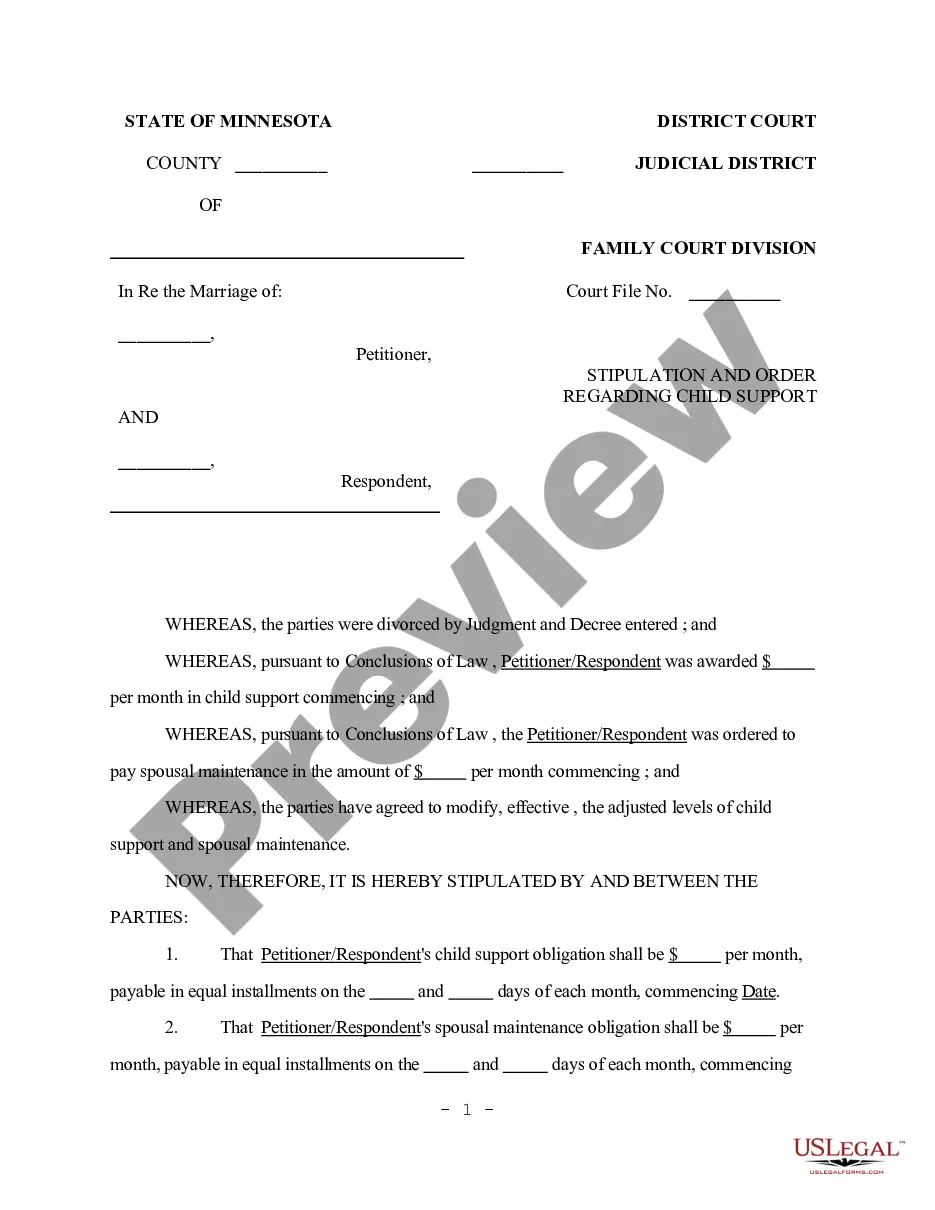
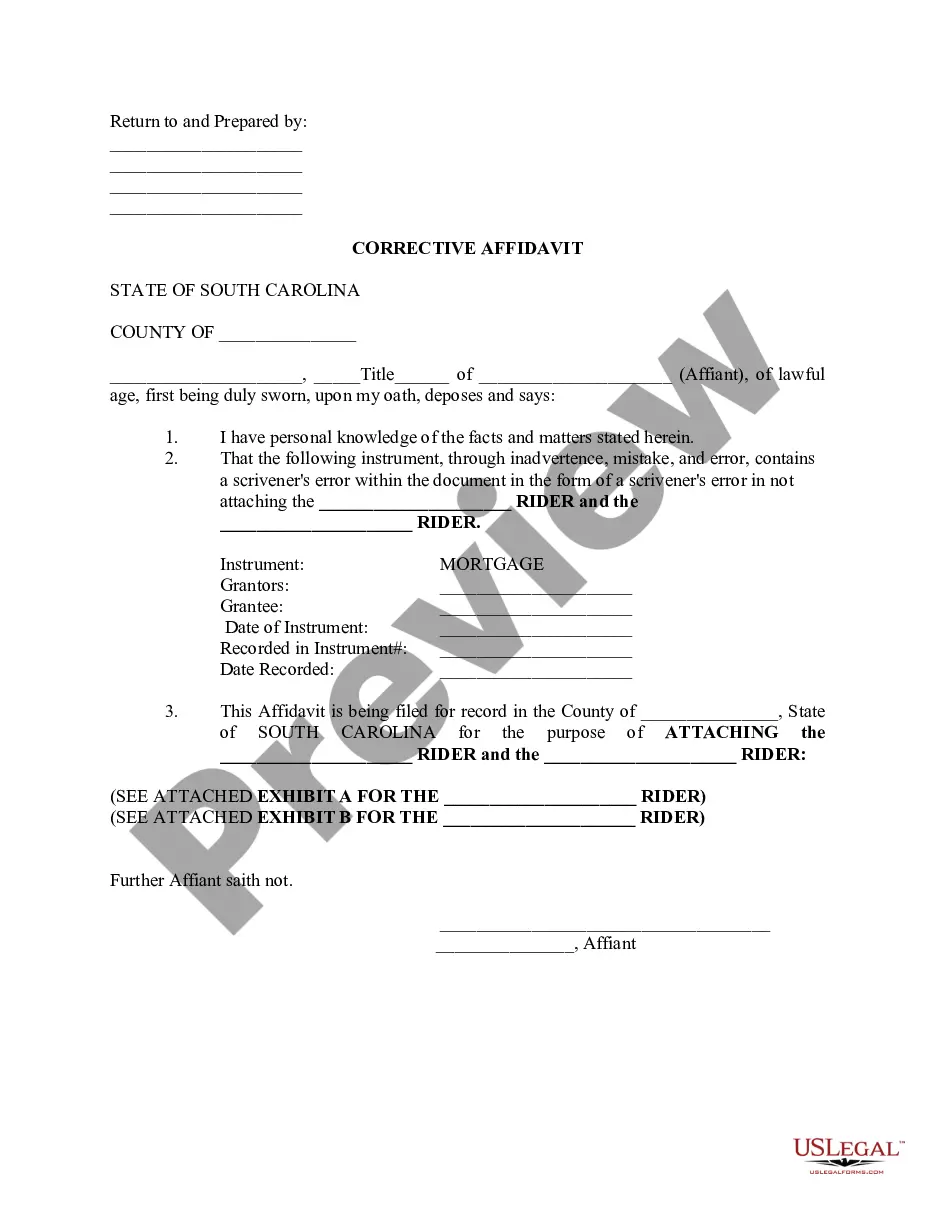
Looking for another form?

Form popularity
FAQ
In law, interrogatories (also known as requests for further information) are a formal set of written questions propounded by one litigant and required to be answered by an adversary in order to clarify matters of fact and help to determine in advance what facts will be presented at any trial in the case.
You must answer each interrogatory separately and fully in writing under oath, unless you object to it. You must explain why you object. You must sign your answers and objections.
The purpose of interrogatories is to learn a great deal of general information about a party in a lawsuit. For example, the defendant in a personal injury lawsuit about a car accident might send you interrogatories asking you to disclose things like: Where you live.
So, can you refuse to answer interrogatories? The answer is, no, you may not. You must answer a Rule 33 interrogatory within 30 days of being served with it. That answer must either permit inspection of the requested information or object to the production of the information for a specific reason.
Interrogatories are written questions that one party to a lawsuit sends to another, and the responding party submits written answers under oath. If a lawsuit is filed in a personal injury case, chances are interrogatories will come into play.
Responding to Form InterrogatoriesAnswer each question, being careful to answer each subpart, if one exists. Read the question carefully, and answer only what it asks. You may attach exhibits, if necessary. The response must be verified, meaning you must swear that the responses given are true.
Interrogatories are a discovery device used by a party, usually a Defendant, to enable the individual to learn the facts that are the basis for, or support, a pleading with which he or she has been served by the opposing party.
Motions to Compel If a party doesn't respond to interrogatories or requests for production, then the party seeking those answers must file a motion to compel with the court. If the court grants the motion to compel, then the party who objected or failed to answer must then do so.
The plaintiff must respond by the deadline. There are different ways to make sure you get each kind of discovery if the plaintiff does not give it to you by the deadline. If the plaintiff does not respond to the court order, then you can file a Motion to Dismiss and you may win your case.