New Jersey Warranty Deed for Husband and Wife Converting Property from Tenants in Common to Joint Tenancy
What is this form?
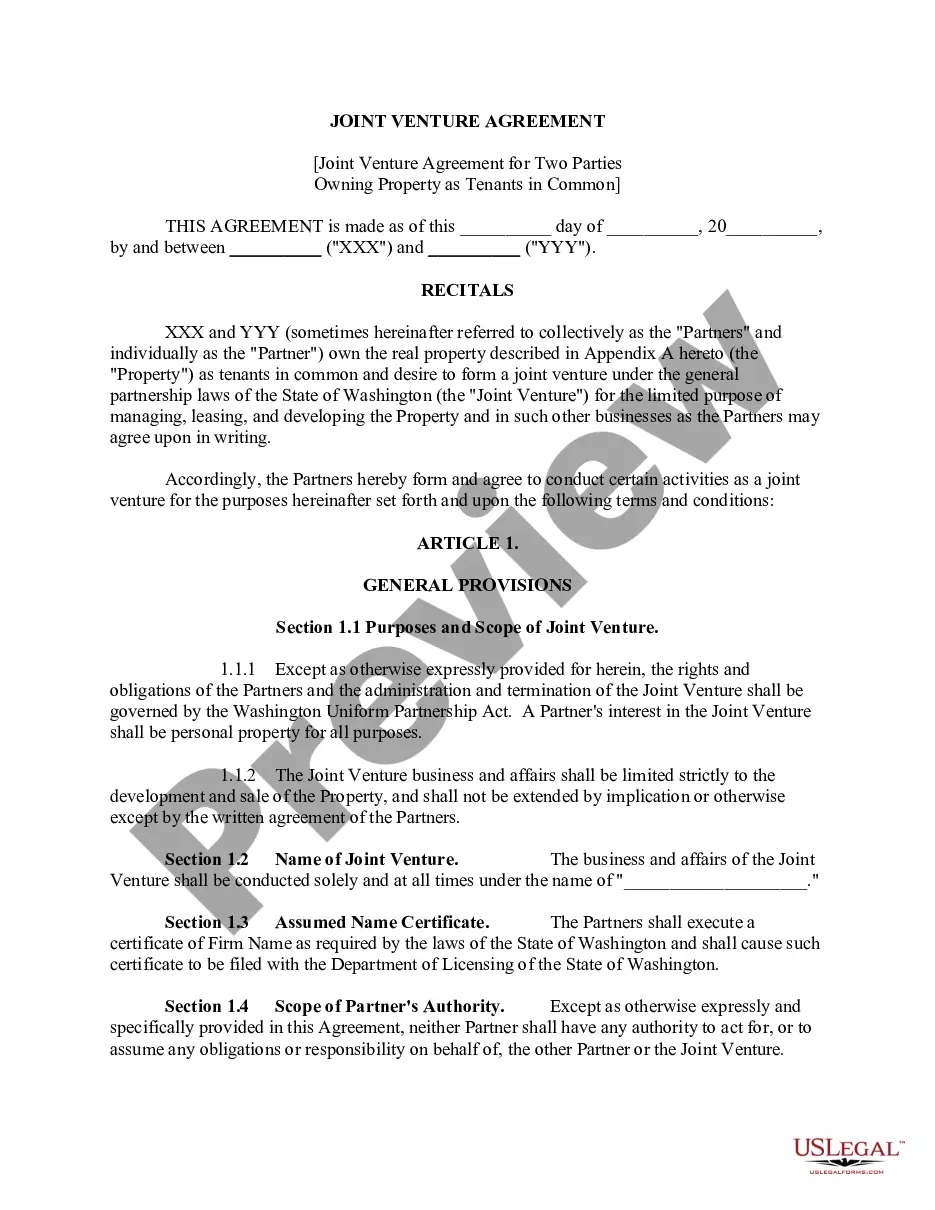
This Warranty Deed is a legal document used by a husband and wife to convert their ownership of property from tenants in common to joint tenants. This form is specifically tailored to ensure that both spouses have equal rights to the property, including rights of survivorship, meaning that if one spouse passes away, the other automatically inherits the entire property. This form is beneficial for couples looking to simplify their estate planning and ensure the seamless transfer of property upon death, differing from arrangements such as tenancy in common where ownership interests are not automatically inherited.
What’s included in this form
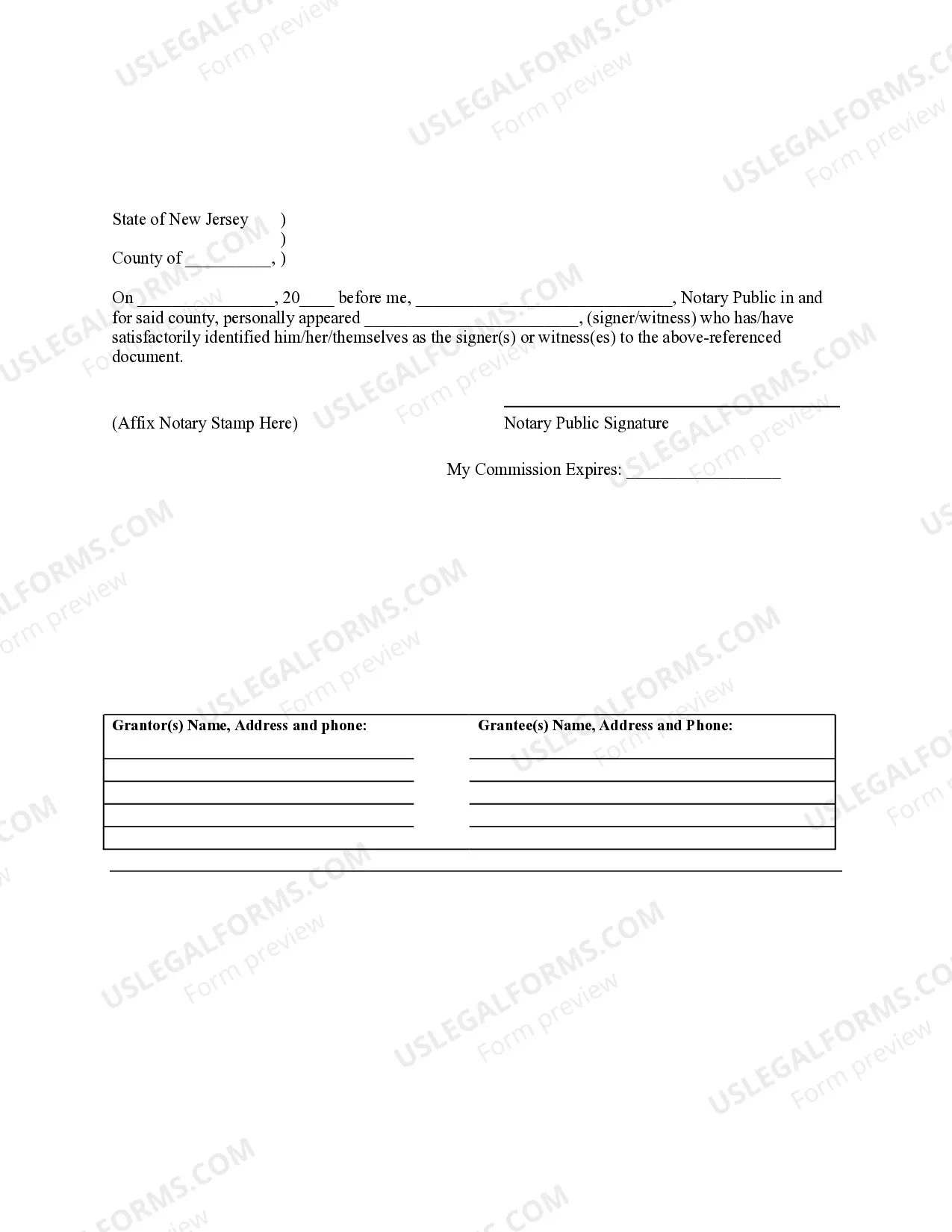
- Grantors and Grantees: Identification of the individuals transferring the property and the individuals receiving it.
- Property Description: Clear description of the property being conveyed, including location and any pertinent details.
- Consideration Clause: Stipulates the monetary consideration exchanged for the property, typically nominal.
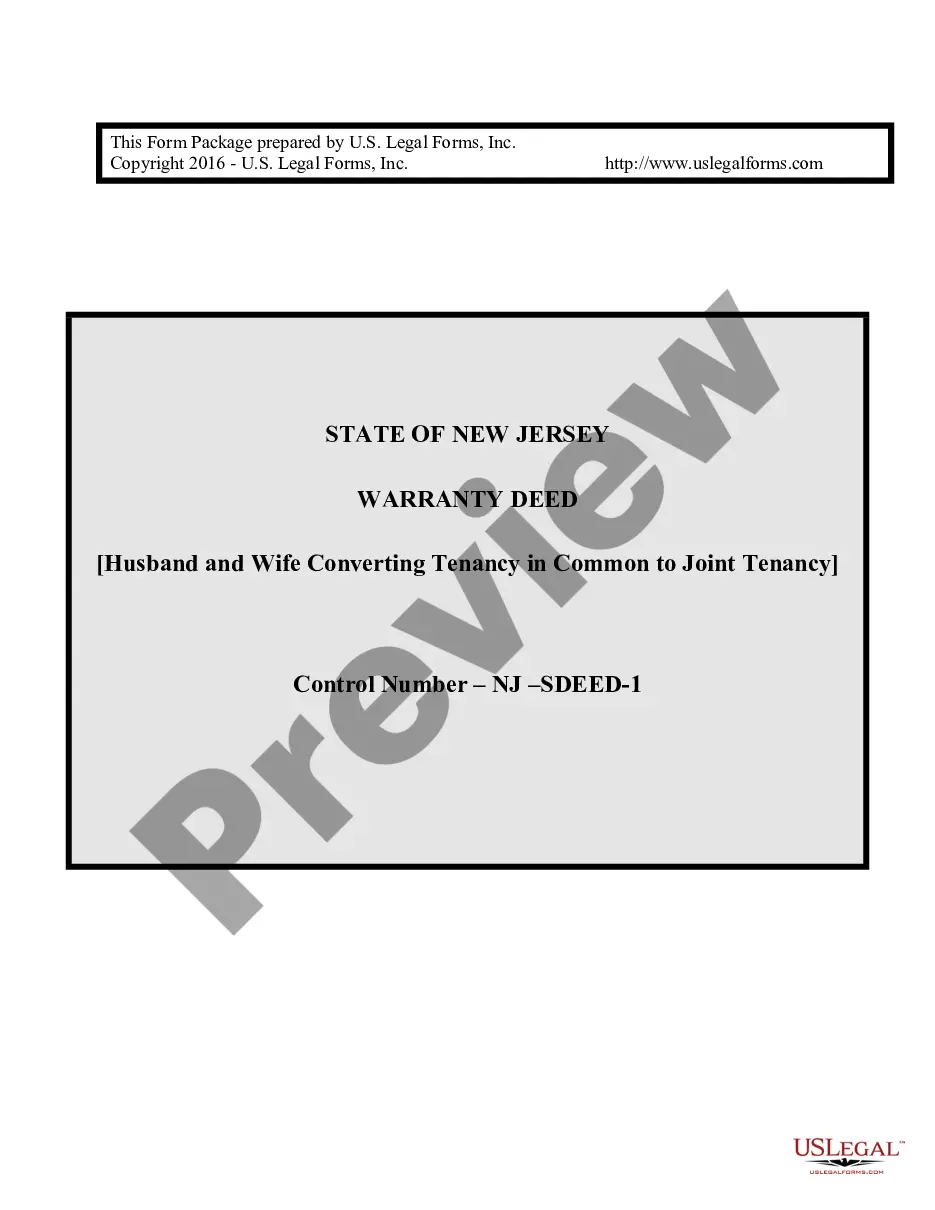
- Survivorship Rights: Details on how property will pass to the surviving spouse in the event of death.
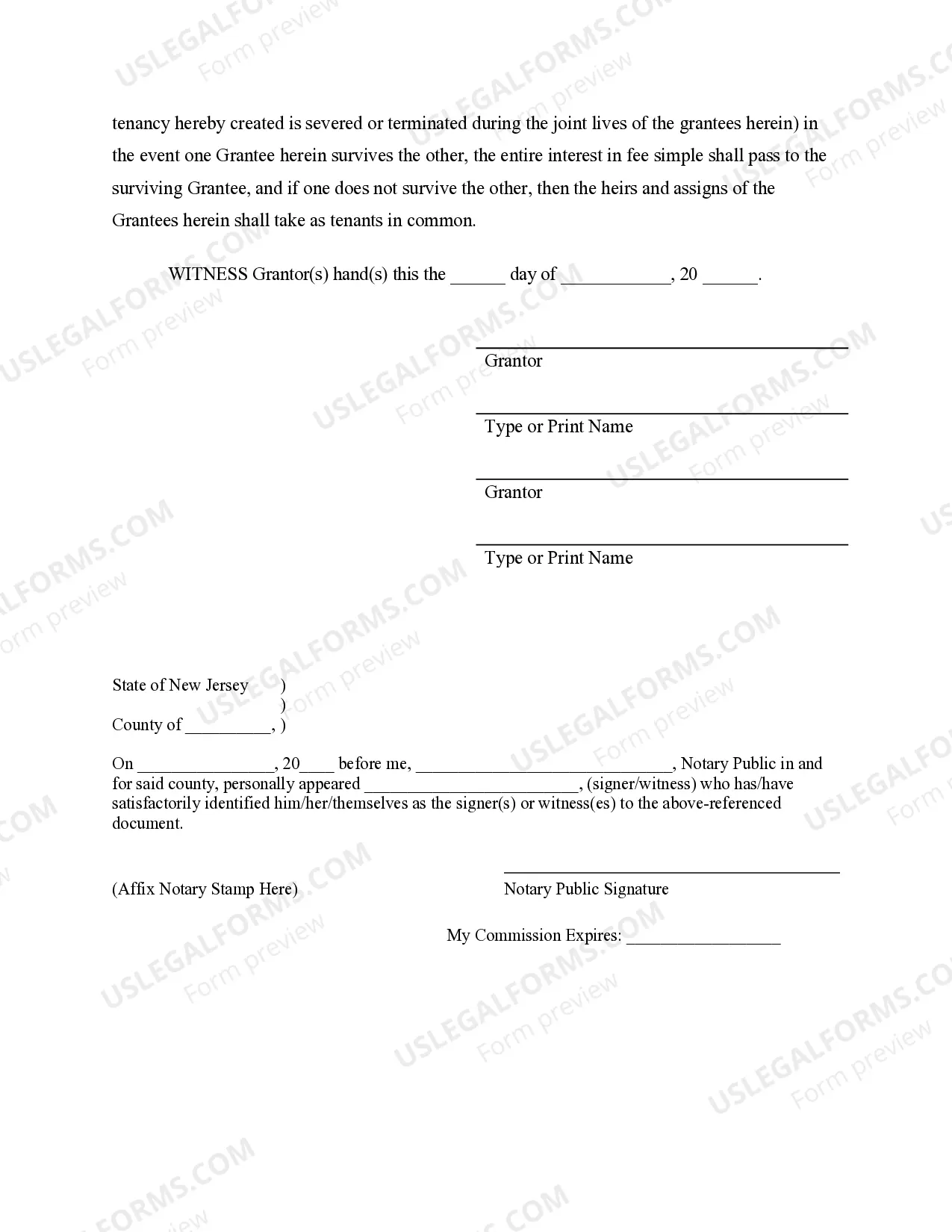
- Notary Acknowledgment: Requirement for formal notarization to validate the deed.






When this form is needed
This Warranty Deed should be used when a husband and wife currently hold the title to their property as tenants in common and wish to change their ownership to joint tenancy. This situation often arises during estate planning or when couples want to ensure that the surviving spouse will retain full ownership of the property without further probate proceedings upon the death of one spouse. It is also suitable for couples who want to simplify property transfer during a divorce or separation.
Who can use this document
- Couples currently holding property as tenants in common.
- Married individuals looking to simplify their estate plan.
- Spouses wanting to provide clear rights of survivorship in the event of death.
- Anyone seeking a legally valid method of converting property ownership with their spouse.
Steps to complete this form
- Identify the parties involved: Clearly state the names of the Grantors (husband and wife) and the Grantees (same individuals).
- Specify the property: Include a detailed description of the property being conveyed, noting its location and any other important characteristics.
- Enter consideration: Fill in the nominal amount of consideration, typically ten dollars.
- Include dates and signatures: The Grantors must date and sign the deed in the designated areas.
- Notarize the document: Have the document notarized by a certified notary public to complete the process.
Notarization requirements for this form
This form must be notarized to be legally valid. US Legal Forms provides secure online notarization powered by Notarize, allowing you to complete the process through a verified video call.
Get your form ready online
Our built-in tools help you complete, sign, share, and store your documents in one place.
Make edits, fill in missing information, and update formatting in US Legal Forms—just like you would in MS Word.
Download a copy, print it, send it by email, or mail it via USPS—whatever works best for your next step.
Sign and collect signatures with our SignNow integration. Send to multiple recipients, set reminders, and more. Go Premium to unlock E-Sign.
If this form requires notarization, complete it online through a secure video call—no need to meet a notary in person or wait for an appointment.
We protect your documents and personal data by following strict security and privacy standards.

Make edits, fill in missing information, and update formatting in US Legal Forms—just like you would in MS Word.

Download a copy, print it, send it by email, or mail it via USPS—whatever works best for your next step.

Sign and collect signatures with our SignNow integration. Send to multiple recipients, set reminders, and more. Go Premium to unlock E-Sign.

If this form requires notarization, complete it online through a secure video call—no need to meet a notary in person or wait for an appointment.

We protect your documents and personal data by following strict security and privacy standards.
Common mistakes
- Failing to provide a complete and accurate property description.
- Not having the form notarized, which is necessary for its legality.
- Not specifying the correct names of Grantors and Grantees.
- Leaving out the consideration clause or not providing a nominal amount.
Why complete this form online
- Instant access to a legally vetted form prepared by licensed attorneys.
- Convenience of downloading and completing the form at your own pace.
- Editable format that allows for effortless adjustments to fit your specific needs.
- Cost-effective solution compared to hiring an attorney for standard property transfers.
Key takeaways
- The Warranty Deed aids married couples in converting property ownership to joint tenancy.
- Notarization is required to ensure the document's legal validity.
- It simplifies the transfer of ownership upon the death of one spouse, making estate management easier.
Looking for another form?



Form popularity
FAQ
A tenancy in common (TIC) is one of three types of concurrent estates (defined as an estate that has shared ownership, in which each owner owns a share of the property). The other two types are a joint tenancy and a tenancy by the entirety. A TIC typically has no right of survivorship.
If one person passes away, the home will automatically continue to be owned by the surviving partner, even if there is no will. This is known as the survivorship rule. However, many couples choose to hold their homes as tenants in common.
For example, joint tenants must all take title simultaneously from the same deed while tenants in common can come into ownership at different times. Another difference is that joint tenants all own equal shares of the property, proportionate to the number of joint tenants involved.
Rights And Responsibilities All tenants in common have an equal right of access to the property, regardless of their ownership amount. If the property produces an income, co-owners are entitled to a percentage of that income equal to their ownership shares.