New Jersey New State Resident Package
What this form package covers
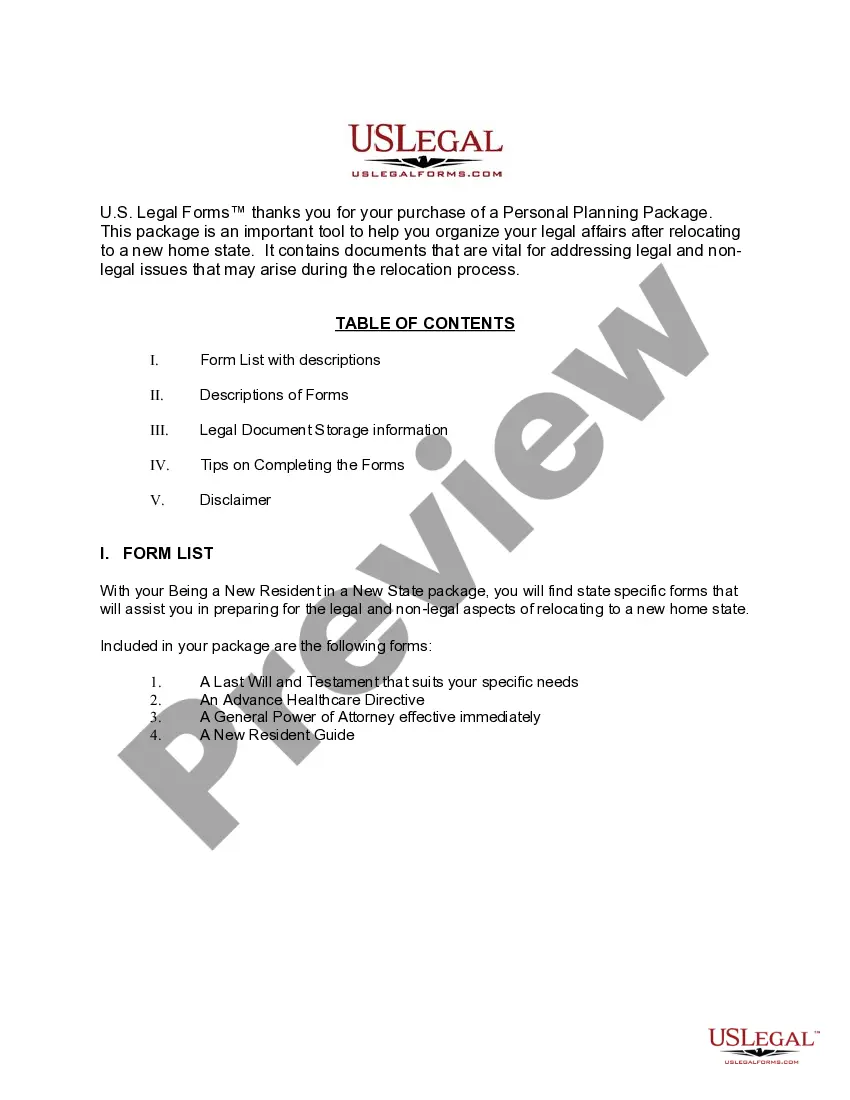
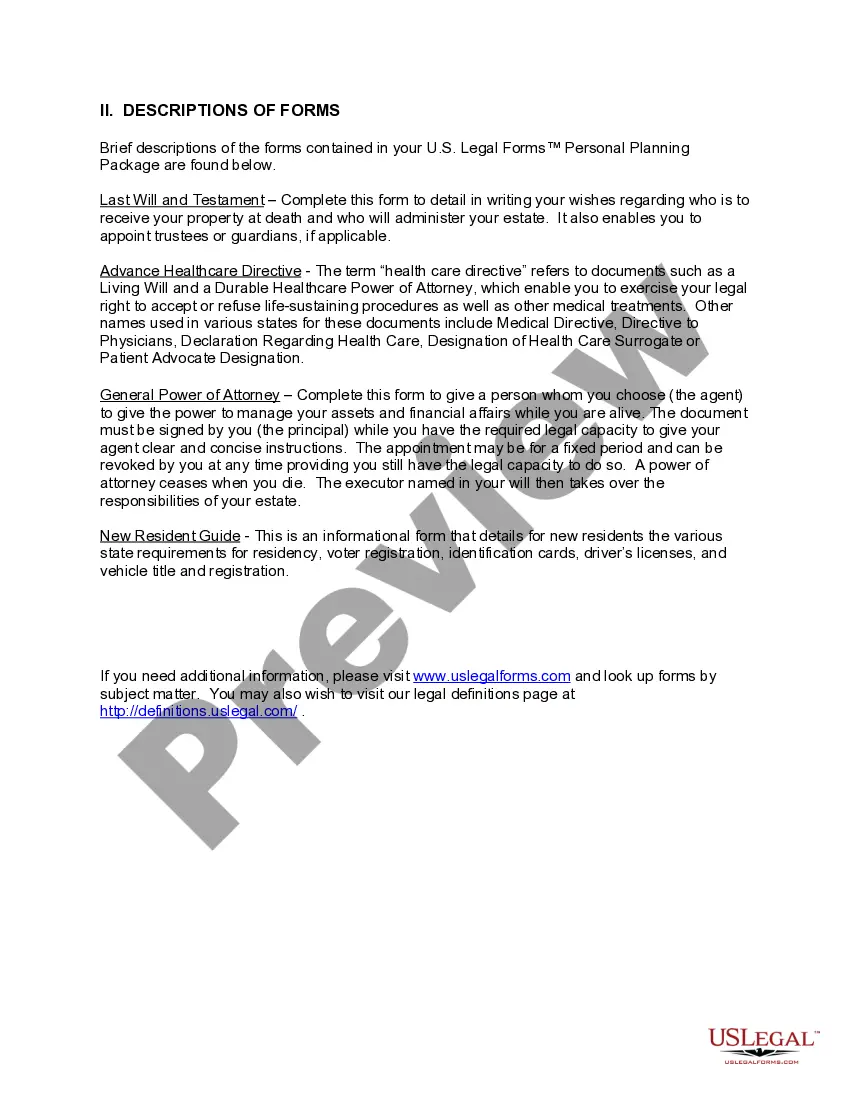
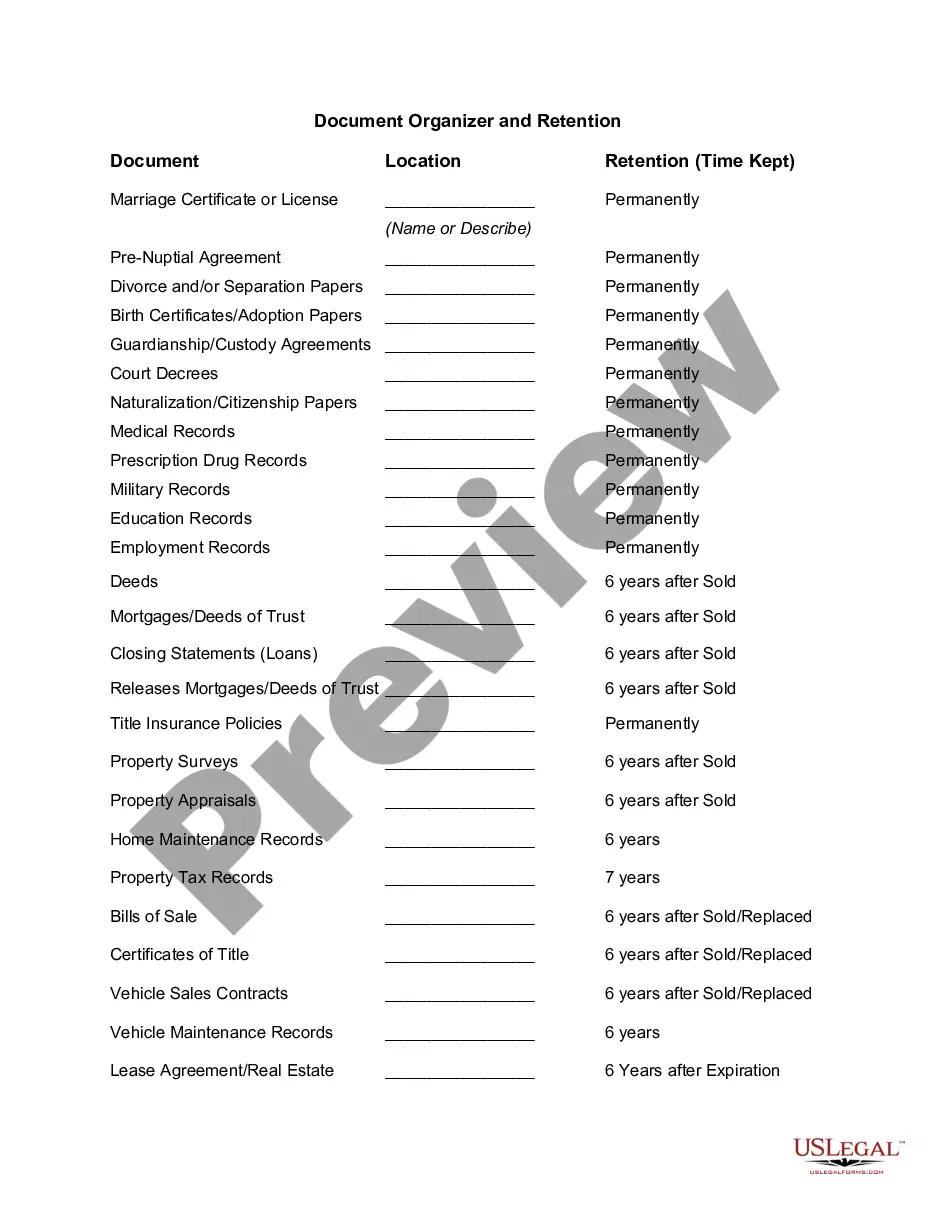
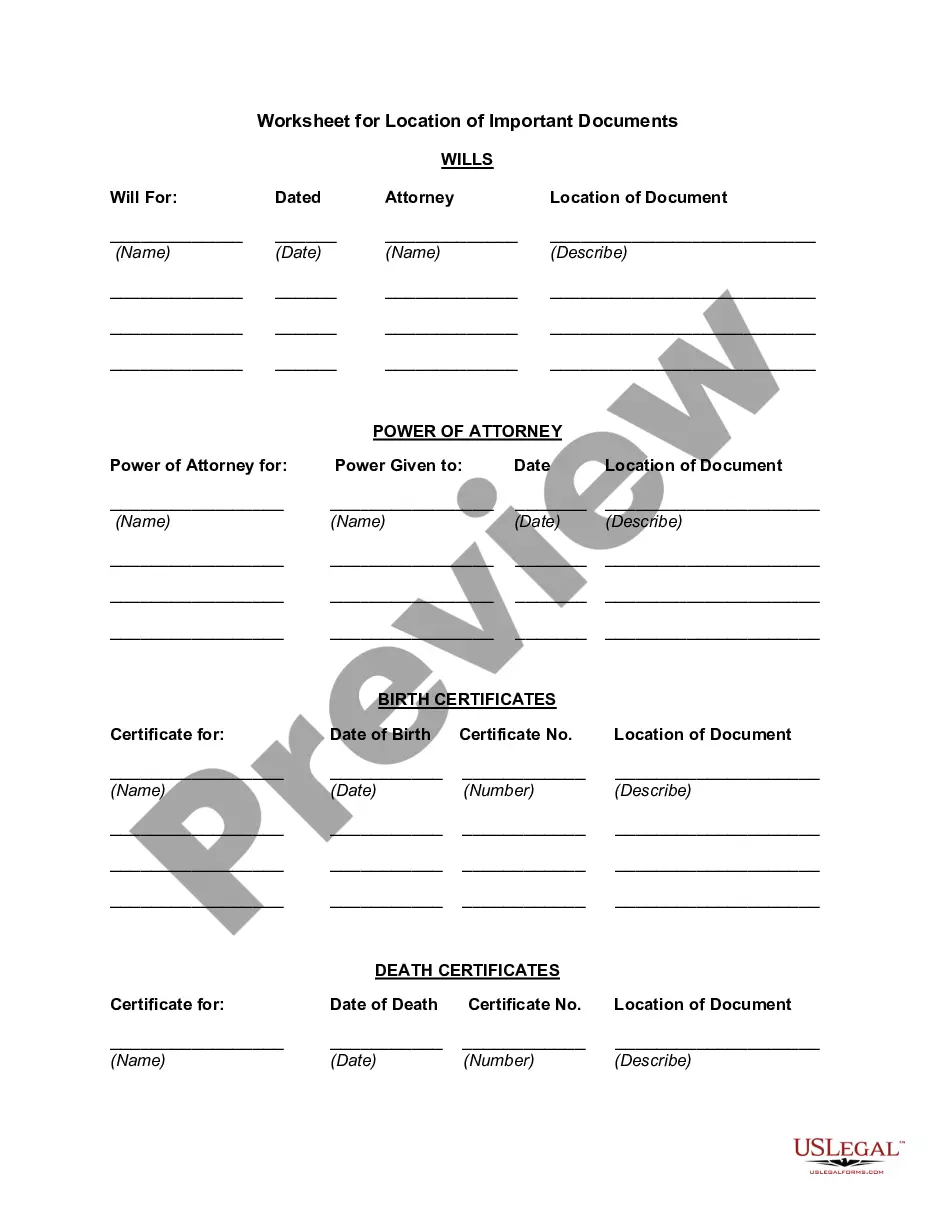
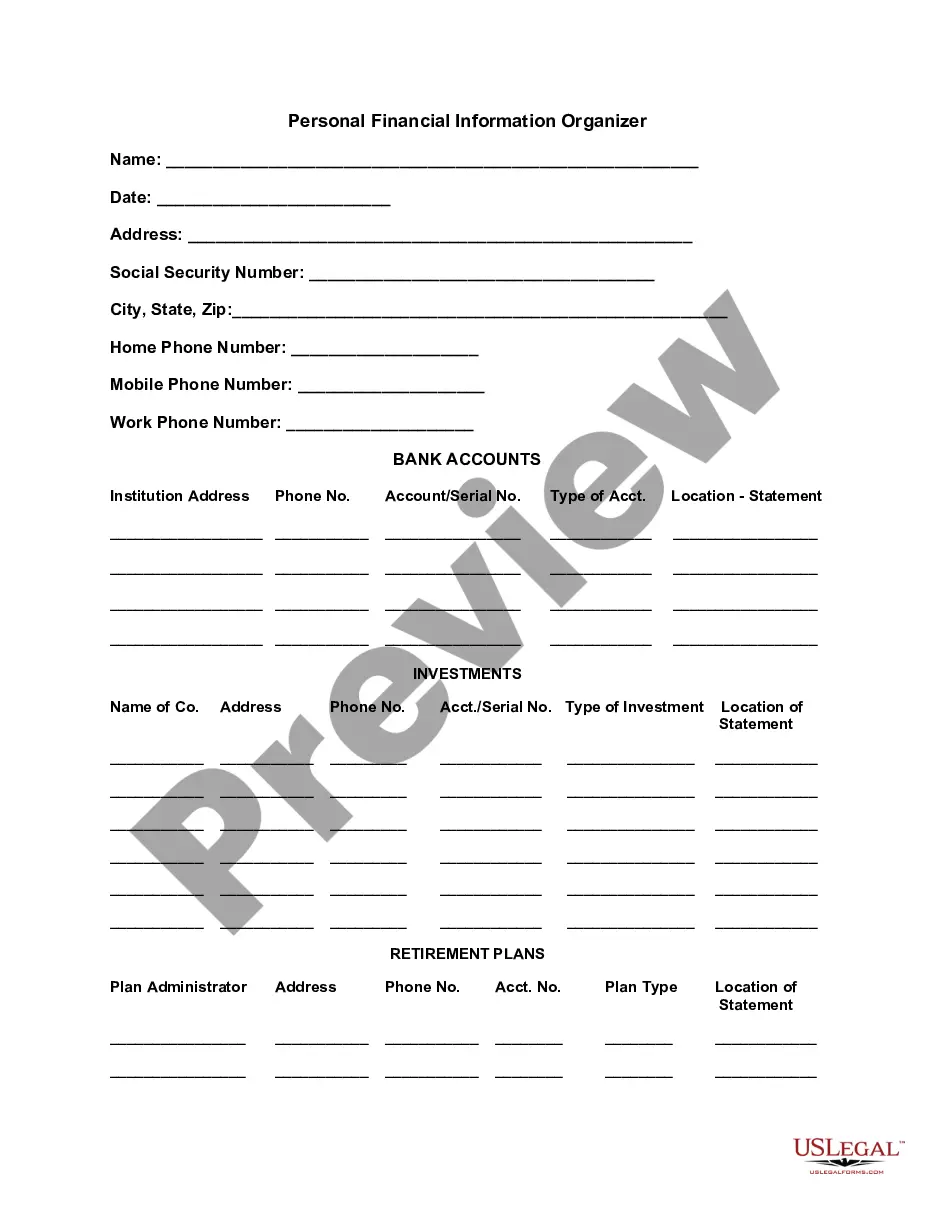
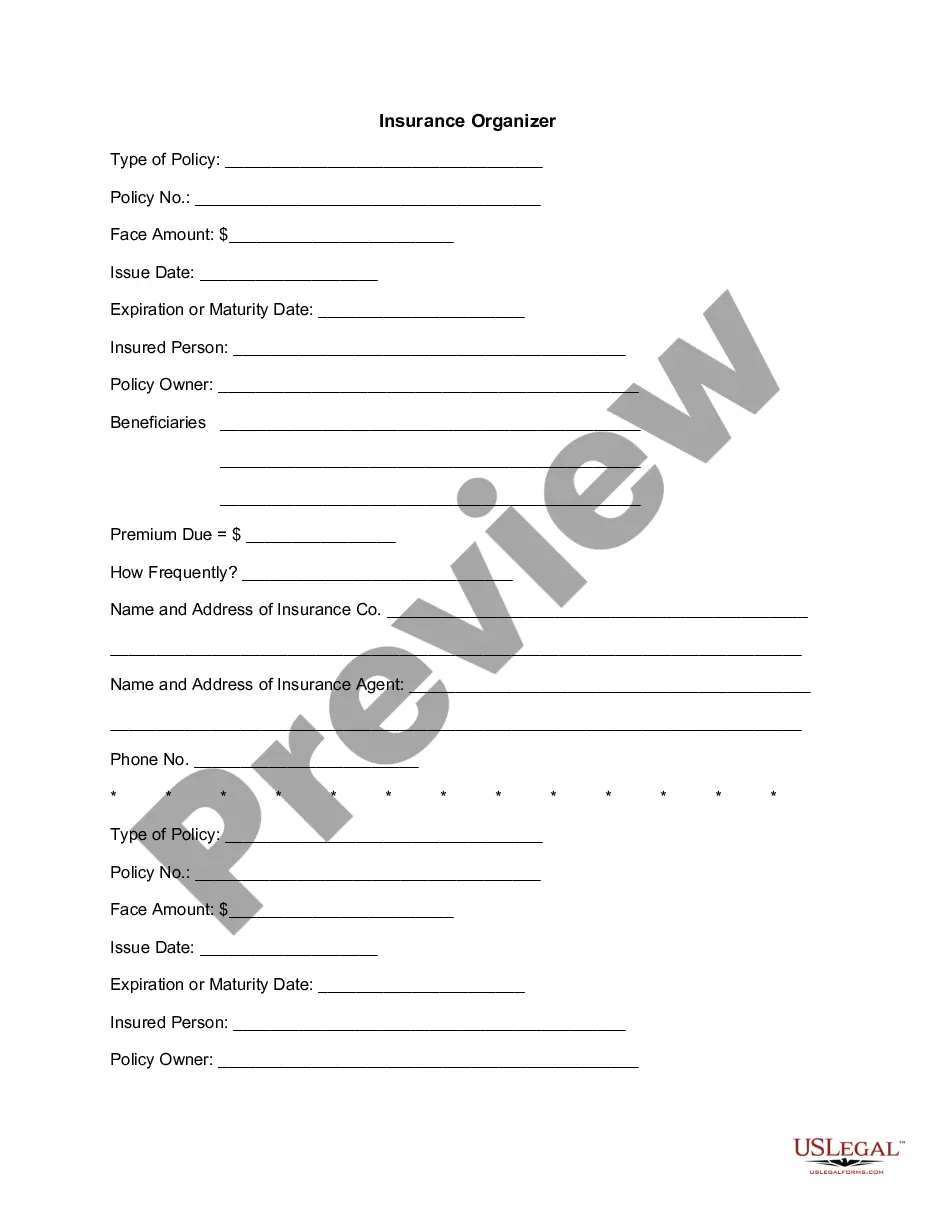
The New Jersey New State Resident Package includes essential legal documents designed to help you organize your affairs after moving to a new home state. This package is specifically tailored to meet the requirements of New Jersey residents and includes a Last Will and Testament, an Advance Healthcare Directive, a General Power of Attorney, and a New Resident Guide. Unlike other generic form packages, this one provides state-specific guidance and forms, ensuring you meet local legal standards.
Forms included in this package

Common use cases
This form package is particularly useful in several scenarios, including:
- When you have recently moved to New Jersey and need to establish your legal documents.
- If you want to make healthcare and financial decisions legally recognized in your new state.
- When you need guidance on registering as a new resident, obtaining identification, or transferring vehicle registrations.
Who can use this document
- New residents of New Jersey looking to establish legal documentation.
- Individuals interested in preparing their Last Will and Testament or healthcare directives.
- People needing a legal framework to empower someone to handle their financial affairs.
- Anyone seeking guidance on New Jersey residency requirements and regulations.
Completing these forms step by step
- Review all included forms to familiarize yourself with their content and purpose.
- Identify the necessary parties involved, such as agents for the Power of Attorney.
- Fill in the required information, ensuring accuracy and completeness.
- Have the forms signed in accordance with New Jersey legal requirements.
- Store the completed documents in a secure location, such as a safe deposit box.
Notarization details for included forms
Forms in this package typically do not require notarization unless required by local law. However, reviewing each document for specific instructions is essential to ensure you comply with New Jersey's legal standards.
Get your form ready online
Our built-in tools help you complete, sign, share, and store your documents in one place.
Make edits, fill in missing information, and update formatting in US Legal Forms—just like you would in MS Word.
Download a copy, print it, send it by email, or mail it via USPS—whatever works best for your next step.
Sign and collect signatures with our SignNow integration. Send to multiple recipients, set reminders, and more. Go Premium to unlock E-Sign.
If this form requires notarization, complete it online through a secure video call—no need to meet a notary in person or wait for an appointment.
We protect your documents and personal data by following strict security and privacy standards.

Make edits, fill in missing information, and update formatting in US Legal Forms—just like you would in MS Word.

Download a copy, print it, send it by email, or mail it via USPS—whatever works best for your next step.

Sign and collect signatures with our SignNow integration. Send to multiple recipients, set reminders, and more. Go Premium to unlock E-Sign.

If this form requires notarization, complete it online through a secure video call—no need to meet a notary in person or wait for an appointment.

We protect your documents and personal data by following strict security and privacy standards.
Mistakes to watch out for
- Failing to sign the forms in front of a witness or notary as required.
- Not updating forms if your circumstances change, such as a change in agent or healthcare preferences.
- Overlooking state-specific requirements that may differ from your previous residency.
Advantages of online completion
- Convenience: Download and complete your forms from the comfort of your home.
- Editability: Fill out forms digitally, allowing for easy corrections and updates.
- Reliability: Forms are drafted by licensed attorneys, ensuring they comply with state laws.
Quick recap
- The New Jersey New State Resident Package provides essential legal documents for new residents.
- The forms are tailored to meet New Jerseyâs specific legal requirements.
- Completing these forms ensures that your healthcare and financial preferences are legally recognized.
Looking for another form?
Form popularity
FAQ
Generally you are considered a resident if your domicile is that state, or (if your domicile is another state) you maintained a permanent place of abode in that state and spent more than 184 days there during the year. Most state tax authorities have a page explaining what exactly constitutes a resident in their state.
Where you live - This is the state that you consider your permanent home. This would include things like, your driver's license, your voting registration, where you have a home and where your car is registered.
Once you find a place to live in New Jersey, you can establish permanent residency by registering your vehicle in the state, getting a New Jersey driver's license and registering to vote.
Generally, you need to establish a physical presence in the state, an intent to stay there and financial independence. Then you need to prove those things to your college or university. Physical presence: Most states require you to live in the state for at least a full year before establishing residency.
If New Jersey is your domicile, you are considered a resident for New Jersey tax purposes, unless: 1.You did not spend more than 30 days in New Jersey. If New Jersey is not your domicile, you are only considered a resident if you maintain a permanent home and spend more than 183 days here.
If you are a nonresident and your income for the entire year was more than the filing threshold amount for your filing status, you must file a New Jersey nonresident tax return. You are a nonresident for tax purposes if: You did not maintain a "permanent" home in New Jersey; and.
A person who receives income from a New Jersey source while a nonresident, and whose income from all sources for the entire year exceeds $7,500 ($3,750 if filing status is married, filing separate return) must file a New Jersey nonresident return, even though the income from New Jersey sources reported for the period
Yes. You can file them separately. Although state returns can be e-filed with your federal return (or after your federal return has already been accepted), it's no longer possible to e-file state returns before the federal. They are taking this measure to add an extra layer of security to all e-filed state returns.