New Hampshire Employment or Job Termination Package
About this form package
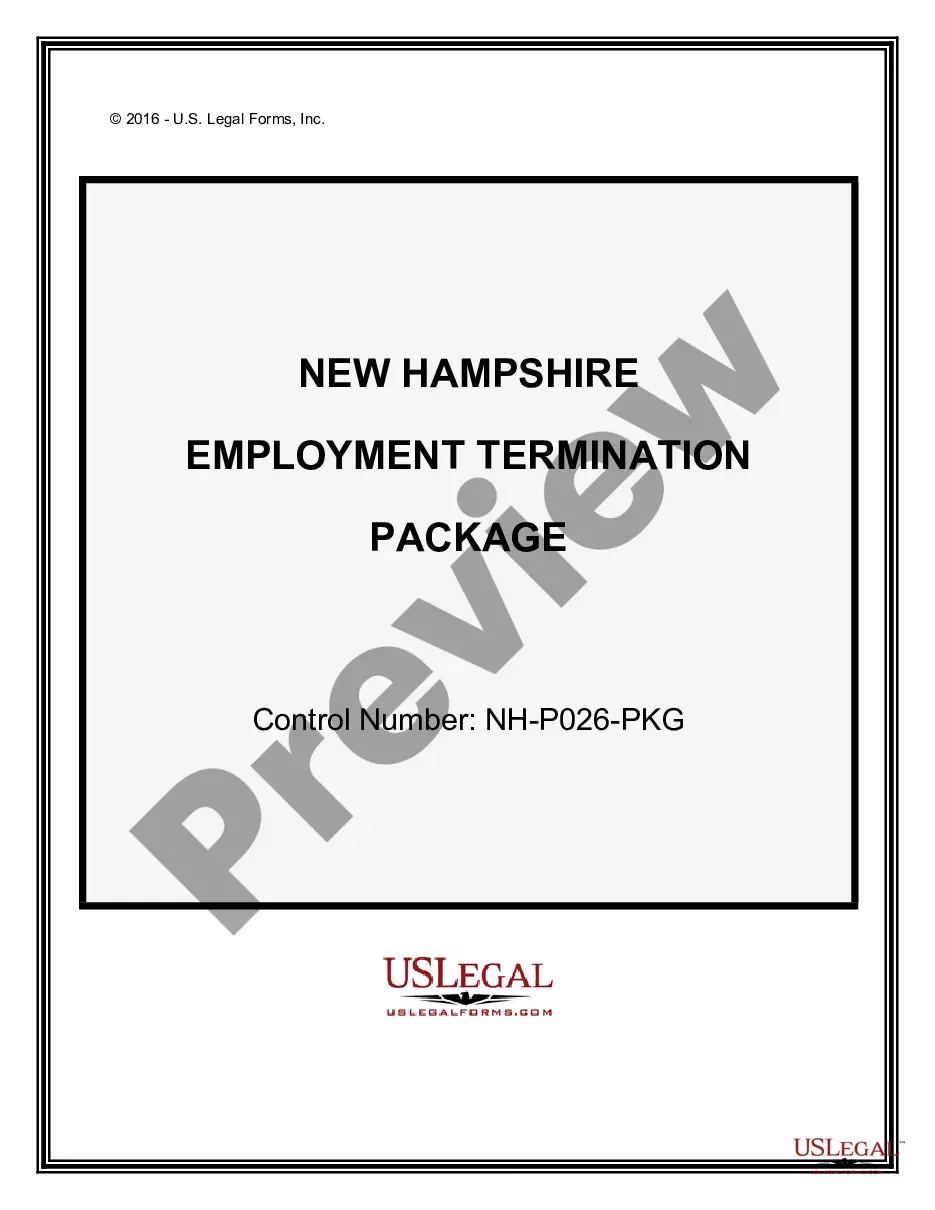
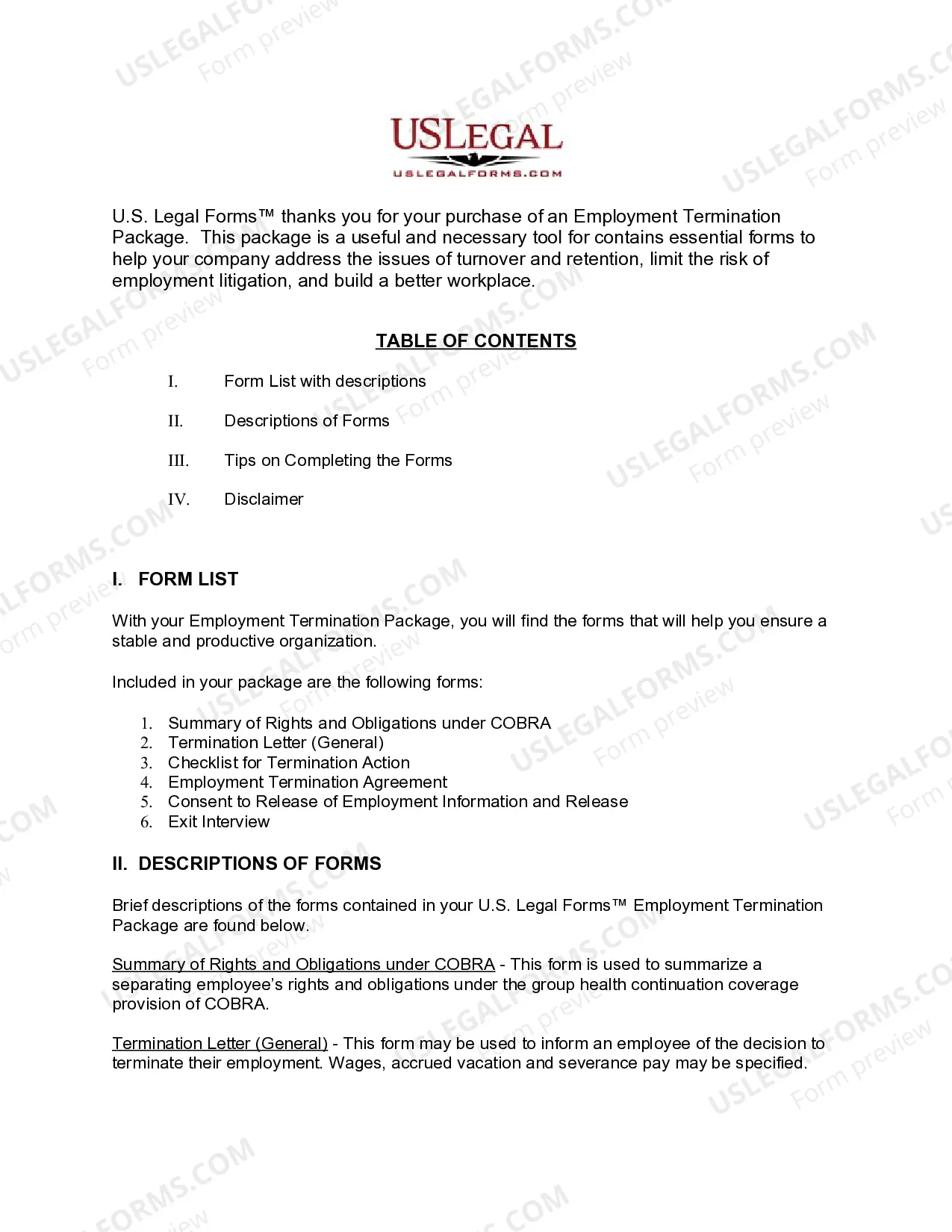
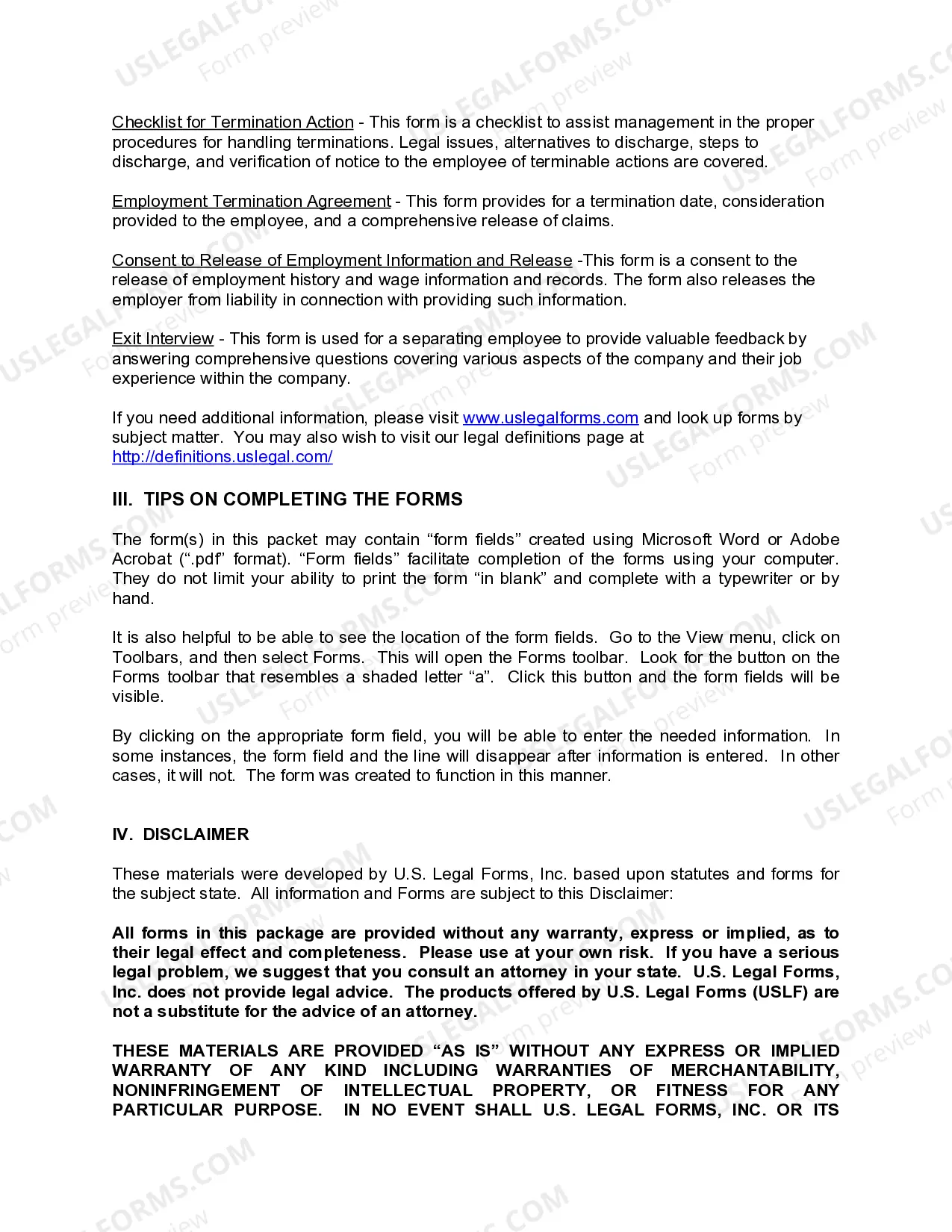
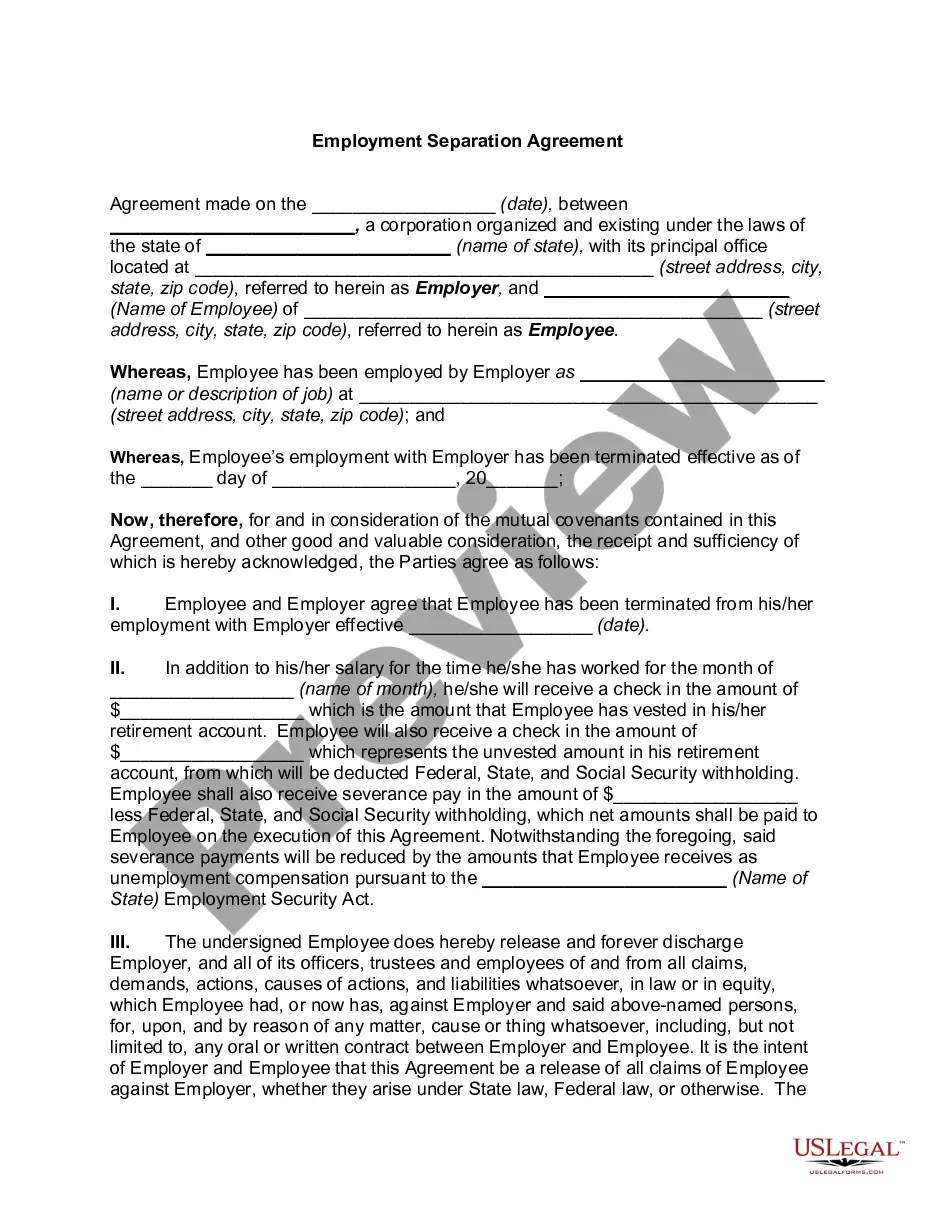
The New Hampshire Employment or Job Termination Package is designed to assist employers in managing employee terminations and enhancing workplace relations. This package includes essential forms to minimize legal risks associated with employee turnover, ensuring that employers address termination processes correctly and professionally. It stands out from other packages by offering a comprehensive set of documents tailored to meet state-specific requirements along with useful guidance for handling separations effectively.
Documents contained in this package

Common use cases
This package is suitable for use when an employer needs to terminate an employee's contract. Consider utilizing this package in the following scenarios:
- When preparing to hold a formal termination meeting with an employee.
- When documenting the reasons for termination to protect against potential legal disputes.
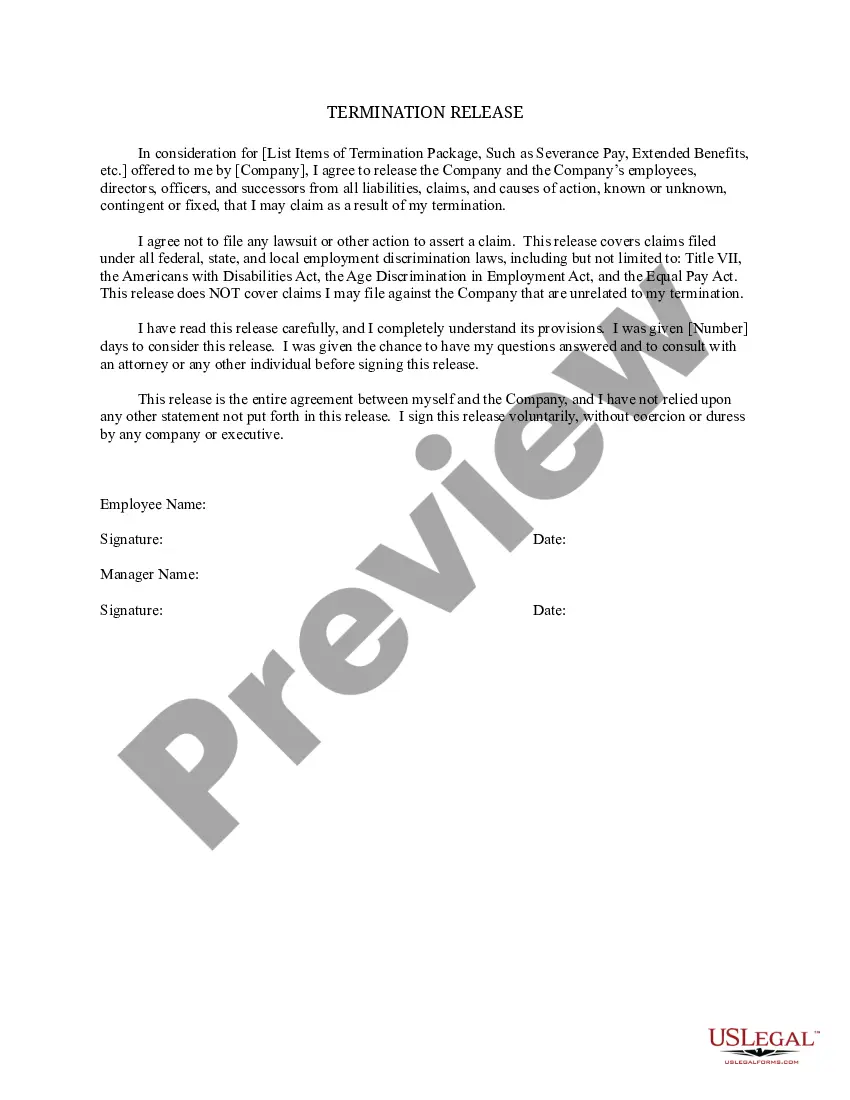
- When an employee is exiting the company and requires a comprehensive release of claims.
- When conducting exit interviews to gather feedback from departing employees.
Intended users of this form package
- Human resource professionals managing employee terminations.
- Business owners seeking to comply with legal requirements during employment separations.
- Managers responsible for ensuring smooth transitions when employing staff.
- Any organization looking to minimize risks related to employment lawsuits.
Steps to complete these forms
- Review all included forms carefully for understanding their purpose and requirements.
- Gather necessary details about the employee and termination circumstances.
- Complete each form with the required information, ensuring accuracy and consistency.
- Have all relevant parties review the documents before finalizing the termination.
- Maintain copies of all completed forms for your records.
Do forms in this package need to be notarized?
Forms in this package usually don’t need notarization, but certain jurisdictions or signing circumstances may require it. US Legal Forms provides a secure online notarization option powered by Notarize, accessible 24/7 from anywhere.
Get your form ready online
Our built-in tools help you complete, sign, share, and store your documents in one place.
Make edits, fill in missing information, and update formatting in US Legal Forms—just like you would in MS Word.
Download a copy, print it, send it by email, or mail it via USPS—whatever works best for your next step.
Sign and collect signatures with our SignNow integration. Send to multiple recipients, set reminders, and more. Go Premium to unlock E-Sign.
If this form requires notarization, complete it online through a secure video call—no need to meet a notary in person or wait for an appointment.
We protect your documents and personal data by following strict security and privacy standards.

Make edits, fill in missing information, and update formatting in US Legal Forms—just like you would in MS Word.

Download a copy, print it, send it by email, or mail it via USPS—whatever works best for your next step.

Sign and collect signatures with our SignNow integration. Send to multiple recipients, set reminders, and more. Go Premium to unlock E-Sign.

If this form requires notarization, complete it online through a secure video call—no need to meet a notary in person or wait for an appointment.

We protect your documents and personal data by following strict security and privacy standards.
Mistakes to watch out for
- Failing to document the reasons for termination clearly.
- Not following the proper procedures outlined in the Checklist for Termination Action.
- Neglecting to conduct and document an exit interview for feedback.
- Overlooking the completion of the Consent to Release of Employment Information form.
Benefits of using this package online
- Convenience of downloading forms immediately, saving time on researching legal documents.
- Editability of forms directly on a computer, allowing for easy customization.
- Reliability as the forms are drafted by licensed attorneys, ensuring legal compliance.
Legal use & context
- The forms included in this package are meant to assist employers in legally compliant termination processes.
- Using these forms correctly can help mitigate risks associated with wrongful termination claims.
- Consulting an attorney is advisable if unusual circumstances surround the termination.
Key takeaways
- This form package is essential for employers in New Hampshire managing employee terminations.
- It includes vital documents for navigating the termination process legally and effectively.
- Utilizing this package can enhance workplace stability and compliance with state laws.
Looking for another form?


Form popularity
FAQ
New Hampshire is an employment-at-will state. This means that an employer or employee may generally terminate an employment relationship at any time and for any reason.
Understand the components of a severance package. Wait before signing paperwork. Read everything carefully. Get an expert opinion. Understand your priorities. Negotiate for more than money. Decide on a reasonable request. Leverage your success.
This is because all Canadian employees are entitled to common law severance, which provides a range of around two and half months' severance up to thirty-six months' severance depending on several factors.
The severance pay offered is typically one to two weeks for every year worked, but can be more.The general practice is to try to get four weeks of severance pay for each year worked. Middle managers and executives usually receive a higher amount. Some executives, for example, may receive pay for more than a year.
If severance pay does extend the employment relationship, however, unemployment benefits may not be available until the severance ends. For example, if you receive a lump sum amount of severance on your last day of work, you may apply for unemployment.
A severance package may include compensation or payments based on years of service, payment for unused vacation time or sick leave, insurance benefits, bonus payments, or stock options. There also may be an offer of assistance in finding a new job called outplacement services.
At ninety days of employment, the employer must either give one weeks' notice of termination or pay one weeks' wages as severance pay. At one year of service, the employee is entitled to two weeks' notice or pay. Each additional year of service adds an extra week or notice or pay up to a maximum of eight weeks.
Separation pay (including severance, vacation, holiday, sick, bonus, etc.), is disqualifying in New Hampshire. You can not be paid unemployment benefits for a week in which you received or expect to receive a week of separation pay.
The number of completed years of employment; and. the number of completed months of employment divided by 12 for a year that is not completed.