North Dakota New Resident Guide
Overview of this form
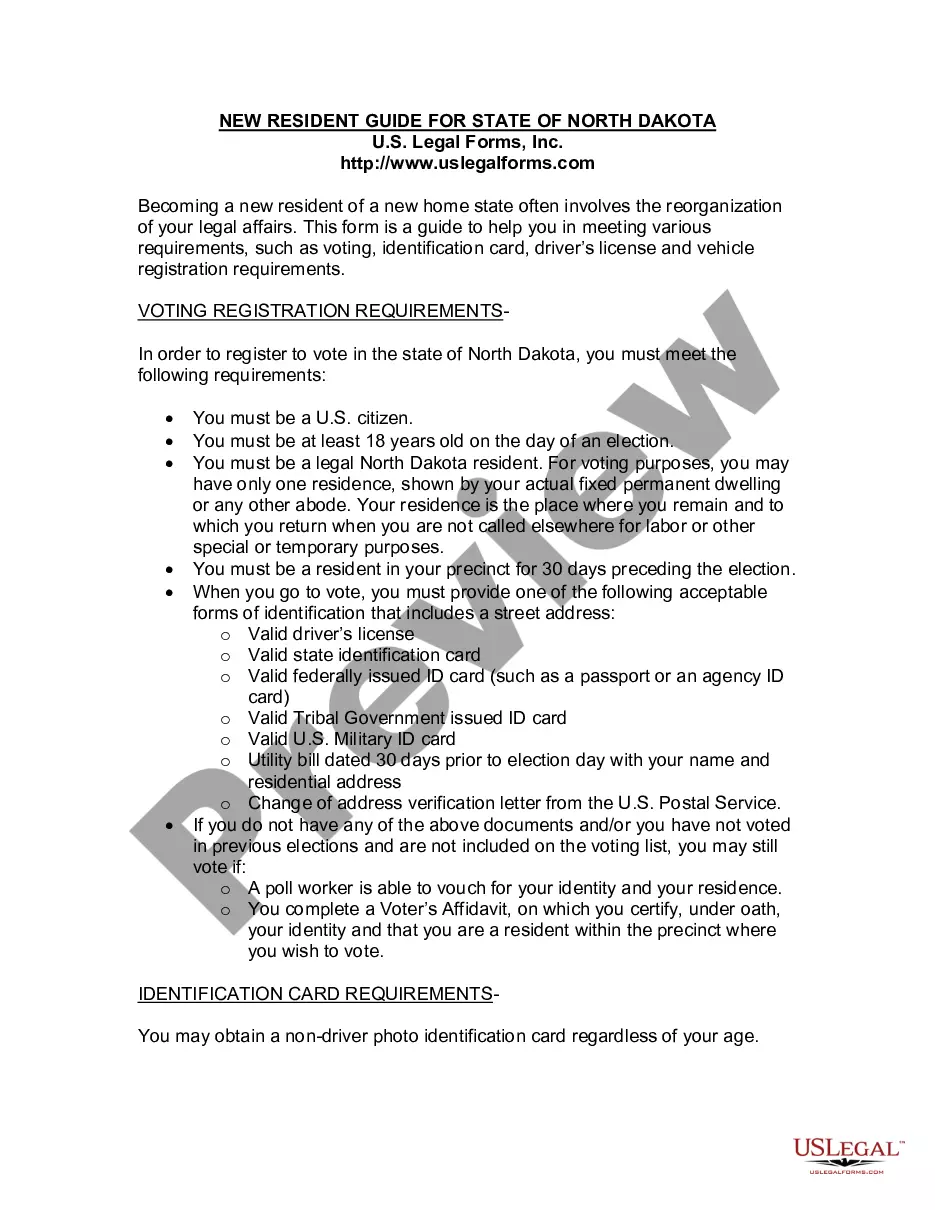
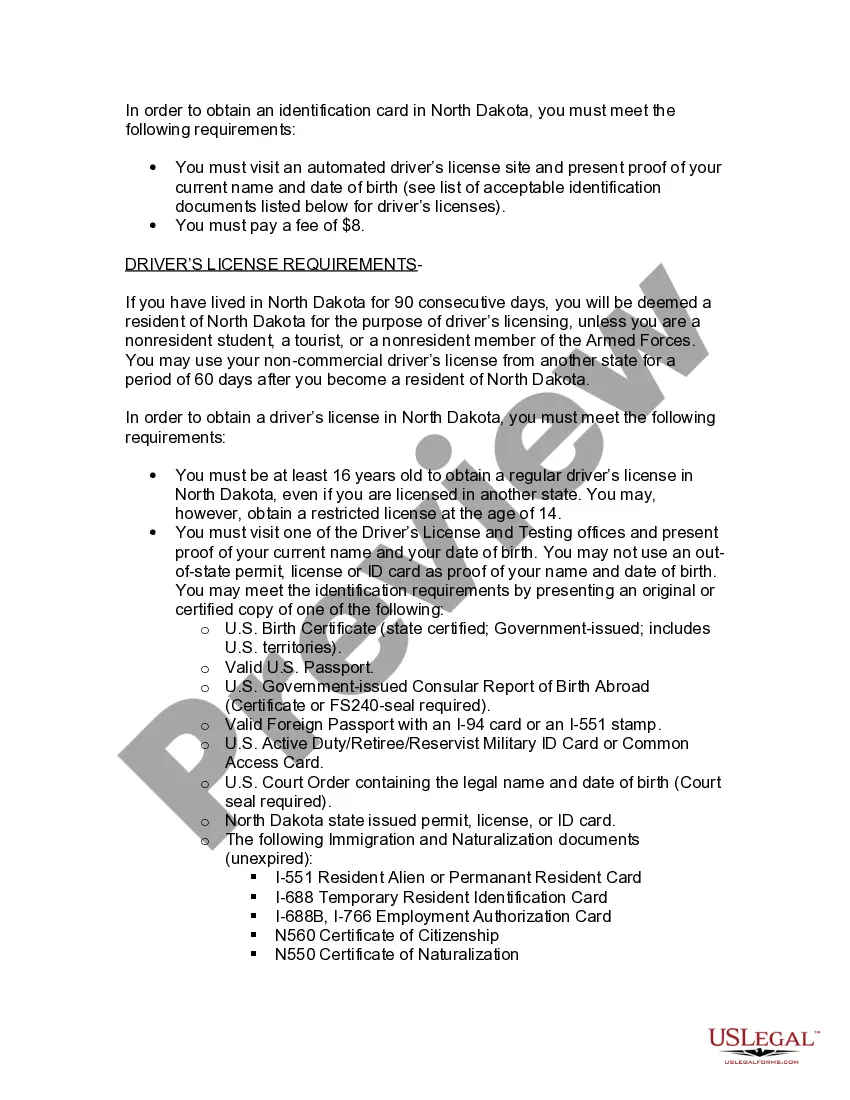
The New Resident Guide is an informational resource for individuals relocating to a new state. It outlines essential requirements such as voter registration, identification cards, driverâs licenses, and vehicle titling and registration. This guide serves as a comprehensive tool to assist new residents in navigating legal obligations, ensuring a smooth transition into their new community.
Key parts of this document
- Voting registration requirements, including eligibility criteria and acceptable identification.
- Identification card requirements necessary for obtaining a state ID.
- Driver's license requirements for new residents looking to drive legally.
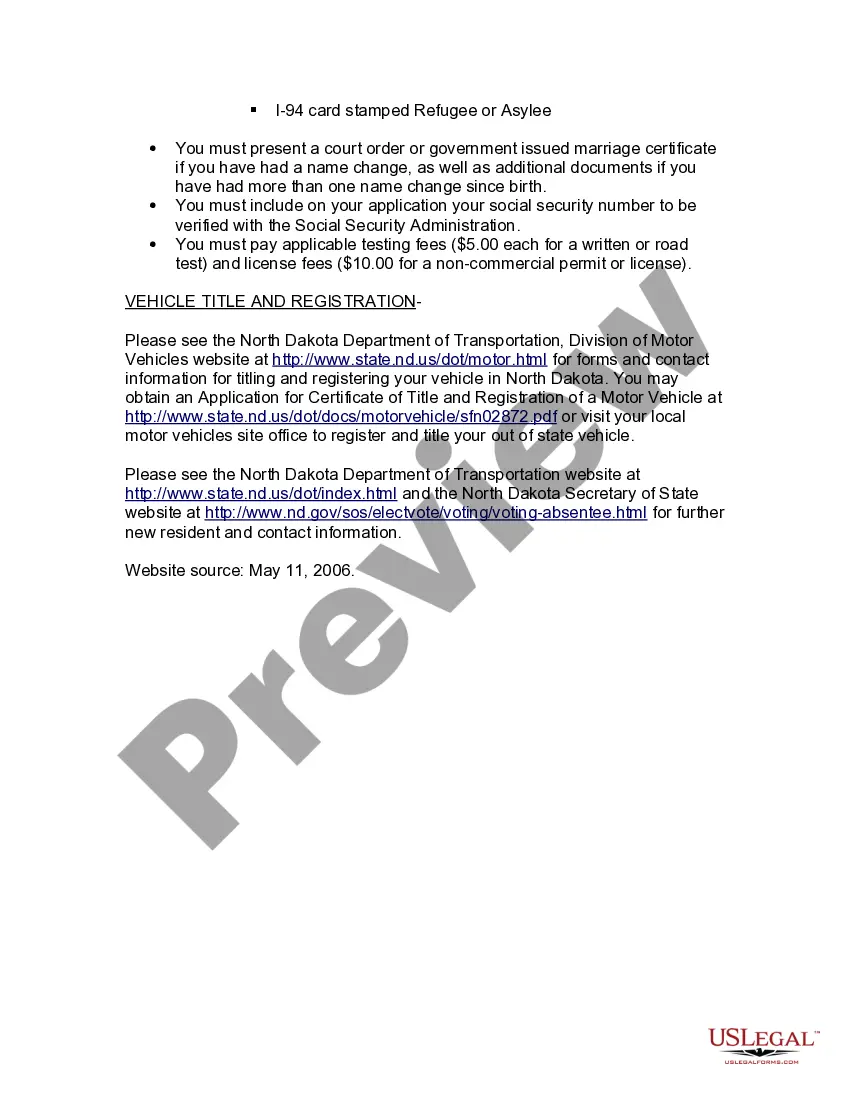
- Vehicle title and registration information for properly registering a vehicle in the new state.
- References to relevant state resources for further assistance.
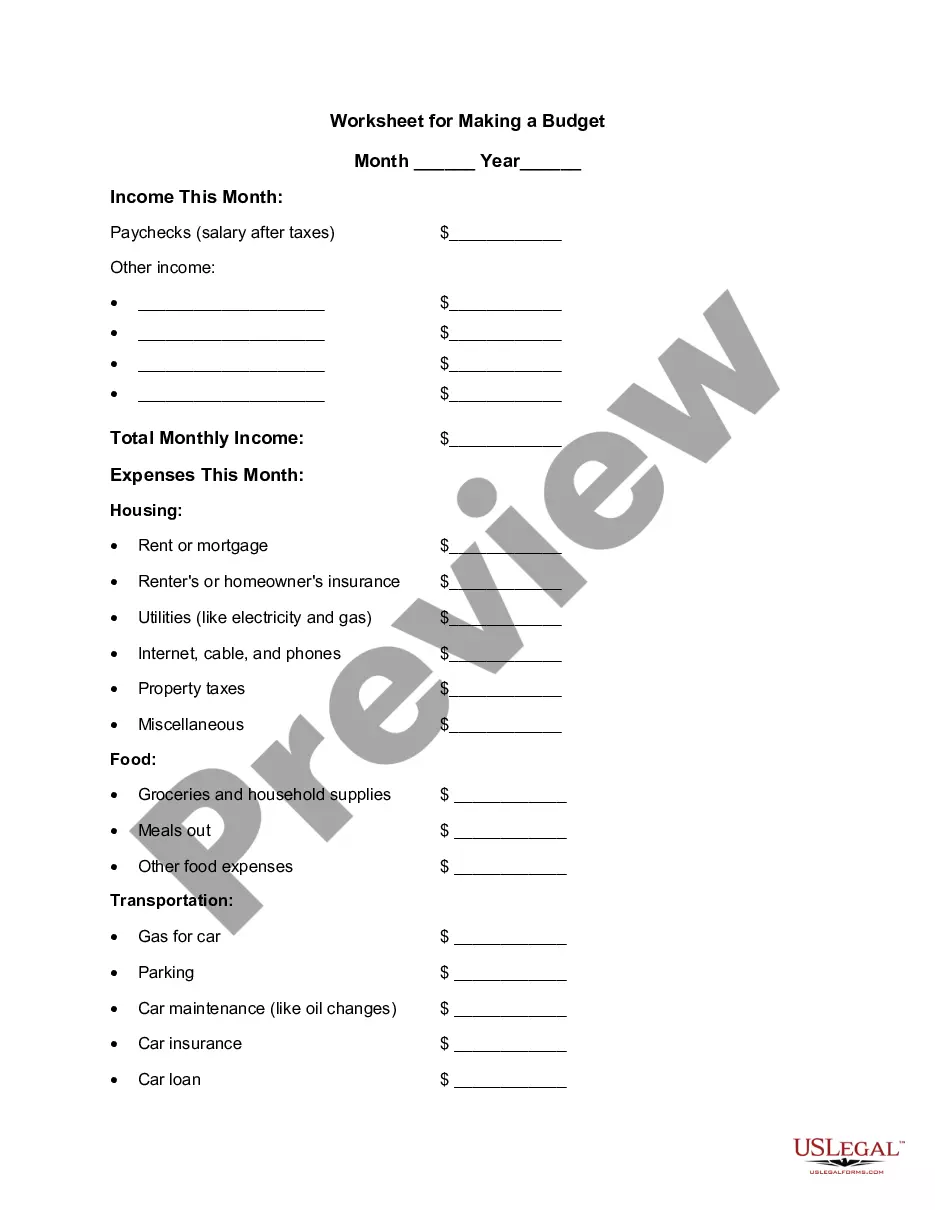
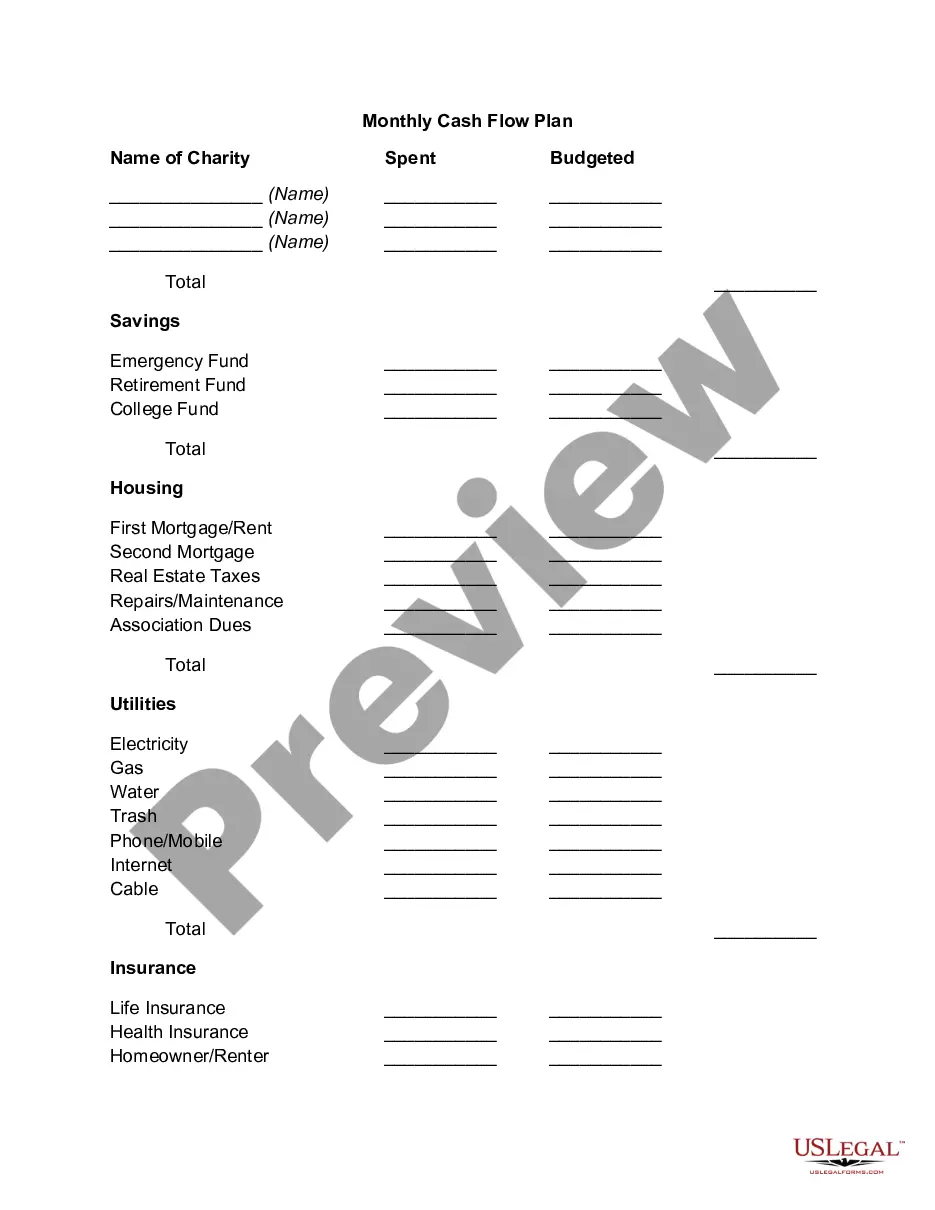
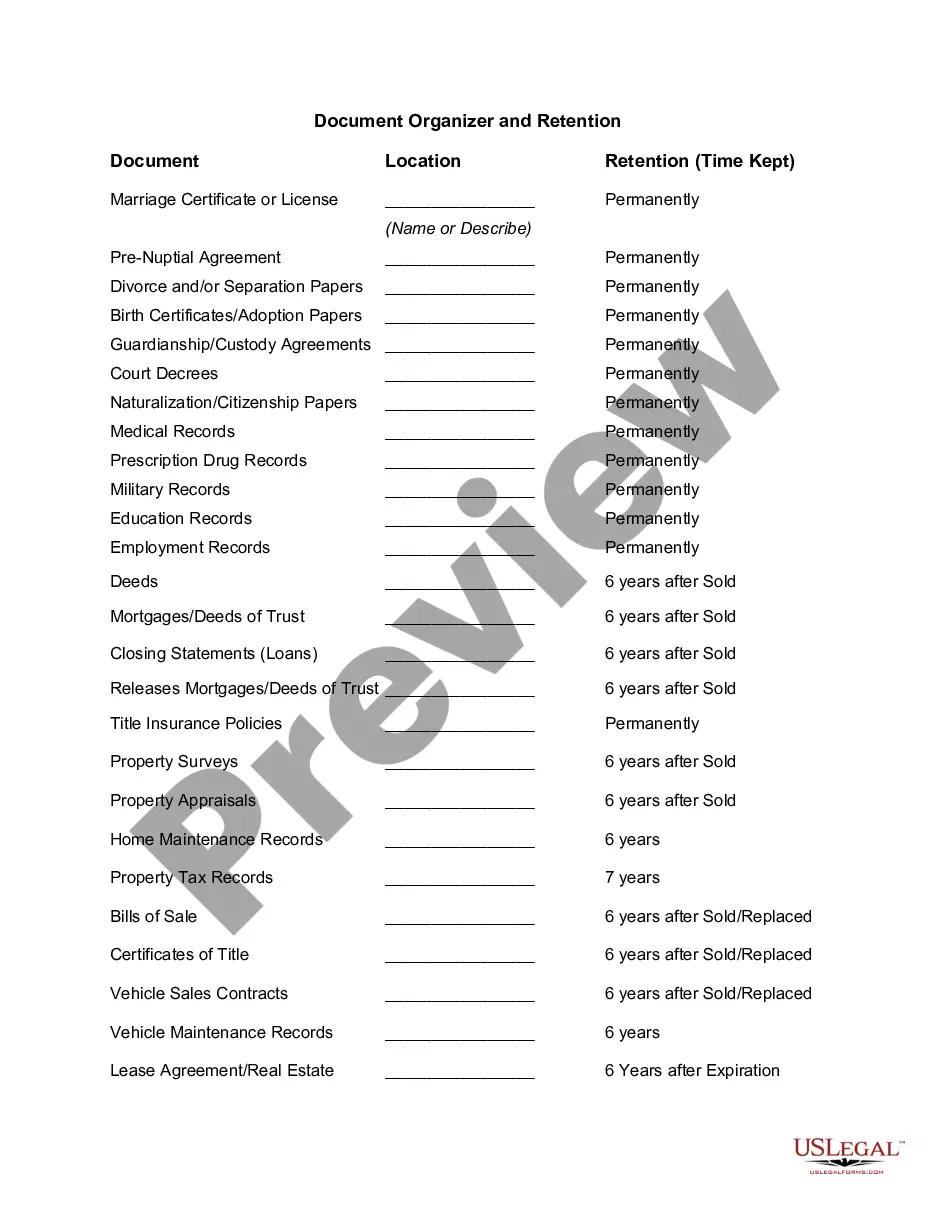
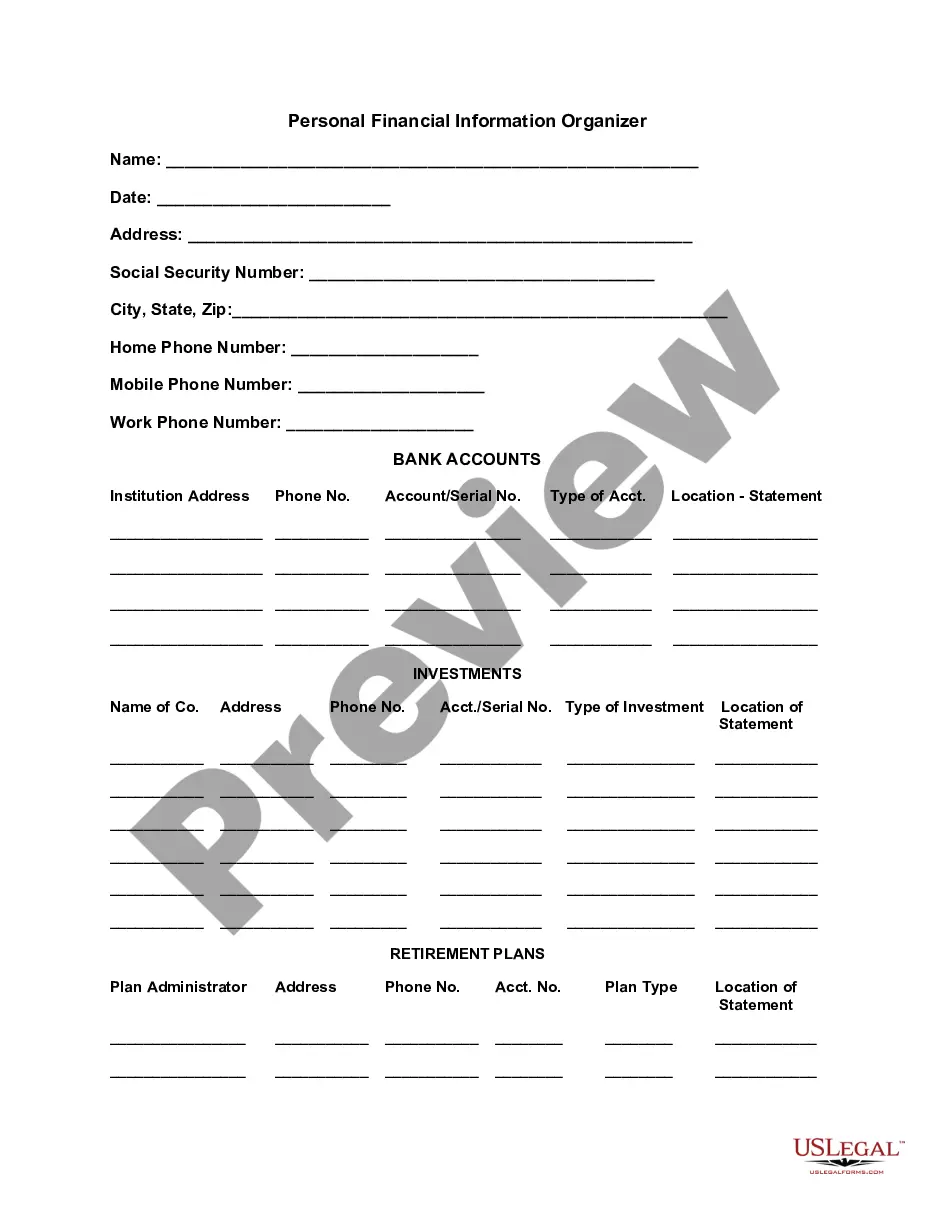
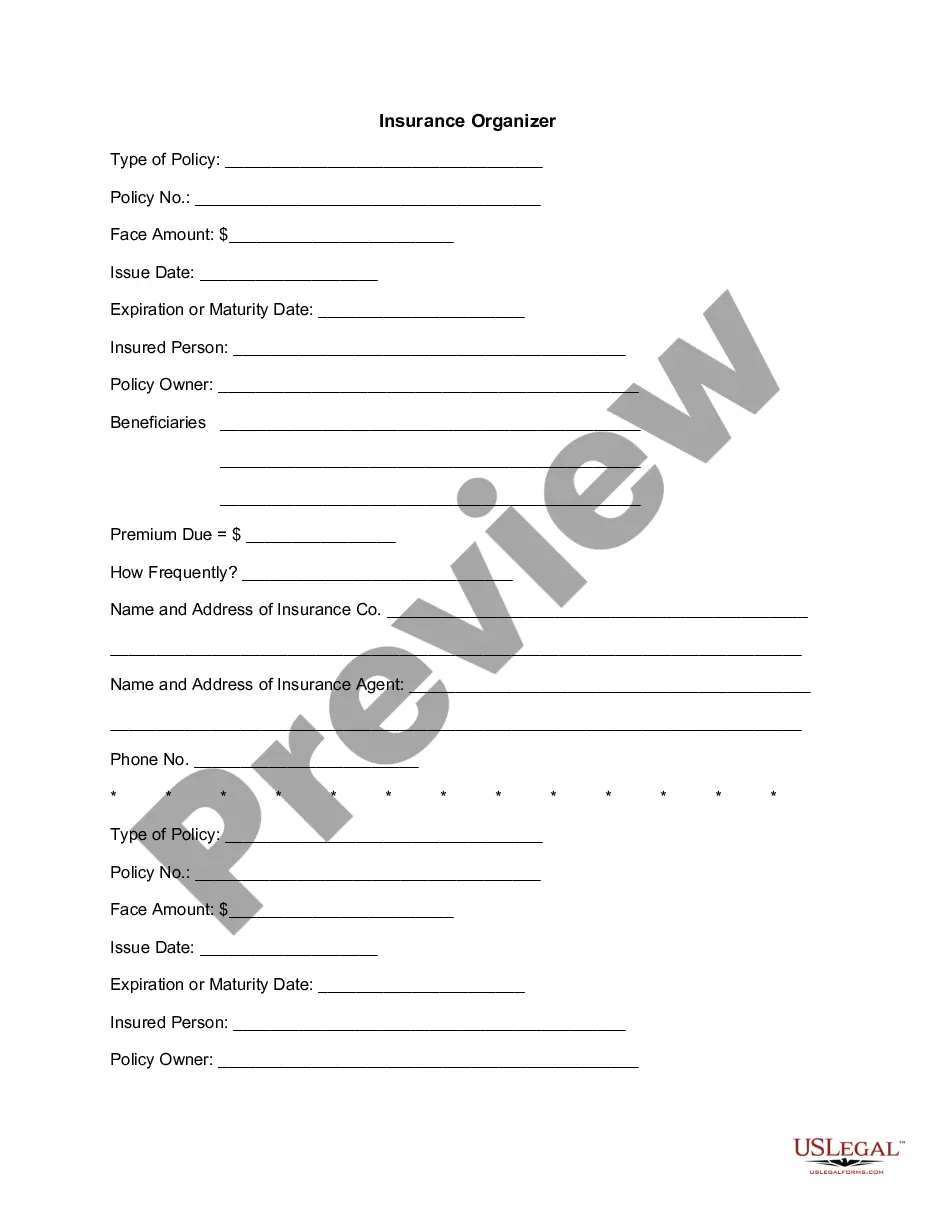
Situations where this form applies
This form is useful when moving to a new state and needing to establish residency. It is applicable when you are preparing to register to vote, obtain a driverâs license, or title and register your vehicle. Utilizing this guide will help ensure that you comply with all local laws and regulations associated with your new residency.
Who needs this form
This form is meant for:
- Individuals relocating to a new state.
- New residents who need to register to vote.
- People applying for state ID or driverâs license in their new state.
- Anyone needing guidance on vehicle title and registration processes.
Completing this form step by step
- Read through the entire guide to understand the requirements for your new state.
- Gather necessary documents for voter registration, such as identification and proof of residency.
- Determine your eligibility for a state ID or driverâs license and locate your nearest service office.
- Complete the vehicle registration forms if bringing a car from another state.
- Submit all applications and fees as directed in the guide.
Notarization guidance
This form does not typically require notarization unless specified by local law. Ensure to review any additional documentation requirements for specific processes like voter registration or vehicle titles in your new state.
Get your form ready online
Our built-in tools help you complete, sign, share, and store your documents in one place.
Make edits, fill in missing information, and update formatting in US Legal Forms—just like you would in MS Word.
Download a copy, print it, send it by email, or mail it via USPS—whatever works best for your next step.
Sign and collect signatures with our SignNow integration. Send to multiple recipients, set reminders, and more. Go Premium to unlock E-Sign.
If this form requires notarization, complete it online through a secure video call—no need to meet a notary in person or wait for an appointment.
We protect your documents and personal data by following strict security and privacy standards.
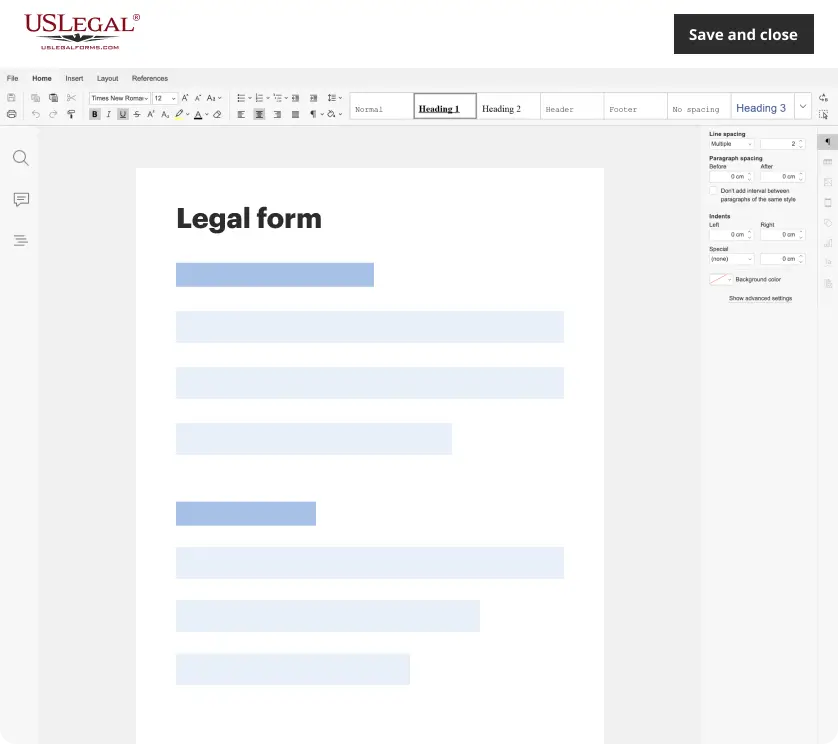
Make edits, fill in missing information, and update formatting in US Legal Forms—just like you would in MS Word.
Download a copy, print it, send it by email, or mail it via USPS—whatever works best for your next step.
Sign and collect signatures with our SignNow integration. Send to multiple recipients, set reminders, and more. Go Premium to unlock E-Sign.

If this form requires notarization, complete it online through a secure video call—no need to meet a notary in person or wait for an appointment.
We protect your documents and personal data by following strict security and privacy standards.
Mistakes to watch out for
- Failing to gather appropriate identification documents prior to visiting registration offices.
- Not verifying residency duration before attempting to register to vote.
- Overlooking application fees associated with obtaining a state ID or vehicle registration.
Benefits of using this form online
- Immediate access to the latest legal requirements and processes for new residents.
- Editability of the guide based on personal circumstances and needs.
- Convenience of obtaining necessary legal forms without physical visits to law offices.
Main things to remember
- The New Resident Guide is essential for understanding legal requirements in a new state.
- It provides clarity on voter registration, identification, and vehicle registration processes.
- Be aware of state-specific requirements to ensure compliance and avoid delays.
Looking for another form?

Form popularity
FAQ
A completed Application for Certificate of Title and Registration of a vehicle. A valid driver's license. A signed copy of the vehicle's title. Proof of car insurance.
U.S. birth certificate (state certified; Government issued) Valid, unexpired U.S. passport. Report of Birth Abroad issued by the U.S. Department of State. Certificate of Naturalization. Certificate of Citizenship. Valid, unexpired Permanent Resident Card.
In simple situations where you own the vehicle outright and wish to transfer ownership to someone else, all you must do is complete a title certificate. Once you have filled out and signed the certificate, the buyer or recipient can take the title to a local DMV office and officially transfer ownership.
U.S. birth certificate (state certified; Government issued) Valid, unexpired U.S. passport. Report of Birth Abroad issued by the U.S. Department of State. Certificate of Naturalization. Certificate of Citizenship. Valid, unexpired Permanent Resident Card.
The fee for a REAL ID-compliant driver license is the same as the fee for a non-compliant license. If you are renewing and keeping a non-compliant credential, it is $15; if you are renewing and upgrading to a REAL ID-compliant credential, it is $15.
On the front of the title, near the middle, the seller must write in the current odometer reading on the vehicle. Near the bottom, the seller must fill in the following information on the appropriate lines: Date the vehicle was sold, and their printed name and signed name (which should be written on the same line).
You will be asked to bring two proofs of residency (utility bills, bank statements, etc.); proof of identity and legal residence in the United States (a birth certificate, U.S. passport or permanent resident card); and a Social Security card (not just the number).
Bring your current, valid driver's license. Either take and pass a vision test on-site or bring a certificate of vision from an eye physician. The certificate must not be older than six months. Pay the required $15 driver's license renewal fee.
North Dakota income tax law defines a resident as an individual who either (1) is domiciled in North Dakota or (2) is not domiciled in North Dakota but maintains a permanent place of abode in North Dakota and spends more than seven months (which is equal to 210 days) of the tax year in North Dakota.