North Dakota Non-Marital Cohabitation Living Together Agreement
Overview of this form
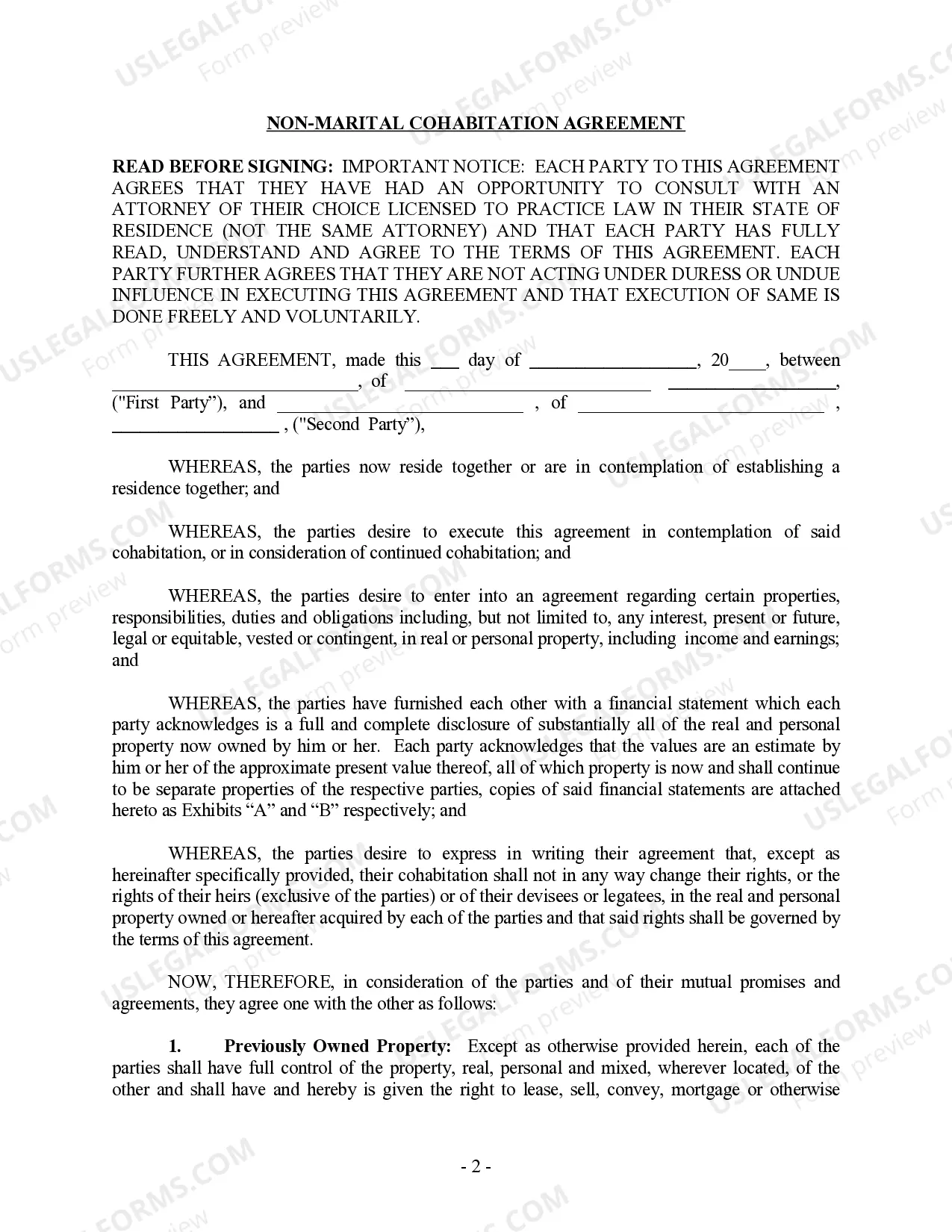
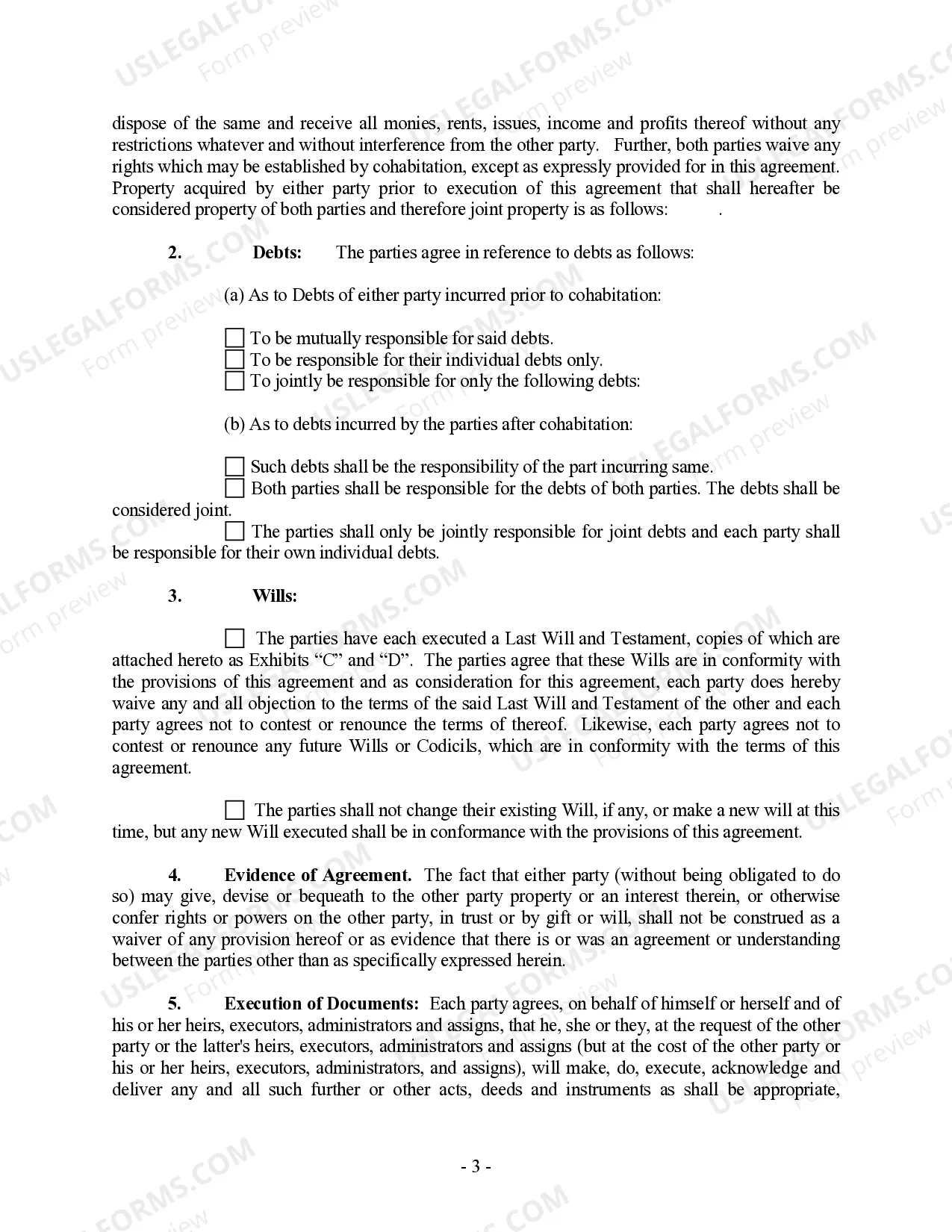
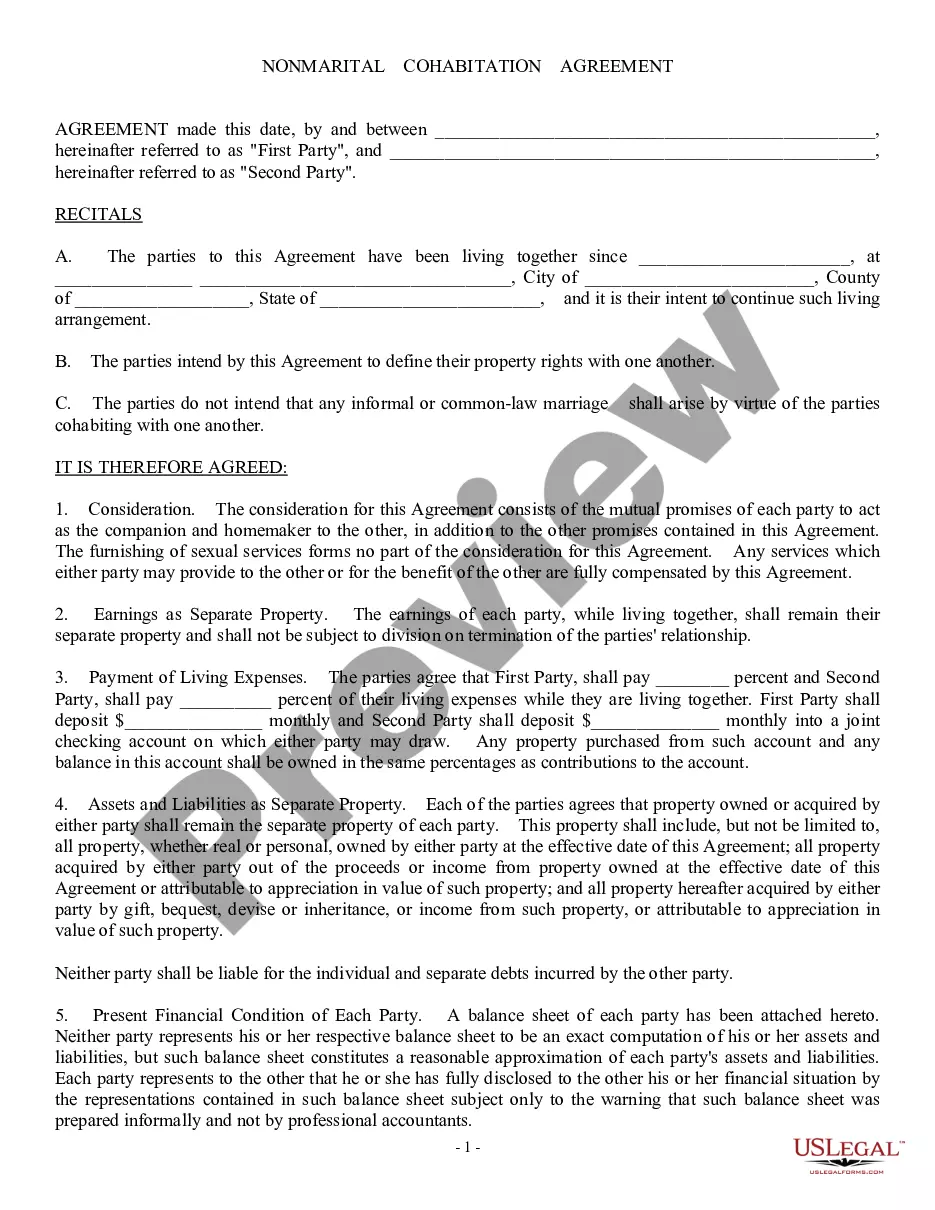
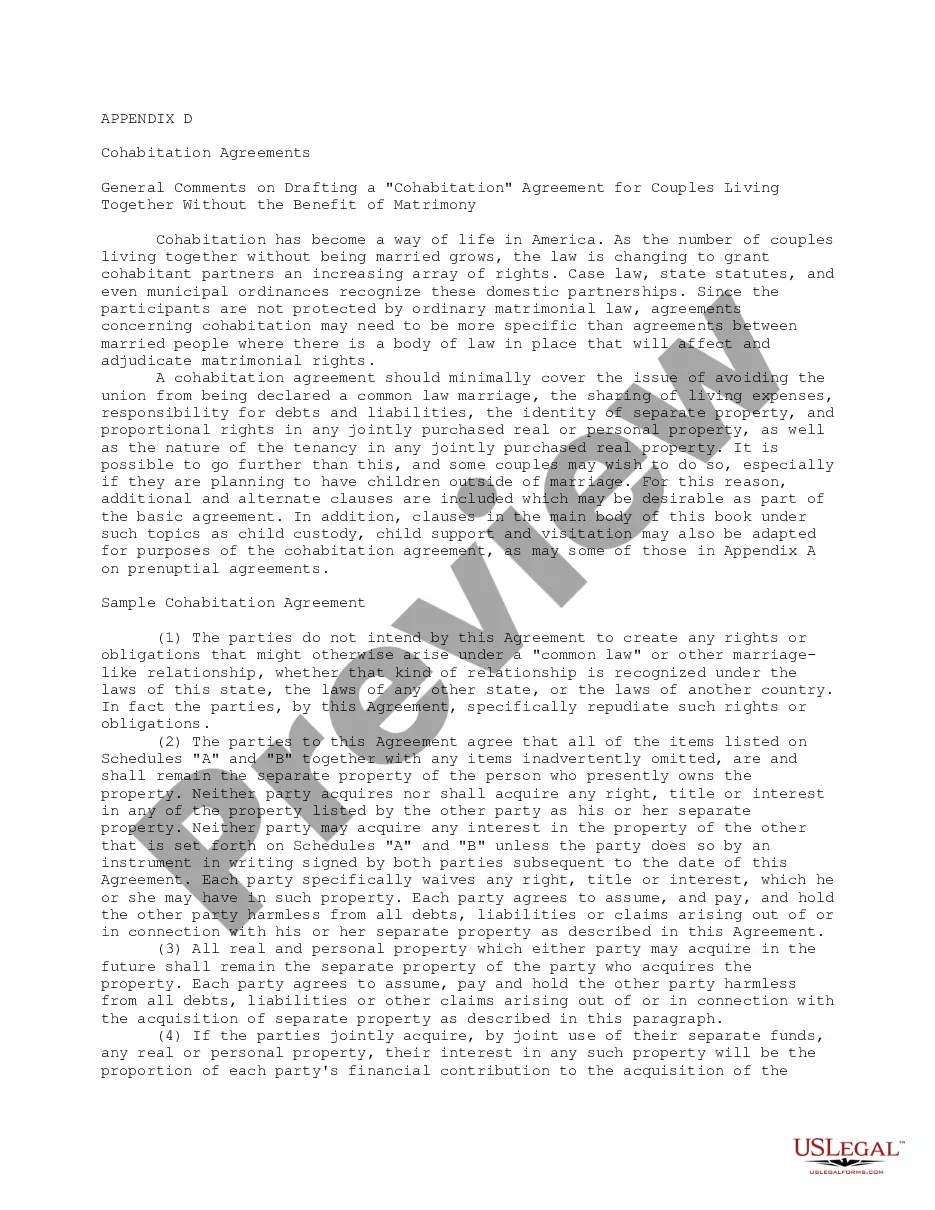
The Non-Marital Cohabitation Living Together Agreement is a legal document designed for couples who live together but are not married. This agreement outlines the rights and responsibilities of each party in terms of shared expenses, property ownership, and other important matters. Its purpose is to prevent disputes and clarify expectations, distinguishing it from marriage contracts or divorce agreements, which focus on different legal relationships.
Main sections of this form
- Identification of the parties involved and their respective financial disclosures.
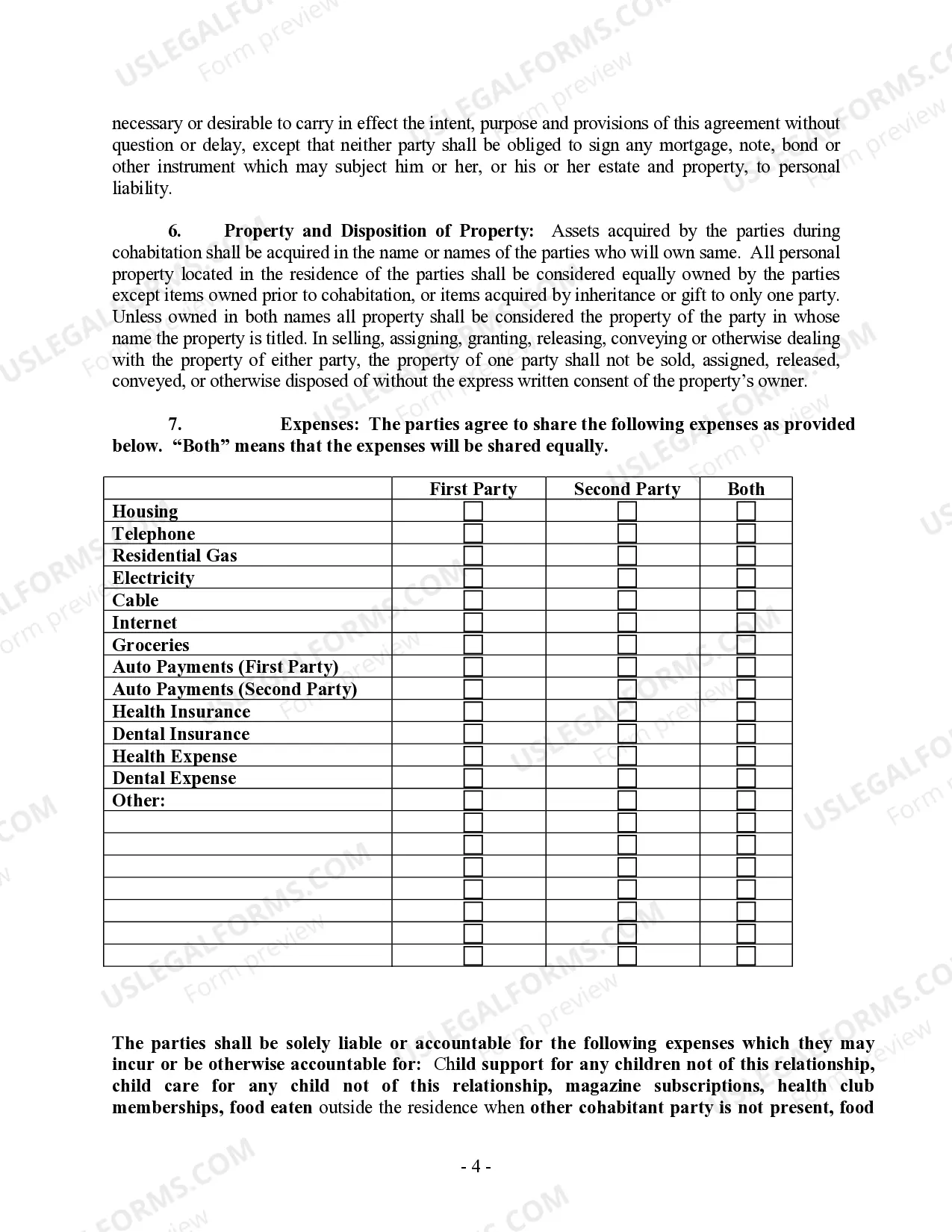
- Provisions for shared and individual expenses including rent, utilities, and household supplies.
- Ownership of property and assets acquired during cohabitation, specifying joint and separate properties.
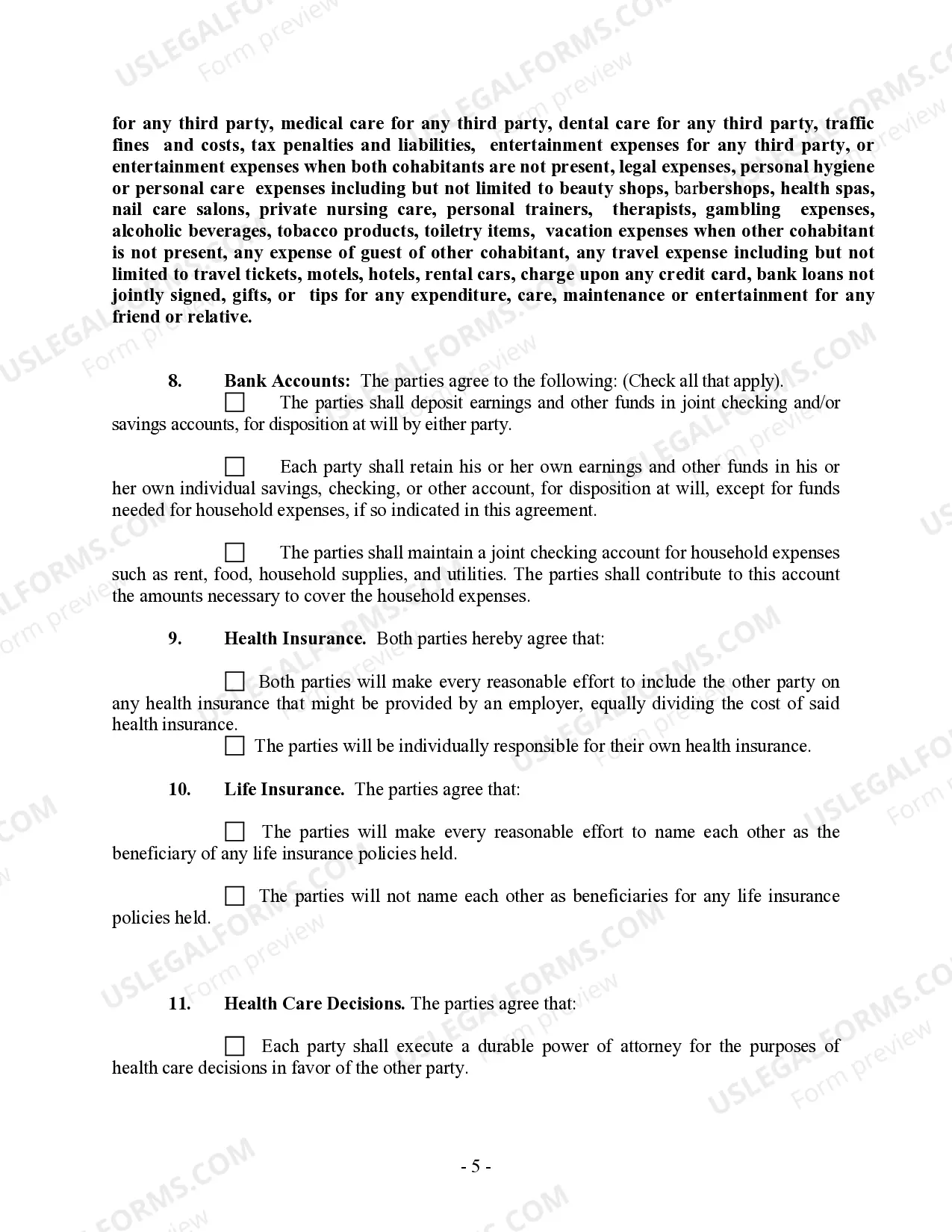
- Health care decision-making clauses, including durable power of attorney rights.
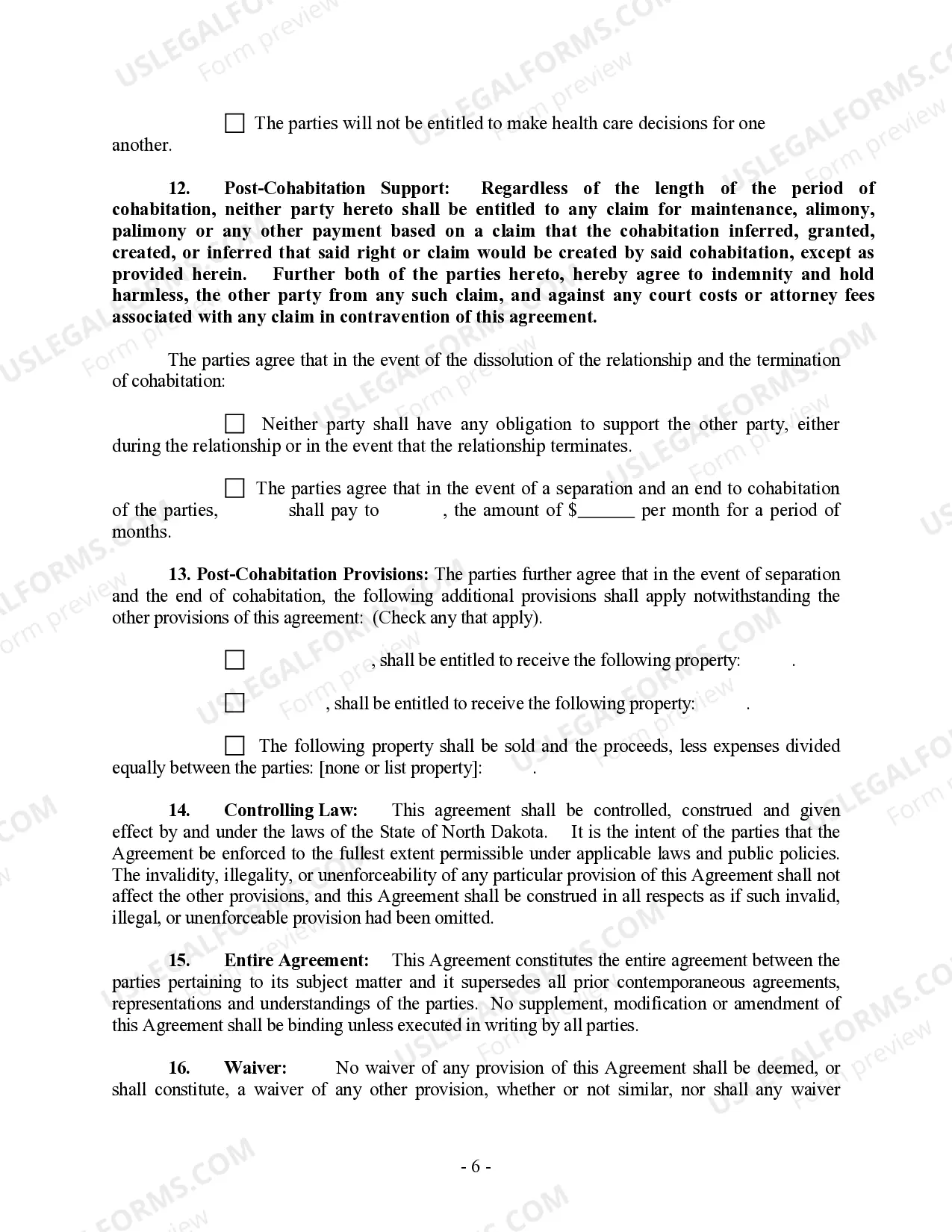
- Terms relating to potential post-cohabitation support obligations.
- Details on how debts will be handled during and after the relationship.

When to use this form
This form should be used when two individuals decide to live together in a non-marital relationship. It is beneficial for couples who want to set clear expectations regarding financial responsibilities, asset ownership, and other legal rights, thereby minimizing potential conflicts that may arise from cohabitation. This agreement is particularly valuable when one or both parties have significant assets, debts, or children from previous relationships.
Who this form is for
- Couples planning to live together without getting married.
- Individuals who want to protect their assets and clarify financial obligations.
- People who wish to formalize their living arrangement to avoid potential disputes in the future.
- Partners with differing financial situations or expectations.
Instructions for completing this form
- Identify the names and addresses of both parties.
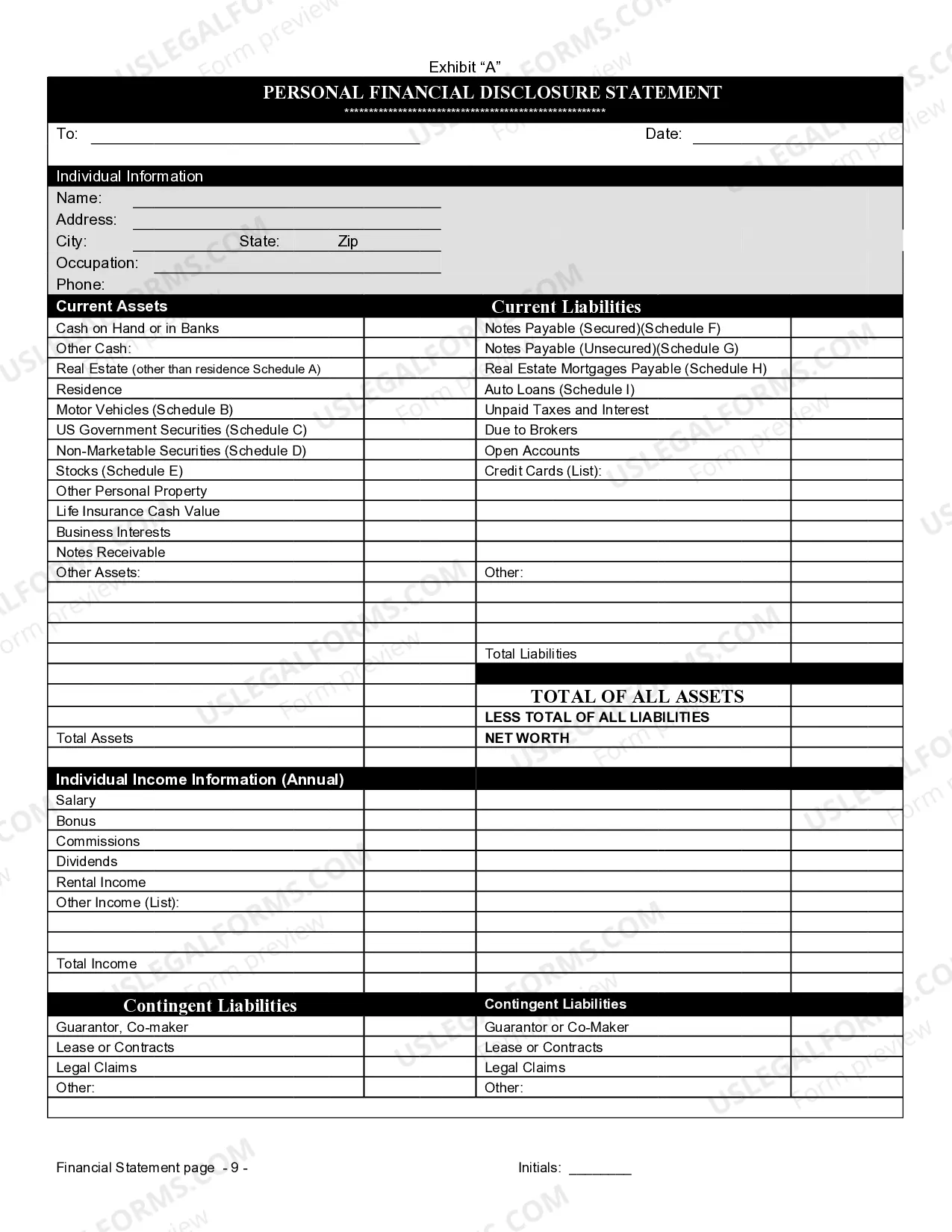
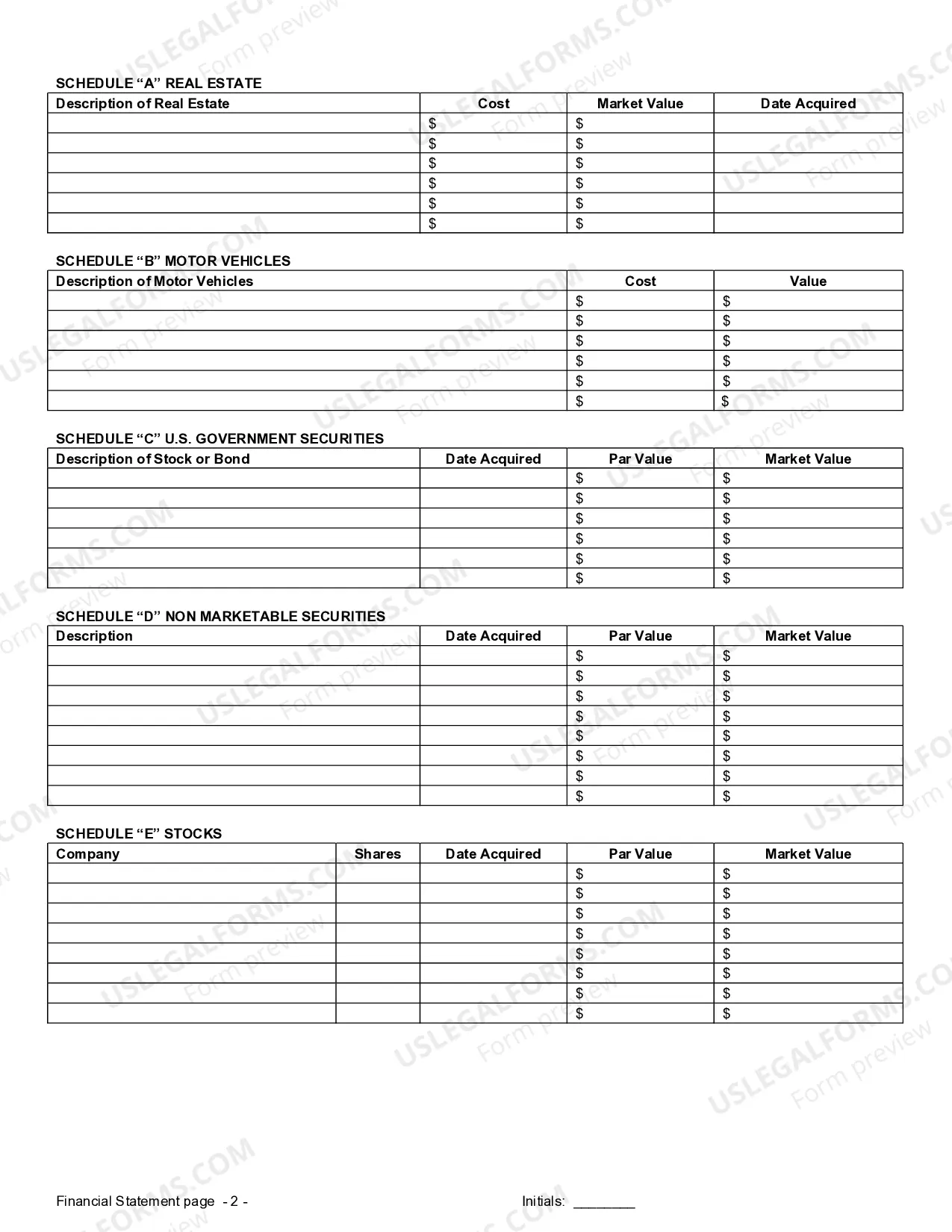
- Disclose financial information by completing the financial statements attached as exhibits.
- Define shared expenses and specify how these will be split.
- Clearly identify property ownership and any joint assets.
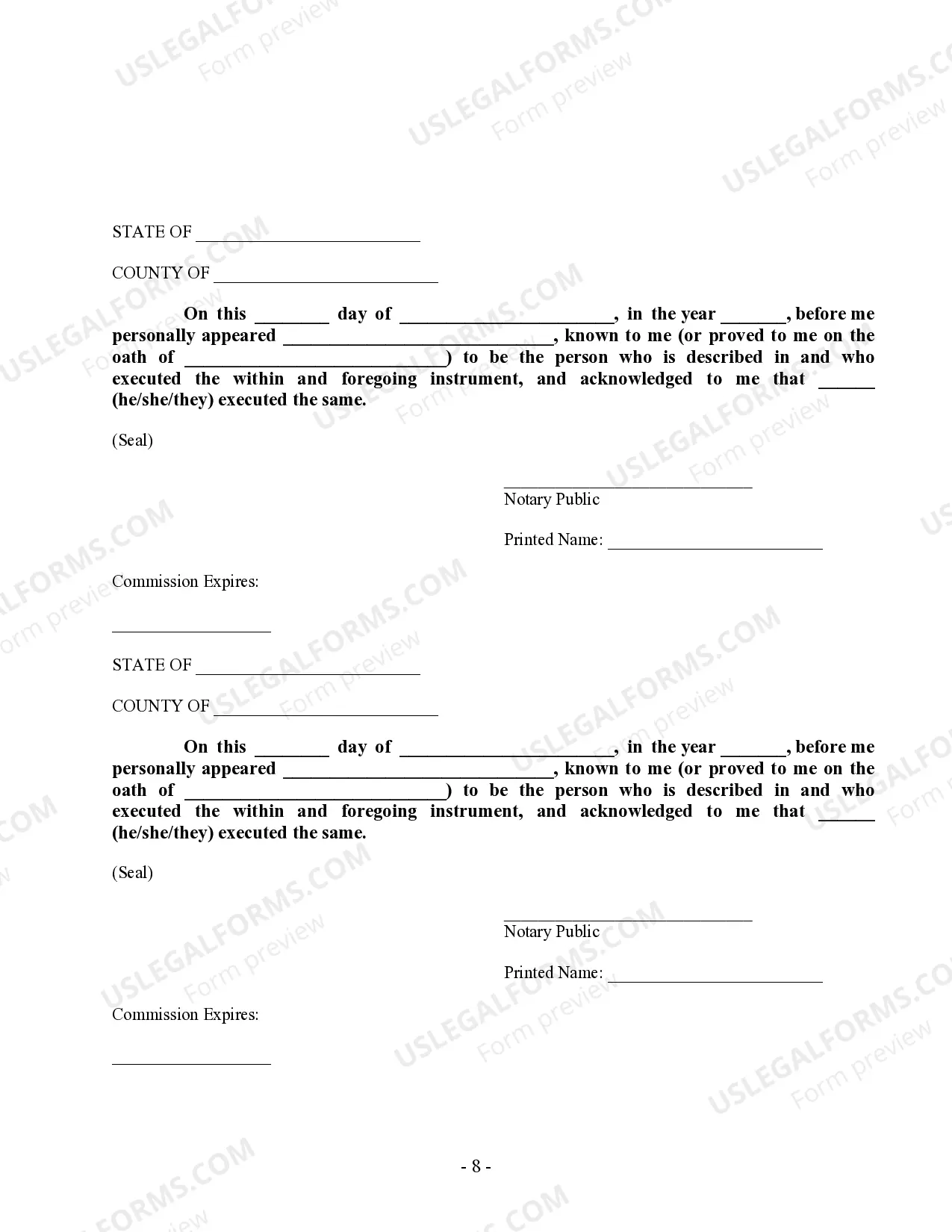
- Each party should review, sign, and date the agreement, including a notary acknowledgment if required.
Is notarization required?
This form must be notarized to be legally valid. US Legal Forms provides secure online notarization powered by Notarize, allowing you to complete the process through a verified video call.
Get your form ready online
Our built-in tools help you complete, sign, share, and store your documents in one place.
Make edits, fill in missing information, and update formatting in US Legal Forms—just like you would in MS Word.
Download a copy, print it, send it by email, or mail it via USPS—whatever works best for your next step.
Sign and collect signatures with our SignNow integration. Send to multiple recipients, set reminders, and more. Go Premium to unlock E-Sign.
If this form requires notarization, complete it online through a secure video call—no need to meet a notary in person or wait for an appointment.
We protect your documents and personal data by following strict security and privacy standards.

Make edits, fill in missing information, and update formatting in US Legal Forms—just like you would in MS Word.

Download a copy, print it, send it by email, or mail it via USPS—whatever works best for your next step.

Sign and collect signatures with our SignNow integration. Send to multiple recipients, set reminders, and more. Go Premium to unlock E-Sign.

If this form requires notarization, complete it online through a secure video call—no need to meet a notary in person or wait for an appointment.

We protect your documents and personal data by following strict security and privacy standards.
Typical mistakes to avoid
- Failing to fully disclose financial information, which might affect the agreement's enforceability.
- Not defining shared expenses clearly, leaving room for disputes.
- Neglecting to consider future changes in circumstances, such as job loss or large purchases.
- Forgetting to have the agreement notarized where required, which could affect its validity.
Advantages of online completion
- Convenience of downloading and completing the form at your own pace.
- Ability to edit the document easily to reflect specific agreements between the parties.
- Saves time and legal costs by providing a clear framework for the living arrangement.
- Access to a legally vetted document prepared by licensed attorneys.
What to keep in mind
- A Non-Marital Cohabitation Living Together Agreement clarifies the rights and responsibilities of partners who are cohabitating.
- It is essential for addressing financial obligations and property ownership during the relationship.
- Using this form can prevent conflicts and misunderstandings in a non-marital living arrangement.
- Consulting with an attorney may ensure compliance with specific state laws.
Looking for another form?
Form popularity
FAQ
Legal status In California, such couples are defined as people who "have chosen to share one another's lives in an intimate and committed relationship of mutual caring," including having a "common residence, and are the same sex or persons of opposite sex if one or both of the persons are over the age of 62".
Unlike other states, court orders for marriage between underage persons are not given.Common law marriage is not recognized in North Dakota. This is when a couple lives together as man and wife without the benefit of a legal marriage. Cousins are not allowed to marry in North Dakota.
A North Dakota partnership (domestic partnership) is composed of two or more partners. A foreign partnership is a partnership created under laws other than the laws of North Dakota. More information regarding the types of partnerships is available through the links below: General Partnership.
Common ownership of a car or other property (joint deed or mortgage agreement) Driver's licenses listing a common address. Proof of joint bank accounts or credit card accounts and loans.
Polygamous marriages violate the strong public policy of North Dakota. In situations where polygamy has occurred, the first marriage is considered valid in North Dakota if the marriage meets the criteria in #1, 2 or 3 above. Any additional spouse(s) claimed after the first marriage are considered non-relatives.
Under the California Insurance Equity Act, carriers can only require documentation of domestic partnership if they also require proof of marriage.Employers may allow employees to add their domestic partner to their coverage outside of the open enrollment period when they enter into a new domestic partnership mid-year.
Five states allow for civil unions: Colorado, Hawaii, Illinois, Vermont and New Jersey. California, District of Columbia, Maine, Nevada, Oregon, Washington and Wisconsin allow for domestic partnerships while Hawaii allows for a similar relationship known as reciprocal beneficiaries.
In light of these dramatic social changes, you may be surprised to learn that cohabitation is technically still illegal in 4 U.S. states. As it currently stands, Mississippi, Michigan, Florida, and Virginia currently have laws on the books banning cohabitation.
United States: Polygamy is illegal in all 50 states however in Utah, in February 2020, the law was significantly changed in the House and Senate to reduce polygamy to the status of a traffic ticket.4 It is still illegal federally according to the Edmunds Act.